25 Purple Perennial Flowers for Your Garden by Season
Find 25 purple perennial flowers for sun, shade, dry beds, and moist borders. Compare bloom times, spread, hardiness, and care before choosing a cultivar.
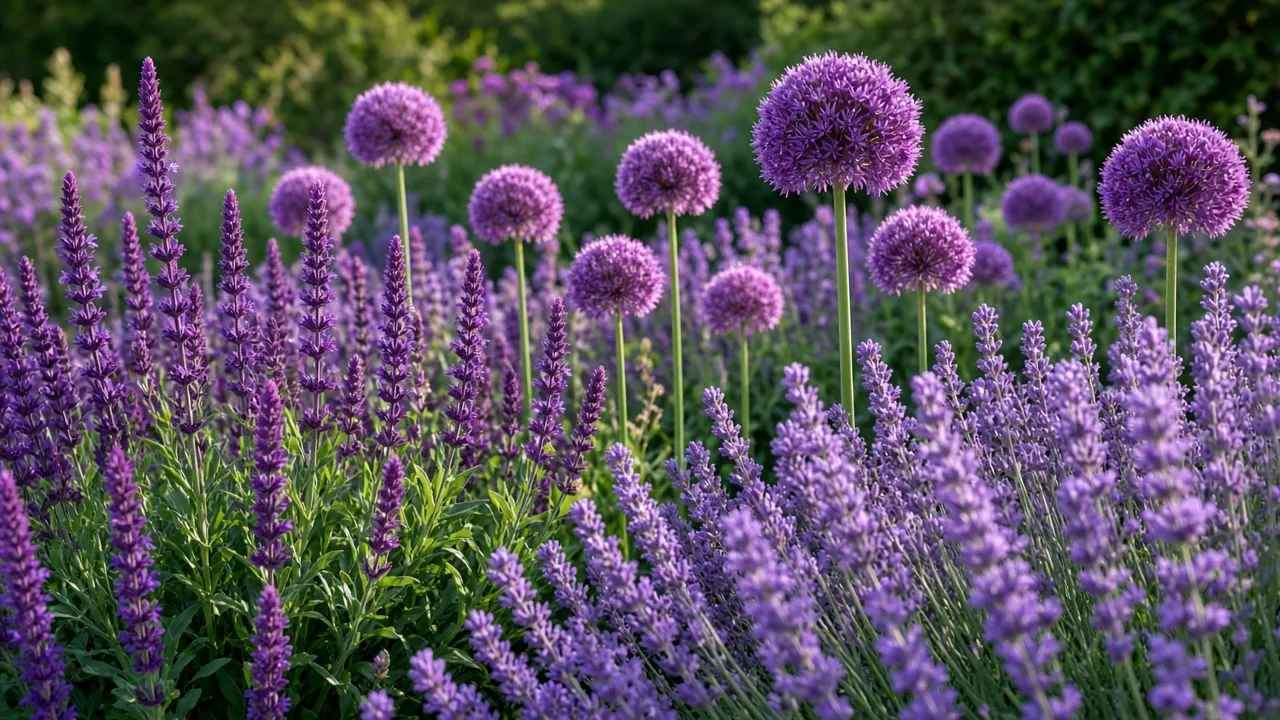
Purple is a broad garden color: it includes indigo, violet-blue, lavender, plum, and magenta. A plant’s flowers may also look cooler or warmer as the light changes, so choose a named cultivar when a particular shade matters. The most reliable way to find purple perennial flowers is to match a plant to your light, soil moisture, and local winter conditions first, then check its cultivar label.
“Perennial” also needs a location attached to it. A plant can be perennial in a mild climate and behave like an annual where winters are colder; even hardy plants can fail in waterlogged soil or a harsh microclimate. The USDA map describes average annual extreme minimum winter temperatures, not summer heat or drainage, so use a cultivar’s regional guidance alongside your own site observations (USDA Plant Hardiness Zone Map).
Choose for the site before you choose a shade of purple
Start by watching the intended bed for a full day. Count direct sun, note whether the soil dries quickly or stays moist after rain, and check whether tree roots compete for water. “Partial shade” can mean gentle morning sun or punishing afternoon heat beneath a western wall; those are not interchangeable growing conditions.
Then decide how you want the color to work. A single repeat planting of one cultivar makes a clear ribbon of purple, while a mixed border can give you flowers at different heights and seasons. If you want a groundcover, decide how far it may spread before selecting a vigorous phlox, violet, deadnettle, or mistflower.
At a glance: match a flower to your garden conditions
| Garden condition | Good starting choices | Typical color window |
|---|---|---|
| Full sun, dry or sharply drained | English lavender, May Night sage, catmint, ice plant, purple prairie clover | Late spring to fall, depending on plant |
| Full sun, average to moist soil | Allium, clematis, delphinium, garden phlox, coneflower, liatris, speedwell | Spring to late summer |
| Part shade, woodland edge | Creeping phlox, columbine, wood anemone, violets, balloon flower | Early spring to summer |
| Moist soil, late-season color | Great blue lobelia, New England aster, mistflower | Mid-summer through fall |
Bloom windows shift with latitude, cultivar, planting date, and weather. Use the table to shortlist candidates, not as a promise that every plant will bloom on the same dates in every garden.
25 purple perennials, grouped by where they grow best
The entries below name dependable starting points where possible. Some flower colors lean blue or pink rather than “true purple,” and some popular selections are short-lived; the distinction is useful when you are planning repeat color rather than shopping by a picture alone.
Sun and lean, fast-draining soil
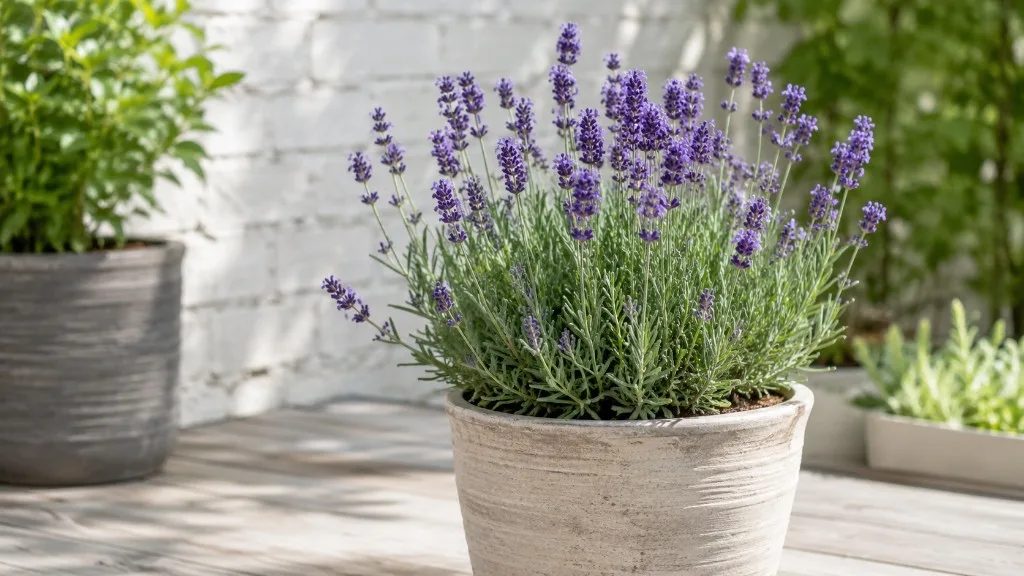
- English lavender (Lavandula angustifolia ‘Munstead’). This compact lavender has fragrant lavender-blue flower spikes in summer and suits an open bed, gravel garden, or large container. Give it full sun and exceptionally good drainage; soggy winter soil is a more common threat than dry summer weather once the roots are established. ‘Munstead’ is a specific English lavender selection, not a guarantee that every plant sold as lavender is equally hardy (Missouri Botanical Garden Plant Finder).
-
May Night sage (Salvia × sylvestris ‘Mainacht’). ‘May Night’ sends up dark violet-blue flower spikes in late spring and often gives a second show if you shear the first spent stems back to the foliage. It likes full sun and well-drained soil, and established plants tolerate short dry spells; heavy shade or rich, constantly wet ground encourages a looser, less floriferous mound. The cultivar name ‘Mainacht’ is sometimes sold as ‘May Night,’ so use the plant tag when matching color and habit (North Carolina State Extension).
-
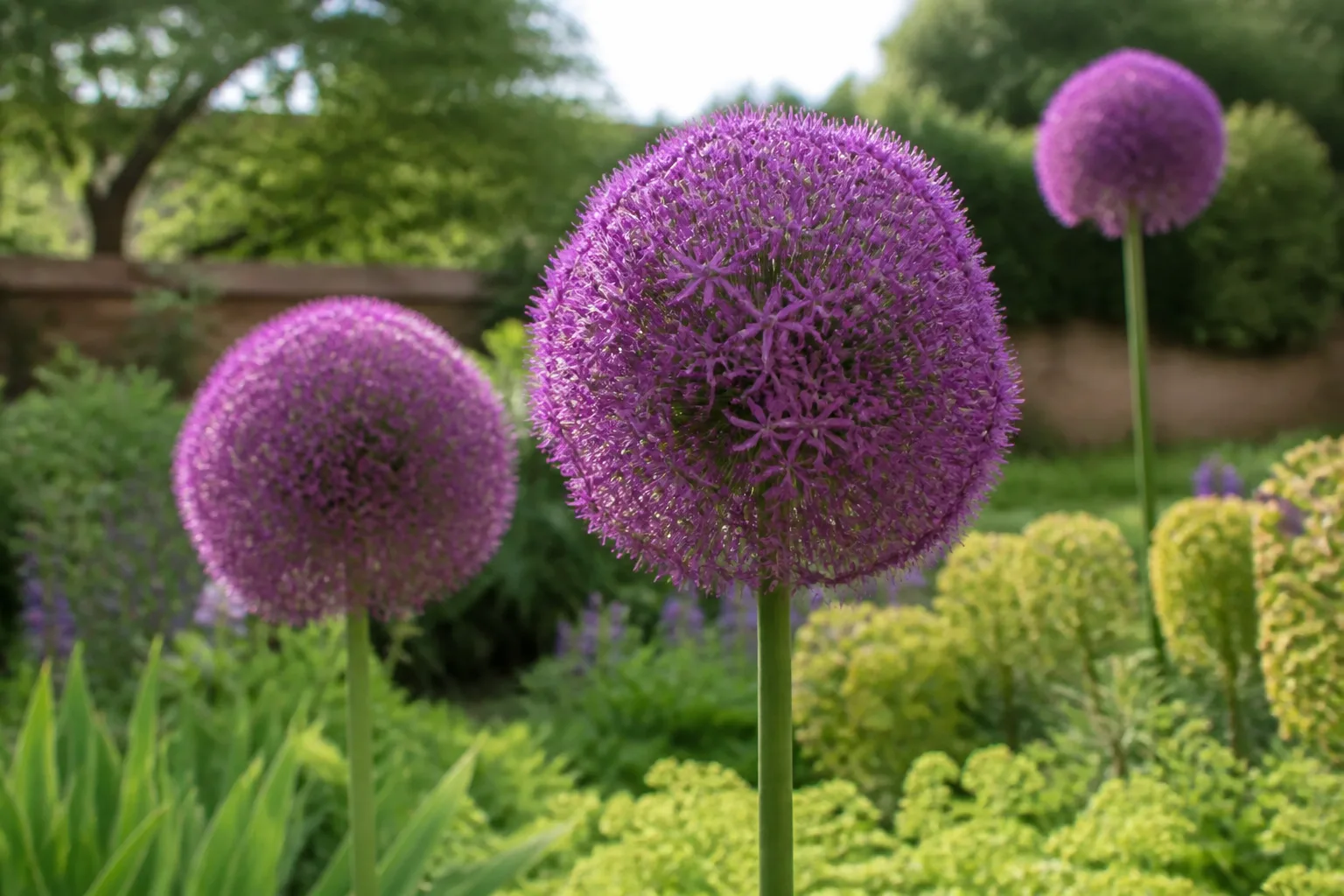
Ornamental allium (Allium ‘Purple Sensation’). This fall-planted bulb perennial makes spherical purple flower heads above upright stems in late spring. Plant bulbs in a sunny, well-drained place where the fading foliage can remain until it yellows; cutting it off while still green deprives the bulb of energy for next year. Smaller plants around the stems can hide the foliage without crowding the bulbs (Missouri Botanical Garden Plant Finder).
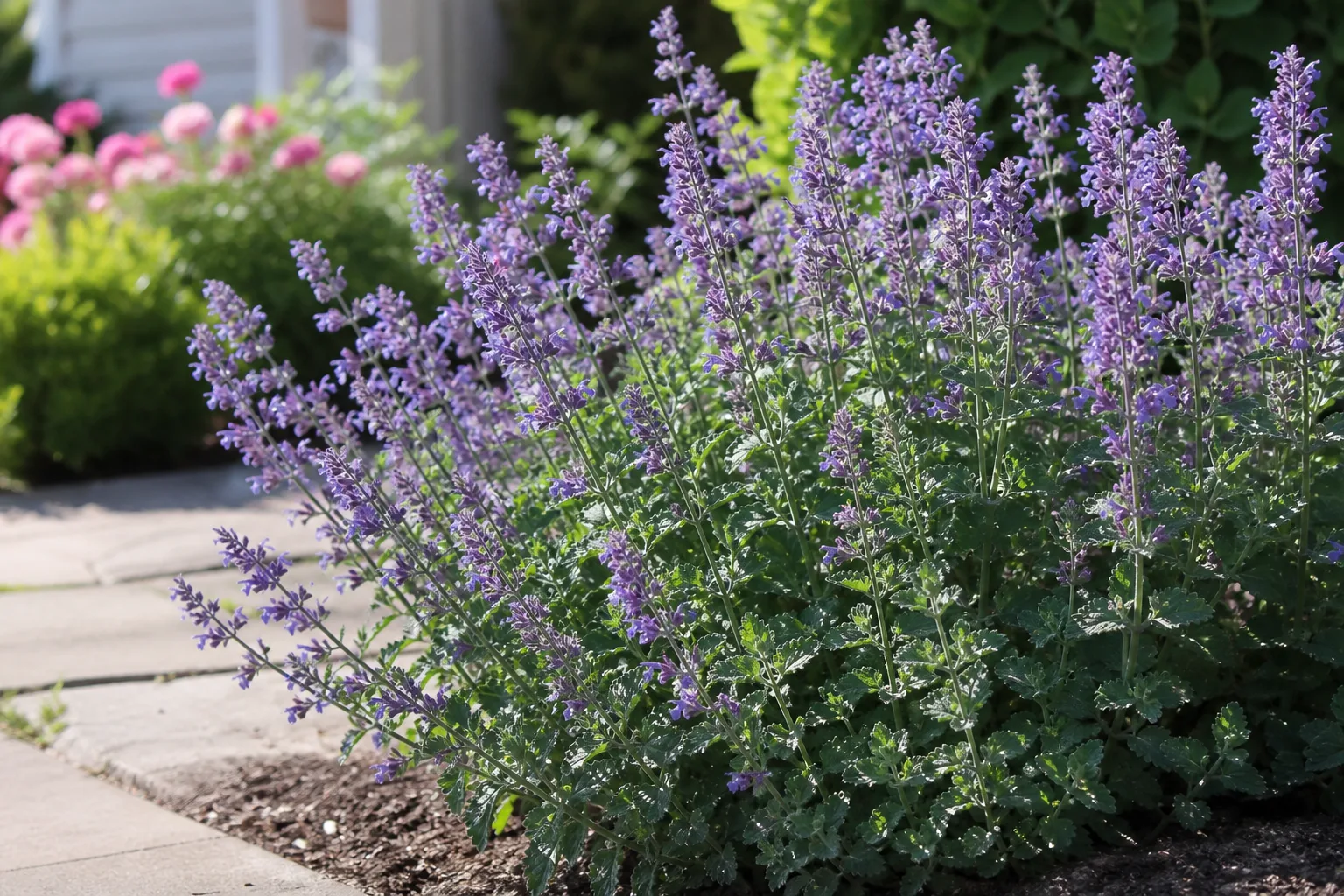
- Catmint (Nepeta × faassenii ‘Walker’s Low’). Lavender-blue flower spikes rise over aromatic gray-green leaves from late spring into summer, and a midseason shear can prompt fresh growth and another bloom flush. Plant it in full sun and soil that drains freely; in humid regions, afternoon shade may prevent stress, though too much shade can make the mound floppy. The name sounds like a height promise, but ‘Walker’s Low’ can spread wider than a small edging space, so allow room or trim the edges (NC State Extension Plant Toolbox).
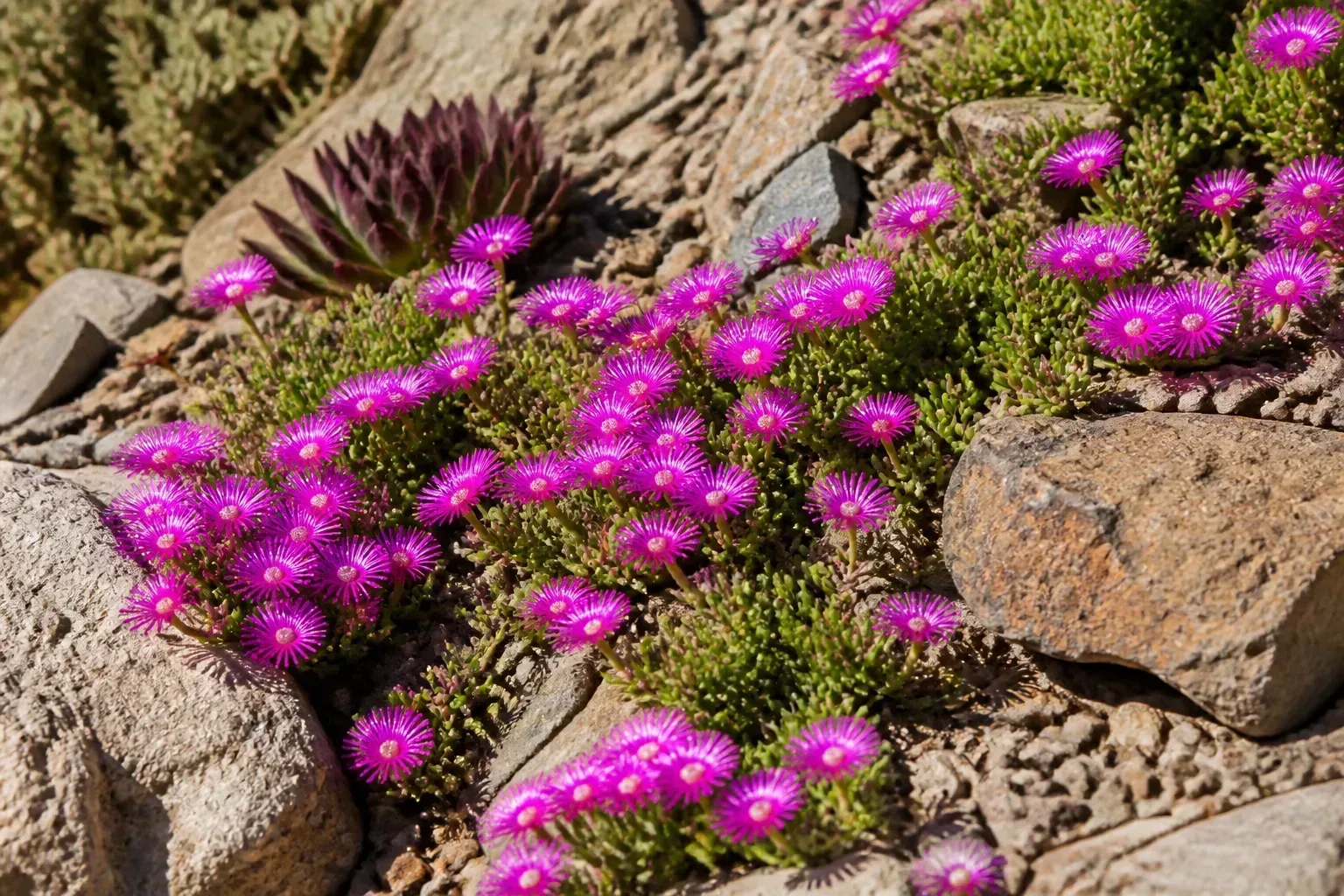
- Hardy ice plant (Delosperma ‘Violet Wonder’). This low succulent makes daisy-like purple flowers over fleshy foliage and works best in a sunny rock garden, gravel edge, or raised container. Its roots need sharply drained soil, especially in winter; a wet clay pocket can defeat a plant that otherwise handles summer heat and drought. Ice-plant cultivars differ in flower shade and cold tolerance, so check the label rather than assuming every Delosperma survives the same winter (NC State Extension).
- Purple prairie clover (Dalea purpurea). Tiny purple flowers open progressively up the cone-shaped flower head in early to midsummer, creating a fine-textured native accent rather than a large, solid-colored bloom. This deep-rooted prairie perennial prefers sun and tolerates dry, rocky, or sandy soils; it is a better fit for a naturalistic border than a lush, frequently irrigated bed. Its long-lived taproot makes it sensible to choose the permanent site before sowing or planting (NC State Extension).
Sunny borders with average or moisture-retentive soil
-
Clematis (Clematis viticella ‘Étoile Violette’). This climbing perennial carries deep purple flowers with pale centers in midsummer, adding color above a fence or trellis instead of only at ground level. Keep the root zone cool and moist, give the vine a sturdy support, and verify the pruning group before cutting it back; cultivars do not all bloom on the same wood. ‘Étoile Violette’ is a Group 3 clematis, so its specific pruning directions differ from spring-flowering types (Royal Horticultural Society cultivar record).
-
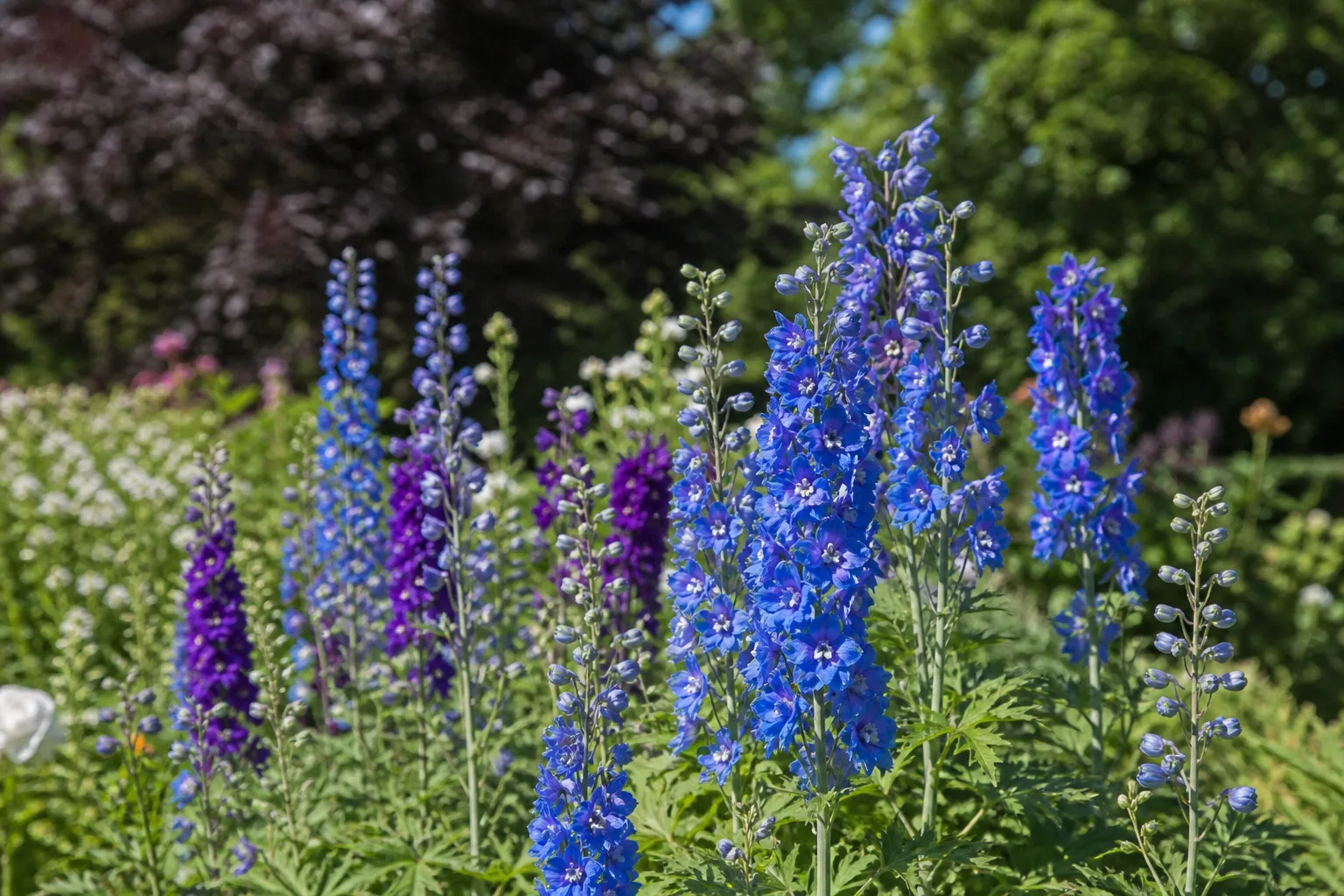
Delphinium (Delphinium elatum hybrids). Tall purple or violet-blue flower spires make a strong back-of-border accent in a cooler-summer garden. They need rich but well-drained soil, regular moisture, and staking before stems lean; they are often short-lived and may need replacement after several seasons. Heat, humidity, and fungal disease can shorten the display, so afternoon shade in hot climates and good spacing help, but do not turn a delphinium into a low-maintenance plant (NC State Extension).
- Garden phlox (Phlox paniculata ‘Purple Flame’). Choose a purple-flowered cultivar rather than relying on a generic phlox label; cultivars range from lavender to pink-purple. Garden phlox flowers in summer and prefers full sun, moisture-retentive but well-drained soil, and open spacing. In humid regions, air circulation matters: crowded, stressed foliage is more vulnerable to powdery mildew, and drought can reduce bloom (Missouri Botanical Garden Plant Finder).
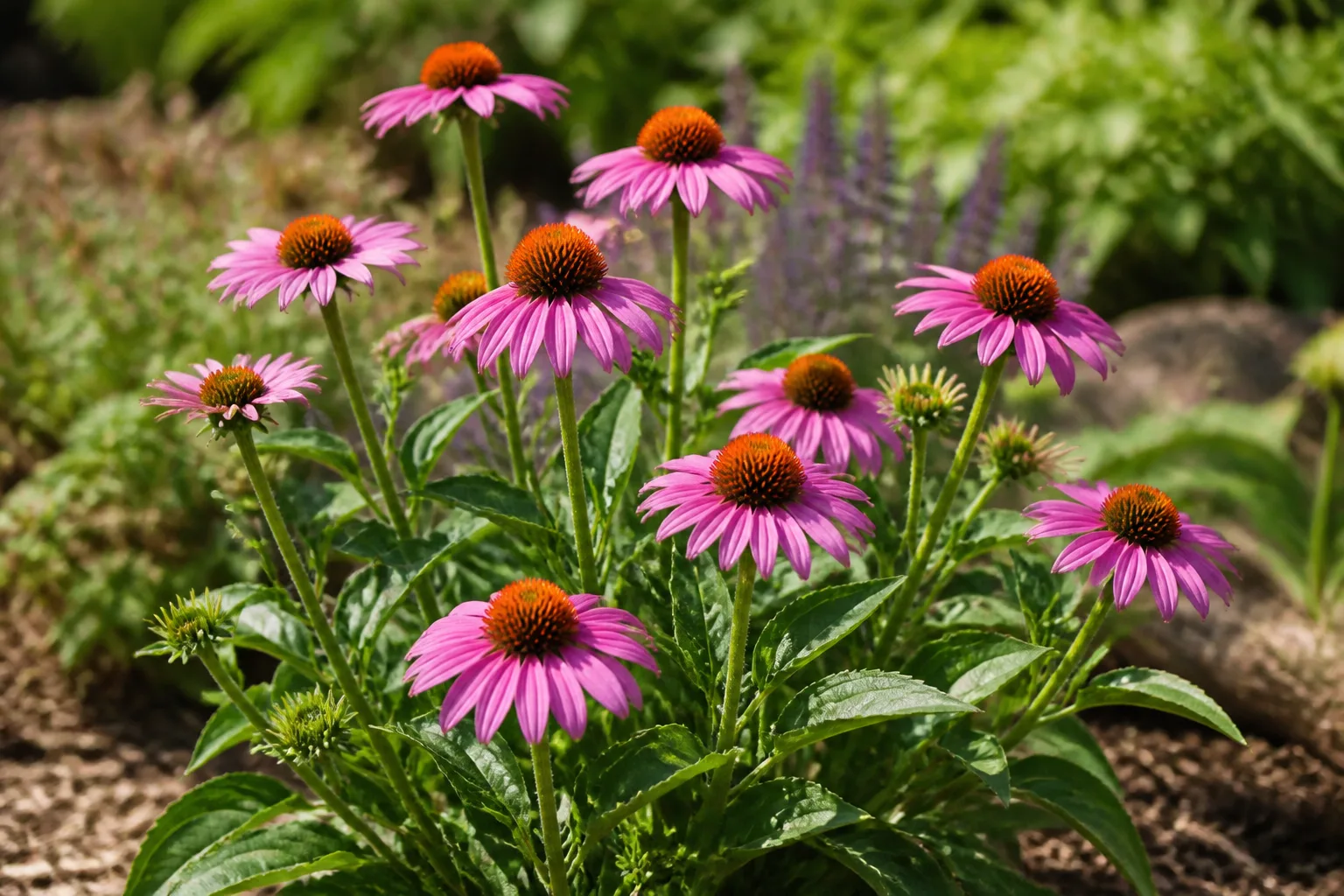
- Purple coneflower (Echinacea purpurea). Its daisy-like flower heads usually read as rose-purple or magenta rather than blue-violet, and their raised centers remain useful after petals fade. Plant in sun and well-drained soil; established plants can handle dry spells, while consistently wet soil can rot roots. Purple coneflower is a North American native perennial and supports a long summer display, but cultivated hybrids can differ in color, form, and persistence (Missouri Department of Conservation).
-
Blazing star (Liatris spicata). Narrow purple flower spikes add upright punctuation in midsummer, and they open from the top downward—a useful contrast to many flower spikes that open from the base. Plant the corms in sun with average to moist, well-drained soil; this species tolerates summer heat better than some moisture-loving perennials but does not want stagnant water. Leave some stems standing after bloom when you can, since hollow stems can provide nesting sites for native bees (NC State Extension).
-
Blue false indigo (Baptisia australis). Indigo-blue to violet pea-shaped flowers appear in late spring above a strong, upright clump. The plant is long-lived and drought-tolerant once established, but its deep taproot makes moving it difficult; decide where it belongs before planting. Its mature size and seed pods give it a long season of structure, so leave enough room rather than squeezing it into a narrow front edge (NC State Extension).
-
Spiked speedwell (Veronica spicata ‘Royal Candles’). Compact violet-blue flower spikes make this a tidy choice for a border front, rock garden, or cutting bed in full sun. It prefers moist but well-drained soil, and trimming spent spikes can encourage additional flowering; do not shear so severely that you remove all the basal foliage. Although the flowers often look more blue-violet than purple, the cultivar gives a strong cool-toned accent (Royal Horticultural Society plant profile).
Part shade, woodland edges, and moist ground
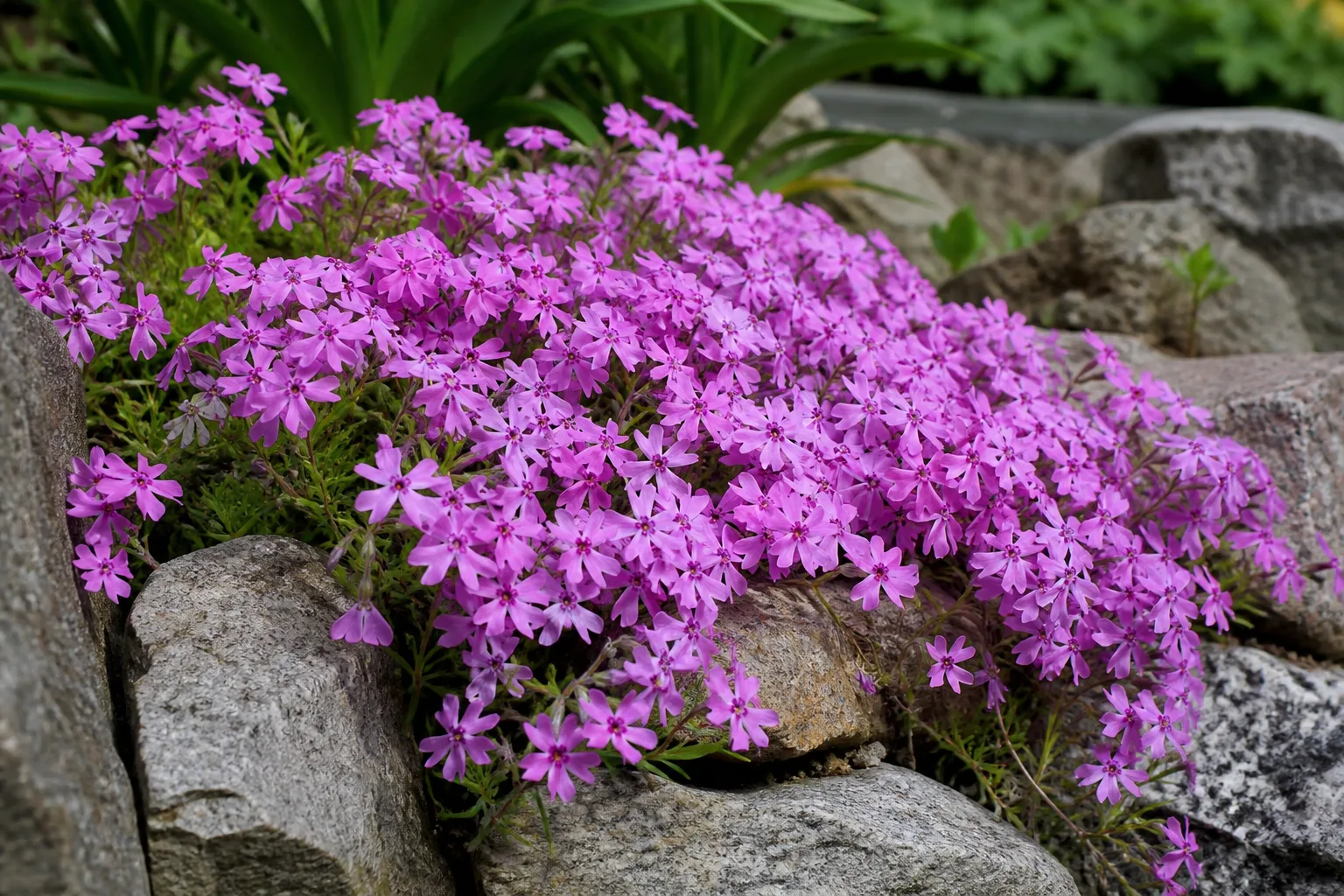
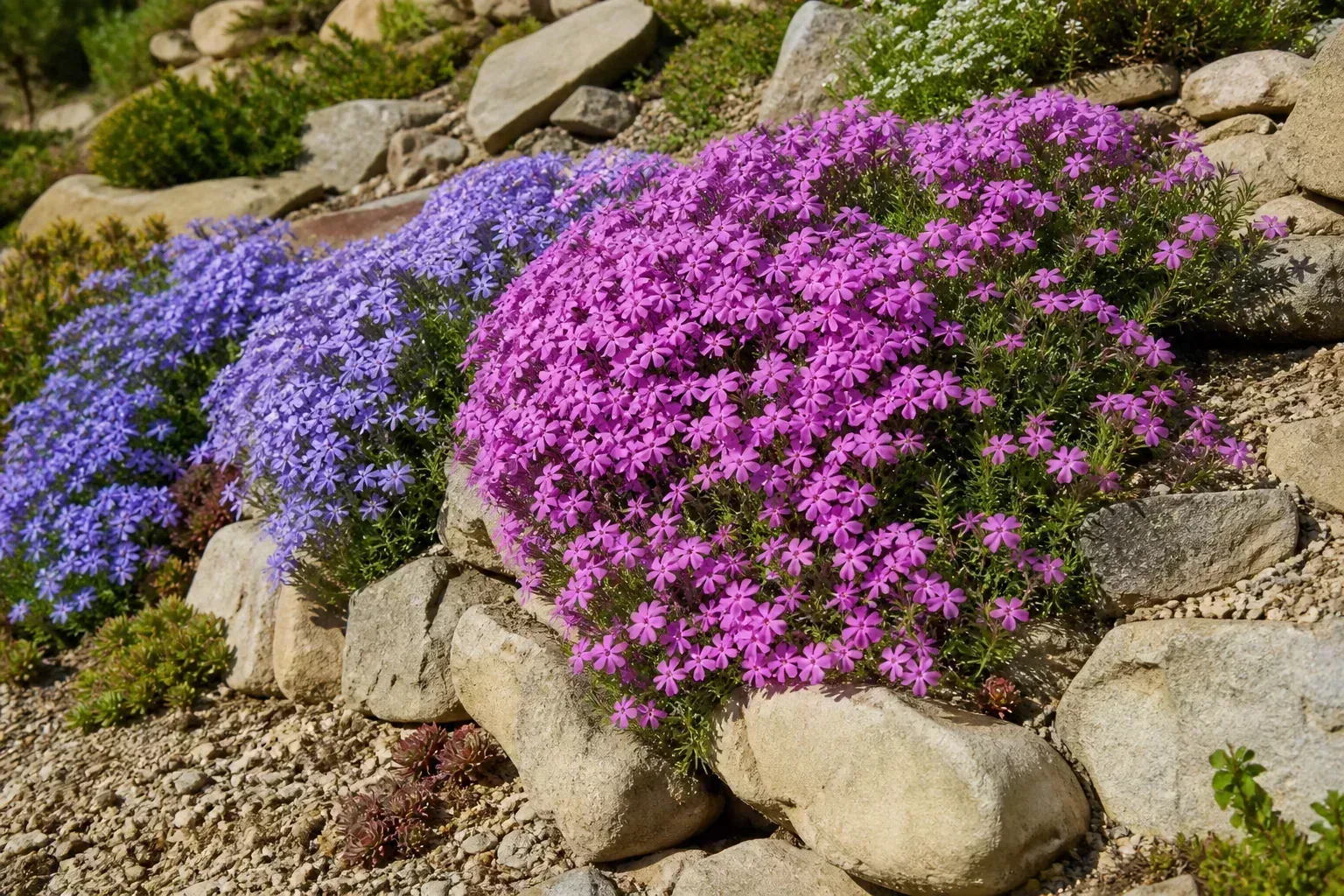
- Creeping phlox (Phlox stolonifera ‘Sherwood Purple’). Unlike moss phlox, this Appalachian groundcover tolerates part shade and forms a low mat from stems that root at their nodes. Its spring flowers can be blue-violet or purple, and it appreciates moist, well-drained soil while establishing; after that, it handles ordinary dry spells better. It spreads steadily, so use it where a flowering carpet is welcome, not where every edge must stay crisp (NC State Extension).
-
Spotted deadnettle (Lamium maculatum ‘Purple Dragon’). This low groundcover combines silver-marked foliage with spring purple flowers and is useful beneath shrubs or along a shaded border. Give it part to full shade and soil that drains; winter-wet ground and hot, humid summers can leave bare or “melted” patches. Because it roots where stems touch soil, inspect the edges a few times each season and pull it back before it reaches neighboring plants (Royal Horticultural Society cultivar profile).
-
Columbine (Aquilegia hybrids). Look for a named purple or purple-blue hybrid, since species and seed-grown plants can produce mixed colors. Columbines flower in spring and suit light shade or morning sun with evenly moist, freely draining soil; they are often short-lived but can reseed to replace themselves. Cut spent stems if you want to limit seedlings, or leave a few pods where a naturalized patch is part of the plan.
-
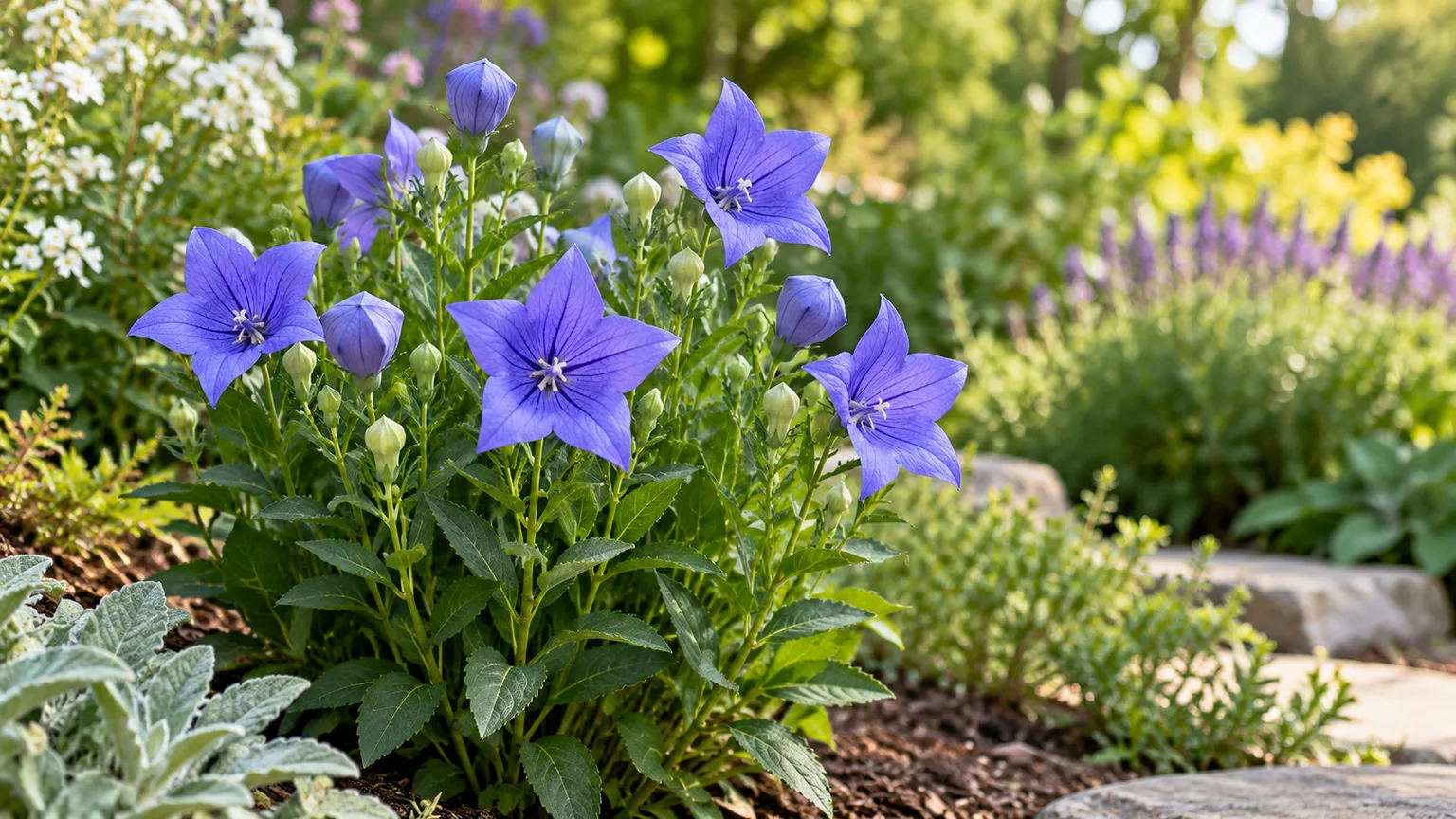
Balloon flower (Platycodon grandiflorus ‘Misato Purple’). The rounded buds swell before opening into wide violet-purple bells in summer, making this compact perennial a good front- or middle-border choice. Give it sun to light shade and well-drained soil, then leave it in place: its fleshy roots dislike disturbance. It also emerges late in spring, so mark the crown or wait before cultivating the bed; accidental digging is an easy way to damage a healthy plant (Missouri Botanical Garden Plant Finder).
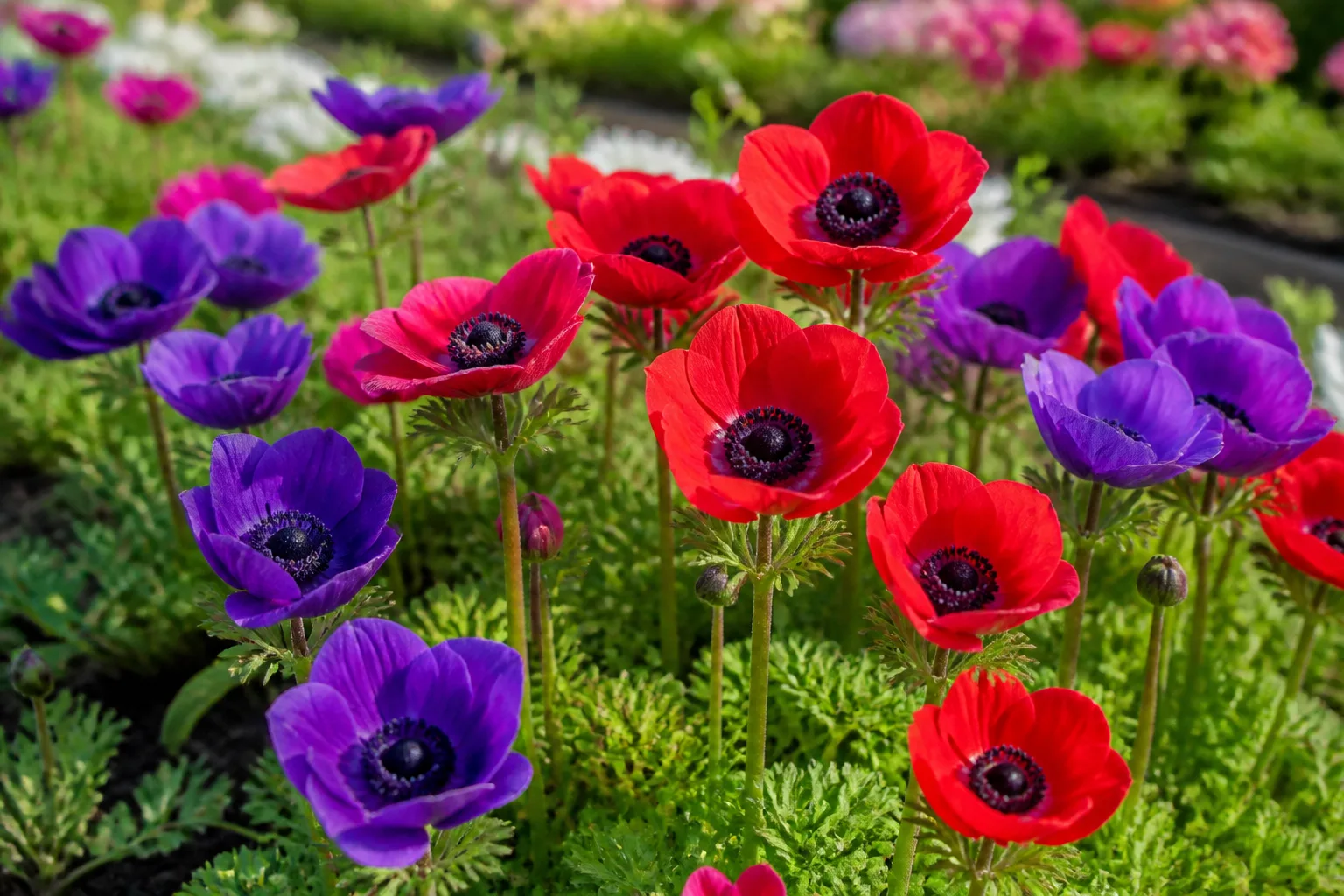
- Wood anemone (Anemone nemorosa ‘Bowles’s Purple’). This low rhizomatous perennial makes rich purple-blue flowers in spring and then goes dormant, so it works best beneath deciduous trees or among other plants that can fill the space later. Plant it in partial shade and humus-rich, moist but well-drained soil, and allow the patch to settle rather than repeatedly digging through it. Its short aboveground season is a feature of woodland ephemerals, not a sign that the plant has failed (RHS plant profile).
-
Common blue violet (Viola sororia). Heart-shaped leaves and early spring blue-violet flowers make this native perennial a soft edging plant beneath trees or along a path. It spreads by seed and can naturalize in lawns, which is useful in a meadow-like area and frustrating in a tightly clipped lawn. Give it part shade and average moisture; if the seedlings are unwelcome, deadhead before seed capsules mature or choose a less self-seeding groundcover.
-
Great blue lobelia (Lobelia siphilitica). This moisture-loving native perennial sends blue to violet tubular flowers up upright stems in late summer, especially in rain gardens, pond edges, and consistently damp borders. It prefers moist or wet soil and partial sun; full sun can work if the roots do not dry out. The name “lobelia” covers many different plants: this species is perennial, while trailing garden lobelia (L. erinus) is commonly grown as a frost-tender annual. Do not rely on a genus name alone when buying a plant (NC State Extension).
-
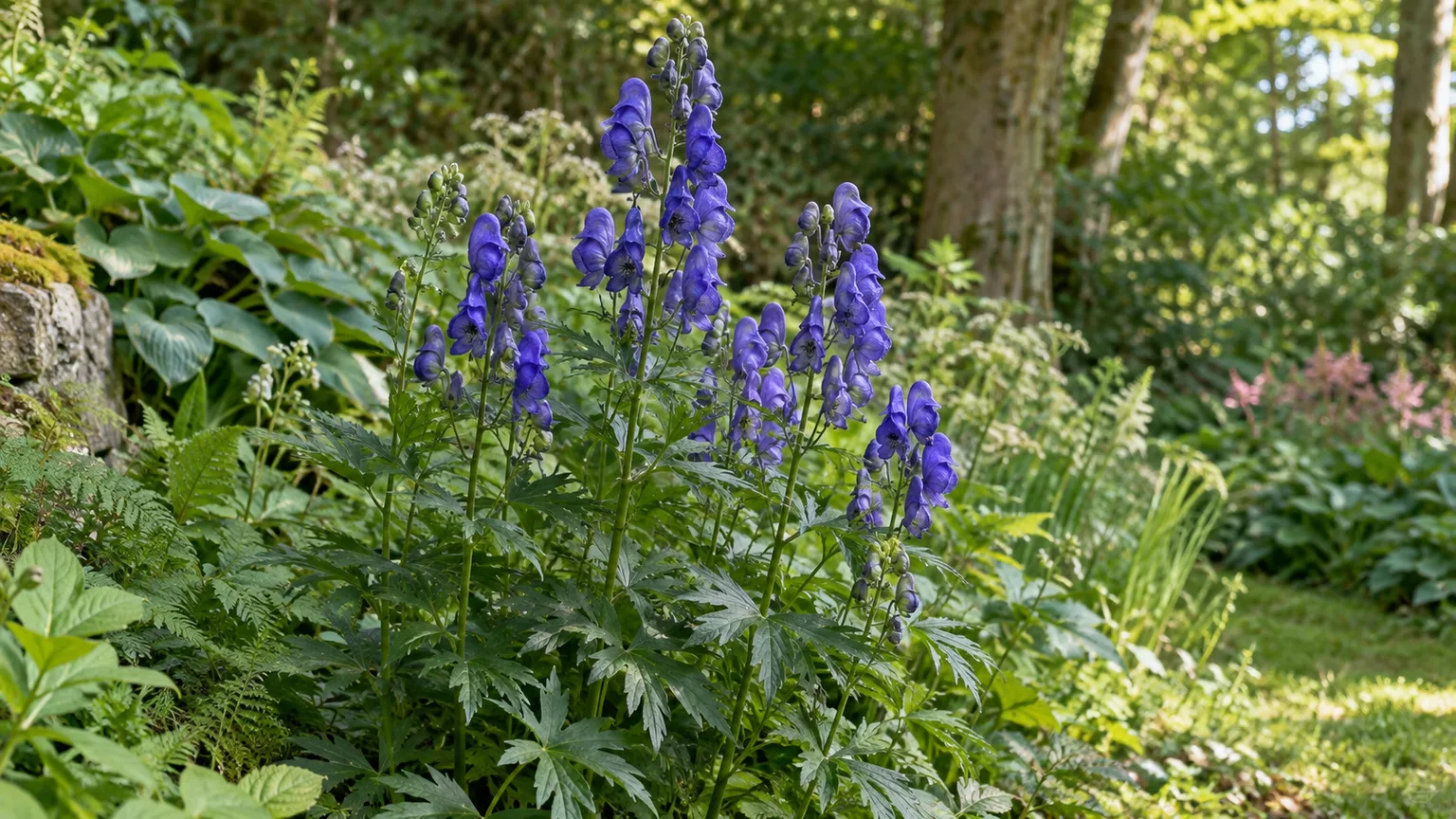
Monkshood (Aconitum uncinatum). Its hood-shaped blue-violet flowers fit a moist, partly shaded border and bring late-season color where many spring plants have faded. This is not a plant for a child-accessible or pet-accessible garden: all parts of monkshood are poisonous if ingested, and poison-control guidance treats exposure seriously. Choose it only if you can reliably prevent handling or eating, wear gloves when working around it, and identify the plant clearly (NC State Extension; Pet Poison Helpline).
Long bloom and late-season color
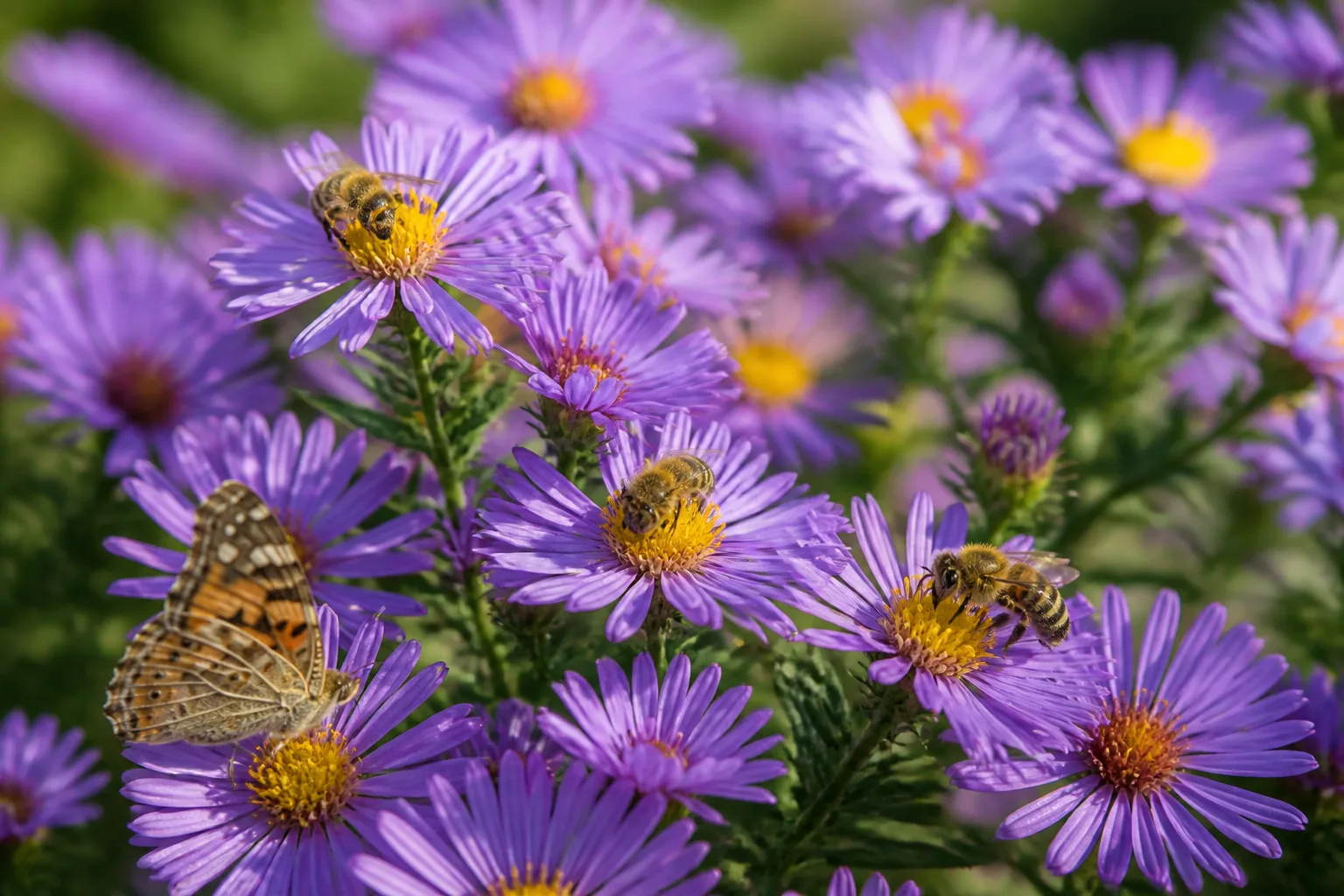
- New England aster (Symphyotrichum novae-angliae ‘Purple Dome’). This compact cultivar is a better fit than the tall species form for the front of a border, with purple daisies and yellow centers in late summer to fall. Give it full sun and soil with reliable moisture but good drainage; pinching stems earlier in summer can encourage bushiness and reduce flopping, while also delaying bloom. Native asters can be important late-season nectar sources, so leave some flowers for pollinators before deadheading (Missouri Botanical Garden Plant Finder).
-
Blue mistflower (Conoclinium coelestinum). Despite the common name, its fluffy late-summer flower clusters often read as blue-purple or lavender in a garden. This native perennial likes moist ground and spreads by rhizomes and seed, so it is best along a pond, in a rain garden, or in a naturalized bed with a clear boundary—not in a small mixed border. Cut seedheads or edge the patch if you want to prevent it from wandering (Clemson Cooperative Extension; UF/IFAS Extension).
-
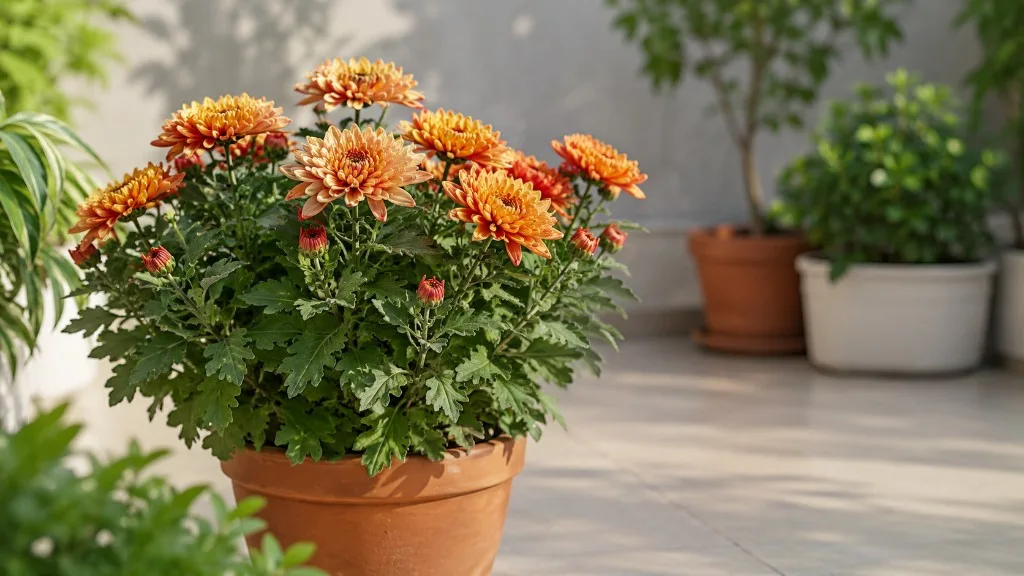
Hardy garden mum (Chrysanthemum ‘Mammoth Lavender Daisy’). This University of Minnesota selection has lavender flowers with gold centers and supplies fall color when summer perennials are fading. For the best chance of winter survival, buy a named hardy garden mum, plant it in spring, give it full sun and well-drained soil, and leave old stems standing through winter; a supermarket florist mum is not the same bet. Winter hardiness varies by cultivar and planting time (University of Minnesota’s hardy mum program; Iowa State Extension).
- Hardy geranium (Geranium ‘Rozanne’). Violet-blue flowers appear over a long season in sun or partial shade, and the spreading mound can knit together the front of a mixed border. It is a true hardy geranium, not the frost-tender bedding “geranium” (Pelargonium) sold in spring flats. Give it room to spread, then cut back untidy growth after a flush; the fresh foliage can help the plant look composed again while it regrows.
Build a purple bloom sequence from spring to fall
Layer plants by season and height
A garden that is purple for one week is easy to make; one that keeps changing from spring to fall takes a little sequencing. Start with spring columbine, creeping phlox, wood anemone, and allium; follow with early summer lavender, salvia, catmint, and speedwell; then let coneflower, delphinium, lobelia, mistflower, asters, and hardy mums carry the color later. Timing varies by region, but overlapping bloom windows are more dependable than asking one plant to flower all season. Garden designers use the same principle in late-summer borders, layering perennials, grasses, and annuals and cutting selected early flowers back for another flush (Gardens Illustrated).
Use height to make the sequence legible. Put creeping plants at the edge, mounded plants in front or middle, and taller delphinium, allium, clematis, and aster where they can rise without hiding low flowers. Repeat two or three plants in groups rather than planting 25 single specimens; repeated shapes make a mixed border feel intentional and simplify watering.
Use purple as a color, not a single paint chip
Pair violet-blue flowers with chartreuse foliage, pale yellow blooms, or silver leaves to keep the border from becoming visually flat. If you prefer a quieter palette, vary the flower shape instead: round allium globes, spires of salvia, daisies of aster, and bell-shaped balloon flowers read as different notes even when they share a color family. Keep labels from plants you like, because “purple” alone does not tell you whether a cultivar is blue, wine, lavender, or magenta.
A useful combination is lavender and catmint along a sunny path, with allium bulbs rising through the foliage in spring and a low aster filling the gap in fall. For a woodland edge, combine spring phlox and anemones with columbine, then use a later-emerging perennial to cover the space after the anemones go dormant. Choose companions with compatible moisture needs; lavender and lobelia may both be purple, but they should not share a wet planting pocket.
Give new perennials a strong first season
Water to establish roots, then adjust by species
Water newly planted perennials deeply after planting, then check the root zone rather than following a fixed calendar. A plant with a small root ball in hot weather may need frequent checks, while a cool spring planting in a moisture-retentive bed may need little supplemental water. The goal is evenly moist soil during establishment, not a permanently saturated crown.
Once roots reach surrounding soil, adjust by species. Lavender, ice plant, and prairie clover need drainage and should dry between waterings; phlox, lobelia, and balloon flower need more consistent moisture. Mulch can reduce weed pressure and temperature swings, but keep it a little away from crowns and avoid trapping winter moisture against plants that need dry soil.
Deadhead, stake, and cut back selectively
Deadheading can extend flowering or limit seedlings, but it is not a rule for every plant. Shear salvia or catmint after a first flush if you want fresh growth, stake tall delphiniums before they lean, and leave some aster or coneflower seedheads when winter food and structure matter more than a tidy bed. For bulbs, allow green leaves to finish naturally so they can replenish the bulb.
Resist the urge to cut every perennial to the ground in fall. Some plants benefit from spring cleanup, and hollow stems can shelter insects; others may need prompt removal if diseased foliage is a recurring problem. Use the plant’s specific guidance, especially for mildew-prone phlox and for clematis, whose pruning depends on its group and bloom habit.
Manage self-seeders and spreading groundcovers
A plant that spreads is not automatically a problem, but its growth pattern should fit your maintenance style. Violets can seed into a lawn, mistflower can travel by rhizomes and seed, and creeping phlox and deadnettle root along spreading stems. These plants can cover open soil efficiently; they are less welcome between delicate neighbors or across a narrow path.
Before planting, measure the mature spread on the tag and decide what will define the edge: a path, mowing strip, edging, dry moat, or regular division. Use a container for a vigorous plant only if the plant tolerates container conditions; a pot can limit roots but also dries faster and may expose roots to colder winter temperatures. Recheck the boundary while the patch is small, when pulling a few runners is easier than removing a mat.
Also be selective about what “perennial” means on a nursery bench. Snapdragon, trailing Lobelia erinus, and calibrachoa are often treated as annuals in cold-winter gardens, even though they can persist in frost-free climates. Sweet William and some columbines are short-lived or biennial-like and rely on seedlings to renew a patch. They can still be useful, but count on local survival or self-seeding only when you have observed it in your climate.
Check safety before planting near children or pets
Do not assume an ornamental flower is safe to chew because it is common, edible-looking, or attractive to pollinators. Delphinium and monkshood can cause serious poisoning if eaten; the ASPCA lists larkspur/delphinium as toxic to dogs and cats, and veterinary poison guidance also identifies monkshood as toxic to pets. Great blue lobelia also has poison characteristics if eaten in large amounts, so it belongs in a garden where children are taught not to sample plants (ASPCA larkspur guidance; NC State Extension on lobelia).
If an animal or person may have eaten a plant, identify the plant and contact a veterinarian, poison center, or local emergency service promptly; do not wait for symptoms or try a home remedy. When safety is uncertain, choose a different perennial for an area where a curious child or pet can reach it. Plant labels and photos are useful identification aids, but they do not replace expert guidance after a possible ingestion.
Conclusion
The best purple perennial is the one that matches the place you have: sun and sharp drainage for lavender or ice plant, summer moisture for phlox, or a reliably damp edge for lobelia and mistflower. Choose by botanical name and cultivar, then confirm regional hardiness and bloom timing with a local extension or botanical-garden source. A few well-matched plants repeated across spring, summer, and fall will give you more lasting color—and less replacement work—than a crowded collection chosen only by flower shade.