How to Grow and Care for Shasta Daisy Flowers Outdoors
Grow Shasta daisies in sun and well-drained soil. Learn planting dates, spacing, watering, deadheading, division, and how to diagnose wilt or floppy stems.
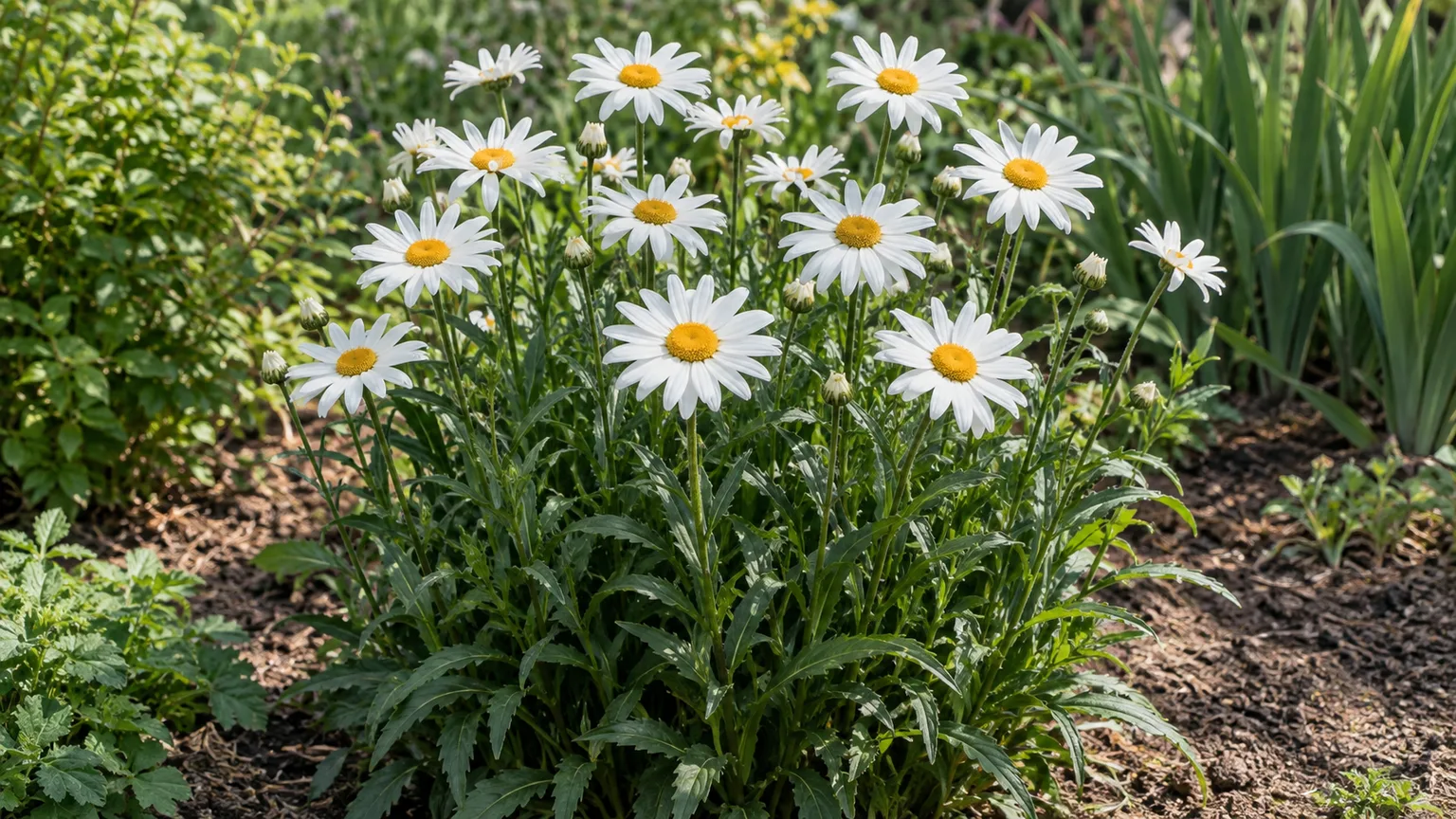
Shasta daisies are sun-loving, clump-forming perennials with white petals and golden centers. They are easy to grow when the crown stays out of standing water, the cultivar has enough room, and new plants receive steady moisture while they establish. Most disappointments come from choosing a tall variety for a shady, crowded spot or watering a poorly draining bed as if it were a thirsty annual.
The plant sold as Shasta daisy is Leucanthemum × superbum, a garden hybrid in the aster family. Its flowers and mature size vary by cultivar, so the plant label matters more than a generic care schedule. The practical guide below covers site choice, seasonal care, division, seed starting, and the checks that help distinguish ordinary drought stress from a more serious decline.
Shasta daisy at a glance
| Feature | What to expect |
|---|---|
| Botanical name | Leucanthemum × superbum |
| Growth habit | Clump-forming herbaceous perennial |
| Typical flower | White ray florets around a yellow center; some cultivars are double |
| Bloom period | Usually summer into early fall, varying with cultivar and climate |
| Light | Full sun for the most flowers; light afternoon shade can help in extreme heat |
| Soil | Moist but well-drained; avoid winter-wet ground |
| Mature size | Often about 2 to 3 feet tall, with compact and taller cultivars outside that range |
| Propagation | Division for a close copy of a named plant; seed for more plants with possible variation |
The Royal Horticultural Society describes Shasta daisy as a robust perennial with dark green leaves and single or double flowers from early summer to early autumn. Missouri Botanical Garden lists the species at roughly 2 to 3 feet tall, with a 1.5- to 2-foot spread, but named cultivars can be shorter or taller. (RHS plant profile, Missouri Botanical Garden Plant Finder)
Hardiness ratings also vary. Missouri Botanical Garden lists the species for USDA Zones 5–9, while Epic Gardening describes a broader 4–9 range; cultivar, winter drainage, and local exposure all affect survival. Treat a zone range as a screening guide, then check the exact cultivar and local extension recommendations before planting at the edge of your climate. (Missouri Botanical Garden Plant Finder, Epic Gardening)
Choose a cultivar that fits your space
Start with mature height and spread, then consider bloom form. A compact plant may be the right choice for a pot or the front of a border; a tall selection can anchor a cutting garden but may need a support ring if the site is shady or exposed. Do not buy by flower photo alone: check the label for the mature measurements and whether the flowers are single or double.
‘Becky’ is a tall classic, often reaching about 3 to 4 feet in favorable conditions. ‘Alaska’ is commonly described around 2 to 3 feet, while compact ‘Snowcap’ is near a foot tall and can suit a container or the front edge of a bed. These are useful planning ranges, not guarantees; soil, sun, climate, and the nursery’s exact selection can change a plant’s final size. (Savvy Gardening)
If pollinator access is part of your planting goal, favor a single-flowered form. The open yellow disk is easier to reach than the dense, extra petals on many doubles; double flowers can still be chosen for their appearance, but they may offer less accessible pollen and nectar. In any form, leave space around the clump so stems dry after rain and neighboring plants do not swallow the basal leaves. (RHS perennial leucanthemum guide, Savvy Gardening)
Give the plant sun, airflow, and draining soil
Choose a spot with at least six hours of direct sun when possible. Full sun generally means more flower stems and sturdier growth; light shade is a reasonable compromise in hot regions, especially where afternoon heat is intense. Deep shade tends to stretch stems and reduce flowering, so it is a poor fix for a plant already leaning toward the light. (Missouri Botanical Garden Plant Finder, RHS perennial leucanthemum guide)
Drainage is the other site decision to make before digging. After a soaking rain, look for puddles that linger, soil that stays shiny and saturated, or a low place where water collects; a sunny site with those conditions can still be a bad home for Shasta daisies. Use a raised bed or a container if the garden remains waterlogged, rather than trying to compensate with a lighter watering schedule alone.
Plant at the right time and depth
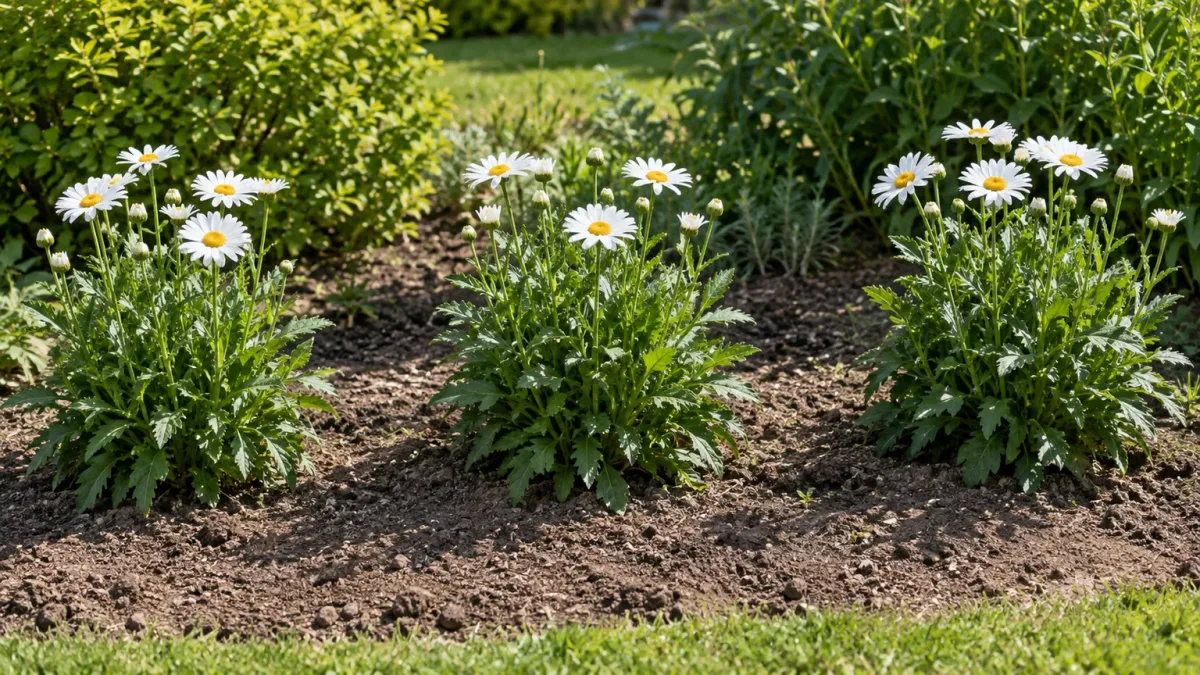
Plant nursery-grown Shasta daisies in spring after the soil is workable, or in early fall while there is still time for roots to settle before hard freezes. In hot-summer climates, spring planting is usually easier to manage because a new transplant has a cooler, less stressful establishment period; in mild regions, an early-fall planting can root in while the ground is warm. Avoid planting during a heat wave or into saturated soil.
Use the plant tag’s mature spread to set spacing. For a typical 18- to 24-inch-wide cultivar, a similar distance between plant centers gives the foliage room to fill in without immediately crowding; compact selections can sit closer, and very tall or broad selections may need more. If you want an instant full look, resist the urge to pack plants tightly—the hidden cost is reduced airflow, more competition, and clumps that need dividing sooner.
Before planting, water the nursery pot so the root ball is evenly moist. Make a hole as deep as the root ball and about twice as wide, loosen circling roots gently, and set the crown level with the surrounding soil. Backfill, firm lightly, and water slowly until the root zone is wet; do not bury the crown under soil or a deep layer of mulch. The RHS recommends moist but well-drained soil, and Missouri Botanical Garden cautions that wet soil, especially in winter, can be fatal. (RHS plant profile, Missouri Botanical Garden Plant Finder)
Water to establish, then water for drought
Newly planted divisions and nursery plants need more attention than established clumps. During the first growing season, check the root ball and surrounding soil every few days in warm or windy weather; water deeply when the upper inch or two begins to dry, then let excess water drain. A shallow sprinkle wets the surface without encouraging roots to grow outward and downward.
Once a clump is established, it can tolerate short dry spells, but that does not mean it performs best in dry soil all summer. Water during extended hot, rainless periods when the root zone is dry, directing the hose or watering can at the soil rather than repeatedly wetting foliage. If the plant wilts in the afternoon but the soil is damp and it recovers by evening, heat may be the immediate stress; if it stays limp while the soil is saturated, investigate drainage before adding more water.
Container plants dry faster because their roots occupy a limited volume of mix. Check the pot with a finger rather than following a fixed weekly schedule, and water thoroughly when the top inch or two is dry. Empty standing water from saucers and confirm that drainage holes remain open. (Epic Gardening)
Improve soil without overfeeding
Shasta daisies tolerate a range of ordinary garden soils, but they do not tolerate a crown that stays wet. In heavy clay, improve the entire planting area with organic matter or raise the bed; adding a small pocket of loose compost to an otherwise dense hole can create a basin that holds water around the roots. In sandy soil, compost can improve moisture retention while still allowing drainage.
Fertilizer is optional in reasonably fertile soil. A thin layer of finished compost in spring is often enough; if growth is weak and a soil test shows low fertility, use a balanced fertilizer according to its label. Avoid repeated high-nitrogen feeding: a plant that produces lush leaves but few flowers may be overfed, shaded, crowded, or simply a naturally leafy cultivar. Good drainage and adequate sun matter more than frequent fertilizer. (Missouri Botanical Garden Plant Finder, Epic Gardening)
Keep mulch about 1 to 2 inches deep over the root zone to reduce weeds and slow moisture loss, but pull it back from the crown. In a wet winter climate, a thick wet blanket over the crown can prolong the very conditions that lead to rot. Shredded leaves or compost make suitable light mulch when kept off the plant’s base. (Savvy Gardening)
Extend bloom with selective deadheading
A mature clump usually sends up its main flush in summer; cultivar and local weather determine whether flowers continue into early fall. Deadheading can keep the bed tidy, limit self-sown seedlings, and encourage another flush on some cultivars, but it cannot make every variety bloom continuously. If a few flowers remain open and attractive, leave them for pollinators or cut them for a vase.
Remove finished flower stems, not healthy foliage
When an individual flower fades, follow its stem down to a healthy leaf pair, side shoot, or branch junction and cut just above that point. If there is no clear side shoot, remove the finished flower stem near the base without cutting the whole leafy clump to the ground. This leaves photosynthesizing foliage in place while reducing the spent heads that would otherwise set seed. (Gardening Know How)
After the first wave, inspect the plant rather than shearing it on a calendar. Deadhead stems that are finished; if most flowers have faded and the plant looks ragged, a light trim can tidy it, but cutting back hard may delay or reduce the next display. Stop deadheading when you want seed heads for birds or seedlings, or when the plant is heading into dormancy and no meaningful new bloom is likely.
Divide mature clumps before they thin
Shasta daisies are short-lived perennials, and the middle of an old clump can become woody, sparse, or less productive. Dividing every two or three years is a useful starting point, but let the plant tell you when: a thinning center, fewer flowers, or crowded stems are stronger clues than the calendar. The RHS recommends division in early spring or late summer, and Missouri Botanical Garden gives a similar two- to three-year interval for maintaining vigor. (RHS plant profile, Missouri Botanical Garden Plant Finder)
Choose a cool, cloudy day when the soil is moist but not waterlogged. Early spring division lets plants rebuild before the main flowering period; late summer division works when the heat has eased and the soil will not dry immediately. Do not divide a drought-stressed plant, a plant in full flower during hot weather, or a clump whose roots are sitting in mud.
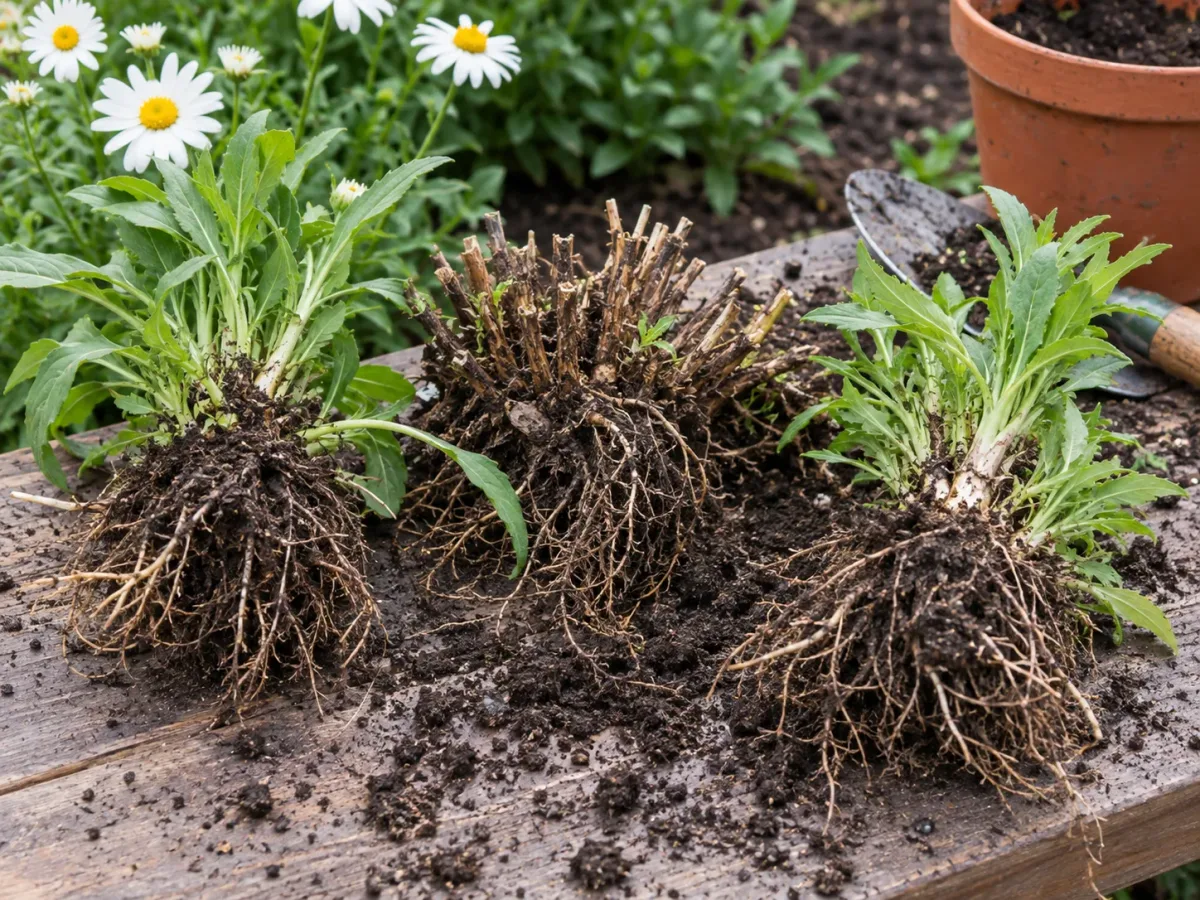
Keep vigorous outer sections with roots and shoots
- Water the clump the day before if the soil is dry, then cut back spent flower stems so you can see the crown.
- Use a spade to loosen soil around the plant, starting several inches beyond the outer leaves. Lift under the root mass rather than pulling on stems.
- Shake or brush off loose soil and separate the clump with a sharp spade or knife. Keep outer pieces that have several healthy shoots and a solid amount of roots; discard a hollow, woody center if it has little viable growth.
- Replant each division promptly at the same depth it was growing, spacing sections according to the cultivar’s mature spread.
- Water thoroughly and keep the soil lightly moist while new growth resumes. A brief setback is normal; persistent wilting in wet ground is a reason to check the roots and crown.
A division is the best way to preserve the visible traits of a named cultivar, because it continues the same established plant. Practical division guidance from Gardening Know How similarly emphasizes lifting the whole clump and keeping healthy roots with each section. (Gardening Know How: dividing Shasta daisies)
Grow from seed when variation is acceptable
Seed is a low-cost way to raise several plants, but it is slower than buying a nursery plant or dividing an established clump. Start indoors about six to eight weeks before your average last frost, or sow outdoors around the last-frost window once the soil can be worked; follow the seed packet because cultivars can differ. Press the small seeds onto the surface or cover them only lightly if the packet calls for it, keep the mix evenly moist, and provide bright light after germination. Epic Gardening reports emergence in roughly 10 to 15 days under suitable conditions. (Epic Gardening)
Harden indoor seedlings off over a week or so before planting them outside. Set them at the same depth they grew in their pots and keep them watered while roots establish. Spring-sown plants may concentrate on roots and foliage in their first season and flower the following year, so do not mistake a healthy, nonflowering seedling for a failure.
A seedling is not guaranteed to look exactly like its named parent, particularly when the parent is a hybrid cultivar. If you want a dependable ‘Becky’, ‘Snowcap’, or other named form, buy a plant labeled with that cultivar or divide one you already trust. Also keep the names straight: Shasta daisy is Leucanthemum × superbum; the National Park Service’s invasive-plant account is about oxeye daisy, Leucanthemum vulgare, a different species. That report does not establish that Shasta daisy is the same plant or that Shasta seedlings “revert” to invasive oxeye daisies. (RHS perennial leucanthemum guide, National Park Service: invasive oxeye daisy)
Grow compact cultivars in containers
Choose a compact cultivar and a stable pot with several open drainage holes. The container should leave room for the mature root system rather than just the nursery root ball; a tall, vigorous cultivar can become top-heavy and dry out quickly in a small pot. Fill it with fresh, free-draining potting mix, set the crown at the mix surface, and leave a little space at the rim for watering.
Place the pot where it receives full sun, or some afternoon shade in very hot climates. Water when the top inch or two of mix dries, then let excess drain completely; containers need more frequent checks than garden beds, especially in wind and midsummer heat. If roots circle densely, emerge from the drainage holes, or the mix dries unusually fast, divide the plant or move it to a slightly larger container instead of continually adding fertilizer. (Epic Gardening)
Container roots experience more winter temperature swings than roots in the ground. Use a cultivar suited to your region, group the pot near a sheltered wall, and protect the container during severe cold with an unheated sheltered space or insulation around the pot. Do not keep the plant warm indoors through winter; it is an outdoor perennial that needs its seasonal rest.
Prepare the clump for winter
In cold climates, let the foliage die back naturally after frost, then remove diseased or collapsed leaves. You can cut the stems down in late fall, as the RHS recommends, or leave healthy hollow stems standing until early spring; the latter gives small cavity-nesting insects shelter, a practice described by Savvy Gardening. Either choice is reasonable if you remove diseased material and do not leave a wet, matted layer over the crown. (RHS plant profile, Savvy Gardening)
In regions with severe freeze-thaw cycles or where a newly planted clump is near its cultivar’s hardiness limit, add a light layer of loose mulch after the ground cools. Keep the crown visible and avoid heavy mulch that stays wet. In mild regions, established in-ground plants generally need little winter attention; pots are the exception because their roots are more exposed to cold and drying.
Troubleshoot weak growth and leaf symptoms
Start with two observations before changing care: feel the soil several inches down and check whether symptoms affect the whole clump or just a few leaves. That quick check often separates a simple watering or light issue from a crown or root problem. Avoid adding fertilizer or pesticide before you know what is causing the change.
Floppy stems or few flowers
If stems lean toward a bright opening, the plant is probably reaching for light. Move it to a sunnier spot at the next suitable planting window, or use a low support ring early in spring before tall stems need it. Shasta daisies tolerate some shade, but the combination of shade, a tall cultivar, and crowded growth makes flopping more likely. (Savvy Gardening, University of Arkansas Cooperative Extension)
If leaves are lush but flowers are scarce, check whether the plant is receiving enough sun and whether it has been fed repeatedly with a high-nitrogen fertilizer. If the clump is older and the center is thinning, divide it rather than trying to correct the problem with extra feed. If stems are already flowering and leaning, stake them; cutting the entire plant back at that point sacrifices the current display.
Yellow leaves, wilt, or a soft crown
| What you notice | What to check first | Practical next step |
|---|---|---|
| Soil is dry and leaves droop during a hot spell | Check moisture below the surface, not just the mulch | Water deeply at the base and watch whether the plant recovers |
| Soil stays wet and lower leaves yellow | Check drainage, crown firmness, and roots | Stop routine watering, improve drainage, and remove standing water |
| The crown or roots are soft, dark, or mushy | Look for decay rather than assuming drought | Remove badly rotted tissue only if healthy roots remain; replant into draining soil or replace the plant |
| Yellowing and wilt progress despite suitable moisture | Look for spreading symptoms on older leaves and brown streaking inside a cut stem | Ask a local extension office whether a sample can be diagnosed |
The University of Arkansas Cooperative Extension describes Shasta daisies with Verticillium wilt as developing yellowing, wilting, and dying older leaves, sometimes after hot, dry stress. Brown streaking at the soil line can raise suspicion, but a visual check is not a laboratory diagnosis; the extension service recommends submitting a plant sample when the cause remains uncertain. Do not respond to every wilt by watering more, especially when the soil is already saturated. (University of Arkansas Cooperative Extension)
If a plant collapses quickly in wet soil, inspect the crown and roots for soft rot and correct the site before replanting. If symptoms recur across several plants, keep notes about drainage, recent weather, and which leaves changed first, then seek a local diagnosis rather than applying a fungicide by guesswork. The RHS lists moist but well-drained soil as the growing condition for this perennial. (RHS plant profile)
Leaf damage, pests, and pet-safety questions
Small holes or stippling on otherwise vigorous foliage may be insect feeding rather than a disease. Check the undersides of leaves and the newest growth for visible aphids or other insects; a few aphids can often be rinsed away with a directed stream of water. RHS lists aphids among possible pests, while Savvy Gardening notes that four-lined plant bugs can leave cosmetic pockmarks without killing the plant. Confirm what you see before considering any treatment, and avoid spraying open flowers when pollinators are visiting. (RHS plant profile, Savvy Gardening)
Pet-safety lists require the same attention to the botanical name. The ASPCA entry titled “Daisy” identifies its plant as Chrysanthemum species, while Shasta daisy is Leucanthemum × superbum; that listing does not establish a Shasta-specific toxicity classification. If a pet eats an unidentified plant, take a clear photo or keep a sample for identification and call your veterinarian or a poison-control service promptly; do not rely on a shared common name to decide that an ingestion is harmless. (ASPCA Daisy listing)
Conclusion
Shasta daisies give the strongest, steadiest display when the cultivar suits the space, the bed drains freely, and new plants are watered until established. After that, care is mostly seasonal: deadhead selectively if you want a possible second flush, divide thinning clumps every few years, and avoid feeding or watering by habit when the actual site does not call for it.
When a plant declines, check light and soil moisture before reaching for a remedy. Dry soil, a wet crown, a crowded center, and progressive disease symptoms point to different next steps; identifying which condition you have is the fastest route to a healthier clump and a more reliable display.