7 Shrubs to Plant in October for Spring Color
Discover seven shrubs to plant in October for spring color, with honest notes on drainage, mature size, invasive spirea, pruning, and first-winter care.
October can be an excellent month to plant a shrub, but the month itself is not the deciding factor. The safer signal is a stretch of workable soil between the end of summer heat and the point when the ground freezes hard. In that window, a hardy deciduous shrub can settle roots without having to support a full canopy through hot weather.
The seven shrubs below cover more than one kind of spring garden. Lilac and forsythia bring classic early color, Carolina allspice supplies fragrance, and witch hazel can bridge winter into spring. Red-twig dogwood and staghorn sumac earn their places for winter stems, wildlife value, fall color, or tough-site performance, while Japanese spirea comes with a regional invasive-plant warning that should change your buying decision.
Treat the list as a set of plant-and-place matches, not a shopping order. Before you buy, check the exact cultivar’s hardiness, mature width, and status on your state or provincial invasive-plant list. The RHS guidance on spring-interest shrubs makes the same broader point: shrubs are long-term investments, so choosing the right plant for the right place matters more than chasing an ideal planting date.
Is October the Right Time to Plant Shrubs?
For many hardy, deciduous shrubs, yes. Fall planting avoids the hottest weather, and the plant can devote much of its remaining energy to root establishment before the next summer arrives. That advantage disappears if the root ball is dry, the soil is saturated, or the planting happens so late that roots have no time to settle before repeated freezing and thawing.
The best candidates are shrubs that are already slowing down or going dormant, are suited to your local USDA Hardiness Zone, and can be watered deeply after planting. Container-grown shrubs are usually the most flexible in October because their roots arrive in a defined ball, but they still need careful inspection for circling roots and dry potting mix.
Follow Soil Conditions, Not the Calendar
Start with the soil. If a spade can enter the ground, the hole sides do not collapse into soup, and water does not sit in the bottom after a normal soaking rain, you probably have a workable planting window. If the ground is frozen, sticky with standing water, or already difficult to dig without smearing compacted clay, wait for a better day rather than forcing the project because the calendar says October.
Your local freeze pattern matters more than a national rule. In a mild coastal garden, October may leave a long runway for root growth; in a northern interior garden, the same date can be the edge of the safe window. Ramsey County Master Gardeners describes fall planting in Minnesota as practical through October and sometimes early November when the roots still have time to establish, while cautioning that late November can be pushing it. Use that condition-based advice, not a promise that every October planting will succeed everywhere.
One more distinction matters: a fall planting date is not a guarantee of spring flowers. The plant may need a full season or more to recover from transplanting, and a late freeze can kill flower buds even on an established shrub. Plant for the shrub’s long-term fit first; treat the first spring as a bonus rather than a deadline.
When to Wait Until Spring
Wait when the site is saturated, the soil is frozen, or you cannot keep the root ball moist until the ground freezes. A shrub that goes into cold, wet soil with poor oxygen around its roots is not getting the same benefit as a shrub planted into cool but well-drained soil. Spring is also the safer choice for tender species, borderline-hardy cultivars, and plants that arrive stressed from a late-season sale.
Northern gardeners should be particularly cautious with large evergreens and broadleaf evergreens. They continue losing water through foliage after planting, so winter wind can desiccate them even when the soil is cold. The seven choices here are mostly deciduous, but a wind-exposed site can still justify postponing any new planting until spring.
Do not let a nursery discount make the decision for you. A small, healthy shrub with a sound root ball is a better investment than an oversized plant with dry roots that you are trying to squeeze into a week of bad weather.
Match the Shrub to the Site Before You Buy
The right October shrub is the one that fits the spot after it reaches full size. Walk the proposed planting area at midday and again in late afternoon, note where water collects after rain, and measure from the planting center to paths, windows, fences, overhead wires, and neighboring shrubs. A container that looks tiny in October can become a 20-foot-wide thicket or a spreading colony.
Use the nursery label as a starting range, not a guarantee. Cultivar, climate, pruning, soil fertility, and available moisture all change mature performance. When a plant profile offers a range, plan for the larger end unless you have verified a genuinely compact cultivar.
Sun, Drainage, and Moisture Are Deal-Breakers
Full sun usually means about six or more hours of direct light during the growing season. Lilac, forsythia, and sumac flower or color best in bright conditions, while Carolina allspice and witch hazel can accept partial shade. Shade is not interchangeable with darkness: a shrub placed under a dense evergreen canopy may receive much less usable light and much more root competition than the label suggests.
Drainage is just as important. Lilac, forsythia, sumac, and Japanese spirea want soil that does not stay waterlogged, while red-twig dogwood is a logical choice for a consistently moist low spot. Witch hazel prefers moist, humus-rich soil that still drains, and Carolina allspice handles occasional flooding but is a poor choice for a permanently dry, sandy site.
The NC State Extension Plant Toolbox is useful for checking these differences at the species level. A tag that says “adaptable” does not mean “happy in every hole”; it usually means the plant tolerates a range once the basic requirements of light, oxygen, and moisture are met.
Mature Spread Matters More Than the Nursery Tag
Shrub spacing should protect both the plant and your future access. Leave enough room to walk behind a hedge, mow around a sumac colony, inspect a lilac’s interior, or prune dogwood stems without leaning into a thorny or crowded border. Planting too close and planning to keep everything small with repeated shearing usually creates weak growth, poor airflow, and fewer flowers.
| Shrub | Typical mature range | Best October site | Main caution |
|---|---|---|---|
| Common lilac | 8–16 ft. tall, 6–12 ft. wide | Sunny, well-drained border | Needs winter chill; can become leggy |
| Forsythia | 8–10 ft. tall, 10–12 ft. wide | Sun to part shade, open soil | Arching habit; flowers on old wood |
| Japanese spirea | 4–6 ft. tall, 4–7 ft. wide | Sunny, well-drained bed where permitted | Invasive in parts of the eastern U.S. |
| Red-twig dogwood | 5–9 ft. tall, 5–10 ft. wide | Moist low spot or rain-garden edge | Spreads by underground stems |
| Staghorn sumac | 8–25 ft. tall and wide | Naturalized slope or large edge | Aggressive root suckering |
| Carolina allspice | 6–12 ft. tall and wide | Moist, rich soil with some afternoon shade | Fragrance varies; may sucker |
| Witch hazel | 15–30 ft. tall, 15–20 ft. wide | Moist, acidic woodland edge | Much larger than its nursery form |
Seven Shrubs to Plant in October
These choices are not equally suitable for every yard, and they do not all peak at the same point in the calendar. That is intentional: a garden that looks stunning in spring often needs winter structure, early-spring flowers, and a succession into late spring or early summer rather than seven shrubs that all bloom during one week.
1. Common Lilac
Common lilac (Syringa vulgaris) is the classic choice when fragrance and a late-spring flower show matter most. Depending on cultivar, it grows roughly 8 to 16 feet tall and 6 to 12 feet wide, with highly fragrant panicles in purple, lavender, pink, or white. NC State’s lilac profile places it broadly in Zones 3 through 7 and notes that it performs best where winters provide a long chill period.
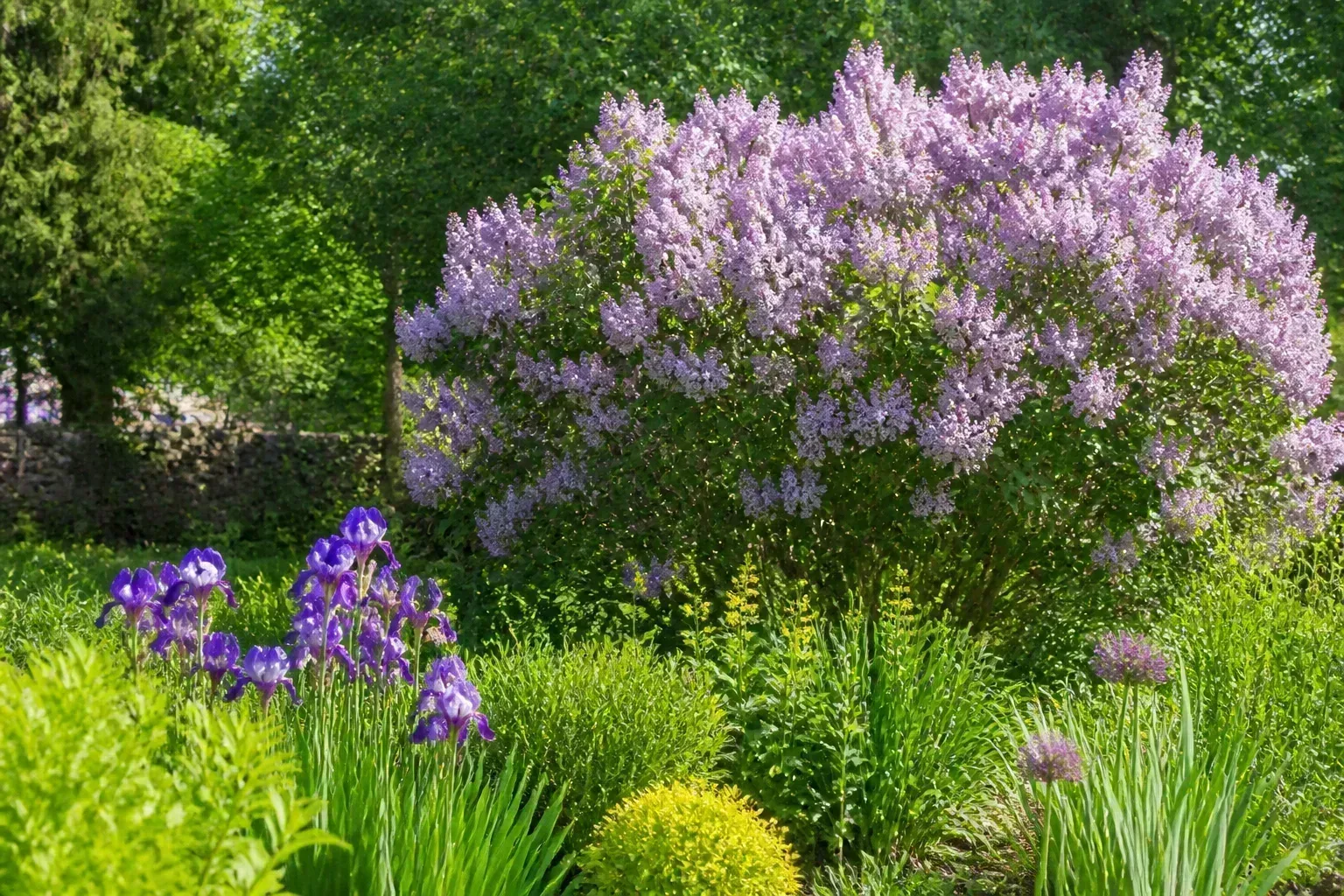
Give lilac full sun if you want abundant bloom, good drainage, and enough lateral room for its mature form. It tolerates several soil textures, but highly acidic or poorly drained ground can reduce performance. A protected position helps because a late frost can damage open flower buds even when the shrub itself survives.
October is a good time to establish a lilac in a cold-winter region when the soil is still workable. Do not expect a newly moved plant to produce the same flower display as a mature specimen next spring. After it settles, prune immediately after flowering rather than in fall so you do not remove the next season’s buds; also remove rootstock suckers if the plant is grafted.
2. Forsythia
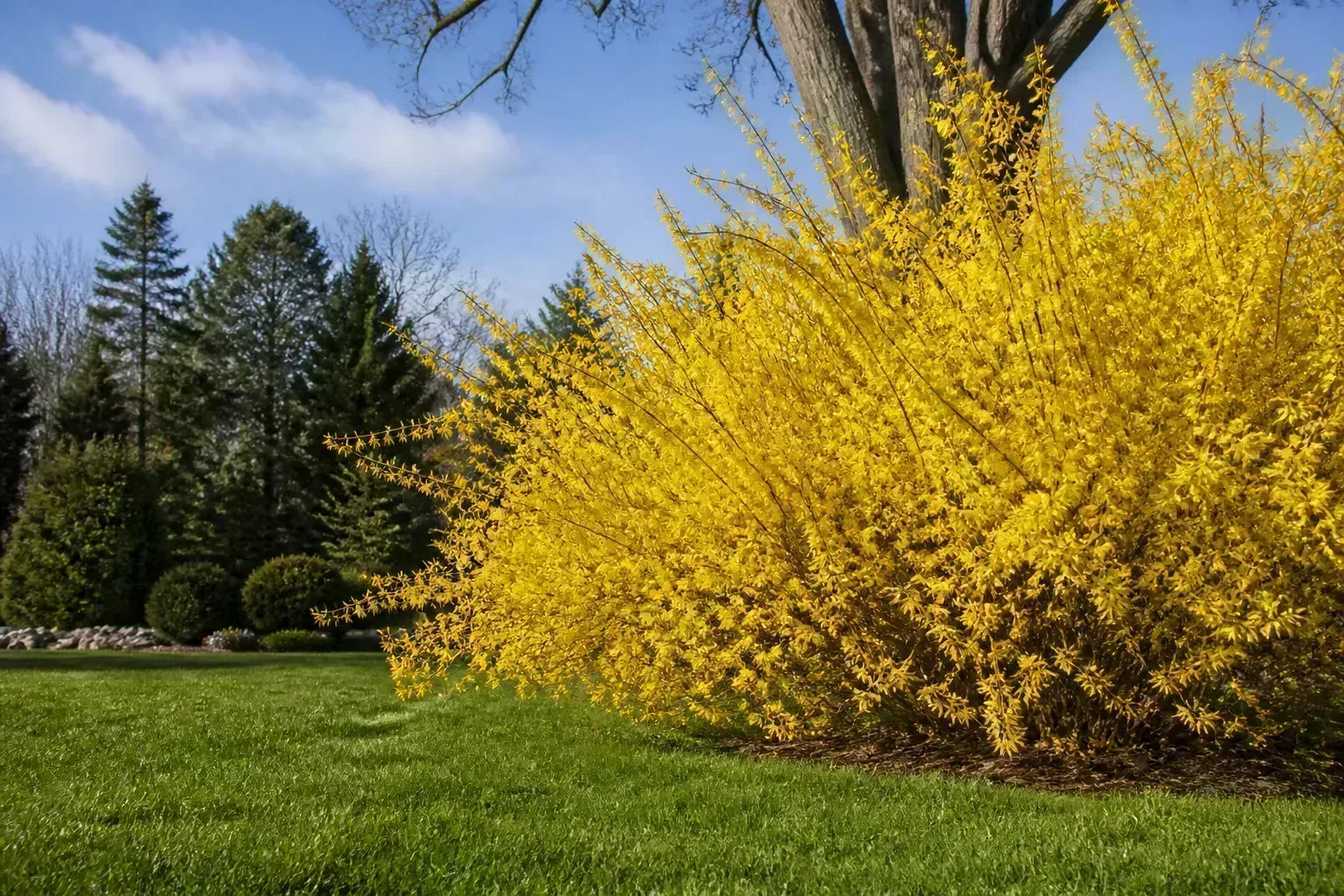
Forsythia is the quickest visual payoff on this list: bright yellow, bell-shaped flowers appear on bare arching stems in early spring. Border forsythia (Forsythia × intermedia) commonly reaches 8 to 10 feet tall and 10 to 12 feet wide, although compact cultivars are available. NC State’s forsythia profile notes that full sun brings earlier and heavier flowering than partial shade.
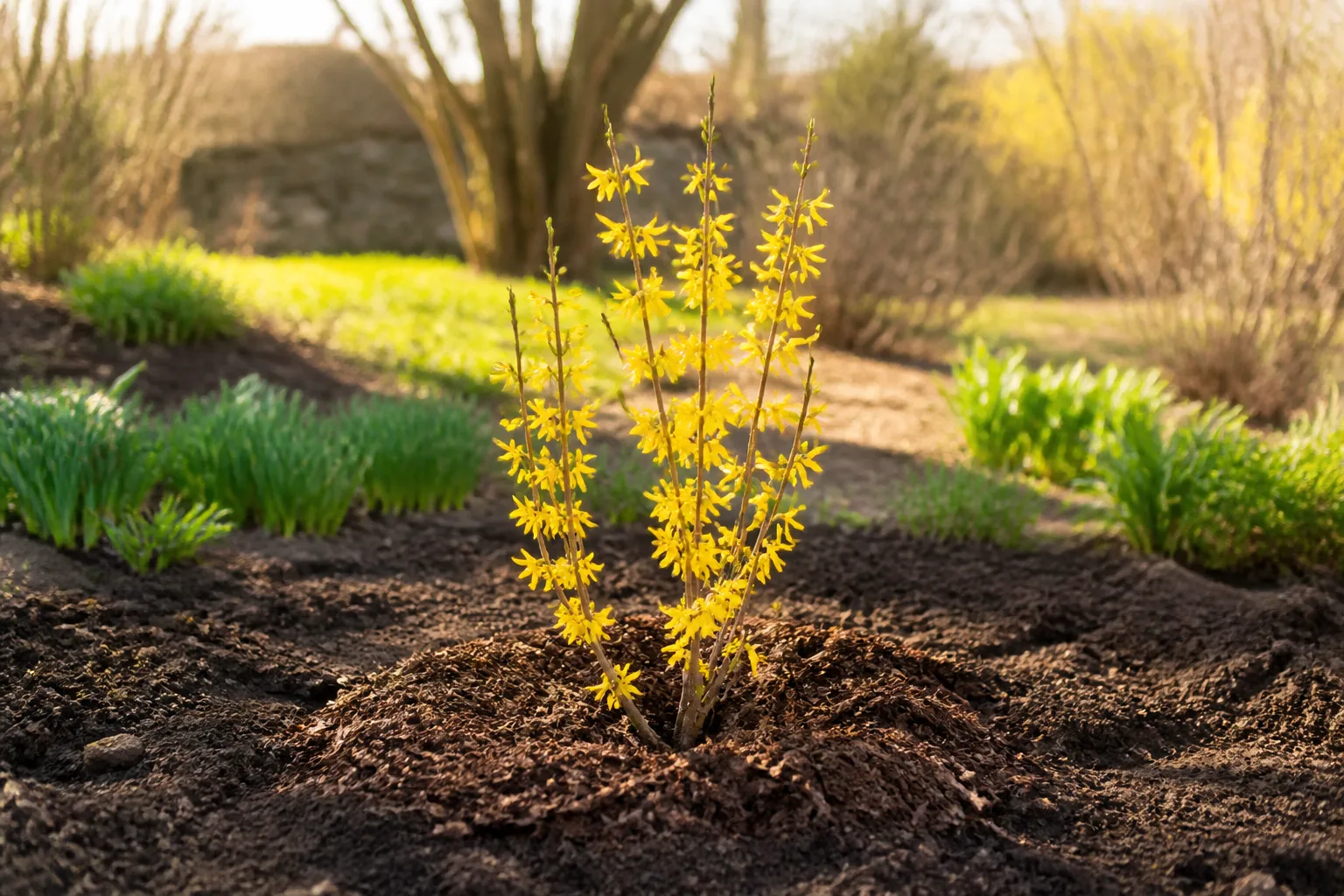
Choose forsythia for an informal hedge, a sunny bank, or a spot where its fountain-like shape can spread. It handles average soil, urban conditions, salt, and some drought after establishment, but the planting hole still needs good drainage. In colder areas, select a bud-hardy cultivar: very low temperatures and late freezes can reduce the flowers even when the stems remain alive.
The pruning rule is simple and easy to get wrong. Forsythia flowers on one- and two-year-old growth, so prune immediately after the spring display fades; a hard cut in late summer, fall, or early spring can remove the buds you planted it to enjoy. If the shrub becomes crowded, remove some of the oldest stems at the base after flowering instead of shearing the whole plant into a box.
3. Japanese Spirea—with a Regional Caution
Japanese spirea (Spiraea japonica) is compact compared with lilac and sumac, usually reaching about 4 to 6 feet in height and width. It produces dense pink or rose flower clusters in late spring to summer, not the earliest spring color, and its young foliage can add yellow, chartreuse, or red tones depending on the cultivar. NC State’s profile lists full sun to partial shade and well-drained soil as the basic fit.

Here is the decision many short listicles skip: NC State identifies Japanese spirea as problematic in North Carolina and reports that it has escaped and naturalized in parts of the eastern United States. It is listed as invasive in several states, including Virginia, Georgia, South Carolina, Tennessee, and Kentucky. Check your local invasive-plant list before buying; if it is restricted or invasive where you live, choose a locally native flowering shrub instead.
If your region clears it, Japanese spirea can be useful in a smaller mixed border because it responds well to renewal pruning and does not demand the footprint of a mature witch hazel. Keep it away from natural areas, monitor for seedlings and suckers, and do not describe it as an early-spring shrub simply because it was planted in October.
4. Red-Twig Dogwood
Red-twig dogwood (Cornus sericea) is the specialist for a damp, low-lying part of the yard where many classic flowering shrubs struggle. The plant forms a 5- to 9-foot multi-stemmed shrub with white flowers in early summer, white berries for birds, fall color, and vivid red stems that become the main attraction after leaf drop. NC State’s red-twig dogwood profile describes its preference for organically rich, consistently moist soil and its usefulness along wetland margins and stream banks.
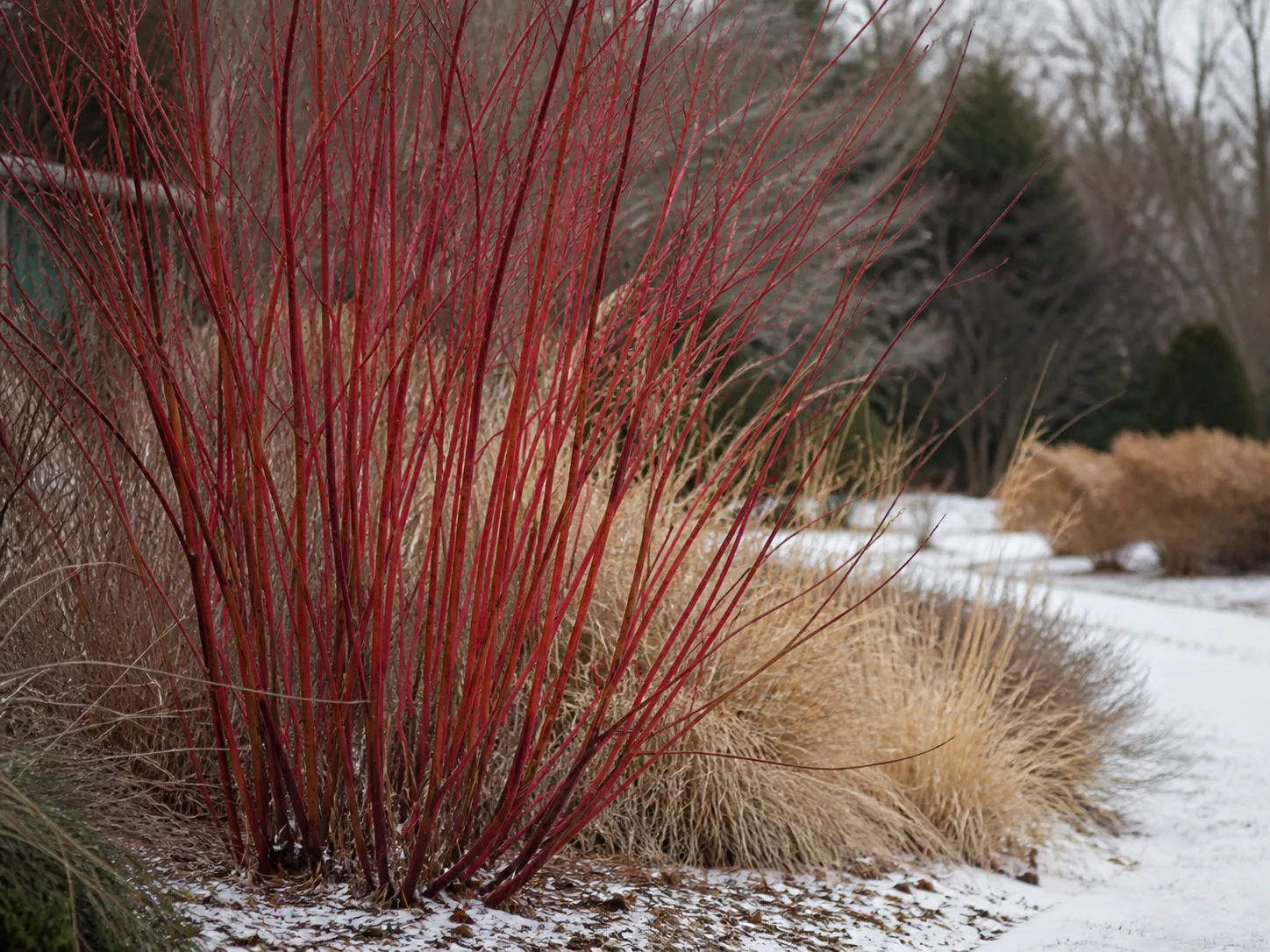
Plant it in full sun to partial shade, adjusting for hot-summer exposure. It can tolerate both wet and dry periods, but a new plant should not be left to swing from flooded soil to drought. Its underground stems can create a colony, which is excellent for erosion control or a wildlife thicket and inconvenient beside a tidy lawn.
The best red color comes from young vigorous stems. Do not cut the plant back at October planting time; let the roots settle, then use early-spring renewal pruning in later years to stimulate new shoots. A root-pruning spade can define the edge if its spread starts to move beyond the space you planned.
5. Staghorn Sumac
Staghorn sumac (Rhus typhina) is a bold choice for a large, sunny, naturalistic space. Its pinnate leaves turn scarlet, orange, or yellow in fall, and upright red fruit clusters can persist into winter. NC State’s staghorn sumac profile gives it a broad height and spread range of roughly 8 to 25 feet and describes its tolerance of shallow, rocky, well-drained soil.
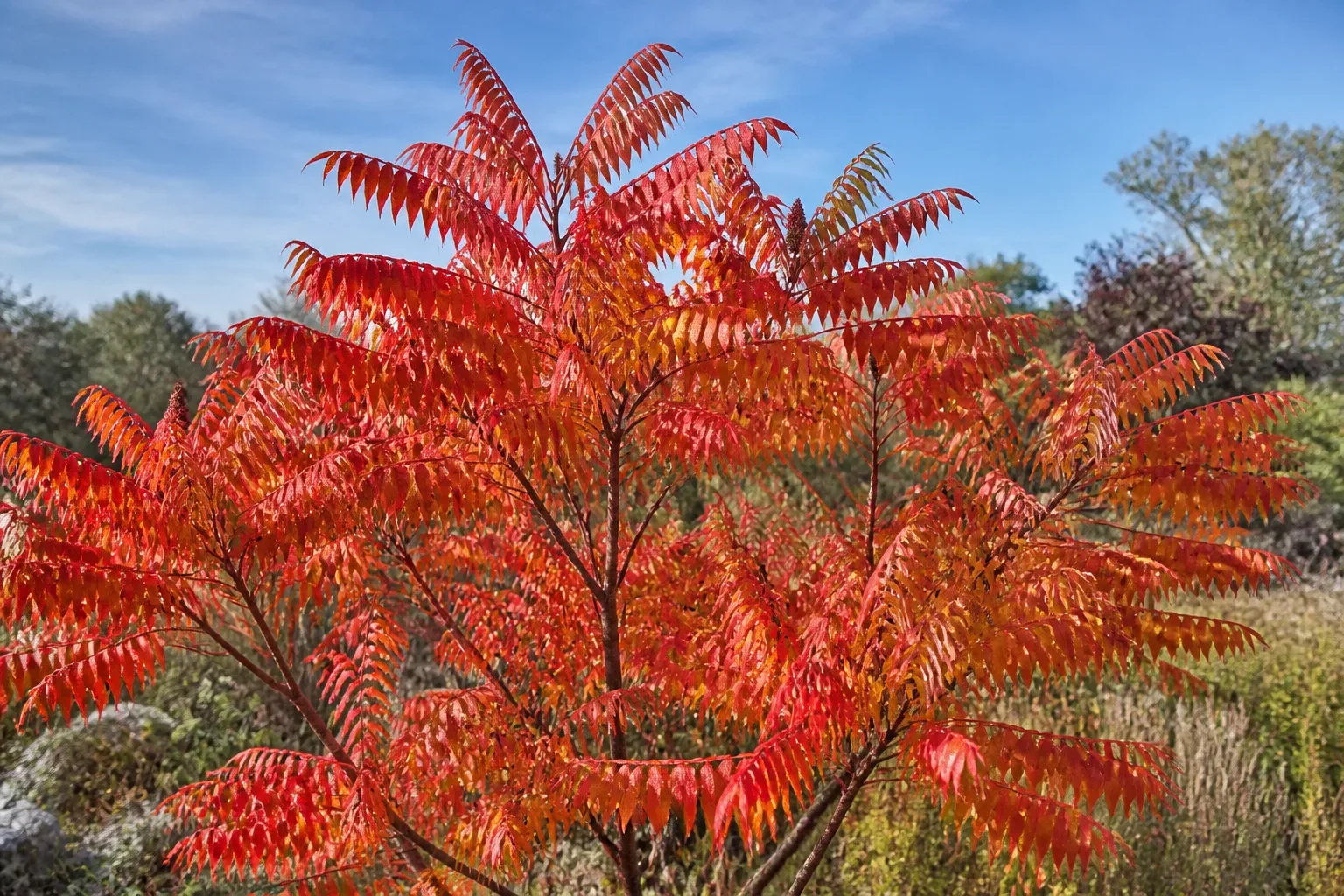
Sumac is not a foundation shrub for a narrow bed. It spreads by root suckers and can form colonies, so reserve it for a slope, woodland edge, or naturalized corner where that habit is an asset. If you need one contained specimen near a patio, select a different plant or be prepared to mow, dig, or otherwise manage shoots at the edge.
Its spring flowers are small and its strongest seasonal effects arrive later, but that is exactly why it can make a spring border feel complete rather than briefly colorful. Planting in October gives a young sumac time to establish before summer drought, provided the site drains and you keep the root zone watered through the first fall.
6. Carolina Allspice (Sweetshrub)
Carolina allspice, also called sweetshrub (Calycanthus floridus), is the fragrance-first pick. This southeastern native grows about 6 to 12 feet tall and wide, with deep red to brown, strap-petaled flowers that appear from mid-April to mid-May before or around leaf emergence. NC State’s Carolina allspice profile says its scent can suggest pineapple, strawberry, or banana, but also warns that fragrance varies between plants.
Choose a nursery specimen in flower if fragrance is the reason you are buying it. Carolina allspice handles full sun through deep shade, although hot gardens benefit from afternoon protection and shaded plants may grow lankier. It likes rich, moist, well-drained soil, can tolerate brief flooding, and struggles in prolonged drought or very sandy ground.
Leave at least 6 feet from neighboring shrubs unless you have selected a compact cultivar. The plant may sucker, so remove unwanted shoots while they are small or give it room to naturalize. Prune after flowering, not during October establishment, because next season’s flower production can involve both old and new wood.
7. Witch Hazel
Common witch hazel (Hamamelis virginiana) is a long-lived native shrub or small tree for a roomy woodland edge. It can reach roughly 15 to 30 feet tall and 15 to 20 feet wide, with fragrant, strap-like yellow flowers that appear from fall into winter. NC State’s witch hazel profile places it in Zones 3 through 9 and recommends moist, acidic, humus-rich soil with good drainage.
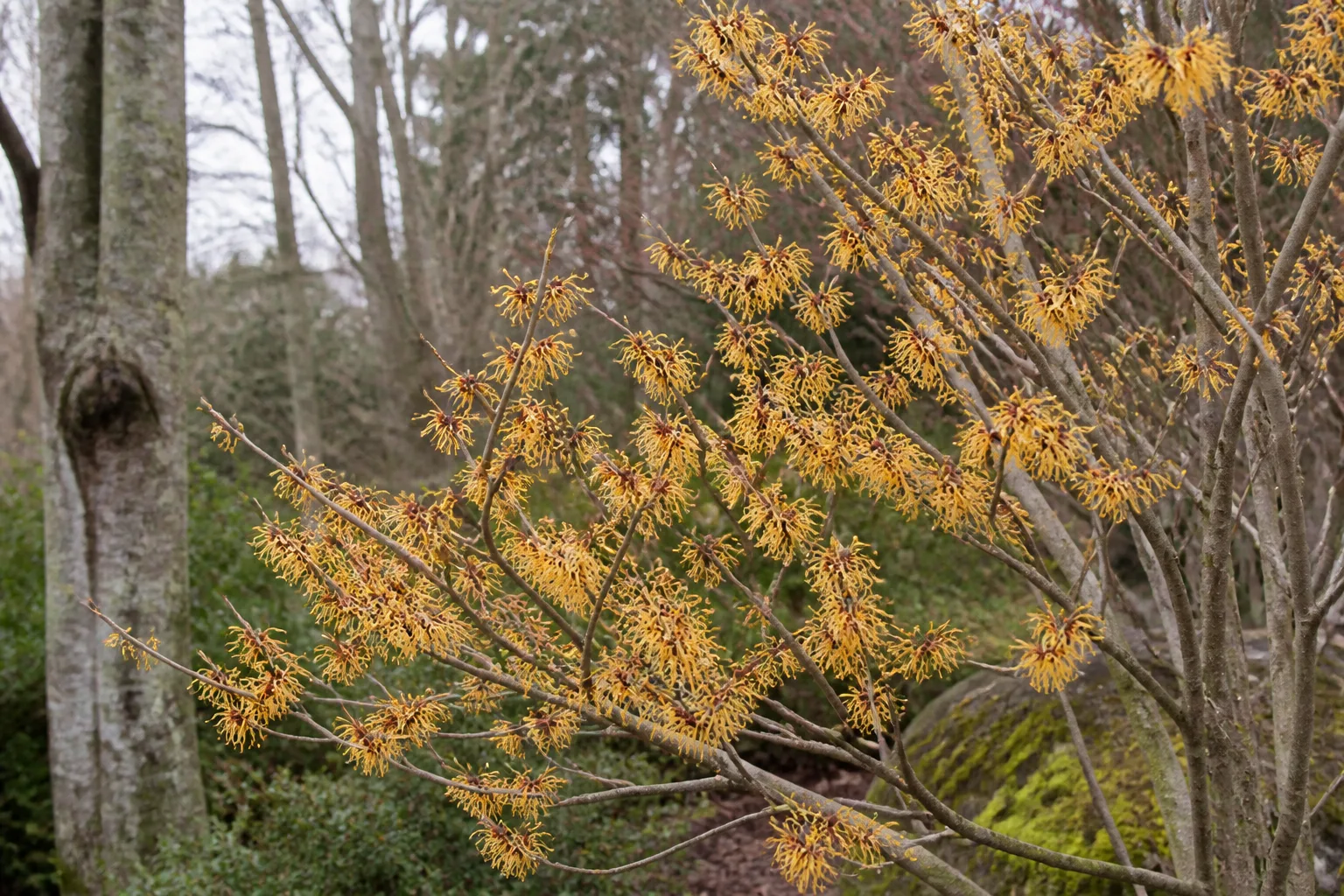
It belongs on a spring-garden list because it makes the transition into spring feel earlier and more continuous, not because common witch hazel is a conventional April bloomer. If your goal is specifically late-winter or early-spring flowers, compare the flowering window of the exact species or cultivar before you buy; “witch hazel” is a group, not one uniform bloom date.
Give it space and avoid dry, exposed positions. Witch hazel is adaptable to heavy clay and deer browsing, but it is not drought tolerant once the soil dries deeply. Pruning is usually light: remove dead or awkward branches and preserve its natural shape rather than forcing a compact outline.
How to Plant a Shrub in October
Have water, mulch, and the final site ready before the shrub leaves the pot. The goal is not to create a rich pocket of amended soil; it is to make a broad transition from the root ball into the surrounding ground so roots can move outward without the plant settling too deeply.
- Water the root ball in its container. Soak it slowly until water runs from the drainage holes, then let excess water drain while you prepare the hole. A dry root ball can shed water after planting instead of absorbing it.
- Dig wide, not deep. Make the hole at least twice the width of the root ball and no deeper than the root ball’s height. In heavy soil, set the root flare at grade or slightly high rather than burying the crown.
- Correct circling roots. Slide the shrub from its container and inspect the outside of the root ball. Loosen a few circling roots with your fingers or make shallow vertical cuts when roots are tightly matted; do not shred the entire ball.
- Backfill with the soil you removed. Set the shrub straight, confirm that the top of the root ball is not below the surrounding grade, and firm native soil around it. Avoid routine fertilizer at fall planting; Ramsey County Master Gardeners recommends withholding it so you do not encourage tender top growth just before cold weather.
- Soak, settle, and mulch. Water slowly across the whole hole until the soil is evenly moist and air pockets settle. Add about 2 to 3 inches of organic mulch over the root zone, keeping it several inches away from the trunk or main stems.
Do not stomp heavily on wet clay to “anchor” the plant, and do not pile soil over the stem because the shrub looks loose. If a tall container shrub rocks in wind, a temporary stake can help, but remove it after the root ball can hold itself so the plant develops normal movement and trunk strength.
Water, Mulch, and Protect New Shrubs Through Winter
New shrubs still need water after the leaves fall. Check the root zone every few days during dry weather, water deeply when the upper soil begins to dry, and adjust for rainfall, soil type, wind, and the size of the root ball. Ramsey County Master Gardeners suggests daily watering for the first two weeks unless rain does the work, followed by watering a couple of times a week until the ground freezes; use that as a starting rhythm rather than an automatic timer.
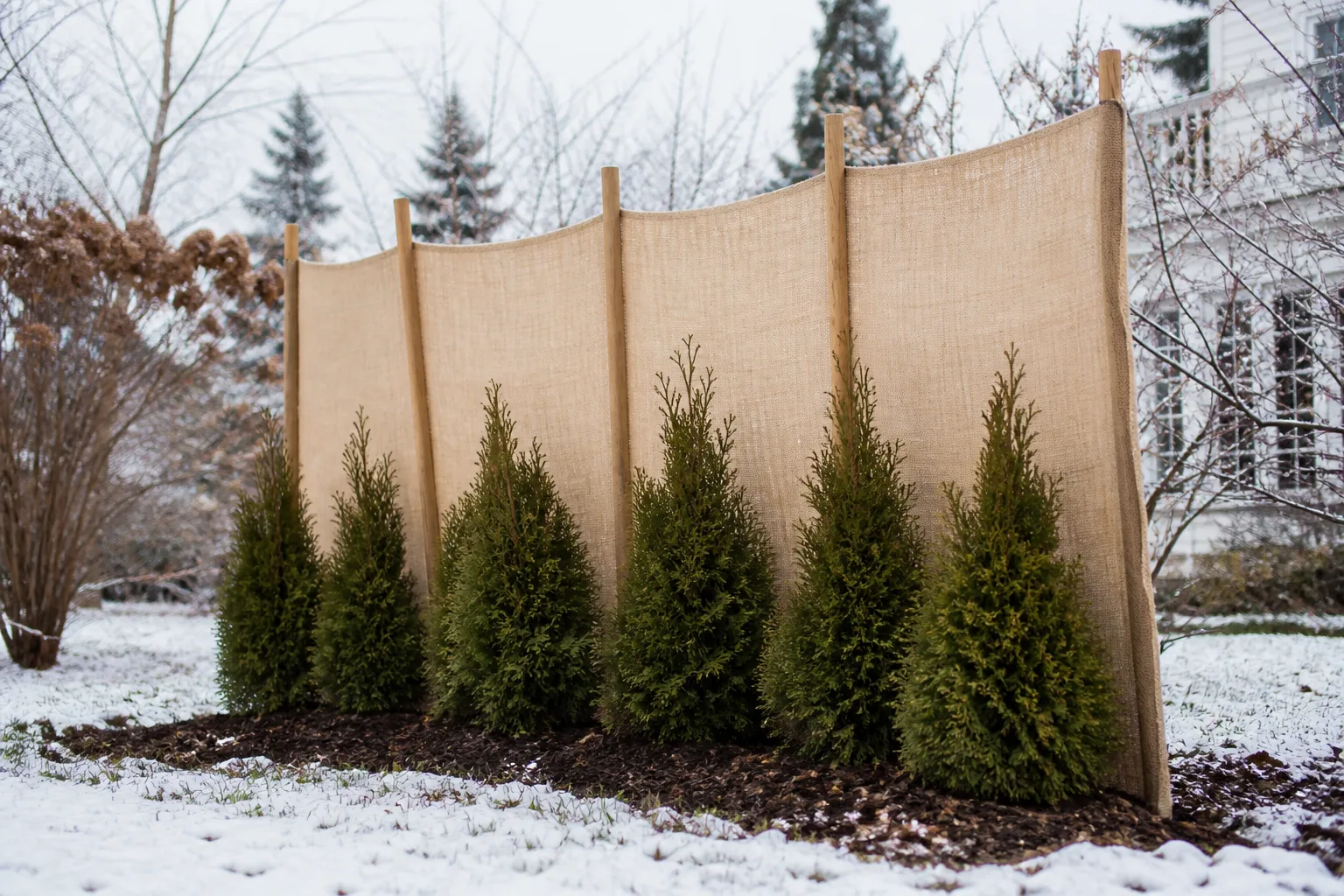
The mulch ring is a moisture buffer and a temperature buffer, not a volcano around the stem. Keep it broad enough to cover the root zone you disturbed, renew it if it mats or blows away, and pull it back if rodents begin nesting against the bark. Mulch protects roots, but it does not make a badly drained planting site safe.
Protect only what the site and plant require. A shrub exposed to prevailing winter wind, salt spray, deer, rabbits, or repeated freeze-thaw may benefit from a burlap windbreak or hardware-cloth guard. Do not wrap a deciduous shrub tightly in plastic, and do not cover every plant automatically; protection that traps moisture or creates a warm pocket can cause its own problems.
Keep monitoring through the first spring. Resume watering during dry stretches before the shrub shows wilt, remove winter guards when the hazard passes, and delay feeding until the plant is actively growing and a soil test or local recommendation supports it. A quiet first spring with modest growth can mean the shrub is investing below ground, not failing.
Avoid the Pruning Mistake That Steals Spring Flowers
Fall is the wrong time for a blanket haircut. Many shrubs that flower in early spring form their buds on older wood, so cutting healthy stems in October can remove the display you are trying to create. BBC Gardeners’ World’s guide to early-flowering shrubs recommends pruning soon after flowering for this group, while LeafyPixels’ fall-pruning guide explains why the right window depends on the shrub’s bloom wood and the goal of the cut.
At planting, remove only dead, broken, diseased, or dangerously crossing branches. Wait until you know the plant’s growth pattern before shaping it. Use this quick timing map after the shrub is established:
| Shrub | Safer pruning window | Why |
|---|---|---|
| Lilac | Immediately after spring bloom | Protects next year’s old-wood buds |
| Forsythia | Immediately after spring bloom | Flowers on one- and two-year-old stems |
| Japanese spirea | Late winter or after its late-spring/summer bloom, depending on cultivar | Generally flowers on newer growth; local timing varies |
| Red-twig dogwood | Early spring for renewal cuts | New stems provide the strongest winter color |
| Staghorn sumac | Late winter or early spring for rejuvenation | Controls leggy growth and exposes unwanted suckers |
| Carolina allspice | After flowering | Maintains shape while preserving the next bloom cycle |
| Witch hazel | Light shaping only, usually after flowering | Flowers form on older growth and the natural habit is valuable |
If you are pruning because the new shrub is in the wrong place, stop and reconsider the placement instead. Repeated hard pruning can keep a plant smaller for a while, but it cannot turn a 25-foot sumac or 30-foot witch hazel into a tidy foundation shrub.
Conclusion
The best shrubs to plant in October are the ones that fit your local freeze window and the site you can actually offer them. Common lilac and forsythia are strong choices for sun and spring color; Carolina allspice adds scent; red-twig dogwood handles wet ground; sumac solves a tough naturalized site; witch hazel carries interest through winter; and Japanese spirea belongs only where local invasive-plant guidance permits it.
Plant while the soil is workable, set the root flare at the right height, water deeply through the freeze window, mulch without touching the stems, and leave routine pruning and fertilizer for a reasoned later decision. That modest October discipline gives roots a head start without pretending that a newly planted shrub can skip the seasons it needs to mature.