Japanese Holly Care: Planting, Pruning & Problems
A practical Japanese holly care guide covering cultivar choice, spacing, pH, watering, winter protection, pruning, berries, and common problems.
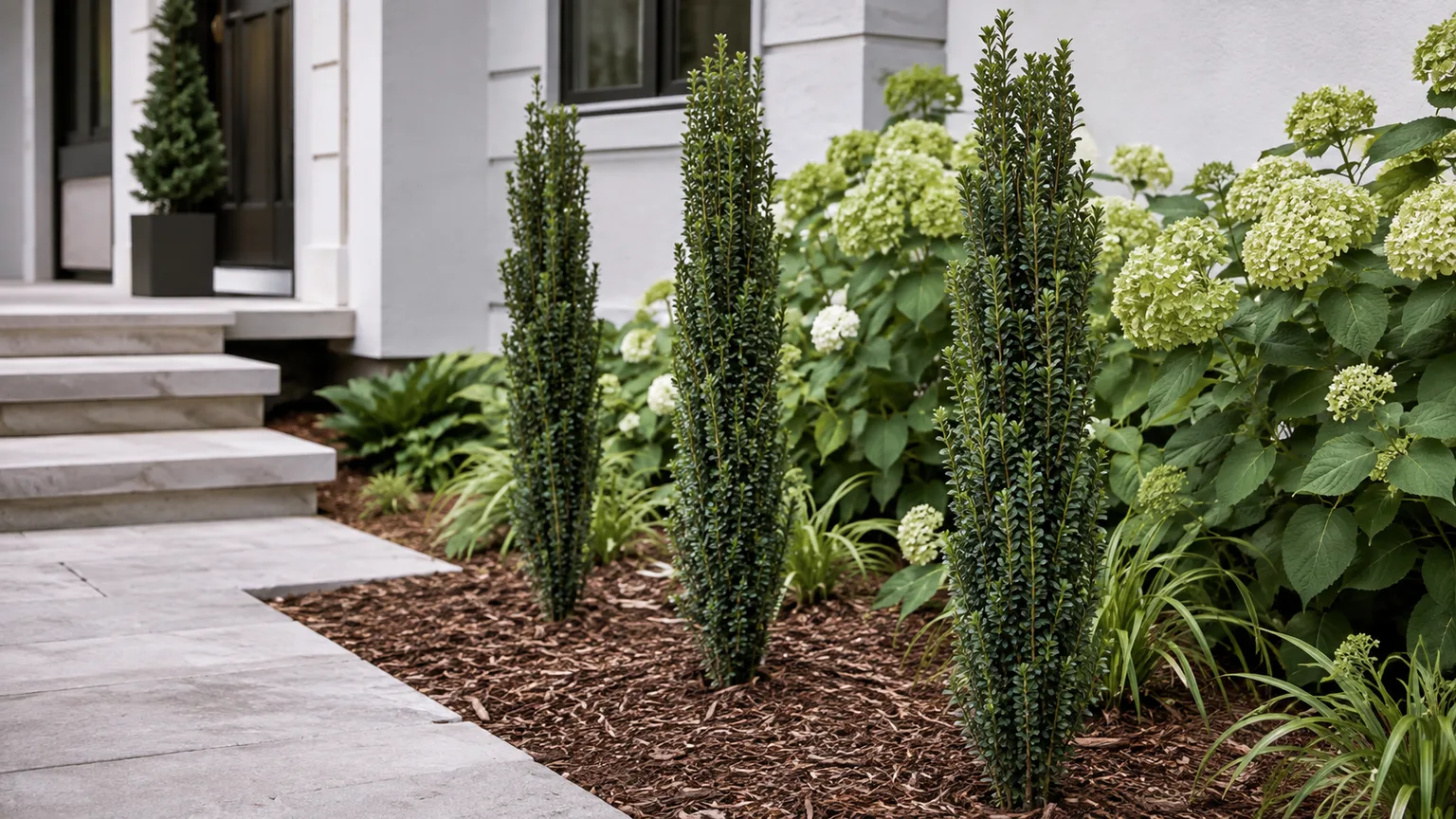
Japanese holly (Ilex crenata) is the evergreen to choose when you want polished, small-leaved structure without the broad, prickly foliage of many hollies. It can form a rounded shrub, a low hedge, or—when you choose the cultivar ‘Sky Pencil’—a remarkably narrow vertical column for an entry, patio, or shallow foundation bed.
The plant is forgiving about soil texture but not about long-term drainage, alkaline soil, or drought stress. Get those three decisions right before you worry about fertilizer or pruning. This guide covers the species and its most common cultivars, with extra detail for Sky Pencil because its narrow habit is the reason most people buy Japanese holly in the first place.
Know the Plant Before You Plant It
Japanese holly is a broadleaf evergreen shrub in the Aquifoliaceae family. Its small, glossy, dark-green leaves are usually oval and slightly convex, and its inconspicuous greenish-white flowers appear in spring. Female plants can produce small black fruits after flowering, but fruit is a bonus—not the plant’s main landscape feature.
The species is native to East Asia, including Japan and Korea. The New York Botanical Garden describes a highly variable habit, from dense multi-branched shrubs to upright small trees, which is why the name Ilex crenata alone does not tell you how wide the plant will become. Always identify the cultivar on the nursery tag before you plan a hedge or foundation row.
NC State Extension lists ‘Sky Pencil’ as a female, slow-growing, densely branched, fastigiate cultivar. “Fastigiate” means the branches grow upright and clustered, creating a column that tends to hold its shape without constant shearing. The selection is usually about 6 to 10 feet tall and roughly 1.5 to 3 feet wide at maturity, though site, climate, and pruning change the final result. NC State Extension describes the cultivar’s form, tolerances, fruiting requirement, and mature dimensions.
Japanese Holly vs. Boxwood: Similar Look, Different Rules
Japanese holly is not a boxwood. The resemblance comes from the small, glossy leaves and dense branching, but the plants have different botanical identities and different site preferences. Japanese holly usually has a more pointed, slightly toothed leaf and a darker, shinier appearance; its leaves are not the sharp, stiff blades associated with many traditional hollies.
The comparison matters most when you are replacing boxwood. A Japanese holly can be an excellent formal hedge or container accent, but it is not a universal substitute. It prefers acidic, well-drained soil and can develop iron chlorosis in alkaline beds, while a boxwood-replacement plan that ignores pH simply trades one problem for another. Match the plant to the soil, not only to the photograph on the nursery tag.
Decide Whether Japanese Holly Fits Your Site
Japanese holly earns its place in formal beds, narrow screens, walkway borders, courtyards, and containers where a controlled evergreen outline matters. ‘Sky Pencil’ is especially useful when a site needs height but has little horizontal room. It looks intentional beside a door, at the end of a path, or as a vertical counterpoint to low rounded shrubs.
It is a poor choice for a low spot that stays wet after rain, a bed filled with alkaline construction debris, or an exposed site where winter wind strips moisture from broadleaf evergreens. It also needs more sun than many gardeners expect if you want dense foliage all the way to the ground. A plant that survives in deep shade may still become thin and open rather than hedge-worthy.
Climate, Heat, Wind, and Winter Exposure
Hardiness numbers for ‘Sky Pencil’ vary by source. NC State Extension lists it from USDA zone 5a through 8b, while horticultural references commonly describe the cultivar as a zone 6-to-8 or 6-to-9 plant. Treat the overlap as the reliable core, and regard the outer zones as exposure-dependent, not guaranteed.
In colder areas, plant it where a wall, fence, or group of shrubs blocks prevailing winter wind, but do not trap it in a permanently dry foundation pocket. In hot, humid regions, give it morning or filtered afternoon shade if full afternoon sun turns the site into a heat sink. Gardenia also lists full sun to partial sun, average water, and well-drained soil, while noting a compact mature width and low maintenance. Gardenia’s cultivar profile provides a useful comparison point for exposure, size, and landscape use.
The practical test is simple: if the soil drains well, the shrub receives several hours of direct light, and the winter side of the plant is not blasted by drying wind, Japanese holly is more likely to keep its color and density. If two of those conditions fail, choose a different evergreen rather than trying to compensate with fertilizer.
Choose a Cultivar That Matches the Job
Do not buy “Japanese holly” as if every plant has the same footprint. Use the label to match mature height, width, habit, and fruiting expectations to the space you have.
| Cultivar | Typical role | What to expect |
|---|---|---|
| ’Sky Pencil’ | Narrow accent, formal row, container | Upright column, often 6–10 feet tall and 1.5–3 feet wide; female and needs a male pollinizer for berries |
| ’Helleri’ | Low border or dwarf container | Slow, compact, rounded habit, commonly about 2–4 feet tall and 3–5 feet wide |
| ’Convexa’ | Rounded specimen or broader hedge | Larger, convex-leaved form that can become much wider than Sky Pencil |
| ’Dwarf Pagoda’ | Small formal accent | Very compact, often around 2 feet tall |
| ’Lemon Gem’ | Bright foliage contrast | Small form with yellowish new foliage that matures toward lime green |
For a tight vertical space, Sky Pencil is the logical choice. For a low, rounded outline, Helleri or Dwarf Pagoda will save you from repeatedly cutting a naturally tall plant. The New York Botanical Garden’s cultivar notes are a helpful reminder that Japanese holly varies widely in form, so a “dwarf” label should always be read alongside the actual mature width. NYBG’s plant reference discusses the species’ variable habit and cultivar range.
Prepare Light, Soil, and Drainage First
Give Japanese holly full sun to partial shade. In a cool or mild climate, six or more hours of direct light usually produces the densest growth. In a hot climate, morning sun and afternoon protection can reduce leaf scorch and water stress, but deep shade commonly causes slower growth and a looser silhouette.
The ideal soil is slightly acidic, fertile enough to support steady growth, and well drained. Japanese holly can tolerate clay, sand, and ordinary garden soil when excess water moves through the root zone. That does not mean it tolerates a saturated planting hole. Clemson Extension identifies Japanese hollies as especially prone to root rot in poorly drained soil, and notes that planting too deeply or piling mulch over the crown raises risk. Clemson’s holly disease guidance explains why drainage and planting depth are preventive tools, not after-the-fact cures.
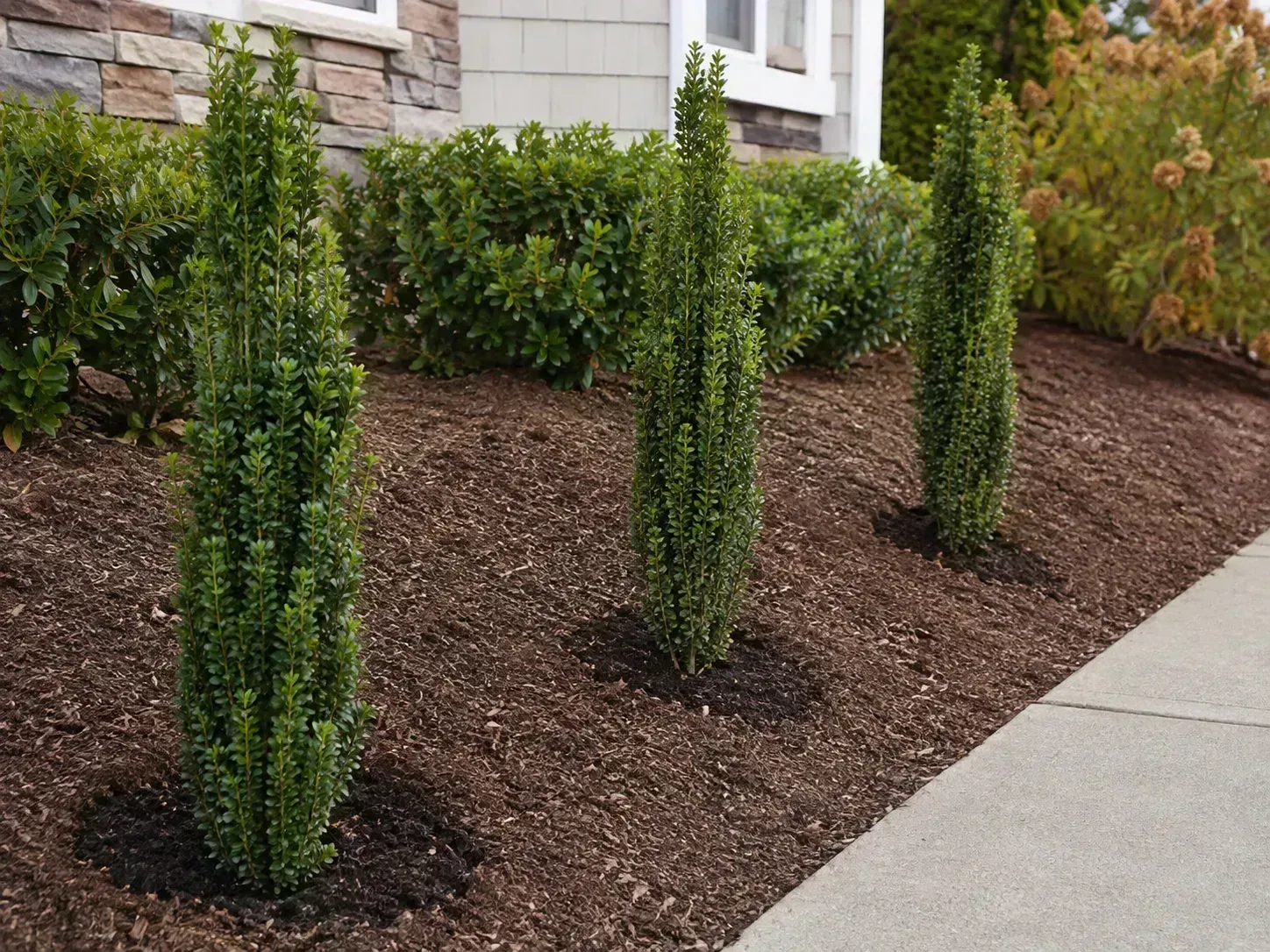
If the site puddles for more than a day after ordinary rain, fix the site first. A raised bed, a slightly elevated planting position, or a different shrub is more reliable than filling one hole with gravel. Gravel at the bottom of a small planting hole does not create a drainage system; it can leave the root ball sitting in a perched wet zone.
Test Soil pH Before Treating Yellow Leaves
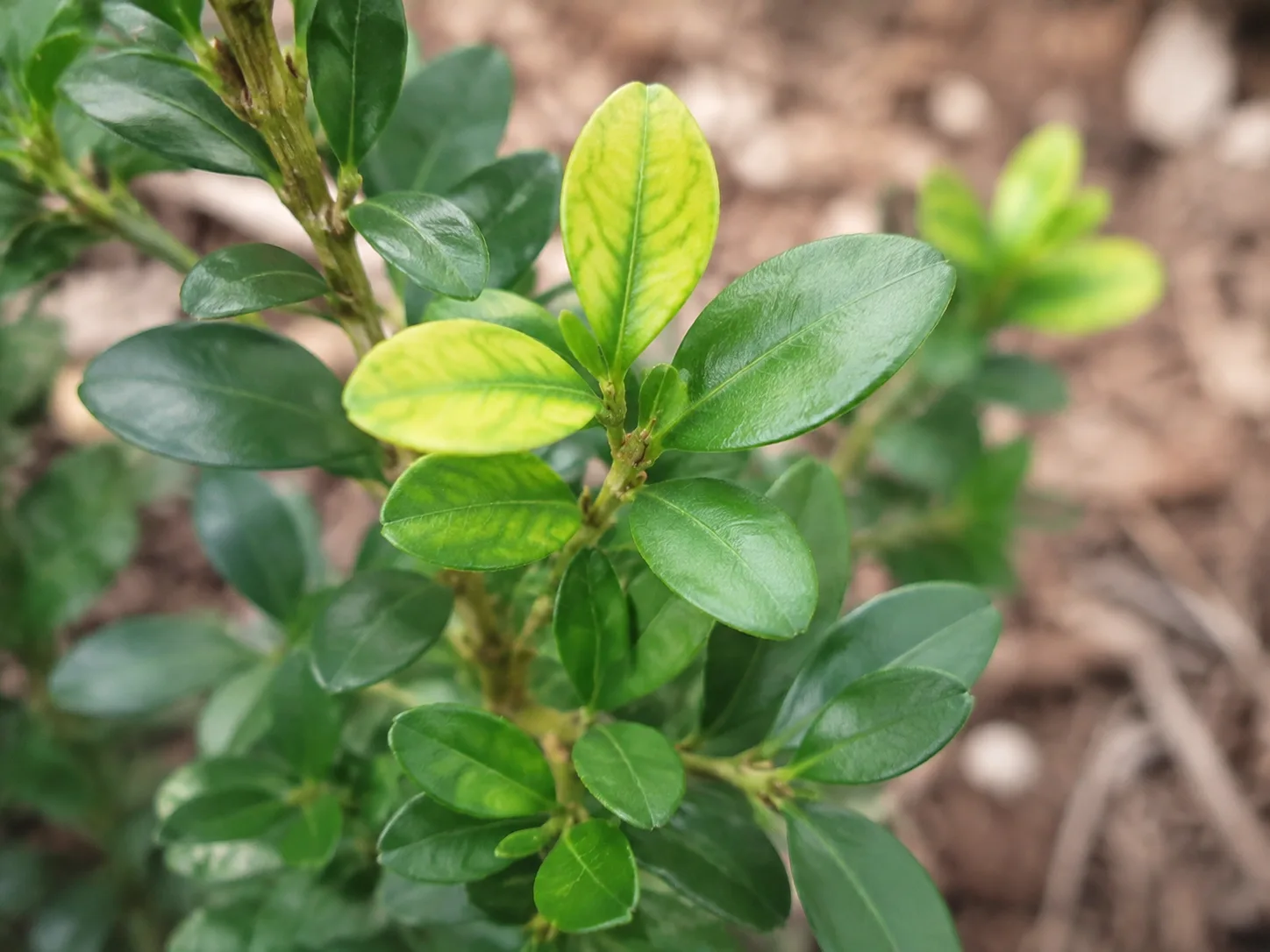
Aim for acidic to near-neutral soil, with a soil test guiding any amendment. Alkaline soil can make iron unavailable even when the soil contains plenty of iron, producing interveinal chlorosis—yellow tissue between greener veins, often most visible on newer leaves. Adding more general fertilizer does not correct that chemistry and can create soft, pest-prone growth.
Test the broad planting area, not only a scoop of potting mix from the hole. If pH is chronically high because of native soil, concrete dust, irrigation water, or construction fill, repeated acidifying treatments may be expensive and temporary. In that situation, choose a shrub suited to the site instead of forcing Japanese holly to live outside its comfort zone.
Plant Japanese Holly Without Creating Root Problems
Plant in spring or early fall, when the root system has time to establish before the worst heat or cold. Avoid planting during a summer drought unless you can provide dependable, deep irrigation. Inspect the container plant before buying: roots should be firm and light-colored rather than black, sour-smelling, or circling in a tight mat.
Dig a hole no deeper than the root ball and two to three times wider. Set the top of the root ball level with the surrounding soil, or slightly high in heavy clay. Backfill with the soil you removed, breaking up large clods but resisting the urge to create a small pocket of rich amended soil that roots never want to leave. Gardening Know How’s practical Sky Pencil planting guidance uses the same wide-hole, careful-backfill approach.
Water slowly and deeply after planting so the entire root ball is wet, then check that the soil has settled without burying the stem. Apply about 2 to 3 inches of mulch over the root zone, leaving a bare ring around the trunk and keeping the crown visible. A mulch volcano is not winter protection; it is a wet collar that can encourage decay.
Space Sky Pencil Holly for the Mature Width
Use the mature width on the tag as your starting point. For a formal Sky Pencil row, 24 to 36 inches on center is a useful planning range for many plants, with closer spacing closing faster but increasing competition, pruning, and humidity between shrubs. If you want each column to read as a separate architectural accent, space more generously—at least the mature width, plus room to walk behind it.
Measure from the center of one root ball to the next, not from the edge of the foliage. Do not plant the row directly against a wall or walkway; air movement and access matter, and the outer branches will eventually occupy more space than the young nursery plants suggest.
Water and Mulch for Steady, Not Soggy, Growth
Water new shrubs when the upper few inches of soil begin to dry, soaking the whole root zone rather than sprinkling the leaves every day. The first growing season usually needs the closest attention; a plant may look established above ground while its roots are still confined to the original container soil. In the second season, lengthen the interval as roots move outward, but keep checking during heat, wind, and drought.
Established Japanese holly is moderately drought tolerant in a good site, not drought-proof. Water during extended dry spells, especially for Sky Pencil in a narrow, hot bed or for any plant growing in a container. Conversely, do not irrigate on a calendar when the soil is already wet. Pale foliage, dieback, and root decline can follow too much water just as surely as too little.
Refresh a thin mulch layer when it decomposes, keeping it off stems and crown. Organic mulch moderates root temperature, slows evaporation, and reduces competition from grass. It cannot repair compacted soil or compensate for a bed that drains poorly.
Fertilize Only When the Plant Needs It
Japanese holly usually needs little feeding after establishment. Start with a soil test and inspect the pattern of growth before reaching for fertilizer. If the plant is growing normally and foliage is a healthy deep green, annual feeding is optional rather than a requirement.
When a test or a clear nutrient deficiency supports feeding, apply a slow-release fertilizer labeled for acid-loving shrubs in early spring, following that product’s rate. Keep fertilizer away from the trunk and water it into the root zone. High-nitrogen lawn fertilizer can push tender shoots and does nothing to solve high-pH iron chlorosis.
Compost can improve soil structure when incorporated broadly before planting, but piling compost against an established shrub or repeatedly top-dressing with alkaline material is not a pH strategy. Correct the cause first: poor drainage, high pH, drought, or root damage.
Prune for Shape Without Losing Density
Sky Pencil generally holds its column without formal shaping. Prune only when a branch is dead, damaged, crossing, or outside the space you planned. For a hedge or a slightly shorter column, use light, selective cuts in late winter or early spring before strong new growth begins.
If you shear, remove small amounts across the whole plant instead of taking a large section from one side. Cutting a hedge narrower than its mature habit year after year can expose bare inner wood and create a green shell with no useful density underneath. Thin crowded stems at their origin when you need light and air; do not automatically turn every shrub into a geometric block.
Avoid heavy pruning close to the first autumn frost. New shoots produced after a late cut may not harden before cold weather, especially on an exposed site. A neglected shrub that needs major renovation is often better handled over several seasons, or replaced if the plant is already declining from root problems; a hard cut is not a guaranteed reset button.
Flowers, Berries, and the Male Pollinizer Question
The small spring flowers are easy to overlook, but they matter if you want fruit. ‘Sky Pencil’ is a female cultivar, so it needs pollen from a compatible male Japanese holly nearby. Without a male plant, it can grow and flower normally yet produce no berries.
If fruit is important, buy the male and female plants as a planned combination and ask the nursery to identify compatible bloom timing. Place the male close enough to share the same pollinator traffic rather than hiding it at the far end of a large property. A male plant does not need to be the same visual form, but it should be a suitable male Ilex crenata, not simply any holly with a similar common name.
No berries can also mean the plant is young, spring flowers were removed by pruning, or a late freeze reduced pollination. Treat black fruit as ornamental and seasonal, not as proof that the shrub is especially healthy. Gardenia and NC State both identify the female-cultivar and male-pollinizer relationship. See NC State’s cultivar description for the fruiting requirement.
Grow Japanese Holly in Containers
Dwarf Japanese holly cultivars are the easiest container subjects, but Sky Pencil can work in a large, heavy pot when the root system has adequate room and the plant is protected from drying wind. Use a container with large drainage holes and a well-drained, slightly acidic potting mix. Terracotta is stable and breathable but dries faster; plastic or glazed pots retain moisture longer and may need less frequent watering.
Choose a pot only modestly larger than the root ball—roughly 8 inches wider is a practical starting point for a young plant—then repot in spring when roots fill the container. Do not leave the pot standing in a saucer of water. In cold zones, insulate the container or move it to a sheltered, unheated location so roots are not exposed to the same temperature swings as an in-ground plant.
Propagate It—or Buy the Right Plant
Seed is a poor route to a named cultivar. Japanese holly seed can be slow and erratic, and seedlings will not reliably reproduce the narrow habit, foliage color, or size of ‘Sky Pencil’. If you need that exact silhouette, buy a labeled plant from a nursery with a clear cultivar name.
Cuttings are the practical cloning method for experienced propagators, but they need clean material, a free-draining rooting medium, consistent moisture, and patience. Take cuttings from healthy, non-flowering shoots and keep them out of harsh sun while roots form. A rooted cutting should be allowed to build a substantial root system before it is placed into a demanding hedge row.
Diagnose Pests, Diseases, and Environmental Damage
Start with the pattern, the newest growth, and the soil—not with an insecticide. Clemson Extension lists black root rot, Phytophthora root rot, holly leafminers, scale insects, and mites among the problems that can affect hollies, while NC State specifically flags leafminers, spider mites, nematodes, alkaline soil, wind, and cold for ‘Sky Pencil’.
- Holly leafminer: winding tan or brown tunnels inside leaves point to larvae feeding between the leaf surfaces. Remove and discard heavily mined leaves, monitor the new flush, and do not expect a contact spray to work well against larvae protected inside the leaf.
- Scale: small brown, gray, or white bumps on stems or leaf undersides can weaken a plant over time. Scrape light infestations, prune badly infested twigs, and preserve natural predators; if an oil or insecticide is needed, use a product labeled for the plant and pest and follow local extension guidance.
- Southern red mites or other mites: fine yellow stippling, bronzing, and delicate webbing are most visible on leaf undersides. Shake a branch over white paper to look for moving specks, rinse the foliage with a firm water stream, and correct drought stress before considering treatment.
- Root rot: yellowing combined with wet soil, wilting despite moisture, stunted growth, dieback, or brown-to-black roots is more serious than a single pale leaf. Improve drainage before replanting; severely infected plants may not be curable, so repeated fungicide applications should not substitute for removing the cause.
Yellow Leaves Need a Decision Tree, Not a Single Fix
First, identify which leaves are yellow. New leaves yellow between green veins suggest iron unavailability, often linked to high pH. Older leaves that yellow uniformly can reflect drought, root damage, or general stress. A few old leaves dropping while fresh growth is healthy may be normal evergreen turnover, not a crisis.
Next, check moisture and planting depth. If the soil is saturated or the crown is buried, fix the root-zone problem before feeding. If the soil is bone dry and leaves are crisp at the edges, water deeply and protect the plant from further drought. If the pH is high, use a soil-test-led correction and understand that existing yellow leaves may not turn green; judge success by new growth.
Winter browning can result from cold, sun, or drying wind rather than disease. Water the root zone before the ground freezes if the soil is dry, mulch evenly, and use a windbreak for exposed plants. Wait for spring growth before removing every browned tip, because live buds may still push after the worst weather passes.
Safety, Toxicity, and Invasive-Status Checks
Do not let children or pets eat Japanese holly berries or foliage. NC State rates the fruit of ‘Sky Pencil’ as low-severity poisonous to humans and identifies saponins as the toxic principle, with possible vomiting, diarrhea, or other illness after ingestion. The ASPCA’s holly entry is for American holly (Ilex opaca) rather than Japanese holly, but it likewise identifies saponins and reports vomiting, diarrhea, and depression in pets; because common names cover several Ilex species, treat all holly fruit as ornamental and call a veterinarian or poison-control service if a pet eats it. NC State’s plant profile documents the species-specific human safety rating. ASPCA’s holly entry provides the pet-safety symptoms for its listed holly species.
Japanese holly is exotic in the United States, and invasive status is not identical in every state or county. The Invasive Plant Atlas lists Japanese holly records and several invasive-listing sources but cautions that its distribution map is incomplete. Check your state, county, and local natural-area guidance before planting near forests, parks, or conservation land; if it is listed or spreading locally, choose a regionally appropriate native evergreen instead. Review the Invasive Plant Atlas entry for the current listing and distribution context.
Conclusion
Japanese holly is low maintenance only after the site is right. Choose the cultivar by mature width, give it light and well-drained acidic soil, plant the root ball high enough to breathe, and water consistently while it establishes. Sky Pencil needs little pruning because its column is naturally narrow, but it needs a compatible male Japanese holly if black berries matter.
When the shrub struggles, test pH, inspect the root zone, and look under leaves before you fertilize or spray. Protect it from winter wind and prolonged drought, keep mulch away from the crown, and check local invasive and pet-safety guidance before planting. Those choices do more for a healthy, dense evergreen than any routine feeding schedule.



