How to Grow and Care for Star of Bethlehem Year-Round
Learn when Star of Bethlehem blooms, how much sun and water it needs, how to divide bulbs, and why checking local invasive status matters before planting.
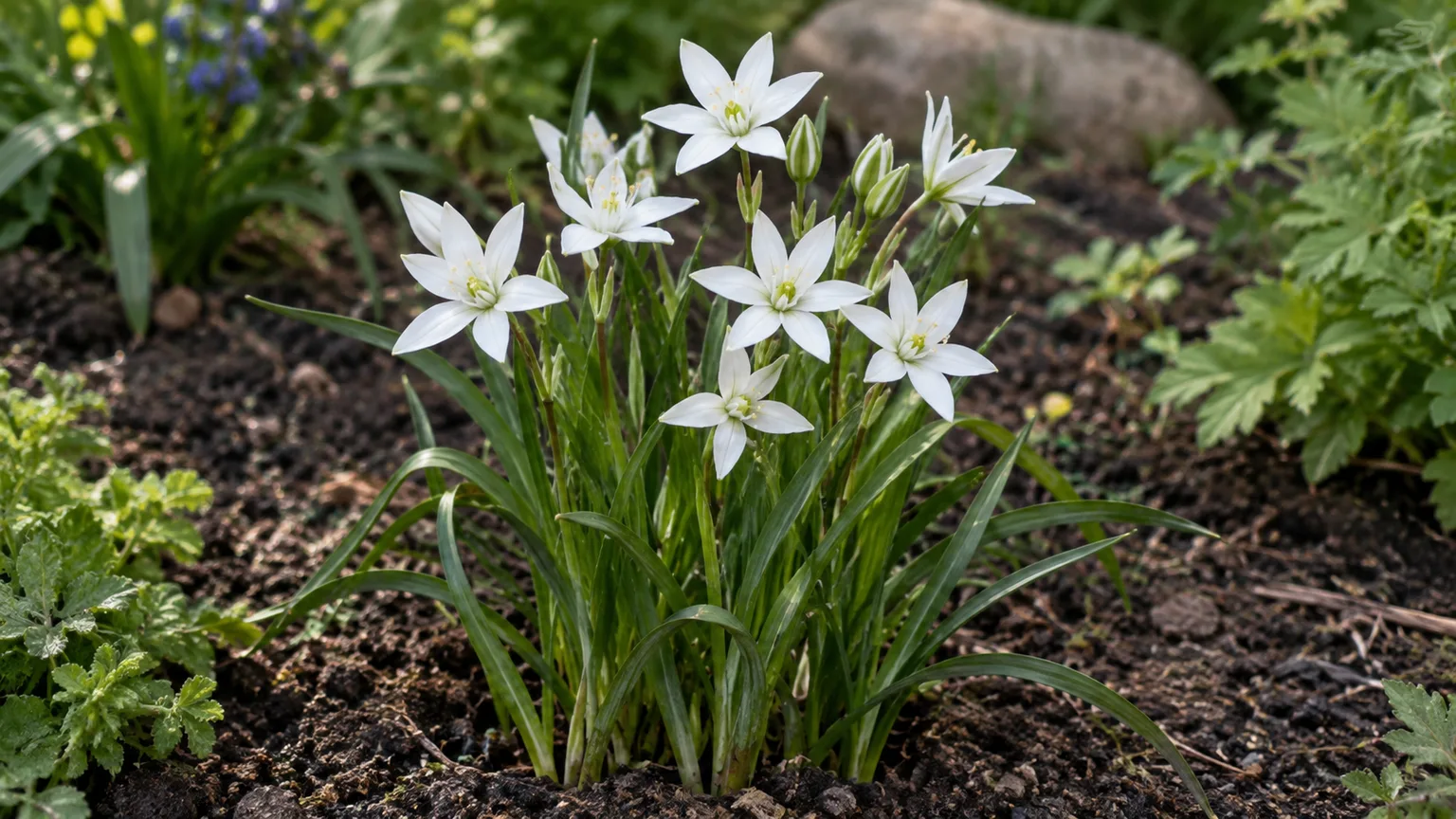
Star of Bethlehem (Ornithogalum umbellatum) is a low-growing perennial bulb with clumps of foliage and stems of small, white, star-shaped flowers. The flowers open in late morning and close at dusk or during cloudy weather, so a closed bloom on a gray afternoon is part of the plant’s normal rhythm. It flowers readily in the right site, but its bulbs multiply and its seeds volunteer; decide whether you can responsibly contain it before planting.
For the strongest flowering, give it at least six hours of direct sun, well-drained soil, and water only while it is actively growing and the soil has begun to dry. Let the leaves remain after bloom until they yellow and the plant goes dormant. The main caution is spread: it has naturalized in parts of North America, and local invasive-plant guidance should determine whether it belongs in your garden. The Invasive Plant Atlas entry for Star of Bethlehem is one of the references identified for that concern.
Decide Whether Star of Bethlehem Belongs in Your Garden
This plant is not a neutral choice for every flower bed. A clump can become a colony as bulbs produce offsets and flowers set seed, and the plant has escaped cultivation in many areas. Before buying or moving bulbs, check with local invasive-plant authorities or a regional horticulture expert; if they advise against it, choose a different spring bulb rather than trying to manage a plant that local guidance says not to grow.
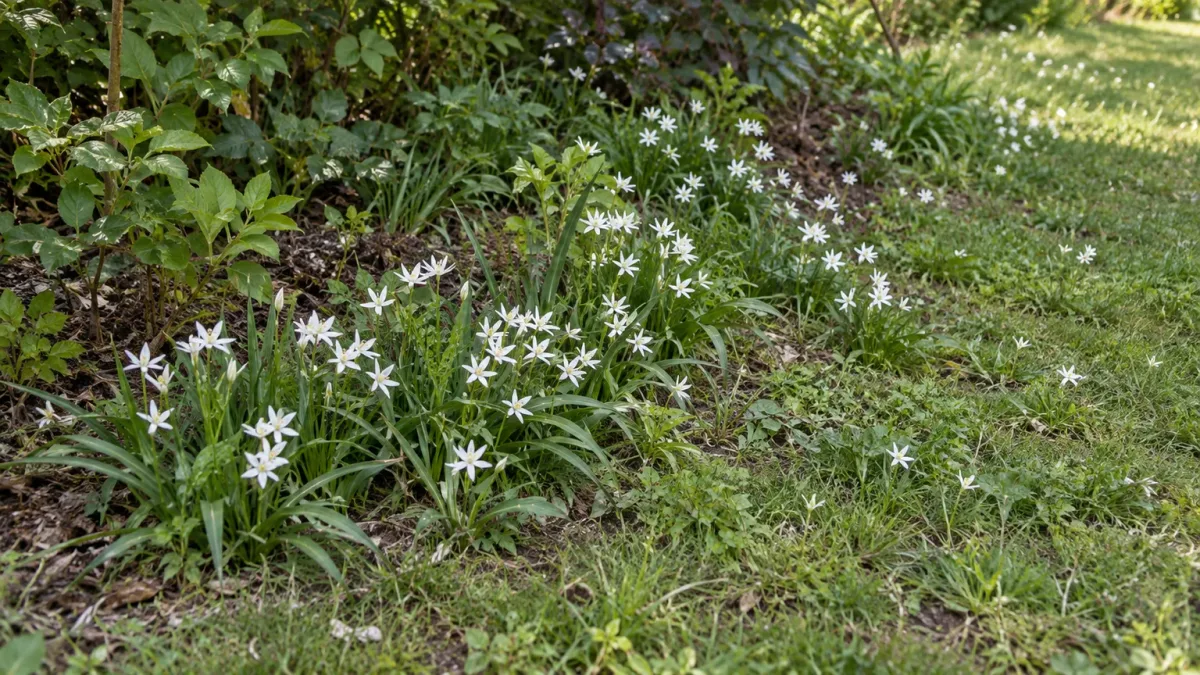
If local guidance permits it and you still want to grow it, choose a defined area where new shoots are easy to see and remove. Do not assume nearby shrubs, a lawn edge, or a tidy planting plan will keep every offset or seed in place. This is a plant to monitor, not a set-and-forget groundcover. The image below shows why a spreading patch changes the planting decision: flowers may look delicate while the colony extends well beyond its first clump.
Star of Bethlehem at a Glance
The following profile is useful when checking a plant label or planning a site. Measurements describe the compact plant in the source profile; a colony can occupy more ground as bulbs and seedlings spread.
| Feature | Star of Bethlehem |
|---|---|
| Botanical name | Ornithogalum umbellatum |
| Plant type | Perennial bulb |
| Typical size | About 4–6 inches tall and 2–3 inches wide |
| Light | Full sun to partial shade; best bloom with at least 6 hours of sun |
| Soil | Loamy and well-drained; tolerates acidic, neutral, or alkaline pH |
| Bloom | Usually May and June; white, star-shaped flowers |
| Hardiness | USDA zones 4–9 |
| Dormancy | Foliage dies back in summer after flowering |
| Main cautions | Spreading habit and toxicity to people and pets |
Star of Bethlehem belongs to the asparagus family, Asparagaceae, and is native to Europe and Africa. Common names include grass lily and nap-at-noon, a nod to the way the flowers open and close during the day. These details help distinguish the plant from other spring bulbs, but identification alone does not answer the most important question: whether it is appropriate to grow where you live.
Choose a Site With Sun and Drainage
Light
Choose a spot with six or more hours of direct sunlight on most days if abundant flowering is the goal. Star of Bethlehem can grow in partial shade, but fewer hours of sun generally mean a less impressive bloom display. If a clump produces leaves but very few flowers, assess its actual light before adding fertilizer or dividing it.
Soil
Good drainage matters more than a narrow pH target. The plant can grow in acidic, neutral, or alkaline soil, while waterlogged ground can cause bulbs to rot. Loamy soil suits it; if a site stays saturated, select a better-drained location rather than trying to compensate with more watering or richer soil.
Plant Bulbs and Offsets Carefully
Because spread is the first decision, do not start by asking how to fill the largest area. First confirm local guidance, then choose a location that can be watched through spring growth and summer dieback. The supplied profile gives a reliable depth and spacing for replanting bulbs and offsets: set them about 3–6 inches deep and 4 inches apart in moist, loamy soil. It does not specify a universal planting calendar for newly purchased bulbs, so follow the supplier’s directions and local advice for those.
Keep the soil moist when establishing replanted offsets, but not saturated. The depth and spacing are starting points for the bulbs described in the profile, not a reason to scatter extras around the garden. A few small offsets can take a full two years to flower, so judge a new division by whether it establishes, not by whether it blooms immediately.
Water by Growth Stage
Young plants need regular moisture while they establish. Aim for soil that is evenly moist rather than soggy, and check the soil instead of watering by the calendar. Once plants are established, they tolerate some dry soil, but they still do best with moderate moisture during active growth.
In spring and summer, check a couple of inches below the surface and water when that layer feels dry. The point is to prevent a growing clump from staying parched without leaving its bulbs in standing or persistently wet soil. When flowering is over and the foliage begins turning yellow, stop routine watering; during summer dormancy the bulbs usually need no supplemental water.
Feed Lightly for Spring Growth
Work compost into the soil in spring if the bed needs organic matter. The source profile describes compost as the useful feeding choice and says additional fertilizer is unnecessary; heavy feeding, particularly with nitrogen-rich fertilizer, can work against flowering. If leaves look lush but the plant produces few blooms, stop adding fertilizer and review the light and bulb maturity instead.
Do not treat fertilizer as a repair for every disappointing season. A shaded location, recently divided offsets, or the plant’s ordinary year of establishment can explain limited bloom. Repeated feeding adds material without fixing those causes and may make the flower display worse.
Care for the Plant After Flowering
Keep Green Leaves Until They Fade
After the white flowers finish, the foliage can look tangled and untidy. Resist cutting it while it is still green: the leaves are feeding the bulbs as they complete the growth cycle. Wait until the foliage turns yellow and then brown, which signals that the plant is entering summer dormancy; only then remove it if its appearance bothers you.
The gap left by dormant foliage is a design issue, not a cue to dig up healthy bulbs. Gardeners sometimes fill the empty space with annuals or neighboring perennials, but do so only after considering the plant’s tendency to spread. Avoid disturbing the bulbs or carrying soil and plant material into areas where new colonies would be difficult to monitor.
Deadhead to Limit Seed
Removing spent flowers will not trigger a second flush, but it can reduce seed production and the number of volunteer plants. If limiting spread is the priority, remove the flowers as they fade rather than waiting until seed has scattered. Deadheading addresses the seed route only; it does not stop bulb offsets from multiplying underground.
Understand Flowering and Fix Poor Bloom
Star of Bethlehem usually puts on a several-week display in May and June, with roughly 10–20 small white flowers on a stem. The blooms open around late morning and close at sunset or under cloudy skies. That daily opening pattern means a plant photographed early, late, or on an overcast day may look less open without having a flowering problem.
When a clump has healthy leaves but little bloom, work through three likely causes. First, check for at least six hours of direct sun; partial shade supports growth but can reduce flowering. Second, review feeding and avoid excess nitrogen. Third, consider the plant’s age: offsets may need about two years to reach flowering size, and seed-grown plants can take longer.
The flowers are small and white, with a light sweet fragrance. If a few blooms close during poor weather, wait for a brighter part of the day before deciding the season has ended. If the whole clump remains leaf-only year after year, the sun, fertilizer history, and maturity of its bulbs are more useful checks than trying an unlisted treatment.
Propagate by Separating Offsets
Bulbs naturally multiply, producing small offsets, also called bulbils. Propagate only when local guidance allows the plant and you have a reason to keep or relocate it; dividing an invasive or unwanted colony can spread it further if bulbs are misplaced. For an approved planting, late summer—when foliage is dying back—is the time identified for lifting and separating offsets.
- As the foliage declines in late summer, loosen the soil around a clump with a shovel or trowel and lift the bulbs carefully.
- Separate the small offsets attached to the parent bulb without scattering them into neighboring soil.
- Replant the parent bulb and wanted offsets about 3–6 inches deep and 4 inches apart in moist, loamy, well-drained soil.
- Keep track of every bulb you intend to retain, and do not discard unwanted offsets where they could take root.
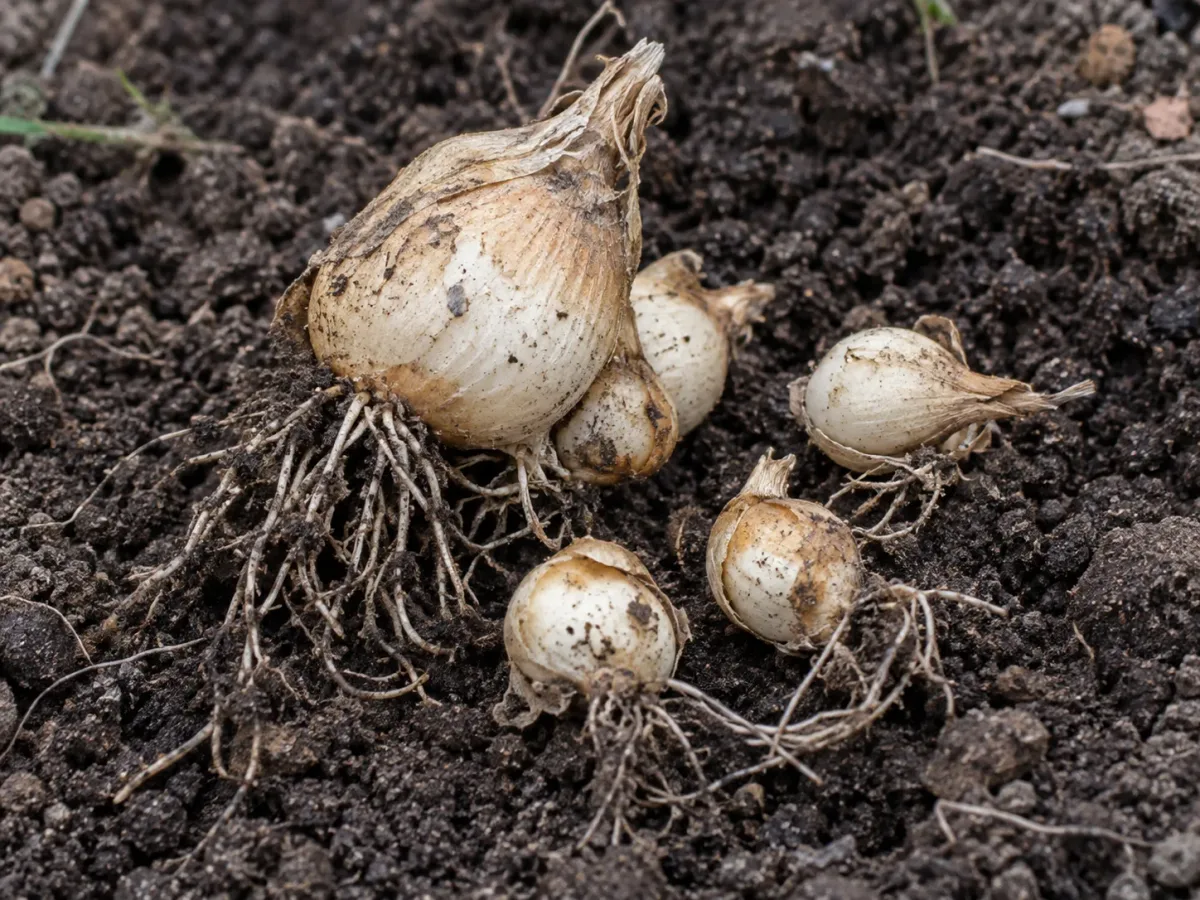
Do not interpret a nonflowering offset as a failed division after one season. The smallest bulbs may need two years to mature enough to bloom, and seed-grown plants take longer still. If your goal is to reduce a colony, do not divide and replant the offsets; propagation is the wrong response to unwanted spread.
Limit Spread and Remove Unwanted Growth
Star of Bethlehem spreads in two ways described in the source: rapidly multiplying bulbs and readily self-sown seed. Deadheading can reduce seed, but the bulbs remain. Removing a visible flower stalk or cutting back leaves while green does not remove the underground source of future shoots.
For a colony you want to remove, begin when shoots appear in spring and carefully dig out the bulbs you can find. Check the disturbed area for new plants and seedlings as the season progresses; a single pass can miss small offsets or volunteer seedlings. Revisit the site rather than assuming that the first cleanup ended regrowth, and take care not to move bulbs in soil to another bed.
If you are uncertain whether the plant is restricted or considered invasive locally, pause propagation and ask a local authority or horticulture expert before moving it. The Invasive Plant Atlas is among the references linked for this plant’s naturalization concerns, but local guidance is the practical check for your own property. Avoid planting it near a natural area or in an open meadow simply because the flowers look at home there; an easy route beyond the garden boundary is exactly the risk to weigh.
Prepare Star of Bethlehem for Winter
Within USDA zones 4–9, Star of Bethlehem is described as hardy through winter. In the colder, exposed parts of zone 4, a layer of dry mulch can protect the planting. Keep the distinction clear: the suggested mulch is dry, while cold, wet soil around bulbs can encourage rot.
In extremely cold locations, the source profile describes digging the bulbs and storing them in a protected space such as a basement. Do not leave bulbs soaking in cold ground, and do not water routinely while the plant is dormant. If you are outside the stated hardiness range or face unusual winter conditions, seek local horticultural guidance rather than assuming the zone range guarantees success.
Know the Toxicity Risk
Treat Star of Bethlehem as toxic to people and pets. The Missouri Department of Conservation’s field guide, one of the supplied references, identifies that toxicity. Keep bulbs and cut plant material away from children and animals, and do not allow pets to chew the foliage or flowers.
If you suspect a person or pet has eaten any part of the plant, contact a medical professional, poison-control service, or veterinarian promptly for advice. Do not wait for visible symptoms or try a home remedy. The source material does not provide a dose or treatment protocol, so this guide does not attempt to estimate the severity of an exposure.
Distinguish Star of Bethlehem From Related Species
There are no named cultivars of O. umbellatum in the supplied profile. Other species in the Ornithogalum genus differ in flower color, mature height, and hardiness, so a plant sold under a broad “star of Bethlehem” label may not share this species’ exact profile.
| Species | Flower and approximate size | Hardiness listed in the source |
|---|---|---|
| O. arabicum | White; about 19 inches tall | Zones 9–10 |
| O. dubium | Orange; about 10 inches tall | Zones 7–10 |
| O. nutans | White with green; about 16 inches tall | Zones 6–10 |
| O. thyrsoides | White; about 16 inches tall | Zones 7–10 |
These are related species, not cultivars of O. umbellatum. If you want a similar white-flowered bulb with less aggressive behavior, the source suggests daffodil garlic (Allium neapolitanum) and notes that other Allium species may suit colder areas. Check the specific plant’s local status and hardiness before substituting; a familiar flower shape does not guarantee that two bulbs behave alike.
Conclusion
Grow Star of Bethlehem only after checking whether local guidance allows it and deciding how you will watch for spread. Where it is appropriate, give it sun, sharply draining loamy soil, moderate water during active growth, and a light spring compost application; let the leaves fade naturally after bloom.
Its small spring flowers and low stature are appealing, but the same plant can naturalize beyond its original clump and is toxic to people and pets. Keep propagation deliberate, remove unwanted bulbs and seedlings carefully, and treat local invasive guidance as part of the care plan from the start.