How to Grow and Care for a Strawberry Tree
Strawberry tree care made clear: choose a site, manage first-year water, grow it in a pot or ground, harvest fruit, and fix common problems.
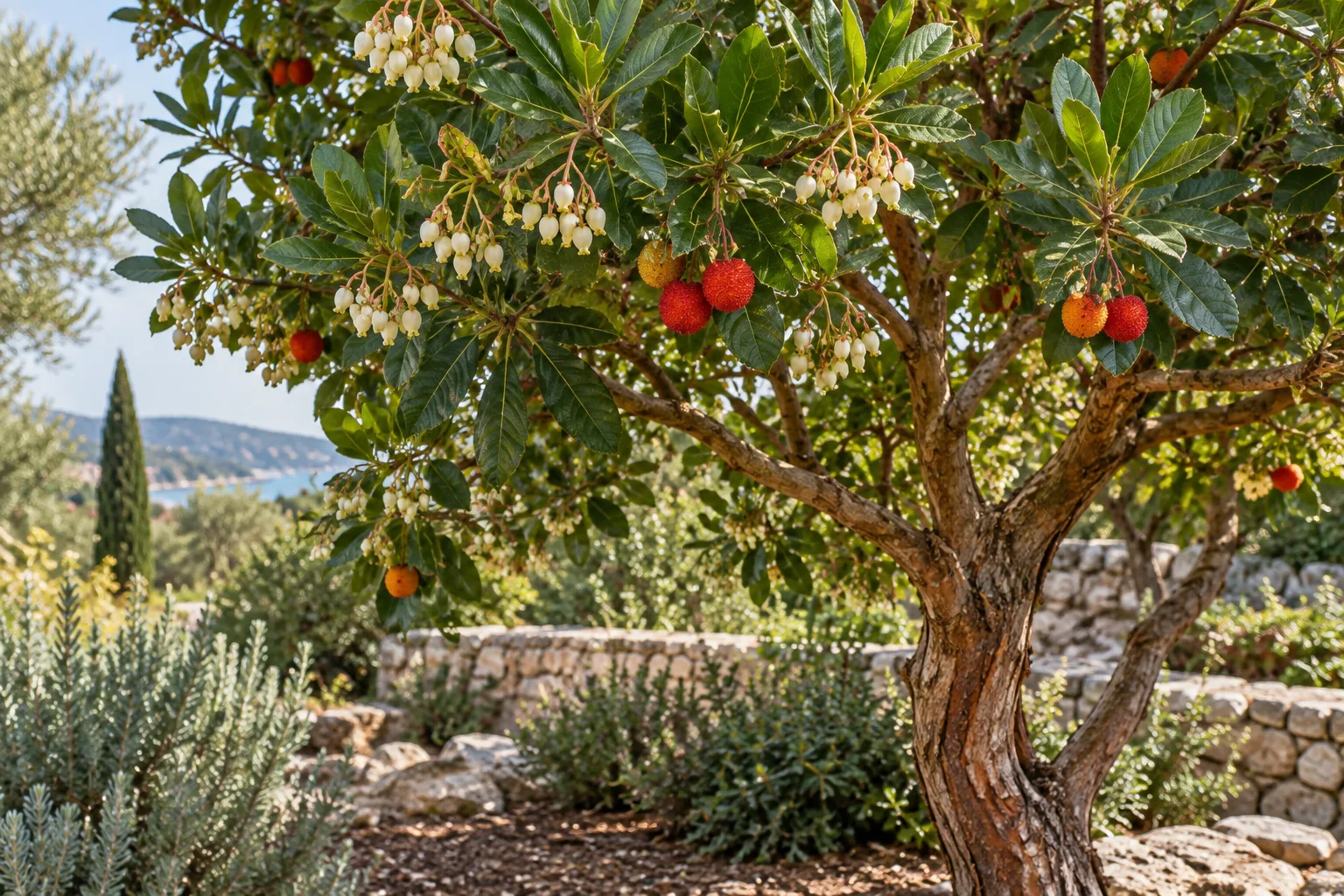
The strawberry tree (Arbutus unedo) is an evergreen Mediterranean shrub or small tree with leathery leaves, peeling bark, dangling clusters of bell-shaped flowers, and round fruits that gradually turn orange-red. It is not a strawberry plant, and its fruit does not taste like a garden strawberry. Its appeal is the combination of year-round foliage, late-season flowers, colorful fruit, and a sculptural trunk.
This is a forgiving plant once established, but “drought tolerant” does not mean “plant it and forget it.” A new tree needs dependable moisture while roots spread, and it will struggle in waterlogged soil, severe wind, or a climate with colder winters than its hardiness range. Give it drainage, sun, room to mature, and protection during its first winters, and it can become a long-lived specimen, hedge, patio tree, or wildlife-friendly focal point.
Strawberry Tree Quick Reference
| Care factor | Practical target |
|---|---|
| Botanical name | Arbutus unedo |
| Common names | Strawberry tree, Irish strawberry tree, Killarney strawberry tree, arbutus |
| Family | Ericaceae |
| Habit | Evergreen shrub or small multi-trunked tree |
| Mature size | Commonly 8–12 feet tall and wide in gardens; larger in favorable sites |
| Light | Full sun is best; partial shade is tolerated |
| Soil | Sandy, loamy, or clay soil that drains freely |
| Soil reaction | Acidic to neutral is preferred, though the plant is adaptable |
| Bloom season | Fall into winter |
| Fruit season | Often late fall or winter, depending on climate |
| Hardiness | Generally USDA zones 7–10; local exposure matters |
| Growth rate | Slow to moderate |
| Water | Regularly during establishment, then less often but deeply |
Use the table as a starting point, not a substitute for observing your site. A strawberry tree in heavy clay on a rainy slope needs a different watering plan from one in sandy soil beside a hot patio.
Identify the Strawberry Tree Before You Buy
The species name on the label should be Arbutus unedo. Mature plants have glossy, oblong leaves with fine serration, smooth young stems, and older bark that may peel or reveal contrasting shades. Creamy white to pink flowers hang in small clusters, often while last season’s fruit is coloring. The fruit is round and textured rather than smooth, which gives the plant its common name.
Do not confuse it with Muntingia calabura, sometimes called Jamaican cherry or another kind of strawberry tree. That is a different, faster-growing tropical species. If you want the evergreen ornamental commonly grown in Mediterranean-style gardens, coastal landscapes, and mild temperate climates, buy by the botanical name rather than the common name alone.
Choose Ground or Container Growing
Plant in the ground when you have a mild climate, sharply draining soil, and enough room for a broad crown. In a suitable site, an in-ground plant needs less intervention after establishment and can develop a more substantial trunk. It is especially effective as a specimen near a patio, at the edge of a lawn, or in an informal screen.
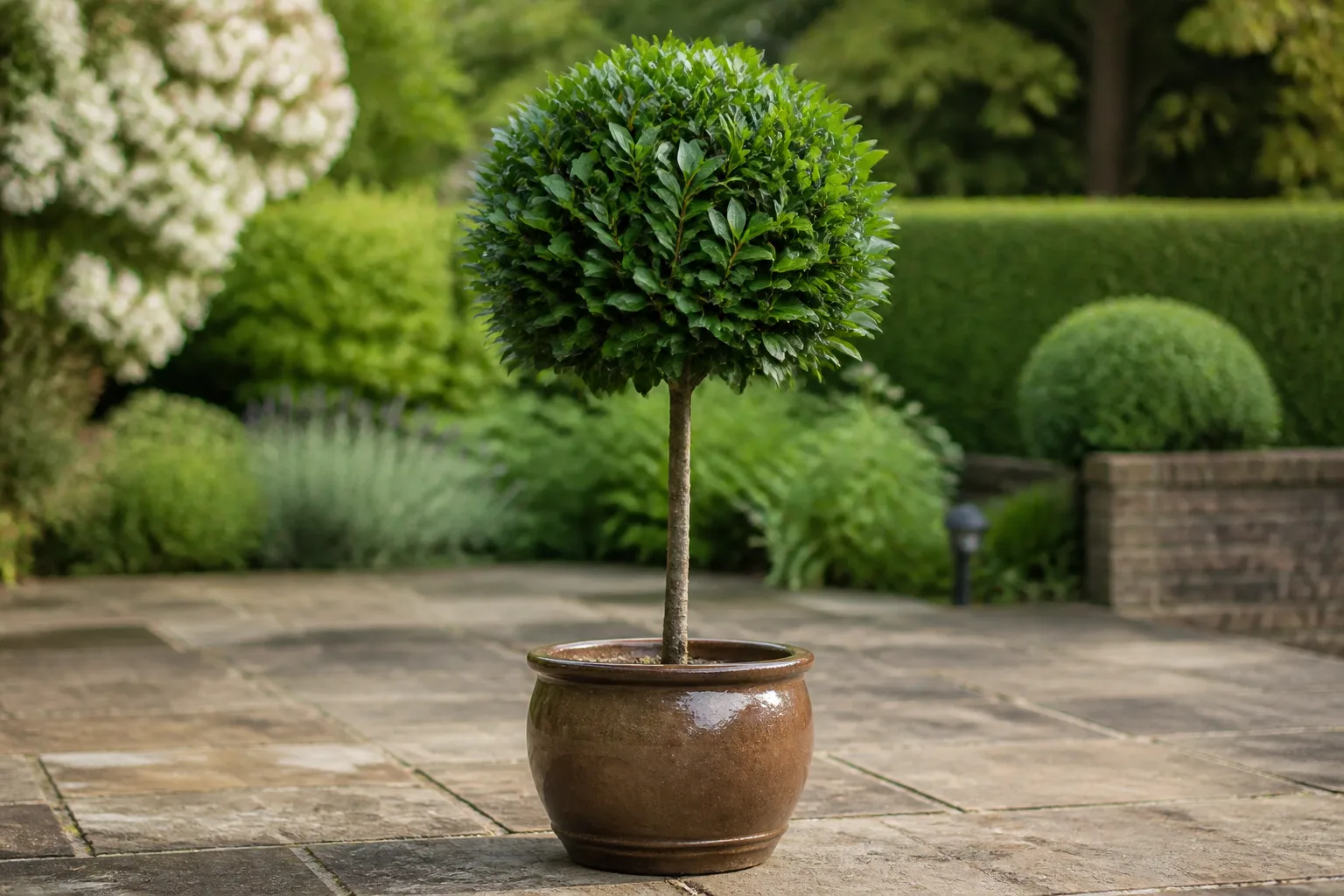
Choose a container when winter temperatures regularly threaten the plant, your soil stays wet, or you want to keep a dwarf cultivar compact. A pot also lets you move a young tree away from cold wind and bring it under cover during an exceptional freeze. The tradeoff is weight, faster drying, and the need to refresh or prune roots periodically.
Pick the Best Site and Planting Time
Plant in early fall where winters are mild, giving roots time to grow before summer heat. In colder parts of the range, plant in spring after the ground has thawed and the risk of a hard freeze has passed. Avoid planting just before a heat wave, a prolonged wet period, or a forecast of severe frost.
Choose a location with at least six hours of direct light if possible. A little afternoon shade can help in a very hot, dry climate, but dense shade produces a thinner canopy and fewer flowers. Leave enough clearance from paving, walls, and utilities for a mature crown, and remember that the fruit can drop onto walkways.
Soil, Drainage, and Spacing
The most important soil feature is drainage. The plant can tolerate sandy, loamy, or clay soil, but the root zone should not remain saturated after rain. If water pools for hours, correct the site with a raised planting area or choose a different location; simply adding a small amount of compost to a wet hole will not solve poor drainage.
Space landscape plants about 20 to 35 feet apart when planning a row or group. That distance looks generous when plants are young, but it protects the rounded canopy from crowding and preserves airflow. For a closer informal screen, use a smaller cultivar and accept more pruning, or stagger plants rather than forcing full-size trees into a narrow line.
Plant a Strawberry Tree Step by Step
- Water the nursery plant thoroughly a few hours before planting.
- Dig a hole no deeper than the root ball and two to three times its width.
- Tease circling roots at the outer edge, but do not shred the root ball.
- Set the plant so the topmost root is level with or slightly above the surrounding soil.
- Backfill with the excavated soil, firming gently to remove large air pockets.
- Water slowly until the whole root ball and surrounding soil are wet.
- Apply a 2- to 3-inch mulch layer over the root zone, keeping it several inches away from the trunk.
- Stake only if wind or a loose root ball makes the plant unstable; remove the support after it can stand on its own.
Do not bury the trunk flare or create a deep bowl that stays wet against the bark. Water again if the soil settles, but do not pack the surface hard. The goal is close root-to-soil contact with oxygen still available around the roots.
Light and Temperature
Full sun encourages dense growth, flowering, and fruit color. Plants can tolerate partial shade, especially in hot locations, but morning or filtered light is safer than a deeply shaded corner. Young trees are more vulnerable to wind and cold than established specimens because their roots and branches have not yet developed the same resilience.
Although the species is commonly grown in zones 7 through 10, hardiness labels are not guarantees. A sheltered coastal zone 7 site may be successful while an exposed inland site with drying winter wind is not. The Royal Horticultural Society’s plant profile is a useful local-reference point for the species’ habit and cultivation preferences, but your own winter exposure still matters. Protect young plants from frost pockets, reflected heat, and sudden temperature swings. Good drainage becomes even more important in cold weather because wet roots are less tolerant of freezing.
Watering From Planting Through Establishment
For the first growing season, check the soil a few inches below the surface every few days. Water deeply when that layer begins to dry, then let excess water drain. In hot, sandy soil this may mean watering more often; in cool clay it may mean waiting longer. A fixed calendar is less reliable than checking the root zone.
During the second season, extend the interval between waterings while soaking the soil more broadly around the expanding roots. Once established, the tree can handle dry spells, but prolonged drought may reduce flowering, fruit size, and new growth. Water slowly at the drip line during an extended dry period instead of sprinkling the foliage.
Container plants need closer attention. A pot can be dry at the surface while the lower half is still wet, so feel down into the mix and confirm that the drainage holes are open. Empty saucers after watering. Repeatedly wet soil and a weak, declining canopy are a stronger warning than a single drooping leaf.
Mulch and Fertilizer
Mulch helps moderate root temperature, slows evaporation, and returns organic matter as it breaks down. The Missouri Botanical Garden’s winter-injury guidance also supports the broader principle of protecting evergreen roots and foliage from drying winter exposure. Use bark, leaf mold, or another stable organic mulch in a broad ring. Keep it off the trunk so bark stays dry and visible.
Do not fertilize automatically because the tree grows slowly. If new growth is pale, short, or weak and the soil test supports a nutrient shortage, use a restrained, balanced product in spring according to its label. Heavy feeding can produce soft growth that is more vulnerable to cold and pests. In good soil, mulch and consistent moisture are often more valuable than extra fertilizer.
Cultivars and Growth Forms
The species can be grown as a multi-stemmed shrub or trained to a single trunk. Choose the form that fits the site before planting. A shrub form gives privacy and a dense silhouette; a standard form creates a clearer trunk and canopy for a patio or entry planting.
‘Elfin King’ is useful where a smaller plant and less fallen fruit are priorities, although reduced fruiting is part of the tradeoff. ‘Compacta’ is another compact selection commonly used in smaller spaces. ‘Rubra’ is grown for deeper pink flowers. ‘Oktoberfest’ is a dwarf option that can suit container culture when given bright light and protection from strong wind.
Cultivar names do not remove the need to check mature dimensions. Nursery plants often look interchangeable at the same small size, but their eventual width, fruiting habit, and pruning needs can differ substantially.
Flowers, Fruit, and Wildlife Value
Flowers usually appear from fall into winter, often at the same time that older fruits are ripening. The blooms are small, urn-shaped, and carried in hanging clusters. Bees and other pollinators can use them when fewer garden flowers are available. Birds may eat the fruit and use the dense evergreen canopy for shelter.
The fruit is edible when fully colored and slightly soft. It has a textured skin and a soft, mild interior; many people find it more useful cooked than eaten fresh. It can be made into preserves or other cooked preparations, but do not assume a red fruit is ready solely because it has changed color. Harvest a few and check their texture before collecting a large batch.
Fruit production also depends on age, light, water, and pollination conditions. A young tree may need several years to begin bearing well. A plant that flowers but does not hold fruit may be too young, stressed by drought, exposed to late frost, or simply producing more flowers than the site can mature.
Growing a Strawberry Tree in a Container
Start with a pot that is roughly 14 inches deep and 14 to 24 inches wide for a young dwarf plant, with generous drainage holes. Choose a stable container because the canopy catches wind and a mature root ball becomes heavy. Casters can help you move it, but they must be strong enough to support wet soil and the plant’s weight.
Use a free-draining potting mix rather than garden soil. Set the root ball at the same depth as it was growing, water thoroughly, and place the pot in bright light. Repot when roots circle densely or water runs straight through the container, moving up only one pot size at a time. A pot that is too large stays wet longer and increases the risk of root problems.
In cold climates, move the container before a hard freeze, not after leaves and stems have already been damaged. A cool, bright, protected location is better than a dark, heated room. Reduce watering during low-light winter conditions, but never let the root ball become bone dry for long periods.
Pruning and Training
Routine pruning is light. Remove dead, damaged, crossing, or diseased branches at the end of winter or in early spring. Make cuts just outside the branch collar, and avoid leaving long stubs. If training a tree form, select one strong central stem while the plant is young and gradually remove competing basal stems.
Do not shear the plant into a tight ball if you want flowers and fruit. Hard annual shearing removes flowering wood and can create dense, weakly ventilated growth. Instead, make a few deliberate cuts that improve structure, clearance, and airflow. Clean tools between plants when removing diseased material.
Propagating by Layering and Cuttings
Air layering is a practical choice when you want a clone of a desirable plant and can wait several months. In spring, choose a healthy one- or two-year-old branch. Remove a ring of bark, apply optional rooting hormone, pack the wound with moist sphagnum moss, and wrap it securely in plastic. Keep the moss damp, not soaked. Roots may take eight to twelve weeks; once they are substantial, sever the branch below the rooted section and pot it without disturbing the moss.
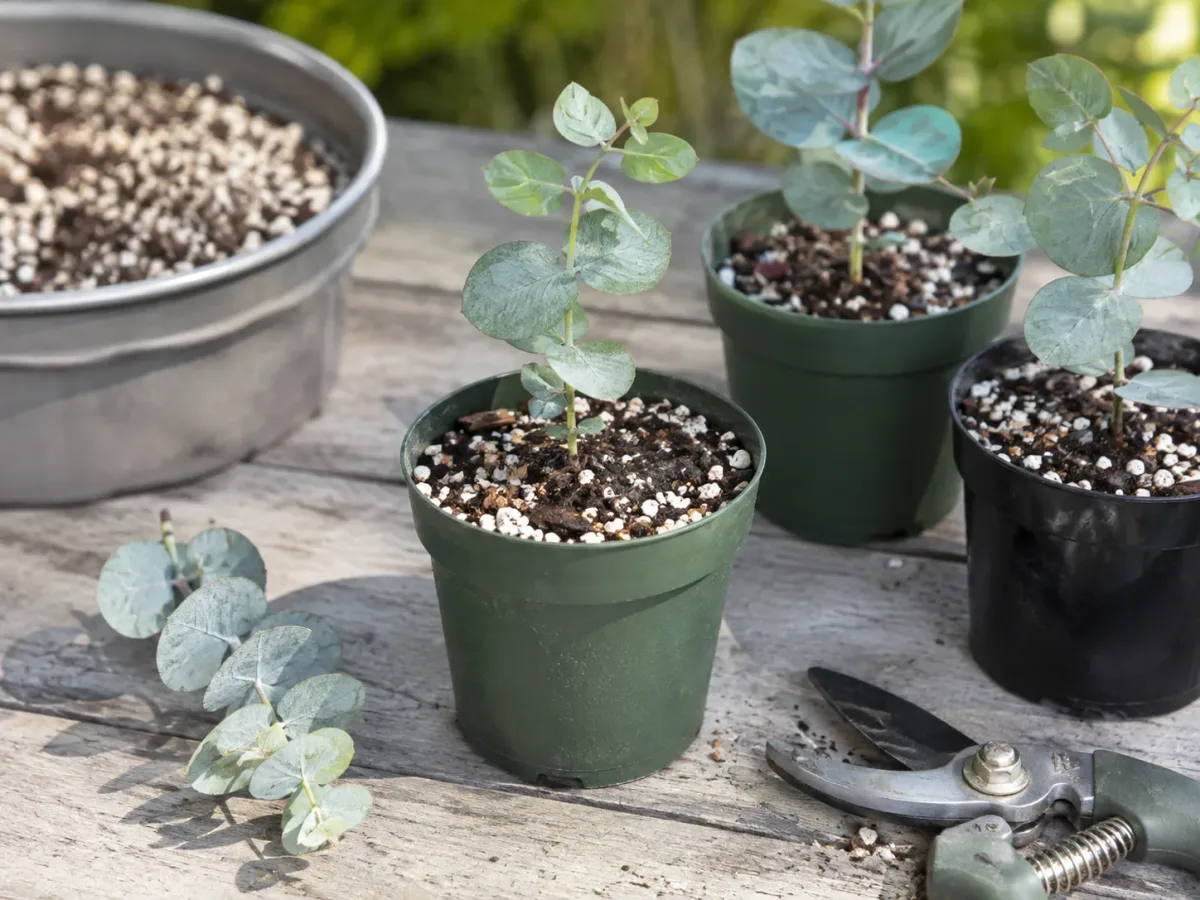
Softwood cuttings can be taken in midsummer. Choose 4- to 6-inch pieces of healthy new growth, cut just below a node, remove the lower leaves, and place the cuttings in a sterile, free-draining medium. A loose plastic cover maintains humidity, but air circulation is essential. Keep the pot in bright, indirect light and wait for firm new growth before transplanting.
Both methods require patience. A cutting that remains green is not necessarily rooted, so do not pull it up to check. Tug very gently after several weeks or wait for new growth before potting on.
Growing From Seed
Seeds are naturally spread when birds eat the fruit, but starting them at home is slower than buying a plant. Collect seed from fully mature fruit, clean away the pulp, and soak it in warm water for several days. Sow on moist, free-draining compost with only a light covering, then give it a cool period in a cold frame or another protected setting.
Germination may occur after dormancy breaks in spring. Pot seedlings individually once they are sturdy enough to handle, and grow them under protection for about a year before planting outdoors. Protect young roots from drying and from saturated mix. Seed-grown plants may not reproduce every trait of a named cultivar, and they take longer to reach flowering size.
Winter Protection
The first winter is the most important. Water the root zone before the ground freezes if the soil is dry, add a fresh but not excessive mulch layer, and shield a young plant from drying wind with burlap or a temporary windbreak. Do not wrap foliage tightly in plastic, which can trap moisture and cause damage during temperature swings.
Container plants are more exposed because their roots have little insulation. Move them to a sheltered, bright location before severe cold arrives. If a late frost threatens flowers or developing fruit, a breathable cover overnight can reduce damage; remove it during the day so light and air can reach the plant.
Pests, Diseases, and Troubleshooting
Most problems begin with stress, poor drainage, crowded growth, or a mismatch between the plant and climate. Inspect the leaves, stems, and soil before reaching for a treatment.
| Symptom | Likely causes | First response |
|---|---|---|
| Yellow leaves with wet soil | Overwatering or root stress | Let the root zone drain; check holes and soil texture |
| Brown leaf edges | Drought, wind, salt, or root damage | Check moisture and exposure; water deeply rather than misting |
| Spotted leaves | Leaf-spot disease, wet foliage, or poor airflow | Remove badly affected leaves and improve airflow |
| Sticky leaves or clusters of insects | Aphids or scale | Inspect undersides and stems; wash small infestations away |
| Sudden wilt in wet soil | Root rot or serious root injury | Stop watering and inspect drainage and roots |
| Flowers but little fruit | Young plant, frost, drought, or weak light | Improve site conditions and allow time |
Aphids cluster on tender growth, while scale may look like fixed brown or pale bumps on stems and leaf undersides. Small infestations can often be reduced with a water spray or careful hand removal. Avoid spraying stressed plants in heat, and follow any product label exactly if a treatment becomes necessary.
Root and crown problems are more serious than minor leaf damage. If the base stays wet, the bark softens, or the plant declines despite adequate moisture, improve drainage and seek a local diagnosis rather than repeatedly adding fertilizer. Remove diseased branches with clean tools and dispose of them away from the compost pile when appropriate.
Conclusion
Successful strawberry tree care is mostly about matching the plant to the site. Give Arbutus unedo sun, drainage, room for its rounded habit, and regular water while it establishes. Then maintain a light mulch layer, prune only for structure and health, and protect young plants and containers from severe cold and wind. Its late flowers, colorful fruit, evergreen leaves, and textured bark reward that measured approach for years.