How to Grow and Care for Stock Flowers in Any Climate
Grow stock flowers in cool weather for fragrant, sturdy blooms. Learn when to sow, how to choose double-flowered varieties, and when to cut stems for the vase.
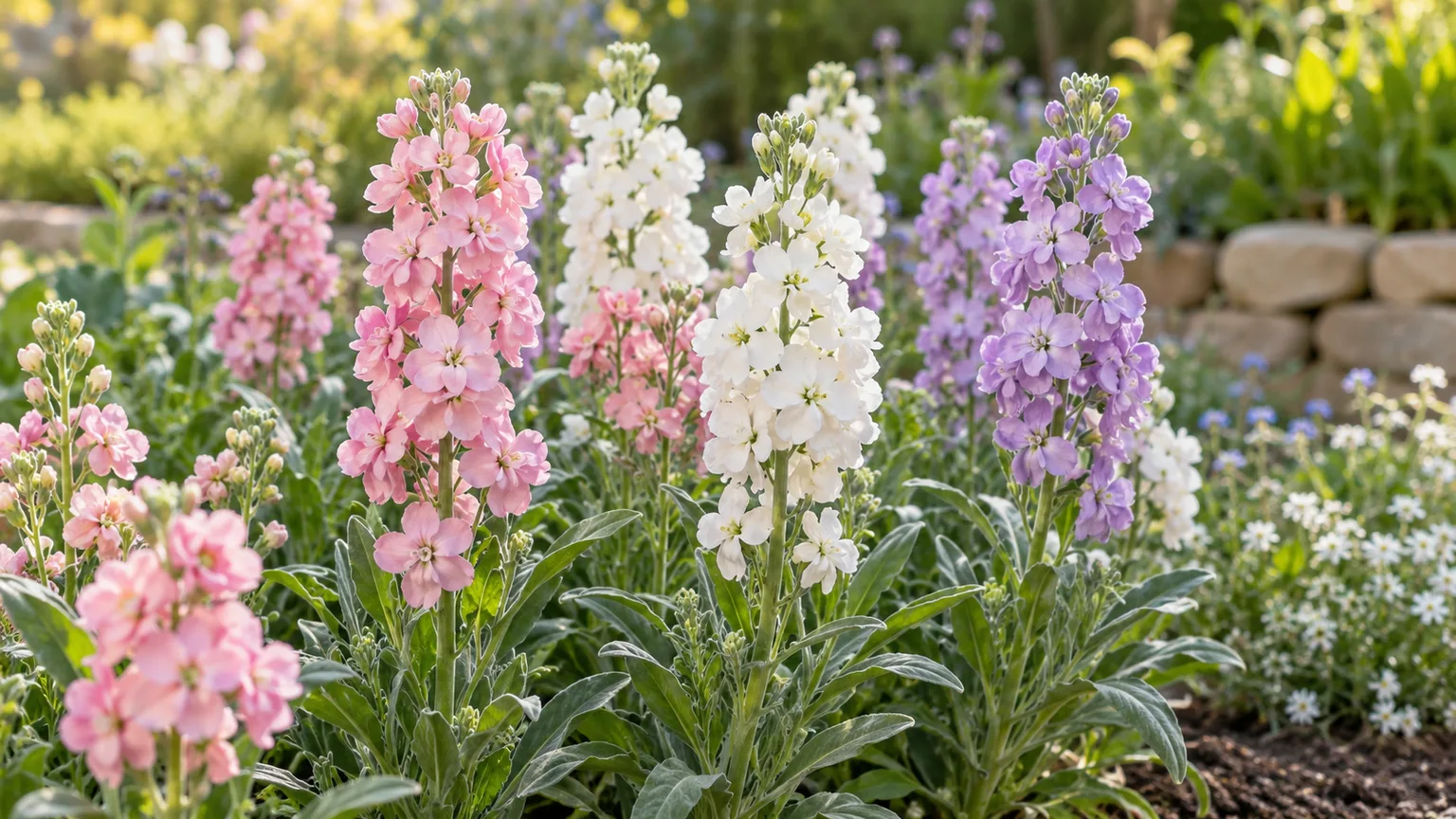
Stock is a cool-season flower: plant it while spring is still brisk, or grow it through the mild part of winter where summers are hot. Give it sun, soil that drains, and steady moisture, and it can produce upright, clove-scented flower spikes for beds, containers, and bouquets. The timing matters more than a complicated fertilizer routine. If stock is planted after warm weather has settled in, it may grow leaves and then fade before it makes the flowers you expected.
Stock flower basics: identify the right Matthiola
The garden stock usually sold as stock, gillyflower, or ten-weeks stock is Matthiola incana, a member of the mustard family. Its gray-green leaves form a low rosette before the flower stalk rises. The blossoms open along upright clusters called racemes and may be single or full and double, in shades that include white, pink, red, lavender, purple, cream, and yellow. The scent is spicy and clove-like, especially noticeable when several stems grow near a path or patio.
“Stock” can also refer to other Matthiola species, including night-scented stock, M. longipetala. That plant is grown chiefly for evening fragrance and does not have the same full, florist-style flower spikes as common stock. Check the botanical name on a seed packet if you want M. incana for bedding or cut flowers; the common name alone can be ambiguous. NC State Extension describes M. incana as a cool-season plant that is often grown as an annual or biennial, and notes that heat can shorten its display. NC State Extension’s plant profile is a useful reference for the species and its basic growing conditions.
Plan around cool weather
Stock flowers best when young plants establish in cool conditions and the days lengthen without heat arriving too quickly. A hardiness zone can help estimate winter survival, but it cannot tell you whether spring will heat up early or whether warm nights will interrupt bud development. Use your local frost calendar as a starting point, then watch the forecast and select a cultivar suited to the season you can offer.
| Growing situation | Practical starting point | Main timing risk |
|---|---|---|
| Cool or cold-winter region, spring display | Start seed indoors about 6 to 8 weeks before the average last frost; harden seedlings and plant out while the weather is cool | Waiting until all frost risk has passed can leave too little cool growing time |
| Mild spring, direct-sown bed | Sow outdoors as soon as soil is workable and severe cold is unlikely; follow the packet’s depth and spacing | Soil that is wet and cold can slow emergence; warm weather can overtake seedlings |
| Hot-summer, mild-winter region | Sow or plant in fall or winter for a cool-season display; use a regional extension calendar for local dates | A universal “zone” date can miss local frost and summer-heat patterns |
| Container planting | Set out young plants in early spring or the cool season for your region | A dark, sun-heated pot can warm roots and dry quickly |
Spring: sow early, not just after frost
In many temperate gardens, sowing indoors six to eight weeks before the last average spring frost gives stock time to build roots before the main growing season. Stock is relatively frost-tolerant once established, but that does not mean tiny seedlings should be left through a hard freeze, drying wind, or saturated soil. Harden seedlings for about a week by gradually increasing outdoor exposure, then plant during a mild spell while nights are still cool.
This is one reason “plant after the last frost” can be an incomplete instruction for stock. If you wait for reliably warm weather, you may have solved frost risk while creating heat stress. NC State Extension recommends starting stock indoors six to eight weeks before the last frost or sowing outdoors, and notes that plants decline as summer temperatures rise above about 80°F; warm nights can add to the problem. UF/IFAS Extension’s stock profile shows how the calendar shifts in Florida, where stock is used as a late-winter flower rather than a summer annual.
Mild-winter gardens: use fall sowing
Where winter is mild and summer heat is intense, stock can be scheduled as a fall, winter, or early-spring crop. Sow after the most punishing heat eases, leaving enough time for seedlings to establish before cold weather; in climates with little frost, winter-grown stock may bloom before spring heat arrives. The exact sowing month varies by region, so local extension guidance is more reliable than a national calendar.
Warm nights can be as limiting as hot afternoons. A plant may keep growing but fail to develop a satisfying flower spike if it misses the cool conditions its cultivar needs. For commercial tunnel production, Cornell’s cut-flower guidance describes cultivar-dependent cold exposure as part of flowering; home gardeners do not need to reproduce that controlled treatment, but the principle explains why cool-season planting is central to success. Cornell High Tunnels’ stock notes distinguish early and late varieties and explain that late types may stay leafy when planted too late in spring.
Start seeds and transplant without stalling them
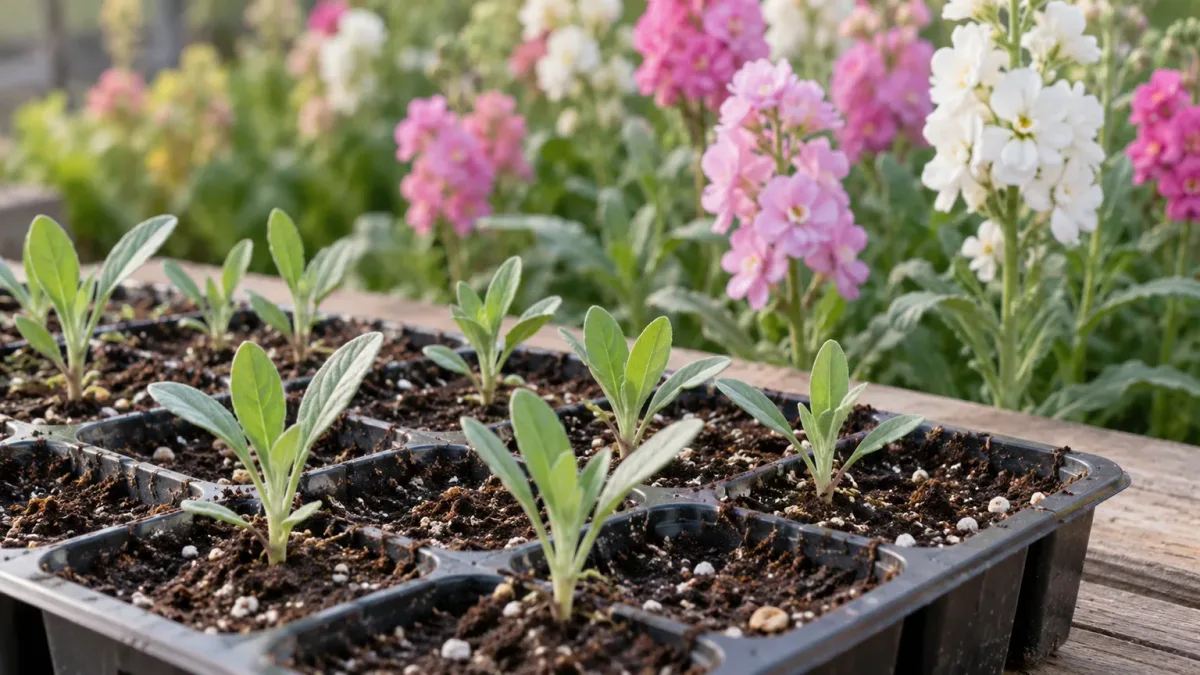
Stock seeds are small and need light at the surface to germinate. Fill clean cells with pre-moistened seed-starting mix, place one or two seeds on top, and press gently; cover only with a dusting of fine mix, roughly one-eighth inch, or leave uncovered if the packet says to do so. Keep the medium evenly damp rather than wet, and use a bright location or grow light as soon as seedlings emerge so they do not stretch.
Germination commonly takes around one to two weeks under suitable conditions, but seed age, temperature, and moisture affect the pace. Do not keep a covered tray sealed and dripping after emergence: stagnant, wet conditions invite damping off, in which seedlings collapse near the soil line. Remove the humidity cover once most seeds sprout, provide air movement, and water from below or at the mix level when it begins to dry.
Start in individual cells if you can. Stock dislikes unnecessary root disturbance, so moving a small plug with its root ball intact is less disruptive than pulling intertwined seedlings from a shared flat. When seedlings have several true leaves and are sturdy enough to handle, thin crowded cells to one plant, harden them off, and transplant at the same depth they were growing. Space according to the seed packet and mature plant size; many garden forms need roughly 9 to 18 inches, while compact cultivars can be closer together.
For many garden strains, the first flowers arrive roughly 10 to 12 weeks after sowing, although some seed packets count maturity from transplanting instead. If you want a longer run of blooms, sow a small batch every couple of weeks rather than planting every seed at once. Succession sowing only helps while temperatures remain suitable; stop when the forecast shows a sustained warm spell, because a later batch may leaf out without blooming. Gardener’s Path gives a detailed seed-starting sequence for M. incana and likewise emphasizes shallow sowing, steady moisture, and transplanting without burying the seedling crown. Gardener’s Path’s stock-growing guide is useful for cultivar and home-garden details. Harvest to Table also recommends very shallow sowing and even moisture in Harvest to Table’s stock-growing guide; follow the packet if your chosen cultivar specifies a different routine.
Choose stock flowers for fragrance, height, and cut stems
Before buying seed, decide what you want the plant to do. Compact, branching forms fit the front of a border or a pot; taller, single-stem forms make stronger vertical accents and usually give more usable cut stems. Read the listed mature height and growth habit rather than choosing by color alone, and check whether a variety is described as a cut-flower or bedding type.
Stock seed may produce single and double flowers in the same strain. Doubles have fuller petals and are often preferred for bouquets, while singles are simpler but still fragrant and useful to pollinators. In mixed strains, the proportion can vary; a packet photo does not guarantee every seedling will make a double bloom. If full flowers are the priority, buy a named series labeled for a high percentage or all double plants and follow its specific growing instructions.
Professional growers sometimes sort seedlings by cold treatment and seed-leaf color, but that is a specialized selection method, not a dependable shortcut for every home seed packet. Cornell notes that some cultivars can be distinguished this way and that varieties differ in cold requirement. For a garden bed, it is usually easier to accept a mix or choose a cultivar bred for the flower form you prefer. Do not save seed expecting a hybrid to come true to type; offspring may vary in color, height, and flower form.
Give stock sun and soil that drains
Choose a site with about six hours of direct sun, especially in a cool-summer climate. Light afternoon shade can help flowers last longer in a hot region, but deep shade tends to produce weaker stems and fewer blooms. If the garden is humid, leave enough room around plants for air to move instead of squeezing them into a dense mass.
Stock prefers soil that holds some moisture but drains freely. A loamy bed enriched with finished compost is a good starting point; heavy soil that stays saturated is more dangerous than soil that is merely not rich. Extension and horticulture references differ slightly on preferred pH, so avoid trying to “sweeten” the soil by eye. If a soil test shows strongly acidic soil, follow the test’s amendment recommendation rather than adding lime or wood ash automatically.
In a new bed, loosen compacted soil and work compost into the planting area instead of filling only the seedling hole with rich material. A sharply different pocket can hold water around roots or encourage them to circle within amended soil. In a raised bed or pot, make drainage the first check: water should pass through rather than pooling around the crown.
Water consistently without keeping crowns wet
Stock grows best with even moisture during active growth, but the goal is damp soil below the surface, not constantly wet foliage and crowns. Check the bed with a finger; if the top inch is dry and rain is not expected, water slowly at the base. Newly planted seedlings need closer attention because their small root systems dry faster than established plants.
A mulch layer can reduce evaporation and moderate soil temperature, particularly in a warm spring. Keep mulch a little away from the stem bases so air can circulate and water does not sit against the crown. In humid weather, morning watering gives leaves that get wet a chance to dry; drip irrigation or a soaker hose keeps water off the foliage.
Yellow leaves alone do not prove overwatering. Check the soil first: a sour smell, standing water, or persistently wet root zone points toward poor drainage, while dry, crumbly soil suggests the plant may be thirsty. A lower leaf can also yellow as a plant ages or responds to heat. Correct the condition you can observe before adding fertilizer or treating for disease.
Feed lightly and support tall varieties
If your bed has average garden soil and compost, stock usually does not need repeated heavy feeding. A soil test is a better reason to add fertilizer than pale leaves by themselves. Too much nitrogen can favor soft foliage over sturdy flower stems, and lush, crowded growth can also make the planting harder to ventilate.
If you use fertilizer, choose a balanced product or one labeled for flowering annuals and follow the package rate. Do not combine a rich potting mix, compost, and frequent liquid feeds without accounting for their combined nutrients. Containers lose nutrients more quickly than beds, but the smaller root zone also accumulates salts if fertilizer is overapplied.
Tall, densely flowered varieties can lean after rain or in wind. Plant them where they have some shelter from strong gusts, space them so stems dry quickly, and add discreet support before they flop if you are growing them for long cut stems. Cornell’s grower notes mention lodging after transplanting in tunnel production; garden plants benefit from the same basic lesson that upright stems need support when a heavy head and wind combine.
Grow stock in pots
A pot is a good choice when you want fragrance near a door or seating area, or when garden soil drains poorly. Pick a container with several drainage holes and enough width and depth for the mature size on the seed label. Compact stock can fit smaller containers, while tall cut-flower types need a broader, heavier pot to reduce tipping.
Use a free-draining container mix rather than dense garden soil. Set plants at the same depth as their cell or nursery pot and leave space around them; an overcrowded container traps humidity and encourages mildew. Place it in a bright, cool spot, and remember that dark containers in full afternoon sun can heat the root ball more than an open bed.
Check containers more often than beds because potting mix dries faster, especially in wind. Water thoroughly until excess runs out, then wait until the surface begins to dry before watering again. If a container stays soggy for days, improve drainage or move it under cover during prolonged rain instead of trying to solve the problem with less frequent, tiny sips.
Harvest stems when they are ready for the vase
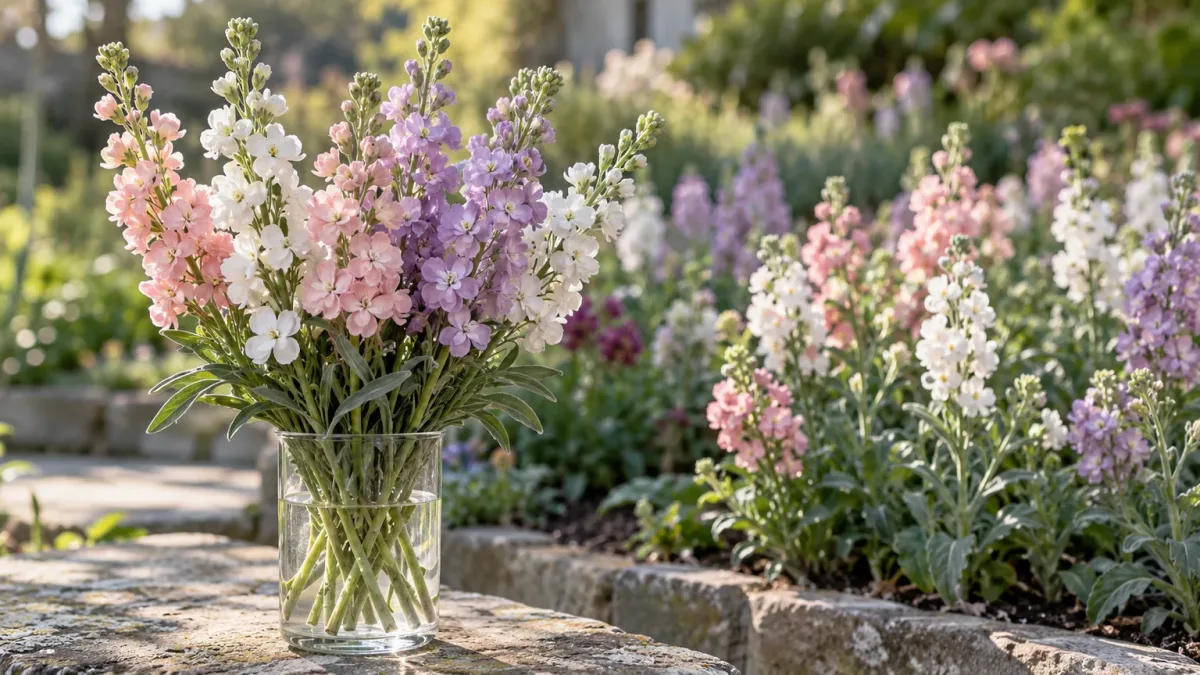
Stock makes a useful cut flower because its upright stems carry many fragrant florets. For production harvest, Mississippi State Extension recommends cutting when one-third to one-half of the florets are open and the remaining buds show good color and size. The upper buds can continue to open indoors. Harvest in the cool part of the day, use clean sharp pruners, and place stems into water promptly.
Remove leaves that would sit below the waterline, then arrange stock in a clean vase with fresh water. Replace the water daily or whenever it becomes cloudy, and recut the stem ends if the flowers begin to flag. Cornell reports a typical vase life of about seven to ten days under room-temperature handling; heat, bruising, stale water, and decaying leaves can shorten that window. Cornell’s cut-flower notes also point out that stock’s strong stems can be thick and somewhat woody, so a sharp blade matters.
Deadhead with realistic expectations
As the lower flowers fade, you can remove individual spent florets to keep the spike tidy. Once most of the stem is finished, cut the whole flower stalk back to its base or to a healthy leaf junction. This keeps the plant from putting energy into seed while leaving the foliage in place for a little longer.
Do not count on deadheading to restart a full bloom cycle. Stock is not a reliable repeat-bloomer in the way some branching annuals are, and heat often ends flowering even when spent stems are removed. If you want to collect seed, leave a few healthy spent stems to form pods and let them dry on the plant, then store the seed only if the variety is open-pollinated and you are comfortable with possible variation.
Spot pests and disease early
Inspect the undersides of leaves and new growth when watering. Aphids cluster on tender tips; flea beetles leave small holes; caterpillars may chew larger irregular patches. A few visible insects can often be picked off or washed from the plant, and removing badly damaged leaves helps you see whether new growth is clean. Avoid spraying on a schedule when there is no active problem.
Wet, crowded conditions are more likely to cause disease than a single missed watering. Seedlings that collapse at soil level may have damping off; gray fuzzy growth on damaged tissue in humid weather is consistent with gray mold; plants that wilt while the soil stays wet may have root or crown damage. These signs overlap with heat stress and other root problems, so inspect the whole plant and soil before deciding what caused the symptom.
Give plants spacing, water at the base, clear away badly diseased debris, and avoid reusing contaminated seed-starting mix. If a disease keeps returning in the same bed, rotate stock to a different spot and seek local extension help for a diagnosis. NC State Extension notes white mold can affect stock in mild, rainy winters; that regional example reinforces why airflow and drainage matter, but it does not mean every yellow or wilted plant has white mold. NC State’s profile links to additional extension guidance on the problem.
Troubleshoot leaves and missing flowers
When stock looks wrong, identify the pattern before changing care. The same yellow leaf can come from dry soil, saturated roots, aging foliage, heat, or disease, so one symptom rarely gives a certain diagnosis. Use this quick check:
| What you see | Likely direction to check first | What to do |
|---|---|---|
| Seedlings fall over at the soil line | Damping off in crowded, wet, still air | Remove collapsed seedlings, uncover the tray after germination, reduce excess moisture, and improve airflow |
| Leaves yellow while mix stays wet | Poor drainage or root stress | Pause watering, empty saucers, and move pots to a freely draining location |
| Leaves droop and the root zone is dry | Water stress, especially in a small pot | Water deeply and check again after the mix drains |
| Plants are leafy but have few or no buds | Heat, late planting, insufficient sun, or a cultivar needing more cool exposure | Compare the planting date and recent night temperatures, then verify the seed label |
| Stems are weak and stretched | Too little direct light, crowding, or overfeeding | Increase light, give plants space, and stop excess nitrogen |
| Flowering stops as warm weather arrives | Normal cool-season decline | Harvest open stems, keep the root zone evenly moist, and plan the next sowing for a cooler season |
If there are no flowers, start with temperature and timing rather than immediately adding bloom fertilizer. Stock planted late may never have a long cool period to form buds, and some cut-flower cultivars require more cold exposure than early varieties. Bright shade can also reduce flowering, while a high-nitrogen feed can build leaves at the expense of flowers. For the next crop, choose an earlier sowing date or an early cultivar, then record when nights warmed so you can adjust the schedule next year.
Treat stock as an annual unless your climate proves otherwise
Stock may be described as an annual, biennial, or short-lived perennial because its life cycle changes with climate and cultivar. Gardeners often grow it as an annual: sow, bloom, and remove the plant when summer heat ends the display. In a mild climate, a plant may persist through winter and become woodier, but that is not a dependable promise of the same flower quality the following year.
Frost tolerance is not the same as winter-proofing. Cold, wet soil can damage roots even when brief light frosts do not injure foliage, and windy sites expose tall stems to breakage. If you want to experiment with overwintering, grow a few plants in a sheltered, well-drained location and treat any return as a bonus rather than the basis of next season’s plan.
Most garden stock varieties are grown from seed. If you save seed, let pods mature and dry before collecting them, but remember that hybrid plants may not reproduce the parent’s color, height, or double-flower percentage. Buy fresh seed when uniform flowers matter, and follow the variety description for its season and cold needs.
Design with fragrance and stems in mind
Place stock where its scent will reach you: beside a path, near a doorway, or close to a sitting area. Its vertical flower spikes add structure to lower spring bedding plants, and a small group of one color often reads more clearly than scattered single plants. Leave enough room to reach stems for cutting without trampling the rest of the bed.
Use compact forms at the front of a border and taller forms toward the middle or back, checking the packet’s stated height because varieties vary substantially. In a cutting garden, plant in short rows so you can harvest without stepping into the bed; succession sow a few plants only while the weather can still support flowers. Stock works well with other cool-season flowers that share a sunny site and well-drained soil, but spacing matters more than a particular companion list.
Conclusion
To grow stock flowers well, put the season first: sow or transplant early enough to give them a long cool period, then provide sun, drainage, and consistent moisture. Choose a cultivar for the flower form and height you want, and check the seed label for its cold and bloom timing rather than assuming every stock variety behaves alike. Harvest stems as the lower florets open, keep vase water fresh, and treat a return the next year as a climate-dependent extra. That simple plan gives stock the conditions it needs to fill a garden with fragrance before summer heat takes over.



