How to Grow and Care for a Totem Pole Cactus
Grow this slow, sculptural cactus indoors or outdoors with practical guidance on sun acclimation, drainage, watering, cold snaps, propagation, and pests.
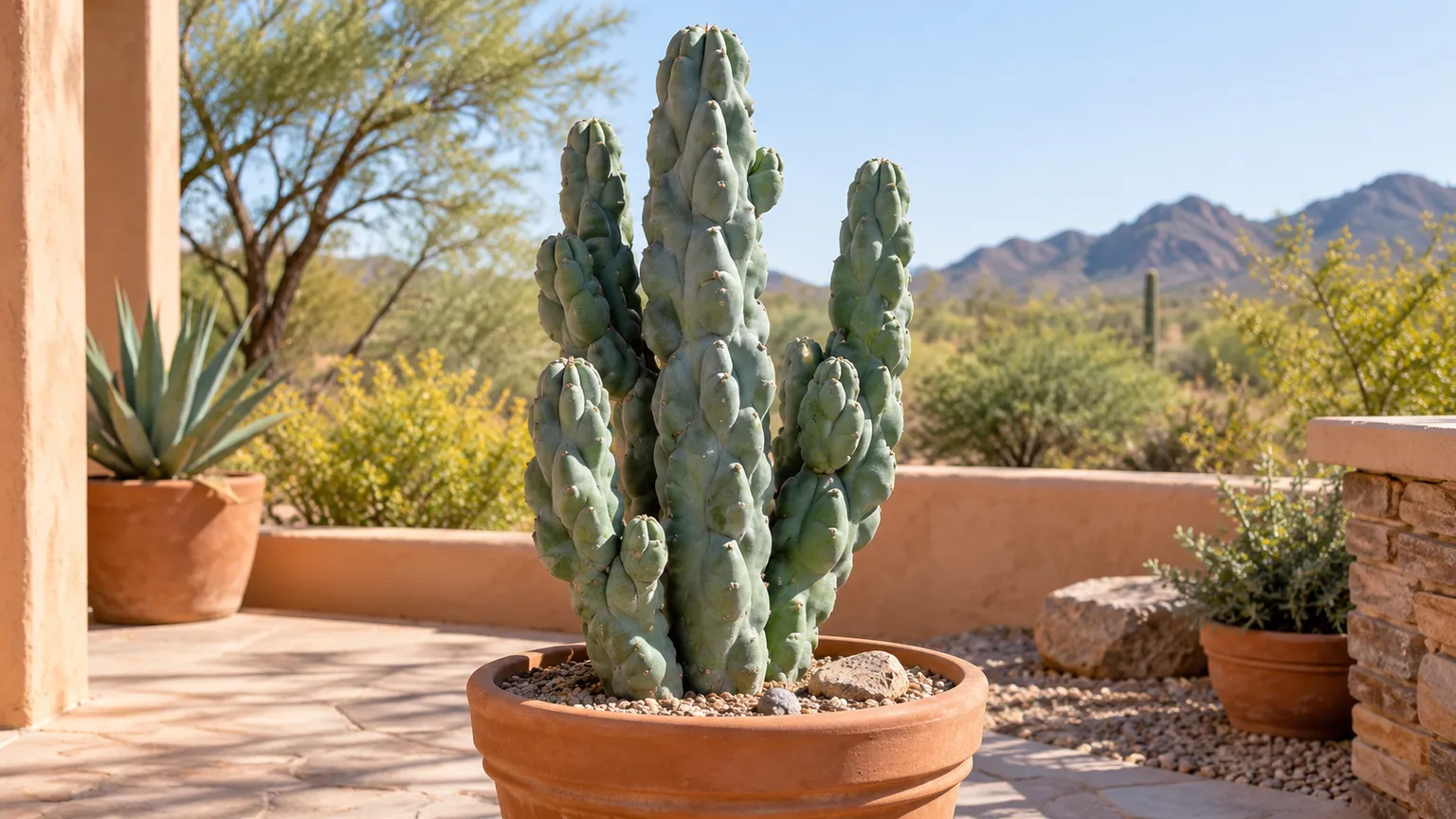
The totem pole cactus is a slow-growing columnar cactus prized for its smooth, irregularly knobby stems. Its unusual outline can look almost carved, but the plant still has ordinary desert-cactus needs: strong light, a porous root zone, and a thorough dry-down between waterings. Most problems start when a plant kept indoors or in a cool climate is treated as if it were growing in a hot, dry desert.
A useful routine depends on where the cactus lives. A plant in a sun-baked landscape bed, a terracotta pot on a patio, and a plastic nursery pot indoors do not dry at the same pace. Set the light and drainage first; then decide when to water by checking the whole root zone rather than following a weekly reminder.
A sculptural monstrose form of senita cactus
The plant is commonly sold as Pachycereus schottii f. monstrosus and may also appear under older horticultural names using Lophocereus schottii. The naming varies between references and nursery labels, so a different genus name on a tag does not necessarily mean you have a different cactus. The University of Arizona Campus Arboretum lists Pachycereus schottii as senita; specialist plant-care references use the older Lophocereus name for the totem-pole form.
“Monstrose” describes the irregular growth pattern: instead of forming the strongly ribbed, relatively regular columns associated with the ordinary senita cactus, this form develops bumpy, uneven stems. It is a cultivated curiosity of a desert species, not a tropical cactus that needs constant humidity. Its water-storing stems let it withstand dry spells, but they do not make it immune to low light, waterlogged roots, or prolonged cold.
You may encounter claims that the plant stays spineless. Mature stems are often smooth and lack the long, obvious spines many people expect from a cactus, but young growth and individual plants can have small bristles or prickly points. Check before handling, and treat a tall specimen as heavy and breakable even if it appears harmless.
Quick care snapshot
| Need | Practical target |
|---|---|
| Light | Several hours of direct sun; acclimate gradually after shade or indoors |
| Soil | Coarse, fast-draining cactus mix with enough organic matter to anchor roots |
| Water | Soak the root ball, drain fully, then wait until the mix is dry through the pot |
| Temperature | Warm growing conditions; protect from frost and prolonged cold, especially when wet |
| Pot | Drainage hole, stable base, and only modest extra room around the roots |
| Growth | Slow; avoid trying to speed it up with excess water or fertilizer |
Use this as a starting point, not as a watering calendar. A small nursery pot in summer sun may dry quickly, while a large glazed pot indoors can stay wet for weeks. The Royal Horticultural Society’s cacti guidance likewise emphasizes bright conditions, gritty free-draining compost, and seasonal changes in watering rather than treating every cactus like a tropical foliage plant (RHS growing guide). A general cactus-care overview from House Beautiful also flags overwatering, poor drainage, and unsuitable compost as common failure points (House Beautiful cactus guide).
Light: give it strong sun gradually
This cactus grows best in a bright location with direct sun for part of the day. Outdoors in a hot desert climate, it can take strong sun once established; indoors, place it as close as practical to a very bright south- or west-facing window. A bright room several feet from the glass may still be dim for a columnar desert plant, especially during short winter days.
Give a plant time to adjust before moving it from a shaded nursery, a store, or an indoor shelf into intense afternoon sun. Start with morning sun or a few hours outdoors, then increase exposure over roughly a week or two while watching the stem for pale, bleached, or sharply scorched patches. The exact pace depends on the starting conditions and local heat. A sudden move from filtered greenhouse light to hot pavement and full afternoon sun can injure the surface even though mature plants tolerate sun.
If the plant leans toward a window or new growth becomes narrower and more stretched than the older stem, light is probably inadequate. Rotate a container a small amount every week or two to reduce one-sided leaning, but do not expect an already stretched section to thicken back up. Better light supports compact future growth; it cannot reshape old tissue.
Indoors or outdoors: choose by light and climate
A totem pole cactus can live in a container indoors, but “easy houseplant” should not be mistaken for “low-light houseplant.” A sunny windowsill, sunroom, or suitable grow-light setup is a better fit than a dim office. An indoor location also lets you keep the plant dry and warm during cold or rainy seasons, which is an advantage outside desert climates.
In a warm, arid region, planting in the ground can suit the cactus if the site has sharp drainage and enough room for a large mature column. Do not put it in a low spot where irrigation or rainwater collects, beside a frequently watered lawn, or under a roof dripline that keeps the root crown wet. In a humid or rainy climate, a raised bed or container under an open-sided shelter may be safer than ordinary garden soil.
Before buying or moving a specimen outdoors, compare the plant’s actual exposure with your local conditions. A protected patio can be far hotter than the weather station, and a pot has less insulation from cold than a plant established in the ground. Keep a tall container where wind cannot knock it over, but preserve airflow around the stems and soil.
Temperature and winter protection
Warmth and dry roots are a safer combination than cold and wet. The species is associated with the warm Sonoran Desert region, but hardiness claims for a nursery-grown monstrose specimen should not be treated as a guaranteed frost rating. Cold tolerance depends on how long the temperature stays low, whether the root ball is wet, the plant’s acclimation, and whether it is in a pot or protected in the ground.
If freezing weather is possible, move a potted plant to a bright, protected area before the cold snap rather than waiting for visible damage. A garage can protect it briefly from frost, but a cactus left in a dark garage for weeks may weaken; return it to good light once the danger passes. For landscape plants in marginal climates, choose the warmest, driest microclimate and do not rely on a blanket zone number to compensate for winter rain or a poorly drained site.
In winter, growth and water use usually slow when light and temperatures fall. Let the mix dry completely and water sparingly only when the plant is warm enough to use that moisture. A heated room with bright light may not produce a deep dormancy, so adjust based on conditions instead of imposing a strict “no water all winter” rule. Avoid placing it against a cold window or directly beside a heater, where temperature swings and dry heat can stress the stem.
Soil and drainage that let roots breathe
Use a cactus or succulent mix that becomes dry and airy rather than staying dense and damp. Many commercial mixes contain more fine peat or coir than a desert cactus needs indoors; improve one by blending in coarse pumice, lava rock, expanded shale, or coarse perlite. The goal is not a specific magic recipe but a mix that drains quickly, remains stable around the roots, and does not collapse into a wet block after repeated watering.
A practical starting blend for a container is roughly one part potting mix to one or two parts coarse mineral material by volume. In a hot, dry climate, retain a little more organic material so the roots do not dry before they can take up water; in a humid home or cool room, use a grittier blend. Avoid fine play sand or beach sand as the main amendment: very small particles can fill air spaces and make the mix denser rather than more porous. The RHS recommends a free-draining gritty compost for container cacti and succulents; its proportions can be adjusted for your local drying conditions.
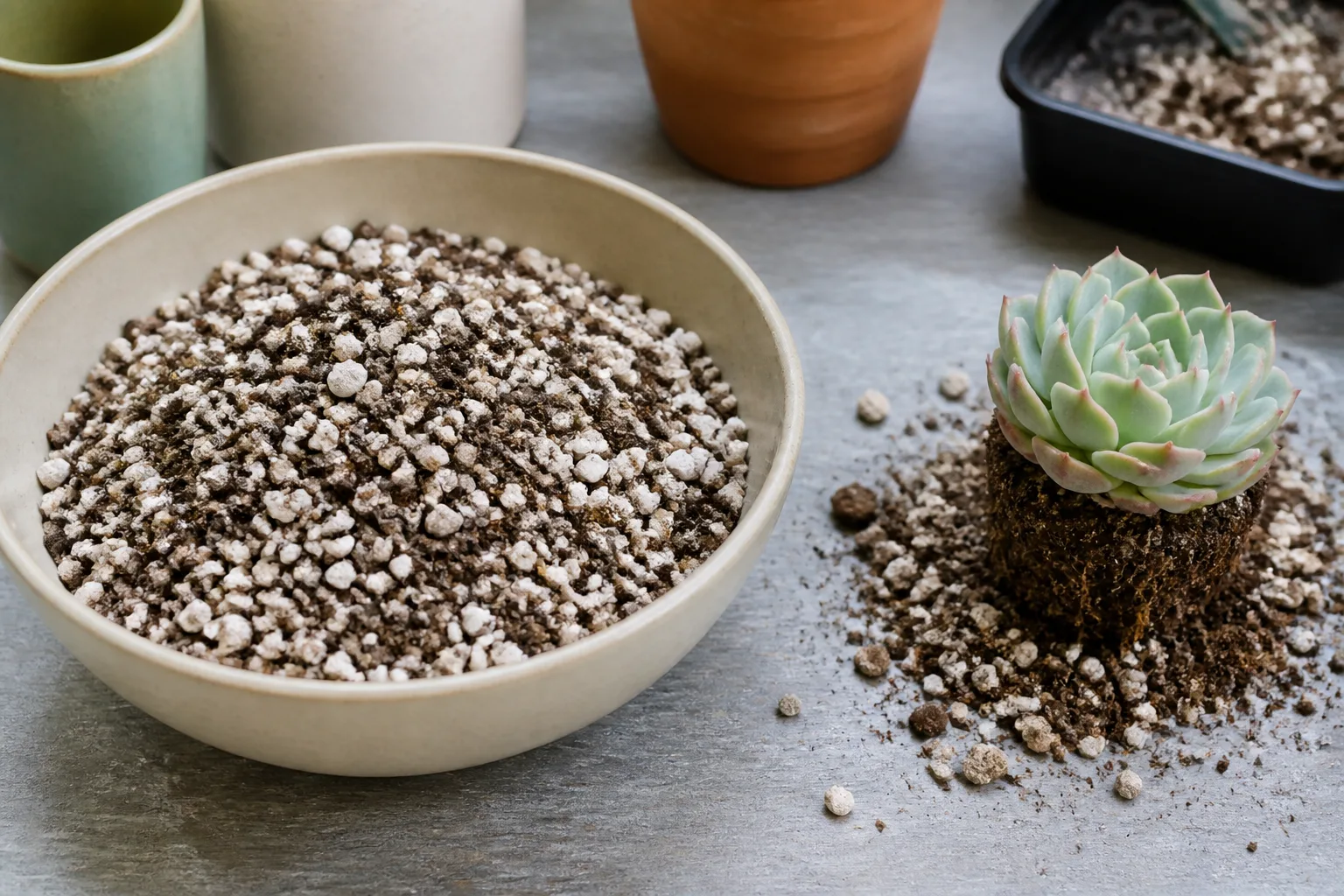
Use a container with at least one unobstructed drainage hole. Terracotta can help a mix dry faster, while glazed ceramic or plastic holds moisture longer; neither material is automatically wrong if you adjust watering. Choose a pot only slightly wider than the root mass and deep enough to support the plant. An oversized pot stores more wet mix than a small root system can use, and decorative cachepots must be emptied after watering.
Do not put gravel in the bottom of a pot as a substitute for drainage. A hole that lets excess water escape and a porous mix throughout the root zone are more useful than a coarse layer under fine soil. If water sits on the surface or takes a long time to leave the pot, repot into a better-draining medium before increasing the amount of light or fertilizer.
Water by root-zone dryness, not the calendar
During active growth in warm, bright weather, water thoroughly enough to wet the full root ball, then let every excess drop drain away. Wait until the mix is dry throughout before watering again. A wooden skewer inserted near the pot’s center, the pot’s weight, and the condition of the mix several centimeters below the surface are more useful than a fixed “once a week” rule.
The key is to distinguish dry surface from dry root zone. Topsoil can feel dry while the center of a large pot remains damp, particularly in a cool room or a heavy, glazed container. If you are unsure, wait a few days and check again. A healthy cactus stores water in its stems, so it can handle a delay better than roots can handle repeated watering in wet soil.
When you do water, avoid frequent small sips that moisten only the top layer. A full soak followed by a long dry interval encourages roots to explore the pot while preventing a permanently wet crown. Do not leave water in a saucer or cachepot. If you water from below, remove the pot when the surface has begun to show moisture and let it drain completely; bottom watering should not turn into standing water.
Reduce watering when growth slows in cool, dim weather, and increase it again only as warmth and light return. An outdoor plant may receive enough from seasonal rain, while one under a roof might need occasional water during a long dry spell. Always account for rainfall, pot material, soil texture, plant size, and temperature before deciding. Some shriveling after a long dry period can mean thirst, but a soft yellow or darkening base points to a different problem; do not respond to every change by adding water.
Feeding and realistic growth expectations
Totem pole cactus is not a fast-growing plant, and fertilizer cannot safely turn it into one. If it is healthy but growing slowly, check light, root health, and season before reaching for feed. A little cactus fertilizer during warm active growth is optional; use a diluted product at the label’s lower recommended rate and stop when growth slows.
Avoid repeated high-nitrogen feeding or applying fertilizer to bone-dry roots. Excess salts can accumulate in a pot, and lush, weak growth is not the goal for a columnar desert cactus. If you have repotted into fresh commercial cactus mix, check the label: some mixes already contain fertilizer, so additional feed may be unnecessary for a while.
Expect progress in increments rather than dramatic growth each month. A mature plant can become a substantial architectural feature over time, but container size, light, and growing season affect its pace. Avoid overpotting or keeping the mix constantly moist simply because the plant has not visibly changed; slow growth is normal for this cactus.
Potting and repotting without overpotting
Repot when roots fill the container, the plant becomes unstable, the medium has broken down, or drainage has become poor. A slow-growing specimen may stay in the same pot for several years. Repotting because the calendar says so can create unnecessary root disturbance, and moving a cactus into a much larger pot increases the volume of soil that stays wet around its roots.
Choose a container just a little wider than the root ball and heavy enough to keep a top-heavy column upright. Let the mix dry before repotting so it releases more easily and damaged roots are not immediately surrounded by wet soil. A tall specimen may need two people: one steadies the pot while the other supports the plant with folded newspaper, cardboard, or a thick towel around the stem.
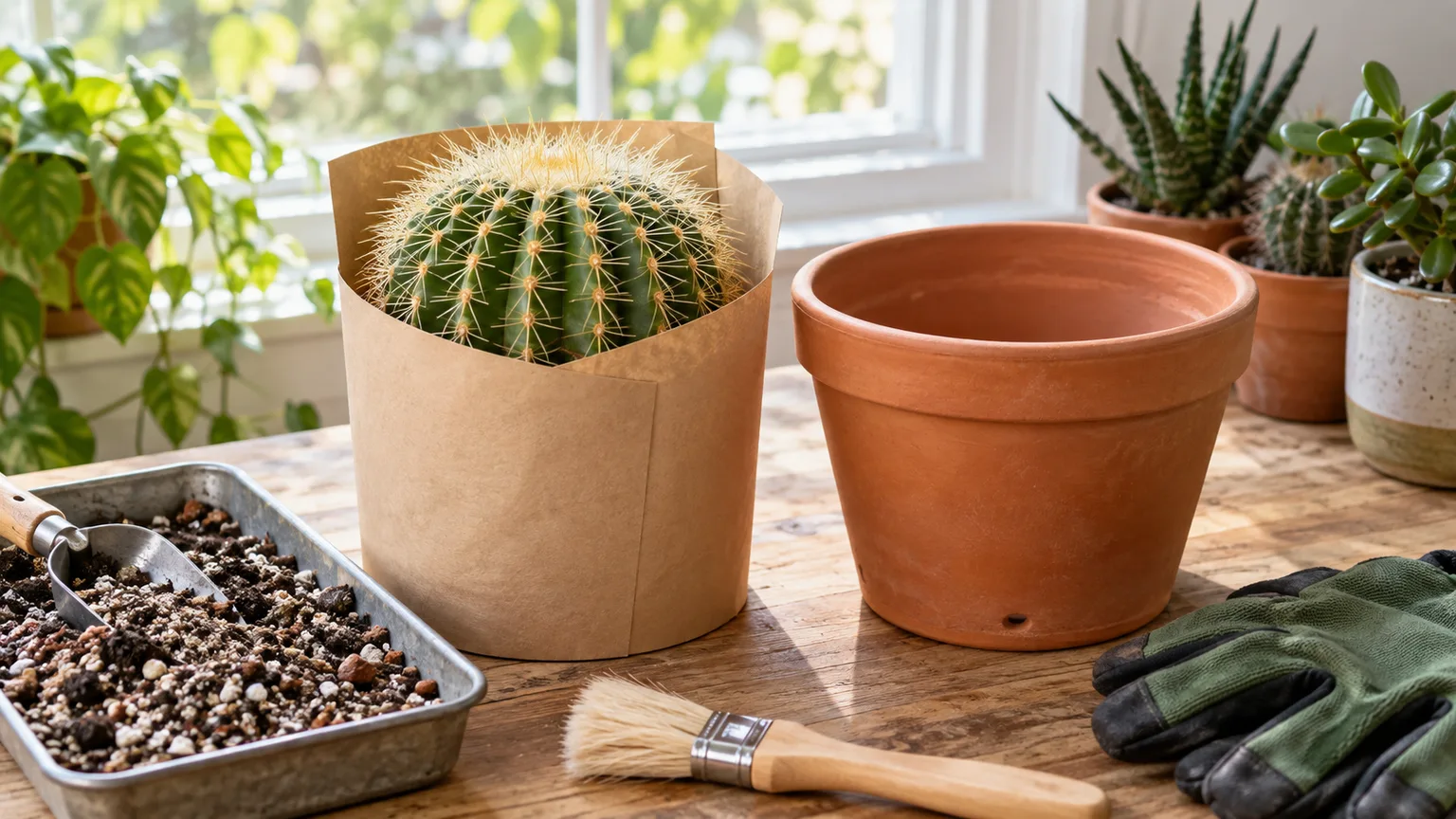
After unpotting, inspect roots without tearing them apart. Remove only roots that are clearly dead or mushy with a clean tool, then let cuts dry before potting into fresh, dry mix. Wait several days before the first watering if roots were disturbed; give larger injuries longer. Secure the plant at the same depth it was growing before, and keep soil from piling against the stem base.
Propagation by stem cuttings
A totem pole cactus is usually propagated from stem cuttings because the monstrose form is not reliably available from seed and flowering or seed set is uncommon in cultivation. Cuttings take patience; a newly potted piece may sit without visible growth while it forms roots. The Royal Horticultural Society notes that columnar cacti can be propagated from stem sections, and species-specific care references describe the same method for this form (RHS propagation guidance, Plant Care Today species profile).
Choose a firm, healthy section with no soft, dark, or sunken tissue. Use a clean, sharp blade and protect your hands and eyes; even a mostly smooth cactus can have small bristles, and a tall stem can snap under its own weight. Make a straight cut, label which end is the base, and do not try to root a cutting that was taken from a rotting section until you have cut well above all damaged tissue.
Prepare and root a callused cutting
Let the cut end dry in a shaded, airy place until it forms a dry callus. A few days may be enough for a small segment; a large cut can take longer. Do not seal it in a plastic bag or set it in water. A fresh wound surrounded by damp soil is an easy route to rot.
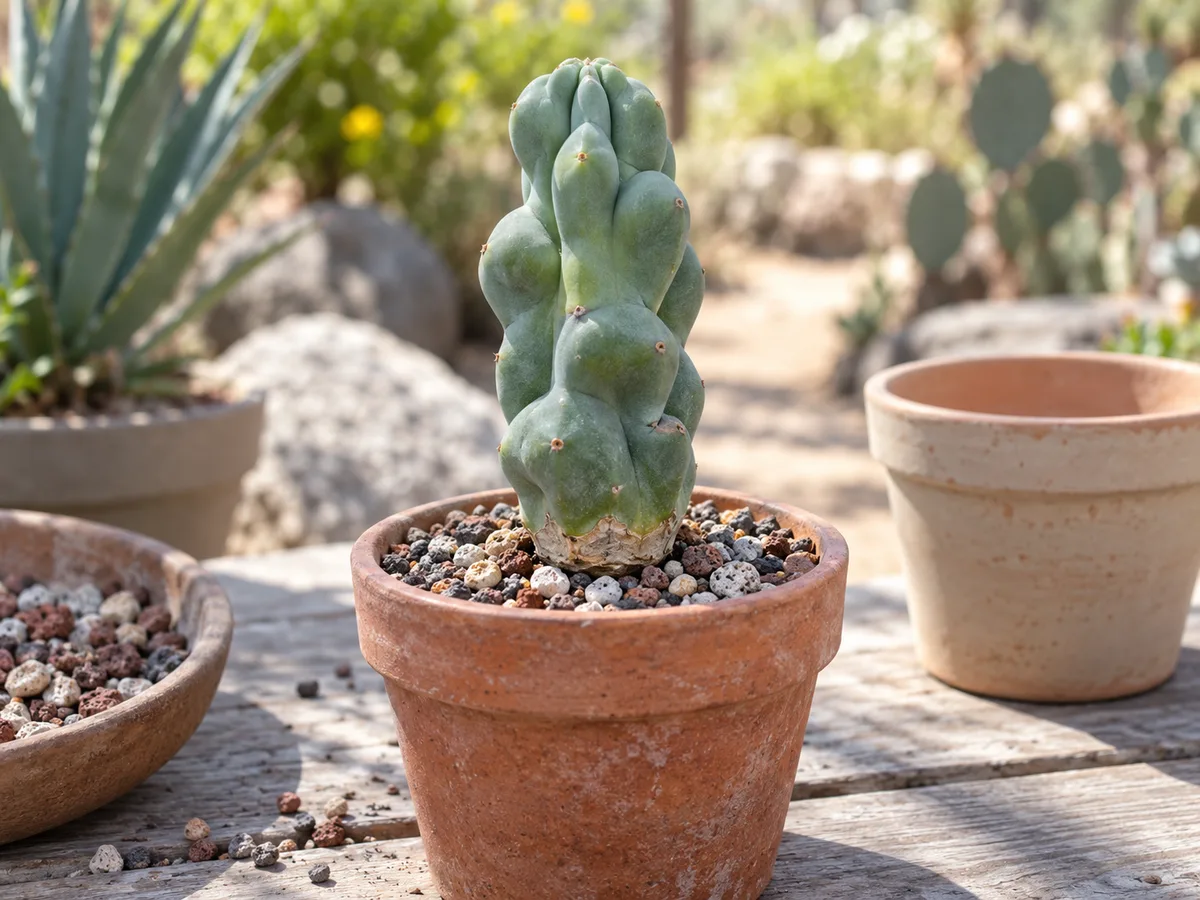
Set the callused end shallowly into dry, gritty mix and support the piece so it cannot wobble. Keep it in bright shade or gentle morning light while it begins rooting; then introduce stronger sun gradually. Do not pull on the cutting every few days to check for roots, because that can tear new growth. After several weeks, give it a very gentle stability check; once it resists movement, water modestly and allow the mix to dry again before the next soak.
Rooting can take weeks or longer, and some cuttings fail. Warmth, airflow, a dry callus, and a mix that drains quickly improve the odds, but none guarantees success. If the base turns soft or develops a spreading dark area, remove the cutting from the mix, inspect the tissue, and recut above the damage with a clean blade if enough firm material remains. Allow the new wound to callus before trying again.
Pests and disease prevention
Cacti kept in bright, airy conditions with careful watering are less likely to develop major problems, but scale insects and mealybugs can still appear. Inspect the creases and shaded sides of stems, the soil line, and the edges of a cluster where pests may be hard to spot. New plants should be checked before they join a collection, and an infested plant should be isolated while you identify the pest.
Cottony clusters may indicate mealybugs; small fixed bumps can be scale. Do not assume that every pale spot on the knobby surface is an insect: scars, corking, and natural stem texture can look similar. Use a hand lens and check whether the mark wipes away or whether insects cluster beneath it. If you confirm a pest, remove visible insects and follow the product label if you use a pesticide; test any treatment on a small area first because some products can mark cactus skin. For a serious or recurring infestation, ask a local extension service or experienced cactus grower to identify it before escalating.
Root rot is most often tied to a root zone that stays wet too long. A draining pot, airy mix, and watering only after a full dry-down address the conditions that allow rot to take hold. Avoid misting the stem or keeping the plant in a humid, stagnant corner; this cactus stores water internally and does not need a pebble tray.
Troubleshoot changes in the stem
Look at texture, location, and timing together rather than diagnosing from color alone. A scar that is firm and stable is different from an area that expands, softens, or smells unpleasant. Also review what changed recently: watering frequency, a move into direct sun, a cold night, repotting, or a new fertilizer can explain the first sign of stress.
Soft, dark, or collapsing tissue
A brown or black patch that feels soft, wet, or sunken is urgent, especially if it starts near the soil line. Stop watering and inspect the roots and stem base. If only a portion of the stem is affected, keep the plant dry, isolate it, and cut well above visibly softened tissue with a sterilized blade. The remaining firm section may be saved as a cutting, but a cut does not cure rot unless every damaged part is removed and the remaining tissue is allowed to dry.
Firm corky areas are less urgent than mushy tissue. Older stems can develop a rough, tan surface as they age, while sun injury can leave a fixed pale or brown mark after abrupt exposure. Photograph the spot and compare it after a few days; fast expansion, softness, or a wet appearance calls for action, while a stable dry scar may only be cosmetic.
Yellowing, stretching, and cracks
Yellowing is a symptom, not a watering instruction. If the stem is firm and the pot has stayed dry for a long time in warm bright conditions, a careful soak may help. If it is yellowing at the base while the soil stays wet, adding water can make the underlying root problem worse. Check moisture below the surface and inspect the root zone before changing the routine.
Narrow, stretched new growth points toward insufficient light. Move the plant to a brighter location in stages rather than placing a shaded specimen straight into harsh afternoon sun. Cracks or splits can follow a sudden swell after heavy watering, particularly after a long dry spell; let the plant dry, check for secondary soft rot, and make future watering more consistent. A dry scar may remain visible even after the growing conditions are corrected.
Prune only when there is a reason
Most healthy plants do not need routine pruning. Remove a broken or diseased section only when leaving it in place could allow damage to spread, or when a stem is unsafe or structurally unstable. Use a clean, sharp blade and make a deliberate cut through firm tissue; do not repeatedly shave or scrape a healthy stem to improve its outline.
Wear eye protection and gloves, and support the section before cutting so its weight does not tear the remaining stem. For a large outdoor specimen, use a qualified cactus or landscape professional rather than leaning over it with a household knife. Set removed pieces aside only if they are healthy enough to callus and root; diseased tissue should not be propagated.
Flowering and what mature plants can do
The main reason to grow this cactus is its sculptural form, not dependable flowers. Mature plants may bloom in favorable conditions, but flowering is uncommon in ordinary indoor cultivation, and the timing varies. If a bloom appears, do not assume that it will set viable seed; the monstrose form is often described as sterile or unreliable from seed, which is why stem cuttings are the practical way to preserve its shape.
A plant may eventually become large and heavy, so choose its permanent location with room for its columns and access for maintenance. A container helps control the footprint but does not stop the cactus from becoming top-heavy. If a specimen becomes difficult to move, protect it in place from cold and rain rather than repeatedly lifting it and risking a cracked stem.
Conclusion
Totem pole cactus care is mostly about getting the setup right and avoiding excess intervention. Give it strong light, a coarse draining mix, a pot with a real drainage hole, and enough time for the root zone to dry before you water again. Adjust that rhythm for season, container, and local weather instead of trusting a calendar or a single temperature claim.
Move it gradually into stronger sun, protect it from frost and cold wet soil, and repot only when the roots or medium call for it. If you propagate, start with firm tissue, let the cut callus, and expect slow rooting. Those choices keep a distinctive desert cactus healthy without trying to hurry a plant whose natural pace is measured in years.



