19 Types of Ivy to Grow in Your Yard
True ivies, Boston ivy, Virginia creeper, pothos, and more—compare 19 ivy plants by zone, invasiveness, wall safety, and best use in your yard.
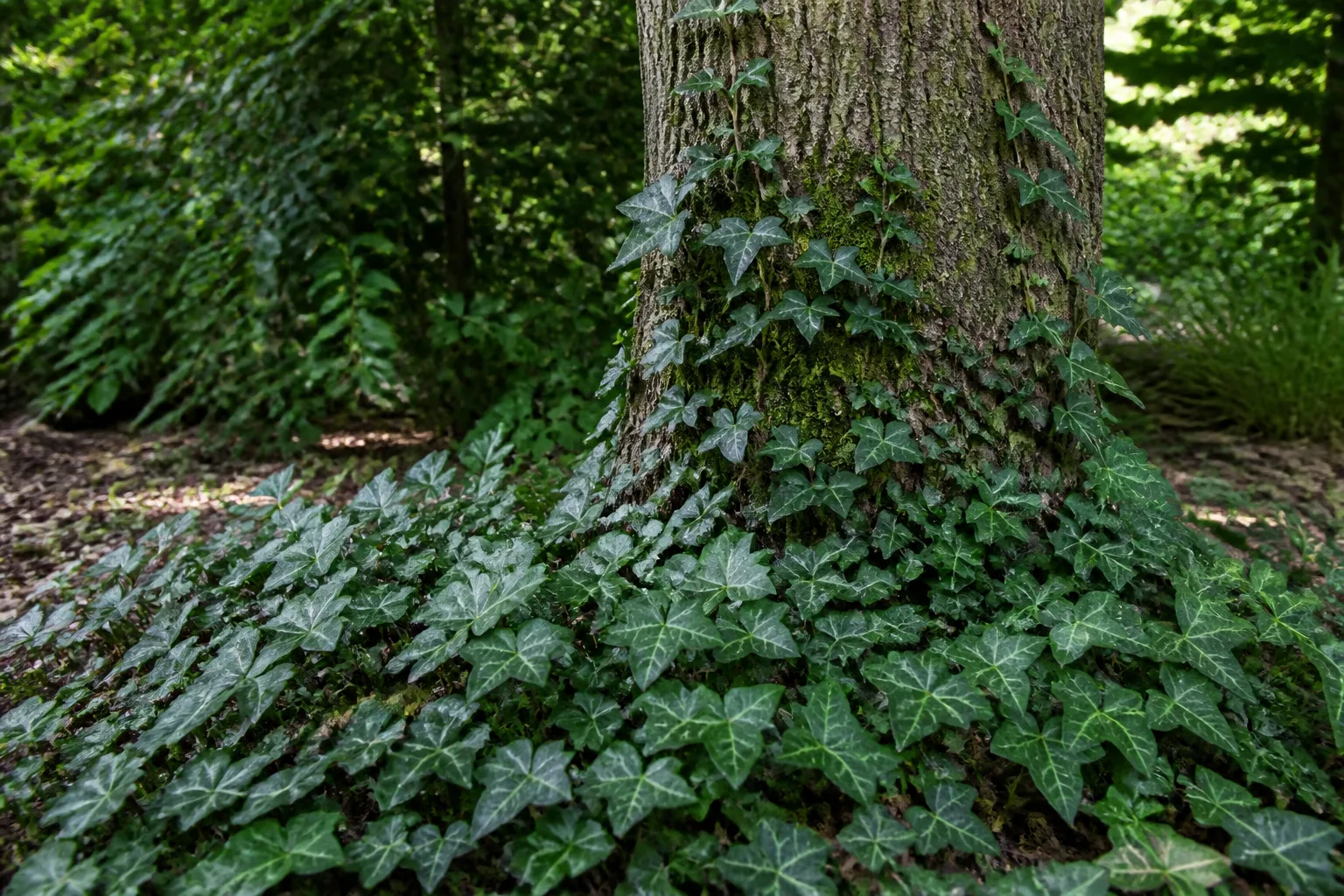
“Ivy” is one of the most overloaded words in gardening. Walk into a nursery asking for ivy and you might be shown a woody European vine (Hedera), a Japanese wall climber with blazing fall color (Parthenocissus), or a tropical trailer sold as devil’s ivy (Epipremnum) that has nothing to do with either. That naming overlap is why so many yards end up with the wrong plant in the wrong spot—a fast evergreen ground cover where a homeowner wanted a red-fall facade vine, or a masonry-climbing Hedera where a hanging-basket pothos would have been safer.
This guide walks through 19 ivy plants people actually grow, grouped by what they are botanically and what job they do best. You will get USDA zones, growth habits, invasiveness flags, and surface-safety notes so you can match a vine to a wall, slope, or container without learning the hard way that not all ivies climb the same way—or stay where you plant them.
True Ivy vs. Plants Called Ivy
True ivies belong to the genus Hedera in the ginseng family (Araliaceae). They are evergreen woody vines that climb with adventitious rootlets along their stems and spread as dense ground cover. NC State Extension describes Hedera helix reaching 20 to 80 feet high and 3 to 50 feet wide where conditions allow—numbers that explain both its usefulness and its reputation. (NC State Extension)
Many other “ivies” are unrelated plants whose common names stuck:
| Common name | Scientific name | Family | Evergreen? | How it climbs |
|---|---|---|---|---|
| English ivy | Hedera helix | Araliaceae | Yes | Rootlets |
| Boston ivy | Parthenocissus tricuspidata | Vitaceae (grape) | No (deciduous) | Tendrils + adhesive discs |
| Virginia creeper | Parthenocissus quinquefolia | Vitaceae | No | Tendrils + discs |
| Devil’s ivy (pothos) | Epipremnum aureum | Araceae | Yes | Twining / trailing |
| Swedish ivy | Plectranthus australis | Lamiaceae | Yes | Soft trailing stems |
| Ivy geranium | Pelargonium peltatum | Geraniaceae | Yes | Trailing |
Poison ivy (Toxicodendron radicans) is not a true ivy at all—it is a rash-causing native shrub/vine in the cashew family. If that is what you are trying to eliminate, see our poison ivy removal guide instead of anything below.
How to Pick an Ivy for Your Site
Before choosing a cultivar, answer three questions: What surface or bed will it cover? What is your USDA zone? Can you commit to annual edging? Fast outdoor ivies are low-maintenance only if you define the boundary they are allowed to cross.
Wall Climbers vs. Ground Covers vs. Containers
Wall and fence climbers need attachment structures compatible with the vine. Hedera rootlets grip bark, brick, and stone but can work into mortar joints and under shingles over time. Parthenocissus species use sucker-like holdfasts; NC State notes Boston ivy should not be grown on wood or shingle walls because pads are hard to remove and can ruin paint. (NC State Extension)
Ground covers and erosion control favor Hedera species with dense juvenile foliage—English, Baltic, and Irish ivy spread quickly on slopes. That same vigor is why many states list them as invasive.
Containers and indoor baskets are the right home for tender “ivies”—pothos, Swedish ivy, grape ivy, German ivy, and ivy geranium in cold climates. Keep true Hedera in pots only if you are willing to prune aggressively and never let stems touch soil outdoors where the plant is listed invasive.
True Ivies in the Hedera Genus
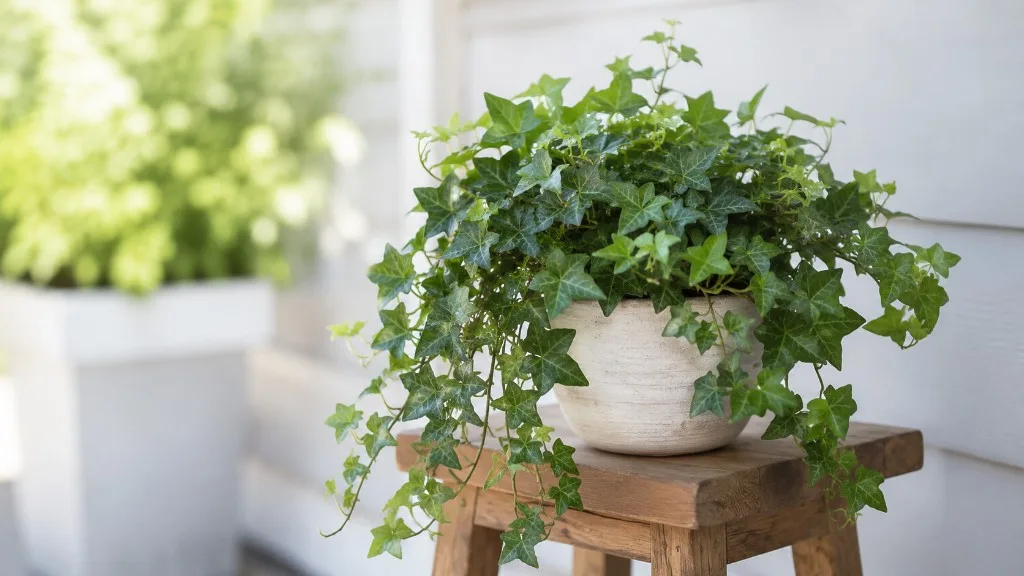
The eight entries below (English through variegated Algerian) are genuine Hedera species and cultivars. They share evergreen foliage, shade tolerance, and—outdoors—serious spread potential.
English Ivy and Its Cultivars
English ivy (Hedera helix) is the reference plant most people picture: glossy lobed leaves, shade tolerance including north walls, and stems that root as they run. It works as ground cover where you need fast fill, on masonry that can tolerate rootlet attachment, and in hanging baskets indoors.
- Native range: Europe, western Asia, North Africa
- USDA zones: 4–9 (cultivar-dependent)
- Size: 20–80 ft. climb; 3–50 ft. spread
- Light: Partial sun to full shade; variegated forms need more light
- Risk: Listed invasive in much of North America; confirm with your state or extension office before planting outdoors
White-and-green variegated English ivy (H. helix ‘Glacier’ and similar) needs more sun than all-green ivy to keep white margins from reverting to green. In the South, give variegated cultivars afternoon shade so summer heat does not bleach leaves.
Yellow-and-green variegated English ivy (H. helix ‘Gold Child’) carries gold-edged foliage that reads like a brighter ground cover. Northern gardeners can site it in brighter partial sun; southern gardeners should favor shade to protect the chartreuse color.
For full indoor/outdoor care, invasiveness checks, and pruning schedules, the dedicated English ivy care guide goes deeper than a list entry can.
Baltic Ivy and Irish Ivy
Baltic ivy (Hedera helix ‘Baltica’) is essentially English ivy with smaller, finer leaves—useful when you want a tighter ground-cover texture on a steep bank. Rooting stems make it a standard erosion-control choice, with the same invasive cautions as the species.
Irish ivy (Hedera hibernica, sometimes called Atlantic ivy) has larger leaves than English ivy and naturalizes aggressively in cool, moist regions such as the Pacific Northwest. It shares English ivy’s uses—walls, slopes, shade carpets—and its regulatory headaches. Do not assume “Irish” means safer; check local lists.
Persian, Algerian, and Warm-Climate Hedera
Persian ivy (Hedera colchica) stands out for large heart-shaped leaves—3 to 7 inches wide and up to 10 inches long. Cultivars like ‘Dentata’, ‘Dentata Variegata’, and ‘Sulphur Heart’ extend the palette. The big leaves fill topiary frames faster than English ivy, but the plant still wants shade and manageable boundaries.
Algerian ivy (Hedera canariensis) brings glossy, shallowly lobed leaves spaced farther apart on the stem for a looser look. It is less cold-hardy than English ivy—typically zones 7–11—and suits mild coastal and Southern gardens.
Variegated Algerian ivy (H. canariensis ‘Gloire de Marengo’) pairs gray-green centers with creamy margins. Once established it tolerates drought better than many Hedera species and works as a ground cover or wall planting where winter lows stay above roughly 10°F (-12°C).
Parthenocissus Vines Often Called Ivy
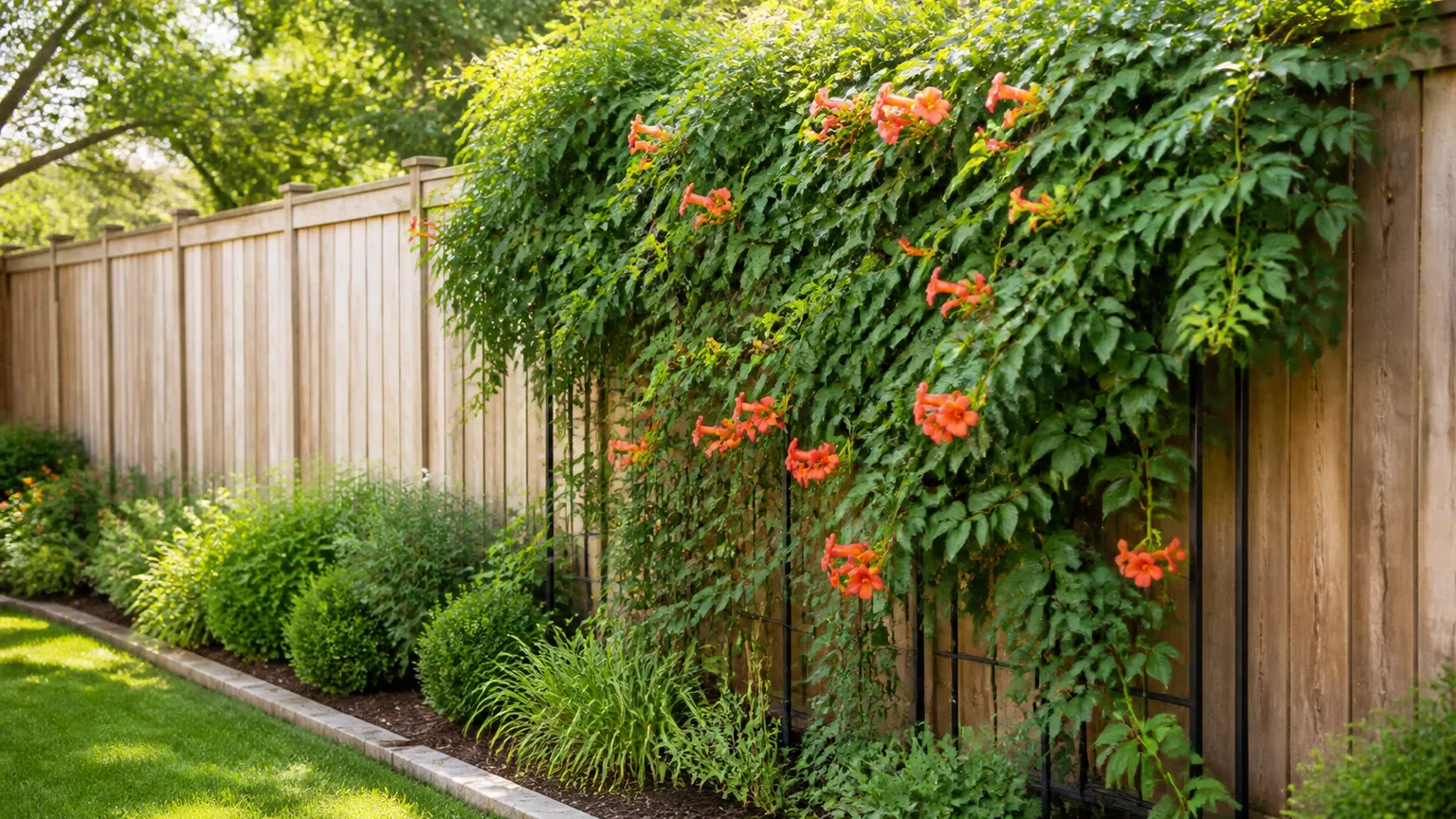
Boston ivy and Virginia creeper are not true ivies, but they solve the same design problems—green facades, fence coverage, and softening masonry—with a different attachment strategy and, for Boston ivy, spectacular fall color.
Boston Ivy and ‘Fenway Park’
Boston ivy (Parthenocissus tricuspidata) is the deciduous vine famous on Ivy League campuses and outfield walls. NC State Extension notes it is unrelated to English ivy, climbs with branched tendrils tipped by adhesive discs, and turns burgundy in autumn after a green summer. (NC State Extension)
- Native range: China and Japan
- USDA zones: 4–8
- Size: 30–50 ft.
- Light: Full sun to shade; more sun intensifies fall color
- Best uses: Brick or stone walls, trellises, large vertical structures with room to expand
- Avoid: Wood siding, shingles, gutters, and letting vines climb living trees—they can outcompete canopy
‘Fenway Park’ is a chartreuse-leaf cultivar that emerges golden in spring, greens in summer, and reds in fall. Give it full sun in the North for the brightest spring color; afternoon shade in the South prevents scorch.
Boston ivy is less structurally aggressive than English ivy on many surfaces, but holdfasts still complicate repainting and maintenance if you let the vine reach windows, soffits, or fascia boards without yearly trimming.
Virginia Creeper (Five-Leaved Ivy)
Virginia creeper or five-leaved ivy (Parthenocissus quinquefolia) is native to North America and a favorite among gardeners who want fall red without importing Hedera. It is large, vigorous, and common along roadsides and woodland edges.
- USDA zones: 3–10
- Size: 30–50 ft.
- Light: Full sun to partial shade
- Advantages: Native status in much of its range, excellent fall color, grows in sun or shade
- Cautions: Berries are toxic to humans; sap can irritate skin; still do not let it smother desired trees
Where English ivy is restricted, Virginia creeper is often the more ecologically defensible wall or fence climber—provided you prune it away from rooflines and keep it off wooden structures you plan to maintain.
Ground Ivy and Hybrid Forms
Not every ivy-named plant is a towering climber. Two useful oddities—a lawn weed turned ornamental and a shrub-vine hybrid—fill different niches.
Variegated Ground Ivy (Creeping Charlie)
Ground ivy (Glechoma hederacea) is the aromatic lawn weed known as creeping Charlie over much of North America. The variegated ornamental form is sold for edging and shade containers, with scalloped leaves and occasional purple spring flowers.
- USDA zones: 6–10 outdoors; treat as annual or houseplant farther north
- Height: Under 1 ft.
- Light: Sun to partial sun
- Reality check: The species spreads aggressively in turf; keep variegated plants in contained beds or pots unless you enjoy pulling volunteers from lawn
Tree Ivy (Fatshedera)
Tree ivy (× Fatshedera lizei) is a hybrid between English ivy and fatsia (Fatsia japonica). It inherits glossy evergreen lobed leaves from ivy and a shrubby, self-supporting habit from fatsia—typically 3 to 5 ft. tall without needing a wall.
- USDA zones: 7–10
- Light: Partial shade
- Best uses: Shade borders, foundation plantings, large containers
- Cultivars: ‘Variegata’ and similar forms add white margins
Tree ivy gives you ivy aesthetics where a climbing vine would be overkill.
Tender “Ivies” for Pots and Hanging Baskets
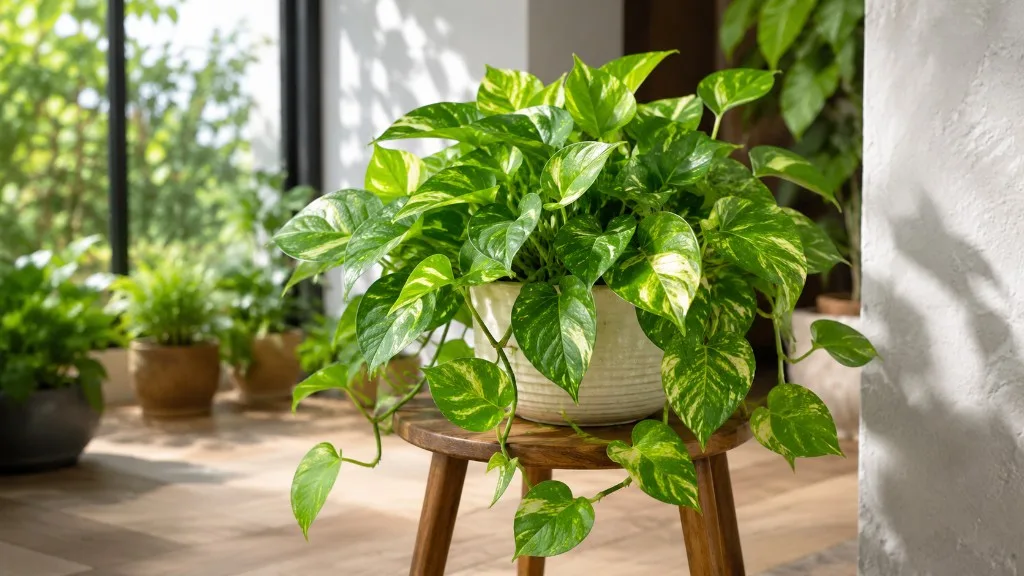
These six plants are “ivy” only in common name. In cold climates they are summer porch plants or year-round houseplants, not yard ground covers.
Ivy Geranium and Swedish Ivy
Ivy geranium (Pelargonium peltatum) is a trailing Pelargonium, not a true geranium (Geranium spp.). It shines in window boxes and hanging baskets with glossy leaves and red, pink, white, or lilac blooms.
- USDA zones: 10–11 year-round; annual elsewhere
- Size: 12–18 in. trailing
- Light: Full sun to partial shade; more sun in cool summers
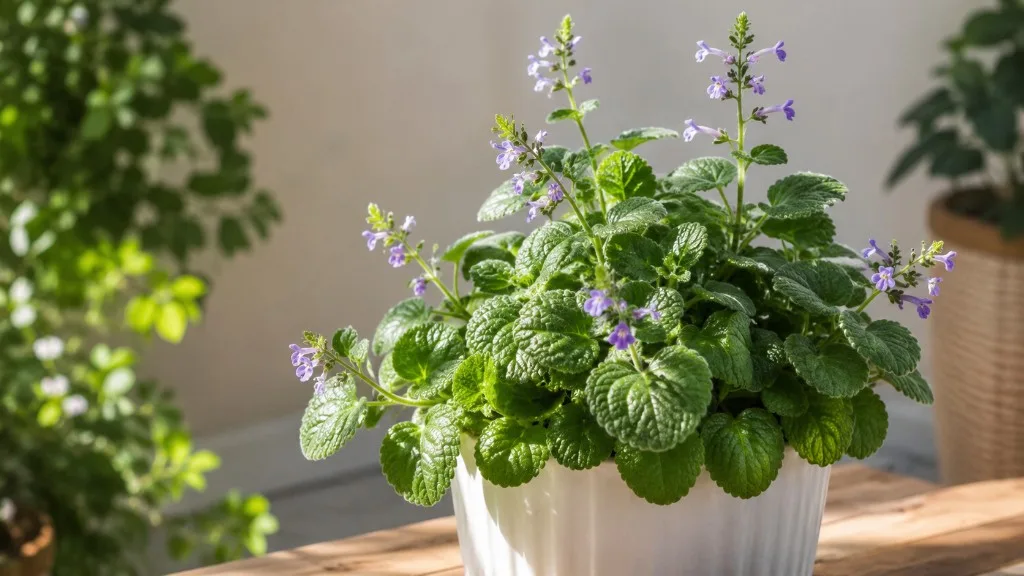
Swedish ivy (Plectranthus australis) is a soft-stemmed trailer from South Africa, popular indoors and on shaded porches. Pinch stem tips regularly to keep it bushy. The Swedish ivy care guide covers watering, light, and propagation in detail.
Variegated Swedish ivy (P. australis ‘Variegata’) adds creamy leaf edges that show up better in mixed planters than the plain-green species.
Pothos, Grape Ivy, and German Ivy
Devil’s ivy or pothos (Epipremnum aureum) is the forgiving houseplant most beginners recognize. Cultivars include ‘Marble Queen’, ‘Pearls and Jade’, ‘Neon’, and ‘Silver Satin’. It tolerates low light better than true Hedera indoors but is toxic to dogs and cats if chewed. (ASPCA)
Grape ivy (Cissus alata, also sold as Cissus rhombifolia) is a tender climber for indoor trellises or summer hanging baskets. It handles lower light than many trailers and stays manageable with occasional pinching.
German ivy (Delairea odorata) offers jagged, slightly succulent leaves and can produce showy yellow daisy flowers in mild climates. It naturalizes invasively in coastal California and similar zones; many gardeners treat it as a houseplant only unless local guidance says otherwise.
Invasive Risk and Regional Planting Rules
The most expensive ivy mistake is planting a vigorous exotic where your state or municipality already regrets it. English ivy is documented invasive in North Carolina and widespread in disturbed urban forests across the continent. (NC State Extension) Boston ivy and Virginia creeper also spread into woodlands when fruiting stems reach mature form and birds deposit seeds.
Before you plant outdoors:
- Search your state invasive plant list and county extension guidance.
- Ask whether your HOA or city restricts Hedera sales or planting.
- Never plant English or Irish ivy where it can reach tree trunks—juvenile vines add weight and shade bark; mature vines flower and fruit, spreading seed.
- Prefer native Virginia creeper over exotic Hedera where ecology matters and you can prune yearly.
- Keep tender invasives like German ivy in pots only in warm coastal areas.
Urban row-house neighborhoods add another layer: ivy rooted on a neighbor’s lot can regrow on your siding after removal, a recurring dispute documented in Philadelphia condo associations where shared walls make permanent eradication a negotiation, not a one-time chore.
Pet and Human Safety for Ivy Plants
Several ivy-group plants carry real toxicity—not contact dermatitis like poison ivy, but ingestion risk for pets and children.
| Plant | Pet risk | Human notes |
|---|---|---|
| English ivy (Hedera helix) | Toxic to dogs, cats, horses (ASPCA) | Foliage more toxic than berries; sap can irritate skin |
| Pothos (Epipremnum aureum) | Toxic to dogs and cats | Oral irritation, vomiting if chewed |
| Virginia creeper berries | Toxic if eaten in quantity | Sap may cause brief skin irritation |
| Ground ivy | Generally low pet concern | Historically used as herb; not a snack for pets |
| Swedish ivy, grape ivy | Typically listed lower risk | Still discourage chewing |
English ivy contains triterpenoid saponins; Pet Poison Helpline notes vomiting, abdominal pain, and hypersalivation in pets that ingest foliage. (Pet Poison Helpline) Hang baskets high and supervise puppies around any trailing vine.
Which Ivy Belongs on Your House?
Match the vine to the building material and your maintenance budget:
| Goal | First choice | Second choice | Avoid |
|---|---|---|---|
| Red fall facade on brick | Boston ivy | Virginia creeper | English ivy on wood |
| Evergreen north wall | English ivy (where legal) | Algerian ivy (zones 7+) | Boston ivy (deciduous) |
| Fast shady ground cover | Baltic or English ivy (managed) | Variegated Hedera in beds | Virginia creeper on open lawn |
| Hanging basket indoors | Pothos or Swedish ivy | Grape ivy | English ivy in dark corners |
| Native woodland edge | Virginia creeper | — | English or Irish ivy |
| Erosion on steep shade bank | Baltic ivy (edged yearly) | Persian ivy (large leaves) | Unpruned Hedera near forest |
Horticulturists commonly recommend stone or brick for self-clinging vines and caution against stucco, cedar shake, and wood siding, where pulling vines can strip the surface. Trim around windows, doors, soffits, and HVAC penetrations every year regardless of species.
If you want ivy aesthetics without masonry risk, install a trellis or cable system one foot off the wall and grow a twining trailer like pothos indoors or an annual ivy geranium outdoors.
Conclusion
Nineteen “ivies” really boil down to three decisions: whether you need a true Hedera evergreen, a deciduous Parthenocissus facade with fall color, or a tender trailer for pots. True ivies excel in shade and on slopes but demand regional respect and hard boundaries. Boston and Virginia creeper answer the classic ivy-wall look with less evergreen weight—still not maintenance-free. Pothos, Swedish ivy, and their kin belong in baskets, not blanketing your local woods.
Check your zone, your wall material, and your state’s invasive list before buying. Prune vertical vines away from rooflines annually. Keep toxic species away from curious pets. Get those three right and ivy stops being a neighborhood controversy and becomes the useful ground cover or facade plant you actually intended.



