What Happens If You Don’t Fertilize Vegetables?
Find out what happens if you don’t fertilize vegetables, when soil reserves are enough, and how to fix a real shortage without overfeeding your garden.
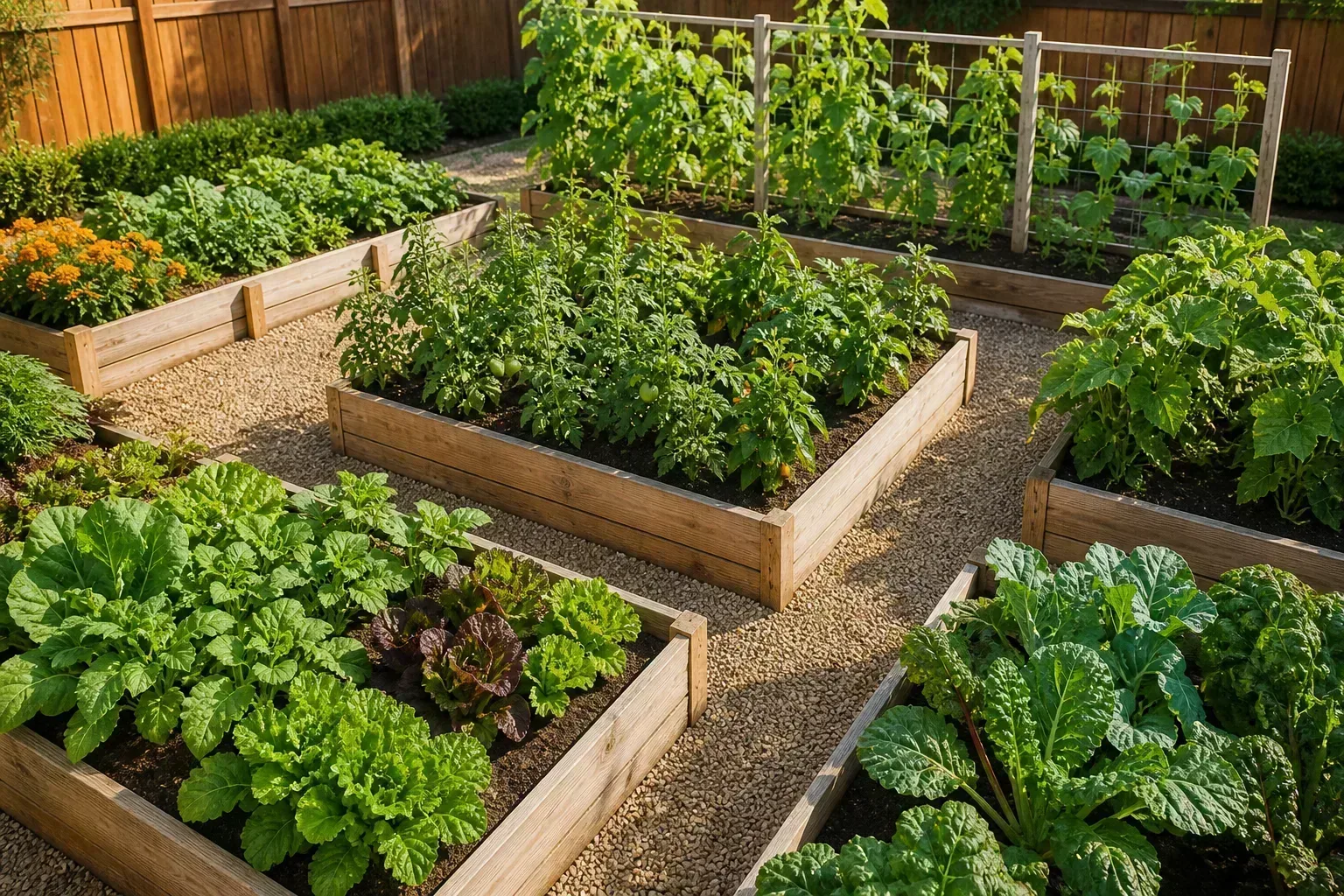
If you forgot to fertilize your vegetable garden, don’t rush out with a bag of plant food. A garden does not run on a calendar, and missing one application does not automatically make the soil empty or the crop fail. If the soil already supplies what the plants need, they may grow and produce normally; if a nutrient is genuinely short, growth or harvest can gradually fall below the garden’s potential.
The useful question is not “Did I fertilize?” but “Can this soil supply this crop at this stage?” Soil fertility depends on what was in the bed before planting, what has been added since, how nutrients become available, and whether roots can take them up. A soil test, not a blanket fertilizer dose, is the best starting point when you are unsure.
The short answer: one skipped feed usually isn’t a crisis
Vegetables need nutrients, but they do not all need a fresh dose of packaged fertilizer every few weeks. Plants take up nutrients already present in the soil, including nutrients released as organic matter decomposes. A missed spring application may have little visible effect in a fertile, amended bed, while the same omission can matter more in a newly built bed with poor soil or in a long-season crop with high nutrient demand.
When a nutrient shortage does limit growth, the change is usually gradual: plants may grow more slowly, stay smaller, produce fewer leaves or flowers, or yield less than they could have. The size of the effect depends on which nutrient is short, how severe the shortage is, when it occurs, and how long the plant has to recover. A plant that looks healthy after a skipped application is not proof that fertilizer never matters; a struggling plant is not proof that fertilizer is the cause.
Fertilizer adds nutrients; it doesn’t automatically improve every soil
Fertilizer supplies plant nutrients, commonly nitrogen (N), phosphorus (P), and potassium (K), in forms roots can take up. Those nutrients support processes such as leaf and stem growth, root development, and water regulation. The three numbers on a fertilizer label show the relative percentages of N, phosphate, and potash in the product; they do not tell you that every garden needs all three in the same proportion.
A soil test can show whether the bed has enough nutrients already and whether pH may be limiting their availability. Nebraska Extension describes fertilizer as a way to provide nutrients the soil does not adequately supply, and notes that pH affects availability; the recommended amendment depends on the test, not on a generic “vegetable” label. (University of Nebraska–Lincoln Extension)
Fertilizer and soil amendments do different jobs
Compost, leaf mold, and well-rotted organic materials can help build soil structure and support soil organisms. They can also release nutrients, but the amount and timing vary with the material and how far along it is in decomposition. Colorado State University Extension distinguishes amending soil for its structure from fertilizing to supply nutrients; adding compost does not guarantee that a crop receives a predictable amount of nitrogen when it needs it. (Colorado State University Extension)
That distinction works both ways. A bed can have rich, crumbly soil yet still need a nutrient identified by a soil test, and a garden can have adequate nutrients without a recent application of commercial fertilizer. Compost is valuable, but it is not a universal substitute for a crop-specific fertilizer recommendation. Repeated heavy compost additions can also push some nutrients or soluble salts too high, so “natural” does not mean unlimited or automatically balanced.
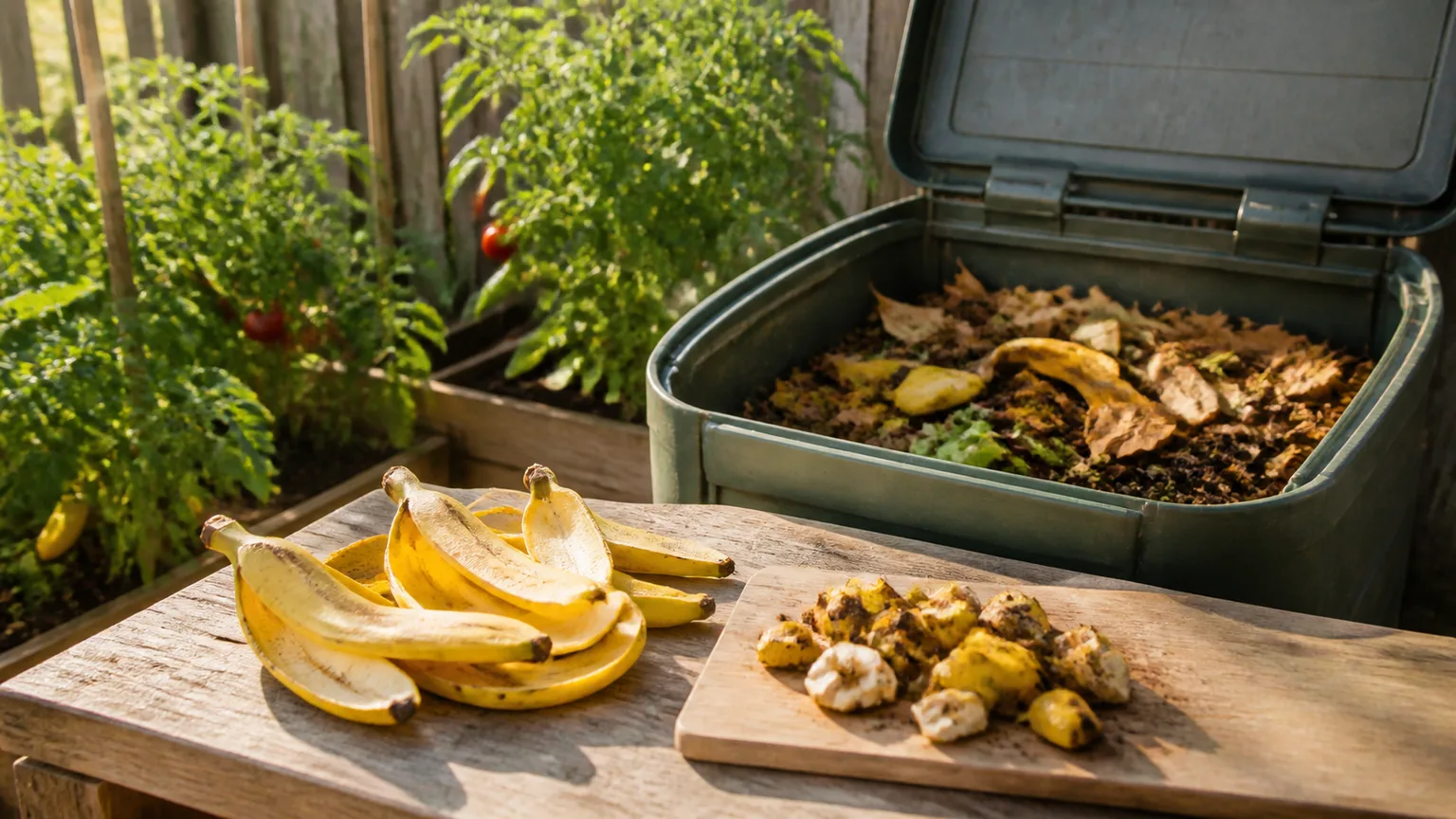
Compost can build soil and release nutrients, but the amount and timing vary by material.
What actually happens if a crop is short on nutrients?
A nutrient shortage restricts the plant process that depends on that nutrient; it does not always produce an obvious, unique pattern on the leaves. Nitrogen is often associated with green, leafy growth, while phosphorus and potassium play different roles in roots, flowering, fruiting, and general plant function. The outcome may be less vigor or yield rather than a dramatic collapse.
That matters because gardeners often discover a problem only after growth has slowed or fruit set looks disappointing. Adding fertilizer at that point might help if the shortage is real and the crop can still respond, but it cannot instantly replace lost growing time or reverse every symptom. A short-season radish near harvest and a tomato plant with months left have different opportunities to benefit from a midseason correction.
Nitrogen shortage slows leafy growth
Nitrogen is needed in relatively large amounts and moves within the plant. When it is in short supply, older leaves may become paler or yellow while growth slows; the plant may be less leafy and smaller overall. In some crops that can mean less harvestable leaf, smaller plants, or reduced capacity to support a later crop.
But yellow leaves are not a fertilizer diagnosis. Older leaves naturally age, and yellowing can also follow waterlogged roots, drought, root damage, disease, or normal end-of-season decline. Nevada Extension notes that excess nitrogen can also cause trouble: plants may grow rapidly and become leggy, and fruit development in crops such as tomatoes and cucumbers can suffer when leafy growth is pushed at the wrong time. (University of Nevada, Reno Extension)
Phosphorus, potassium, and micronutrients affect different jobs
Low phosphorus or potassium can constrain growth and yield, but adding either without a reason can create a different imbalance. Phosphorus availability changes with soil conditions, particularly pH and temperature, and many established soils already contain adequate or high levels. A plant may show poor nutrient uptake even when a nutrient is present if pH or root conditions prevent it from becoming available.
Other nutrients, including iron and magnesium, can produce leaf-color changes too. Because the same symptom can arise from different causes, do not treat purple, pale, or scorched foliage as proof that a specific nutrient is missing. A soil test is useful for soil chemistry; if the test does not explain a persistent problem, look at roots, irrigation, temperature, pests, and disease before adding more nutrients.
Why a garden may cope with one missed application
Garden soil holds a history. A bed that has been managed for years may contain residual nutrients from past amendments, and organic matter can release some nutrients as it breaks down. A new garden filled with low-organic-matter soil has less of that buffer. The same fertilizer schedule can therefore be too much for one plot and too little for another.
GrowVeg describes how soil testing in established, compost-amended beds can reveal nutrient reserves that differ from newer beds, and how the results can guide whether additional fertilizer is needed. That is why a single missed application is often less informative than the bed’s test result and management history. (GrowVeg)
Soil history and organic matter change the starting point
Before deciding what to do, remember whether you added compost, manure, bagged raised-bed mix, lime, or fertilizer in the last year or two. The material, amount, and timing matter. Some amendments release nutrients slowly; others may contain more phosphorus, potassium, or salts than expected. A garden that has been amended repeatedly is not necessarily “hungrier” just because you skipped this spring.
Soil pH is another part of the starting point. If the pH is too low or too high for a crop, certain nutrients become harder for roots to access. Adding fertilizer may increase the amount of a nutrient in the bed without solving the underlying availability problem. Fine Gardening’s soil-testing guide explains that a test can report pH, texture, organic matter, nutrient levels, and fertilizer recommendations; a representative sample tells you far more than looking at the soil surface. (Fine Gardening)
Containers run out of buffer sooner than in-ground beds
A vegetable growing in a pot or grow bag has a smaller volume of growing medium than one rooted into a garden bed. Water drains through that limited volume, and soluble nutrients can leave with it. Container vegetables may therefore need more deliberate feeding than an established in-ground bed, but the right plan depends on the potting mix, crop, watering, and fertilizer already included in the mix.
Check the potting mix label and the fertilizer label before adding anything. If the mix contains a slow-release fertilizer, topping it with another product may double-feed the plant. If the container has been watered heavily for weeks and no initial fertilizer was included, use a product labeled for edible crops and container use, following its rate and schedule rather than improvising a concentrated “catch-up” dose.
Crops don’t all respond to missed feeding the same way
“Vegetables are heavy feeders” is too broad to be useful as a fertilizer plan. Crops differ in nutrient demand, root depth, time in the ground, and the part you harvest. A leafy green harvested in a short window has a different need from a tomato producing fruit for months; neither should be fed by a calendar that ignores soil conditions.
Colorado State Extension groups crops such as corn, potatoes, and cole crops among those that can use substantial nitrogen, while beans, peas, tomatoes, and vine crops can need less nitrogen in some garden conditions. Its examples are regional guidance, not universal rates, so use your own soil test and local extension recommendations to choose a product and amount. (Colorado State University Extension)
Leafy crops, fruiting crops, roots, and legumes
Leafy greens depend on steady vegetative growth, so inadequate available nitrogen can reduce leaf size or delay harvest. Long-season crops such as corn and many brassicas may be more exposed to a shortage that persists through growth. Fruiting crops need enough nutrition to build roots, stems, leaves, flowers, and fruit, but extra nitrogen at the wrong time can encourage foliage over fruit.
Root crops such as carrots and beets still need balanced conditions; they are not “no-fertilizer” crops. Too much nitrogen can favor top growth or distort the balance between foliage and the harvested root, while a true nutrient shortage can limit the plant overall. Beans and peas can obtain some nitrogen through their partnership with nitrogen-fixing bacteria, but that does not make every soil nutrient irrelevant or make legumes immune to poor pH, drought, or other stresses.
For a mixed bed, use crop-specific local guidance and test the soil rather than spreading a heavy-feeder rate across everything. A more targeted plan can feed the part of the bed that needs it and avoid adding unnecessary phosphorus or nitrogen where it does not.
Signs are clues, not a fertilizer prescription
A vegetable garden that has run short on an available nutrient may show slow growth, pale foliage, small leaves, weak stems, or disappointing yield. Some nutrient problems appear first on older leaves; others show up on new growth or fruit. These patterns can help you decide what to investigate, but they do not identify a deficiency on their own.
For example, tomato leaves with a purple cast can point a gardener toward phosphorus, yet cool soil can also restrict phosphorus uptake, and cultivar traits or other growing conditions may affect leaf color. The photograph below shows a visual clue, not a diagnosis; a soil test and a look at the plant’s growing conditions are needed before treatment.
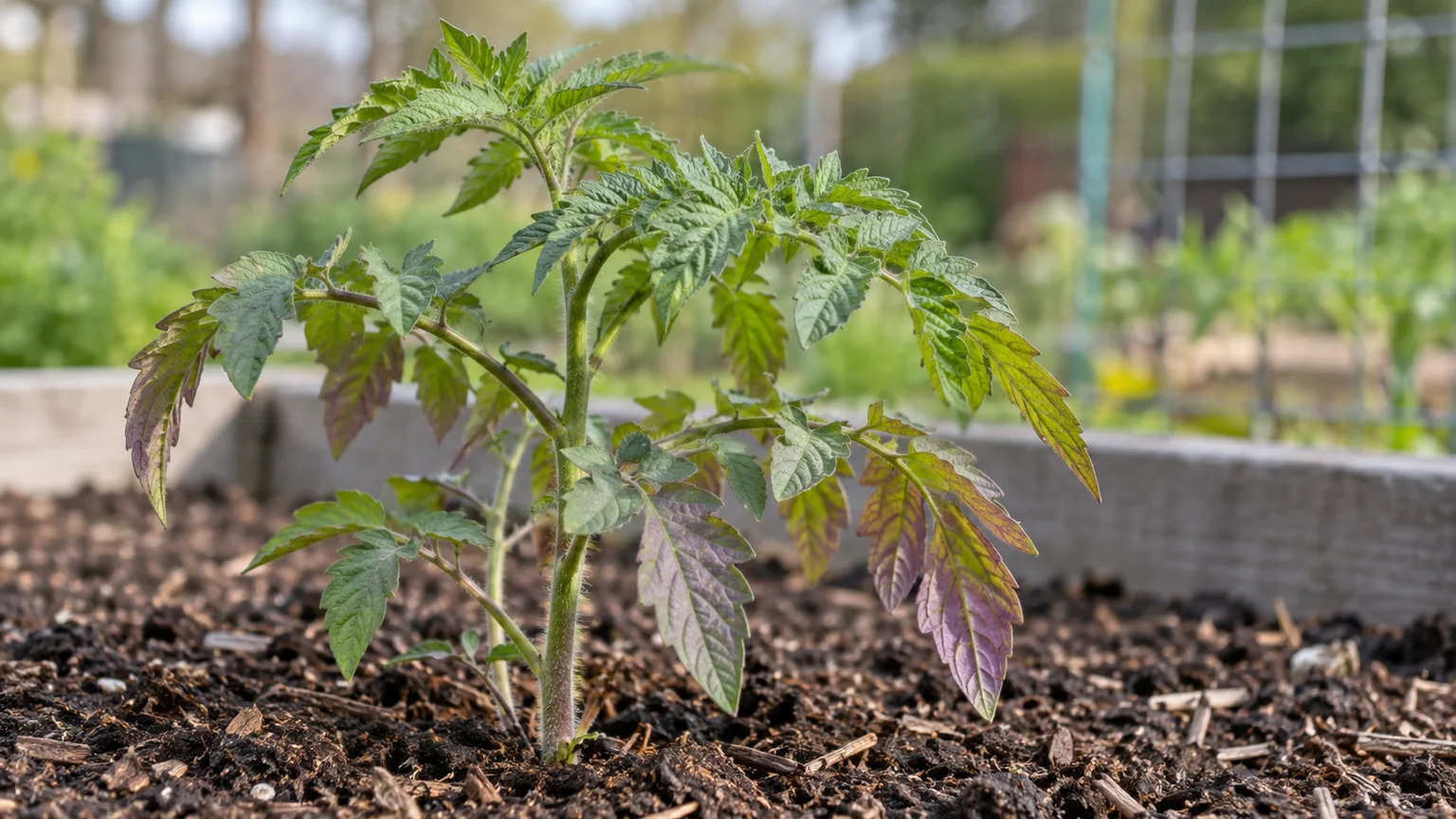
Purple tomato foliage can have several causes; color alone does not prove a fertilizer shortage.
Rule out water, temperature, roots, and pH
Check the soil moisture several inches below the surface, not just the dry crust on top. Roots in soil that stays saturated can struggle to take up nutrients; a drought-stressed plant can also slow down even if nutrients are present. Temperature, compacted soil, transplant shock, poor drainage, pest damage, and disease may create similar symptoms.
Next, look at the pattern. Is one plant affected, a whole row, or every crop in the bed? Did symptoms begin after a cold spell, a major change in watering, or a fertilizer application? A single struggling plant may have a local root or irrigation issue; symptoms across multiple crops may point to a shared soil or environmental condition. This quick check helps prevent a common mistake: treating nutrient symptoms that are actually caused by something else.
What to do after you realize you skipped fertilizer
Start with the bed and the plants, not a bag. Write down what you grew there last year, which amendments you added, and when the plants began to look different. Then check for moisture, drainage, pests, and other conditions that can limit uptake. If the plants are growing steadily and look healthy, there may be nothing to correct immediately.
If growth is weak, harvest is poor, or you are starting a new planting, arrange a soil test through a local extension service or another reputable lab. The report can identify pH and key nutrient levels and translate them into a recommendation for your region. There is no universal fertilizer rate for every vegetable bed: soil type, test results, crop, and local guidance all matter.
Sample soil before adding anything
For a useful result, take a representative sample rather than scooping one handful from a convenient corner. Follow the lab’s instructions for depth and number of subsamples; many extension services ask gardeners to combine several samples from the same bed while avoiding compost piles, fertilizer bands, paths, and unusual spots. Submit different beds separately when their histories or soil differ.
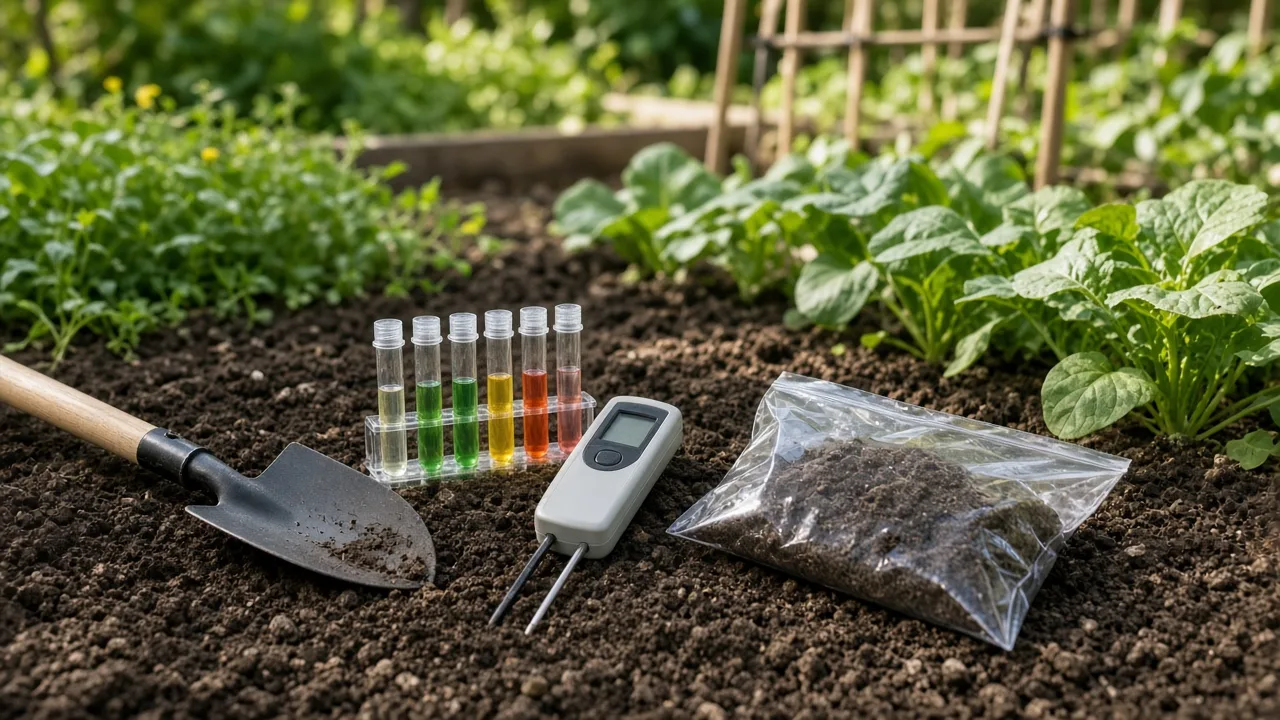
A soil test can show whether the bed needs nutrients or a pH adjustment before you add anything.
A test is most useful before the next crop goes in, but it can still help during the growing season if a problem is unresolved. Tell the lab or extension office what crops are growing and what you have already added. Do not apply lime, sulfur, bone meal, or a high-phosphorus “bloom booster” just because a leaf looks pale or a social post recommended it. The soil test can show when a product is unnecessary, which is just as valuable as knowing what to add.
Decide whether a midseason correction can still help
The timing and crop stage determine whether a correction can make a practical difference. A long-season crop with new growth ahead may respond to a confirmed shortage; a crop close to harvest may not gain much from a late application. A soil test may also show that the problem is pH or another factor that cannot be corrected instantly.
If you cannot test immediately, avoid large or repeated applications. Ask your local extension office for crop-specific guidance, especially if symptoms are spreading or you are unsure whether the issue is a nutrient deficiency. Keep the fertilizer package so you can follow the correct dilution or area rate if an application is recommended. Never compensate for a missed feeding by multiplying the next dose.
If testing shows a need, feed precisely and gently
Use the soil-test recommendation for the specific crop and region, then check the product label for how much of that fertilizer supplies the recommended nutrient. A bag’s N-P-K numbers are percentages, not a direction to apply the same amount of every formula. Two products with different analyses deliver different quantities of nutrients at the same weight, so avoid transferring a rate from one product to another without doing the calculation or following the lab’s conversion.
Apply only the nutrient needed. If a soil report says phosphorus and potassium are already sufficient but recommends nitrogen, a fertilizer that adds all three may increase levels you do not need. When the recommendation calls for a side-dressing, place it according to the label and crop guidance, keep dry fertilizer off leaves and stems, and water it in as directed. Do not place concentrated fertilizer against seeds or roots; over-application can burn roots and set plants back.
A missed application does not mean every crop needs foliar feeding, starter fertilizer, compost tea, or a monthly liquid product. Those are delivery methods, not proof that the plant needs nutrients. The simplest effective plan is usually a measured soil-based application at the timing recommended for that crop, then an observation period before you add more.
Fertilizer mistakes that can cause more trouble than skipping
The first mistake is fertilizing by habit. A recurring schedule can be convenient, but if it ignores soil fertility, weather, crop stage, or what was already mixed into a bed, it can add nutrients without a need. Nutrients can move out of the root zone or contribute to water pollution; excess nitrogen can push leaf growth when a fruiting crop needs to set and fill fruit.
The second is assuming more compost always solves nutrient needs. Compost composition varies, and some composts or manure-based amendments can add significant nutrients or soluble salts. Use mature, appropriate compost in measured amounts, and consider testing soil that has received repeated additions. Colorado State Extension notes that manure and manure-based compost can carry salt concerns and that nutrient release is slow; its regional guidance reinforces why material and soil conditions matter.
The third is diagnosing by a single symptom. Yellowing, purpling, scorching, and stunting can reflect water, temperature, pH, root damage, disease, or normal aging. A fourth is following a generic crop label such as “heavy feeder” as if it were a diagnosis. Crop groups help set expectations, but they cannot tell you what is already in your bed.
Finally, do not apply fertilizer to very dry soil or put concentrated material against roots. Follow the product label, use the crop’s local recommendations, and wait long enough to see whether plants respond before adding another dose. Fertilizer is useful when it fills a real gap; more product does not make an uncertain diagnosis more accurate.
Conclusion
Forgetting to fertilize a vegetable garden does not automatically ruin the harvest. If the soil can supply enough nutrients, crops may keep growing; if a shortage develops, growth and yield may suffer gradually, with the effect depending on the crop, nutrient, soil, and season.
Before trying to catch up, check the bed’s history and current growing conditions, then get a soil test if you still have reason to suspect a nutrient problem. Follow a crop- and region-specific recommendation, and add only what the soil needs. That approach gives your vegetables a better chance than a blanket dose—and protects a healthy bed from fertilizer it never needed.



