How to Use Coconut Coir in Your Garden
Learn how to hydrate coconut coir, check for salts, and use it in seed-starting, potting mixes, garden beds, and mulch without treating it as fertilizer.
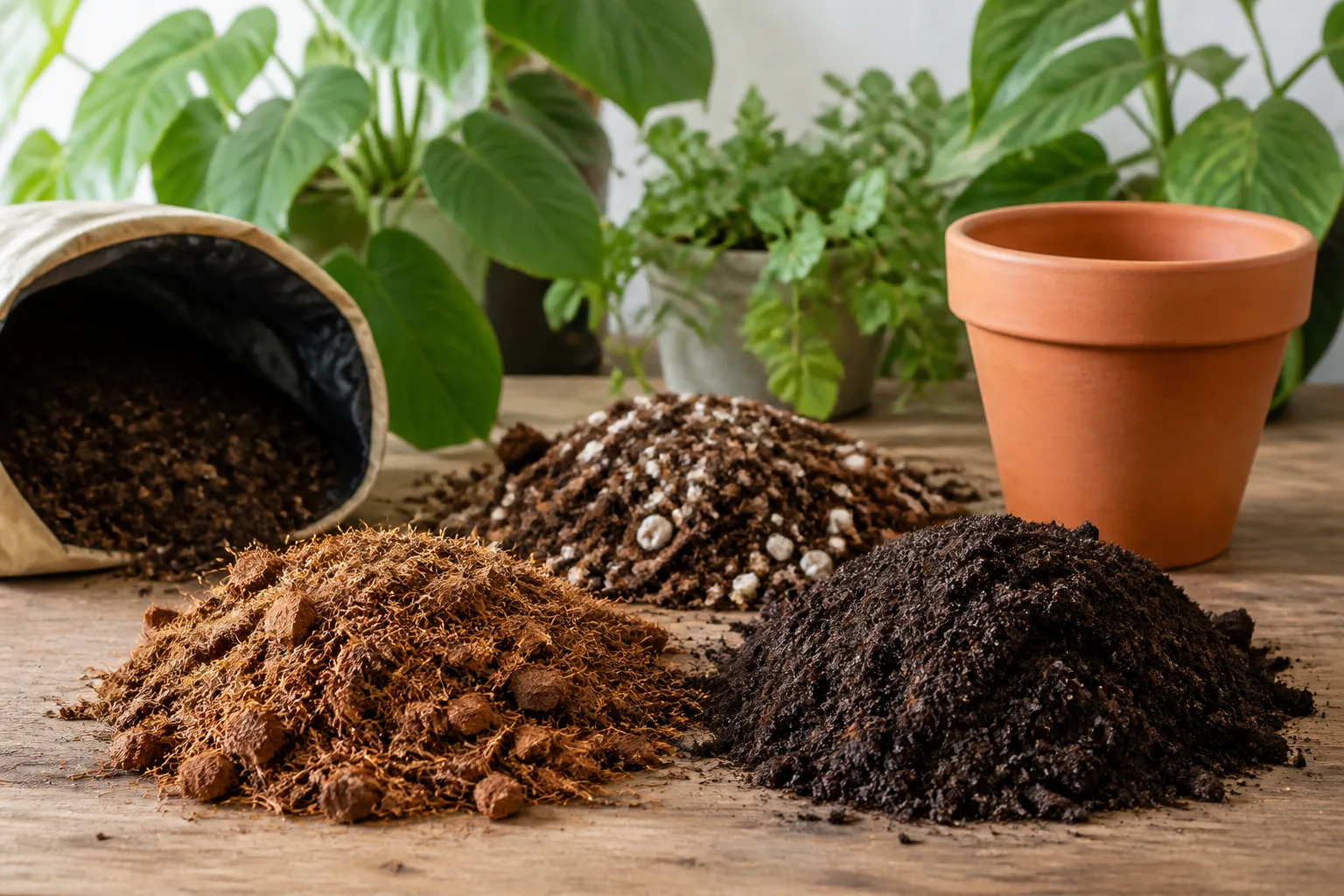
Coconut coir is most useful as a moisture-holding, soil-structure ingredient in seed-starting, potting, and garden mixes. It can help a blend stay evenly moist while leaving room for air, but performance depends on its particle size and the materials around it. Coir is not a complete fertilizer, and a compressed brick may need rinsing before it goes near seeds or roots.
The reliable sequence is simple: choose the right grade, check whether it was washed, hydrate it fully, and blend it for the job. If you remember only one distinction, make it this: coir changes the physical behavior of a growing medium; it does not provide a balanced nutrient program.
What coir does—and what it does not do
Coir is made from the fibrous husk around a coconut. After processing, the husk may be sold as fine pith, stringy fiber, or coarse chips. Fine coir products are also marketed as coco peat or coir peat, even though they are not peat moss. When wet and fluffed, the pith holds moisture and adds organic material; coarser pieces leave larger spaces in a mix.
That combination can be useful in a container where the original mix dries too quickly, or in a bed where sandy soil does not hold water well. In a dense mix, a coarser grade may help preserve air space, but fine coir alone does not guarantee drainage. Colorado State University Pueblo Extension describes gardeners using coir for seed starting, container media, soil amendment, and mulch, while noting that coir-rich containers still need regular fertilizer. Its examples also show why local conditions matter: a light coir-and-perlite container can be easy to manage but may tip in strong wind. (Colorado State University Pueblo Extension)
Coir contains few of the nutrients a growing plant needs in balanced amounts. It may carry some potassium or processing residues, but that does not make it a fertilizer or a substitute for compost, a charged potting mix, or a crop-appropriate feed. If you grow in mostly coir, plan for nutrition from the start; if you add a modest amount to a fertile garden bed, the existing soil and compost may supply much of what plants need.
Choose a coir form that fits the job
Before buying, decide where the material will go. Product labels use overlapping names, so the form and particle size are more useful than the word “coco” on the package. For seed trays and fine-textured mixes, choose a clean, finely screened pith. For a chunky container blend, look for chips or fibrous pieces that create larger gaps. For surface cover or a hanging-basket liner, choose a product intended for that use rather than assuming every compressed brick is interchangeable.
| Form | Best fit | What to watch |
|---|---|---|
| Fine pith or coco peat | Seed-starting and as the moisture-holding fraction in potting mix | Can pack tightly if used alone; low fertility and variable salts |
| Coir fiber | Basket liners, mats, and some surface covers | Can dry faster at exposed edges; not a ready-made potting mix |
| Coir chips | Chunky container media and some hydroponic systems | Large pieces do not behave like fine pith; check grade and salt treatment |
| Compressed brick or block | Bulk pith or fiber that expands when wet | Final volume and water requirement vary by product |
| Coir pot or pole | A container or support accessory | The object does not replace suitable growing media or plant nutrition |
Pith, fiber, and chips behave differently
Fine pith is usually what gardeners mean when they say “coco peat.” It mixes evenly and can hold a lot of moisture, which makes it handy for germination and for blending with compost or a purchased potting medium. Because the particles are small, a pith-heavy mix can remain too dense for plants that need a fast dry-down. Add a structural ingredient such as perlite, pumice, or aged bark when the crop and container need more air space.
Long fibers and chips do a different job. Fibers help form liners or a protective surface layer; chips create a coarse structure but are not a direct substitute for perlite, which contributes mineral air space without the same water-absorbing organic texture. Do not buy coarse chips for a seed tray just because “coir” sounds like the right ingredient. Match the grade to the roots, then check that the finished mix drains and re-wets evenly.
Read the label for salt treatment
Coir quality varies with where and how the husks were processed. Some batches can contain soluble salts that raise electrical conductivity (EC), a measure of dissolved ions in water. Too much salinity can interfere with water uptake and injure sensitive roots, especially at germination and transplant stages. A low-EC or washed claim is helpful, but look for the intended horticultural use and, when available, a product specification rather than relying on vague words such as “natural” or “premium.”
A label that says washed means the coir was rinsed during processing to reduce soluble salts. Buffered describes an additional treatment—often with calcium-containing fertilizer salts—to make the material’s nutrient exchange more predictable for controlled growing. The RHS discussion of coir explains that most garden users need appropriately washed coir, while buffering is mainly useful when growers require closer control or grow salt-sensitive crops. The quoted figures there are producer-specific, not a universal test threshold for every brand or extraction method. (Royal Horticultural Society)
MIgardener’s practical coir guide also emphasizes that washing depends on how a particular product was processed. Because the article promotes the company’s own coir, treat its preparation advice as a useful example—not as proof that every brick has the same salt level or needs the same rinse. (MIgardener)
Washed and buffered are not the same
If you are filling a few patio pots or mixing a modest amount into a bed, washed, horticultural-grade coir is usually a sensible starting point. For high-coir systems, hydroponics, propagation of sensitive plants, or seed production where consistency matters, a documented low-EC product or buffered coir may be worth the extra cost. Buffering does not mean the material is fertilizer-complete, and rinsing does not automatically correct nutrient imbalances.
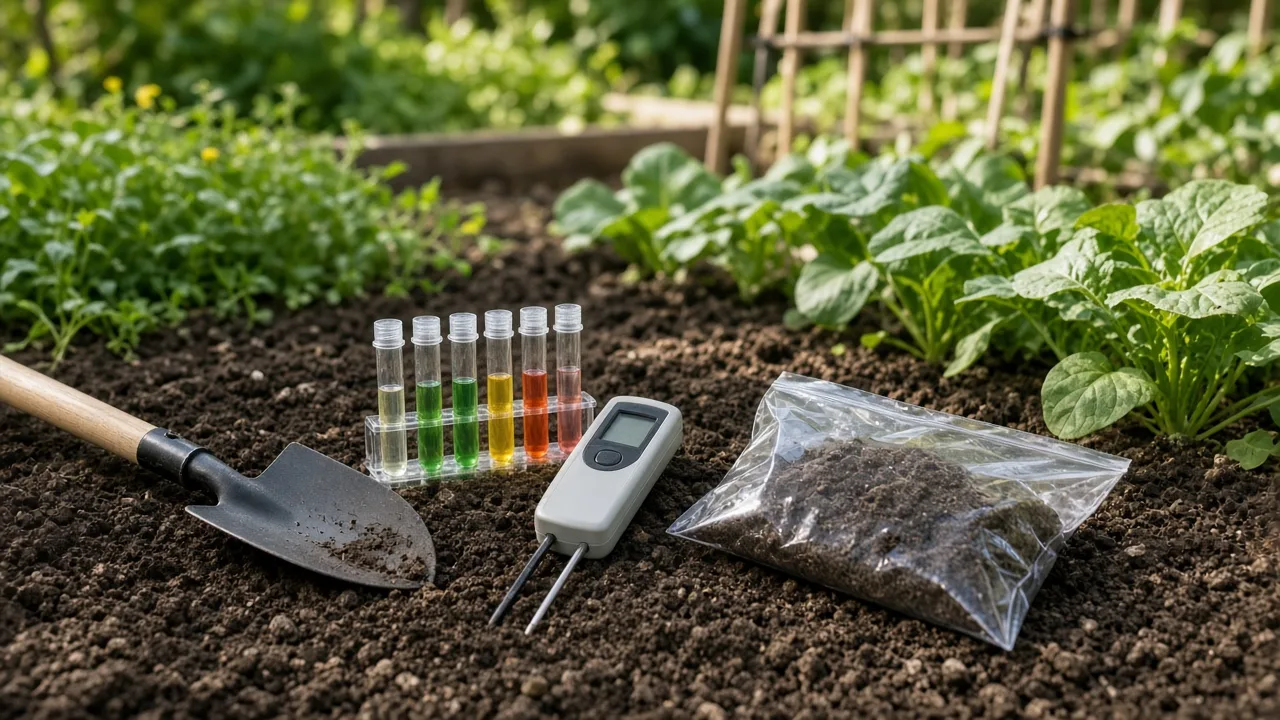
If the package gives an EC value, note how it was measured; extraction ratios and meters can produce readings that are not directly comparable. Gardeners who do not have an EC meter can still use the label, rinse uncertain material, and avoid putting unverified coir straight into a tray of valuable seedlings. Clemson Cooperative Extension specifically advises rinsing coir thoroughly before use to reduce the risk of salinity problems. (Clemson HGIC)
Rehydrate a compressed coir block
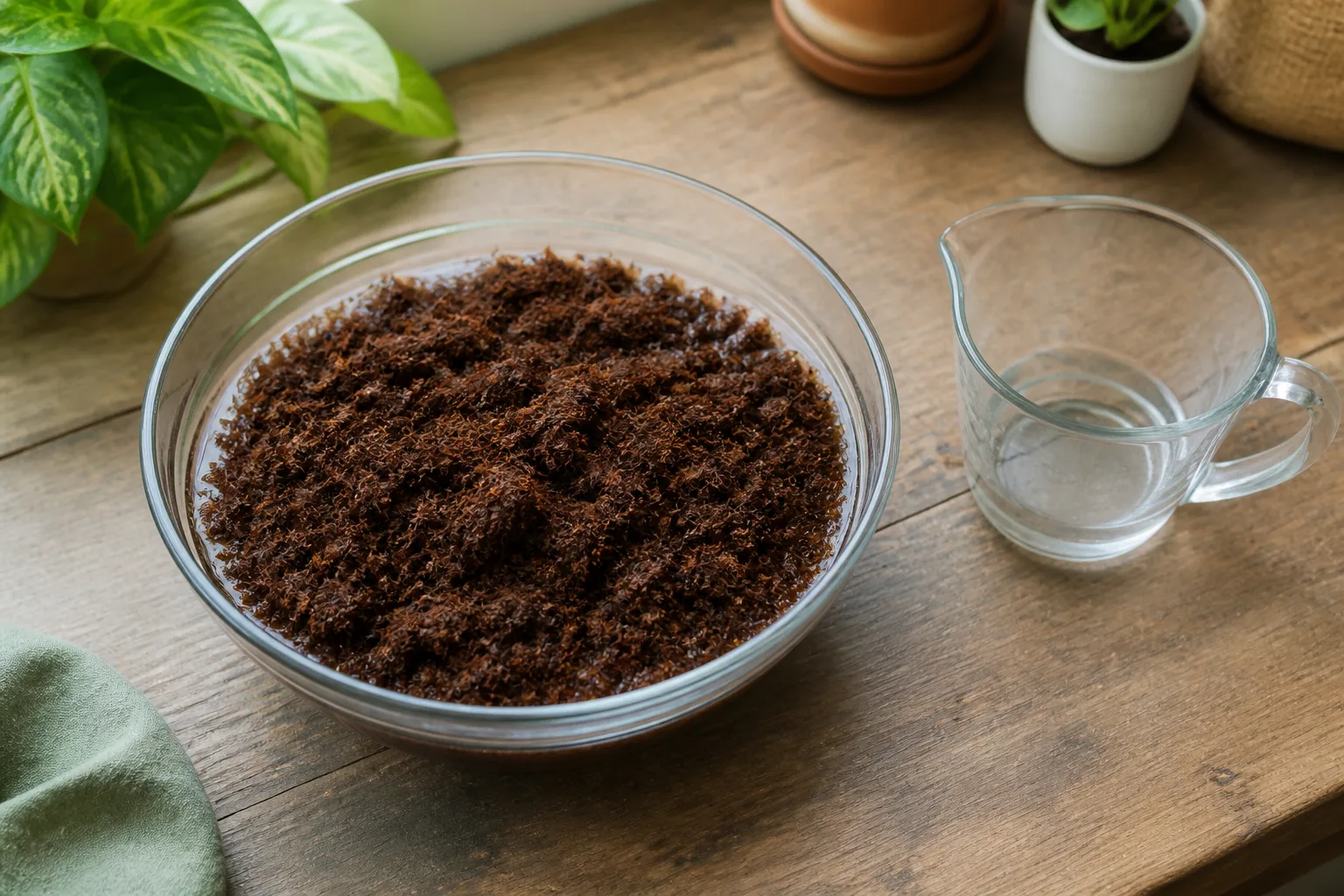
A compressed brick is convenient to store but cannot be mixed while dry. It expands as it absorbs water, and the expansion ratio depends on its weight, compression, grade, and manufacturer. Read the package first instead of using a gallon estimate from a different brand. Then put the amount you need in a tub with enough spare room for it to loosen and expand; a narrow bucket that is barely larger than the brick makes mixing harder.
Add clean water in stages, following the label’s directions. Let the first pour soak in, then break apart softened edges and fluff the material so water can reach the dry center. Add more water a little at a time until the mass is evenly damp and springy, with no hard core or dusty dry pockets. If water pools at the bottom, pause and let the coir absorb it before adding more.
Grow Organic’s coir guide similarly recommends giving a compressed block room to expand, adding water gradually, and loosening it after it softens. Its product examples have different expansion yields, which is why the bag’s own directions are more dependable than a one-size-fits-all water measurement. (Grow Organic)
For a partial brick, chip off the amount you need while the block is dry and keep the remainder sealed in a dry place. Once expanded, squeeze a handful: it should hold together briefly but release water only when pressed firmly, not drip continuously. Loosen clumps with your fingers or a trowel; do not stomp or compress the hydrated coir into a dense slab. A spacious container and incremental watering make it easier to judge the texture than dumping in all the water at once.
Decide whether to rinse before planting
Rinsing is prudent when the package does not clearly identify horticultural washing or low-EC processing, when a brick comes from an uncertain source, or when you are starting seeds and cuttings. Hydrate the coir first, then move it into a colander or mesh container and flush it with clean water. Let it drain before you use it. The rinse water carries away some soluble material; do not assume one quick splash removes every salt from a heavily contaminated batch.
If a label documents washed, low-salt coir, an extra rinse may be unnecessary for ordinary mixes, though a quick flush is a low-cost precaution for a sensitive crop. Do not confuse “buffered” with “already rinsed at home”: buffering is a product treatment, not a promise that the brick is free of every soluble residue. If you use an EC meter, compare the first flush with later runoff using the same water and method; the trend is more meaningful than comparing your result with a number measured another way.
Do not dump concentrated rinse water onto seedlings, salt-sensitive plants, or a small container garden. Use the product directions and local disposal rules, and avoid sending it into a storm drain. If the coir is visibly contaminated, smells foul, or remains very salty after repeated flushing, return or discard it rather than trying to rescue an unknown batch for propagation.
Use coir for starting seeds
Fine, washed coir can give seeds a light, even-textured place to germinate. It holds moisture around the seed without the heaviness of many garden soils, but it does not bring a complete nutrient supply. Some seeds rely on stored reserves during germination; once seedlings expand their first true leaves and begin growing steadily, they need a nutrient plan and eventually room to grow. A seed tray filled with pure coir can germinate well and still produce pale, stalled seedlings later if they are left unfed.
For a simple starting blend, combine two parts hydrated fine coir with one part fine perlite or vermiculite, then moisten the mix before filling cells. This is a small-batch starting point, not a universal recipe: change the texture if it dries too quickly or stays soggy, and use a commercial seed-starting mix if you need a standardized, precharged medium. Do not add raw coir brick crumbs directly to a tray; dry pockets and uneven particle size make it harder to maintain consistent moisture around tiny seeds.
Sow at the depth recommended for each seed and cover the tray to retain humidity only until germination begins. Keep the medium damp rather than waterlogged; standing water deprives roots of oxygen and encourages seedling problems. After seedlings establish, follow the seed species’ light and transplant needs, and begin dilute, balanced feeding when the seed’s reserves are no longer enough and the chosen medium contains no starter charge. If you want to avoid feeding seedlings in a mostly inert medium, choose a seed mix formulated with a modest starter nutrient level instead of improvising a heavy dose of fertilizer.
Blend coir into containers and potting mixes
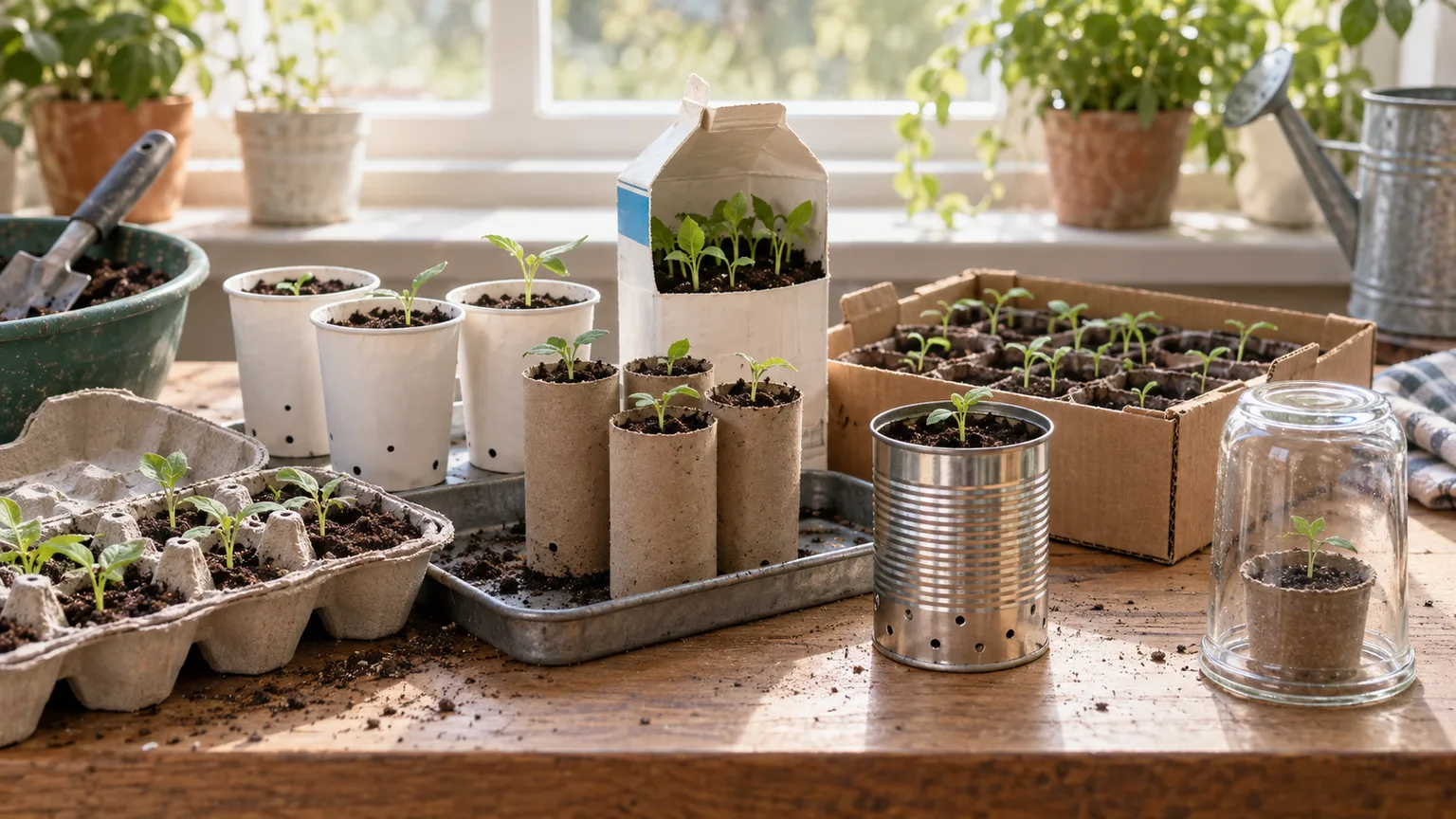
Use coir as one ingredient in a mix, not as a cure-all for a pot that stays wet. A general container medium needs a balance of root support, moisture storage, air space, and nutrients. Coir can take the moisture-holding role, while aged bark, perlite, or pumice can create larger pores; compost or a labeled potting mix can contribute fertility. UF/IFAS explains that good container media must meet roots’ needs for air, water, nutrient retention, and support, and it recommends making small test batches when experimenting with a homemade blend. (UF/IFAS)
For a first trial, replace only part of the existing medium with hydrated coir, keeping the rest of the recipe that already suits the plant. If your potting mix is heavy and stays wet for days, do not add more fine coir; increase the coarse, open fraction or choose a lighter medium instead. If the mix dries very fast in a small hanging pot, a moderate amount of fine coir can buffer moisture, but the plant still needs drainage holes and a watering routine based on how quickly that actual pot dries.
A useful test is to mix enough for one container, water it thoroughly, and watch both drainage and dry-down for several days under the same light and temperature where the plant will live. A mix that drains freely but becomes bone dry by the next morning may need more moisture-holding material; one that stays cold and soggy needs more air space or a different pot. Make one adjustment at a time so you can tell what helped.
Improve soil in raised beds and borders
In an outdoor bed, coir can contribute organic matter and help sandy soil hold moisture more evenly. It may also loosen the feel of some compacted mixes, but it will not turn every clay soil into a well-drained loam by itself. Incorporate it into the root-zone soil rather than laying a thick layer under plants. If the bed needs nutrients as well as better tilth, finished compost or a soil-test-based amendment does that broader job more directly.
Work soil only when it is crumbly rather than saturated. Fold hydrated coir into the planting area and observe how water moves through the bed; heavy clay and low spots can still drain slowly after an amendment, while a raised bed in a hot, windy site may dry faster than expected. A simple side-by-side test—a small amended patch beside an unchanged patch—can show whether coir is helping your soil under local conditions before you buy enough for the whole garden.
Avoid treating coir as a stand-alone soil builder when the real issue is compaction, poor grading, a blocked drain, or a shallow bed over hardpan. In those situations, changing the physical structure above ground may not correct the cause below it. Coir is most useful when you already know the goal is to adjust moisture behavior and texture in the planted layer, and you keep fertility and drainage in view as separate parts of the problem.
Use coir as mulch, a basket liner, or a plant support
Coir products can do more than fill a mix, but select the form made for the job. Long-fiber mats or a labeled coir mulch can shade bare soil and reduce evaporation at the surface. Fine, loose pith can crust or shift after heavy rain, so it is not always the best choice for a neat, durable surface layer. Apply mulch loosely and keep it back from crowns, stems, and trunks so the plant base does not stay constantly damp.
A coir hanging-basket liner holds media in an open wire frame while allowing water to escape. That permeability is useful for drainage but means the basket can dry faster in sun and wind than a solid pot. Check moisture more often after planting and consider an appropriate inner liner only if it still allows excess water to drain. Replace a liner when fibers break down or the basket no longer holds its shape; do not assume old liner material is automatically safe to reuse if it carried diseased roots.
Coco poles use coir fiber around a support for climbing plants. They can provide a textured surface for stems or aerial roots to attach to, but they are not the same as a moisture-retentive sphagnum moss pole, and product construction varies. A coir pot is similarly an accessory rather than a complete growing system: it can dry through its walls, so the plant may need closer moisture checks than one in plastic.
Adjust watering and fertilizer after planting
Coir can hold water while also allowing a suitable mix to drain; those are not opposites. The finished texture, pot depth, drainage holes, plant size, and local heat determine how long the root zone remains moist. Do not water on a fixed “coir schedule.” Check the medium where roots are growing, lift a lightweight pot to learn its wet and dry weight, and make the next watering decision from the plant’s needs rather than the surface color alone.
Fertilizer needs depend on what else is in the mix. A pre-fertilized potting mix may already contain a starter charge, while pure coir has little fertility and a mix containing compost has a different nutrient profile. Follow the product label and crop guidance; do not stack a full dose of liquid feed on top of controlled-release fertilizer without checking the rates. Colorado State University Pueblo Extension notes that coir naturally contains potassium and that fertilizer plans may need adjustment, while UF/IFAS likewise cautions that coir use can affect potassium and nitrogen supplementation. (UF/IFAS)
If you are growing in mostly coir with a complete nutrient solution, follow the crop-specific program for that system and monitor the medium and drainage water when possible. Ordinary garden soil does not need a hydroponic fertilizer recipe just because coir was mixed into it. The practical rule is to decide what supplies nutrients—compost, a precharged mix, or fertilizer—and avoid assuming the coir itself covers that role.
Troubleshoot coir-related growing problems
When a plant struggles after you add coir, do not blame the material before checking the whole root environment. The likely issues are often a mismatch between fine particles and drainage needs, leftover salts, or missing fertilizer. Compare moisture, drainage, and the product label with how the plant was growing before the change. If possible, check the root ball before making another amendment; a plant can show similar leaf symptoms from drought, waterlogging, and salt injury.
Water runs off dry coir
A dry coir brick or potting mix can take time to absorb water evenly, especially if it was not fully hydrated before use. Wet the material in several passes, wait between pours, and gently loosen dry clumps. For an established container, water slowly across the surface or set the pot in a shallow basin briefly so the root ball can rehydrate, then let it drain completely. If water races down a gap between the mix and pot wall, refill that gap with damp mix rather than flooding the saucer and leaving roots submerged.
If runoff still bypasses most of the root ball, the mix may have shrunk, become compacted, or separated from the container wall. At that point, re-potting into a fresh, evenly moistened blend may be more reliable than repeated surface watering. Coir is often easier to re-wet than dry peat, but that advantage does not remove the need to pre-moisten and distribute the material evenly.
Seedlings stall or container plants show stress
Pale, slow growth in a coir-rich medium may mean the plant needs nutrients, but first rule out excess salts and poor drainage. A crust on the pot surface, scorched-looking leaf margins, or sudden stress after planting can justify checking the coir source and flushing a container with clean water if the plant and pot can tolerate it. Do not respond to every brown tip with more fertilizer; feeding a salty medium can increase the problem.
If you used a washed product, the pot drains well, and roots look healthy, review the fertilizer source and timing. A seedling that has moved beyond its seed reserves needs an appropriate dilute feed or transplant into a lightly fertile mix; an established container may need a complete fertilizer according to its label. If the plant remains stressed after you correct one factor, inspect roots and consider replacing the medium rather than layering on several amendments at once.
Weigh the sourcing tradeoffs
Coir is made from coconut husks, a byproduct of food and oil production, and it can replace some peat in growing media. That origin is a useful point in its favor, but it does not prove that every coir product has a lower impact overall. Processing may involve water for washing, drying, screening, and compression, and many products travel long distances from coconut-growing regions. A compressed brick ships with less bulk than loose expanded material, but transport and processing still count.
The RHS has discussed these questions with a coir-industry representative and emphasizes that water use, washing, worker conditions, and transport depend on the producer and supply chain. Treat those details as questions to ask, not as a guarantee that all coir is responsibly made or that all peat substitutes have identical footprints. If environmental impact is central to your purchase, look for transparent sourcing, processing, and quality information; compare the whole growing medium and its lifespan rather than the raw ingredient’s label alone. (Royal Horticultural Society)
For many gardeners, the best decision is practical: choose a product that fits the crop, is clear about washing and grade, and can be used efficiently. A local compost or bark product may be a better choice for some soil-building jobs, while compact coir bricks may be convenient for seed starting or container recipes where consistent moisture matters. If you are weighing coir against peat specifically, see our coco coir versus peat moss guide for a separate comparison of performance and environmental considerations.
Conclusion
Use coconut coir as a growing-medium ingredient when its water-holding texture solves a real problem: even moisture for seeds, a peat-free component in pots, or improved texture in a bed. Pick the form by particle size, fully hydrate compressed blocks, rinse material without clear low-salt processing—especially for seedlings—and pair coir with the aeration and nutrients your plants need.
The label and the finished mix matter more than broad claims about coir being naturally better. Start with a small batch, check how quickly it drains and dries in your conditions, and adjust one ingredient at a time. That approach lets coir improve the root environment without mistaking moisture retention for drainage or organic material for fertilizer.