When Do Azaleas Bloom? Flowering Times and Lifespan
Find out when azaleas bloom, how long flowers last, which types flower early or late, and how watering, pruning, frost, and light affect the display.
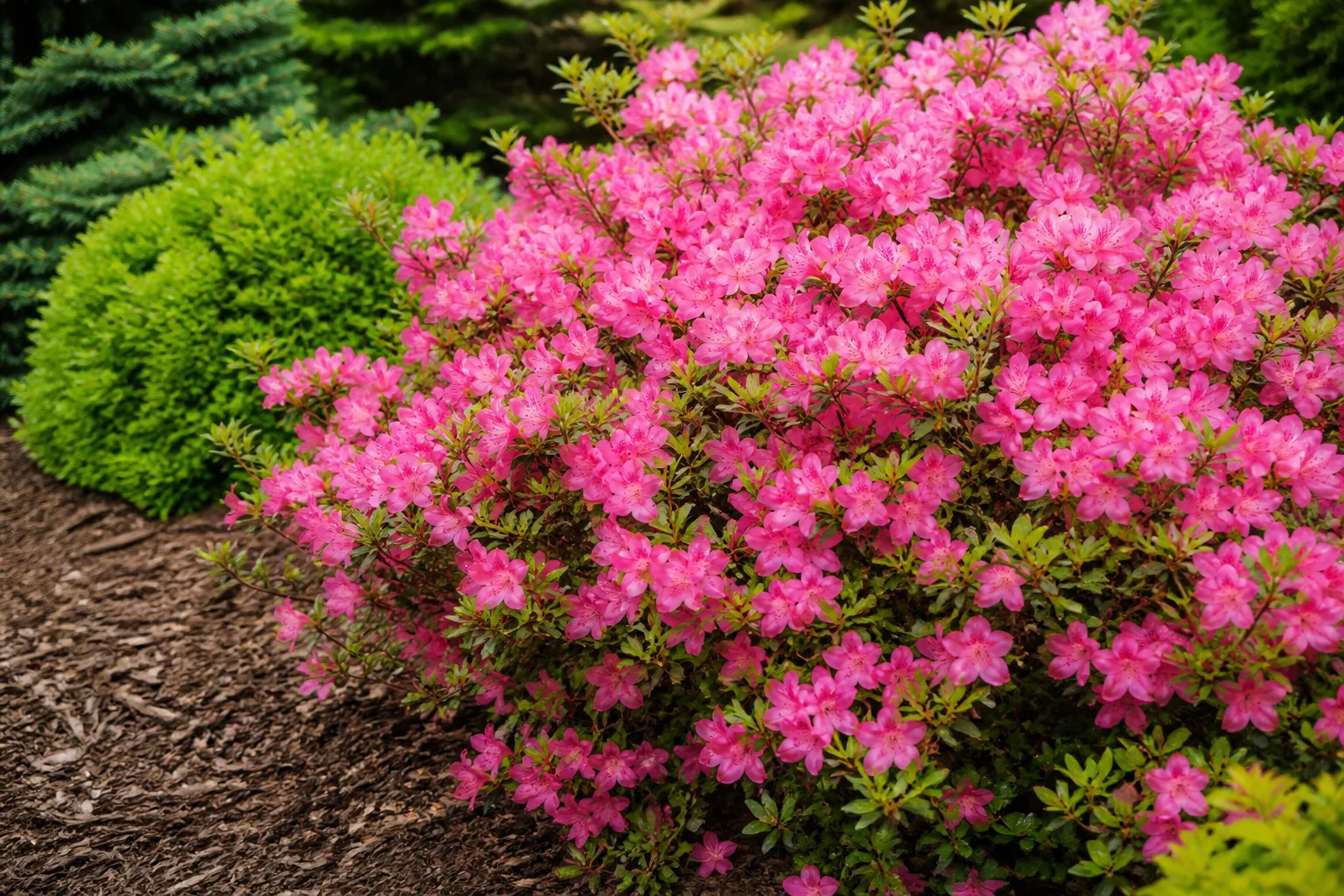
Azaleas usually bloom in spring, but the exact window can run from late winter into early summer. In a typical garden, early types may open in March, many evergreen hybrids peak in April, and late deciduous or native azaleas can carry color into May or early June. Warm spells, a sheltered wall, and an early cultivar can move that schedule forward; a cold spring, high elevation, or late-blooming species can move it back.
The flowers themselves commonly look their best for about two to three weeks, although a cool, calm spell can stretch the display and hot sun, wind, or heavy rain can shorten it. That is separate from the shrub’s lifespan: a well-sited azalea can flower for decades. The useful question is not simply “What month do azaleas bloom?” It is “Which azalea do I have, what weather is it experiencing, and did it have the water and pruning timing needed to make buds?”
The Short Answer: Spring Is the Main Azalea Season
Most landscape azaleas flower once in spring on buds that were prepared during the previous growing season. The broadest expectation is February through May, but that range combines many different plants and climates; it should not be read as a promise that one shrub will bloom for four months. A single cultivar generally has a much narrower flowering period.
In the Southeast, some evergreen azaleas begin in late February or March. Farther north, the same general group may wait until April or May. Native deciduous azaleas, including sweet and flame azaleas, often bloom later than many evergreen Kurume types. A nursery label that names a bloom group or cultivar is more useful than a generic “azalea” label because timing is inherited.
An azalea that is flowering in June is not necessarily unusual. It may be a late native type, a late hybrid, or a reblooming cultivar. Conversely, an azalea that flowers in January may have been tricked by an unusually warm spell; those early flowers can be lost when winter returns.
How Long Do Azalea Flowers Last?
Plan on two to three weeks of useful color from one azalea, with individual flowers fading at different speeds. A large shrub can appear to bloom longer because its buds do not all open on the same day. Cooler temperatures help flowers hold; intense heat, drying wind, hard rain, and frost can collapse an otherwise healthy display within days.
Flower longevity also depends on what you mean by “last.” A flower may be visually faded while the plant is still opening fresh buds. A shrub may stop flowering for the year while its leaves remain healthy and its next year’s buds are already forming. Do not interpret the end of the display as the end of the plant’s life or as evidence that it needs heavy feeding.
The best way to lengthen a display is to plant several bloom windows, not to force one shrub to flower for an entire season. Pair an early evergreen azalea with a midseason hybrid and a later deciduous native type. In a small bed, two cultivars with different timing can make a bigger difference than adding fertilizer to the first plant.
What Controls the Bloom Calendar?
Cultivar and Species
Azaleas are woody members of the heath family, Ericaceae, and are generally treated botanically as rhododendrons. NC State Extension’s plant profile notes that all azaleas are rhododendrons, but not all rhododendrons are azaleas. Their shared name hides major differences: evergreen landscape hybrids, deciduous native species, large Exbury hybrids, compact Kurume types, and repeat-blooming selections do not follow the same calendar.
Cultivar descriptions are useful but not absolute. A label saying “early spring” describes the plant relative to other azaleas, not a fixed date. It may open in March in Georgia, April in Pennsylvania, and May in a cool mountain garden. Use the bloom group to plan sequence, then use local nursery observations to refine the date.
Climate, Exposure, and Weather
Latitude and elevation shift spring temperature, but microclimate can matter just as much. A south-facing wall may warm buds early, while an open north-facing slope stays colder. Dappled light under high trees often produces a more moderate bloom period than reflected heat beside pavement.
Weather in the previous summer and fall matters because that is when many azaleas set flower buds for the following spring. Drought stress can reduce bud quality. A sudden warm spell can push buds open before pollinators and before the last frost has passed. A freeze after opening damages petals directly; a freeze while buds are still tight may do less harm.
Early, Midseason, and Late Azalea Bloomers
| Bloom group | Typical garden window | What to expect |
|---|---|---|
| Early | Late February to early April | Flowers can arrive before the last frost; sheltered sites advance the display |
| Midseason | April to early May | The main spring show for many evergreen hybrids |
| Late | May to early June | Often includes deciduous natives and large-flowered hybrids |
| Reblooming | Spring, then intermittent summer or fall flushes | Repeat flowers are weather- and care-dependent, not continuous |
Early bloomers are valuable when you want color before trees leaf out, but they carry the greatest frost risk. Midseason types are often the safest choice for a reliable mass display because the worst winter cold has passed while temperatures are still moderate. Late bloomers bridge the gap to summer and can pair well with shrubs whose foliage becomes the main attraction after spring.
Examples vary by region, but compact evergreen selections such as ‘Chinzan’ are commonly treated as early, while large-flowered hybrids such as ‘Gibraltar’ are often midseason. Smooth azalea, Rhododendron arborescens, is a later native species with pale fragrant flowers. Confirm hardiness and local performance before buying; the same cultivar can shift by several weeks across a continent.
Evergreen, Deciduous, Native, and Reblooming Types
Evergreen azaleas keep foliage through mild winters and dominate many foundation and woodland plantings. They often bloom in a concentrated spring flush. “Evergreen” does not mean that the shrub will flower continuously or that leaves cannot thin after drought, winter injury, or poor drainage.
Deciduous azaleas lose their leaves in fall and often produce a looser, taller habit. Their flowers can be later, fragrant, and especially useful for a naturalistic garden. Because the leaves are absent during winter, do not judge the plant as dead unless stems are brittle and fail a scratch test in several locations.
Native azaleas are a broad group rather than one uniform plant. Their timing ranges from early spring to early summer, and their mature size can be much larger than a compact evergreen hybrid. Give them the space and soil drainage their species requires.
Reblooming azaleas can flower in spring and produce additional flushes later, especially where autumn remains warm and bright. The second flush is not guaranteed. Heat, drought, excess shade, hard pruning, or a short growing season can reduce or eliminate it. Treat rebloom as a bonus, not as a substitute for choosing the right primary bloom time.
How Azalea Buds Form Before You See Flowers
The flowers you see in spring are the result of decisions made months earlier. After the current display fades, the shrub grows leaves and new shoots. Later in the season, it develops flower buds near branch tips. Those buds must mature without being cut off, dried out, frozen, or weakened by root stress.
This explains two common surprises. First, a shrub can look healthy in summer but flower poorly the next spring because it suffered drought the year before. Second, a shrub can be pruned neatly in late summer and then produce plenty of leaves but few flowers because the developing buds were removed.
Keep the root zone evenly moist, especially during late summer and fall drought. The Azalea Society of America’s growing guidance emphasizes moist, well-drained soil and warns that shallow roots suffer when the site stays wet or dries repeatedly. Water slowly enough to wet the soil around the whole root zone rather than splashing the foliage every day. A two- to four-inch layer of organic mulch helps buffer moisture and temperature, but keep it off the stems so the crown stays dry.
How to Extend an Azalea Display
Combine Bloom Windows
The most dependable design is a relay: early, midseason, and late plants overlap briefly, then hand off the show. You do not need three giant shrubs. One compact early cultivar, one midseason plant, and one later native or hybrid can create a longer season if their mature sizes and light needs match.
Read tags for mature height, width, hardiness, and bloom timing. Do not buy by flower color alone. Two pink azaleas can differ by a month in flowering and by several feet in mature size.
Keep Buds Hydrated
Water when the root zone is beginning to dry, not on an automatic schedule that ignores rain and soil. Azalea roots are shallow and need oxygen as well as moisture. A wilted plant in dry soil needs a deep drink; a wilted plant in saturated soil needs drainage investigation, not more water.
Avoid late high-nitrogen feeding. It can encourage soft leafy growth at the expense of balanced bud development and may push tender growth into cold weather. Use a soil test before applying sulfur or fertilizer. Azaleas generally prefer acidic soil, but adding amendments blindly can create a second problem.
Protecting Azaleas From a Late Frost
If a freeze is forecast while azaleas are in tight bud, water the root zone if it is dry and cover small shrubs with frost cloth before temperatures drop. The cover should reach the ground so it captures some soil warmth; it should not be tied tightly against wet flowers. Remove it in the morning when temperatures rise.
Do not use plastic sheeting directly on foliage. It can trap condensation, conduct cold, and damage leaves where it touches. For a large established shrub, a cover may be impractical. In that case, accept that some flowers may be lost and focus on keeping the plant hydrated and avoiding extra stress.
Brown petals after a freeze are damaged tissue, not a watering signal. Wait until the weather settles, then remove collapsed flowers if they are slimy or moldy. Do not cut healthy branches simply because the flowers were frosted.
Pruning Without Removing Next Year’s Flowers
The safest general rule is prune just after flowering, once the main display is over. This gives the plant time to push new growth and set next year’s buds before late summer. Remove dead, damaged, crossing, or badly placed branches first. Then shorten only what the shrub’s shape or size truly requires.
Late summer and fall pruning are risky because you may remove the buds that would open next spring. A severe renovation cut is a different operation and may sacrifice a season of flowers. If an old shrub needs major reduction, spread the work over more than one season where possible, and expect recovery rather than instant bloom.
What to Do When an Azalea Does Not Bloom
Check problems in this order:
- Was it pruned after midsummer? If yes, flower buds may have been removed.
- Was the root zone dry last summer or fall? Drought can reduce next spring’s buds.
- Is the plant in deep shade? Leaves may grow while flowers remain sparse.
- Did a freeze or warm spell damage the buds? Look for browned buds after frost or scattered early opening after warmth.
- Is the soil alkaline or compacted? Nutrients can be present but unavailable to acid-loving roots.
- Are deer eating the buds? Inspect branch tips and protect the shrub before assuming a soil problem.
- Are roots staying wet? Yellowing, wilting in damp soil, and dieback point toward drainage or root disease.
Do not jump straight to fertilizer. A plant with healthy green leaves but no flowers often has a timing, light, pruning, or previous-season stress problem. Fertilizer cannot recreate buds that were eaten, frozen, or cut away.
Soil, Light, and Water Checks That Matter Most
Azaleas prefer acidic, moist, well-drained soil, often around pH 4.5 to 6.0, a range also given by the Azalea Society of America. They generally perform best in morning sun or bright filtered light with protection from harsh afternoon heat. Dense shade reduces flowering; reflected heat and dry wind can shorten it.
Test soil rather than relying on leaf color alone. Yellow leaves with green veins can indicate iron becoming unavailable, but the cause may be high pH, compacted soil, excess water, or damaged roots. The University of Georgia Extension selection guide recommends using soil testing to guide pH and fertility decisions. Foliar iron can temporarily improve appearance without fixing the site. Correct the root-zone condition first.
Mulch with pine bark, pine straw, leaves, or another stable organic material. Keep the mulch shallow enough to leave the crown exposed. The goal is an even, cool root zone—not a wet collar around the stems.
Can Deadheading Make Azaleas Bloom Longer?
Deadheading does not make a finished spring flush keep producing flowers in the same way it can with some annuals. It can improve appearance and prevent old flowers from obscuring new buds, but the main benefit is cleanup, not a guaranteed extension of bloom.
Use your fingers or small snips to remove spent clusters without tearing the tender growth below them. Work gently, because new leaves and next year’s buds may be close to the old flowers. If a shrub is large or the flowers are already collapsing from rain, deadheading every bloom is usually not worth the time.
How Long Do Azalea Shrubs Live?
Azaleas can live for many decades when their roots have oxygen, their soil stays appropriately acidic, and the plant is not repeatedly stressed by drought, heat, or improper pruning. The RHS growing guide likewise treats rhododendrons and azaleas as long-term woody garden plants whose performance depends heavily on the site. There is no single expiration date for an azalea. A shrub that flowers for only a few years may have been planted too deeply, placed in wet clay, girdled by roots, or exposed to a climate it cannot tolerate.
Evergreen azaleas can become woody and bare in the center as they age. That does not always mean they are dying. Remove dead wood, improve light and moisture management, and consider staged rejuvenation if the base still has living growth. If stems are brittle and brown throughout, roots are black and soft, or the plant continues to decline in wet soil, replacement may be more realistic than repeated rescue attempts.
Azaleas are not maintenance-free, and they are not universally deer-resistant. Protect buds if browsing is common. Also remember that rhododendrons and azaleas contain compounds that can be harmful if eaten by pets or people; keep plant debris and access in mind around curious animals.
A Month-by-Month Azalea Bloom Checklist
Late winter: Watch early cultivars for swelling buds and cover them if a hard frost threatens. Do not prune simply because the shrub looks untidy; confirm whether it is an early bloomer first.
Spring bloom: Water during dry spells, keep heavy foot traffic away from shallow roots, and remove only damaged branches. Photograph the plant when it is flowering and record the date; that is more useful than a generic calendar next year.
Immediately after flowering: Deadhead if you want a cleaner look, then do necessary shaping. Finish routine pruning before the plant begins setting next year’s buds.
Summer: Maintain steady moisture during heat and drought. Check the underside of leaves for pests, but diagnose the cause of yellowing before spraying. Avoid unnecessary late nitrogen.
Late summer and fall: Protect developing buds from drought. Refresh mulch without burying stems. This is the season that quietly determines how much color you see next spring.
Winter: Leave the shrub’s structure intact. Shield exposed plants from drying wind where practical, and do not wrap foliage tightly in plastic. Review your bloom notes and add a complementary cultivar if the season was shorter than you wanted.
Conclusion
Azaleas mainly bloom in spring, but the calendar is a moving target shaped by cultivar, climate, exposure, and weather. Most individual shrubs provide roughly two to three weeks of strong flower color, while a well-chosen collection of early, midseason, late, and reblooming types can make the garden feel colorful for much longer.
The key to a dependable display is not a last-minute bloom booster. It is protecting the shallow root system from drought and standing water, giving the plant the right light, pruning soon after flowering, and leaving developing buds alone through late summer and fall. If an azalea fails to bloom, start with timing and site conditions before reaching for fertilizer. A plant that is healthy after flowering is already preparing next year’s show.