How to Cut Back Phlox: Timing by Species
Cutting phlox at the wrong time removes next year's buds or spreads powdery mildew. Get the fall, spring, and summer pruning calendar for every common type.
If you type “when to cut back phlox” into a search bar, you will get a single answer that sounds simple: cut tall phlox in fall and creeping phlox after spring bloom. That advice is directionally right and practically incomplete. The Phlox genus includes mat-forming spring bloomers, shade-loving woodland carpets, and upright summer panicles — and each one sets flower buds on a different schedule. Cut the wrong type at the wrong moment and you either remove next year’s show or leave mildew-covered stems standing through winter.
This guide starts with species ID, walks through a three-season pruning calendar, and finishes with the fall-versus-spring cleanup decision that trips up even experienced gardeners. If you need full cultural care beyond pruning, see our phlox care guide.
Which Phlox Do You Actually Have?
Nursery tags often say only “phlox.” Before you pick up pruners, match your plant to one of these groups. Growth habit and bloom time are your field clues; botanical names on the tag confirm the call.
Tall Garden Phlox (Phlox paniculata)
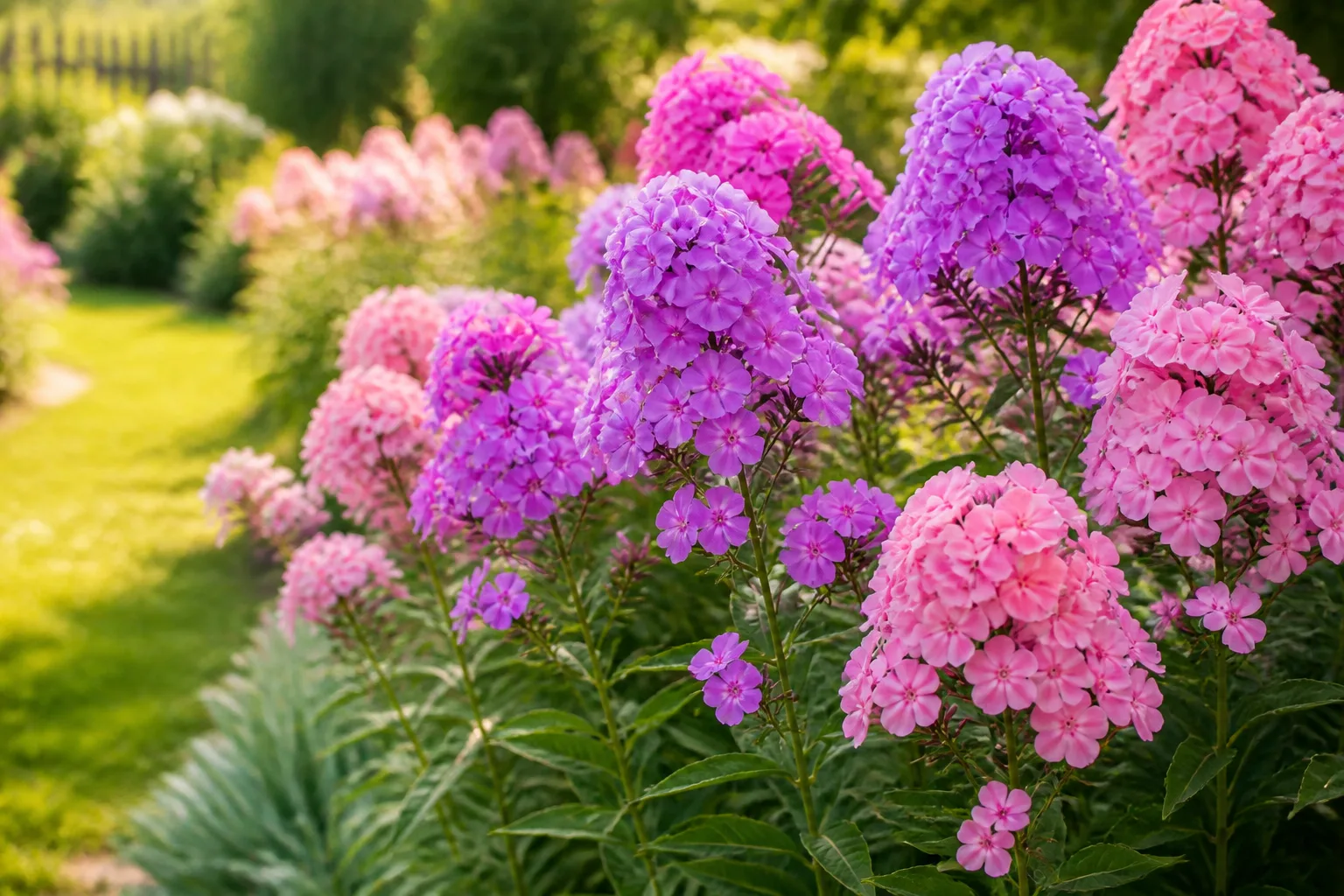
Tall garden phlox — also called garden phlox or summer phlox — forms upright clumps 2 to 5 feet tall with fragrant panicles from late June through September. This is the species most vulnerable to powdery mildew and the one that receives a hard fall cutback after frost. University of Minnesota Extension notes that crowded, shaded plants flower poorly and mildew faster — pruning is one tool in a larger airflow strategy, not a magic fix on its own.
Moss and Creeping Phlox Species
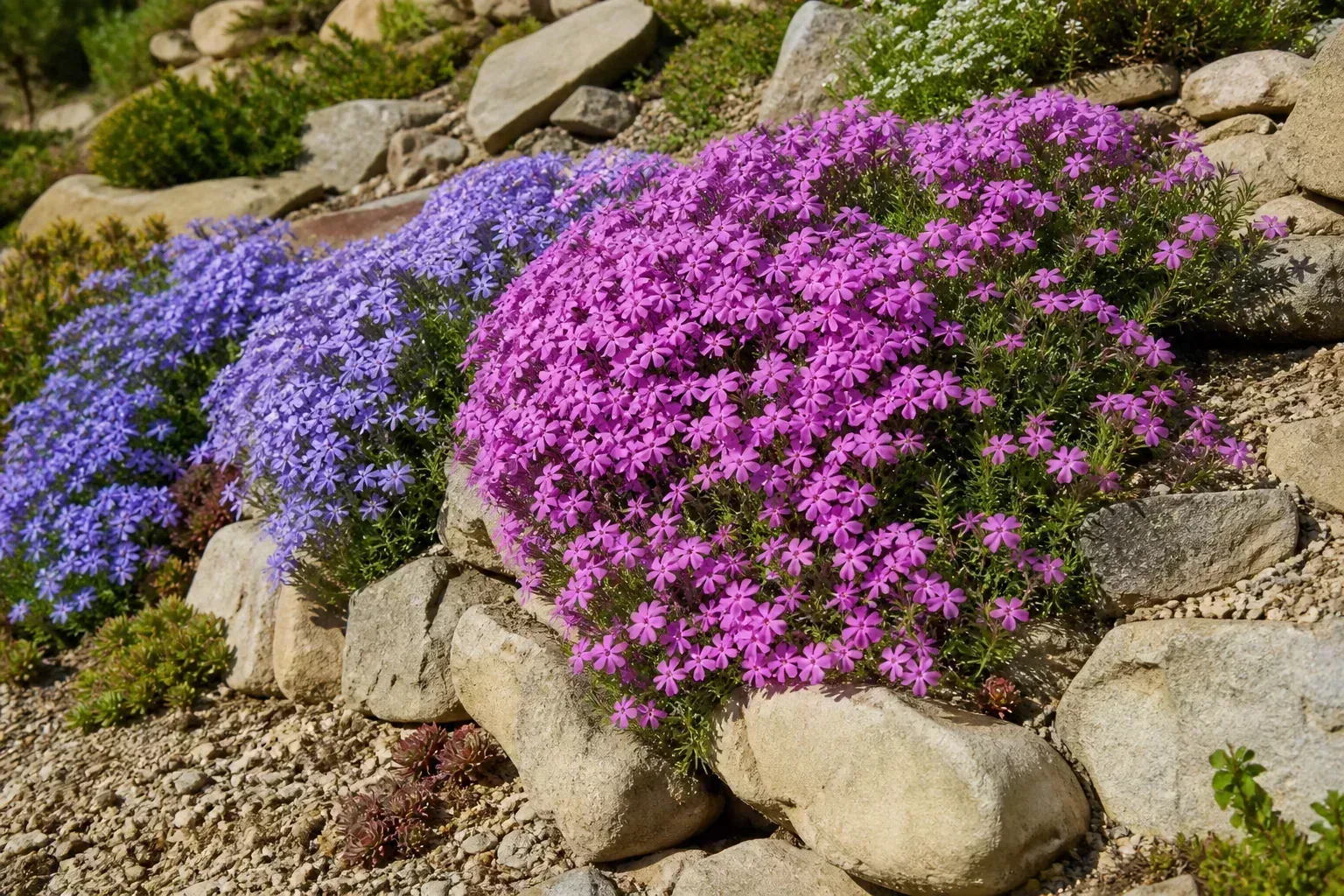
Moss phlox (Phlox subulata) forms a dense evergreen mat 4 to 6 inches tall on sunny, sharply drained sites. It blooms heavily in mid- to late spring. True creeping phlox (Phlox stolonifera) spreads by stolons in partial shade with moist soil and also flowers in spring. Both are sold as “creeping phlox,” but their pruning windows are identical: shear after the spring flush, not in fall.
Woodland and Other Border Phlox
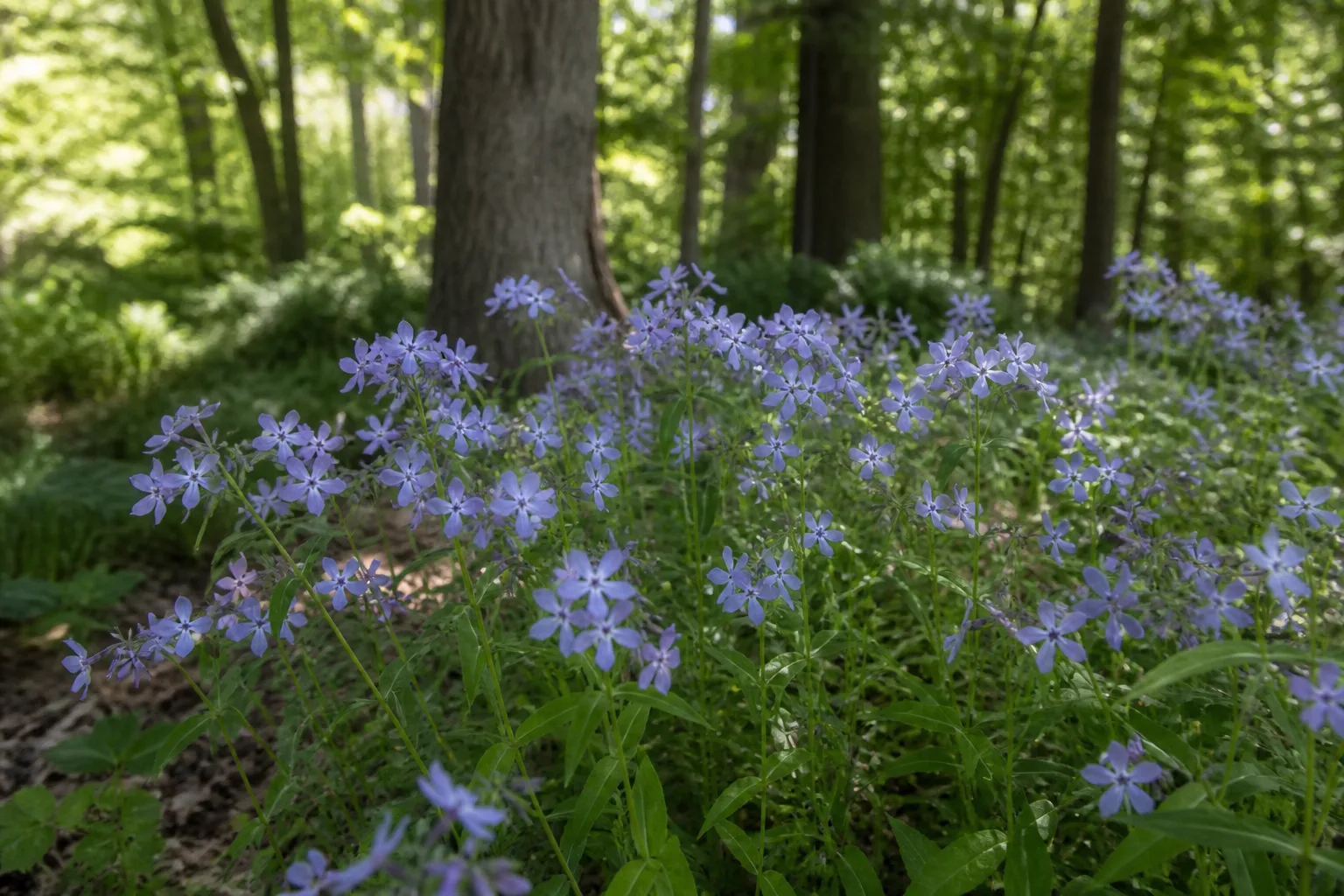
Woodland phlox (Phlox divaricata) and meadow phlox (Phlox maculata) follow different rules again. Woodland phlox blooms in dappled shade in late April and May; it rarely needs aggressive shearing. Meadow phlox resembles a shorter, spotted-stem cousin of tall garden phlox and can be thinned in spring and cut back after frost like P. paniculata. Annual phlox (Phlox drummondii) is removed at season’s end — it will not return.
Why Pruning Timing Changes Your Results
Phlox pruning is not one job with one date. It serves four distinct purposes across the year: thinning for airflow before tall phlox blooms, deadheading to redirect energy from seed, post-bloom shearing to refresh low mats, and dormancy cleanup to remove disease-carrying debris. Confuse those jobs and you either open the plant to mildew without improving structure, or you shear off the buds that were supposed to open next month.
Tall garden phlox sets its flower buds on new growth produced in spring and early summer. That is why a hard fall cut to the crown does not remove next year’s blooms — those buds do not exist yet. Creeping and moss phlox, by contrast, flower on short stems that grow in spring; cutting them hard in fall removes the structure that would carry next year’s bloom and exposes evergreen foliage to winter damage.
The Phlox Pruning Calendar at a Glance
| Phlox type | Spring | Summer | Fall / winter |
|---|---|---|---|
| Tall garden phlox (P. paniculata) | Thin to 6–8 stems; optional Chelsea chop | Deadhead faded panicles | Cut to 2–3 inches after killing frost |
| Moss phlox (P. subulata) | Light tidy only if needed | Shear up to one-third after spring bloom | No hard cutback; pull fallen leaves off mat |
| Creeping phlox (P. stolonifera) | Same as moss phlox | Shear after bloom for shape | Leave foliage; divide if mat thins |
| Woodland phlox (P. divaricata) | Remove winter-damaged tips | Deadhead lightly if desired | Minimal cleanup; compost healthy leaves |
| Annual phlox (P. drummondii) | Plant or sow | Deadhead for continued bloom | Remove plants after frost |
Use this table as your quick reference, then read the sections below for the how and the why behind each row.
Spring Pruning: Thinning and Early Pinching
Spring is when tall garden phlox earns its best blooms — not when you hack it to the ground. As new shoots emerge and reach 6 to 8 inches tall, inspect each clump. Dense interior stems compete for light, hold moisture, and mildew weeks before neighbors notice a problem.
How to Thin Tall Phlox in Early Spring
Select the 6 to 8 strongest shoots per clump and remove weaker stems at the base with clean bypass pruners. UConn’s Home & Garden Education Center recommends this range for garden phlox specifically because it balances flower count with airflow. Step back and look through the clump — you should see daylight between stems.
Some gardeners apply a Chelsea chop in late May: cut the entire clump back by one-third to one-half to delay bloom and produce shorter, bushier plants. This works on vigorous tall phlox in windy sites where 5-foot stems flop. It is optional, not mandatory, and it will push bloom two to three weeks later. Do not Chelsea chop moss or woodland phlox — they have already finished or nearly finished flowering by then.
Pinch the growing tips of remaining stems back to the first or second leaf node if you want extra branching on young plants. This early pinching is gentler than the Chelsea chop and suits first-year clumps still establishing root systems.
Summer Deadheading Without Losing Momentum
Deadheading is not the same as cutting back. On tall garden phlox, snip each faded panicle just above the first healthy leaf set below the spent cluster. You are removing seed heads and encouraging the plant to push energy into side shoots rather than seed production. Rebloom is cultivar-dependent — ‘Bright Eyes’ and other vigorous selections sometimes produce a lighter second flush in late summer; older heirlooms may not bother.
On moss and creeping phlox, wait until at least half the flowers have faded, then shear the top one-third of the mat with hedge shears or scissors. A light summer trim tidies leggy stems and can trigger a modest second bloom on moss phlox in favorable summers. Woodland phlox rarely needs summer shearing unless you want to prevent self-seeding in a formal bed.
Deadhead annual phlox weekly in containers and borders. Consistent removal keeps the show going until frost and prevents the bed from looking tired by August.
Fall Cutback for Tall Garden Phlox
Fall is the season that drives most searches on this topic — and it applies almost exclusively to tall garden phlox. Wait until a killing frost browns the foliage and stems. In USDA zones 4 through 7, that usually means late October through November, though mild autumns can push the date into December. Cutting while stems are still green steals carbohydrates the roots need for winter storage.
How Low to Cut and When Frost Matters
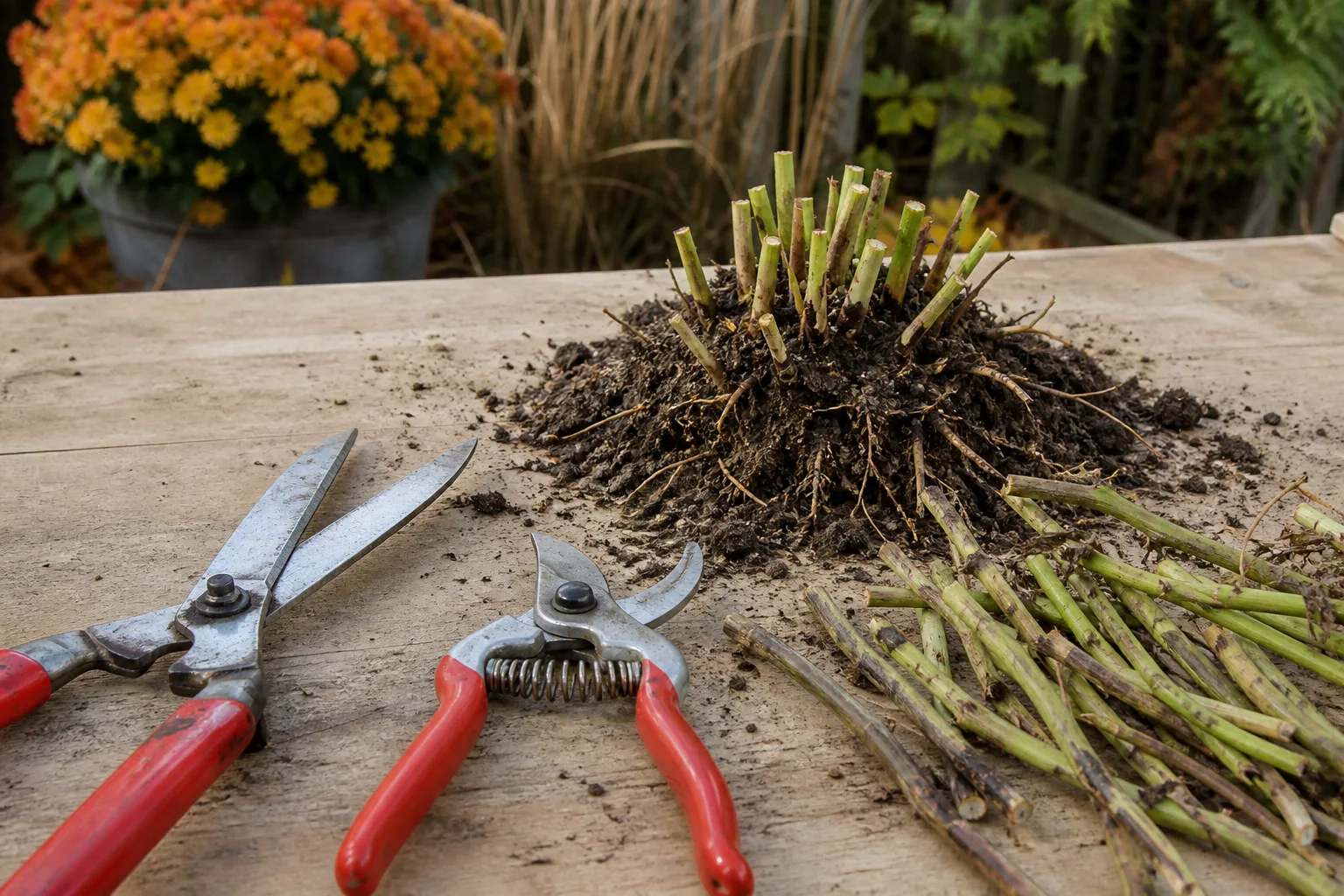
Cut browned stems to 2 to 3 inches above the crown — not flush with the soil and never through the crown itself. Leaving a short stub marks the plant’s location for spring and protects the crown from heaving in freeze-thaw cycles. Our November cutback guide covers the same height rule for phlox alongside bee balm, daylilies, and other mildew-prone perennials.
If powdery mildew coated your plants by August, treat fall cutback as a sanitation job, not just a tidy-up. Remove every stem and fallen leaf from the bed surface. Bag diseased material and trash it or send it to municipal green waste. Home compost piles rarely heat enough to kill Erysiphe spores that cause phlox mildew.
Post-Bloom Shearing for Creeping and Moss Phlox
Creeping and moss phlox do their heavy pruning in late spring to early summer, immediately after the main bloom finishes — typically late May through mid-July depending on your zone and spring weather. Shear the top one-third of the mat to remove spent flowers and any leggy growth above the evergreen foliage layer.
Do not cut creeping or moss phlox to the ground in fall. The evergreen mat protects the crown through winter, and hard fall shearing exposes plants to desiccation on exposed slopes and rock walls. If the mat looks messy in autumn, pull fallen tree leaves off the surface so wet debris does not sit on the crown all winter. That is usually all the fall attention these plants need.
Woodland phlox follows a lighter version of the same rule: a quick trim after spring bloom if the patch sprawled into paths, otherwise leave it alone until you see winter-damaged tips the following March.
Fall vs Spring Cleanup: Which Approach Fits Your Garden
Here is the honest trade-off most one-size-fits-all pruning guides rarely spell out. Fall cutback removes mildew inoculum before spores overwinter on standing stems — Iowa State University Extension lists sanitation as a core mildew control step alongside resistant cultivars and spacing. Spring cutback leaves dried stems standing through winter, which provides shelter for beneficial insects and adds structure to an otherwise bare border.
Both approaches work for healthy tall garden phlox. Choose fall cleanup if mildew was severe last year, if your bed is crowded, or if you are preparing for a November mulch application. Choose spring cleanup if your plants stayed disease-free, you garden for pollinator habitat, or your winters are mild and stems do not collapse into a wet mat on the crown. Plantura notes that many European gardeners prefer late-winter or early-spring removal for exactly this reason — insect shelter outweighs the marginal tidiness gain of November shearing.
If you opt for spring cleanup, cut before new shoots reach 2 inches tall. Stems that stayed up all winter will pull away easily once growth begins. Either way, remove debris from the soil surface so spring shoots emerge into clean air, not a carpet of last year’s mildewed leaves.
Powdery Mildew and Diseased Debris Disposal
Powdery mildew on tall garden phlox is so common that many gardeners assume it is inevitable. Pruning alone will not cure a badly placed clump in deep shade, but removing infected tissue at the right time breaks the spore cycle that reinfects fresh spring growth. Cut affected stems as soon as you see widespread white coating in late summer if the plant is still green — do not wait for frost if more than a third of the foliage is infected.
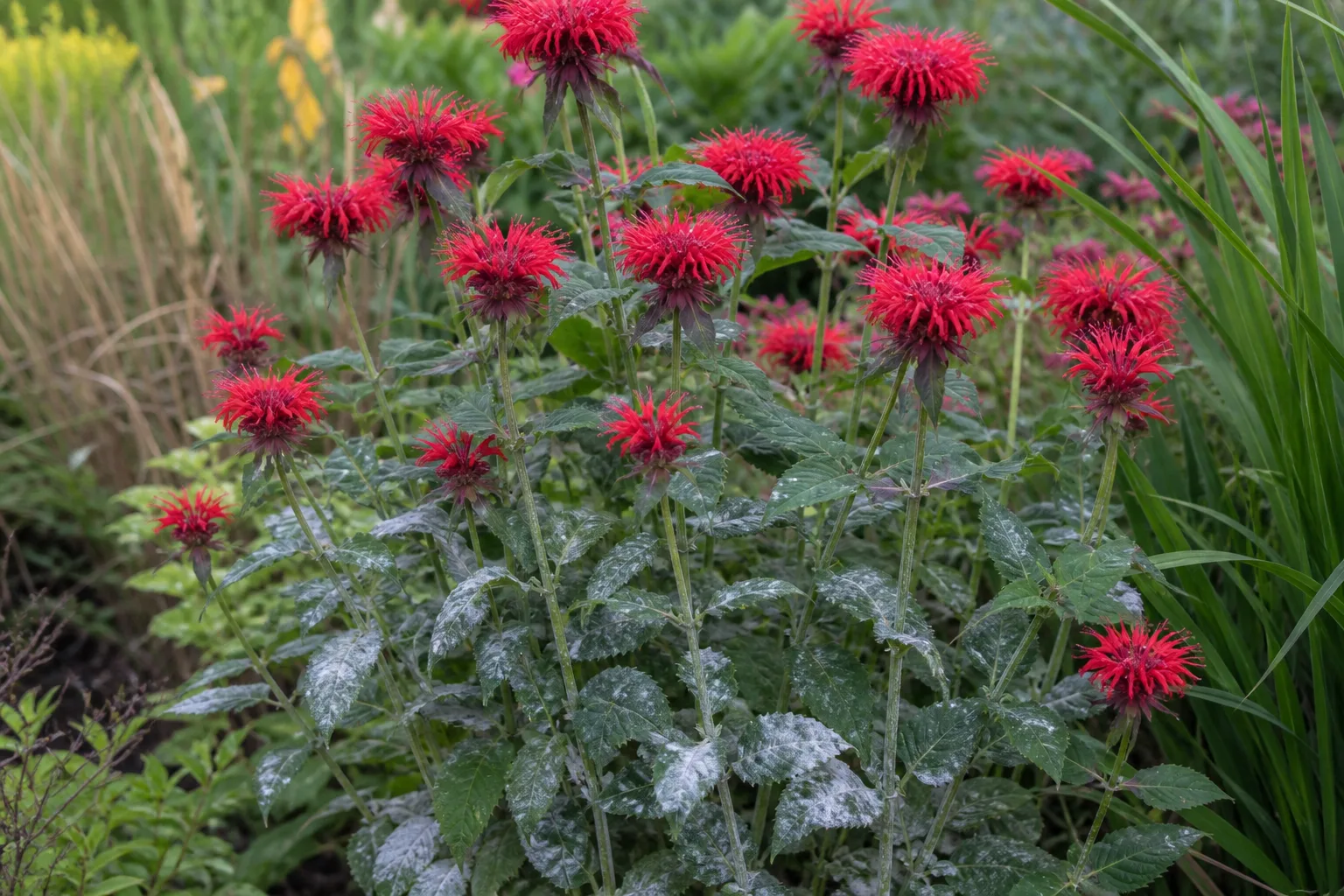
After any cut involving mildew, disinfect pruners before touching healthy plants. A 10-to-1 water-to-bleach dip or a wipe with 70% isopropyl alcohol is sufficient. Rake fallen leaves from around the base — spores survive on debris even after stems are gone. Pair cleanup with cultural fixes from our phlox care guide: resistant cultivars like ‘David’ and ‘Jeana’, 18-to-24-inch spacing, and base watering so foliage stays dry overnight.
Tools, Sanitation, and Safe Cutting Technique
You need two tools for most phlox jobs: bypass pruners for individual stems and panicles, and hedge shears or grass scissors for shearing moss phlox mats. Loppers are overkill unless you are removing an entire multi-year clump during division.
Disinfect blades before you start and between plants when mildew or suspicious leaf spots are present. Wear gloves if you have sensitive skin — phlox sap is mild but stem bases can harbor soil pathogens. Cut at a slight angle on individual stems so water runs off the stub; on mat shearing, keep blades parallel to the ground for an even surface.
Work on dry days when possible. Wet stems tear rather than slice cleanly, and you track spores from plant to plant on damp blades. Gather clippings as you go rather than leaving piles on the bed where slugs and spores find shelter.
Common Phlox Pruning Mistakes
Cutting creeping phlox in fall. Moss and stoloniferous phlox need post-bloom spring or early-summer shearing. A November buzz cut removes next year’s flowering wood and stresses evergreen mats through winter.
Shearing tall phlox while still green in October. Early cutback interrupts root carbohydrate storage and does not improve mildew outcomes compared with waiting for frost.
Composting mildewy stems. Spores survive home composting. Bag and trash infected material.
Skipping spring thinning on dense clumps. Fall cutback alone cannot fix a clump with 30 stems crammed into a 12-inch circle. Thin in spring or divide the clump entirely.
Pruning woodland phlox like tall garden phlox. Woodland phlox does not need a hard fall cut. Treat it as a spring bloomer with optional light deadheading.
Confusing annual and perennial phlox. Annual P. drummondii is removed after frost. Perennial types regrow from crowns and roots — cutting them to the crown in fall is correct only for tall garden phlox, not for every phlox in the bed.
Conclusion
Cutting back phlox is really three jobs on one calendar: thin tall garden phlox in spring, deadhead through summer, and remove browned stems after frost — or at the very start of spring if you are prioritizing winter habitat over immediate mildew cleanup. Moss and creeping phlox want a post-bloom shear in late spring, not a fall ground-level cut. Woodland phlox needs a light touch year-round.
Identify your species first, match the season to the task, and treat diseased debris as hazardous waste rather than compost fodder. Get those three decisions right and phlox becomes one of the easier perennials to keep — fragrant summer panicles above, spring carpets below, and far less white dust on the leaves come August.