Christmas Cactus Turning Red: Causes and Fixes
Christmas cactus turning red or purple? Learn what the color shift means, run a fast triage, and fix sun stress, watering, roots, and nutrients.
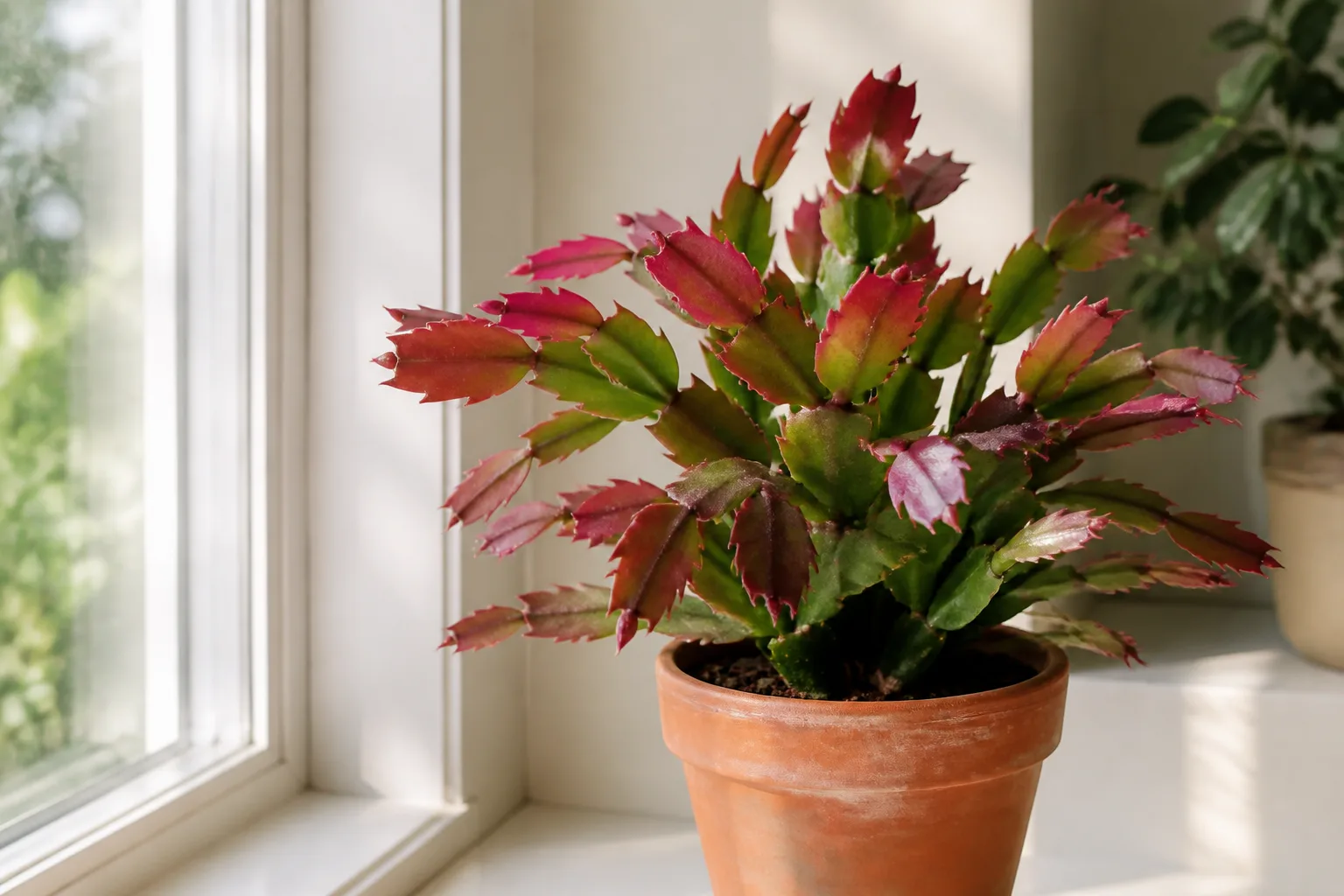
A Christmas cactus (Schlumbergera × buckleyi) with segments flushing red or purple is not trying to match its holiday blooms—it is broadcasting stress. The good news: discoloration is usually reversible if you catch it early and fix the right variable. The bad news: most owners change watering, fertilizer, and window placement all at once, which can drop buds and make the diagnosis harder.
This guide explains what the color shift means, how to triage in under a minute, and which fixes actually work for sun scorch, drought, root trouble, and nutrient gaps. For year-round care beyond color recovery, see the Christmas cactus care hub and our Christmas cactus care guide.
What Red or Purple Segments Actually Mean
Holiday cacti are rainforest epiphytes, not desert succulents. Their flat, jointed phylloclades (the stem segments most people call leaves) stay glossy green when light, water, roots, and temperature stay in range. When any of those drift out of bounds, the plant often pumps anthocyanins—the same pigments behind red fall foliage—into segment tissue as a protective sunscreen or stress buffer.
That is why red and purple tints show up across so many different care mistakes. The color is a symptom, not a diagnosis. Your job is to figure out which stressor flipped the switch.
Normal Accent Color vs Stress Discoloration
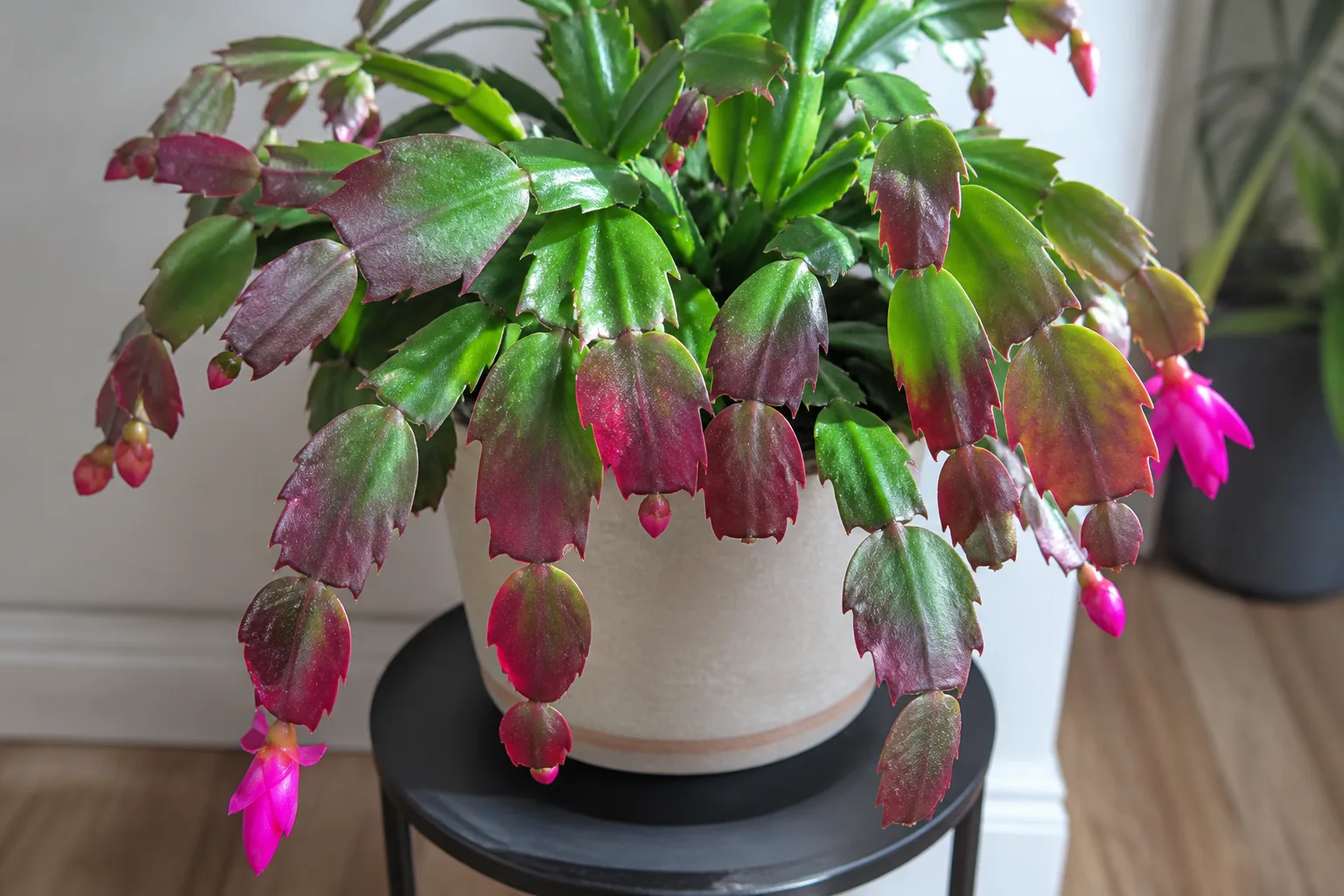
Some cultivars naturally show reddish margins, veins, or segment tips even when perfectly healthy—especially on newer growth or varieties bred for darker foliage. That kind of accent is usually subtle, stable, and limited to edges. You will not see segments shriveling, bleaching, or feeling soft.
Stress discoloration looks different. Entire phylloclades—or large patches—shift red, burgundy, or purple. Segments may also look thin, wrinkled, pale yellow-green, or scorched on the sun-facing side. If the color appeared suddenly after a window move, a heat wave, or a forgotten watering week, treat it as a problem—not a cultivar quirk.
The Anthocyanin Stress Response
Anthocyanin buildup is the plant’s way of saying conditions are harsher than its Brazilian cloud-forest ancestors evolved for. NC State Extension notes that full sun can bleach stems on Schlumbergera—the flip side of that coin is reddish-purple pigment when light is intense but not yet lethal. Cold snaps, drought, and root dysfunction trigger similar responses because they all raise cellular stress.
Understanding the mechanism matters because it sets expectations: fix the environment and new growth should return green within weeks. Old segments that were heavily pigmented may stay tinted permanently even after the plant recovers—more on that below.
Run a 60-Second Triage Before You Change Anything
Grab your phone’s notes app and answer three questions in order. Changing everything at once is how healthy plants lose buds.
Check Light Exposure First
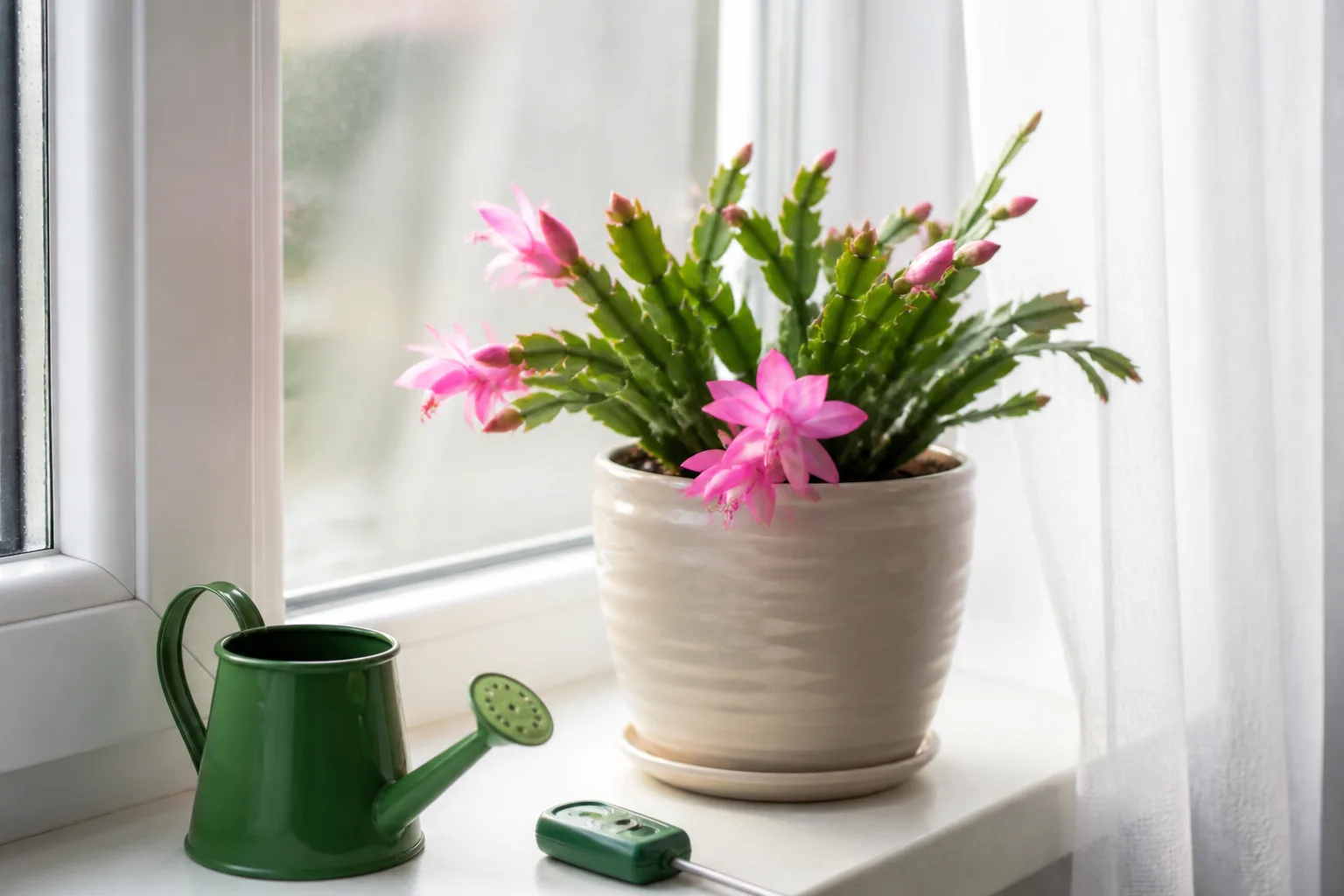
Stand where the pot sits at noon on a sunny day. Can you see direct sun patches on the segments? Is the plant on a south or west sill without a sheer curtain? Did you move it outdoors for summer? Too much direct light is the number-one cause of red Christmas cactus segments—start here before repotting or feeding.
Check Soil Moisture and Pot Weight
Lift the pot. A light pot with wrinkled, thin segments that reddened from the base up points to underwatering. A heavy pot with soggy mix, musty smell, or soft segments at the soil line suggests overwatering or root rot—a more urgent problem where red color may precede mush.
Press your finger into the top inch. Epiphytes want the surface to dry between drinks during active growth, but bone-dry soil for weeks is still a stress trigger. See Christmas cactus watering for seasonal rhythm.
Check Temperature and Drafts
Feel for hot or cold air within two feet of the pot. AC vents, radiator blow, frequently opened doors, and cold window glass in winter all cause rapid pigment shifts. RHS guidance emphasizes stable indoor conditions—holiday cacti hate sudden swings.
Triage shortcut: Sun + recent window change → fix light first. Wrinkled + light pot → water. Mushy + heavy pot → stop watering and inspect roots. Draft or heat blast → relocate.
Too Much Direct Sun (The Most Common Cause)
Christmas cacti want bright, filtered light—think tree-branch shade in a humid forest, not desert rock. NC State Extension lists partial shade as the outdoor equivalent: direct sun only part of the day. Indoors, that translates to an east-facing window, a few feet back from south glass, or west exposure softened by a sheer curtain.
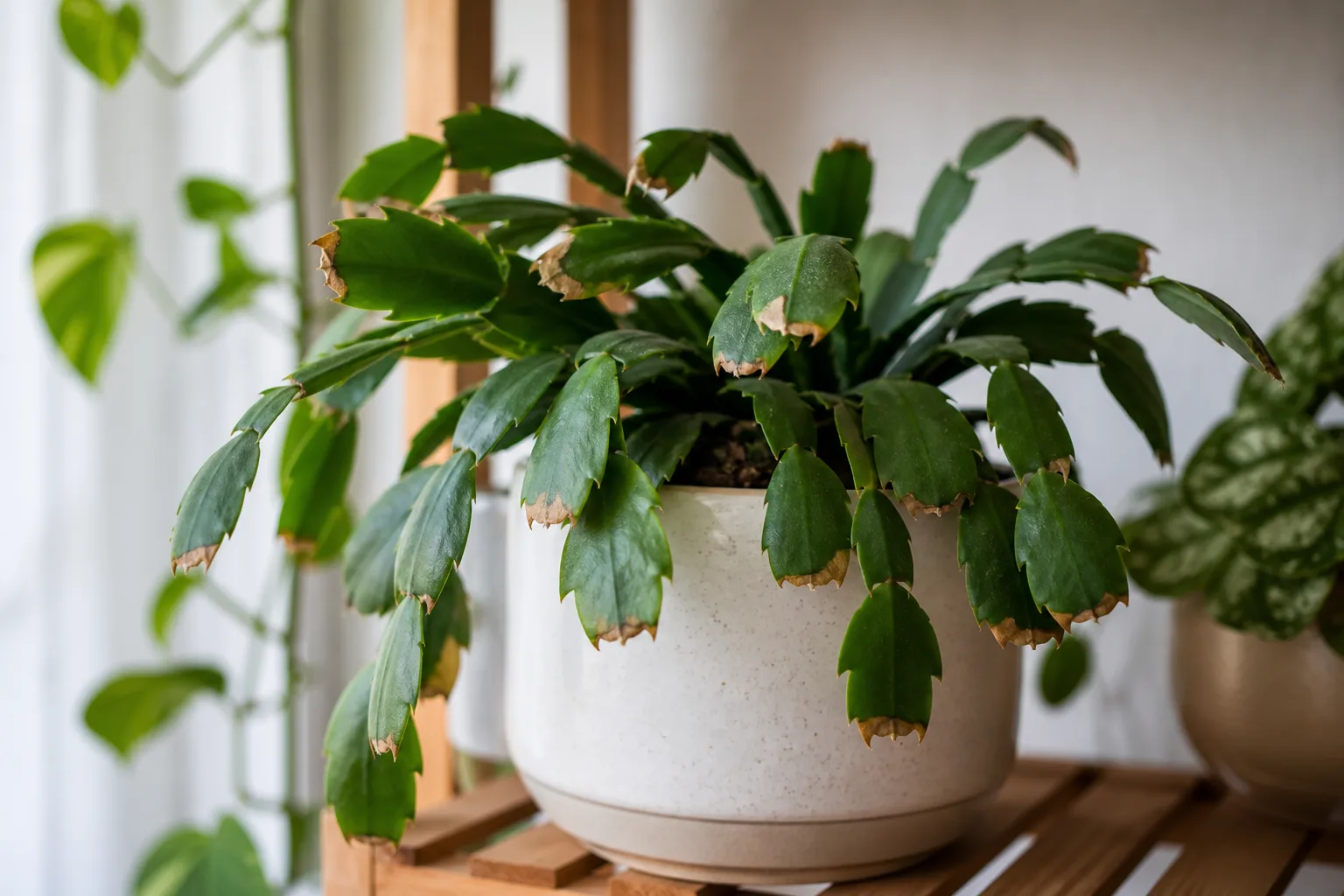
When segments get too much UV, anthocyanins accumulate on the sun-facing side first. Left unchecked, tissue bleaches yellow-white or turns crispy brown—NC State specifically warns that full sun bleaches stems.
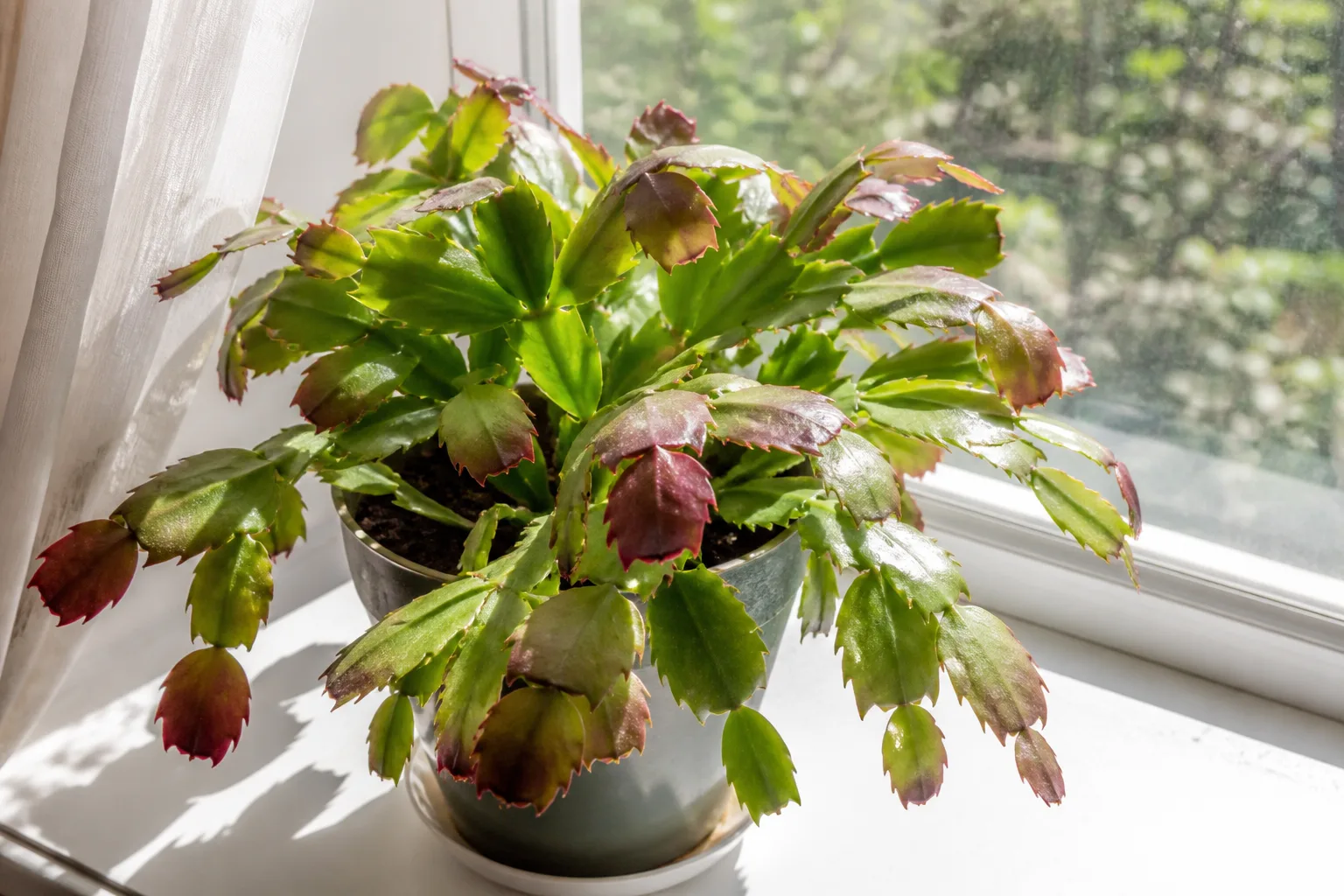
Summer South Window vs Winter Low Sun
Season matters. A spot that was perfect in November can scorch by June when the sun angle climbs. Many owners report red segments appearing mid-summer after months of trouble-free green growth—that is classic seasonal sun creep, not a mystery disease.
In fall and winter, low-angle sun through bare branches is gentler, and many plants tolerate brighter exposure. Do not assume the summer windowsill that reddened your plant is wrong year-round; adjust with the calendar. Our Christmas cactus light guide maps seasonal placement in detail.
How to Move Without Dropping Buds
If buds are already visible, move the pot in 6-inch increments every few days toward lower light rather than yanking it into a dark corner. Sudden light cuts after sun stress can trigger bud drop—the same photoperiod sensitivity that drives bloom induction makes these plants reactive to relocation.
Add a sheer curtain first if you like the window view. Rotate the pot a quarter turn weekly so one side does not hoard pigment. If you summered the plant outdoors, harden it off in reverse: dappled shade for a week before bringing it to an indoor sill.
Underwatering and Root Stress
Desert-cactus rules do not apply. Schlumbergera roots expect consistent moisture in an airy mix from spring through early fall, with only modest dry-down—not weeks of dust.
When soil stays too dry, roots cannot supply water fast enough. Segments lose turgor, wrinkle, and often flush red or purple at the margins before going limp. This pattern is easy to confuse with sun stress until you lift the pot and feel how light it is.
The Epiphyte Watering Rhythm
During active growth (roughly March through August), water when the top inch of mix feels dry, then soak until water runs from the drainage hole and empty the saucer. From mid-September through bud set, let the surface dry slightly longer—NC State recommends reducing water as buds develop. After flowering, ease off again through late winter, but never let the entire root ball go crispy for weeks.
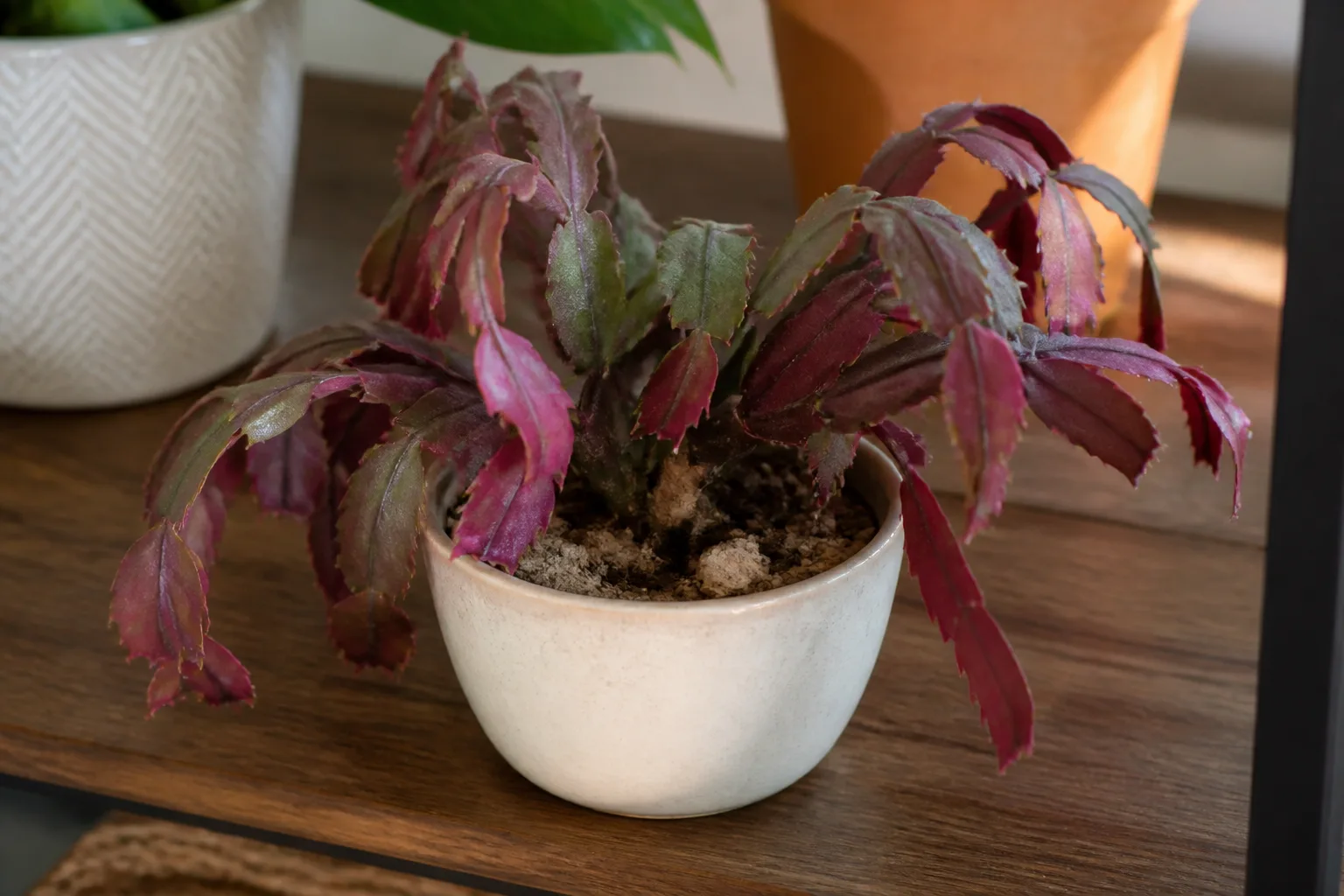
If underwatering caused the red tint, a single deep soak will not instantly re-green segments. Give the plant 10–14 days of steady moisture in a stable spot. New segments at the tips should emerge greener; older reddened cladodes may keep some color.
Overwatering and Root Rot (When Red Turns to Mush)
Red pigment can appear on a plant that is also drowning—especially when roots are damaged but not yet fully rotted. The difference is texture: mushy, translucent segments, gray mold at the soil line, or a sour smell mean stop watering immediately.
Overwatering collapses root function the same way drought does—roots cannot transport water and nutrients, so above-ground tissue stresses and pigments spike. But the rescue path is opposite: do not water your way out of rot.
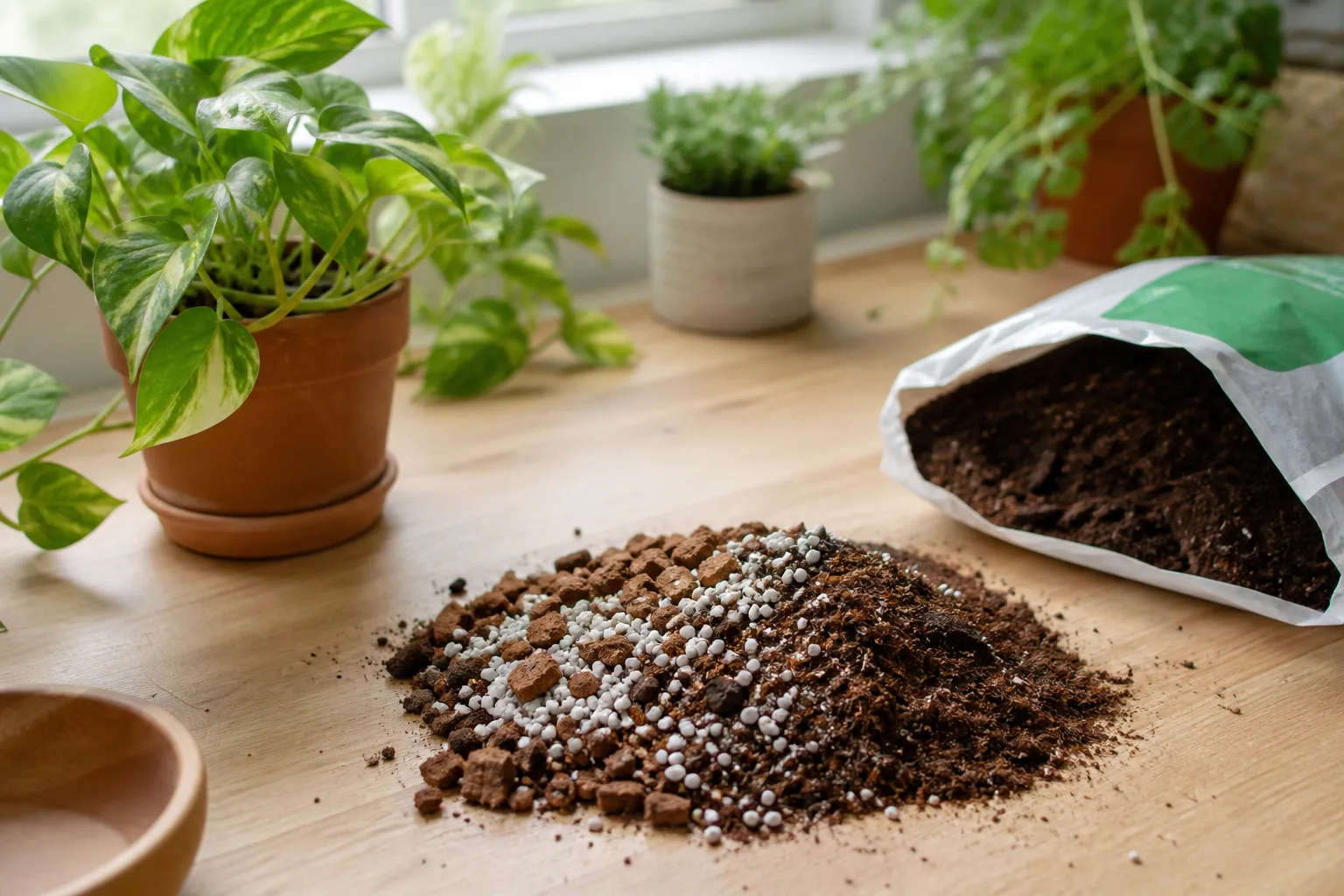
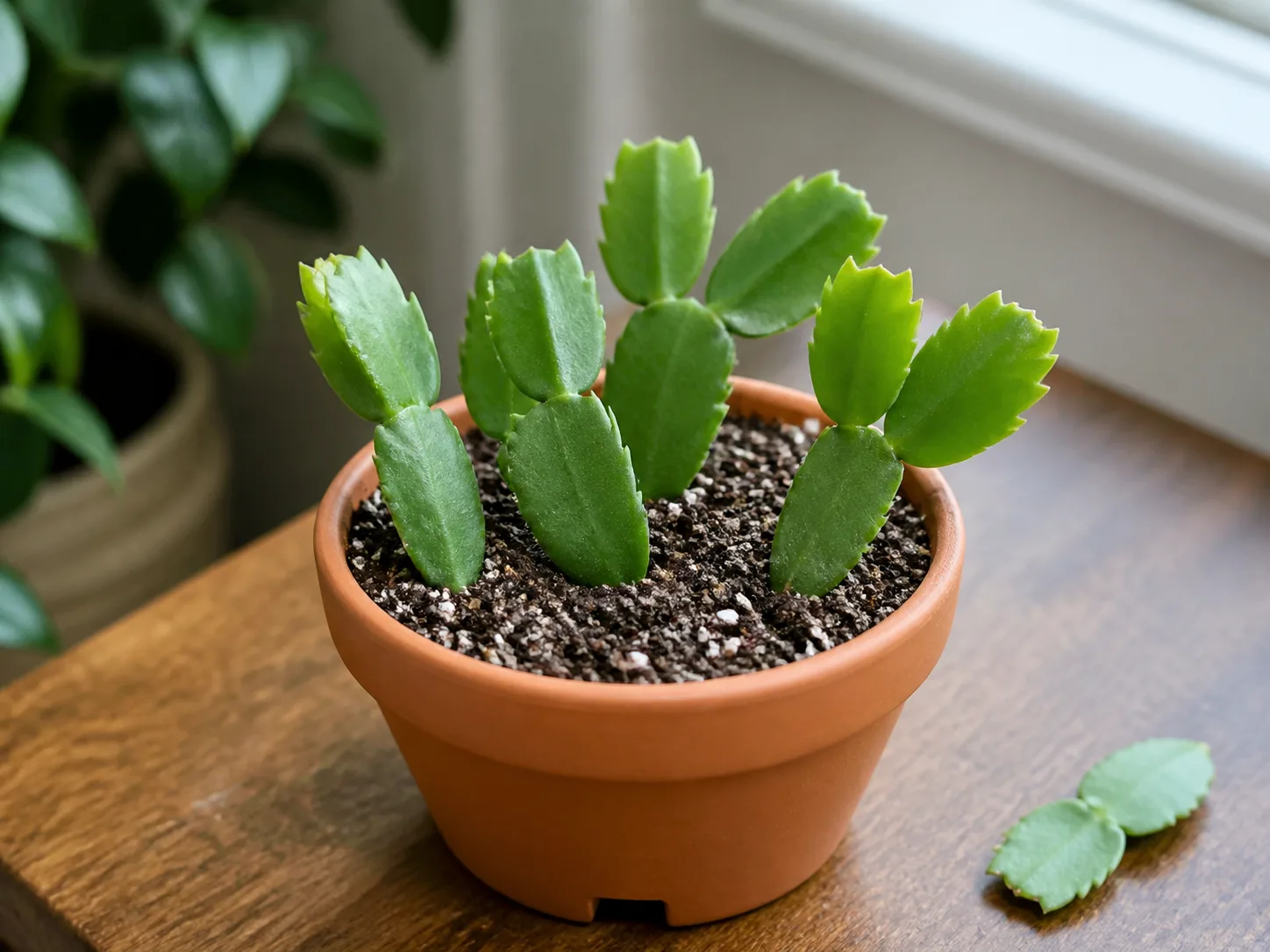
Unpot the plant, trim brown or mushy roots back to firm white tissue, and repot into fresh, fast-draining mix with extra perlite or orchid bark. Let the plant rest in bright indirect light and do not fertilize until new growth appears. If more than half the root mass is gone, propagate healthy green segments and treat the mother plant as a backup—see how to propagate Christmas cactus.
Rootbound Plants and Nutrient Lockout
Holiday cacti bloom best when slightly pot-bound—tight roots signal the plant to flower. But there is a ceiling. When roots circle so densely that water sheets through the pot in seconds and old mix has turned brick-like, nutrient uptake stalls and segments redden from deficiency stress even when you fertilize on schedule.
When Slightly Pot-Bound Helps Blooms
Missouri Botanical Garden and multiple extension sources note that Schlumbergera tolerates—and often prefers—being a bit snug. Repot only when you see roots escaping drainage holes, water runs straight through, or the plant has not been refreshed in three to four years.
Spring, just after flowering ends, is the safest repot window. Choose a pot one size up—an extra inch of diameter, not a mansion. Use peat-based mix with perlite and bark for epiphyte drainage.
Magnesium Deficiency and Epsom Salts
Christmas cacti use more magnesium than many houseplants. Chronic deficiency can contribute to reddish-purple foliage alongside pale new growth. Gardening Know How recommends dissolving 1 teaspoon of Epsom salts per gallon of water once monthly through spring and summer—but never the same week you apply regular fertilizer, and never while the plant is in full bud or bloom.
Feed monthly at half strength with balanced houseplant fertilizer from early spring through late summer, then stop by September so bud set is not disrupted. If segments reddened from nutrient stress, expect four to six weeks of consistent feeding before judging results.
Cold Drafts, Heat Spikes, and HVAC Stress
Schlumbergera grows best around 70–80°F during the active season, per NC State Extension. That does not mean it wants to live above a radiator.
Cold winter glass, single-pane windows, and outdoor porch nights below 50°F trigger anthocyanin the same way sun does. Heat is equally damaging: segments pressed against a sun-heated window or blasted by a furnace vent can redden within 48 hours. Move the pot six inches back from glass in winter, or slip a insulating mat between pot and sill.
Cool nights (55–65°F) are intentional in fall—they initiate blooms. But that is a controlled, gradual cool-down with bright days, not a random January freeze by the front door.
Less Common Causes Worth Ruling Out
If light, water, roots, and temperature all check out, widen the net—but do not chase rare problems before fixing the obvious five.
Nematodes and Pest Stress
Gardening Know How notes that heavy root-knot nematode infections can stunt plants and turn branches red-brown. When you repot, inspect roots for tiny round cysts. Sterilize tools between plants if you suspect nematodes in your potting bench.
Mealybugs, scale, and spider mites cause stress indirectly by weakening the plant. Check segment joints and the soil line with a magnifying glass. Isolate affected pots and treat before returning them to a collection.
Thanksgiving cactus (S. truncata) and Christmas cactus share the same red-leaf triggers—pointed segment teeth and earlier bloom on Thanksgiving types are the main ID clues, not different rescue steps. If your November bloomer is reddening, run the same triage.
Your Step-by-Step Recovery Plan
Once you have identified the primary stressor, follow this sequence—one major change at a time:
Step 1 — Stabilize placement. Move to bright indirect light away from drafts and HVAC. If sun scorch is the cause, add a sheer curtain or shift back from glass; do not plunge into a dark closet.
Step 2 — Correct water. Underwatered plants get a full soak and drained saucer; overwatered plants get a dry-down and root inspection if segments are soft.
Step 3 — Hold fertilizer for two weeks unless deficiency is clearly the only issue and roots are healthy. Panic-feeding stressed roots burns tissue.
Step 4 — Repot only if rootbound or rotted. Use fresh airy mix; trim dead roots; skip the next scheduled watering.
Step 5 — Watch new growth, not old segments. Green tips emerging within two to four weeks mean your fix worked. Old reddened cladodes may never fully revert—that is normal.
Step 6 — Resume bloom prep on schedule. From mid-September, return to the long-night routine in our light guide only after the plant looks stable. Moving a recovering plant during bud initiation can undo your progress.
If segments are mostly red but a few firm green sections remain, you can propagate the healthy tips and retire the stressed mother plant—a legitimate rescue when rot or nematodes compromised the base.
When Discoloration Is Permanent
Not every red segment turns green again. Heavily sun-stressed or long-neglected phylloclades often keep a burgundy cast even after conditions improve. That is cosmetic, not fatal, as long as new growth is green and firm.
Discard the plant—or propagate salvage segments—when you see stem collapse at the soil line, pervasive gray mold (Botrytis), or roots that smell rotten after a dry rest and trim. Partial recovery is common: prune ugly reddened sections once the plant is stable, as you would after bloom pruning.
Some growers keep purple-tinged plants on purpose. If health metrics are good—turgid segments, steady new growth, reliable blooms—the color is a quirk you can live with.
Prevention Habits That Keep Segments Green Year-Round
Consistency beats heroics. Match light to the season—pull back from south glass in May, allow brighter exposure in November. Water on segment feel and pot weight, not a rigid calendar. Repot every three to four years in spring with one-size-up pots and epiphyte mix. Fertilize lightly through summer, stop by late August, and skip Epsom salt the same week as fertilizer.
Keep the pot away from doors, fireplaces, and heat registers. Run a darkness audit in September so bloom prep does not require shuffling the plant across the house mid-recovery. Linking color health to the same routines that prevent leaf drop and bud drop saves you from repeating this triage next year.
Conclusion
Red or purple Christmas cactus segments are a stress signal, not a sentence. Run the 60-second triage—light first, then water and roots, then temperature—and fix one variable before chasing rare diseases. Most plants re-green at the growing tips within weeks once sun, moisture, and roots are back in epiphyte range.
Expect older segments to keep some tint; judge recovery by new growth, not nostalgia for uniformly green cladodes. If the base is mushy or moldy, propagate firm green tips and start fresh. Keep seasonal light shifts, steady watering, and timely repots on calendar, and you will spend next holiday season admiring blooms—not wondering why the plant turned red.