When to Plant Tomatoes for a Better Harvest
Learn when to plant tomatoes by frost date, soil temperature, and plant size, plus a simple calendar for seeds, seedlings, containers, and late starts.
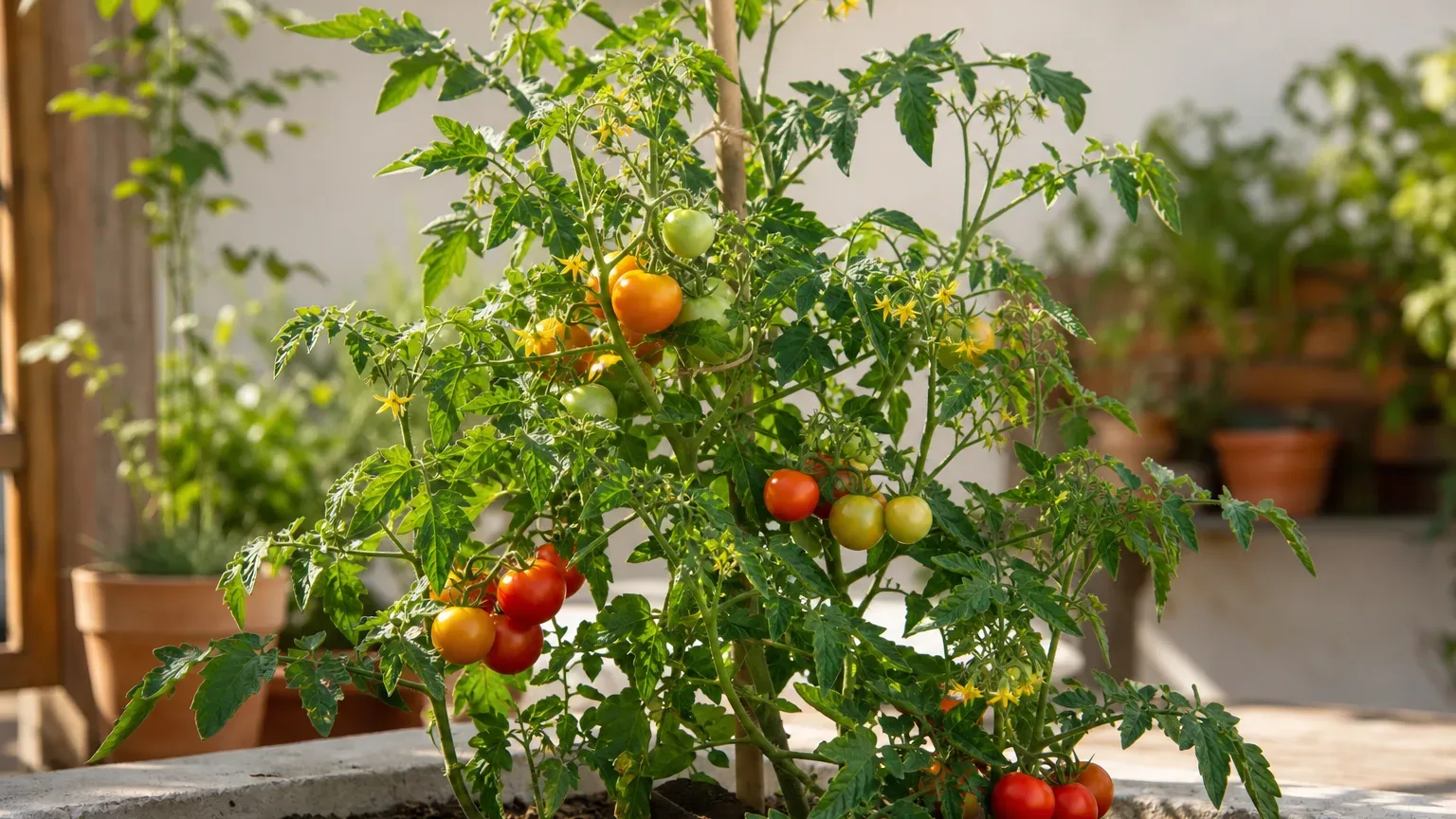
Tomatoes are not planted on a fixed date. They are planted when the cold risk has passed, the soil can support warm-season growth, and the seedling is strong enough to handle outdoor conditions. In most temperate gardens, that means transplanting a healthy tomato after the local last spring frost, when nights are reliably above about 50°F (10°C) and the soil has warmed to roughly 60°F (16°C) or more. Warm-loving tomatoes grow fastest when soil is closer to 65–70°F (18–21°C).
That rule is more useful than “plant in May” or “plant after Easter,” because spring arrives at different speeds even within the same hardiness zone. A sunny raised bed may warm a week before a low, wet in-ground bed. A container on a sheltered patio may be easy to move under cover. A tomato started from seed needs a different calendar from a six-week-old nursery transplant.
The short answer: plant by conditions, not the calendar
Use this go/no-go test on planting day:
- Your area’s expected last frost has passed, or you have a reliable way to move or cover the plant if a brief cold night returns.
- The forecast shows several mild nights, with no sustained dip near freezing.
- The soil is workable, not cold and saturated, and is at least about 60°F at the depth of the root ball.
- The seedling has been hardened off and is not wilted, root-bound, flowering heavily, or carrying obvious pests.
- The bed has full sun, drainage, and a support plan ready before the plant goes in.
If any of the first three checks fails, wait. A tomato that sits in cold soil does not gain a head start; it often pauses while its roots struggle to absorb water and nutrients. If the seedling is already outgrowing its pot, keep it in bright light, water when the surface begins to dry, and pot it up rather than rushing it into a cold bed.
Build your tomato planting calendar backward
The easiest way to plan is to start with the date you expect to transplant outdoors and count backward. Seed packets and plant tags usually list days to maturity, but that number generally begins at transplanting or, depending on the seller, at direct sowing. It is an estimate under favorable conditions—not a promise that fruit will be ripe exactly that many days later.
Starting seeds indoors
Start tomato seeds indoors about five to eight weeks before your intended outdoor transplant date. This gives the seedling time to germinate, develop several true leaves, and build a compact root system without becoming lanky. In a cool spring, the earlier end of that range may be useful; in a warm climate or with strong grow lights, five to six weeks is often enough.
For example, if conditions suggest an outdoor planting window around May 15, sow indoors between March 20 and April 10. The exact date depends on your indoor light, variety, and how quickly your home warms. Seedlings grown in weak window light may need more time but can become tall and thin, so a grow light positioned close above the foliage is usually better than simply starting earlier.
Keep the growing medium evenly moist but not waterlogged. Once seedlings emerge, give them strong light, gentle air movement, and enough room that leaves do not remain wet or pressed together. A crowded, soft seedling is harder to harden off and more likely to break during transplanting.
Buying and transplanting seedlings
Nursery plants remove the germination stage, but they do not remove the weather decision. Buy a plant with a sturdy stem, healthy green leaves, and roots that hold the potting mix without circling into a dense mat. A very large, flowering plant is not automatically better: it may be root-bound or stressed from sitting in a small container.
If the plant came from a warm greenhouse, harden it off before planting. A week of gradual exposure is a practical baseline: begin with a few hours outdoors in bright shade, increase the time each day, and introduce morning sun before full afternoon sun. Bring it inside or protect it whenever wind, cold, or intense sun would be a shock. A plant that wilts during hardening off needs more shade and a slower pace, not more fertilizer.
The three outdoor checks that matter most
Last frost and nighttime air temperature
Your local last-frost estimate is a planning tool, not a force field. Frost dates are based on historical probabilities, and a late cold snap can still happen. Tomatoes are frost-tender; a brief freeze can kill exposed foliage, while several chilly nights above freezing can still stall growth.
For an unprotected transplant, wait until nights are consistently above about 50°F. Tomatoes can survive cooler temperatures for short periods, but growth slows below that range and cold stress can leave a plant vulnerable just when it should be establishing roots. If the forecast is borderline, delay planting or keep the plant in a container that can be moved.
Do not confuse the USDA hardiness zone map with a tomato planting date. Hardiness zones describe average winter minimum temperatures and help with perennial plant survival. They do not tell you the last frost date, the current soil temperature, or whether your garden bed is still waterlogged. Use a local extension frost-date tool or nearby weather station, then confirm the actual forecast.
Soil temperature and bed moisture
Soil temperature is often the missing piece in a rushed spring planting. Measure it with a soil thermometer in the planting area, preferably in the morning and at root-ball depth. If you do not have a thermometer, the bed should at least feel workable and warm rather than cold, sticky, and saturated—but touch is an approximation.
Aim for at least 60°F, with 65–70°F better for rapid establishment. Dark mulch or a raised bed can warm sooner, but do not use black plastic or a sunny wall as permission to ignore a freezing forecast. Warm soil cannot protect leaves from frost.
If a bed is wet enough to smear into a ribbon or clump around your tool, wait. Working wet soil can destroy air spaces and leave the young roots in a dense, poorly drained pocket. Let the bed drain, then mix in organic matter only if the soil genuinely needs it; adding large amounts of fresh compost to a planting hole can create uneven moisture and nutrient conditions.
Choose the right planting window for your setup
In-ground beds and raised beds
In-ground beds often warm slowly, especially in heavy clay or a low spot. Raised beds usually drain and warm earlier, but they can also dry faster once the weather turns hot. Plant when the specific bed—not a nearby lawn or air temperature reading—passes the temperature and moisture checks.
Give most tomato plants 18–24 inches of space at minimum, and more for vigorous indeterminate varieties. Crowding reduces airflow and makes it harder to water the soil without splashing foliage. Read the tag for mature width, but treat a small nursery pot as a misleading guide: a plant that is 12 inches tall may eventually occupy several feet of horizontal space.
Containers and protected patios
Containers can make timing more flexible because you can move a plant into shelter. They still need warm potting mix, drainage holes, and a container large enough to keep the root zone from overheating and drying every few hours. A small dark pot on hot concrete can become stressful even when the calendar says conditions are ideal.
Place the container where the plant will receive at least six to eight hours of direct sun, then protect it from cold wind. Do not bring an outdoor tomato into a dim room for several days and expect it to keep growing normally; use the brightest location available or a grow light if it must stay inside.
Late planting and short seasons
You can plant tomatoes in early summer if the plant has enough warm days left to mature fruit. Choose a variety with a shorter days-to-maturity estimate, buy a healthy transplant, and avoid wasting time on a weak plant that needs weeks to recover. In very hot climates, the challenge may be the opposite: a late planting can grow leaves but fail to set fruit during extreme heat.
Late planting is also a chance to stagger your harvest. A second planting of a determinate or early variety can replace an exhausted first crop, but count backward from the region’s first fall frost. The plant needs time for roots, flowers, and fruit—not just time to become tall.
Prepare seedlings before they leave the house
Hardening off is the bridge between greenhouse conditions and a real garden. Start on a calm day. Put seedlings outdoors in bright shade for two or three hours, then return them to their protected spot. Over the next several days, extend outdoor time and increase sun exposure gradually. Water in the morning so foliage dries before night, and do not harden off a plant that is already severely wilted.
Pause the process if leaves bleach, scorch, or collapse. A little midday droop can be a water or heat signal; widespread bleached patches indicate too much sun too quickly. Give the plant recovery time, then resume with less direct light. The goal is tougher leaves and a stable root ball, not a stressful endurance test.
Before planting, water the seedling so the root ball is evenly moist. If roots circle tightly around the pot, loosen only the outer roots gently. Do not pull apart a healthy root ball aggressively. Remove lower leaves that would otherwise sit under the soil, but keep the growing tip and upper foliage intact.
Plant tomatoes so roots, stems, and supports start strong
Set the plant at the same depth it grew in the container, or bury a leggy stem deeper after removing lower leaves. Tomato stems can produce roots along the buried section, but leaves should not be buried and the stem should not be folded sharply. In heavy or poorly drained soil, a deep hole is less useful than a slightly raised planting position.
Install a cage, stake, or trellis at planting time. Adding support later can slice through established roots, and an unsupported plant can sprawl across damp soil before you get around to it. Match the support to the variety: a compact determinate plant may need a sturdy cage, while an indeterminate vine needs a taller, stronger structure and regular tying.
Water slowly at the base after planting until the whole root ball and surrounding soil are moist. Then let the surface begin to dry before watering again. The aim is consistent moisture, not a daily splash. A layer of clean organic mulch added after the soil has warmed helps reduce evaporation and soil splash, but leave a small gap around the stem.
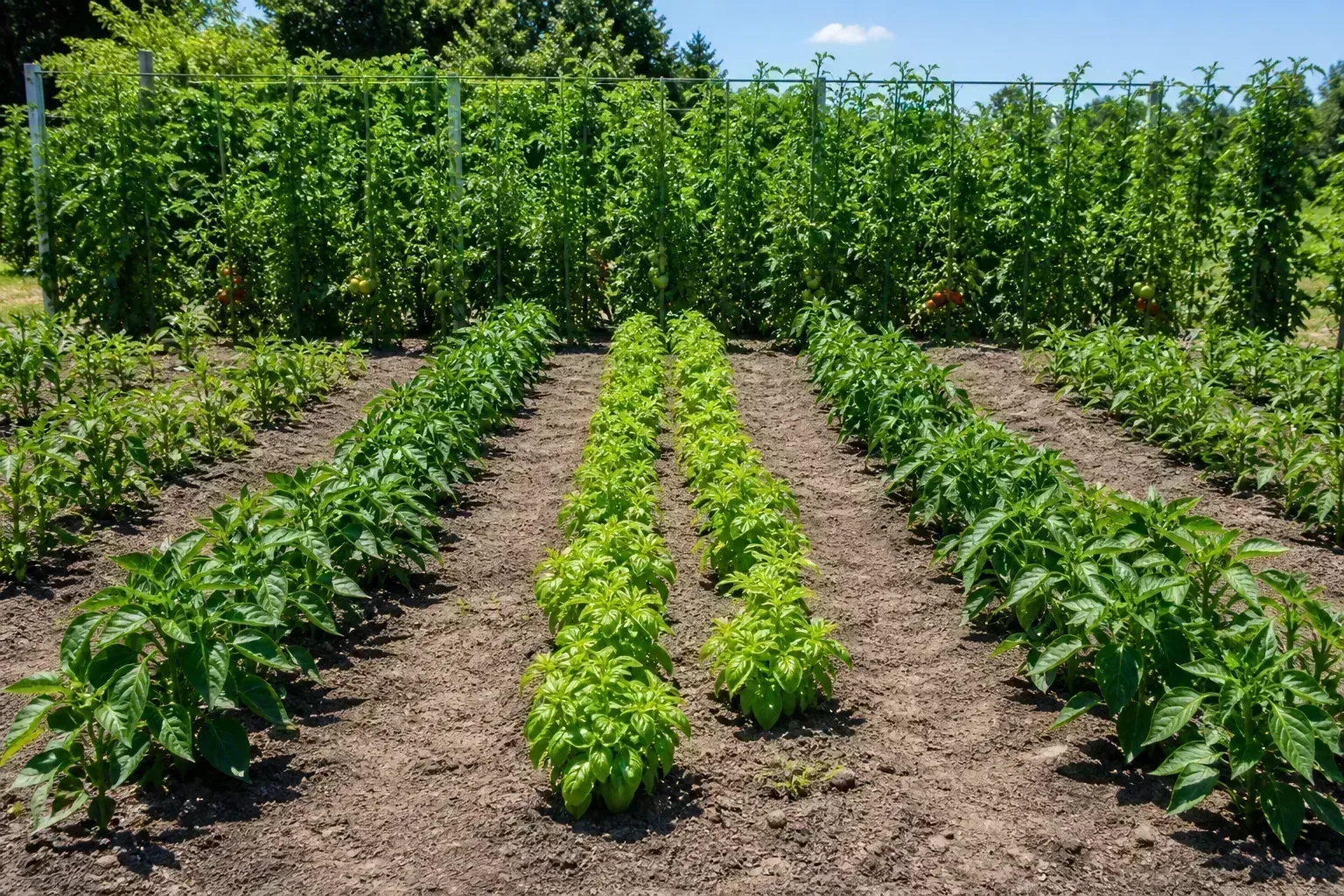
Give new transplants a calm first two weeks
The first two weeks are about roots, not rapid top growth. Check the plant each morning for wilt, wind damage, chewing, and signs of cold stress. Water deeply when the root zone begins to dry, adjusting for rain, soil type, container size, and heat. A small transplant in a windy raised bed may need attention more often than a large plant in deep loam.
If a cold night is forecast, cover the plant with a frost cloth or an inverted box that does not crush the foliage, and remove the cover in the morning. Plastic should not rest against leaves, and a cover is not a substitute for moving a container to shelter. If frost blackens the growing tip, wait a few days before pruning; the plant may have living tissue lower down.
Avoid heavy fertilizer immediately after transplanting. A stressed root system is not improved by a large dose of nutrients. Prepare the bed with a soil test or mature compost when appropriate, then feed according to the product label after the plant begins active growth. Too much nitrogen can produce a large leafy plant with delayed flowering.
Avoid the timing mistakes that cost a crop
Planting by month alone. A calendar date is a starting estimate. Check the forecast, soil, and plant readiness.
Direct-sowing too early. Tomato seed in cold, wet soil can rot or sit for weeks. Direct sow only where the season is long and the soil is reliably warm.
Skipping hardening off. A greenhouse-grown leaf can scorch in one afternoon of strong sun and wind.
Planting a huge, stressed transplant. Size is less important than a sturdy stem, healthy roots, and no serious pest or disease symptoms.
Ignoring the variety’s maturity window. A late, vigorous heirloom may be excellent in a long season but a poor choice when summer arrives late or fall arrives early.
Waiting to add the cage. Roots spread quickly around a new transplant. Put the support where it belongs before you water the plant in.
Watering the foliage at night. Wet leaves and poor airflow can increase disease pressure. Water the soil at the base, preferably in the morning.
Make the harvest window work for your variety
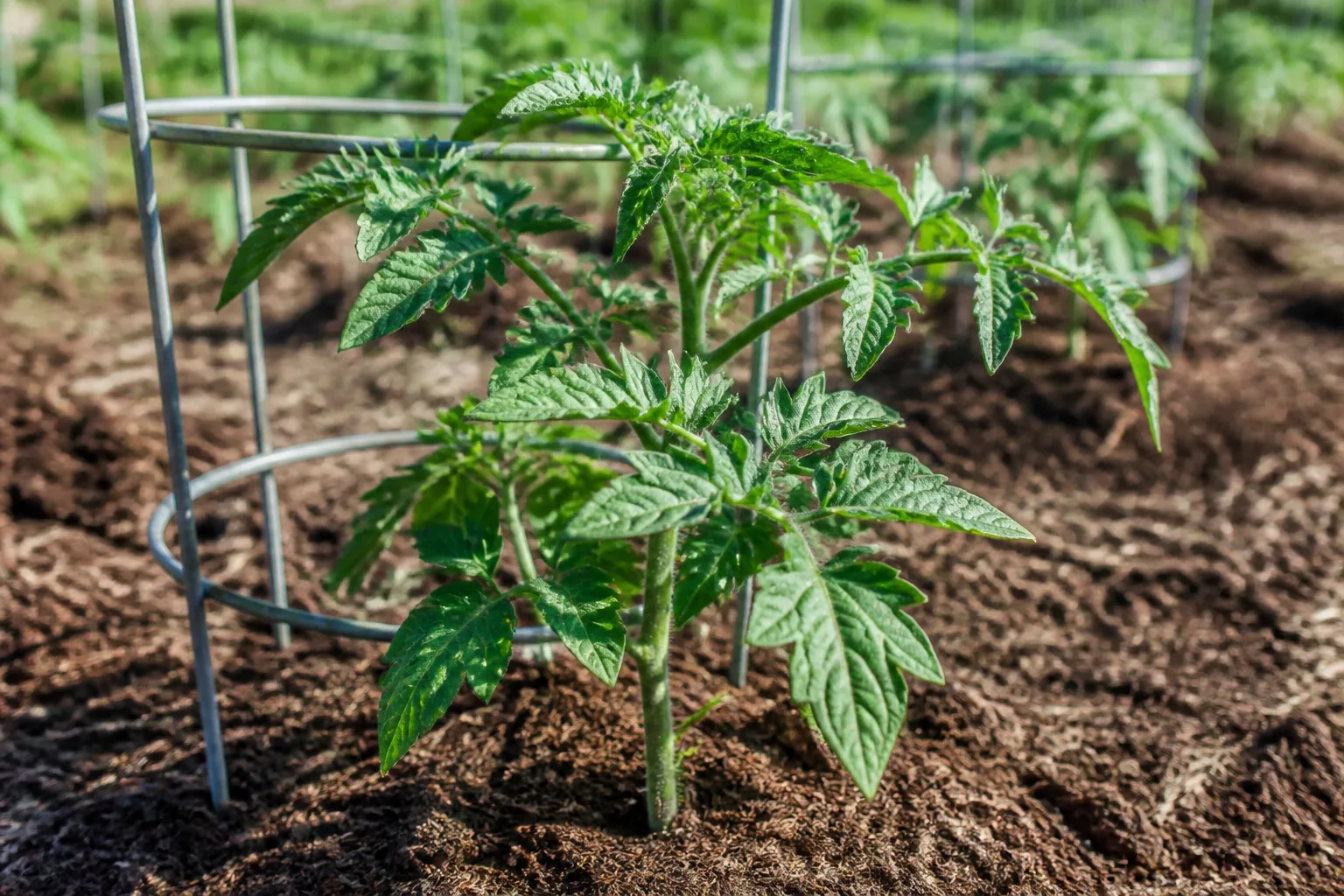
Determinate tomatoes tend to produce a concentrated crop and are useful when you want a predictable flush or have limited support height. Indeterminate tomatoes keep growing and producing through the season, but they require more space, stronger support, and regular tying. Neither type changes the frost rule; it changes how much room and time you should reserve after planting.
Read “days to maturity” as a comparison number. Cool weather, transplant shock, low light, drought, excessive nitrogen, and heat can all delay harvest. If you are choosing between varieties, an early cultivar gives more margin in a short season, while a later heirloom may reward a long, warm autumn with larger or more unusual fruit.
For a reliable succession, plant a small first wave when conditions are right, then a second wave two or three weeks later if your season permits. This spreads risk: one cold snap, heat wave, or disease outbreak is less likely to end the entire harvest. In a short season, prioritize the first healthy transplant and a variety that can finish before the first fall frost.
Conclusion: wait for warmth, then plant decisively
The best time to plant tomatoes is the first stretch after the last likely spring frost when nights are mild, soil is warm enough to support root growth, and the seedling has been hardened off. Start seeds indoors five to eight weeks before that window, but do not let an indoor calendar overrule outdoor conditions. A raised bed, container, or protected patio may shift the timing slightly; none makes a frost-tender tomato cold-proof.
On planting day, prepare the support, set the root ball at the right depth, water slowly, and watch the forecast for the next two weeks. That small amount of patience at the beginning usually buys a stronger root system, steadier growth, and a longer harvest than planting a month too early and asking a stressed tomato to catch up.