Why Is My Bamboo Turning Yellow? Read These Leaf Clues
Why is my bamboo turning yellow? Read leaf and root clues to diagnose sun, water, minerals, fertilizer, temperature, pests, or normal aging in lucky bamboo.
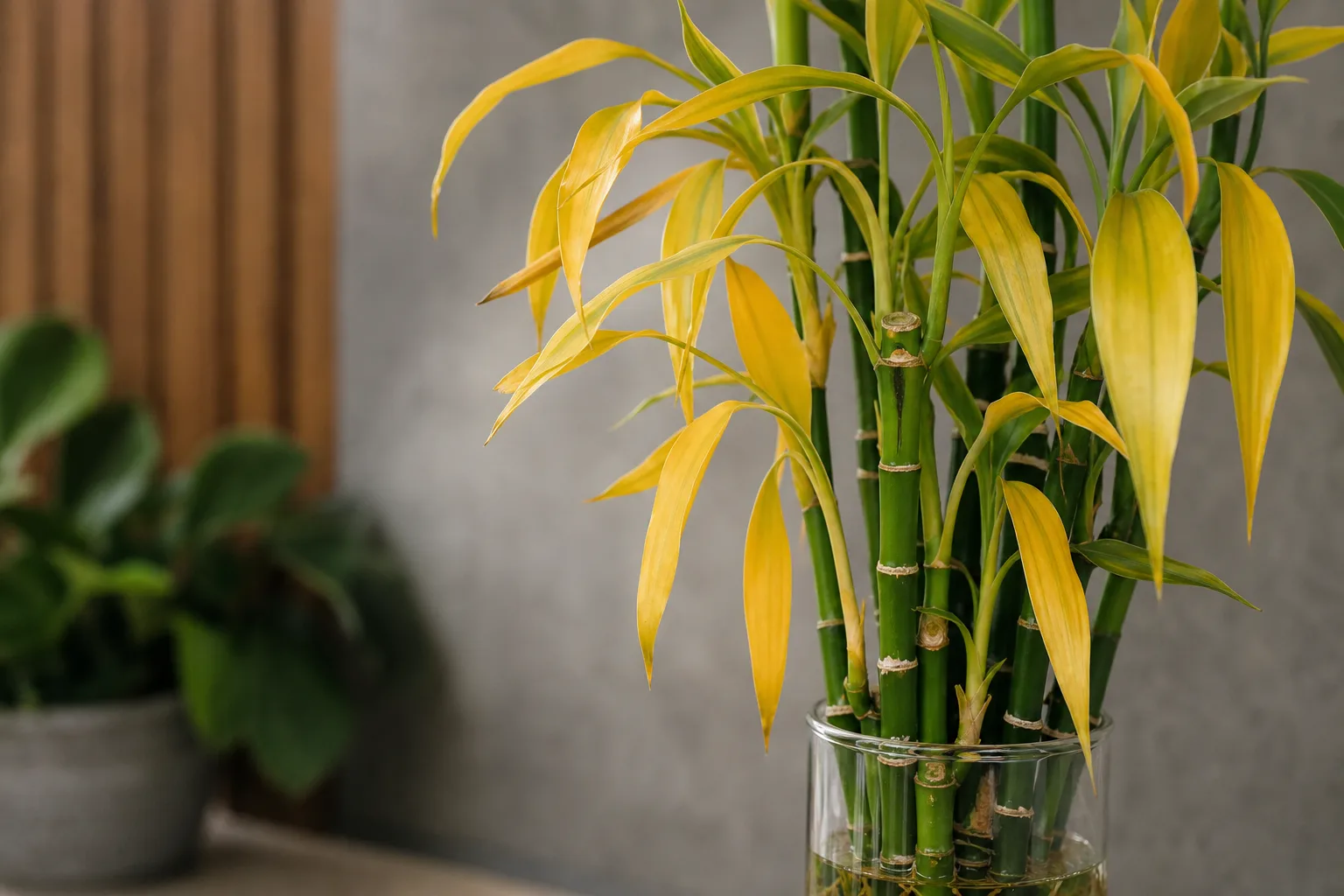
If your “bamboo” is a small desk plant with smooth, jointed canes in a glass vase or pot, it is probably lucky bamboo, Dracaena sanderiana. Its leaves can yellow from sun, water stress, tap-water minerals, fertilizer salts, temperature swings, pests, or ordinary aging—but the right fix depends on how the plant is growing and which parts have changed color. An outdoor clump of real bamboo needs a different diagnosis, so identify the plant before changing its care.
First, identify which “bamboo” you have
Lucky bamboo is a tropical dracaena, not a member of the grass family that includes true bamboos. It is sold as leafy shoots or bare, often braided canes, and it can grow either in a container of water and pebbles or in a draining pot of potting mix. Clemson Extension and NC State Extension both distinguish the two growing methods and recommend bright, indirect indoor light for lucky bamboo. (Clemson Extension) (NC State Extension)
A true bamboo usually has a cluster or grove of hollow, jointed culms emerging from soil outdoors. Its yellow leaves may be part of a normal spring leaf change, drought stress, cold injury, or a site problem; advice about a vase, tap water, or houseplant fertilizer does not translate directly. If yours is planted in the ground or a large outdoor tub, skip to the true-bamboo section below.
Read the yellowing pattern before changing care
Yellow is a symptom, not a diagnosis. Before watering or feeding, note where the yellow appears, how quickly it is spreading, whether the leaf is soft or dry, and what changed in the last few weeks: a move, a new window, a water source, a fertilizer dose, or a temperature shift. Patterns are clues, not proof, so use at least one second check—especially the moisture level or root condition—before making a major change.
Variegated lucky-bamboo cultivars can have cream or yellow-green stripes as part of their normal pattern. Compare a suspect leaf with older leaves and with the rest of the plant; a stable stripe with firm green tissue is different from a new, expanding yellow patch. If the plant’s color has changed across several leaves or the cane itself is fading, look for a growing-condition problem.
Check the roots and cane, not leaf color alone
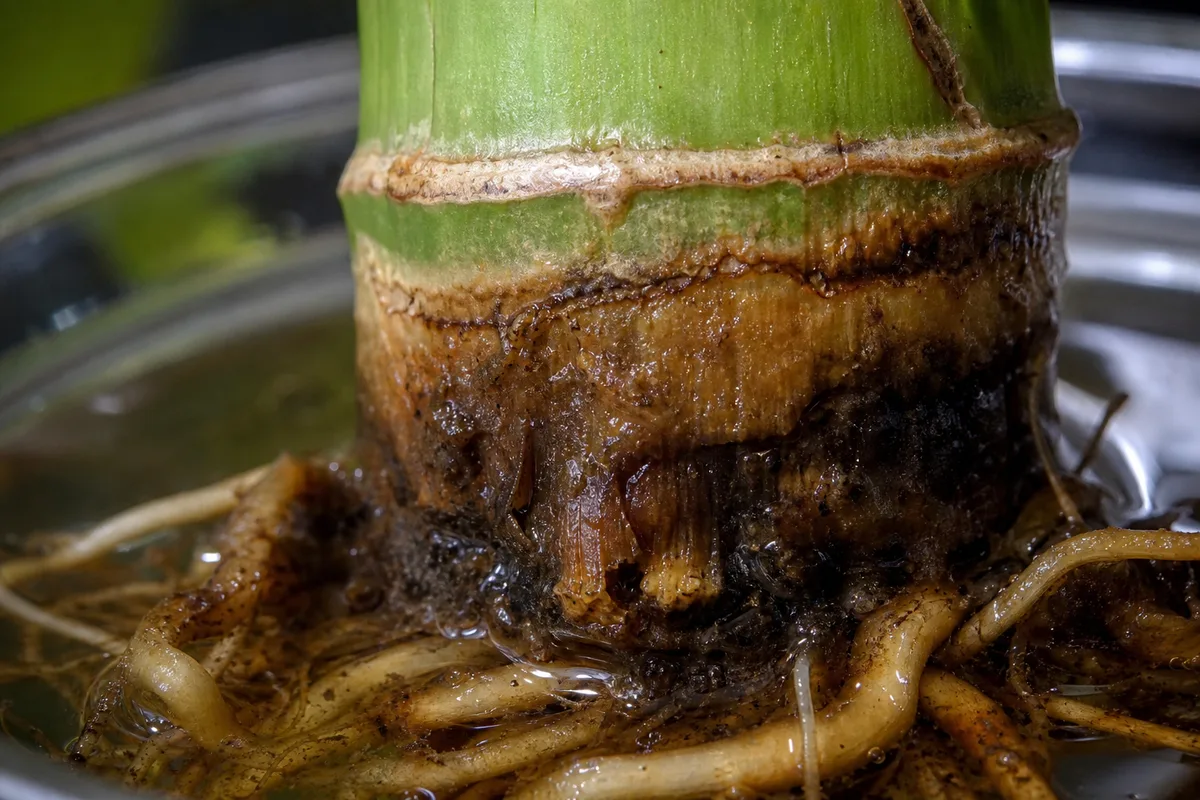
If the plant is in a vase, lift it gently and check the roots and cane at the waterline. Firm roots may be pale, orange, or red, so color alone does not show rot. Slimy dark roots, cloudy or sour-smelling water, or a soft cane base are concerning; rinse healthy roots and avoid repeated handling if only one old leaf is yellow.
For a soil-grown plant, check the mix an inch below the surface and feel the pot’s weight before unpotting it. A brown or black root is not automatically dead, but mushy roots that lose their outer tissue, a persistently wet mix, and yellowing that continues together make root rot more likely. University of Maryland Extension describes dark, soft roots and yellowing or wilting despite damp mix as common root-rot clues. (University of Maryland Extension)
A quick symptom map
| What you notice | Check first | More likely explanation |
|---|---|---|
| One oldest lower leaf fades slowly; the rest stays firm and green | Whether new leaves remain healthy | Normal leaf aging |
| Pale or tan patches on the window-facing side | Recent direct sun or a hot pane | Sun scorch |
| Yellow lower leaves and a pot that stays heavy or wet | Drainage and roots | Waterlogged soil or root rot |
| Yellowing with dry soil, a light pot, or exposed roots in the vase | Moisture at the root zone | Underwatering or low water level |
| Brown or yellow tips, especially after a water or fertilizer change | Water source, white crust, recent feeding | Mineral or fertilizer salts |
| Fine stippling, sticky residue, cottony flecks, or webbing | Leaf undersides and cane joints | Sap-feeding pests |
| A whole cane turns yellow, soft, or hollow | Cane base and roots | Serious cane or root decline |
A yellow lower leaf by itself is low urgency if it is the oldest one and the rest of the plant is unchanged. Several leaves yellowing over a short period, new growth fading, a soft cane, or roots that smell bad deserves a closer check.
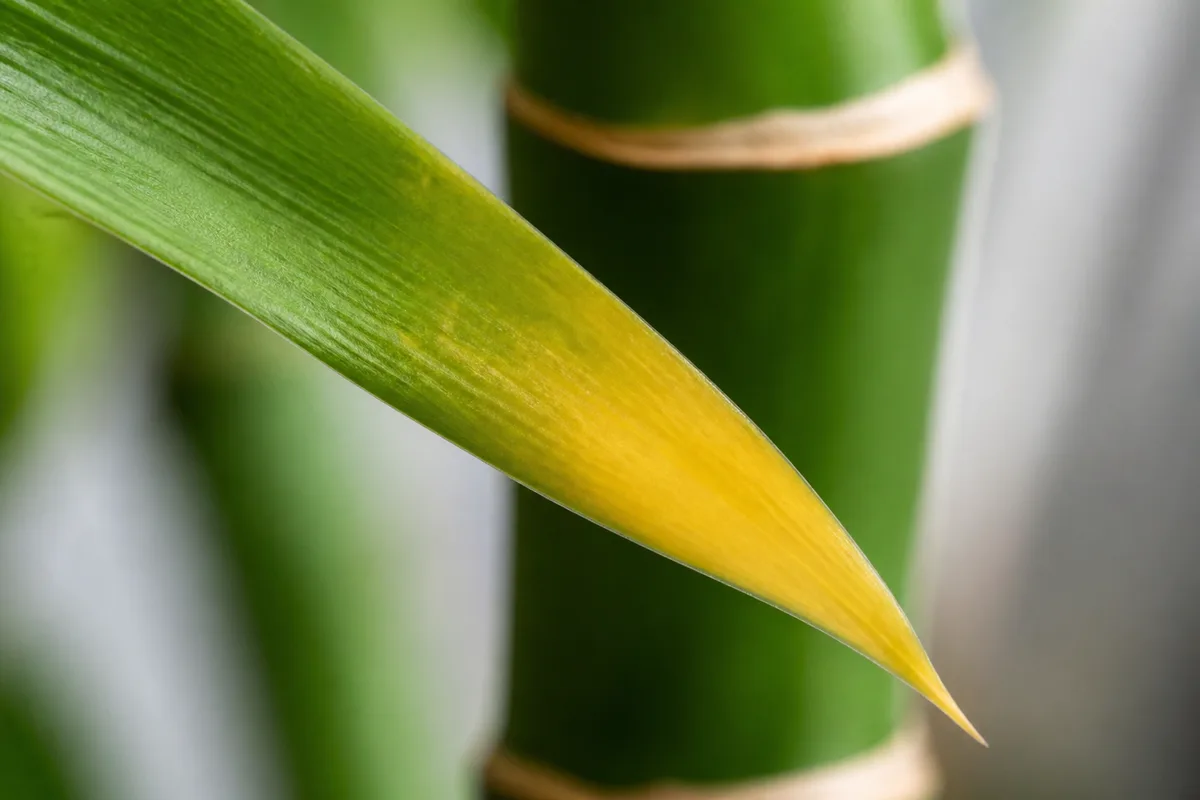
Seven causes of yellowing in lucky bamboo
Lucky bamboo can lose color for more than one reason at once. For example, a vase in a sunny window can warm quickly, grow algae, and concentrate dissolved salts as water evaporates; correcting only the light may not solve every symptom. Start with the clue that matches what you can see, then make one measured change and watch the next growth.
1. Direct sun or heat at the window
Lucky bamboo tolerates a bright room but can scorch in direct sun. The damaged areas are often uneven, pale yellow or bleached, then dry and tan; they tend to show most strongly on leaves facing the glass. A plant that looked fine before being moved onto a sunny sill may show damage after a short exposure. Clemson Extension recommends bright, indirect light, and BBC Gardeners’ World notes that direct sun can scorch the leaves and warm the water enough to encourage algae. (Clemson Extension) (BBC Gardeners’ World Magazine)
Move the plant out of the direct beam, but keep it in a bright spot rather than a dark corner. An east-facing window with gentle morning light or a spot behind a sheer curtain often works; if you move it farther from a window, turn it occasionally so shoots do not lean toward the light. Existing bleached tissue will not regain its color, so wait to see whether newer leaves stay green before trimming anything.
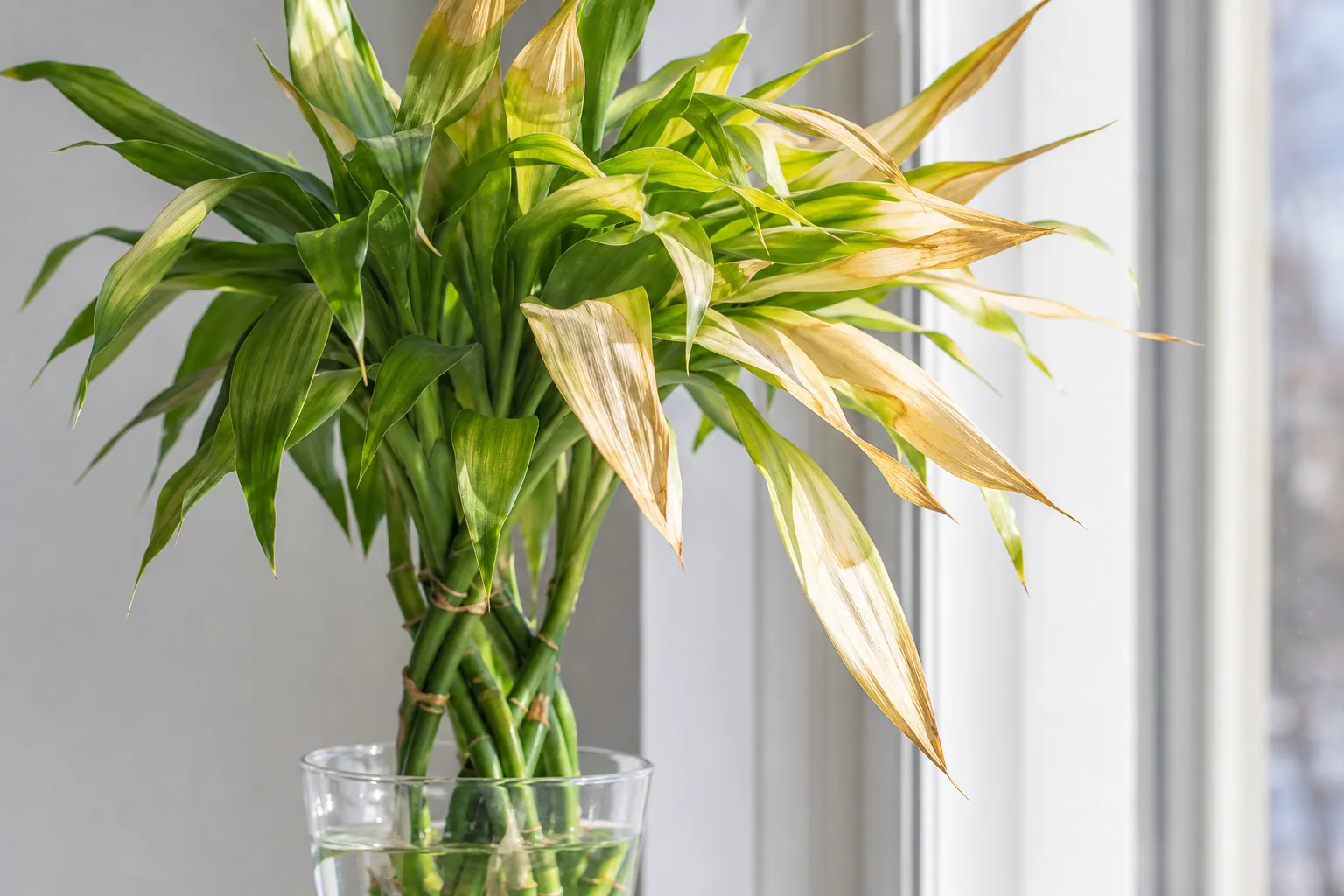
2. Water stress and root or stem damage
Watering instructions differ because a vase-grown dracaena and a soil-grown one do not have the same root environment. In water, keep the roots covered and the bottom inch or so of the cane submerged, but leave leaves and most of the cane above the water. Refresh the water and clean the container about once a week; topping it off indefinitely lets old water, algae, and decaying leaves stay in place. Clemson Extension recommends weekly water changes and covering roots plus at least an inch of stem. (Clemson Extension)
Cloudy or sour-smelling water and slippery roots mean the vase needs attention, not more fertilizer. Remove fallen leaves, rinse the roots and stones, scrub the vase, and refill with clean water. If one cane is mushy or blackening at the waterline, separate it; some healthy lucky-bamboo roots are red, so judge roots by texture and smell rather than color alone.
Soil-grown lucky bamboo should be in a pot with drainage and a loose indoor-plant mix. Water thoroughly when the top inch feels dry, let excess water escape, and empty the saucer. A fixed weekly schedule can fail in winter, in a dim room, or in a large pot, because those conditions slow drying; in brighter or warmer conditions, the same pot may dry faster. Clemson Extension recommends watering soil-grown plants when the top inch is dry and draining the pot well. (Clemson Extension)
If the plant wilts while soil is wet, do not add water just because the leaves look thirsty. Wet mix can deprive fine roots of oxygen, leaving the plant unable to take up water; that is why overwatered plants can wilt as well as turn yellow. A sour smell, dark mushy roots, or a soft stem base supports root rot. (University of Maryland Extension: overwatered indoor plants)
If the mix is completely dry and pulls away from the pot, rewet it gradually, let it drain, and then recheck moisture before watering again. Overwatering, underwatering, and root rot can overlap in appearance, so moisture and root checks matter more than leaf color alone.
A crowded soil pot can dry too quickly or become difficult to water evenly, but yellow leaves alone are not a reason to repot. Repot only when roots densely circle the pot, the plant repeatedly dries soon after watering, or the mix has broken down and will not drain. Use a pot with holes just one size larger; an oversized pot holds more wet mix around the roots, and a water-grown arrangement does not need a larger vase because one lower leaf has turned yellow.
3. Tap-water minerals and chemicals
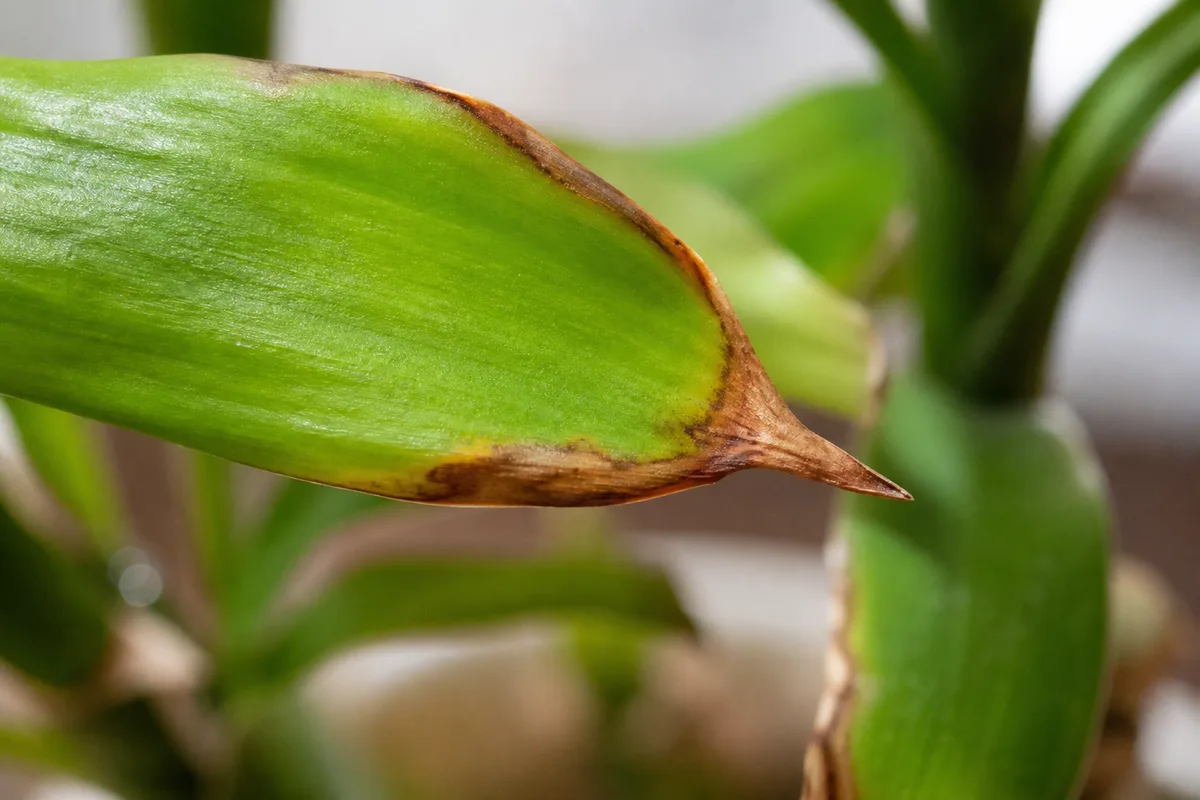
Water quality is a plausible cause when the leaf tips or margins brown or yellow first, especially if the plant has been watered from the same tap for months. Dracaenas are sensitive to fluoride and certain dissolved salts, and high-mineral or softened water may leave salts behind as it evaporates. The pattern often looks like a dry edge that slowly advances inward rather than a whole plant turning yellow overnight. NC State Extension and the University of Missouri both describe dracaenas as sensitive to water-related fluoride or salt injury, often visible at leaf tips and edges. (NC State Extension: Dracaena) (University of Missouri Extension)
Try rainwater, distilled water, or a suitable low-mineral filtered source for several water changes, and see whether new leaves emerge without the same damage. Avoid household-softener water because it can carry extra sodium (University of Maryland Extension); letting a jug stand may reduce some free chlorine but does not reliably remove fluoride or dissolved minerals. Check your local water-quality report if the same pattern affects several sensitive plants.
Do not cut away a healthy cane because a few leaf tips have browned. Trim only the dead part of a leaf if its appearance bothers you, leaving green tissue intact, and avoid adding fertilizer while you are testing a water-quality change. If the yellowing is widespread rather than limited to margins, also check the roots, light, and recent temperature changes.
4. Too much fertilizer and salt buildup
Lucky bamboo is a light feeder, especially when it is growing in a small volume of water. A full dose of general houseplant fertilizer in a vase can create a stronger solution than the roots can handle; repeated feeding can also leave salt deposits in potting mix. Watch for damage after a recent feeding, browned leaf edges, a white crust on soil or the vessel, dead root tips, or a plant that wilts despite having water. University of Maryland Extension identifies excessive or frequent fertilizer use as a cause of high soluble salts and notes that yellowing, stunting, root decline, and leaf-tip damage can follow. (University of Maryland Extension)
Pause feeding while the plant is stressed. For a vase-grown plant, discard the nutrient solution, rinse the vase, roots, and pebbles, and refill with plain clean water. For a soil-grown plant with drainage, flush the mix thoroughly and let the pot drain, or replace it if it is crusted or compacted; do not try to “balance” a heavy dose with another additive.
A plant kept in water for years may eventually benefit from occasional dilute fertilizer, but “more” is not the way to correct yellowing. Clemson Extension recommends one-quarter-strength liquid houseplant fertilizer every other month for water culture; follow a reliable label and use less often if the plant is not actively growing. Soil-grown lucky bamboo can use a normal houseplant feed during active growth, applied according to its label. Wait until the plant is stable before resuming any feed. (Clemson Extension)
5. Cold drafts and sudden temperature changes
A sudden cold draft, a chilled window, an air-conditioning vent, or a burst of heater air can stress a tropical plant. Yellow leaves after a move or a temperature swing may appear alongside drooping, dry edges, or a cane that begins to soften. Lucky bamboo does best in a warm, steady indoor position; Gardeners’ World advises avoiding draughty spots and fluctuating temperatures such as those next to radiators or air conditioners. (BBC Gardeners’ World Magazine)
Move it to a stable, bright room away from exterior doors, heating vents, and air conditioners. Do not place it in a darker space just to avoid the draft if a brighter protected position is available. If the plant went outside during warm weather, bring it back in before nights become cool; Clemson Extension recommends returning lucky bamboo indoors before nighttime temperatures drop below 65°F. Damaged leaves may continue to yellow, so judge the move by the next leaves and the firmness of the cane. (Clemson Extension)
6. Sap-feeding pests
Pests are less common than water or light problems, but they can drain leaf color and are easy to miss on a compact bundle of canes. Spider mites cause fine pale stippling and sometimes delicate webbing; mealybugs look like white cottony flecks at leaf joints; aphids may cluster on soft new growth and leave sticky residue. Clemson Extension lists mites, mealybugs, and aphids among lucky bamboo’s pests, while Maryland Extension’s indoor-plant guide describes these visual clues for houseplants. (Clemson Extension) (University of Maryland Extension)
Hold the plant over a pale surface and inspect the leaf undersides and cane joints with a hand lens or phone camera. If you find insects or webbing, isolate the plant and rinse the foliage thoroughly. Wipe visible mealybugs with a damp cotton swab, then repeat inspections over the next few weeks because hidden pests can outlast one rinse.
Use a product only if the pest is confirmed and its label allows indoor use on houseplants; follow the directions. Do not spray a plant just because its leaves are yellow.
7. Normal leaf aging—or a failing cane
One oldest lower leaf slowly turning yellow while the remaining foliage stays firm and green is often normal turnover. Houseplants do not keep every leaf forever; University of Wisconsin–Madison Extension explains that an occasional yellow lower leaf can be normal as older, less productive leaves give way to new growth. (Wisconsin Horticulture, UW–Madison Extension) If several leaves yellow together, the newest growth fades, or the cane changes color, treat it as a stress signal instead of normal aging. (Royal Horticultural Society)
A leaf that is fully yellow will not turn green again. You can remove it at the base with clean scissors, but leave partially green leaves in place while correcting the cause; they still contribute to the plant. A yellowing cane is more serious than a single old leaf. If a whole cane turns yellow and becomes soft, hollow, or blackened near the roots, separate it from healthy canes and discard it rather than expecting it to recover. (Clemson Extension)
If a healthy green side shoot remains, that shoot can be rooted separately; new roots may form over a few weeks under clean conditions.
What to do today
Do not change the light, water, fertilizer, and pot all at once. A cluster of simultaneous changes makes it hard to see which condition was wrong and can add fresh stress to a plant that may already be recovering. Take a quick photo, note whether it is growing in water or soil, and use this order:
- Check the cane. If it is firm and mostly green, it may recover; separate any soft or blackening cane from healthy stems.
- Check the root zone. In a vase, look for covered roots, clean water, and no slime or sour smell. In soil, feel below the surface and lift the pot; wait if the mix is still wet and heavy.
- Review recent changes. A new sunny window, fertilizer dose, tap-water source, cold night, or plant move often narrows the likely cause better than guessing from leaf color alone.
- Correct one confirmed mismatch. Move it out of direct sun, refresh dirty vase water, correct a soggy or dry soil routine, or pause fertilizer only when the evidence points there.
- Remove only dead tissue. Trim fully yellow leaves at the base and discard a decaying cane. Keep firm green shoots and avoid cutting healthy canes to “reset” the plant.
After the change, keep its conditions steady for several weeks and watch the new leaves. A damaged leaf will not repair itself, and a cane may take time to show whether it has stabilized. The useful sign is that yellowing stops spreading and new growth stays firm and green.
Can yellow lucky bamboo turn green again?
Usually, no: yellowed leaf tissue has lost its normal green color and will not reverse, even if you correct the cause. The plant can still recover by keeping its remaining healthy leaves and producing new green growth, as long as the cane and roots are sound. Do not judge success by waiting for a yellow leaf to recolor; judge it by whether damage stops and the next leaf emerges healthy.
A yellow cane has a poorer outlook than a yellow leaf. If the whole cane is yellow or its base is soft, remove it from the arrangement; a healthy green shoot may be rooted as a separate cutting. A firm green cane with only a few yellow leaves can stay in place while you correct its environment; snip fully yellow leaves with clean scissors.
If it is true bamboo growing outdoors
A garden bamboo is a grass, not Dracaena sanderiana. Many evergreen bamboos shed a noticeable flush of older leaves in spring as new foliage develops; University of Georgia Extension describes this as normal seasonal turnover. If older leaves drop while new ones emerge and the canes remain sound, leave the fallen leaves as mulch rather than treating the plant like a dying houseplant. (University of Georgia Extension)
Widespread yellowing or dieback still deserves investigation. True bamboo prefers moist but free-draining soil, and a lack of water can cause leaf drop and dieback; container bamboo dries out faster than an established in-ground clump. The Royal Horticultural Society recommends regular watering for container bamboo during active growth and warns against leaving it dry or waterlogged. Wind scorch, winter cold, a newly planted root ball drying out, or excessive soil moisture can all mimic a nutrient problem, so check the planting site and soil before adding fertilizer. (Royal Horticultural Society)
Species and climate matter outdoors. A yellow or gold cane may be a normal cultivar trait, while dry silvery foliage after severe cold can point to cold injury; some true bamboos also lose leaves in spring. If most of a clump turns yellow outside its usual seasonal pattern, take a photo of the whole plant and the affected canes, check soil moisture several inches down, and ask a local extension service or reputable bamboo grower to identify the species before applying a treatment.
Prevent yellow leaves from coming back
Give lucky bamboo bright, indirect light and keep it away from both hot glass and cold drafts. If it is in water, refresh the vase weekly, remove fallen leaves, and keep only the roots and a little lower cane submerged; use clean, low-mineral water if tip damage keeps returning. For soil, choose a draining container, let the top inch dry slightly, water thoroughly, and empty the saucer rather than keeping the root zone constantly wet. (Clemson Extension) (BBC Gardeners’ World Magazine)
Feed sparingly and according to the growing method. A water vase offers little buffer against a concentrated dose, while potting mix can collect minerals over time; both setups respond poorly to routine “extra” feeding. Keep a note of when you change water, fertilize, or move the plant, and inspect roots and leaf undersides occasionally; if yellowing recurs, that history may reveal a pattern faster than changing several habits at once.
Repotting is a targeted fix, not a routine response to yellow leaves. Soil-grown plants need a fresh, free-draining mix when the old one has collapsed or roots are crowded enough to affect watering; water-grown plants need a clean vase and water, not potting soil. A snug container that supports the canes is usually fine, so check moisture, water quality, and cane firmness before deciding that the plant has outgrown its home.
Conclusion
For the common indoor plant sold as lucky bamboo, identify whether it is growing in water or potting mix, then match the yellowing pattern to a likely cause. Sun scorch, stressed roots, mineral-heavy water, excess fertilizer, temperature swings, pests, and normal aging look different when you check the leaves alongside the roots and cane. Correct the confirmed problem one step at a time; yellow leaves rarely turn green again, but a firm green cane can continue growing well.
If the plant is true outdoor bamboo, seasonal spring leaf drop may be normal. Garden soil, weather, and species—not vase care—should guide your diagnosis.