Whiteflies on Alocasia Cuprea: Mirror Leaf Checks & Fixes
Quick answer
Whiteflies on Alocasia Cuprea show up as tiny white flying insects and scale-like nymphs on dark purple leaf undersides—often with sticky honeydew dulling the mirror copper finish. First step: isolate if needed, wear gloves, and gently hose or wipe adults off every leaf underside before setting yellow sticky traps or spraying.
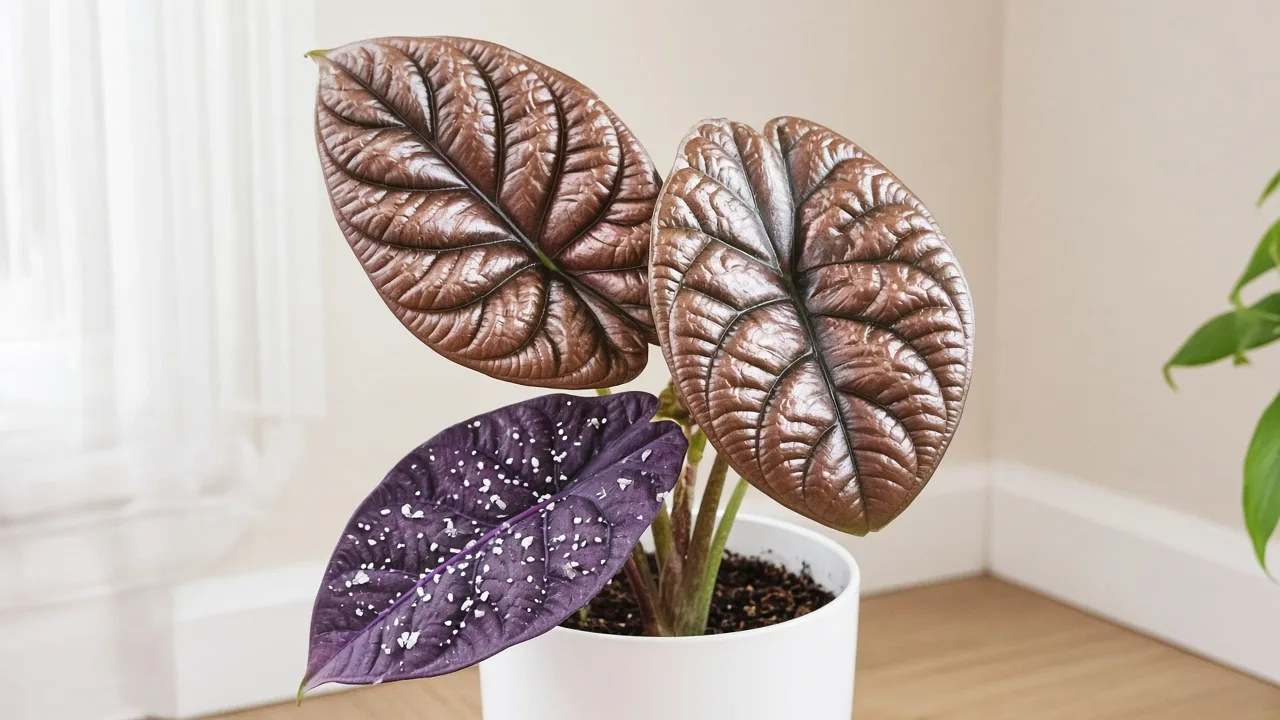
Whiteflies on Alocasia Cuprea: Causes, Checks & Fixes
This guide covers whiteflies on Alocasia Cuprea. See also the general Whiteflies guide, watering, and light pages for this plant.
Whiteflies on Alocasia Cuprea: Causes, Checks & Fixes
Quick answer
Tiny whiteflies on Alocasia cuprea almost always show up on dark purple leaf undersides and the central unfurling red spear of this compact jewel alocasia—often before you notice anything on the mirror copper surface facing the window. Adults fly in a puff when disturbed; flat oval nymphs stay glued to the leaf back and do most of the sap damage. They leave sticky honeydew that can feed sooty mold in bullate mirror grooves.
For how whitefly life cycles work, why yellow sticky traps catch adults, and when insecticidal soap helps in general, see our whiteflies pest guide. On Cuprea, the practical pattern is warm-season colonies on lower purple undersides, a cloud of white insects when you brush a leaf, and extra urgency because this species often carries only one to three leaves at a time—losing one yellowed blade is a major setback on a slow-growing corm.
First step: isolate the plant if other aroids sit nearby, put on gloves, and gently hose or wipe adults off every purple leaf underside and petiole axil—then re-inspect in three days before hanging sticky traps or spraying anything.
When to use this page vs other Alocasia Cuprea guides
This page is the pest-first entry for tiny white flying insects and scale-like nymphs on mirror foliage.
| Pattern | Read next |
|---|---|
| Soft pear-shaped clusters on unfurling spears, no flight | Aphids |
| Fine webbing and stippled pale dots | Spider mites |
| White cottony patches in petiole axils | Mealybugs |
| Silvery scarring on mirror blades | Thrips |
| Black sooty coating without confirmed insects | Black spots |
| Yellow lower leaves, wet mix, mushy petioles | Overwatering or root rot |
| Pale or silvery new spear, no insects | Pale leaves — normal colour change before copper darkens |
| Crisp brown edges, no stickiness | Low humidity or brown tips |
What whiteflies look like on Alocasia Cuprea
Whiteflies are tiny sap-sucking insects with yellowish bodies and four whitish wings—not true flies, but relatives of aphids and mealybugs. On Cuprea they prefer the tissue you rarely see from across the room:
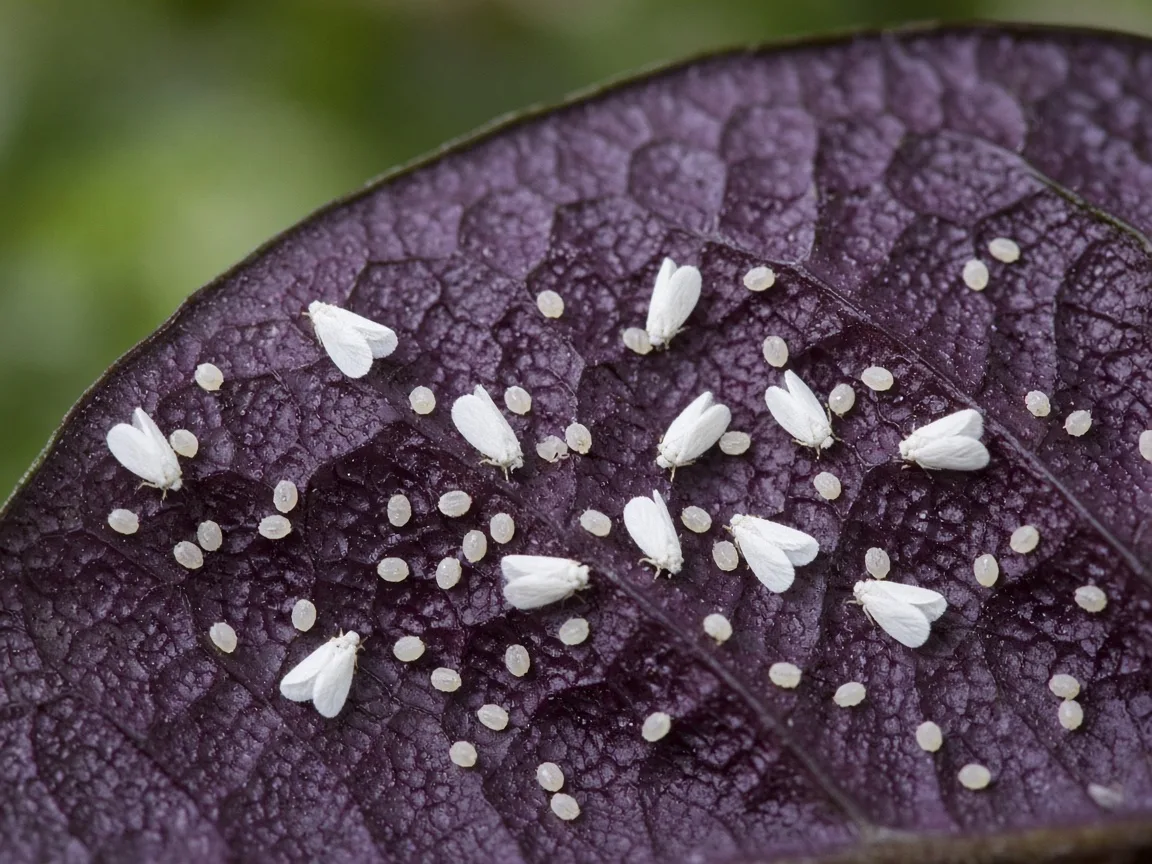
Adult whiteflies and flat oval nymphs on a purple leaf underside—brush the leaf and watch for a brief white cloud.
- White cloud when disturbed — Brush a purple underside and adults fly off in a puff; aphids on Cuprea stay put on the same plant
- Scale-like nymphs on leaf backs — Oval, legless immature stages glued flat to purple tissue; these cause most feeding damage
- Sticky dull patches on mirror copper — Honeydew collects in bullate grooves on the rippled leaf back and along petioles, dulling the metallic finish
- Yellowing or drooping lower leaves — Heavy nymph feeding can yellow, dry, or drop leaves while the copper mirror top still looks fine
- Ant trails on the pot rim — Ants protect whiteflies from natural enemies while harvesting honeydew
Healthy Cuprea leaves are thick, bullate, copper-bronze above with a dark purple underside—young spears emerge flushed red before the cuticle darkens. Mature lower blades can look perfect while purple undersides carry dense nymph colonies—do not assume the plant is clean because the mirror surface facing the room looks fine.
NC State Extension notes that alocasias should be monitored for aphids and mealybugs alongside other sap feeders. Cuprea is not exempt because it is a collector plant—it is often grown in the same warm, humid cabinets that whiteflies love.
Where whiteflies hide on mirror copper spears and purple undersides
Alocasia cuprea is a compact jewel alocasia with a small underground corm and a short crown. Whiteflies follow the protected undersides on each blade, not the reflective copper face owners admire from across the room.
Large colonies often develop on the undersides of leaves. On Cuprea, the equivalent hot zones are:
- The central unfurling red spear — Soft rolled tissue at the crown before the blade opens flat and the mirror cuticle develops
- Purple leaf undersides on lower blades — Nymphs concentrate on the oldest leaves first; the copper top hides them from casual inspection
- Petiole axils — Where each mirror leaf meets the corm; honeydew drips down stems below colonies
- Bullate mirror grooves on leaf backs — Rippled purple tissue traps honeydew and dead adults in grooves a rinse can miss on the first pass
- Humid cabinet neighbors — Warm 65–80% humidity Cuprea needs for crisp mirror leaves also lets whiteflies develop rapidly in warm weather
Inspect every leaf separately, including the one still unfurling. One sticky purple underside beside clean mirror tops means a localized outbreak, not a whole-plant care failure.
Red-flush spear or whitefly damage?
Cuprea’s normal colour cycle confuses first-time owners. Young leaves emerge flushed red and mature to copper-bronze above with a dark purple underside—a pale or silvery new spear is not automatically a care failure.
Normal red flush follows the whole unfurling spear evenly. The blade opens on schedule, the cuticle darkens over one to two weeks, and no sticky residue appears on purple undersides or petioles.
Whitefly damage brings a white cloud when you brush the spear, flat immobile nymph disks on purple tissue, tacky honeydew you can feel with a gloved finger, and ants on the pot rim. Distorted spears that stay closed with confirmed nymphs point to distorted leaves from feeding—not normal colour development.
If you see red flush without insects, stickiness, or flight, compare against the pale leaves guide and keep scouting weekly rather than spraying.
Why losing one leaf matters on a one-to-three-leaf Cuprea
Most healthy Cuprea plants in good light carry one to three leaves at a time. Unlike a sprawling pothos, this slow jewel alocasia does not mask pest damage with dozens of blades.
When whiteflies colonize the only unfurling spear, you may lose the plant’s entire new growth cycle for the month. A yellowed mirror leaf stays visible for weeks because jewel alocasias grow slowly and drop older leaves seasonally.
Heavy feeding on soft tissue can also weaken the corm if the plant is already stressed from overwatering or winter dormancy. A firm corm below the surface can still push clean growth in spring—but only if you stop the colony before it spreads to every axil.
Treat early colonies as urgent on this species not because whiteflies are uniquely deadly, but because each leaf is a large fraction of the whole plant.
Mirror-leaf inspection protocol
Wear gloves before you handle infested leaves. Alocasias contain irritant compounds and broken petioles can release sap that stings skin. Cuprea is also toxic to cats and dogs if chewed.
- Start at the central unfurling red spear—gently part the tip enough to see the purple inside without forcing a stuck blade.
- Flip every mature mirror leaf and inspect the dark purple underside with a hand lens or phone macro. The copper top hides colonies.
- Check petiole bases where leaves emerge from the corm. Nymphs often concentrate here before adults fly to new tissue.
- Tap test — Hold white paper under a petiole and brush the leaf. Adults fly in a white cloud; aphids fall as slow-moving specks.
- Note ant activity on the pot rim—an early clue before colonies are obvious on mirror foliage.
- Compare leaves side by side. One sticky purple underside beside clean neighbors points to whiteflies, not a fertilizer problem.
Dislodging whiteflies without rotting the corm or ruining mirror leaves
Cuprea’s rot-prone corm and reflective cuticle change how you knock whiteflies off. Never mist foliage directly—water droplets sit in bullate grooves, encourage fungal spotting, and can leave permanent dull marks on the mirror finish.
Rinse or wipe—do not soak the crown. Aim lukewarm running water at purple undersides and petiole axils while supporting the leaf from below. Hosing adults off with a strong stream of water dislodges many adults before you need sprays. Let excess water run off, then blot grooves gently with a dry microfiber cloth the same day.
Tilt the pot so runoff does not flood the soil. Cuprea needs water when the top 2–3 cm of mix is dry in chunky aroid mix. Repeated heavy spraying into the pot can stress a rot-prone corm—see the watering guide for dry-down checks.
Air-dry in bright indirect light the same day. Trapped moisture in mirror grooves after a heavy rinse is worse than the whiteflies were—wipe grooves dry before returning the plant to a closed cabinet.
Isolate fallen leaves and cut petioles. A dropped infested blade in a cachepot can spread insects to neighboring aroids.
Why Alocasia Cuprea gets whiteflies
Soft unfurling red spears. Whiteflies lay eggs on leaf undersides and nymphs feed on tender tissue. Each warm-season flush produces a soft rolled blade—ideal habitat before the copper mirror cuticle hardens.
Warm humid growing conditions. Cuprea wants 65–80% humidity—often supplied by cabinets, terrariums, or bathroom shelves. Whiteflies develop rapidly in warm weather and populations build year-round indoors without outdoor predators.
Indoor stability without natural enemies. Houseplant collections lack the lacewings, lady beetles, and parasitic wasps that normally curb whitefly numbers. A single winged adult can start a new colony on the next unfurling spear.
Ant protection. Ants on pot rims or window sills defend honeydew sources on petiole bases, keeping colonies larger than they would be outside.
Nitrogen-rich soft shoots. Heavy early fertilizer can push lush spears that attract sap feeders. Cross-check the fertilizer guide if colonies exploded right after feeding.
Neighboring infested plants. Inspect new plants for whiteflies before bringing them indoors. Quarantine new jewels and inspect shared window shelves weekly.
How to confirm the cause
Work through these checks before you treat:
- Flight test — Brush a purple underside. A white cloud confirms whiteflies. No flight with soft pear-shaped insects suggests aphids.
- Nymph inspection — Flat, oval, immobile disks on leaf backs confirm whitefly nymphs. Cottony wax clusters suggest mealybugs.
- Honeydew test — Sticky purple undersides that feel tacky point to sap feeders. Dry crispy edges without insects point to low humidity.
- Leaf comparison — One sticky spear vs every axil affected separates localized whiteflies from a whole-plant stress pattern tied to not enough light.
- Ant activity — Ants climbing the pot or nearby wall often appear before you spot the colony on the unfurling blade.
- Size check — Adults are up to 1/16 inch long, white and moth-like, holding wings roof-like over the body—distinct from larger flying fungus gnats at the soil line.
If you see only a few adults and round exit holes in nymph cases, parasitic wasps may already be working—monitor before spraying.
First fix for Alocasia Cuprea
Isolate the plant if other aroids are nearby, then hose or wipe adults off every purple leaf underside and petiole axil under lukewarm running water—blot mirror grooves dry with a microfiber cloth—and re-inspect in three days with a magnifier before hanging sticky traps or spraying anything.
Hold the pot tilted so runoff does not flood the soil. Aim at leaf undersides and axils, not the corm. Let the plant air in bright indirect light the same day.
This single step dislodges many adults without stacking chemicals on day one. Repeat every two to three days while live whiteflies remain on inspection.
Do not reach for insecticidal soap, horticultural oil, or systemic products on day one if colonies are small and natural enemies are visible nearby.
Step-by-step recovery if rinsing is not enough
If live whiteflies remain after two rinse cycles:
- Hang yellow sticky traps at leaf level — Sticky traps catch adult whiteflies and help monitor population decline; place traps with the sticky side facing purple undersides, not direct sun.
- Prune heavily infested lower leaves — Remove isolated leaves with dense nymph colonies contact sprays cannot reach. On Cuprea, sacrifice one yellowed lower blade rather than let nymphs spread to every axil.
- Apply insecticidal soap or horticultural oil — Soaps and oils control only whiteflies directly sprayed; cover every purple underside thoroughly. Test one leaf first—some aroids are sensitive on soft new growth. Apply when temperatures are under 90°F and the plant is not drought-stressed.
- Manage ants — Sticky traps on pot rims or ant baits away from pets help natural enemies reach colonies.
- Hold fertilizer — Do not feed a stressed jewel alocasia while pests are active. Resume at half strength only after two clean new leaves unfurl.
- Scout weekly — Check unfurling spears and purple undersides until you see two consecutive clean inspections.
Avoid broad-spectrum sprays that kill lacewings and lady beetles. Lacewings and lady beetles feed on whiteflies when ants are not protecting honeydew sources.
Recovery timeline and winter dormancy
Mild cases often stabilize within two to four weeks after the first thorough rinse and trap placement, judged by a clean unfurling spear with clear copper-bronze colour.
Yellowed or sticky mirror blades from heavy feeding usually do not polish back—they remain dull until the plant drops them naturally. Success means the next spear opens normally, not that old tissue repairs.
If the corm is firm and you see a new speck of growth within three to four weeks after treatment, the plant is recovering. A soft mushy corm with no new spear past mid-spring suggests deeper stress—cross-check root rot before assuming whiteflies alone caused the decline.
During winter dormancy, Cuprea may drop all leaves while the corm stays alive below the mix. Whitefly pressure usually drops too, but do not assume an empty winter pot means the pest is gone—resume scouting when the corm pushes spring growth. Do not overwater an empty-looking pot while waiting.
Mistakes to avoid
- Misting mirror foliage to “wash” whiteflies — Trapped water in bullate grooves causes spotting; use rinse-and-blot or a damp cloth instead.
- Spraying only the copper mirror leaf top — Colonies live on purple undersides and in axils.
- Flooding the corm while rinsing — Saturated mix after repeated sprays mimics overwatering on a rot-prone species.
- Fertilizing during an active infestation — Soft nitrogen-rich shoots attract more sap feeders.
- One spray and done — Whitefly eggs hatch in cycles; repeat applications are often necessary.
- Confusing normal red spear flush with pest damage — Confirm insects, stickiness, and flight before treating.
- Assuming an empty winter pot means whiteflies are gone — Inspect again when the corm pushes spring growth.
How to prevent whiteflies next time
Scout unfurling spears and purple undersides weekly during spring and summer—the same season Cuprea adds leaves in bright indirect light per the light guide.
Inspect new plants before introducing them and isolate for several weeks before placing them in a cabinet with established jewels. Inspect shared shelves and window benches, not just the Cuprea itself.
Hang yellow sticky traps at leaf level during warm months to catch wandering adults early. Manage ants on pot rims so natural enemies can reach colonies. Avoid heavy nitrogen fertilizer that pushes soft lush spears.
Keep the plant in chunky aroid mix that dries predictably—the soil guide pairs with proper watering so new growth is firm, not weak and pest-prone.
Related Alocasia Cuprea guides
| Guide | When to use it |
|---|---|
| Overview | Whole-plant culture, dormancy, and leaf-count expectations |
| Problems hub | Browse all Cuprea issue pages |
| Watering | Dry-down checks so rinse runoff does not mimic chronic wet mix |
| Aphids | Soft pear-shaped insects on unfurling spears—no white cloud |
| Spider mites | Fine webbing and stippling on mirror leaves—common in dry air |
Related tool
Use the Pest Identifier Tool to narrow causes for whiteflies on this plant before changing multiple variables at once.