Thrips on Alocasia Cuprea: Mirror-Leaf Checks & Fixes
Quick answer
Thrips on Alocasia Cuprea rasp bullate copper mirror leaves and scar unfurling red spears with silvery streaks, black frass specks, and rippled new blades—often after hitchhiking on new plants or cut flowers. First step: isolate the plant and rinse every leaf underside along each petiole before applying insecticidal soap.
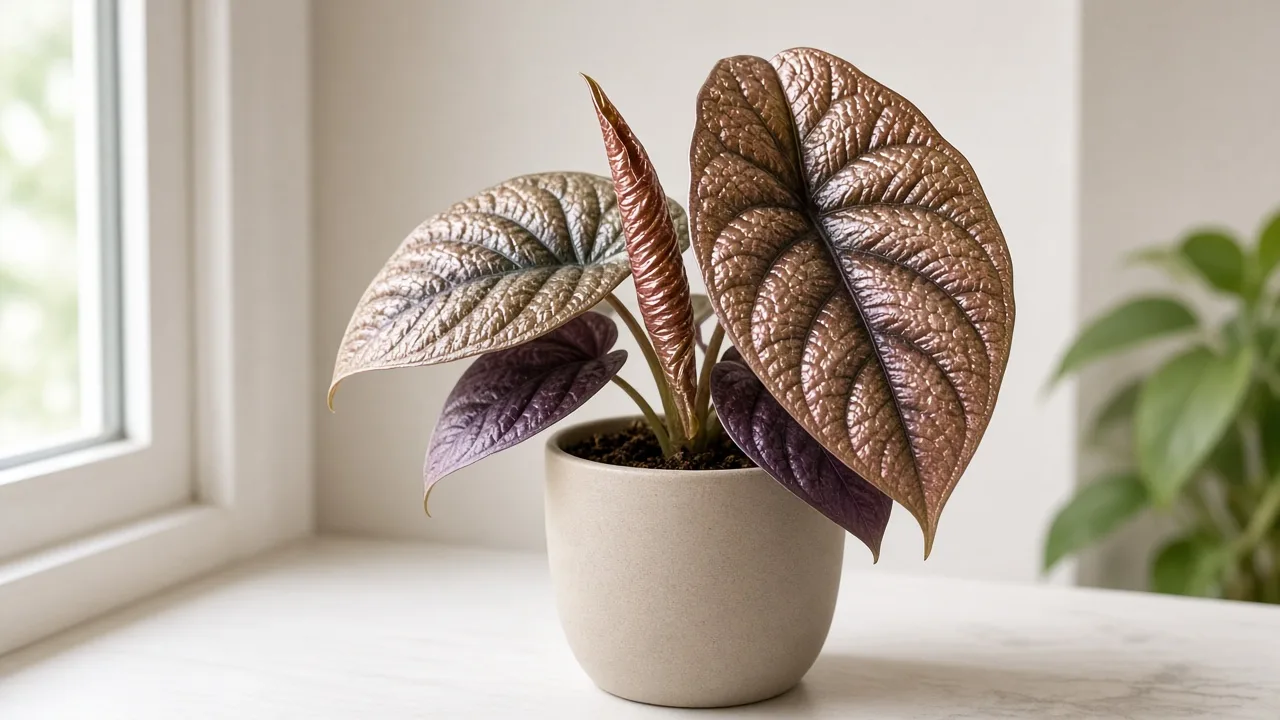
Thrips on Alocasia Cuprea: Causes, Checks & Fixes
This guide covers thrips on Alocasia Cuprea. See also the general Thrips guide, watering, and light pages for this plant.
Thrips on Alocasia Cuprea: Causes, Checks & Fixes
Quick answer
Thrips on Alocasia cuprea rasp the surface of bullate copper-bronze mirror leaves and leave silvery streaks, black frass specks, and rippled new spears as red or pale blades unfurl from the corm. Indoor outbreaks usually trace to new plants, cut flowers, open windows, or shared shelves—not chronic Cuprea weakness.
For general thrips biology and control options, see our thrips guide. On Cuprea, damage concentrates on tender unfurling spears and along bullate mirror tissue where the cuticle is still soft—places a quick glance at the metallic upper surface never catches.
First step: isolate the plant and rinse every leaf underside along each petiole in lukewarm water before applying any spray.
When to use this page vs other Alocasia Cuprea guides
This page is the pest-first entry for rasping insects that scar mirror foliage.
| Pattern | Read next |
|---|---|
| Silvery streaks, black frass specks, distorted unfurling spears | This page |
| Soft pear-shaped insects and sticky honeydew on new growth | Aphids |
| Fine webbing and stippling in dry heat | Spider mites |
| White cottony patches in petiole axils | Mealybugs |
| Distorted new leaves without confirmed insects | Distorted leaves |
| Cupped or curled blades, no silver flecking | Curling leaves |
| Yellow lower leaves, wet mix, soft petioles | Overwatering or root rot |
What thrips look like on Alocasia Cuprea
Thrips are small, slender insects with rasping-sucking mouthparts, generally less than one-eighth inch long. UF/IFAS notes that thrips feeding causes leaves to dry out and develop a scarred or silver-flecked appearance, with small brownish specks of excrement on undersides.

Silvery rasp marks and tiny black frass specks on a bullate mirror leaf—compare with an intact neighbor blade on the same petiole.
Early feeding on mirror leaves:
- Pale silver or bronze streaks across copper-bronze bullate blades, often along rippled ridges
- Tiny black dots (frass) scattered near streaked zones on dark purple undersides
- Slight dulling of the metallic mirror finish on affected tissue
- Damage often starts on one new spear before spreading to the next unfurling leaf
Established infestation on unfurling spears:
- Rippled, narrow, or scarred spear tips emerging from the corm
- Silvery patches that look like dust until viewed in angled side light against the purple back
- Distorted unfurling blades that never open flat along the petiole
- Slender yellow, brown, or black insects on a white-paper shake test
What Cuprea thrips damage is not:
- Dense soft insects with sticky honeydew on new growth—that pattern fits aphids, not thrips
- Fine yellow stippling with silk webbing at petiole bases—spider mites
- White cottony wax clusters—mealybugs
- Whole plant yellowing with sour-smelling wet mix—root rot, not sap feeders
- Pale silvery new spears that darken normally as the cuticle matures—see the overview for normal colour change on young mirror leaves
Damaged mirror leaves stay scarred permanently. New spears pushing clean bullate blades with full copper-bronze sheen after treatment is your recovery signal.
Where thrips hide on Cuprea mirror spears
Jewel alocasias like Cuprea grow from a single underground corm with only one or two mirror leaves at a time. Thrips follow the slowest, softest tissue—not the broad canopy you would find on a taller hybrid.
Unfurling spear tips are the highest-value feeding site. New blades emerge rolled or partially folded from the corm, often flushed red or pale before the copper-bronze mirror colour develops. Thrips rasp the still-soft bullate tissue before the cuticle hardens. Inspect the innermost spear with a magnifier in bright side light.
Purple leaf undersides hold most activity and frass. The metallic upper surface can hide pale streaks from above. Turn each soft new blade and check the rippled purple back in angled light.
Petiole axils and bullate ridges trap frass and shelter insects from a quick overhead rinse. On a slow grower holding only two leaves, one scarred spear can make the whole pot look sick even when the corm below is firm.
Cut flowers and new nursery stock are common entry points. Thrips hitchhike on bouquets, open windows, and fresh alocasias with damage only on the newest spear. Quarantine Cuprea for two weeks and magnify new tips before placing it beside other houseplants.
Once a mirror leaf has fully hardened, thrips usually move up to the next soft spear. Lower mature blades are less common feeding sites unless the whole plant is stressed and pushing abnormally soft growth in very dim light.
Why Alocasia Cuprea gets thrips
Cuprea needs bright indirect light and high humidity, but that slow corm-based rhythm creates predictable thrips habitat.
Warm indoor spear flush. Thrips prefer young leaves, buds, and tender growth. Cuprea pushes new mirror leaves slowly year-round indoors, so soft tissue stays available longer than on fast-growing pothos.
Mirror veiling hides early streaks. The bullate copper surface and rippled ridges make rasp marks easy to miss until spear tips look rippled. Cross-check the light guide if every new blade stays tiny and scarred—pests and weak growth often overlap.
Dry winter air on shared shelves. Warm, dry indoor conditions favor thrips, especially when humidity drops below the 65–80% Cuprea prefers and plants sit close together. A humidifier near the collection helps both pest pressure and leaf quality.
Hitchhikers from new plants and open windows. Thrips commonly enter collections on fresh nursery stock, bouquets, or after summer outdoors. They are not a sign you failed at watering—but wet, stagnant crowns plus pests are a worse combination than either alone.
Slow replacement of scarred foliage. Because jewel alocasias grow slowly and may hold only one or two leaves, thrips scarring on a single new spear can make the whole plant look sick for months even after pests are gone.
How to confirm the cause
Use a white-paper shake test: hold a suspect leaf over white paper and tap it sharply. Thrips fall as tiny moving specks. UF/IFAS suggests this method alongside visual inspection of young leaves and buds.
Work through these checks before you treat:
- Location on the plant — Silvery streaks and frass on newest spears suggest thrips. Sticky honeydew and soft pear-shaped insects suggest aphids. Fine webbing suggests spider mites.
- Hand-lens inspection — Slender rice-shaped bodies with fringed wings confirm thrips. White cottony tufts suggest mealybugs.
- Frass test — Black specks embedded near streaks point to thrips rasping. Mineral dust or hard-water spots wipe off; thrips scarring does not.
- Shake test — Confirm live thrips on damaged mirror blades. Whiteflies would fly up in a cloud—see whiteflies if that happens.
- Care cross-check — Confirm the top 2–3 cm of mix dries between waterings per the watering guide. Pest damage on a drowning corm needs moisture correction, not spray alone.
- Neighboring plants — Inspect anything recently purchased or placed nearby on the same shelf.
If streaks are present but no thrips appear on repeated shake tests, consider whether damage is old from a cleared infestation—monitor new spear flush for fresh scarring.
First fix for Alocasia Cuprea
Isolate the plant and rinse every leaf underside along each petiole thoroughly in lukewarm water.
Move Cuprea away from other plants immediately. Thrips spread to nearby houseplants quickly, especially in warm rooms with shared air. In a sink or shower, support the pot so soil does not waterlog—wrap the pot in plastic if needed to keep the chunky aroid mix from flooding. Spray forcefully from below, targeting the purple backs of all bullate blades and the softest unfurling spears where thrips shelter in petiole grooves.
This single step physically removes thrips and debris before any chemical treatment. Let foliage air-dry the same day in filtered light. Do not repot, fertilize, or prune heavily on day one.
Do not reach for insecticidal soap, horticultural oil, or systemic products on day one if colonies are small and beneficial predators are visible nearby.
Pet and sap note: Cuprea is toxic to cats and dogs and contains irritant calcium oxalate crystals like other alocasias. The RHS alocasia guide recommends gloves when handling. Rinse in a sink away from pets, wash hands after handling, and avoid letting children chew treated leaves.
Step-by-step recovery
After the initial spear rinse:
- Repeat water rinses every five to seven days for at least three cycles. Thrips eggs hide inside plant tissue and hatch on staggered schedules; repeat applications are necessary.
- Apply insecticidal soap if live thrips persist after two thorough rinses. Spray leaf undersides and unfurling spear tips until runoff—soaps only kill on contact. Test one blade first; avoid drought-stressed, dormancy-weakened, or cold-shocked plants.
- Treat neighboring plants on the same shelf or in the same room at the same time. Thrips reinfest from asymptomatic neighbors quickly in dry indoor collections.
- Place yellow sticky traps near the pot to monitor adult thrips and confirm populations are declining.
- Remove severely scarred leaves only if they are mostly dead tissue—trim with clean shears per the pruning guide to reduce pest load. Leave green stippled blades; they still photosynthesize on slow jewel alocasias with few leaves.
- Hold extra fertilizer until thrips are under control. Resume light feeding per the fertilizer guide after new spear flush comes in clean.
Horticultural oil can work on thrips but test one blade first—oils on stressed or waterlogged plants can cause damage. Never spray in direct hot sun through a window.
Recovery timeline
Silvery streaks on existing Cuprea mirror leaves are permanent. Expect to judge success by new spear flush pushing clean bullate blades with full copper-bronze sheen over four to eight weeks after consistent treatment.
Light infestations may stop spreading within two weekly rinse cycles. Moderate cases commonly need four to six weeks. Heavy infestations on multiple plants can take two months of monitoring, especially if thrips re-enter from untreated neighbors or new purchases.
Improvement signs: Flat mirror leaves on new flush, no fresh scarring, firm petioles, stable corm with new spear emerging.
Worsening signs: Silvery streaks spreading to multiple spears, new blades emerging already rippled, or thrips on shake tests after two rinse cycles—escalate to targeted soap treatment or compare with distorted leaves if growth stays warped without insects.
Lookalike symptoms
| What you see | More likely | Quick check |
|---|---|---|
| Silvery streaks + black frass specks | Thrips | Shake test shows slender insects |
| Sticky honeydew + soft insects on spear | Aphids | Pear-shaped; not silver scraping |
| Fine stippling + silk webbing | Spider mites | Dry heat; no frass specks |
| White cottony tufts in petiole axils | Mealybugs | Waxy coating |
| Twisted new leaves, no silver or insects | Distorted leaves | Magnify first |
| Pinholes with silver stippling at margins | Holes in leaves | Through-holes vs surface streaks |
| Pale new spear that darkens to copper | Normal colour change | No frass; see overview |
| Yellow leaves, mushy petioles, wet mix | Overwatering | Sour soil smell |
Mistakes to avoid
Do not soak the pot repeatedly while rinsing spear tips. Cuprea rots fast in saturated mix—follow water when top 2–3 cm dries after treatment and empty the saucer within 30 minutes. NC State Extension stresses moist but well-drained soil, not constantly wet crowns.
Do not use household dish soap instead of labeled insecticidal soap; UF/IFAS warns against home soap mixtures that can burn bullate leaves.
Do not return the plant to the shelf after one rinse. Thrips eggs hatch over weeks; single treatments rarely finish the job.
Do not increase fertilizer during an active infestation. Soft lush spear shoots extend the feeding window thrips prefer.
Do not strip every scarred leaf at once. Slow jewel alocasias may have only one or two blades—remove only heavily damaged tissue.
Do not ignore silvery streaks because Cuprea “looks fine” from across the room—the metallic upper surface hides rasp damage until spear tips ripple.
Do not treat a dormant bare-corm pot as thrips damage if no leaves are present. Wait for spring spear flush and inspect then.
How to prevent thrips next time
Quarantine new alocasias and cut flowers for two to three weeks and inspect spear tips before placing them in a shared collection.
Scout unfurling spears weekly during winter heat—before silvery scarring reaches the only leaf on the plant.
Use yellow sticky traps near collections as early warning in warm dry rooms.
Preserve beneficial insects when possible. Tolerate small populations when damage is cosmetic and lady beetles, lacewings, or predatory mites are present.
Keep the plant in bright indirect light with airy chunky aroid mix so mirror leaves mature quickly and firm up before thrips build large colonies.
Avoid crowding Cuprea beside heavily flowering indoor plants thrips prefer.
When to worry
Small thrips scarring on one spear during warm indoor growth is common and rarely threatens a firm corm if you rinse early. Escalate when silvery streaks spread to multiple spears, new mirror blades emerge already distorted, or shake tests show thrips on several houseplants.
Act urgently if petioles soften, leaves yellow in waves, and mix stays wet for weeks—switch to root rot diagnosis rather than assuming insects alone are the problem.
Related Alocasia Cuprea guides
- Overview — jewel alocasia culture, mirror-leaf colour, and pet toxicity
- Watering — avoid wet corms during rinse treatments
- Light — firm mirror growth vs soft etiolated spears
- Aphids — sticky honeydew on new growth
- Spider mites — webbing and stippling on bullate blades
- Distorted leaves — twist without confirmed insects
- Problems hub — full symptom index
Conclusion
Thrips on Alocasia Cuprea are a spear-flush and mirror-leaf problem in most homes—not a mysterious corm collapse. Magnify the newest unfurling blade, rinse scarred bullate tissue on purple undersides, and keep the corm in well-drained mix while you treat. Firm petioles and clean new mirror leaves on the next spear are the recovery signal; old silvery blades can stay imperfect without harming the slow corm below.
Related tool
Use the Pest Identifier Tool to narrow causes for thrips on this plant before changing multiple variables at once.