Mold on Soil on Betel Leaf: Causes, Checks & Fixes
Quick answer
Surface mold on Betel Leaf soil usually means the top of your compost-rich mix stays wet longer than this shade-loving Piper vine can use—often from watering before the top 2–5 cm dry, monsoon saucer water, or dense mix in a humid corner. First step: scrape the fuzzy top layer, clear fallen leaves and surface manure, and pause the next soak until a finger test at 2–5 cm depth reads dry.
Mold on Soil on Betel Leaf: Causes, Checks & Fixes
This guide covers mold on soil on Betel Leaf. See also the general Mold on Soil guide, watering, and light pages for this plant.
Mold on Soil on Betel Leaf: Causes, Checks & Fixes
Quick answer
Surface mold on Betel Leaf (Piper betle—the paan vine) almost always means the top layer of your organic mix stays wet longer than the vine is using it, not that the plant “needs more humidity” on the soil surface. Field guidance for betelvine describes a regular supply of moisture in well-drained fertile loam—cool humid air with drainage—not a permanently damp carpet on top of the pot.
First step: scrape off the fuzzy top inch of mix, remove fallen heart-shaped leaves and any surface compost or manure, and skip the next scheduled soak until the top 2–5 cm pass a finger dry test. Then resume one thorough watering that drains freely, matching the Betel Leaf watering guide.
For how saprophytic fungi break down organic matter on potting mix in general, see our mold on soil hub. On Betel Leaf, the useful pattern is white or gray fuzz at the moss-pole or stake base with firm stems and new nodes still climbing—not powdery white patches on leaf blades, collar soft rot, or wilt with sour-smelling mix.
When to use this page vs other Betel Leaf guides
This page is the symptom-first entry for fuzzy soil on a paan vine pot.
- Fungus gnats — go here when small flies hover at the pot rim alongside damp mix; gnats confirm the same wet surface habitat but need larval monitoring
- Overwatering — go here when yellow leaves, soft stems, and a heavy pot persist even after you scrape mold
- Root rot — go here when the collar softens, vines collapse, or roots smell sour despite glossy leaves above
- Soil — go here when peat-heavy or compacted mix never dries at the top 2–5 cm
- Watering — go here for monsoon skips, winter intervals, and finger-test depth after mold clears
- Problems hub — full symptom index for Piper betle
What mold on soil looks like on Betel Leaf
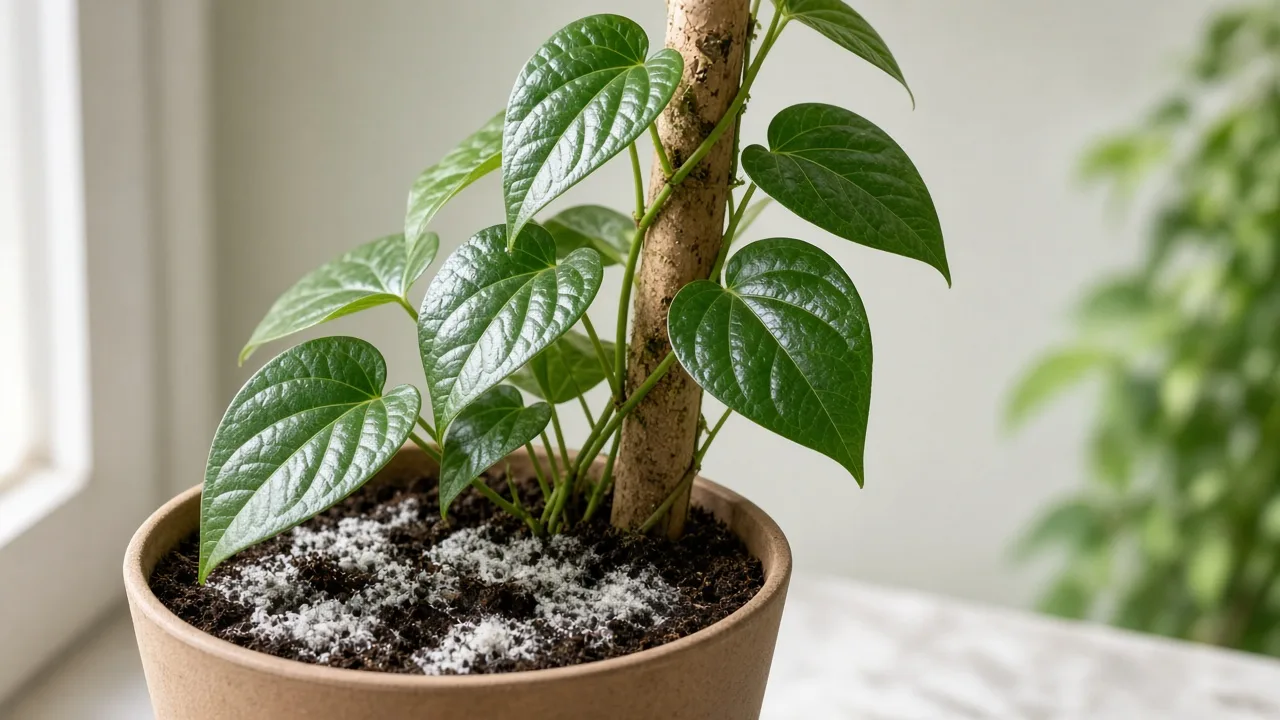
On container paan vines, mold most often appears as a white, gray, or occasionally greenish fuzzy film across the potting mix. It may cluster where the vine meets the stake, under overlapping heart-shaped leaves that shade the rim, or where water sits longest after a deep soak. You might notice a musty smell when you shift the pot, or fungus gnats sharing the same damp organic layer.
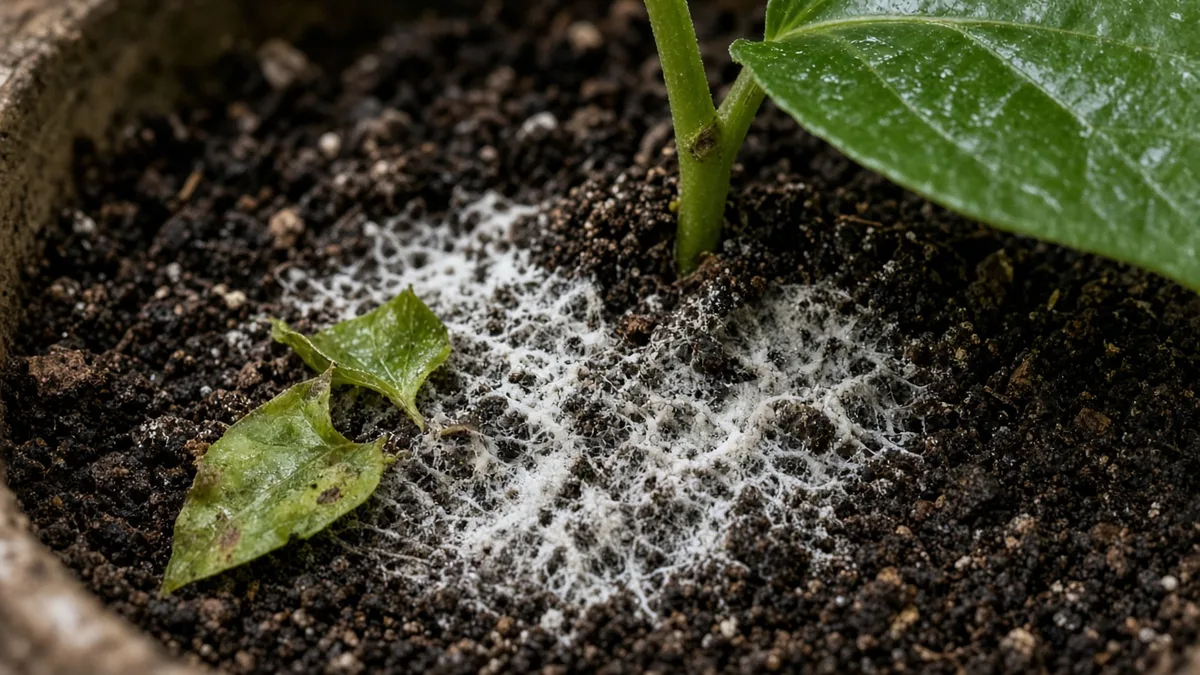
Mold on soil on Betel Leaf - compare fuzzy surface mix with firm glossy stems above the soil line.
Healthy Betel Leaf keeps firm stems at the collar, glossy heart-shaped leaves, and steady new nodes wrapping the support even when surface mold is present. That contrast matters: fuzzy soil with climbing growth usually points to a surface moisture and organic-debris problem, not leaf diseases such as anthracnose or the powdery mildew sprays field growers use on betelvine foliage. If buried nodes soften, several leaves yellow while mix stays wet, or the vine wilts with a sour odor, escalate toward root rot rather than treating mold as cosmetic.
Mold can also line drainage holes or saucers that hold runoff. In a humid shaded balcony or indoor corner with 60–80% humidity, the surface may stay damp for a week after one generous watering—exactly the conditions that keep mold returning on Betel Leaf soil rich in compost.
Why Betel Leaf gets mold on soil
Betel Leaf evolved as a shade-loving climber of humid tropical climates that wants moist, fertile, well-drained soil—a narrower band than “keep the surface wet at all times.” TNAU notes betelvine needs cool humid conditions with a regular moisture supply in well-drained clay loams and does not tolerate saline or alkaline ground. Surface mold is often the first visible clue that moisture is out of balance before collar tissue fails.
Even moisture without a wet carpet
Many growers hear “keep soil moist” and water lightly every day, which keeps only the top centimeter chronically damp while deeper mix may still be usable. Betel Leaf wants even root-zone moisture with a real dry-down at the top 2–5 cm between soaks—not a snake-plant desert and not a sealed peat sponge. When that top layer never dries, harmless saprophytic fungi colonize decaying peat, compost fines, and fallen leaves.
Nodes, moss poles, and collar risk
Paan vines root at nodes along the support. In pots, stems often sit with one or two buried nodes at the soil line or against a moist moss pole base. Chronic surface wetness keeps those nodes in the same habitat as mold and fungus gnat larvae—fine for a day after watering, risky for weeks. Soft tissue at the collar overlaps TNAU’s emphasis on Phytophthora wilt management through drainage and avoiding chronic wet feet—not the same as scraping white fuzz alone.
Monsoon benches, cachepots, and winter irrigation
On Indian balconies, monsoon rain plus hand-watering can leave saucers full for days. Cachepots trap humidity at the rim where betel leaves hang low. In cool months, growth slows while owners keep a summer calendar; TNAU specifically advises growers to avoid frequent irrigation during winter as part of wilt management. Mold in a dim winter room often traces to that mismatch—not to the vine “needing more water” because leaves still look green.
Compost-heavy mix and surface organic dressings
A practical container blend is organically rich and moisture-retentive—compost, coir, and perlite. That fertility supports fast leaf flush, but fresh manure cakes, undecomposed compost on top, or field-style leaf mulch give fungi extra food. In a dry pot those materials are harmless; when the surface never dries, mold follows within two to four weeks.
Low light and the vine’s own shade
Betel Leaf tolerates bright filtered light but transpires less in deep shade or after a move indoors. Continuing the same soak volume while the plant uses less water prolongs surface wetness. Pair light checks with the Betel Leaf light guide when mold appears after a placement change.
How to confirm the cause
Work through these checks before repotting or spraying fungicide.
-
Top-layer moisture. Push a finger 2–5 cm into the mix. If it feels cool and damp many days after watering, the surface is drying too slowly. Lift the pot—heavy weight with only surface mold often means excess volume, blocked holes, or cachepot water, not that Betel Leaf needs less moisture overall at depth.
-
Surface pattern. White or gray fuzz on wet organic-rich soil with firm stems strongly suggests saprophytic surface mold. Green algae on the rim points to constant surface wetness plus light. Mold returning within three to five days after scraping means the environment is still too wet.
-
Drainage audit. Confirm open drainage holes, no standing saucer water, and no outer pot trapping runoff. Dense peat that clumps when squeezed wet may need more perlite or coarse sand per the soil guide.
-
Collar and node clues. Stiff stems and new tendrils on the stake mean you likely caught a timing issue early. Soft collar, sour smell, or wilt despite wet mix mean overwatering or root disease—waterlogged soils favor root decay and pathogens such as Phytophthora.
-
Season and placement. Did the vine move to a dim room, enter cool weather, or sit through monsoon weeks while irrigation continued? That mismatch is one of the most common Betel Leaf mold triggers.
First fix for Betel Leaf
Make one change first so you can read the response: scrape the moldy surface, clear organic debris, and pause watering until the top 2–5 cm of mix feel dry.
Use a spoon to remove the top 1–2 cm of fuzzy mix and any fallen leaves, spent leaf mulch, or fresh compost sitting on the soil line. Discard scrapings in the trash. Do not pour cinnamon, hydrogen peroxide, or fungicide as your first move unless mold covers a large area and you need a brief cosmetic stopgap—those do not replace correcting dry-down.
Skip the next scheduled drink even if leaves still look glossy; Betel Leaf handles a short surface dry spell better than a permanently wet top layer. Once the finger test at 2–5 cm reads dry, resume one deep watering until excess runs from drainage holes, then empty the saucer within thirty minutes.
Give the pot rim breathing room past the leaf canopy—heart-shaped leaves trap humidity at the mix surface. If the vine sits in deep shade, move it toward brighter filtered light per the light guide without jumping into harsh midday sun.
Step-by-step recovery
When surface mold appears on an otherwise climbing paan vine:
-
Isolate slightly if fungus gnats are present so adults do not colonize other wet pots on a shared bench.
-
Remove visible mold and debris. Scrape the affected surface and pick off fallen leaves, old twine, or decorative moss trapping moisture at the stake base.
-
Improve drying at the soil line. Shift the pot for airflow across the rim. Loosen any moss pole wrap that stays soggy against the mix.
-
Match watering to growth phase. In warm humid growth, water deeply when the top 2–5 cm dry. In cool slow months, stretch intervals and reduce volume so the surface gets real dry cycles between drinks.
-
Refresh the surface if needed. After the top layer dries, add a thin layer of dry, gritty mix to replace what you scraped—avoid fresh compost on the surface until the pattern stabilizes.
-
Repot only if mold keeps returning, the mix smells sour, roots feel soft, or drainage cannot be improved in the current container. Repot into fresh fertile mix with perlite, trim mushy roots with clean tools, and avoid stacking heavy fertilizer on the same day.
Lookalike symptoms on Betel Leaf
| What you see | Likely cause | First action |
|---|---|---|
| White fuzz on soil only; firm collar; new nodes on support | Saprophytic surface mold on wet organic top layer | Scrape → clear debris → dry top 2–5 cm before next soak |
| Mold + hovering flies at pot rim | Same wet habitat as fungus gnats | Fix surface dry-down; add sticky trap while correcting water |
| White powder on leaf blades after humid nights | Powdery mildew on foliage (field disease), not soil mold | Improve airflow; see black spots if spots are fungal |
| Yellow leaves, soft stems, sour smell | Overwatering or root rot | Stop water; inspect roots and collar same day |
| Soil stays wet a week; mold returns fast | Dense mix, oversized pot, or winter calendar watering | Amend or repot per soil guide; reduce winter irrigation |
Recovery timeline
Pure surface mold on a firm collar often clears within one to two corrected watering cycles once the top 2–5 cm dry reliably—the fuzzy mat shrinks to harmless dust you can brush away. Expect a clean surface within one to three weeks in warm humid growth.
If underlying mix was soggy for weeks, recovery takes longer. Yellow leaves from chronic wetness will not green up again; watch for glossy new leaves and steady nodes on the trellis. Severe collar damage can take several weeks to stabilize and may require trimming back to firm tissue above healthy nodes.
Mold that reappears within days after scraping means the environment is still too wet—treat that as pot size, mix, light, or seasonal watering, not a failed surface cleanup.
What not to do
Do not treat Betel Leaf like a ZZ plant and withhold all water for weeks. Extended drought stresses a vine built for steady moisture with drainage; the goal is better dry-down at the surface, not a bone-dry root ball.
Do not keep sprinkling the surface daily because humidity is high. Mist leaves if air is dry; do not replace watering rhythm with constant top wetness.
Do not repot into fresh wet compost-heavy mix on day one without checking moisture around buried nodes—you may bury stressed roots in more organic matter.
Do not fertilize a stressed vine to “push growth” through mold. Fix moisture first; use the fertilizer guide only after new growth looks stable.
Do not confuse soil fuzz with leaf powdery mildew or anthracnose spots—those need foliage-focused triage, not scraping alone.
How to prevent mold next time
Use fertile well-draining loam with perlite or coarse sand in a pot sized to the root ball, not an oversized tub of compost.
Match watering to season and shade—longer intervals in cool months and during monsoon weeks when rain keeps the mix moist.
Empty saucers and cachepots immediately after every soak.
Remove fallen leaves from the soil line weekly; they are mold food on organic mix.
Quarantine new vines before placing them beside your main support.
Avoid fresh undecomposed manure or thick compost cakes on the surface; incorporate organic matter into the blend instead.
Keep bright filtered light so the vine uses water actively in growth season—less stagnant wet soil in warm months.
When to worry
A small mold patch on an otherwise healthy Betel Leaf with correctable surface moisture is common in humid shade-house and indoor collections and rarely threatens a mature supported vine once dry-down returns.
Escalate when the collar softens, several nodes wilt together, mold returns while the top 2–5 cm never dry, or flies and sour smell persist after three corrected cycles—those patterns overlap root rot and Phytophthora-style wilt risk on Piper betle, and need root-zone triage, not another surface scrape alone.
Related Betel Leaf guides
- Overview — culture, support, and humidity targets
- Watering — finger test depth and monsoon rhythm
- Soil — fertile loam, pH, and drainage
- Fungus gnats — flies sharing wet surface habitat
- Overwatering — when wet mix damages Piper roots
- Root rot — soft collar and vine collapse
- Problems hub — full symptom index
Conclusion
Mold on Betel Leaf soil is a surface moisture signal in most homes—not a disease eating heart-shaped leaves on the trellis. Scrape the fuzzy layer, let the top 2–5 cm dry before each soak, and align watering with a shade-loving Piper that needs drainage as much as humidity. Firm stems and steady new nodes on the support are the recovery markers; a soft collar and sour mix mean root problems, not fuzz alone.
Related tool
Use the Plant Problem Diagnosis Tool to narrow causes for mold on soil on this plant before changing multiple variables at once.