Root Rot on Betel Leaf: Collar Checks & Vine Rescue
Quick answer
Root rot on Betel Leaf starts in wet, low-oxygen mix at the collar where the climbing vine meets soil—often after calendar watering in deep shade. First step: stop all watering and gently press the stem base at the soil line for softness or a sour smell.
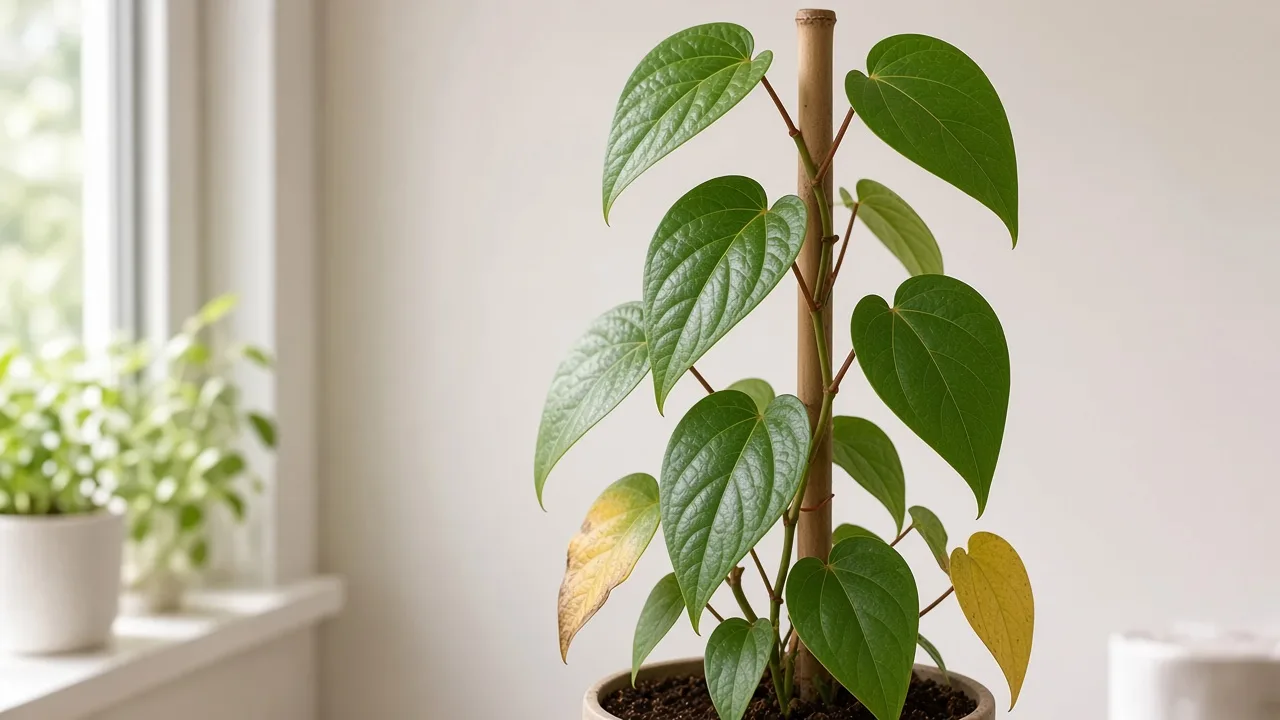
Root Rot on Betel Leaf: Causes, Checks & Fixes
This guide covers root rot on Betel Leaf. See also the general Root Rot guide, watering, and light pages for this plant.
Root Rot on Betel Leaf: Causes, Checks & Fixes
Quick answer
Root rot on Piper betle is collar and root failure from chronically wet, low-oxygen mix—not a mysterious leaf spot on glossy paan foliage. Betel Leaf needs steady soil moisture in humid shade but does not tolerate waterlogged, saline, or alkaline soils. When mix stays saturated, roots lose oxygen and die; decay then climbs the stem collar where adventitious roots meet the pot.
For how chronic wet soil destroys roots in general, see our root rot guide. On Betel Leaf, the tell is a heavy wet pot, sour smell, yellow soft lower leaves, and—most critically—a soft or dark stem base while upper heart-shaped leaves may still look green.
First step: stop all watering immediately. Then press the collar gently where the vine enters the mix. Soft or mushy tissue on wet soil means unpot and inspect roots the same day—do not add water, fertilizer, or spray first.
When to use this page vs other Betel Leaf guides
| Pattern | Read next |
|---|---|
| Heavy wet pot, yellow lowers, firm collar | Overwatering — dry-down pause may be enough |
| Soft collar + mushy roots (this page) | Stay here for unpotting and salvage |
| Limp hearts on light dry pot | Underwatering |
| Drooping without confirmed mush | Drooping leaves |
| Rapid whole-vine collapse on wet mix | Wilting |
| Gnats + surface mold, firm collar | Fungus gnats or mold on soil |
| Yellow-green soft leaves before collapse | Yellow leaves |
What root rot looks like on Betel Leaf
Betel Leaf is a fast-climbing Piperaceae vine with thick, glossy, heart-shaped leaves on reddish stems, usually trained onto a stake, trellis, or moss pole. Root rot hides in the pot while the tip still pushes new nodes—until the collar fails and several hearts wilt at once.
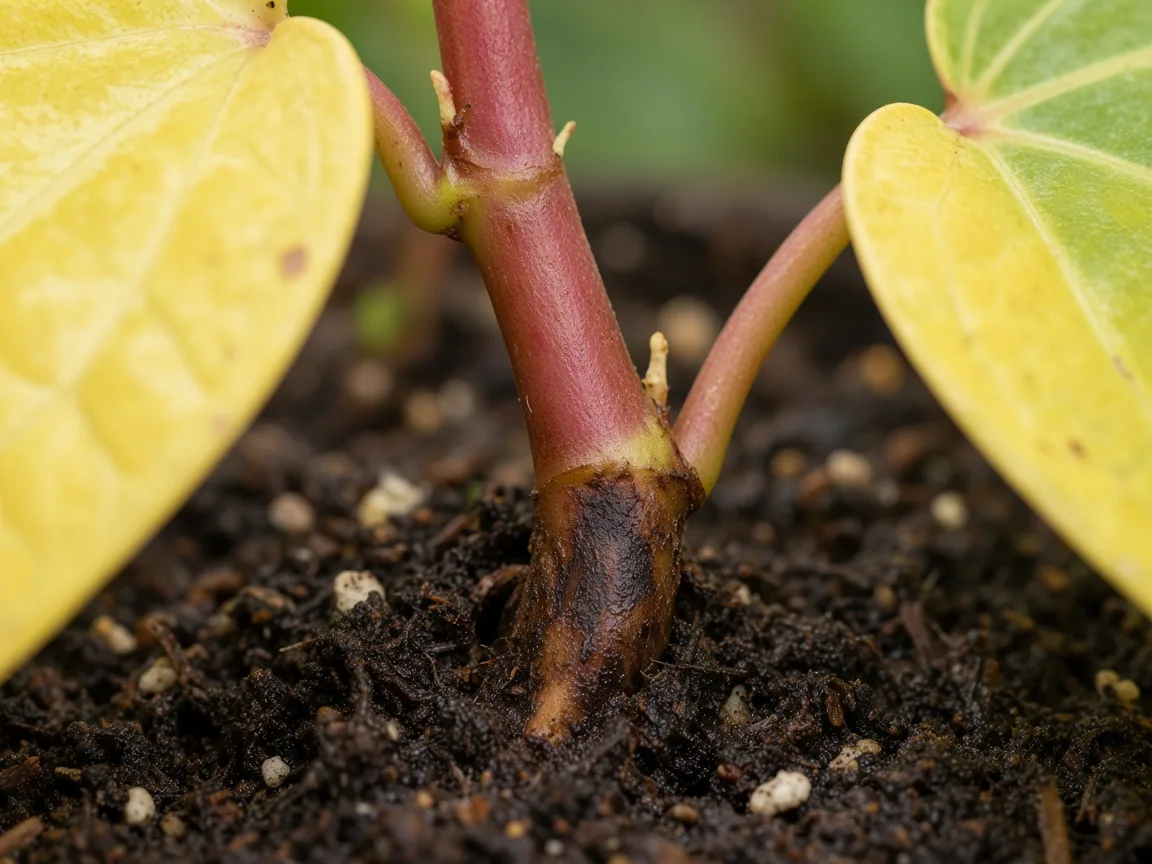
Root rot at the paan vine collar—darkened soft tissue where the stem meets damp organic mix while glossy lower leaves yellow.
Early signs (roots failing, vine still upright)
- Heavy pot days after watering; top 2–5 cm of mix never fully dries in shade
- Sour or rotten smell from drainage holes when you tilt the container
- Yellow lower heart-shaped leaves that feel soft, not crispy, on damp mix
- Dull gloss on outer leaves while the growing tip still looks green
- Stalled new nodes along the support for weeks despite wet soil
- Fungus gnats over persistently wet surface mix
- Gentle unpotting reveals brown, mushy, or translucent roots while the collar still feels mostly firm
Advanced signs (collar rot and Phytophthora-style wilt)
- Soft, dark, or collapsing collar at the soil line—field betel culture calls this Phytophthora wilt territory; TNAU lists integrated management for Phytophthora wilt on betelvine
- Wilt paradox—limp glossy leaves despite wet mix because damaged roots cannot move water
- Black girdling on the lowest stem where it enters the pot
- Several nodes wilt together after cool wet weather when evaporation was already slow
- Mushy adventitious roots on a constantly wet moss wrap at the soil line
One yellowing lower leaf near an old node is not automatically root rot—senescence happens on long vines. Root rot adds wet mix + sour smell + progressive yellowing + collar softening to that picture.
Collar-first triage on a supported paan vine
Commercial betelvine beds use drainage trenches because failure starts where vines meet wet soil. Your container vine follows the same anatomy on a smaller scale.
- Map the stem base before unpotting—note which side faces the pole and where adventitious roots cling.
- Press the collar in a ring around the stem 1–2 cm above and below the soil line. Rot often hits the side buried against a wet moss knot.
- Compare pot weight to a dry reference—half-rotted organic mix still feels heavy while leaves look merely limp.
- Sniff at drain holes—sour odor localizes to anaerobic mix even when upper leaves still shine.
- If the collar is firm but roots are mushy, you may save the vine after trim and repot. If the collar is mushy, plan node-sett salvage from firm growth higher on the support.
Trust collar firmness over how green the topmost heart leaf looks. A paan vine can reach the ceiling while the base is already hollow.
The shaded-pot slow dry-down trap
Betel Leaf belongs in bright filtered light or partial shade—not harsh midday sun. In a dim room or under dense shade cloth, transpiration drops and a peat-heavy nursery pot may stay wet for two weeks after one soak. Owners who water every few days because “tropical vines need constant moisture” keep roots saturated while Piper betle still demands well-drained soil.
Signs you are in this trap:
- Mix stays dark and cool while lower leaves yellow
- Pot weight barely changes between waterings
- Mold on soil or algae on the surface
- The vine sits in a cachepot that never drains fully
The fix is not blasting the vine with afternoon sun—it is matching water to how slowly this pot dries. See the watering guide for the top 2–5 cm finger test and seasonal stretch in cool months. TNAU advises avoiding frequent irrigation during winter when betelvine growth slows—home pots in heated rooms follow the same logic when evaporation drops.
Moss-pole and node moisture traps
Betelvine setts root from nodes along the stem. Indoors, those nodes often sit against a moist moss pole or coir wrap. That helps aerial roots in dry air—but if the wrap stays sodden while the pot is also wet, tissue at the lowest wrapped node can rot before you notice yellow leaves above.
Check:
- Whether the moss sleeve is dripping while the pot is already heavy
- Brown mush where a node pins into wet fiber at the soil line
- Healthy aerial roots look pale and firm; rotting ones turn dark and slimy
Lower the wrap so the lowest node is not submerged in stagnant mix, or switch to a dry trellis until the root zone stabilizes. Pair that with the soil guide—airy loam with perlite or coarse sand, not dense water-holding peat alone.
Why Betel Leaf gets root rot
Piper betle evolved for humid forests with ample soil moisture and shade—not for stagnant anaerobic tubs. Root rot happens when roots sit in saturated, low-oxygen mix until tissue breaks down. Waterlogged conditions favor Phytophthora and similar root pathogens; the trigger in home culture is almost always excess moisture at the collar, not airborne leaf disease.
Calendar watering in a shaded corner. Watering every three days ignores how long your specific pot dries. The same vine in monsoon humidity may need less in November—see overwatering when the collar is still firm.
Oversized pots and heavy organic mix. Extra soil volume around a small root ball holds moisture at the stem base where rot starts. Dense indoor mix in a glazed cachepot stays damp far longer than the fertile, well-draining loam this species needs.
Cool wet nights after heavy watering. Collar wilt on betelvine is documented after prolonged wet culture in cool seasons. A balcony vine soaked before a cold snap can show sudden limp hearts on still-wet mix.
Escalation from chronic overwatering. Mild wet mix often shows up first as yellow lowers and gnats. Root rot is confirmed once roots turn mushy and the collar softens.
How to confirm the cause
Work through these checks in order. Root rot is confirmed by mushy roots and soft collar in wet mix—not by leaf color alone.
- Stop watering and note pot weight today.
- Press the collar gently with a clean finger—firm vs mushy.
- Sniff drain holes for sour or rotten odor.
- Probe the top 2–5 cm—if wet while leaves wilt, suspect root failure not thirst.
- Inspect lowest leaves—soft yellow on damp mix vs crispy yellow on dry mix (underwatering looks different).
- Unpot if collar is soft or smell is strong—shake mix gently and look for brown mushy roots; healthy betel roots should be firm and pale, not translucent ropes.
If the collar is firm, roots are mostly white, and mix merely stayed wet too long, you may be in early overwatering—dry-down and airflow can be enough without full surgery.
The first fix to try
Stop all watering until you complete collar and root checks. Adding water to a limp paan vine on wet mix is the most common mistake—it speeds anaerobic decay.
If the collar is still firm and roots are only slightly brown at tips:
- Move the pot to brighter filtered air (not direct sun) to speed safe dry-down
- Empty saucers and remove cachepots so mix can breathe
- Resume watering only when the top 2–5 cm feel dry—one measured soak, then drain fully
If the collar is soft, smell is sour, or roots are clearly mushy, skip the dry-down-only path and move to recovery steps below the same day.
Step-by-step recovery
1. Unpot and rinse roots gently
Lay newspaper down. Slide the vine out and shake away wet mix. Rinse roots under lukewarm running water only if you need to see extent—avoid tearing healthy tissue.
2. Trim only mush
Cut away brown, slimy roots with clean scissors. Sterilize blades between cuts if rot is advanced. Keep every firm, pale root section you can.
3. Assess the collar
If soft tissue extends more than 1–2 cm up the stem, trim back to firm green stem. Let cut surfaces air-dry for several hours in shade—not direct sun.
4. Repot into fresh airy mix
Use a clean pot with drainage holes sized to the trimmed root ball—not a huge tub. Follow the soil mix ratios for loam, compost, perlite, and bark. Set the collar slightly above the new soil line so adventitious roots breathe.
5. Water once, then wait
Give one thorough soak until water runs free, then empty the saucer. Do not water again until the top 2–5 cm dry—often 5–10 days in cool recovery.
6. Support without soaking the collar
Re-tie the vine to a dry stake or a lightly moistened pole—avoid wrapping sodden moss around a healing collar for the first few weeks.
Hold fertilizer until new glossy leaves appear and the collar stays firm for two weeks. Stressed vines do not need feed while roots regrow.
Node-sett salvage when the base is lost
Field betelvine is propagated from terminal stem cuttings (setts) with several nodes. If the collar is hollow but upper stems are firm, treat salvage like sett production:
- Cut healthy vine sections 15–30 cm long with 3–5 nodes above the rot zone.
- Remove lower leaves from the bottom two nodes; keep one or two hearts at the tip.
- Root in water or moist perlite in bright shade until white roots are 2–3 cm long—then pot into airy mix.
- Discard all mushy base material; do not compost infected mix indoors.
This rescue is specific to nodal vines like Piper betle—it is not the right path for rosette succulents or single-stem trees.
Recovery timeline
| Stage | What to expect |
|---|---|
| Days 1–3 after repot | Leaves may look worse; do not water again until top layer dries |
| Week 1–2 | Collar should feel firm; no new sour smell |
| Weeks 2–4 | First new node or small heart leaf at the tip |
| Month 2+ | Gradual return to normal watering rhythm if dry-down stays predictable |
Badly yellowed or soft leaves will not re-green. Success means no new yellowing, firm collar, and clean new growth at the vine tip.
Lookalike symptoms
| What you see | Likely cause | Check |
|---|---|---|
| Limp hearts, light dry pot | Underwatering | Crumbly top 2–5 cm |
| Heavy wet pot, firm collar, no mush | Overwatering | Dry-down pause |
| Limp leaves, firm collar, dry mix | Low humidity | Crispy margins, dry air |
| Black greasy leaf patches, firm collar | Black spots | Leaf-only lesions |
| Sudden flop after cold night | Cold injury | Warmth; check collar before soaking |
Mistakes to avoid
- Watering a wilted vine on wet mix because paan leaves “look thirsty”
- Fertilizing to green up yellow lowers while roots are failing
- Repotting into an oversized pot “for humidity”—it holds more stagnant water
- Leaving the vine in a full cachepot after every soak
- Misting leaves while the pot stays sodden—fix the root zone first
- Copper or Bordeaux sprays on day one without fixing drainage—field betel protocols use drenches after cultural fixes; home growers should prioritize dry-down and collar surgery
How to prevent root rot next time
- Water when the top 2–5 cm of mix feel dry—not on a fixed calendar.
- Use drainage holes and empty saucers within 30 minutes after each soak.
- Grow in bright filtered light so the pot dries predictably without scorching hearts.
- Reduce winter watering when growth slows and mix stays wet longer.
- Size pots to roots; refresh mix every 1–2 years per the repotting guide.
- Inspect the collar monthly when you water—softness catches rot early on climbing Piper vines.
When to worry
Treat as urgent when:
- Collar tissue collapses or smells sour
- Black girdling climbs above the soil line
- Most lowers yellow in one week on unchanged wet mix
- No firm roots remain after trim—salvage cuttings instead of delaying
A single aging lower leaf on a firm collar is not urgent.
Related Betel Leaf guides
- Overview — support, humidity, and placement
- Problems hub — all symptom guides
- Watering — 2–5 cm dry-down rhythm
- Soil — loam, drainage, and pH
- Overwatering — early wet-soil correction
- Wilting — rapid collapse patterns
- Fungus gnats — moisture alarm on wet mix
Conclusion
Root rot on Betel Leaf is a collar and root-zone crisis on a shade-loving, moisture-loving vine that still refuses stagnant soil. Stop water, test the stem base, and unpot when mush or sour smell confirms failure. Necrotic leaves will not re-green—judge recovery by a firm collar and glossy new hearts at the growing tip. Match watering to how your shaded pot actually dries, and keep moss supports from trapping extra water at the nodes.
Related tool
Use the Root Rot Risk Checker to narrow causes for root rot on this plant before changing multiple variables at once.