Underwatering on Betel Leaf: Causes, Checks & Fixes
Quick answer
Underwatering on Betel Leaf shows up as a light pot, dry top 2–5 cm of mix, and dull limp heart-shaped paan leaves—not yellow mushy foliage on heavy wet soil. First step: probe the top 2–5 cm and lift the container before you pour; if both read dry, give one thorough soak and drain fully.
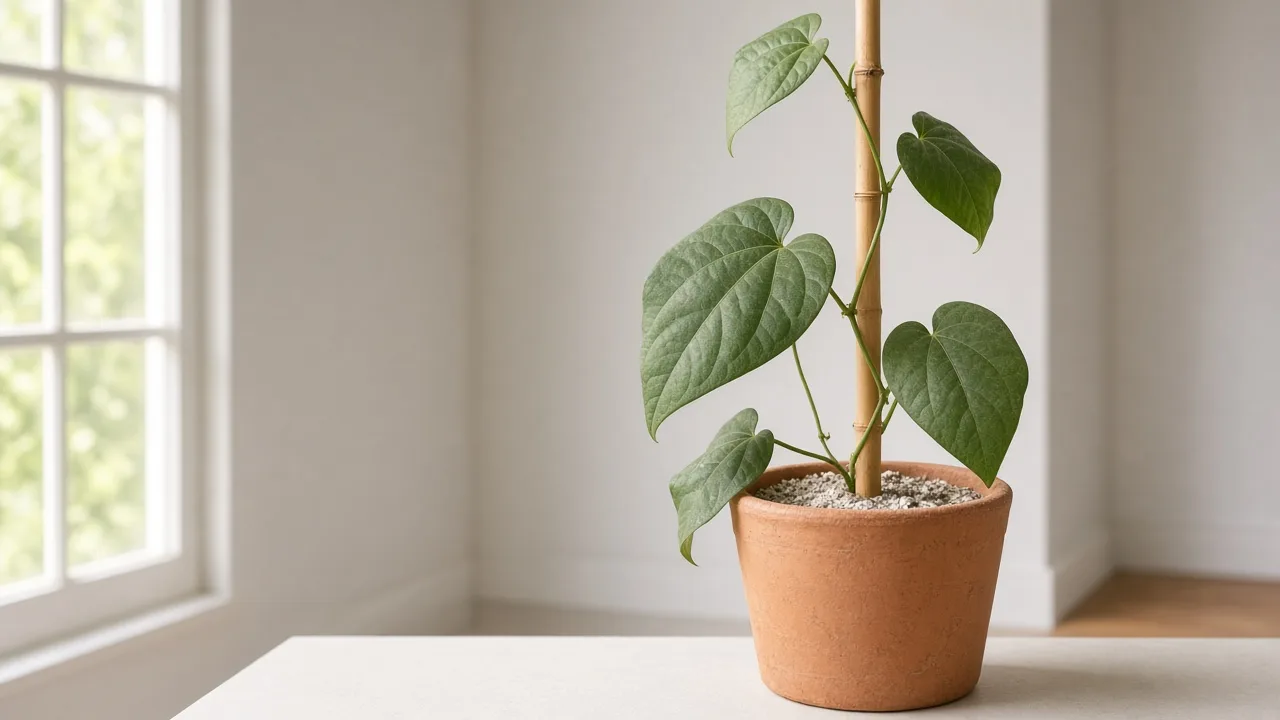
Underwatering on Betel Leaf: Causes, Checks & Fixes
This guide covers underwatering on Betel Leaf. See also the general Underwatering guide, watering, and light pages for this plant.
Underwatering on Betel Leaf: Causes, Checks & Fixes
Quick answer
Underwatering on Piper betle is not a “drought-tolerant vine” problem—betelvine culture assumes cool humidity and a regular supply of moisture in the soil. When the root zone dries too far or too fast, glossy heart-shaped paan leaves lose turgor, internode extension stalls, and owners who recently feared overwatering may wait too long to soak again.
For how chronic dryness stresses houseplants in general, see our underwatering guide. On Betel Leaf, the tell is a light pot, dry top 2–5 cm of mix, dull limp blades, and sometimes crispy tips when air is also dry—not limp yellow lowers on heavy wet soil.
First step: push your finger 2–5 cm into the mix and lift the pot before you add water. If both read dry, one thorough soak with full drainage is the correct first fix—not fertilizer, repotting, or pruning on the same day.
When to use this page vs other Betel Leaf guides
- Drooping leaves — limp heart-shaped foliage from many causes; this page focuses on confirmed dry root zone and light pot weight
- Wilting — rapid whole-vine collapse; use when turgor drops fast after heat or collar failure
- Overwatering — heavy cool pot, yellow lowers on dark damp mix, fungus gnats at the rim
- Low humidity — crisp brown tips with otherwise firm leaves and moist mix
- Brown tips — edge burn from dry air or salts when watering rhythm is already adequate
- Watering guide — long-term top-layer dry-down rhythm after thirst is corrected
- Overview and problems hub — cluster navigation when symptoms overlap
What underwatering looks like on Betel Leaf
A healthy paan vine holds glossy heart-shaped leaves at a firm angle along climbing stems on a trellis, bamboo stake, or moss pole. Underwatering changes gloss and posture before it kills the plant.
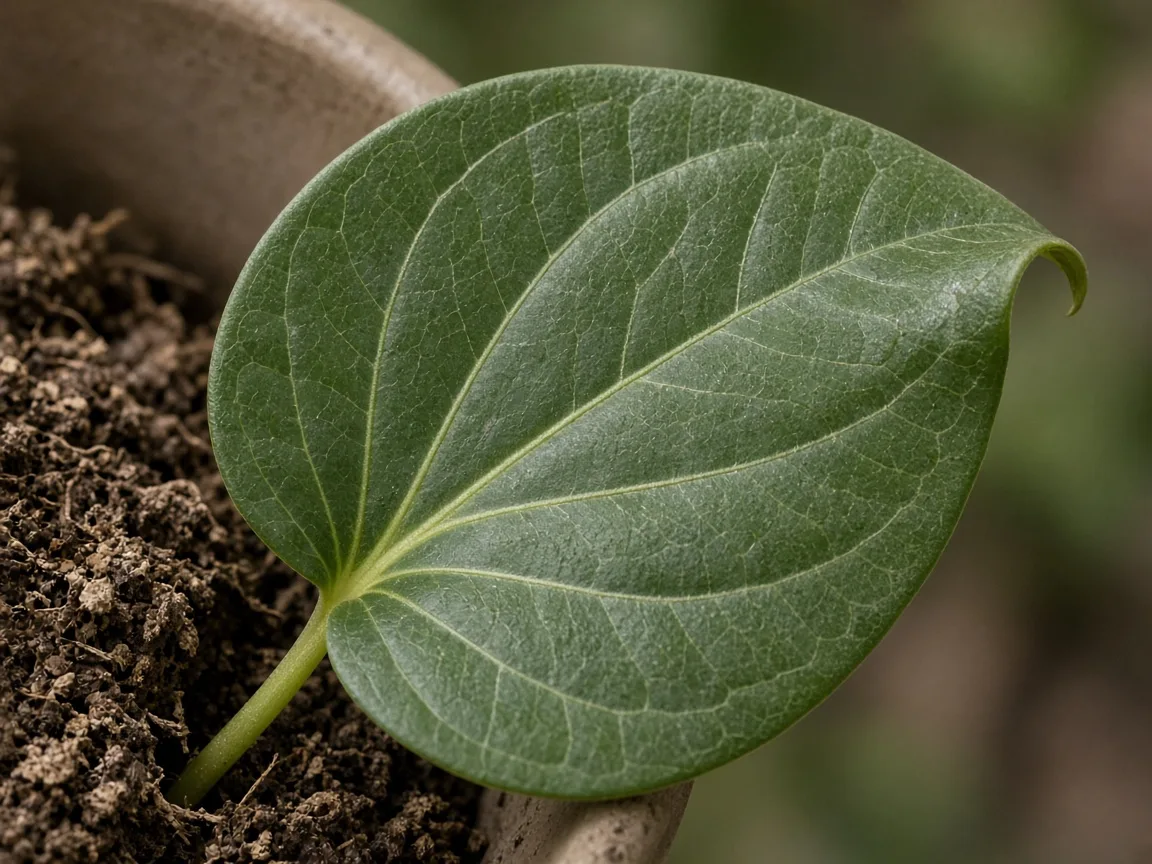
Underwatering on Betel Leaf—slightly dull paan leaf surface, soft limp petiole angle, and pale crumbly mix pulling from the pot wall.
Early thirst shows subtly dull leaves, petioles that hang lower than usual, and mix that looks pale or dusty in the top 2–5 cm while the pot feels lighter than you expect. New tip growth may pause for a week without obvious pest damage.
Established drought brings clearly limp heart-shaped blades that feel thin rather than turgid, slowed vine extension between nodes, and soil pulling away from the pot edge. Adventitious roots on a dry moss wrap may look shriveled or papery.
Advanced dry-down can include papery lower leaves, brown crispy margins when humidity is also low, and a vine that wilts on a feather-light container. Very dry peat or coir may repel water on the surface even after you pour—see the hydrophobic ring section below.
What underwatering is not: limp glossy leaves on a heavy wet pot (overwatering or root rot); stippling with webbing (spider mites); yellow lowers on constantly dark mix; sudden flop after a cold night below about 10°C (wilting from chill).
Why Betel Leaf dries out faster than you expect
Piper betle is a shade-tolerant climber that prefers moist, well-drained soil—not a succulent you can ignore for two weeks. Field betelvine beds rely on regular moisture in humid conditions. Container growers recreate only part of that system, so dry spells bite quickly.
Common underwatering setups on this species:
| Situation | Why Betel Leaf suffers |
|---|---|
| Fear of overwatering after yellow leaves | Owners skip soaks while mix is already dry 5 cm down |
| Small nursery pot on a hot east balcony | Fast transpiration in warm filtered sun outpaces a once-weekly calendar |
| Root-bound vine in summer | TNAU notes irrigation after vine lowering—tight roots have little water reserve |
| AC airflow over a shaded shelf | Leaves lose moisture while mix in a deep pot dries unevenly |
| Winter “rest” watered like summer | Less frequent drinks are correct, but bone-dry coir for weeks still stalls spring growth |
Betel Leaf is also not a plant that signals thirst only at the soil surface. Heart-shaped leaves are large relative to a young root ball, so turgor drops before the top crust looks obviously dusty.
The top 2–5 cm finger test and pot-weight habit
This plant’s published rhythm is water when the top 2–5 cm feel dry—not when a calendar says Tuesday. On paan vines, combine two checks every time foliage looks off:
- Finger or skewer 2–5 cm deep. Crumbly, cool-dry mix supports a thirst diagnosis. Clinging damp mix means wait— even if leaves look limp (wilted leaves may mean wet soil when roots cannot take up water).
- Lift or tilt the pot. Missouri Botanical Garden notes a light pot needs water. Learn your container’s weight right after a full soak versus three days later in your room.
On Betel Leaf, pot weight beats leaf drama for the first fix. Limp paan leaves on a heavy wet pot are a stop-water signal, not this page.
Hydrophobic dry rings in coir-heavy mix
Betel Leaf is often potted in coco coir, compost, and perlite—a blend that holds moisture when healthy but can shrink and channel when allowed to dry completely. You may see:
- Water running down the inside wall of the pot while the center stays dry
- Surface crust that darkens for minutes, then pale again
- Limp leaves shortly after a “watering” that never reached roots
That pattern is still underwatering. Very dry soil may need soaking to wet properly again. For Betel Leaf, use a slow top-water until the pot feels heavier, or bottom-water for 20–30 minutes in a basin, then drain fully. Review soil if the mix dries to dust every three days—frequent hydrophobic cycles mean the root ball is too tight or the reservoir is too small.
Moss-pole and aerial node drying
Supported paan vines push adventitious roots into moss wraps or rough stakes. Owners who water soil on schedule but never moisten the pole can see firm damp mix 2 cm down while nodes at mid-stem dehydrate.
Check mid-vine nodes when lower leaves look fine:
- Papery or brown aerial root tips on a dry moss sleeve
- Limp new leaves emerging just above a dry wrap
- Internodes shortening only on the supported section
Mist the pole or loosely re-wrap with damp sphagnum after you confirm the pot is also on a healthy dry-down cycle—not sopping daily, which routes you to overwatering. The goal is even moisture along the climbing habit, matching how betelvine roots explore humid shade in cultivation.
Hot-shade transpiration vs winter slow-down
Betel Leaf belongs in filtered light or partial shade—but warm east-balcony shade is not cool office shade. On hot days, a well-lit vine transpires heavily while a plastic nursery pot dries in 24–36 hours. That is the hot-shade thirst trap: leaves look lush in morning sun, limp by evening, mix already dry 3 cm deep.
In cool months, the opposite mistake appears: owners water on the same summer interval while evaporation is slow. Underwatering still happens when fear of rot leads to weeks without a soak and coir pulls from the rim. TNAU advises avoiding frequent irrigation in winter—not abandoning moisture entirely. Probe the 2–5 cm layer; dry is dry even in January.
How to confirm underwatering (and rule out lookalikes)
Work through this order before you change care:
| Check | Underwatering | More likely alternative |
|---|---|---|
| Top 2–5 cm + pot weight | Dry and light | Overwatering if cool and heavy |
| Leaf color/pattern | Dull green, optional crispy tips | Yellow lowers on wet mix; stippling (spider mites) |
| Collar at soil line | Firm | Soft collar → root rot |
| After one slow soak | Firms within 1–2 days | No change on wet mix → root uptake failure |
| Humidity | Crispy tips if air dry | Low humidity if mix was moist |
Confirmed dry + light + firm collar = underwatering path below.
The first fix to try
After probe and lift show dry mix:
- Water slowly until it runs from drain holes, using room-temperature water. Pause, then water again so coir re-expands instead of channeling.
- Drain fully and empty saucers or cachepots within 30 minutes—Betel Leaf wants moisture, not stagnant feet (waterlogged soils are unsuitable for Piper betle).
- Wait 24 hours and re-check turgor before repotting, pruning, or feeding.
That single soaked-and-drained cycle is the first fix. Do not stack lime, fertilizer, or a bigger pot the same afternoon.
If mix was hydrophobic, bottom-soak once, then return to top-watering on the watering guide rhythm.
Recovery timeline and what improves first
Mild drought: petioles firm and gloss returns within 24–48 hours after a proper soak. Internode extension at the tip often resumes within one to two weeks in warm humid shade.
Older leaves with crispy margins usually do not fully re-green—trim cosmetic brown if it bothers you, or route persistent tip burn to brown tips and humidity checks. Judge progress by new growth, not by every older paan blade.
Worsening signs after a soak: soft collar, sour smell, or heavier pot with more yellow—stop watering and inspect for root rot. Chronic underwatering followed by panic daily watering can flip the plant into oxygen stress; stabilize one rhythm.
Mistakes to avoid on Betel Leaf
- Pouring because leaves look limp without lifting the pot—classic confusion with overwatering wilt.
- Sprinkling the surface when coir pulled from the sides—roots stay dry.
- Fertilizing a drought-stressed vine before moisture is stable—fix water first.
- Moving to harsh midday sun to “dry it out” when the real issue was thirst—Betel Leaf scorches in direct sun; adjust water in shade.
- Upsizing into a huge pot to “hold more water”—oversized wet reservoirs cause rot; match pot to root ball per repotting guidance when truly root-bound.
How to prevent underwatering next time
- Adopt the top 2–5 cm dry-down rule from the Betel Leaf watering guide and learn dry pot weight.
- In summer heat, check every 2–3 days on small pots; stretch interval in cool months but never ignore a light container.
- Refresh moss poles or trellis wraps so mid-stem nodes do not desiccate between soil soaks.
- Repot when the vine dries out in under a day after watering—root-bound paan vines have little buffer.
- Pair watering checks with humidity if tips crisp—see low humidity when mix moisture is adequate.
Related Betel Leaf guides
Use drooping leaves when limp foliage could be wet or dry—start with probe and lift. Use this page when the pot is light and the top 2–5 cm are dry. Use overwatering when mix stays dark and damp under shade cloth. Use wilting for sudden collapse after heat or chill. Use slow growth when nodes stall after drought stress is resolved but light or nutrition may also be limiting.
Related tool
Use the Plant Watering Calculator to narrow causes for underwatering on this plant before changing multiple variables at once.