Spider Mites on Betel Leaf: Stippling & Webbing Fixes
Quick answer
Spider mites on betel leaf show as fine yellow stippling and silky webbing on the undersides of older heart-shaped leaves—often after dry AC air or drought-stressed nodes on a climbing vine. First step: isolate the plant and blast leaf undersides with a firm stream of lukewarm water, then confirm moving specks with a white-paper shake test before any spray.
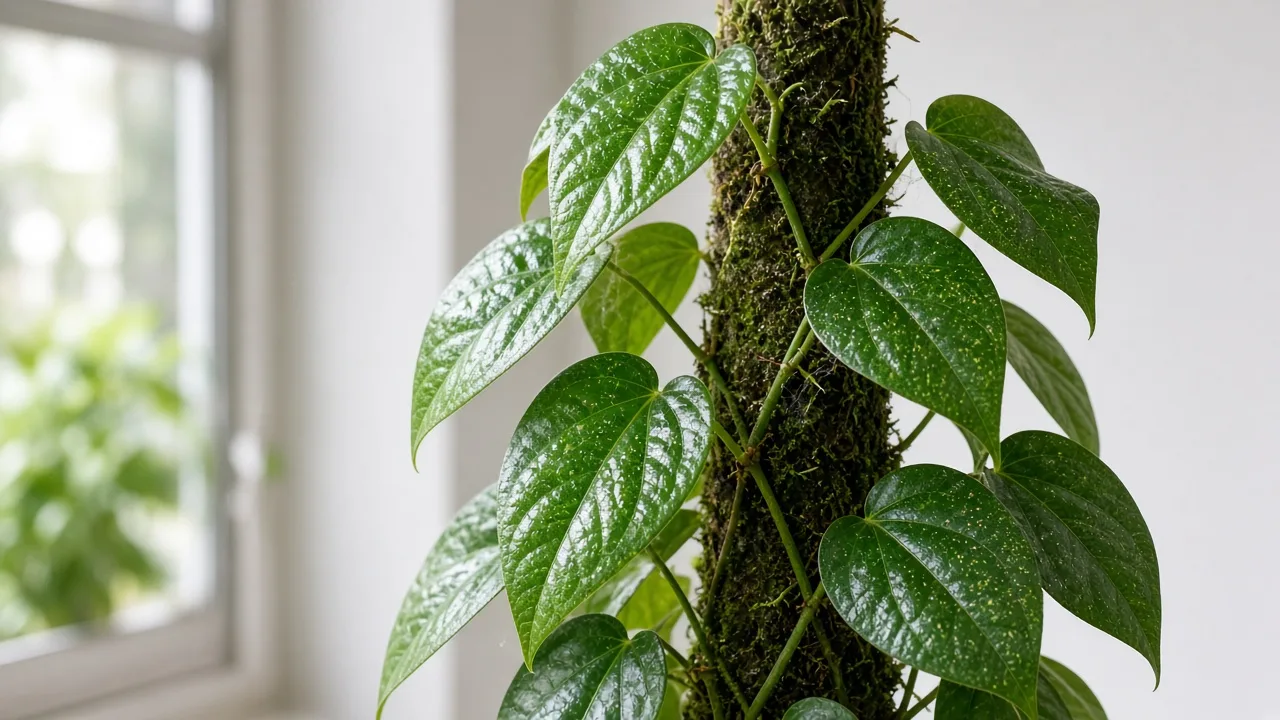
Spider Mites on Betel Leaf: Causes, Checks & Fixes
This guide covers spider mites on Betel Leaf. See also the general Spider Mites guide, watering, and light pages for this plant.
Spider Mites on Betel Leaf: Causes, Checks & Fixes
Quick answer
Spider mites on Piper betle are tiny arachnids—not insects—that suck sap from leaf cells, leaving bronze or yellow stippling on glossy heart-shaped paan leaves and fine silk webbing on undersides when numbers climb. They thrive in hot, dry, still air, which is why betel vines beside winter heaters, AC vents, or drought-stressed nodes on a trellis often flare up even when the shade-house feels humid at floor level.
For how spider mites reproduce, why broad-spectrum insecticides can backfire, and when oils help in general, see our spider mites pest guide. On betel leaf, the tell is stippling plus webbing on older blades hugging the moss pole or jute support—not cottony wax in axils (mealybugs) or pear-shaped insects on shoot tips (aphids).
First step: isolate the vine away from other climbers and herbs, then rinse every leaf underside with a firm stream of lukewarm water—sink sprayer or shower—before you reach for spray bottles. Confirm live mites with a white-paper shake test; if the collar is soft on constantly wet mix, see betel leaf overwatering instead of treating pests.
When to use this page vs other Betel Leaf guides
This page is the mite-first entry for stippling, bronzing, and fine webbing on paan-vine foliage.
- Low humidity on Betel Leaf — Use when papery brown margins appear without stippling or webbing.
- Mealybugs on Betel Leaf — Use for white cottony tufts in leaf axils, not moving dust-speck mites.
- Aphids on Betel Leaf — Use for soft colonies on fresh shoot tips.
- Scale insects on Betel Leaf — Use for hard brown bumps that do not move when scraped.
- Thrips on Betel Leaf — Use for silver streaks and black specks without silk webbing.
- Betel Leaf problems hub — Browse all common issues on this species.
Why betel leaf vines get spider mites in dry pockets
Thin glossy leaves lose water fast in dry microclimates. Piper betle is a shade-loving tropical climber with heart-shaped foliage that transpires heavily when relative humidity drops. Spider mites prefer hot, dusty conditions and reproduce rapidly in warm weather—a heated apartment with 30% RH can outpace the humid shade-house feel at the pot rim.
Overlapping leaves on a support trap still air. Paan vines are grown on a moss pole, trellis, or jute-wrapped stake. Mites colonize the undersides of mature leaves pressed against the pole—pockets a quick top-side mist never reaches. Live to Plant notes spider mites feeding on betel leaf undersides and spinning webs that reduce photosynthesis.
Drought-stressed nodes invite damage. Betel wants even moisture when the top 2–5 cm dries, not bone-dry swings. Water-stressed plants are highly susceptible to mite feeding, and stippling looks worse when roots cannot keep up with leaf water loss in dry air.
Wrong pesticides can explode populations. Broad-spectrum sprays such as some pyrethroids or carbaryl can kill predatory mites and lace wings while pest mites rebound faster. If you recently treated another pest on the vine, suspect a mite spike before you blame care alone.
What spider mites look like on betel leaf
- Fine yellow or white stippling on the upper surface—feeding damage often appears as light dots before leaves bronze
- Bronze or dull olive cast on older heart-shaped blades while new nodes still look glossy
- Silky webbing in leaf axils, along petioles, or bridging a leaf to the moss pole
- Tiny moving specks on undersides—mites look like dust until you shake them onto white paper
- Premature yellowing or leaf drop on heavily infested sections of the vine
- Worst on upper, older foliage near the support; tender new paan shoots may stay clean until the colony spreads
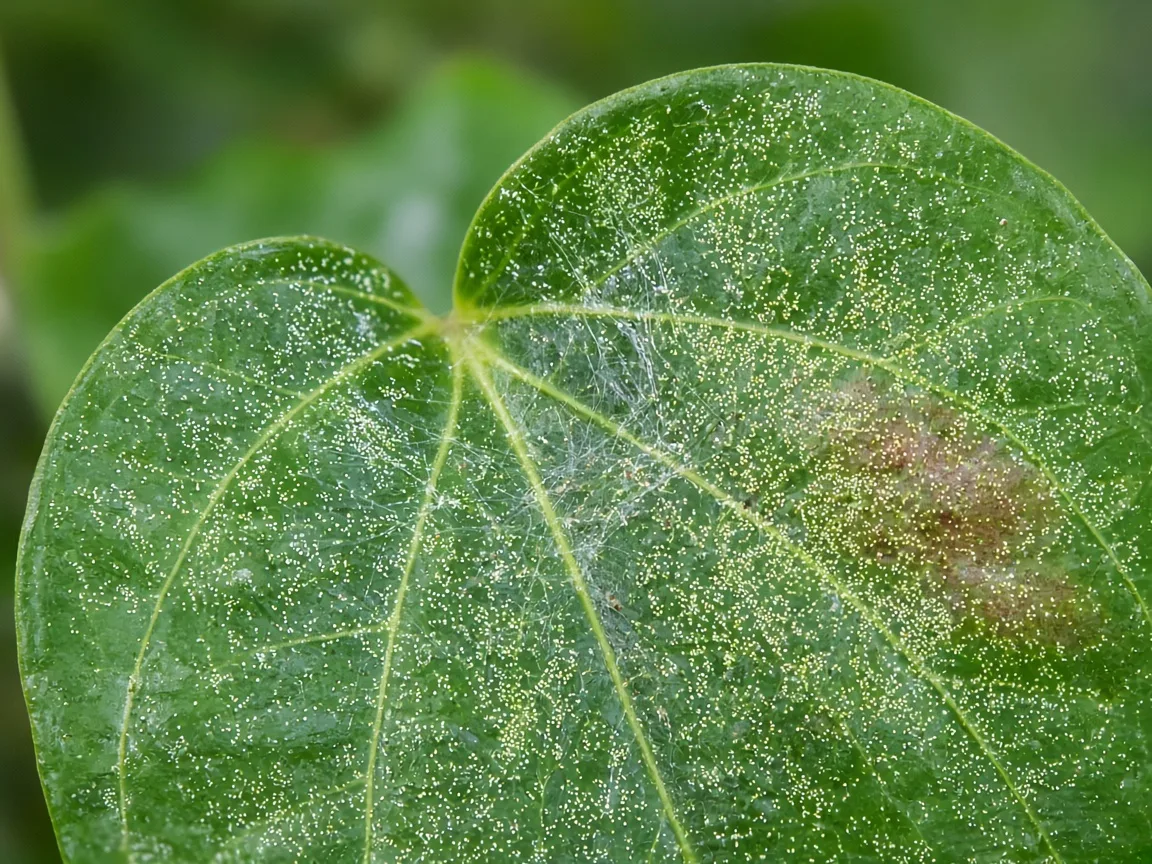
Bronze stippling and fine silk on a betel leaf underside—compare with the even green blade on the node below.
On aromatic Piper foliage, damage is easy to miss until webbing shows—run the paper shake test weekly in dry months even when the vine still looks “fine” from across the room.
Where to inspect along the climbing paan vine
Betel leaf is not a tabletop rosette; mites use the vertical support as habitat. Inspect in this order:
- Undersides of the three oldest leaves on the upper third of the vine—first stippling usually appears here.
- Every leaf pressed flat against the moss pole or twine—webbing spans the gap between blade and coir.
- Nodes wrapped tightly around jute or plastic ties—still air plus dust from untreated bark poles.
- Leaves facing an AC vent or heater—dry laminar airflow strips humidity from glossy blades.
- Lower mature leaves if the upper vine was rinsed but stippling keeps climbing downward.
- Neighboring pots on the same bench—mites disperse on air currents when foliage quality drops.
This pole-hugging inspection path is specific to a climbing Piper vine—not a snake plant rosette or ficus tree canopy.
Confirm spider mites vs low humidity, thrips, mealybugs, and wet mix
| What you see | Likely cause | Key check |
|---|---|---|
| Bronze stippling + fine webbing on undersides | Spider mites | Paper shake shows moving specks |
| Papery brown margins, no webbing | Low humidity | Hygrometer under 50% RH; even green center |
| White cottony wax in axils | Mealybugs | Alcohol dab smears pink-orange |
| Silver streaks, black specks | Thrips | Scraping releases slender insects |
| Soft pear-shaped insects on tips | Aphids | Colonies move when disturbed |
| Limp vine, sour wet mix, no stippling | Overwatering / root rot | Collar soft; mites absent on paper test |
Confirmed diagnosis — Stippling plus webbing with live mites on the shake test and firm lower stems. Suspected — Stippling only may need a hand lens; drought and bright dry window placement can mimic bronzing without a colony.
First fix: isolate and blast leaf undersides with water
Move the vine away from other plants for at least two weeks while you treat.
Rinse undersides with a firm water stream first. UC IPM recommends regular forceful spraying of garden plants with water to reduce spider mite numbers, with good coverage on leaf undersides. Epic Gardening likewise treats mechanical knocking off mites with water as a core first step. On betel leaf, work petiole to tip along the climbing side of each heart-shaped blade, angling the spray up into axils where silk collects.
Why water beats oil on day one
Contact oils and soaps only kill mites they touch; betel vines hide pests under overlapping glossy leaves. A thorough rinse knocks adults and webbing down, confirms you are fighting mites rather than salt or sun scorch, and preserves predatory mites and lacewings that already live on the plant. Repeat rinses every three to four days for two weeks, shaking a sample leaf onto paper after each session until specks stop moving.
Schedule rinses in early morning so foliage dries before midday heat or enclosed balcony humidity traps water on the crown overnight.
Humidity and watering without drowning roots
Mites love dry air; betel roots hate stagnant wet mix. After rinsing, raise canopy humidity with a humidifier or grouped plants—see low humidity—but keep watering on the 2–5 cm dry-down check. Adequate irrigation reduces mite damage because water-stressed plants tolerate feeding poorly.
Insecticidal soap and horticultural oil on Piper vines
If stippling spreads after two or three weekly rinse cycles, add insecticidal soap or horticultural oil labeled for ornamentals. UC IPM advises covering undersides completely and confirming mites are present before treating; avoid spraying when leaves are water-stressed or in extreme heat.
Rules for paan vines:
- Coat undersides and petiole bases where webbing persists.
- Patch-test one leaf; wait 24 hours before treating the whole vine.
- Do not combine heavy prune, repot, and oil in the same week—read the plant’s response one change at a time.
- Skip pyrethroid “general bug” sprays that trigger mite outbreaks.
Leaves you harvest for kitchen use should not be sprayed with any pesticide product—treat ornamental vines only, or rinse edible blades only with plain water until the infestation clears.
Recovery timeline and new node flush
Active mites should drop within one to two weeks of consistent rinsing. Expect clean glossy heart-shaped leaves on the next node flush within three to five weeks during warm growth. Bronze-stippled mature blades will not re-green; they can stay blemished while the vine climbs.
Firm lower stems and steady internode extension are good signs. Webbing that coats most of the upper vine after three treatment rounds means escalate—consider predatory mite release in a greenhouse setup or consult local extension before systemic products.
How to prevent spider mites on betel leaf
Quarantine new vines and tip cuttings for two weeks. Hang a hygrometer at canopy height and act when RH stays below about 50% in dry seasons. Monthly underside rinses during AC winter cost less than recovering a stripped pole vine.
Align light, soil, and fertilizer with steady growth—avoid soft, nitrogen-flush tips that mites colonize quickly, but do not feed a stressed, web-coated vine until new growth looks clean for two weeks.
Outdoor shade-house vines with strong airflow often see fewer indoor-style outbreaks than a single pot on a dry windowsill.
When to escalate
Escalate if most upper leaves bronze and drop, if rinse-resistant webbing returns within 48 hours, or if you must treat a commercial paan vine used for harvest—follow local pesticide rules and withhold sprays on leaves you plan to chew.
Spider mites rarely kill a mature betel vine with firm roots, but they can strip enough foliage to stall climbing for a full season if dry air and drought stress continue.