Curling Leaves on Betel Leaf: Causes, Checks & Fixes
Quick answer
Curling on Betel Leaf usually means the vine lost turgor from dry soil, low humidity, or sap-sucking pests on new growth. First step: press your finger into the top 2–5 cm of mix and flip the newest leaf to inspect the underside before you water or spray.
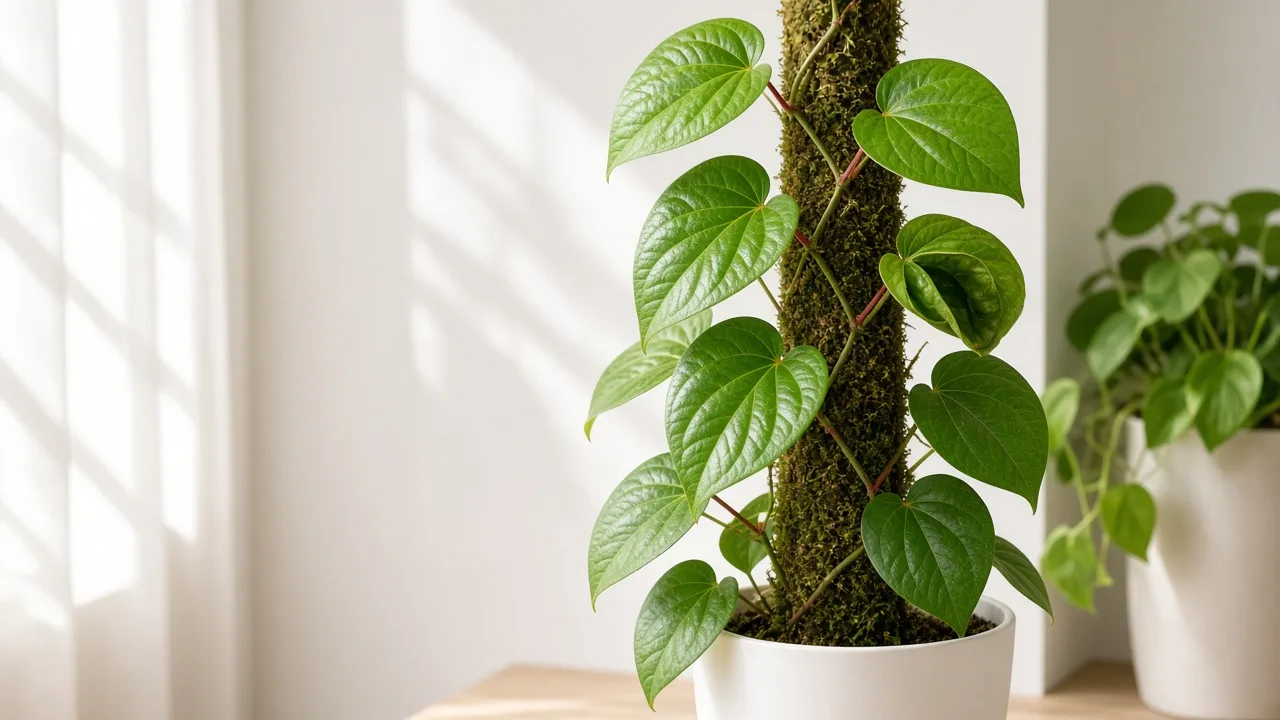
Curling Leaves on Betel Leaf: Causes, Checks & Fixes
This guide covers curling leaves on Betel Leaf. See also the general Curling Leaves guide, watering, and light pages for this plant.
Curling Leaves on Betel Leaf: Causes, Checks & Fixes
Quick answer
Curling on Betel Leaf (Piper betle), the glossy paan vine, usually means the plant lost leaf turgor from dry soil, dry air, sap-sucking pests on new growth, or failing roots in wet mix. Healthy betel leaves lie flat and heart-shaped along the climbing stem. When they cup inward, twist at the tip, or roll along the margin, something in the root zone, humidity, light, or pest load changed recently.
First step: press your finger into the top 2–5 cm of mix and flip the newest leaf to check the underside. Dry soil with no insects means underwatering. Sticky residue, stippling, or tiny moving dots mean pests — not a watering fix. For general curling-leaf mechanics, see our curling leaves hub. On betel leaf, the pattern almost always ties back to this vine’s need for steady moisture, high humidity, and filtered light on a support.
When to use this page vs other Betel Leaf guides
- Underwatering — light pot, dry 2–5 cm layer, dull limp leaves before curl sets
- Overwatering — heavy wet pot, yellowing, soft stems with curl
- Low humidity — crispy curled margins in dry AC air
- Spider mites — stippling and tight curl on new nodes in dry rooms
- Aphids or thrips — twisted young leaves and sticky or silvery damage
- Wilting — whole vine collapse, not just edge curl
- Distorted leaves — puckered growth from chronic pest or virus-like damage
- Watering guide — long-term rhythm after you identify the cause
What curling looks like on Betel Leaf
Healthy betel leaves are glossy, heart-shaped, and deeply veined, with a reddish petiole matching the stem. Curling breaks that flat plane in predictable ways:
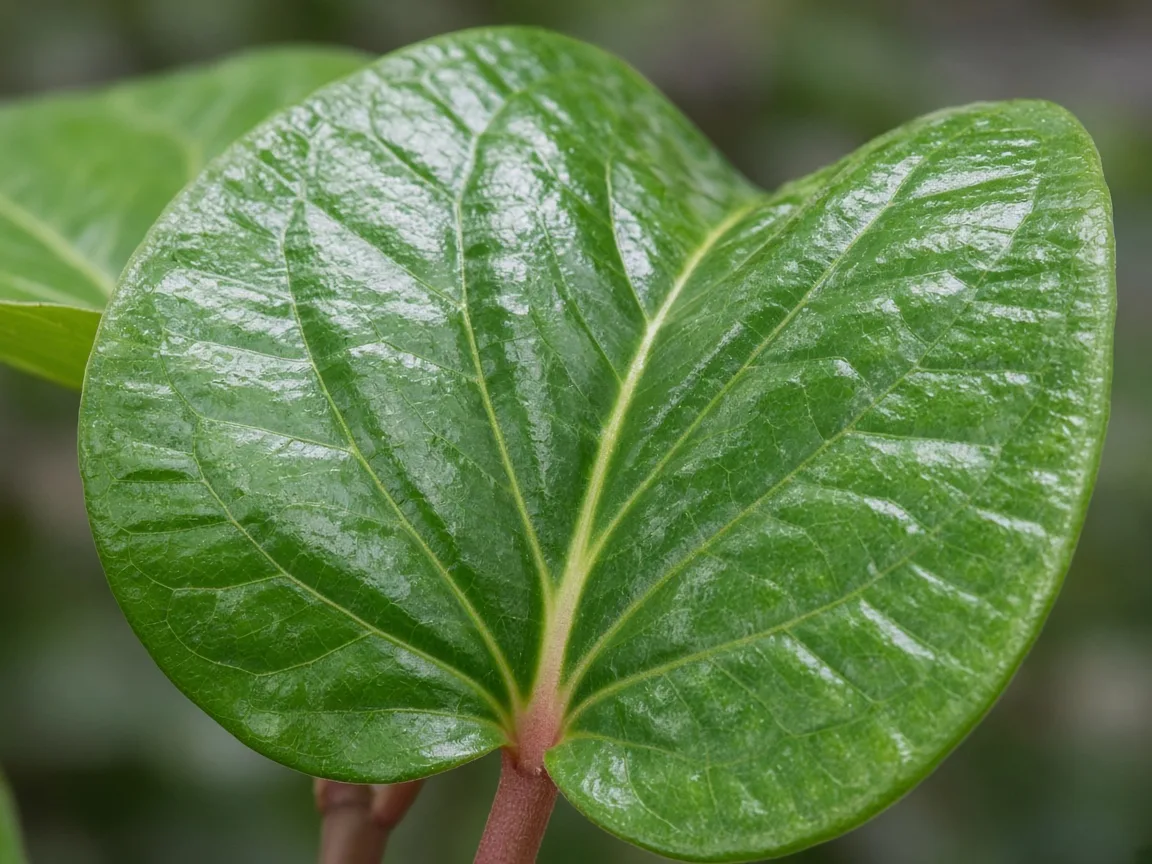
Inward-cupped betel leaf tissue — compare curled margins with flat healthy leaves on the same vine.
Drought / moisture-stress curl:
- Older leaves cup inward along the midrib or fold lengthwise
- Leaf surface turns dull; petiole may droop slightly
- Pot feels light; soil dry at 2–5 cm depth
- Vine still green at nodes unless drought is severe
Low-humidity curl:
- Margins curl and brown while the center stays greener
- Often hits leaves facing AC vents or dry winter heat
- Soil moisture can be normal — the air, not the roots, is the problem
Pest curl (mites, aphids, thrips):
- Newest leaves twist, pucker, or curl tight at the shoot tip
- Silver stippling, sticky honeydew, or visible insects on undersides
- Damage clusters at nodes and tender growth the vine produces while climbing
Wet-root / wilt curl:
- Leaves curl then limp downward despite wet soil
- Collar may soften; mix smells sour or stays heavy for days
- Matches overwatering or early root rot stress
Sun / wind curl:
- Crispy curled patches on leaves exposed to harsh midday sun or drying wind
- Soil and humidity otherwise adequate
- Common after moving a shade-grown vine into direct balcony sun
Reading curl on glossy paan leaves along the vine
Betel leaf is a fast tropical climber that TNAU describes as needing a cool humid climate with regular soil moisture. PFAF notes it prefers shade, wind protection, and consistently moist soil — not the episodic dry-down rhythm many succulents tolerate. That biology explains why curl shows up early here: large thin leaves lose water fast when the 2–5 cm check reads dry or when humidity drops below roughly 60%.
Unlike rubbery succulents, betel leaves do not store much water in the tissue itself. The vine depends on roots pulling steady moisture from organic-rich mix. When you miss a watering cycle in heat, the oldest leaves cup first because they have the longest petioles and the highest transpiration load. New growth at the tip may still look okay for a day — which is why owners often water too late.
PFAF also notes that when a vine reaches about 2 metres, upper leaves grow smaller and poorer quality unless the plant is rejuvenated. Indoor vines on short moss poles hit that ceiling quickly. Small, tight, curled upper leaves on an otherwise healthy lower vine often mean the shoot has outgrown its support height — not a mysterious disease.
When upper-node leaves curl smaller — rejuvenation timing
Field betel cultivation lowers long vines to the soil so new shoots sprout from buried nodes. Container growers see a milder version: the top two feet of vine produce thinner leaves that cup and stay small while lower leaves remain broad and flat.
Signs this is a growth-stage issue, not root failure:
- Lower leaves on the same stem are glossy and normal size
- Roots are white and firm when you slide the pot edge back
- Soil moisture rhythm has been steady
- Vine has climbed past its pole or trellis top
First response for height stress: train a long runner down the support or take a tip cutting rather than drowning the pot with extra water. See the pruning guide for how to shorten and restart vertical growth without shocking the whole vine.
Monsoon humidity vs dry-room curl
Betel leaf performs best with high humidity and semi-shade according to NParks. In humid monsoon balconies, owners rarely see drought cupping — problems shift toward fungus gnats, mold, and Phytophthora wilt when soil stays wet too long in cool weather. TNAU advises avoiding frequent irrigation during winter for that reason.
In dry air-conditioned rooms, the opposite pattern dominates: soil at 2–5 cm can read moist while margins curl and brown from transpiration faster than roots can supply water. That is not underwatering in the classic sense — it is low humidity stressing the leaf edges. Raising humidity around the support (grouping plants, pebble tray, humidifier) often flattens margins within a week without changing the watering calendar.
How to confirm the cause
| Sign | Underwatering | Low humidity | Pests | Wet roots |
|---|---|---|---|---|
| Soil at 2–5 cm | Dry | Often moist | Variable | Wet / heavy |
| Pot weight | Light | Normal | Normal | Heavy |
| Leaf location | Older leaves first | Leaf margins | New shoots | Whole vine |
| Underside | Clean | Clean | Stippling, insects, stickiness | Sometimes gnats |
| Stem at collar | Firm | Firm | Firm | Soft or discolored |
Work top to bottom: newest leaf underside → finger test at 2–5 cm → pot weight → collar firmness. That order prevents the two classic mistakes — soaking a pest-infested vine, or misting a rotting root zone because edges look dry.
First fix for Betel Leaf
If soil is dry at 2–5 cm and leaf undersides are clean: water thoroughly until excess drains, empty the saucer, and boost humidity for 48 hours. Follow the watering guide rhythm afterward — betel leaf wants even moisture, not bone-dry cycles.
If undersides show stippling, aphids, or webbing: isolate the vine and rinse new growth under lukewarm water. Confirm active pests, then follow the spider mites or aphids page before reaching for spray.
If the pot is heavy, soil wet, and the collar softens: stop watering. Improve airflow, confirm drainage holes are open, and read root rot if wilt spreads.
Do not fertilize curled vines. Do not repot and prune heavily on the same day.
Lookalikes to rule out on Betel Leaf
| What you see | Likely page |
|---|---|
| Flat yellowing before any cup | Yellow leaves |
| Brown tips without full cup | Brown tips |
| Whole vine limp, not just curled edges | Drooping leaves or wilting |
| Puckered, bumpy new growth | Distorted leaves |
| Leggy stretch with small pale leaves | Not enough light |
Curl vs droop: drooping means the petiole loses strength and the leaf hangs; curling means the blade folds while the petiole may still feel firm. Advanced drought shows both — start with the finger test before assuming total collapse.
Step-by-step recovery
- Inspect the newest leaf underside at the growing tip for mites, aphids, or thrips.
- Press finger into mix at 2–5 cm. Dry and pest-free → thorough soak; wet and sour → dry-down protocol.
- Check humidity if margins are crispy but soil is moist → humidifier or pebble tray; see low humidity.
- Review light — move off harsh midday sun to bright filtered light per the light guide.
- Evaluate vine height — if upper leaves are small and curled on a tall shoot, lower or prune the runner.
- Watch the next two nodes — flat glossy new leaves mean your fix worked.
What not to do
- Do not water every curled leaf without checking soil depth — wet-root curl gets worse with more water (Missouri Botanical Garden notes chronic wet soil damages roots and causes wilt).
- Do not mist as a humidity substitute on pest-suspect vines — wet foliage in stagnant air invites leaf spot.
- Do not place a shade-grown vine into full afternoon sun to “uncurl” it — that scorches paan leaves quickly.
- Do not ignore scale at the collar — TNAU lists scale on basal stems and leaves as a primary betel pest; infestations weaken new growth upstream.
Recovery timeline
Single dry spell: cupped leaves often relax within 3–7 days after one proper soak and a humidity bump. Low-humidity margin curl: improvement over 1–2 weeks once air moisture stays above roughly 60%. Pest curl: new growth should emerge flat within 2–3 weeks after control; old twisted leaves may not fully flatten. Root-stress curl: weeks to months depending on collar damage — judge by firm new nodes, not old blades.
Winning signs: the next two heart-shaped leaves open flat and glossy; curl stops spreading down the vine; pot weight cycles predictably with your watering checks.
How to prevent curling
Match the vine’s tropical rhythm: even moisture using the 2–5 cm finger test, 60–80% humidity, bright filtered light on a support, and fertile well-draining soil. Inspect new nodes weekly — TNAU lists mites and aphids as routine betel pests that curl tender growth if missed. Reduce watering frequency in cool months while keeping humidity up, and rejuvenate vines that outgrow their pole before upper leaves stay permanently small.
Related Betel Leaf guides
- Overview — paan vine biology and placement
- Problems hub — full symptom index
- Watering — 2–5 cm check and seasonal rhythm
- Light — filtered sun vs scorch
- Soil — organic mix that holds moisture without waterlogging
Related tool
Use the Plant Problem Diagnosis Tool to narrow causes for curling leaves on this plant before changing multiple variables at once.