Brown Tips on Betel Leaf: Humidity, Sun & Water Checks
Quick answer
Brown tips on Betel Leaf usually mean dry indoor air, a missed watering cycle, or harsh sun on thin glossy leaves—not a mysterious disease. First step: place a hygrometer beside the vine and check whether the top 2–5 cm of mix is dry before you change anything else.
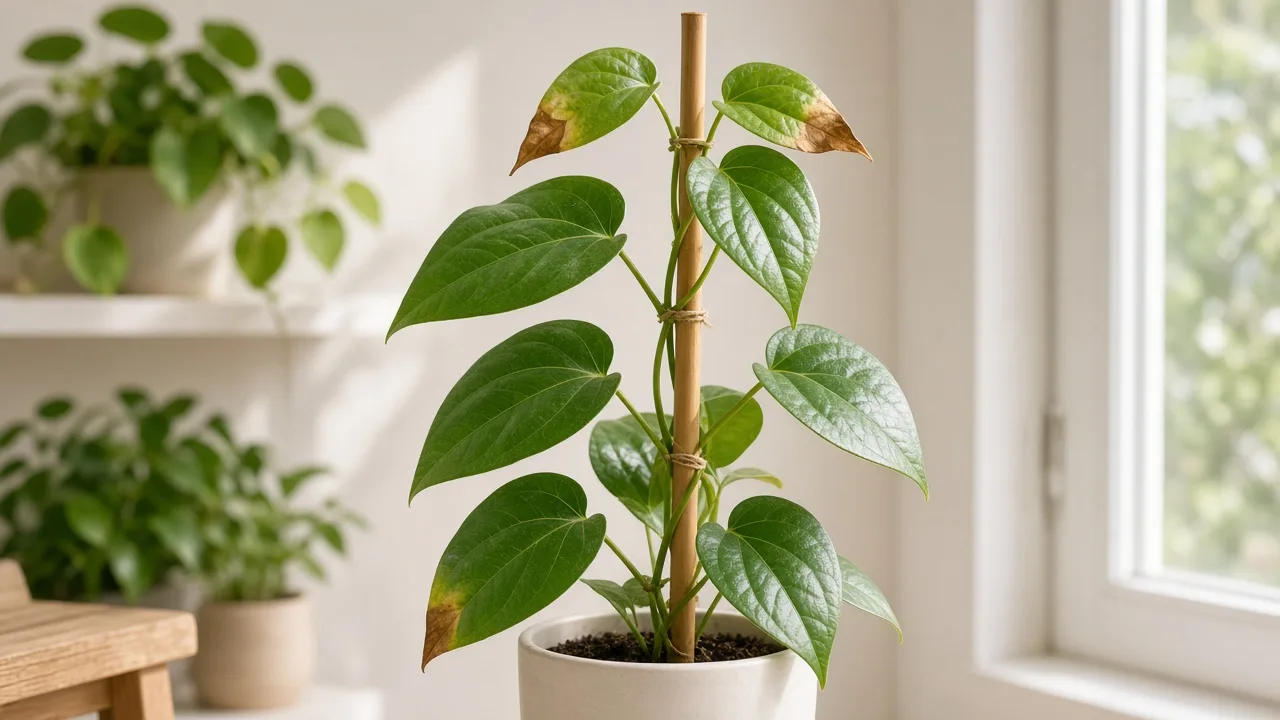
Brown Tips on Betel Leaf: Causes, Checks & Fixes
This guide covers brown tips on Betel Leaf. See also the general Brown Tips guide, watering, and light pages for this plant.
Brown Tips on Betel Leaf: Causes, Checks & Fixes
Quick answer
Brown tips on Betel Leaf (Piper betle) mean the distal edge of a thin, glossy heart-shaped leaf has turned dry and tan while the rest of the blade may still look green. For how tip burn works on houseplants in general, see our brown tips hub. On a paan vine, the pattern almost always traces to dry indoor air, a missed watering cycle, harsh sun after a move, or salt buildup—not a leaf disease.
First step: place a hygrometer within 30 cm of the canopy and run the Betel Leaf finger test at 2–5 cm depth. Readings below about 50% with normal soil moisture point to low humidity. A light pot and dusty-dry upper mix point to underwatering. Crisping on the window-facing side right after brighter placement points to the light guide.
When to use this page vs other Betel Leaf guides
| Pattern | Read next |
|---|---|
| Whole margins brown, not just tips | Low humidity |
| Light pot, dull limp leaves, dry mix | Underwatering |
| Yellow leaves, wet heavy pot, soft collar | Overwatering |
| Bleached patches on sun-facing side | Light / scorch |
| Tips after heavy feeding, white soil crust | Fertilizer guide |
| Tips plus stippling and fine webbing | Spider mites |
What brown tips look like on Betel Leaf
Unlike thick succulents, Piper betle carries thin, aromatic, heart-shaped leaves on a climbing vine. The leaf tip is the farthest point from the roots, so it desiccates first when humidity drops or uptake lags. Plants For A Future describes betel as a plant of humid tropical climates that prefers moist, well-drained soil in full or semi-shade—indoors, that translates to glossy blades that brown at the margins when air or roots fall out of balance.
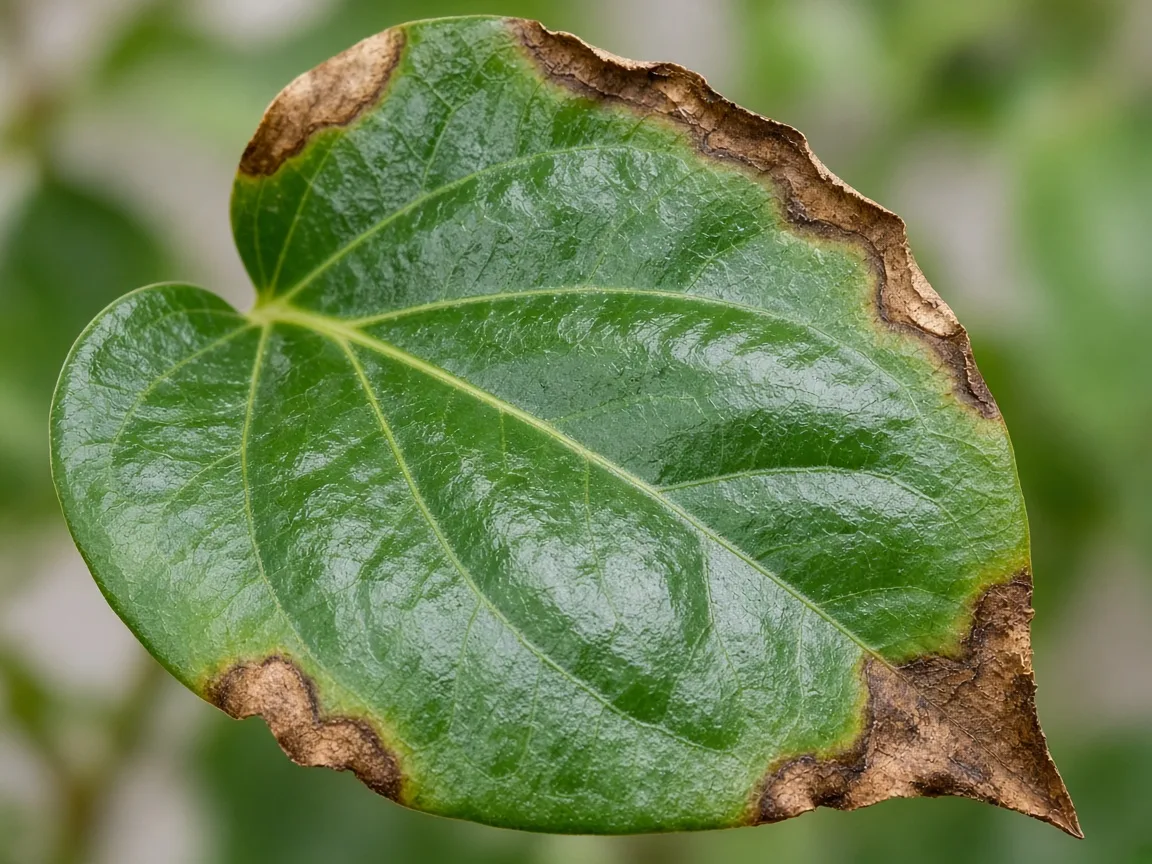
Dry tan tips on glossy heart-shaped Betel Leaf blades—dead tissue will not re-green; watch the next leaf flush for clean margins.
Classic tip burn (dry air or thirst):
- Narrow tan-to-brown band at the very tip or along the wavy margin
- Papery, dry texture on an otherwise green, firm leaf
- Often worse on older outer leaves while the vine still pushes new nodes
- May worsen in heated or AC rooms through winter
Underwatering signature:
- Tips crisp while leaves look dull and slightly limp
- Pot feels light; top 2–5 cm of mix are dusty-dry
- Soil may pull slightly from the pot edge before you soak
Sun-scorch signature:
- Browning or bleaching on the sun-facing side soon after a move to harsh glass or open west balcony
- Damage may skip the shaded side of the same leaf
- Missouri Botanical Garden notes that leaf scorch appears when foliage loses water faster than roots can replace it—hot midday sun on a shade vine accelerates that mismatch
What tip burn is not: uniform yellowing with wet soil (overwatering), whole-leaf collapse with sour mix (root rot), or stippling with webbing (spider mites).
Why thin paan leaves brown at the tip first
This section is betel-vine-specific—it would not apply to cacti or broad rubber-tree foliage.
- Leaf architecture: Betel Leaf is grown for thin, glossy blades on a supported climber. The tip has the least internal water reserve and the highest transpiration load when air is dry.
- Shade biology: Useful Tropical Plants notes that Piper betle thrives under per-humid forest conditions with high relative humidity and ample soil moisture, in shade with wind protection. A vine pulled into dry AC airflow loses tip moisture faster than a desert plant would notice.
- Even-moisture roots: TNAU states that betelvine requires cool humid conditions with considerable humidity and a regular supply of moisture in well-drained soil. Long dry spells followed by heavy soaking stress feeder roots; tips brown while the collar may still feel firm.
- Node and collar context: Adventitious roots cling along the stem on a moss pole or trellis. If the lowest nodes sit in wet, airless mix while upper leaves crisp, you may have both poor collar drainage and dry canopy air—two different levers.
East-balcony shade vs dry AC room
Betel Leaf fails in opposite ways depending on where you grow it.
Humid shaded balcony (ideal): Under 40–50% shade cloth or dappled morning sun, humidity often stays high enough that tips brown only after a missed watering week. Tip damage here usually means check the finger test, not buy more shade.
Dry indoor room (common problem): AC and heaters can hold canopy humidity near 30–40% even when soil is moist. Tips brown on multiple leaves at once while mix at 2–5 cm still feels slightly cool. That pattern is low humidity until proven otherwise—misting alone rarely sustains the 60–80% range this vine prefers in the care hub.
Harsh sun mistake: A vine that looked perfect under shade may crisp within days on a south-west terrace with midday beams. Fix placement per the light guide before you soak repeatedly.
How to confirm the cause
Work through these checks in order. Change one variable at a time so the next leaf flush tells you the truth.
-
Hygrometer at canopy height — Place it within 30 cm of the top leaves. Below 50% with crispy margins strongly supports dry air. Target 60–80% for recovery on this species.
-
Finger test at 2–5 cm — Match the watering guide rhythm. Dusty-dry at depth plus a light pot = thirst. Cool, clinging soil plus limp yellow lower leaves = wet-root stress; see overwatering.
-
Light history — Did tips appear within a week of moving to brighter glass or removing shade cloth? Inspect the sun-facing side first.
-
Feeding and crust — White mineral film on soil or pot rim after frequent fertilizer points to salt tip burn. Hold feed and flush with plain water before resuming half-strength doses from the fertilizer guide.
-
New-growth watch — The decisive test is the next glossy heart-shaped leaf. Clean margins on fresh tissue confirm your fix; repeated damage on new flushes means another cause is still active.
-
Pest scan — Hold leaves to the light. Fine stippling plus webbing on undersides is spider mites, not humidity alone.
First fix for Betel Leaf
Apply one correction first, then wait for the next leaf flush.
If canopy humidity is below 50%
Run a small room humidifier several hours daily in the same room, aimed into ambient air rather than directly onto foliage. Grouping pots can help slightly, but a humidifier is more reliable for sustained recovery than misting alone. Cross-check targets on the low-humidity page.
If the top 2–5 cm are dry and the pot is light
Water thoroughly with room-temperature water until it runs from drainage holes, then empty the saucer within 30 minutes. Do not leave the collar sitting in stagnant water—waterlogged roots lose the ability to move moisture upward even while tips look dry.
If sun scorch followed a recent move
Relocate once to bright filtered light or partial shade—east morning sun with afternoon protection, or shade cloth on a west balcony. Avoid shuffling the vine daily; let new nodes settle.
Cosmetic trim (after the environment fix)
Snip dead tips with clean scissors along the natural leaf contour. Brown tissue will not re-green; trimming is optional and for appearance only.
Recovery timeline
Damaged tip tissue is permanent. Judge success by stopped spread and clean margins on newly opened leaves.
- After humidity correction: New glossy leaves often show intact tips within two to four weeks when canopy RH holds near 60–80%.
- After a proper soak: Dull leaves may perk within 24–48 hours; tip color on old blades stays brown.
- After shade adjustment: Sun-scorched tissue remains tan; the next shaded flush should open without fresh crisping.
If three consecutive new leaves open with clean edges, consider the brown-tip problem controlled. Keep monitoring through heating season.
What not to do
- Do not increase watering because tips are brown while the pot is already heavy and cool at depth—that deepens overwatering risk on a collar-sensitive vine.
- Do not park the vine in harsh midday sun to “dry out” tips—shade species scorch before they recover.
- Do not assume misting replaces a humidifier in dry AC rooms; wet leaf surfaces in stagnant air can invite fungal spotting.
- Do not fertilize a stressed vine before humidity and watering stabilize.
- Do not stack repotting, hard pruning, and pesticide on the same day as a humidity or watering overhaul.
How to prevent brown tips on Betel Leaf
- Keep canopy humidity near 60–80% in heated or air-conditioned rooms—match the overview placement advice.
- Water when the top 2–5 cm feel dry, with full drainage; never let saucers hold standing water.
- Grow in bright filtered light, not harsh midday beams—see the light guide.
- Use fertile, well-draining mix from the soil guide; betelvine does not tolerate waterlogged, saline, or alkaline fills (TNAU).
- Flush the pot occasionally with plain water if you feed monthly during warm growth.
- Inspect new heart-shaped flushes weekly so tip damage is caught while the fix is still a humidity tweak or one thorough soak.
When to worry
Treat as urgent if brown damage spreads to most new leaves within a week, stems soften at the soil line on wet mix, soil smells sour, or fine webbing appears on undersides—those patterns point past cosmetic tip burn toward root rot, chronic overwatering, or spider mites.
Lower urgency: a few crispy tips on older outer leaves while stems stay firm, soil moisture matches the finger test, and new nodes still emerge. Fix air and water before escalating to repotting.
Conclusion
Brown tips on Betel Leaf are usually an environmental mismatch on thin shade-vine foliage, not a death sentence. Piper betle telegraphs dry air, missed watering, harsh sun, and salt stress at the leaf margin before the whole vine collapses. Measure humidity at the canopy, confirm the 2–5 cm dry-down, and pull back from scorching sun; then watch new heart-shaped leaves for the real verdict. Old tips stay tan, but clean new growth means you found the right lever—keep that routine through winter heating and return to everyday Betel Leaf care when symptoms overlap with sibling issues.
Related Betel Leaf guides
- Betel Leaf overview — identity, placement, and cluster map
- Betel Leaf watering — finger test and seasonal rhythm
- Betel Leaf light — filtered shade vs harsh sun
- Betel Leaf soil — mixes that hold moisture without drowning roots
- Low humidity on Betel Leaf — RH targets and humidifier setup
- Underwatering on Betel Leaf — when thirst, not dry air, drives crisping
- Betel Leaf problems hub — all common issues on this species