Slow Growth on Betel Leaf: Node & Vine Checks
Quick answer
Slow growth on Betel Leaf is abnormal in warm humid weather—this paan vine should push new nodes steadily on a support. First step: mark the highest node with tape and press your finger into the top 2–5 cm of mix the same morning so you know whether the stall matches dry soil, wet roots, or a seasonal pause.
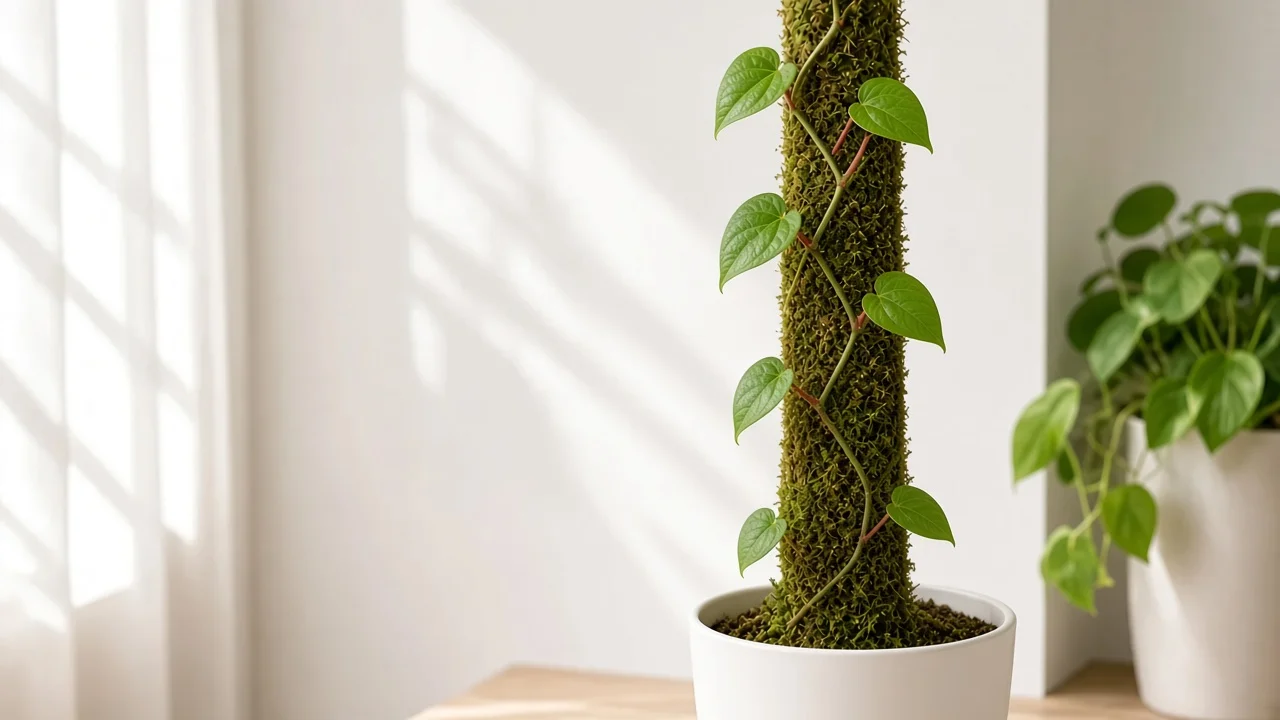
Slow Growth on Betel Leaf: Causes, Checks & Fixes
This guide covers slow growth on Betel Leaf. See also the general Slow Growth guide, watering, and light pages for this plant.
Slow Growth on Betel Leaf: Causes, Checks & Fixes
Quick answer
Slow growth on Betel Leaf (Piper betle), the glossy paan climbing vine, means the plant is **not adding nodes or heart-shaped leaves at the pace this species manages in warm, humid, shaded conditions. Field and garden references describe betel as a fast tropical climber when moisture, shade, and support align—not a succulent that sits quietly for months.
For how chronic stagnation works across houseplants in general, see our slow growth hub. On betel leaf, the decisive check is whether new internode length appears on a marked tip node while the top 2–5 cm of mix dries on a predictable rhythm—not whether older leaves still look green from across the room.
First step: mark the highest node on the vine with tape, then press your finger into the top 2–5 cm of mix that same morning. No tape movement plus dry soil points toward underwatering or root-bound drought. No movement plus wet heavy soil points toward overwatering or failing roots. Steady moisture but a vine past its pole top often needs pruning or lowering, not more fertilizer.
When to use this page vs other Betel Leaf guides
| Pattern | Read next |
|---|---|
| Long gaps between nodes, vine reaching for a dim window | Leggy growth or not enough light |
| Small pale new leaves without much length gain | Pale leaves or nitrogen deficiency |
| Yellowing lower leaves on a heavy wet pot | Overwatering or root rot |
| Light pot, dry 2–5 cm layer, dull limp foliage | Underwatering or drooping leaves |
| Crispy tips, stalled tip growth in dry AC air | Low humidity or brown tips |
| Sticky residue, stippling, tight tip leaves | Spider mites, aphids, or scale insects |
| Pot dries within a day after every watering | Repotting guide |
| Full symptom index | Problems hub |
What slow growth looks like on Betel Leaf
Healthy betel in active growth extends a reddish climbing stem with glossy heart-shaped leaves every one to two weeks on a trellis, moss pole, or bamboo stake. Slow growth is about that extension stopping while existing foliage may still look acceptable:
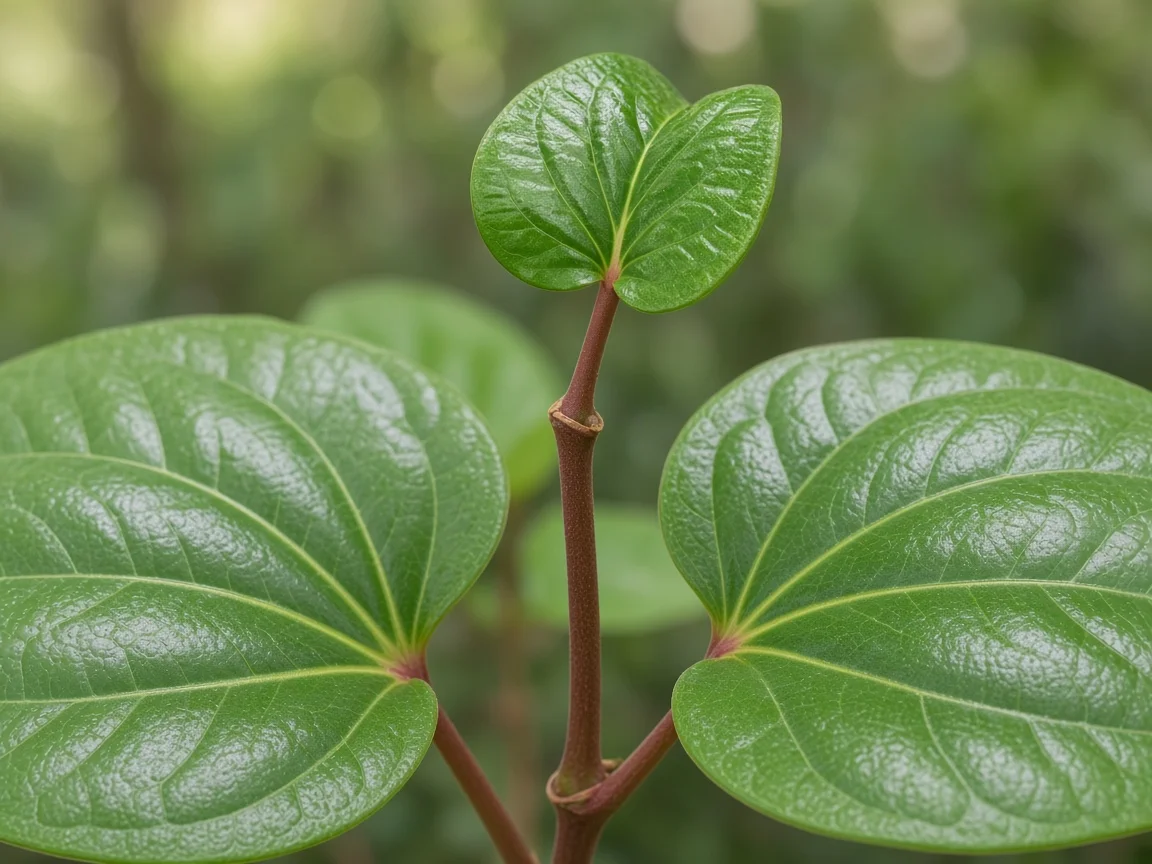
Stalled nodes: compare tight spacing and a tiny tip leaf with broader glossy leaves lower on the same runner.
- No new node for two to four weeks during warm humid weather despite firm green stems
- Internodes stay short — new segments hug the support instead of climbing 5–15 cm between leaves
- Tip leaves stay small — the newest heart-shaped blade opens smaller than the two below it
- Same vine length month to month — you measure the same distance from soil to tape mark
- Upper vine only stalls — lower leaves stay large and glossy while the top foot produces thin growth (height stress)
- Winter quiet — little extension when nights drop below about 18°C (65°F) and humidity falls indoors
- Post-purchase pause — no nodes for two to three weeks after shipping even when care looks correct
This differs from leggy growth, where long thin internodes and lean appear quickly toward a window, and from wilting, where the whole vine collapses. Slow growth can still accompany mild yellow leaves when roots are stressed, but the defining signal is missing node extension, not a single blemished leaf.
Reading node pace on a paan vine
Betel leaf is grown as a supported climber, not a bushy rosette. TNAU notes vines are trained along standards at 15–20 cm intervals as they grow, which reflects how quickly field vines extend when humidity and soil moisture stay steady. PFAF describes young plants as growing quickly under favourable lowland tropical conditions, with shade, wind protection, and ample soil moisture.
Indoors, translate that into a simple log:
- Tape the highest node at the same time each week.
- Note pot weight and whether the 2–5 cm finger test reads dry or moist per the watering guide.
- Record whether a new heart-shaped leaf unfurled.
If tape never moves through June on a humid balcony but soil moisture looks right, the bottleneck is usually light, roots, pests, or vine height—not impatience.
When the vine outgrows the pole — lowering and rejuvenation
Field betel culture lowers long vines so fresh shoots sprout from buried nodes. TNAU explains that when vines reach about 3 m in a year, leaf size and vigour drop until vines are lowered in March–April, with irrigation after each lowering. PFAF similarly notes that when a vine becomes about 2 metres long, it produces smaller poorer-quality leaves and must be rejuvenated by cutting back.
Container growers hit that ceiling much sooner:
- The top 30–60 cm pushes only small cupped leaves while lower leaves stay broad.
- Node extension at the tip stops even though roots feel fine.
- The vine has wrapped past the moss pole or trellis top with nowhere to climb.
First response for height stress: coil a long runner down the support or shorten the vine per the pruning guide rather than increasing fertilizer. Extra nitrogen on a vine that simply ran out of vertical room rarely restores large glossy leaves.
Cool-season pause vs a true stall
Betel evolved in cool humid tropical climates with regular soil moisture. TNAU stresses considerable humidity and steady moisture in the root zone and advises avoiding frequent irrigation during winter to limit Phytophthora wilt—growth naturally slows when temperatures and day length drop.
PFAF lists a tolerated temperature range of about 17–31°C, with preference near 22–27°C. Below about 18°C (65°F) near a cold window or during dry heated winters, betel often holds existing leaves but stops extending until warmth returns. That pause is normal if:
- Stems and nodes stay firm and green
- Soil dries more slowly and you reduced watering frequency
- No sour smell or collar softening appears
A true stall in warm humid weather—tape unmoved for a month above 22°C (72°F) with appropriate moisture—is not seasonal rest. Treat that as a care or root problem.
Why Betel Leaf grows slowly
Insufficient light without obvious stretch
Betel wants bright filtered light or semi-shade, not deep gloom. NParks lists semi-shade and moderate water with a fast growth rate under suitable conditions. In dim corners, vines may stall node extension before they develop dramatic leggy reach—holding a few small leaves indefinitely. Cross-check placement with the light guide and not enough light when internodes stay short and dull.
Moisture stress at the roots
Betel depends on steady moisture in organic-rich mix, not bone-dry cycles. Chronic underwatering slows extension and pairs with dull foliage—see underwatering. Chronic wet soil steals oxygen; growth stops long before total collapse. The Missouri Botanical Garden notes overwatered roots fail to function even when the surface looks moist—a pattern that matches betel vines that stay green but add no nodes on a heavy pot.
Low humidity in dry rooms
Large thin betel leaves transpire heavily. Dry AC or winter heat without 60–80% humidity often shows up as brown tips first, then tip nodes that refuse to extend. Fix humidity per low humidity before assuming the vine needs repotting.
Root-bound or depleted mix
When roots circle a pot and the mix dries within a day, the vine cannot pull steady moisture even if you water often. Repotting signs on betel include circling roots and stalled extension despite warm placement—refresh fertile soil in spring rather than pushing more fertilizer into exhausted peat.
Pests draining vigor at nodes
TNAU lists scale on basal stems, mites, aphids, and mealybugs as routine betel pests. Sap-sucking insects on tender nodes can stall new leaves without collapsing the whole vine. Inspect nodes and leaf undersides with a magnifier before feeding a stressed plant.
Over-fertilization or wrong-season feeding
Nitrogen on wet, cold, or root-damaged vines produces soft weak growth, not faster paan leaves. Hold feed until node extension resumes for two weeks—see the fertilizer guide. Nitrogen deficiency is a separate pattern with broader yellowing on older leaves.
Recent repot, move, or shipment
Betel often pauses two to four weeks after repotting, relocation, or mail-order arrival while adventitious roots settle on the support. Do not stack repotting, heavy pruning, and fertilizer in the same fortnight after shipping.
How to confirm the cause
Work through this order on the morning you marked the tip node:
| Check | Points toward |
|---|---|
| Tape moved <2 cm in 14 days, dry 2–5 cm soil, light pot | Underwatering or root-bound drought |
| Tape unmoved, wet heavy soil, sour smell or gnats | Overwatering, root rot, or compacted mix |
| Tape unmoved, soil OK, dim placement | Not enough light |
| Small upper leaves only, vine past pole top | Height rejuvenation / pruning need |
| Stippling, scale, stickiness on new nodes | Pests |
| Tape unmoved, firm vine, cool room, winter calendar | Seasonal pause |
| Old leaves yellow uniformly, new leaves tiny and pale | Nutrient deficiency after ruling out light and roots |
Separate one primary bottleneck before changing multiple variables. The overview hub links all care topics if you need baseline rhythm.
The first fix to try
After your tape-and-moisture morning log, apply one correction matched to the table—not fertilizer and repotting together.
If soil at 2–5 cm is dry and the pot feels light: water thoroughly until a little drains, then remeasure tape in 14 days. Betel often resumes node extension within one to two weeks when drought was the limiter.
If soil stays wet and the pot feels heavy: stop watering until the top 2–5 cm dries, improve airflow, and confirm drainage—see overwatering before unpotting.
If moisture is steady but the vine topped the support: lower or shorten the runner first.
If pests are confirmed on the newest node: isolate and rinse leaf undersides, then treat the identified pest page—do not feed until new clean growth appears.
Step-by-step recovery
- Keep the tape mark and photograph the tip weekly.
- Correct the primary bottleneck from your confirmation table.
- Maintain humidity at 60–80% while the vine restarts—especially after underwatering recovery.
- Resume half-strength fertilizer only after you see a new node extend with a glossier leaf than the previous one.
- Train new growth onto the support every week so nodes do not break under their own weight.
Winning signs: tape moves 5–15 cm over two weeks, new heart-shaped leaves match the size of the prior pair, and stem tissue at nodes stays firm and reddish-green.
Recovery timeline
| Situation | Typical timeline |
|---|---|
| Single underwatering stall | New node in 7–14 days after a thorough soak and humidity boost |
| Light correction | 2–4 weeks for visibly longer internodes |
| Post-repot or shipping pause | 2–4 weeks before first new node |
| Vine lowering or pruning | 3–6 weeks for flush of shoots from lower nodes |
| Root damage on wet mix | Weeks to months; depends on how much healthy root remains |
| Cool winter pause | Growth resumes when temperatures stay above ~18°C (65°F) consistently |
Old leaves that yellowed during stress do not always green up again. Judge success by new node extension and leaf size on the tip, not by perfect lower foliage.
Lookalike symptoms
| What you see | Often confused with slow growth | Differentiator |
|---|---|---|
| Long thin reach toward glass | Slow growth | Internodes lengthen quickly—see leggy growth |
| Whole vine limp | Slow growth | Collapse within days—see wilting |
| Only tip leaves small | Nutrient deficiency | Lower leaves still full size; vine topped out—prune first |
| Uniform pale yellow older leaves | Slow growth | Color change dominates—see nitrogen deficiency |
| Cupped margins | Slow growth | Turgor issue—see curling leaves |
Mistakes to avoid
- Fertilizing a stalled wet-root vine — burns roots and extends the pause.
- Repotting on day one without confirming moisture rhythm or pest load.
- Judging betel like a succulent — long dry spells stall tropical vines quickly.
- Ignoring vine height — fertilizer cannot replace lowering or pruning when the tip has nowhere to climb.
- Expecting summer speed in a cold drafty window — seasonal pause is normal; chronic summer stall is not.
How to prevent slow growth next time
Match betel’s tropical rhythm: supported placement in bright filtered light per light, even moisture using the 2–5 cm check, fertile well-draining soil, and rejuvenate before upper leaves stay permanently small. TNAU’s lowering practice is the field-scale version of what container growers achieve with pruning and fresh training.
Inspect new nodes weekly for mites and scale, reduce winter watering while keeping humidity up, and repot in spring when roots circle or dry-down becomes unpredictable.
Related Betel Leaf guides
- Overview — paan vine biology and placement
- Problems hub — full symptom index
- Watering — 2–5 cm check and seasonal rhythm
- Light — filtered sun vs scorch
- Fertilizer — when to feed after growth resumes
Related tool
Use the Plant Problem Diagnosis Tool to narrow causes for slow growth on this plant before changing multiple variables at once.