Pale Leaves on Betel Leaf: Light, Nutrients & Mite Checks
Quick answer
Pale leaves on Betel Leaf (*Piper betle*) look washed-out or lime-green instead of glossy deep green on heart-shaped vine blades. First step: compare the newest leaf at the climbing tip with a mature leaf lower on the same stem before you water or fertilize.
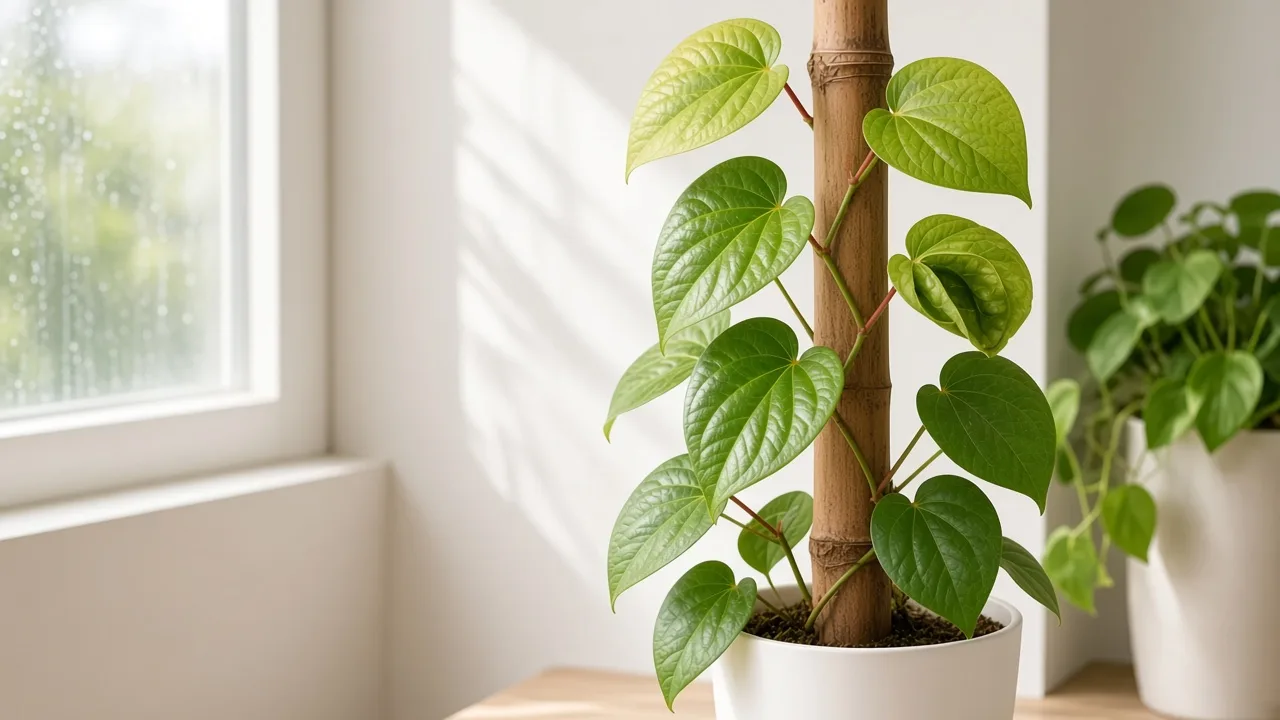
Pale Leaves on Betel Leaf: Causes, Checks & Fixes
This guide covers pale leaves on Betel Leaf. See also the general Pale Leaves guide, watering, and light pages for this plant.
Pale Leaves on Betel Leaf: Causes, Checks & Fixes
Quick answer
Pale leaves on Betel Leaf (Piper betle), the glossy paan vine, lose the deep green shine healthy plants show along a moss pole or trellis. Blades look washed-out, lime-green, or thin yellow-green instead of the bright to deep green NParks describes for this species. The vine may still climb, but new heart-shaped leaves stay smaller and paler than mature ones lower on the stem.
First step: compare the newest leaf at the climbing tip with a mature leaf on the same runner. Uniform pale new growth in a dim room points to light before fertilizer. Older lower leaves fading evenly while the tip still pushes small pale hearts suggests nitrogen loss. Green veins on yellow new blades with firm roots often means iron lockout—not more urea.
For general chlorosis mechanics, see our pale leaves hub. On betel leaf, pale wash almost always ties to filtered-light placement, this fast vine’s feeding rhythm, acid-leaning mix, or mite stippling on tender nodes—not a one-size-fits-all houseplant fix.
When to use this page vs other Betel Leaf guides
- Not enough light — long internodes, stretch toward windows, uniformly pale new growth
- Leggy growth — thin vines with small pale leaves far from the support
- Nitrogen deficiency — oldest heart-shaped leaves fade first, whole vine looks thin
- Iron deficiency — newest leaves yellow between green veins
- Yellow leaves — clear yellowing, often with wet soil or rot risk
- Overwatering — heavy pot, pale wash before soft stems and yellow bases
- Spider mites — silver stippling and dull pale patches on undersides
- Light guide — semi-shade vs scorch placement after you diagnose
What pale leaves look like on Betel Leaf
Healthy betel foliage is glossy, heart-shaped, and deeply veined, with a reddish petiole. Pale leaves break that colour depth in predictable ways:
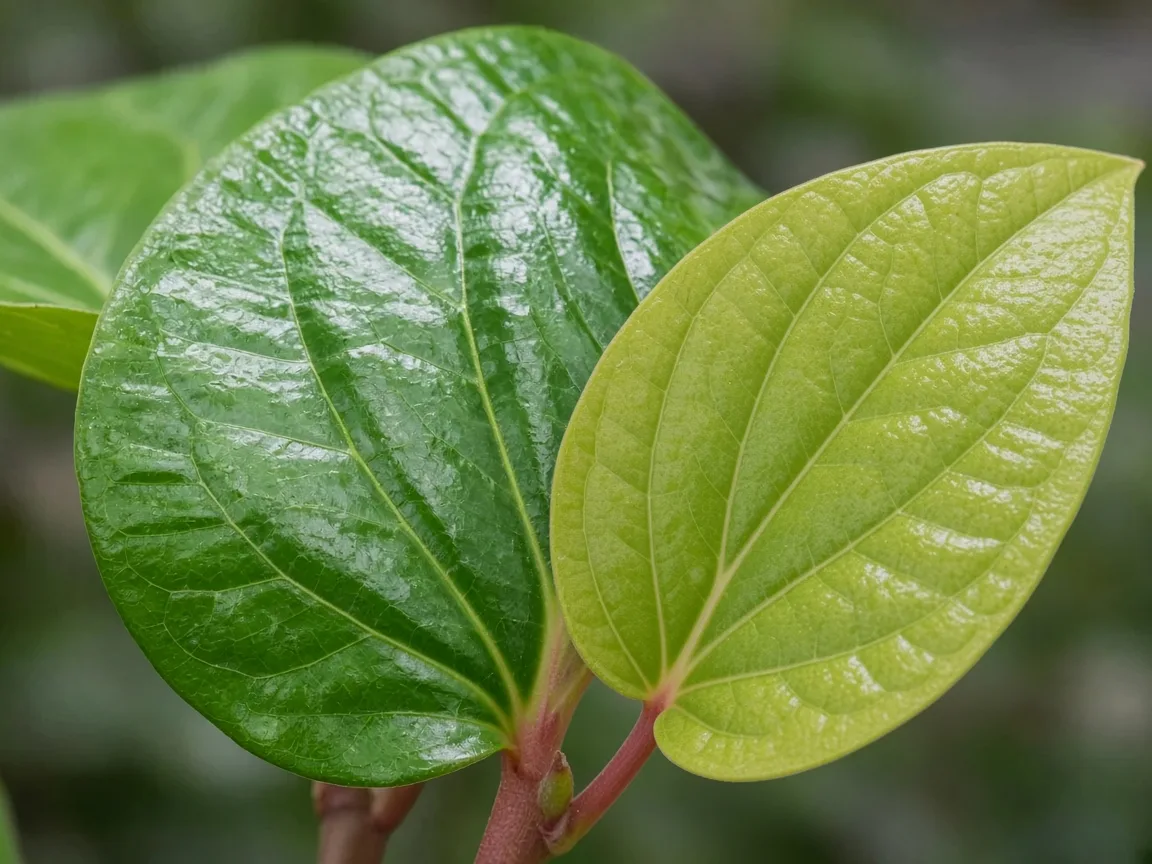
Washed-out lime-green betel leaf beside deeper green mature tissue on the same vine—compare blade colour before you change watering or feed.
Low-light paleness:
- Newest leaves at the tip emerge light green or yellow-green while older leaves below stay darker
- Internodes lengthen; blades stay smaller than lower mature hearts
- Vine sits far from windows, in a dark hallway, or under only weak overhead light
Nitrogen paleness:
- Lowest, oldest leaves turn evenly pale or yellow-green first
- Whole vine looks thin; new growth is small but not vividly veined
- Plant has not been fed through a full warm season in the same depleted mix
Iron / pH paleness:
- Youngest leaves show yellow between still-green veins (interveinal chlorosis)
- Often follows months of alkaline tap water on acid-leaning soil (target pH about 5.5–7.0)
- Roots still firm; soil moisture rhythm otherwise normal
Mite / pest paleness:
- Silvery or speckled dull patches on leaf undersides and new nodes
- Pale areas are not uniform wash—they follow stippling tracks
- Common in dry AC rooms where TNAU lists mites as routine betel pests
Wet-root stress paleness:
- Whole vine dulls before clear yellow; pot stays heavy
- Matches early overwatering when chronic wet mix damages roots
Sun-bleach paleness:
- Pale or whitish patches on leaves that faced harsh midday sun after a move from shade
- Differs from dim-room wash—often one-sided on outer balcony leaves
Reading pale flush on glossy paan leaves along the vine
Betel leaf is a shade-adapted tropical climber that still needs bright filtered light, not a dark corner. PFAF notes it grows in full shade or semi-shade and prefers moist soil; NParks tags it as semi-shade with lots of water. Field culture uses shade structures—indoors that translates to east windows, dappled balcony shade, or bright indirect light a few feet from south glass—not the dim spot where a snake plant would survive.
Because leaves are large and thin relative to stored water, the vine signals light shortage on new growth first. Owners often keep watering on schedule while the tip keeps pushing pale, small hearts; extra water does not deepen colour without more usable light. That pattern overlaps leggy growth—treat light before nitrogen unless lower old leaves are clearly fading first.
When upper-node leaves stay small and pale
Container vines that outgrow a short moss pole show a betel-specific pattern: lower leaves stay broad and greener while the top foot of vine produces thin, pale, smaller hearts. Field growers rejuvenate long runners; indoors you see a mild version when the shoot has nowhere useful to climb.
Signs this is height and light distribution, not root death:
- Lower stem leaves are normal size and gloss
- Roots are white and firm at the pot edge
- Soil dries on your normal watering rhythm
- Support ends above the active growing tip
Response: extend the trellis, train a runner downward, or shorten the vine per the pruning guide—then improve light on the new tip. Do not double fertilizer to “green up” a vine that is simply reaching past its pole.
Alkaline tap water and iron lockout on betel mix
TNAU states betelvine does not tolerate saline and alkaline conditions, and PFAF lists alkali soils as unsuitable. Container betel leaf on coco-compost mix can drift alkaline when hard tap water (often pH 7.5–8.5) is used every watering. Iron stays in the pot but becomes unavailable—new leaves bleach yellow between green veins while older leaves look relatively normal.
That matches the UConn distinction that immobile nutrients such as iron show on newest growth first, unlike mobile nitrogen fading lower leaves first. Switching to rainwater or filtered water for a month is a safer first test than dumping high-nitrogen feed, which worsens iron lockout. If veins stay green on yellow new blades, see iron deficiency for chelated iron and pH correction—not nitrogen deficiency.
Mite stippling versus true chlorosis on undersides
True chlorosis from light or nutrients shows even colour loss across the blade surface. Spider mites on betel leaf leave tiny pale specks and dull silvered patches on undersides, often at the newest node while the owner blames fertilizer.
Before any feed, flip the palest new leaf and check with bright light for moving dots or fine webbing. Mite damage can look like pale leaves from across the room; undersides tell the story. If stippling is present, follow spider mites—feeding a mite-infested vine adds stress without fixing colour.
How to confirm the cause
| Sign | Low light | Nitrogen | Iron / pH | Mites | Wet roots |
|---|---|---|---|---|---|
| Which leaves | New tip, small | Oldest first | Newest, veiny | New nodes, speckled | Whole vine dull |
| Underside | Clean | Clean | Clean | Stippling / web | Sometimes gnats |
| Pot weight | Normal | Normal | Normal | Normal | Heavy |
| Light exposure | Dim | OK | OK | Often dry air | Any |
| Soil at 2–5 cm | Normal | Normal | Normal | Normal | Wet / sour smell |
Work new leaf underside → old vs new colour pattern → finger test at 2–5 cm → light direction → last feed date. That order stops the common mistake of fertilizing a vine that needs brighter semi-shade—or soaking one with failing roots.
First fix for Betel Leaf
If new leaves are uniformly pale and the room is dim: move the support to bright filtered light (gentle morning sun or strong indirect) and wait two weeks before feeding. Read the light guide for semi-shade placement.
If oldest lower leaves fade evenly, light is adequate, and roots are firm: one half-strength balanced feed in the warm season after a normal watering—see fertilizer. Field betel culture uses substantial nitrogen split through the year per TNAU’s betelvine schedule; a starving container vine shows pale old leaves long before the tip fails.
If new leaves are yellow with green veins: switch the next several waterings to rainwater or filtered water; do not add high-nitrogen fertilizer until iron symptoms clear.
If undersides show stippling: isolate and rinse new growth; use the mite page, not fertilizer.
If the pot is heavy and soil stays wet: stop watering and address drainage—pale wash from overwatering often precedes yellow leaves.
Lookalikes to rule out on Betel Leaf
| What you see | Likely page |
|---|---|
| Uniform yellow, not just pale | Yellow leaves |
| Long stretch, tiny pale hearts | Not enough light or leggy growth |
| Green veins on yellow new leaves | Iron deficiency |
| Old leaves fade, tip still growing | Nitrogen deficiency |
| Silver specks on undersides | Spider mites |
| Brown crispy patches in sun | Brown leaves after scorch |
Pale vs yellow: pale means loss of green depth with tissue still mostly flexible; yellow means chlorophyll collapse is further along—often with wet soil or mobile nutrient loss. For mobile-nutrient basics, see nitrogen deficiency.
Step-by-step recovery
- Photograph one mature leaf and the newest tip leaf on the same stem for comparison after two weeks.
- Inspect undersides at the top node for mites or scale.
- Probe mix at 2–5 cm and note pot weight—wet-heavy rules out drought fixes.
- Review window placement against semi-shade needs; add support height if the tip outgrew the pole.
- Apply one correction (light move, water-quality change, single light feed, or pest rinse)—not all on the same day.
- Watch the next two emerging heart-shaped leaves for deeper green gloss.
What not to do
- Do not fertilize a pale vine in soggy soil—salts accumulate while roots cannot absorb nutrients (Missouri Botanical Garden notes wet-soil root damage).
- Do not move a shade-grown vine into harsh afternoon sun to “green it up”—that bleaches paan leaves and causes brown leaves.
- Do not assume pale means nitrogen when new leaves show green veins— that is an iron/pH pattern.
- Do not ignore mites because the top surface looks only “a bit dull.”
Recovery timeline
Low light: the next two new leaves after a light upgrade often show noticeably deeper green over 2–4 weeks in warm months. Old pale blades rarely darken fully.
Nitrogen: lower leaves may stay pale; judge new leaf size and colour at the tip over 3–6 weeks after one appropriate feed.
Iron / water quality: new growth can green within 4–8 weeks once alkaline tap water stops shifting pH.
Mites: new clean leaves in 2–3 weeks after control; stippled tissue stays dull.
Root stress: recovery takes weeks to months depending on collar damage—firm new nodes matter more than old blade colour.
How to prevent pale leaves
Match betel’s tropical rhythm: semi-shade bright light, even moisture via the 2–5 cm check, 60–80% humidity, fertile soil with good drainage, and light feeding in spring and summer when the vine is actively climbing. Use rainwater or filtered water if your tap is hard. Rejuvenate or extend supports before upper leaves stay permanently small and pale. Weekly node checks catch mites while they still look like pale flecks, not a whole-vine wash.
Related Betel Leaf guides
- Overview — paan vine biology and placement
- Problems hub — full symptom index
- Watering — 2–5 cm check and seasonal rhythm
- Light — filtered sun vs scorch
- Fertilizer — when to feed a fast leafy vine
Related tool
Use the Plant Problem Diagnosis Tool to narrow causes for pale leaves on this plant before changing multiple variables at once.