Brown Leaves on Betel Leaf: Humidity & Water Checks
Quick answer
Brown leaves on Betel Leaf (*Piper betle*) are dead tissue on glossy heart-shaped vine blades—usually low humidity crisping, underwatering, overwatering collar wilt, or direct sun scorch on a shade-loving climber. First step: probe the top 2–5 cm of mix and feel whether brown tissue is papery-dry or soft and limp.
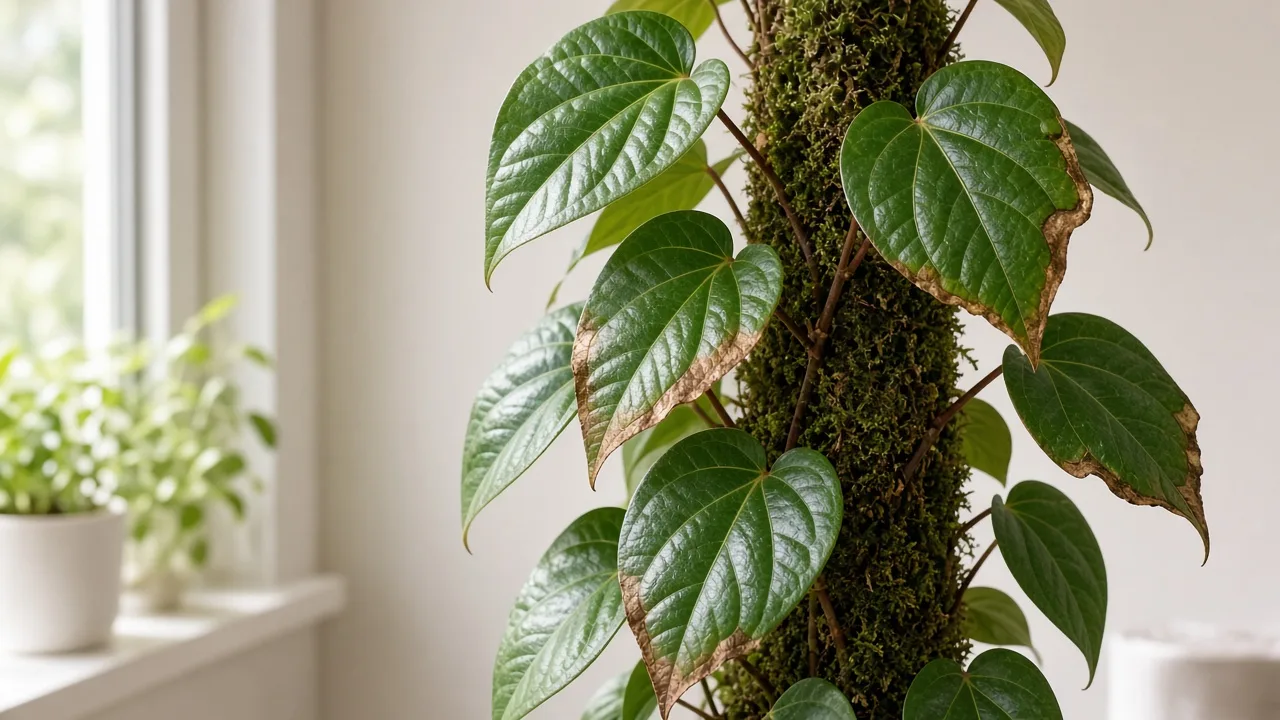
Brown Leaves on Betel Leaf: Causes, Checks & Fixes
This guide covers brown leaves on Betel Leaf. See also the general Brown Leaves guide, watering, and light pages for this plant.
Brown Leaves on Betel Leaf: Causes, Checks & Fixes
Quick answer
Brown leaves on Piper betle mean dead tissue on glossy, heart-shaped vine blades that normally stay deep green in humid shade. For how necrotic leaf tissue works in general, see our brown leaves guide. On Betel Leaf, the split is usually dry versus wet: crispy brown margins on a light pot point to drought or low humidity, while soft brown lowers on heavy wet mix point to collar wilt or root stress on a plant that hates waterlogging.
First step: stick your finger 2–5 cm into the mix, lift the pot, and feel whether brown tissue is papery-dry or soft and limp. That single check routes you before you repot, fertilize, or cut the whole vine back.
When to use this page vs other Betel Leaf guides
| Pattern you see | Read next |
|---|---|
| Brown limited to tips and edges only | Brown tips |
| Heavy wet pot, yellow lowers, sour smell | Overwatering |
| Light dry pot, limp dull leaves | Underwatering |
| Crispy margins in a dry heated room | Low humidity |
| Tan patches on window-facing leaves | Direct sun scorch — see light guide |
| Brown with stippling and fine webbing | Spider mites |
| Yellow-green soft leaves before brown | Yellow leaves |
This page covers whole-blade or large-section browning on betel vine foliage. Tip-only crisping often has a separate humidity or drought path.
What brown leaves look like on Betel Leaf
Betel Leaf is a fast-climbing Piperaceae vine with thick, glossy, heart-shaped leaves on reddish stems. Brown damage follows the leaf shape rather than appearing as random circles. Use this pattern guide before treating:
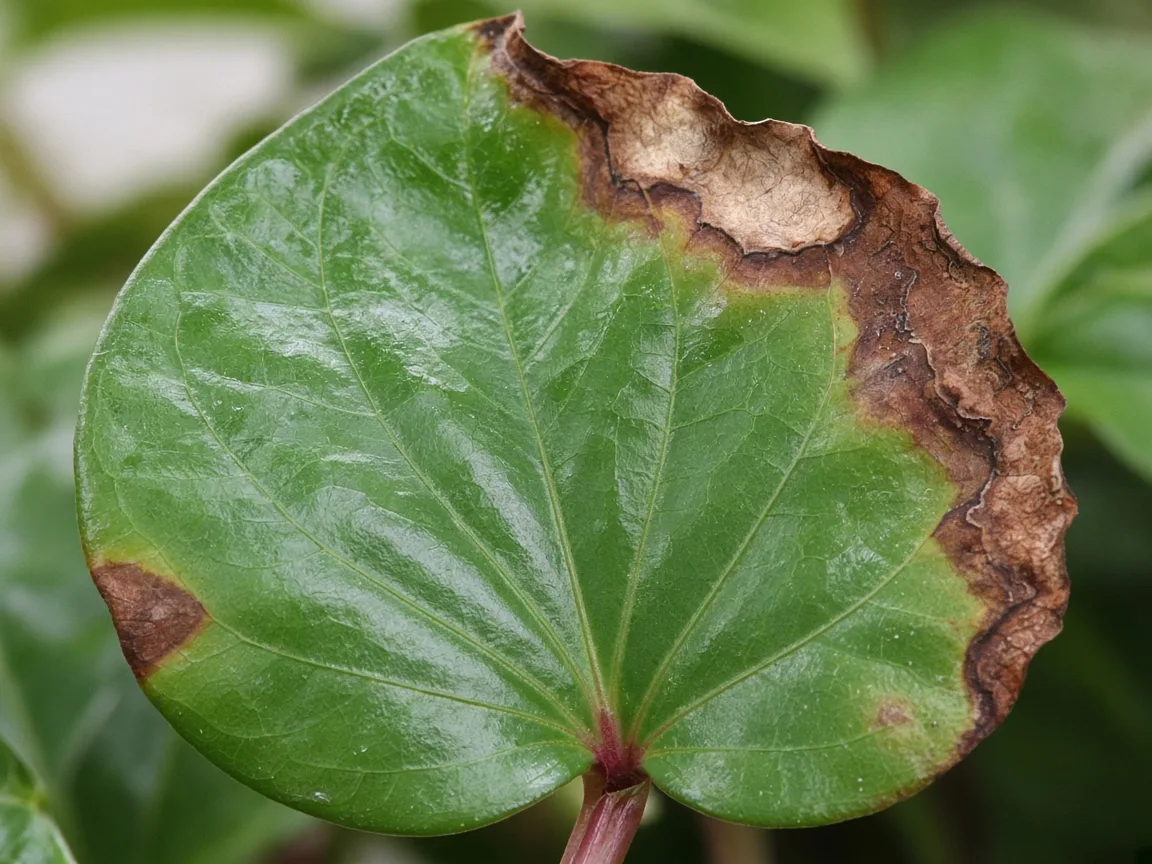
Crispy brown necrosis along the margin of a glossy betel heart leaf — pair with the 2–5 cm finger test to separate dry-air burn from collar wilt.
Crispy brown margins and tips on a light, dry pot
- Tissue feels papery when you bend the blade tip
- Pot lifts easily; top 2–5 cm of mix is dusty dry
- Often hits outer leaves on a heating vent, air-conditioned draft, or a vine that outgrew its watering schedule
- Common when indoor humidity drops below what this humid tropical vine prefers
Soft brown lower leaves on wet, heavy mix
- Tissue feels limp, not crunchy; petiole may weaken at the collar
- Pot stays cool and heavy days after watering
- Phytophthora wilt is a documented disease on betel vine; collar softening is urgent
- Classic when owners keep saucers full or water on a calendar in cool dim weather
Tan papery patches on the window-facing side of one leaf
- Only blades touching hot afternoon glass show damage
- Betel pepper prefers shade and wind protection even though it tolerates bright filtered indoor light
- Unaffected leaves on the shaded side stay glossy green
Brown speckles that spread into larger dead patches
- Small dark lesions enlarge and merge on humid, crowded foliage
- Anthracnose (Theechal) is listed on betel vine; some cultivars are more susceptible
- Distinct from uniform margin crisping from dry air
Single fully brown leaf at an old node with clean tip growth
- Often normal senescence as the vine extends new nodes upward
- Not urgent if the newest heart leaves at the growing tip are firm and glossy
Always check the newest leaves at the vine tip and the collar at soil line. Brown on fresh flush or soft tissue at the base is urgent—one aging leaf low on the stem is not.
The 2–5 cm finger test on a climbing vine
Betel Leaf is watered when the top 2–5 cm of mix feels dry—not on a fixed calendar. On a moss pole or trellis, upper leaves dry out faster than the root zone, so owners often see tip brown while the pot is still moist, or they overwater because one wilted leaf looks thirsty.
| Brown texture | Top 2–5 cm moisture | Pot weight | Most likely cause |
|---|---|---|---|
| Crispy, papery | Dry | Light | Underwatering or low humidity |
| Soft, limp | Wet | Heavy | Overwatering / Phytophthora collar stress |
| Crispy tips, green base | Surface dry, core wet | Medium-heavy | Poor drainage with surface crust; roots still suffocating |
| Tan papery, one-sided | Any | Any | Direct sun scorch on shade-grown foliage |
| Bronzed stippling | Any | Any | Spider mites in dry heated air |
Run the finger test at several points around the pot rim, not only where the vine enters the soil. Climbing betel in a cachepot can hide standing water while upper leaves crisp from dry room air.
Why the moss-pole dry-out trap browns betel vines
Commercial betel culture trains vines on live or bamboo standards with regular moisture at the root zone. Indoor growers replicate that with moss poles—but the pole dries faster than the pot.
- Owner mounts Betel Leaf on a moss pole in bright filtered light.
- Upper nodes and aerial roots lose humidity between misting sessions.
- Tip margins crisp brown while the pot still feels slightly damp at 2–5 cm.
- Owner adds more water to “help” the brown tips, saturating the root zone.
- Lower leaves turn soft brown as chronic wet mix reduces oxygen at roots.
Fix the pole and the pot separately. Mist or dampen the support for aerial roots without watering a mix that is already wet at depth. If tips are crispy and the 2–5 cm probe reads dry, soak until drainage runs free—then let the upper layer dry before the next drink per the watering guide.
Upper-leaf senescence when the vine outgrows its support
In field culture, betel vines are lowered and rejuvenated when they reach about 3 m because upper leaves lose size and quality. In a pot, the same biology shows up as older heart leaves browning near nodes far below the active growing tip while new glossy blades emerge at the top.
That pattern is normal aging—not Phytophthora—when:
- Only leaves on woody lower internodes brown
- The collar is firm and smells like soil, not sour
- New tip growth is glossy and full-sized
Trim fully brown blades for airflow. If the vine is leggy, propagate tip cuttings per the propagation guide rather than assuming the whole plant is dying.
Why Betel Leaf gets brown leaves
Low humidity and dry indoor air. Piper betle evolved in humid tropical climates with steady soil moisture. Heated apartments and air-conditioned rooms pull water from thin leaf margins faster than the vine replaces it. Margins and tips brown crispy while the petiole still feels firm. See low humidity and brown tips.
Underwatering between hot spells. The vine wilts, dulls, then browns crispy edges when the top 2–5 cm stays dry too long—especially in small pots that dry in a day during summer. Top Tropicals notes betel prefers warm humid conditions and only tolerates brief drought.
Overwatering and Phytophthora collar wilt. Betel vine does not tolerate waterlogged, saline, or alkaline soils. Chronically wet mix yellows lowers, then softens them to brown. Collar tissue at the soil line may wilt before the whole vine collapses. See overwatering and root rot.
Direct sun scorch. Glossy heart leaves scorch to tan-brown patches when harsh midday sun hits shade-adapted foliage. East balconies and sheer-curtained windows suit betel better than south glass.
Spider mite bronzing. Dry air plus heat stipples new tender leaves until tissue bronzes and feels sandy on the underside. Webbing at nodes confirms mites before you soak the pot.
Anthracnose leaf spots. Humid crowded growth can show enlarging brown lesions. Field guides list anthracnose on betel; improve airflow and isolate affected vines.
Natural lower-leaf drop on an extending vine. One browned heart leaf at an old node while tip growth stays clean is senescence on a fast climber—not a reason to repot.
How to confirm the cause
Work through these checks in order:
- 2–5 cm finger test. Dry with crispy brown = drought or humidity path. Wet with soft brown = hold water and inspect collar.
- Pot weight. Lift after a known good soak once to learn “heavy.” A heavy pot ten days later in a cool room means slow dry-down, not thirst.
- Tip growth inspection. Firm glossy new hearts at the vine tip = plant still functioning. Brown on the newest unfurling leaf = act today.
- Humidity read. Below about 50% with crispy margins points to air moisture, not roots alone.
- Window side. Tan one-sided patches on glass-facing blades = scorch, not rot.
- Collar feel and smell. Soft mushy tissue or sour odor at soil line = escalate to root rot protocol.
- Underside scan. Fine webbing or stippling on new leaves = mites before you assume moisture failure.
If more than one cause fits, fix waterlogging first when the mix is wet—collar wilt spreads faster than crispy tips recover.
First fix for Betel Leaf
Match one correction to what the finger test and brown texture tell you:
- Top 2–5 cm dry + crispy brown: Water thoroughly until drainage runs free, then empty the saucer within 30 minutes. Raise humidity around the vine or dampen the moss pole—not the foliage on a stagnant evening.
- Top 2–5 cm wet + soft brown: Stop watering. Let the upper layer dry before the next soak. Improve airflow at the collar. Do not fertilize, repot, or hard-prune the same day.
Only after that first correction:
- If margins crisp in a dry room, group plants or use a humidity tray near the base—see low humidity.
- If tan patches face the window, move to bright filtered light per the light guide.
- If webbing is present, rinse leaf undersides and see spider mites.
Betel vine requires regular soil moisture but fails in waterlogged conditions—even shade tolerance does not forgive a saturated root zone.
Step-by-step recovery
For drought or humidity brown (dry 2–5 cm, crispy tissue)
- Soak until water runs from drainage holes; discard saucer water.
- Wait until the top 2–5 cm dry before the next drink—track depth, not calendar days.
- Mist the moss pole or raise ambient humidity; avoid wetting hearts overnight in cool air.
- Remove fully brown blades once new tip growth looks stable.
For overwatering brown (wet 2–5 cm, soft lowers)
- Stop all irrigation until the probe layer reads dry.
- Confirm drainage holes are open; remove standing water from cachepots.
- If lowers keep browning after two dry weeks, gently inspect the collar—trim only mushy tissue, repot into fresh airy mix if roots are sour. Full protocol: root rot.
- Resume watering only when the top 2–5 cm dry—often less often in cool monsoon or winter rooms.
For sun scorch (tan window-facing patches)
- Move back from glass or add sheer curtain.
- Remove scorched leaves if more than half the blade is dead.
- Do not compensate with extra water.
For mite bronzing (stippling before brown)
- Rinse undersides of new leaves with lukewarm water.
- Isolate from other humidity-loving plants until populations drop.
- See spider mites before applying oils on heat-stressed foliage.
Recovery timeline
| Severity | What improvement looks like | Typical timeframe |
|---|---|---|
| Mild humidity crisping | New heart leaves unfurl glossy without margin burn | 1–2 weeks after humidity and watering align |
| Drought brown | Tips stop spreading; vine extends new firm nodes | 1–2 soak cycles after proper dry-down timing |
| Early overwatering | Soft brown stops spreading; lowers may drop but collar stays firm | 2–4 weeks after dry-down |
| Collar Phytophthora stress | New growth returns only after collar dries and affected tissue is removed | 4–8 weeks; some lower blades lost permanently |
Brown tissue never re-greens. Judge success by glossy new hearts at the vine tip, firm collar tissue, stable pot weight between waterings, and no further spread to the newest flush.
Lookalike symptoms
| What you might think | What it actually is | Quick tell |
|---|---|---|
| Whole vine dying | One senescent lower leaf on an old node | New tip growth is glossy and full-sized |
| Fungal leaf spot | Anthracnose on humid crowded vine | Enlarging lesions with defined edges, not uniform margin crisping |
| Yellow leaves turning brown | Overwatering progression | Yellow-green soft lowers precede brown on wet mix |
| Wilting with wet soil | Root uptake failure | Limp hearts on heavy pot—not thirst |
| Black spots | Bacterial or fungal spot | Dark spots with halos, not even margin burn |
Mistakes to avoid
- Watering on a calendar in cool weather. Betel dry-down stretches from two days in summer heat to a week or more in winter—use the 2–5 cm test.
- Misting leaves to fix brown tips while the pot stays wet. Wet hearts in stagnant air invite disease; fix root moisture and room humidity separately.
- Fertilizing to “green up” brown leaves. Feed only after moisture, light, and collar health are stable during active warm-season growth per the fertilizer guide.
- Repotting on day one. Unnecessary repotting shocks roots unless you confirm mush, sour smell, or failed dry-down.
- Placing Betel Leaf in direct afternoon sun to “fix” slow growth. Filtered brightness helps; hot glass scorches shade foliage.
- Cutting the whole vine because lower nodes browned naturally while the tip is healthy.
How to prevent brown leaves next time
- Water when the top 2–5 cm of mix dries—see the watering guide for finger depth and pot weight cues.
- Target 60–80% humidity for glossy heart leaves without crispy margins.
- Grow on a moist moss pole or trellis so aerial roots do not dry between nodes.
- Place in bright filtered light or partial shade—never harsh midday sun on south glass.
- Empty saucers within 30 minutes after every soak.
- In winter and cool monsoon spells, reduce water frequency when growth slows and mix stays wet longer.
- Inspect new tip flush weekly in dry heated air for early mite stippling.
When to worry
Treat as urgent when:
- Brown appears on the newest tip leaves within days
- Collar tissue softens at soil line or the vine base collapses
- Sour smell rises when you lift the pot
- Multiple hearts brown in one week after a single overwater
- Mushy roots or stem are visible on a gentle probe
Those signs point to advancing root rot or Phytophthora collar wilt—dry-down alone may not be enough. A single aging lower leaf browning while tip growth is clean is not urgent.
Related Betel Leaf guides
- Overview — placement, support, and first-month rhythm
- Watering — 2–5 cm finger test and seasonal timing
- Light — filtered brightness without scorch
- Brown tips — margin-only dry-air damage
- Low humidity — humidity targets for Piper vines
- Overwatering — dry-down protocol for wet heavy pots
- Problems hub — all Betel Leaf symptom guides
Conclusion
Brown Betel Leaf blades are humidity, watering, and light signals on glossy shade-grown vine foliage, not a generic houseplant mystery. The 2–5 cm finger test, pot weight, and crispy-versus-soft texture route you to the right first fix faster than repotting or fertilizing on guesswork. Necrotic tissue will not re-green—watch for glossy new hearts at the vine tip, a firm collar, and stable dry-down rhythm matched to your room’s heat and humidity.
Related tool
Use the Plant Problem Diagnosis Tool to narrow causes for brown leaves on this plant before changing multiple variables at once.