Chikoo Propagation: Seeds, Grafting & Air Layers
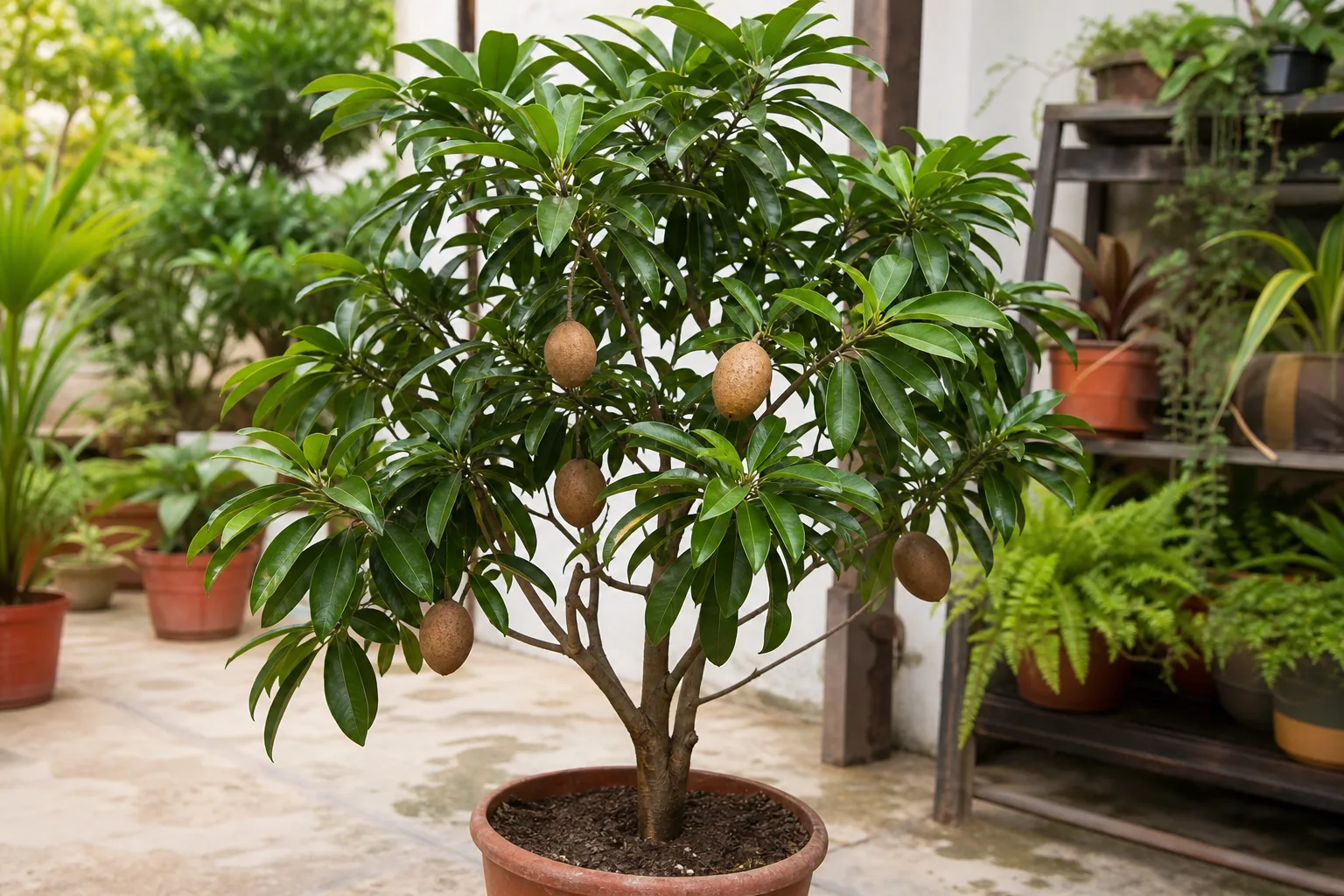
Chikoo Propagation: Seeds, Grafting & Air Layers
Chikoo Propagation: Seeds, Grafting & Air Layers
Chikoo (Manilkara zapota), also sold as sapota, chiku, or sapodilla, is a slow tropical evergreen fruit tree—not a windowsill cutting plant. Propagation succeeds when you match the method to your goal: a true-to-type fruiting cultivar, cheap seedling rootstocks, or a patient experiment from fruit seed. UF/IFAS and Indian horticulture programmes both treat grafting as the practical route for home plantings that should fruit predictably (UF/IFAS Extension).
This guide covers seed, veneer and cleft grafts, approach grafting on khirni (Manilkara hexandra), soft-wood grafts, and what air layering can and cannot do for Manilkara zapota. Pair it with the Chikoo watering and Chikoo soil guides once new plants leave the nursery pot.
Choose your goal before you cut or sow
Buy or make a graft when you want named fruit quality (Kalipatti, Cricket Ball, PKM types, and other local selections) and an earlier first crop. UF/IFAS notes that grafted trees may begin bearing in about the second to fourth year after planting, while seedlings usually need six to seven years or more (UF/IFAS Extension). Plants For A Future similarly reports grafted plants fruiting in about two to three years from planting out versus five to eight years for seedlings (Plants For A Future).
Sow seed when you need rootstocks, many plants cheaply, or you accept genetic variation. Seeds are useful for selection work, but UF/IFAS is explicit that they should not be used for typical home fruit plantings because of long juvenility and seedling variability (UF/IFAS Extension).
Air-layer only with eyes open. Florida extension reports marcottage has not been an effective method for sapodilla (UF/IFAS Extension), while Tamil Nadu Agricultural University describes air layering as a practised technique that produces plants with shallow root systems that handle wind and drought poorly (TNAU sapota propagation). Treat air layering as optional and secondary for Chikoo, not the default clone method.
When to use this page vs other Chikoo guides
Use this page when you are starting a new Chikoo plant—seed cleaning, grafting choices, nursery aftercare, and early establishment. Switch guides when the question is ongoing culture of an existing tree.
- Chikoo overview — species identity, climate fit, and the full care map.
- Chikoo light — full-sun placement once a graft or seedling leaves shade.
- Chikoo watering — age-based irrigation so young roots stay moist without staying swampy.
- Chikoo soil — free-draining mixes that protect grafts and seedlings.
- Chikoo fertilizer — light feeding after new growth resumes, not during graft take.
- Chikoo repotting — container moves without stacking root shock onto a fresh graft.
- Chikoo pruning — framework and height control after the plant is established.
Why grafted Chikoo beats seed for fruit
A Chikoo seed is sexual offspring, not a clone of the fruit you enjoyed. Seedling trees reshuffle traits for fruit size, sweetness, seediness, and bearing habit. That is why nurseries graft scions from proven mother trees onto seedling rootstocks, and why USDA-ARS rootstock trials study grafted ‘Prolific’ scions rather than seed-only orchards (USDA ARS).
Grafting also shortens the wait. The fruiting-age ranges above are the practical reason most terrace and orchard growers in India buy approach-grafted sapota on Manilkara hexandra (pala/khirni/rayan) rather than raising every tree from kitchen fruit (TNAU Sapota). Seed remains valuable for rootstocks and for growers who enjoy selection—not for duplicating a favourite cultivar name.
Some cultivars are self-incompatible or set better with cross-pollination, so an isolated seedling or single grafted tree may flower well and still crop poorly without another compatible pollinizer nearby (UF/IFAS Extension). Propagation gets you a plant; pollination planning affects later yield.
Growing Chikoo from seed
Grow seed when you want rootstocks for grafting, a low-cost experiment, or genetic diversity. Do not expect the seedling to match the parent fruit in timing or quality.
Cleaning and sowing fresh seed
Use fully ripe fruit. Remove the dark, flattened seeds from the pulp, rinse thoroughly, and sow while fresh—Chikoo seed is not a long-storage houseplant seed. Plants For A Future records germination after about 30 days without special pretreatment and success rates up to about 80% under suitable conditions (Plants For A Future).
Sow in a free-draining nursery mix similar to the blend in the Chikoo soil guide: airy potting mix with coarse sand or grit so the seed coat never sits in stagnant water. Plant shallowly, keep the surface evenly moist, and give bright light with warmth. Avoid sealed plastic bags that cook seed in midday sun.
Seeds contain hydrocyanic acid and should be kept away from pets and children during cleaning; remove them from fruit before eating the flesh (Plants For A Future). Wear gloves if latex from fruit or stems irritates your skin.
Germination timeline and early care
Expect sprouts on a weeks-to-month scale, not overnight. Once seedlings emerge, give strong light so stems stay stout, and water only when the top of the mix begins to dry. Crowded, cool, constantly wet trays invite damping-off fungi such as Pythium and Rhizoctonia; NC State Extension stresses clean media, sanitation, and avoiding prolonged wet, low-light conditions (NC State Extension).
Grow seedlings on for rootstock size (roughly pencil thickness at grafting height) before veneer, cleft, or soft-wood work. Label the seed source and sowing date. Do not sell or gift an unverified seedling under a cultivar name.
Grafting methods that work on Manilkara zapota
Grafting is the method UF/IFAS recommends for home plantings and the method TNAU features for commercial sapota. Both systems use seedling rootstocks and scion wood from superior trees; the preferred graft style differs by region and nursery habit.
Side veneer, cleft, and chip budding
UF/IFAS lists side veneer and cleft grafting onto seedling sapodilla rootstock as the most common methods, with chip budding also usable. Choose scions or bud sticks from young terminal shoots, cover grafted scions completely with grafting tape, and time the work for late summer into early fall in Florida’s climate (UF/IFAS Extension). The same bulletin notes that superior varieties are typically veneer-grafted rather than left as seed-grown trees (UF/IFAS ST405).
Align living cambium carefully. The Royal Horticultural Society’s grafting guidance emphasises matching cambial surfaces and securing the union so it cannot dry or shift while callus forms (RHS grafting). For Chikoo, expect milky chicle latex from cuts on stems and bark; wipe blades if sap gums the knife, and keep unions clean and snug.
Top-working an undesirable mature tree is possible by cutting back to about a 1 m stump, whitewashing the stump, then veneer-grafting several new shoots once they reach about 13 mm diameter (UF/IFAS Extension). That is an advanced landscape job, not a first home attempt.
Approach grafting on khirni rootstock
In India, TNAU recommends propagating sapota by approach grafting on Manilkara hexandra (pala/khirni/rayan) because of that rootstock’s strong root system (TNAU Sapota). Their propagation notes call for 2–3-year-old khirni seedlings in bags, about 45–60 cm tall and ~1 cm thick at grafting time, preferably worked in February–March (often more economical than rainy-season grafts) or at the start of the rains (TNAU sapota propagation).
Bring the potted rootstock next to a pencil-thick scion branch on a vigorous 10–15-year mother tree. Expose matching cambial strips about 5–6 cm long on stock and scion, bind them firmly with polythene so no gap remains, and keep the bagged stock watered. Union typically takes about 2–2½ months, but do not separate the scion for at least 3–4 months; detach gradually with successive cuts below the union over about a month (TNAU sapota propagation).
When planting a finished graft, TNAU advises keeping the graft joint at least 15 cm above soil level and staking so wind cannot snap the union (TNAU Sapota).
Soft-wood grafting for nursery work
TNAU describes soft-wood grafting as similar to cleft or wedge grafting: a terminal non-flowering scion of 3–4 months’ maturity, defoliated on the mother tree about seven days beforehand (petiole stubs left) so buds swell before the cut. Insert a wedge scion into a 4–6 cm cleft on rayan/khirni rootstock and tie firmly; vigorous sprouting marks a successful union (TNAU sapota propagation). Soft-wood grafting suits growers who already maintain seedling rootstocks and can hold grafts in shade before field planting.
Air layering: useful in some regions, weak in others
Do not treat Chikoo like guava or fig, where air layering is often the friendliest home clone method. UF/IFAS states that marcottage has not been an effective propagation method for sapodilla (UF/IFAS Extension). That is a strong Florida-home-landscape signal against relying on air layers.
Where air layering is still taught for sapota, TNAU places it in June on 1–2-year-old pencil-thick shoots 45–60 cm long: remove a ~3 cm bark ring, apply rooting hormone paste where local practice allows, wrap moist sphagnum in polythene, and wait until light-brown roots show—often within about four months—then detach gradually and pot under shade. Those layered plants are described as susceptible to strong winds and poor at withstanding drought because roots stay shallow (TNAU sapota propagation). Plants For A Future also lists air-layering of suitably leafy 2-year branches among propagation options (Plants For A Future).
If you try an air layer anyway, treat success as provisional until the plant survives a dry windy spell in a free-draining pot. Prefer a nursery graft when fruit quality and storm resilience matter more than experimenting.
Timing for India and warm tropical gardens
Work when wood is active and weather is warm without extreme drought stress on the mother tree. Practical windows:
- India / monsoon tropics: TNAU favours February–March approach grafts for shorter nursery time and higher reported success, with rainy-season grafting also used; air-layer notes cluster around June; field planting of grafts is commonly June–December (TNAU sapota propagation; TNAU Sapota).
- Florida / similar warm-subtropical: UF/IFAS prefers late summer into early fall for veneer and cleft work (UF/IFAS Extension).
- Seed: sow fresh seed in the warm season when you can keep media moist and bright without cold, stagnant flats.
Avoid grafting during peak heat waves that desiccate uncovered unions, or during cold snaps that stall callus. Protect young grafts from frost; the species is a tropical/warm-subtropical tree, and young growth is tender.
Aftercare for new grafts and seedlings
For the first weeks, prioritize union or root establishment over fertiliser and hard pruning. Keep the graft tape intact until the scion pushes firm new growth, then loosen before girdling begins. Shade fresh grafts from harsh midday sun for a short period, then move toward the full-sun habit described in the Chikoo light guide.
Water like a young tree, not a mature drought-tolerant specimen. UF/IFAS recommends watering newly planted trees at planting, every other day for about a week, then one to two times weekly for the first couple of months, with weekly watering in long dry spells during the first years (UF/IFAS Extension). Use the Chikoo watering guide for age-based checks; never leave a fresh graft in a saucer of standing water.
Pot into free-draining mix and a container only one size up from the root ball. Stake so wind cannot twist the graft union. Remove rootstock sprouts below the union promptly so the scion is not outcompeted—TNAU also flags rootstock sprouts as a productivity issue after planting (TNAU Sapota). Delay heavy feeding until active scion growth is obvious; then follow the light young-tree approach in the Chikoo fertilizer guide.
Common propagation failures and first fixes
Graft dries and dies. Cause is usually poor cambium contact, delayed wrapping, or hot dry wind on an exposed union. Recut clean wood, wrap fully, and shade briefly while callus forms.
Union green but scion never sprouts. Tape may be too tight, scion wood may have been flower-bearing or dehydrated, or the stock may be too weak. Soft-wood protocols that pre-defoliate scions exist specifically to swell buds before grafting (TNAU sapota propagation).
Seedlings collapse overnight. Suspect damping-off in wet, poorly aerated media; improve drainage, reduce watering frequency, increase light and airflow, and discard badly infected patches rather than crowding survivors (NC State Extension).
Layered plant tips over in wind or wilts in drought. That matches TNAU’s warning about shallow layered root systems—shift to a sheltered site, stake, and avoid letting the pot bake dry (TNAU sapota propagation).
Yellowing after planting while mix stays wet. Young Chikoo declines in chronically saturated soil even though mature trees tolerate brief wet spells; fix drainage before adding fertiliser (UF/IFAS Extension).
Latex, seeds, and handling precautions
Every pruning cut and graft wound on Chikoo can bleed milky latex—the historic source of chicle (UF/IFAS ST405). Wear gloves if sap irritates your skin, and keep blades wipeable. Ripe flesh is a common food, but seeds contain hydrocyanic acid and older leaves contain a poisonous alkaloid; keep seeds, older foliage, and latex away from pets and children during propagation work (Plants For A Future). This is handling guidance, not medical or veterinary advice.
Related Chikoo guides
- Chikoo overview — whole-plant care map and climate fit.
- Chikoo light — full sun for strong post-graft growth.
- Chikoo watering — young-tree moisture without overwatering decline.
- Chikoo soil — drainage-first mixes for pots and pits.
- Chikoo fertilizer — when to start feeding after take.
- Chikoo repotting — moving container plants without extra shock.
- Chikoo pruning — size control once the framework is set.
Conclusion
Propagate Chikoo by deciding first whether you need a clone for fruit or a seedling for rootstock and patience. Grafting—veneer or cleft on sapodilla seedlings in Florida-style programmes, approach or soft-wood grafts on khirni in Indian practice—is the reliable path to earlier, more predictable crops. Seed is easy and useful, but slow and variable. Air layering is regionally inconsistent and often leaves a shallow-rooted tree. Keep unions clean, mixes free-draining, and young plants watered like establishing trees—then move them into the light, water, and soil routines in the rest of the Chikoo cluster.