Chikoo Soil Guide: Mix, Drainage & pH for Sapodilla
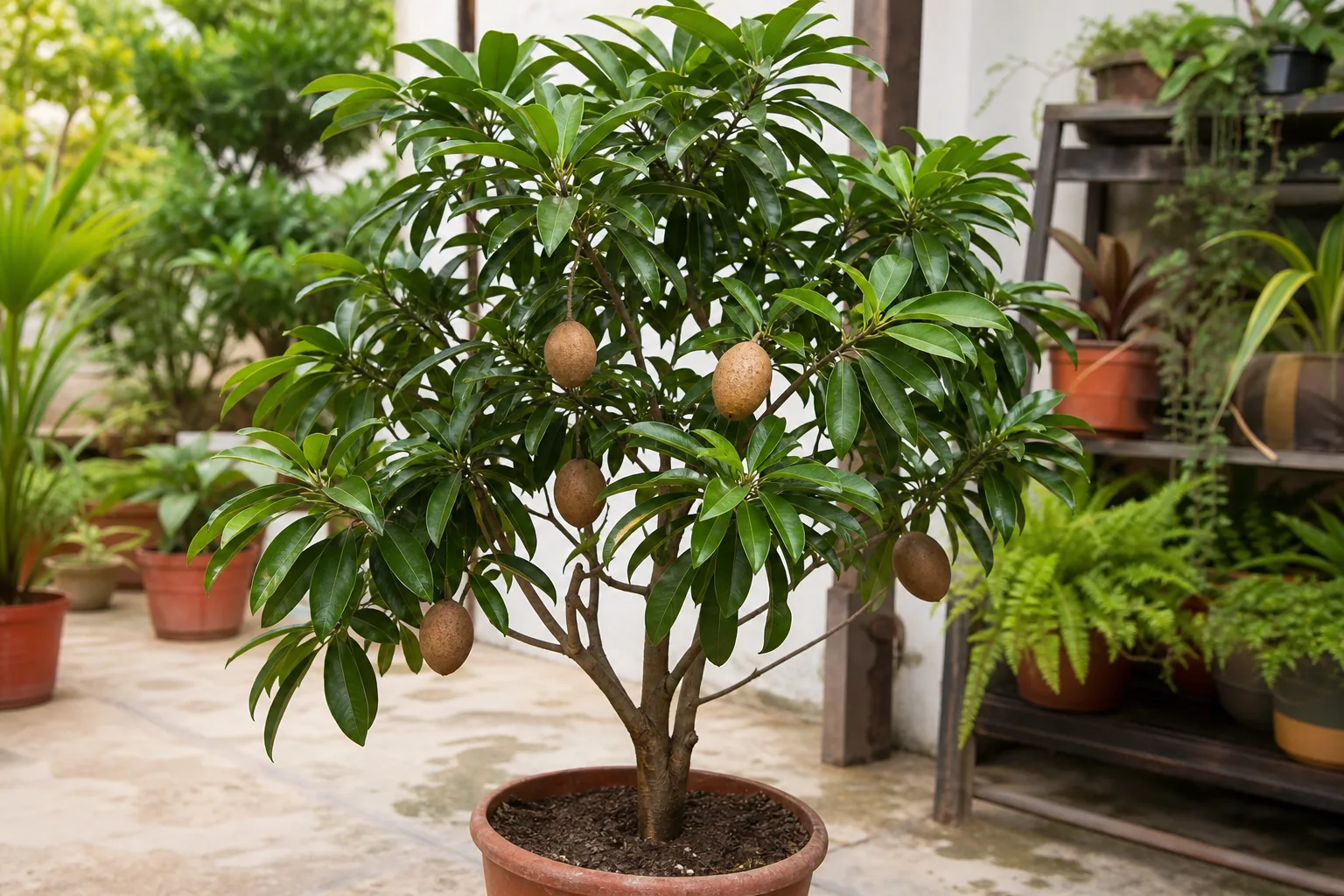
Chikoo Soil Guide: Mix, Drainage & pH for Sapodilla
Chikoo Soil Guide: Mix, Drainage & pH for Sapodilla
Chikoo (Manilkara zapota), also called sapodilla or chiku, is a long-lived tropical evergreen fruit tree, not a windowsill herb. Its roots need a deep zone that holds some moisture for hot days yet restores air after irrigation or monsoon rain. Get that physical structure right, and Chikoo watering becomes predictable. Get it wrong, and even careful schedules cannot save a chronically wet root ball.
This guide covers the soil Chikoo actually tolerates, a practical container recipe, in-ground options for sandy and calcareous sites, monsoon drainage tactics for India and similar climates, mulch placement, warning signs, and when to refresh the mix.
The short answer: what soil does Chikoo need?
The best Chikoo soil is deep, light-textured, and freely draining. UF/IFAS Extension states that sapodillas are well adapted to a wide range of soils but grow best in well-drained, light soils, including the rocky, highly calcareous ground of south Florida. Missouri Botanical Garden culture notes likewise call for moist, fertile, humus-rich, well-drained soils with good drought tolerance once plants are established.
In a container, do not fill the pot with straight garden clay or fine compost. A practical starting blend is 50% quality potting mix, 25% coarse sand or horticultural grit, and 25% finished compost or fine bark. Treat those ratios as a testable recipe: push the coarse fraction up if the pot stays wet through humid weather, and keep a little more organic matter if an exposed terrace dries to dust between soaks.
Why Chikoo soil must drain freely
Drainage is the movement of excess water out of the root zone, not a dry-looking surface. Fine peat, cocopeat, or clay collapse the larger pores that refill with air after watering. When that happens in a Chikoo pot, the top few centimetres can feel ready for water while the lower root ball remains saturated—especially under monsoon rain or a timed lawn sprinkler.
UF/IFAS is explicit that mature sapodilla trees do not need frequent watering, and over-watering may cause trees to decline. The same bulletin warns that lawn sprinklers on a timer can keep roots wet too often and cause root-related decline. Soil choice and irrigation schedule are one system: a free-draining mix only helps if water can leave the pot or planting hole.
How Manilkara zapota roots respond to wet ground
Sapodilla shows moderate tolerance of brief wet spells, but prolonged flooding reduces growth and crop yields. That nuance matters. A short monsoon pulse on well-structured ground is different from a low spot that stays soggy for weeks, or a closed saucer under a terrace pot.
Young trees are the opposite problem on dry, compacted mixes: UF/IFAS notes young sapodillas can defoliate or decline from lack of water during drought. The soil job is therefore balance—enough water-holding capacity for establishment, without locking mature roots in permanent saturation. Pair mix structure with the age-based cues in the watering guide rather than watering every Chikoo on the same calendar.
Calcareous sand versus heavy clay
Chikoo’s native range in southern Mexico and Central America includes limestone and calcareous marl. Purdue’s Morton tropical fruit profile notes that the tree flourishes in deep, loose organic soil or on light clay, sand, or lateritic gravel, but good drainage is essential and fruiting suffers in low, wet locations. Plants For A Future records that sapodilla grows well in calcareous soils and dislikes heavy clay soils, while still listing light, medium, and heavy textures when drainage is adequate.
For Indian home growers, that translates cleanly: coastal sandy loams and raised, open beds are friendly; sticky black cotton clay in a depression is a poor permanent site unless you correct drainage across the plot. Amending only the planting hole with sand inside dense clay often creates a bathtub—water collects in the amended pocket instead of moving through the landscape.
Chikoo soil pH: a workable range, not a single number
Plants For A Future prefers a pH near 6–7, with tolerance roughly 5.5–8.5. UF/IFAS adds that sapodilla rarely develops iron deficiency even on rocky, high-pH Miami-Dade soils, which is useful reassurance for alkaline garden sites and limestone-adjacent coastal plantings.
Test before forcing the soil with lime or sulphur. If leaves show interveinal yellowing, check drainage and root health first, then consider iron forms suited to acid versus alkaline soils as UF/IFAS outlines for sapodilla nutrition. Feeding decisions belong in the Chikoo fertilizer guide; this page only needs you to keep pH inside a broad, workable band so roots can function.
Best Chikoo potting mix for containers
Container Chikoo must do three jobs: anchor a top-heavy young tree, hold an even moisture reserve, and drain fast enough to restore air after a soak. Ordinary field soil alone usually fails in pots because particles settle into a dense mass. Pure cocopeat or peat can fail the other way by staying wet through humid weeks and shrinking as it ages.
Choose ingredients by function. Quality potting mix supplies fine water-holding material; coarse sand, grit, perlite, or pumice keeps pores open; finished compost or fine bark adds structure without turning the pot into a sponge. Keep the whole volume uniform from top to bottom—do not stack a thick stone “drainage layer” under finer mix.
A reliable starting recipe
For a grafted Chikoo in a large outdoor container, begin with:
- 50% quality potting mix (consistent bagged mix, not raw garden clay)
- 25% coarse sand or horticultural grit (visible coarse particles, not fine play sand)
- 25% finished compost or fine pine bark
After the first thorough watering, water should exit the drainage holes promptly and the mix should feel lighter within a few days in warm weather. If the surface still beads water for minutes or the pot stays heavy for a week in humid conditions, increase the grit fraction before the next Chikoo repotting cycle.
India-friendly substitutions
Buffered, low-salt cocopeat can replace part of the fine water-holding fraction, but it should not be the entire mix on a rainy balcony. Blend coir with bark and a coarse mineral component so the root ball still holds air after heavy rain. River sand works only when it is coarse; fine sand packs between larger particles and slows drainage.
Use mature, screened compost that smells earthy and is cool to the touch. Fresh manure or unfinished compost continues decomposing, consumes oxygen, and can spike salts around young roots. For terrace culture, prefer a heavy pot with clear outlets, and empty saucers after rain so monsoon water cannot re-soak the lower root zone.
In-ground planting for sand, rockland, and monsoon sites
In open ground, match planting method to native soil rather than chasing a perfect imported blend. UF/IFAS describes planting in sandy soil by loosening a wide hole, setting the nursery media level with or slightly above surrounding grade, and backfilling primarily with excavated native soil—avoid stacking compost under the root ball. On shallow rockland, dig into the calcareous layer enough for the root ball, then plant at the same grade rules.
Purdue’s profile stresses that sapodilla bears poorly in low, wet locations. Before you dig, watch where water stands after heavy rain. A beautiful cultivar in a drainage sump will lag behind an average plant on a free-draining rise.
Raised mounds where water sits
Where the water table is high or flooding is occasional, UF/IFAS recommends planting on a mound of native soil about 2–3 feet high and several feet across. The mound raises the root crown above the wettest zone without creating a sealed clay bathtub. In Indian monsoon gardens, the same logic applies: grade the bed so surplus water leaves the root zone, keep lawn irrigation off mature Chikoo trunks, and mulch the surface without burying the stem.
Mulch without smothering the trunk
Mulch helps Chikoo by moderating surface moisture, suppressing weeds that compete with young trees, and protecting soil structure near the drip line. UF/IFAS suggests a 2–6 inch layer of bark or wood chips, kept 8–12 inches away from the trunk. That gap matters: mulch piled against bark traps moisture against the stem and invites decay at the soil line.
Refresh mulch as it breaks down, but do not keep raising a volcano against the trunk each season. In containers, a thin organic top-dress can slow surface crusting; it is not a substitute for open mix throughout the pot.
Warning signs the mix is wrong
Wrong soil rarely announces itself with one dramatic symptom. Watch for clusters of clues:
- Leaves yellow while the mix stays wet for days
- Sour smell from the pot or planting hole
- Soft, dark roots when you tip the root ball
- Stalled flushes despite full sun and sensible feeding
- Mature trees declining under frequent timed irrigation
- Water pooling on the surface or taking many minutes to enter the mix
Young trees that drop leaves in dry spells on rock-hard compacted mix need better water retention and deeper watering, not more peat dumped into a sealed hole. Confirm whether the problem is saturation or drought before changing fertiliser rates. The Chikoo overview summarises age-based moisture needs; use this page to correct the medium itself.
Common Chikoo soil mistakes to avoid
Planting in a chronic low spot. Brief wet spells are tolerable; standing water for weeks is not. Raise the site or choose higher ground.
Using unamended garden clay in pots. Field clay packs hard in containers and stays anaerobic after rain. Build an open mix instead.
Filling the pot with moisture-control or fine cocopeat alone. Those media hold water for houseplants that want constant moisture. Chikoo wants air between soaks once established.
Adding a thick gravel layer under fine mix. Coarse material beneath finer soil does not improve drainage; it shrinks usable root volume and can keep the upper medium wetter longer. Fill the pot with uniform free-draining mix and rely on open holes.
Oversizing the container. Extra unused mix stays wet because few roots remove water. Step up one practical size at a time when repotting Chikoo.
Watering mature trees on a lawn timer. UF/IFAS links frequent over-irrigation to decline. Let established trees dry more deeply between irrigations.
Smothering the trunk with mulch. Keep organic mulch a clear hand-width off the bark.
When to refresh or replace the mix
Organic components break down. Bark and compost fines fill pore spaces over one to three seasons, so a mix that drained well at planting can start holding water longer. While the tree is young, plan a full mix refresh every 1–2 years when you move up a pot size. Once Chikoo occupies its largest manageable container, refresh mix and selectively root-prune every 2–3 years rather than forcing endless upsizing.
Refresh sooner if water sits on the surface, the pot stays heavy far longer than it used to, salt crust builds on the rim, or roots circle densely and emerge from drainage holes. Prefer early spring or the start of warm active growth for major root work so the canopy can rebuild after disturbance.
When to use this page vs other Chikoo guides
Use this soil guide to choose ingredients, evaluate drainage, set pH expectations, and fix physical root-zone design. Use the Chikoo watering guide when the medium is structurally sound but you need to decide when and how deeply to irrigate. Use the Chikoo repotting guide for pot sizing, root inspection, and the safest time to replace old mix.
For whole-plant context—sun, size control, latex and seed cautions—return to the Chikoo care overview. Soil cannot fix a dark courtyard, a chronically root-bound tree, or a seedling jammed forever into a nursery pot.
Related Chikoo guides
- Chikoo care overview — identity, growth habit, and the full care framework
- Chikoo watering — moisture checks and age-based irrigation
- Chikoo light — full sun placement and how brightness changes dry-down
- Chikoo fertilizer — feeding after drainage and pH are sound
- Chikoo repotting — root work, pot sizing, and mix replacement
- Chikoo propagation — starting new plants in open media
- Chikoo pruning — height and canopy control for home trees
Conclusion
Good Chikoo soil is a physical system, not a secret bag brand. Give Manilkara zapota a deep, free-draining root zone that retains moderate moisture, tolerates a wide pH band, and never sits waterlogged for long stretches. In containers, start with roughly half potting mix, a quarter coarse grit or sand, and a quarter finished compost or fine bark, then adjust for your monsoon humidity or dry terrace heat.
In the ground, favour light, open soils and raised sites over sticky low spots. Mulch the surface, keep organic matter off the trunk, and refuse timed irrigation that keeps mature roots wet. If you are unsure, check the lower root zone first—what happens beneath the surface matters more than how rich the mix looks on day one.