Chikoo Repotting: Timing, Pots & Roots
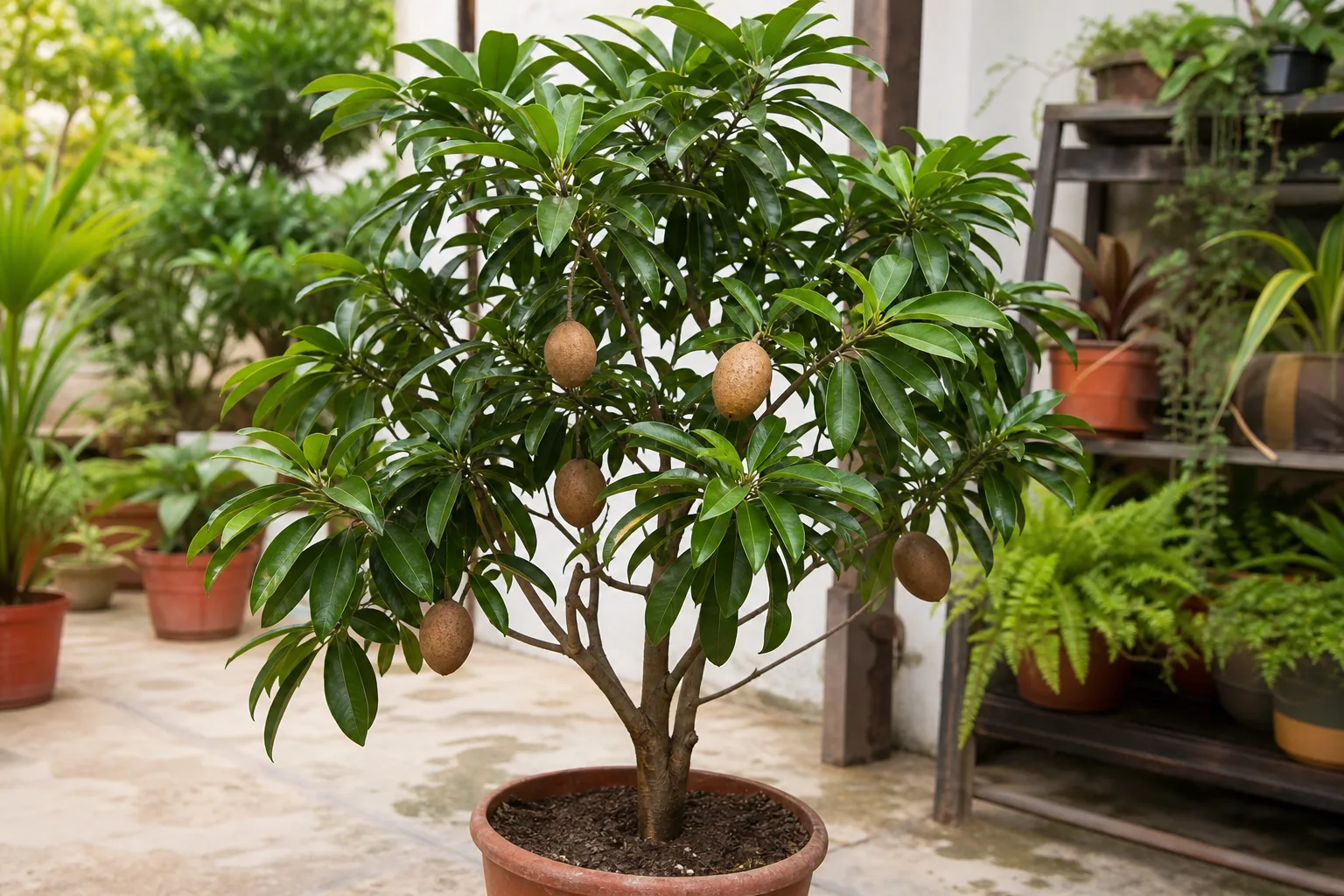
Chikoo Repotting: Timing, Pots & Roots
Chikoo Repotting: Timing, Pots & Roots
Chikoo repotting is tree work, not a cosmetic houseplant refresh. Manilkara zapota—also called sapodilla, sapota, or chiku—is a slow-growing tropical evergreen that can eventually reach 18–30 m if left unpruned, with a dense canopy and, on older landscape trees, flaring surface roots. In Florida home-landscape guidance, UF/IFAS stresses choosing healthy nursery stock and avoiding tall plants jammed into small cans where roots already circle the container edge—those root-bound systems may never establish cleanly once planted.
For terrace and courtyard growers in India and other warm regions, “repotting” usually means one of three jobs: moving a young grafted tree up one pot size, refreshing and selectively root-pruning a plant that has reached its largest manageable tub, or planting a nursery container into a prepared hole with the root ball intact. Pair this page with the Chikoo soil guide for mix structure and the Chikoo watering guide for how the newly settled root zone should dry after the move.
What chikoo repotting actually means
On a peace lily, repotting often means one size up and fresh peat mix. On Chikoo, the same word covers structural decisions. Young container trees typically need more root room every 1–2 years while they are still expanding. Once the tree occupies a heavy final container, you usually refresh mix and root-prune every 2–3 years rather than chasing ever-larger barrels that stay wet through monsoon weather.
In the ground, the critical move is often the first planting from a nursery pot. UF/IFAS tells growers to dig a wide hole, set the container media level with or slightly above surrounding grade, and water in immediately—keeping the nursery ball intact so fine roots are not shredded. That same “intact core, loosen only what circles” idea applies when you slide a pot-grown Chikoo into a larger tub.
When a chikoo needs a new pot or planting hole
Do not repot on a calendar alone. Check whether the tree is asking for more root room, fresher medium, or a drainage rescue. Penn State Extension lists familiar pot-bound cues that also fit woody container fruit trees: mix that dries unusually fast, roots exiting drainage holes, and slowed top growth despite reasonable light and feeding.
Signs the root zone is outgrown
Lift or tip the pot carefully and look for a dense mat of circling roots with little visible mix in the lower third. Practical signals on Chikoo include a tree that tips easily in wind, a pot that feels rock-hard after watering, growth that stalls even in full sun, or roots emerging from drainage holes. UF/IFAS specifically warns buyers away from large nursery trees in small containers where available space is already filled with circling roots.
If the problem is wet, sour mix rather than crowding, you may need an emergency soil change for root health, not a larger wet volume. Fix drainage and mix structure first; see the Chikoo soil guide before upsizing into another waterlogged tub. Mature sapodilla is drought-tolerant and declines under frequent over-watering—a fact that matters even more in deep unused potting mix.
Best timing for transplant and pot changes
Roots recover fastest when the tree is entering or already in warm active growth. Prefer early spring or the start of a reliable warm flush for elective container work, the same seasonal logic extension guides give for pot-bound plants: new roots push into fresh mix while the canopy resumes growth. Sapodilla wants full sun and warmth; cold, wet, low-light weeks after a root disturbance stack stress on a slow evergreen.
India terrace and monsoon drainage
In India, many growers plant or pot up around the start of warmer growth or align field planting with periods when natural moisture helps establishment. That does not mean leaving a freshly potted Chikoo sitting in monsoon roof runoff. Elevate the container, keep every drainage hole open, and shelter the tub from days of standing water. Sapodilla adapts to many soils—including light sandy and calcareous ground—but performs poorly in chronically poorly drained soil, and PFAF likewise lists a preference for well-drained conditions with drought tolerance once established.
When not to disturb the roots
Skip elective repotting while the tree is carrying a heavy flower crop or sizing fruit you care about, or when you also plan hard canopy cuts and a sudden move into harsh midday sun in the same week. Stacking those stresses is a common cause of leaf drop and stalled flushes. Emergency moves for a cracked pot or confirmed sour, rotting roots are exceptions: rescue the roots, then accept temporary leaf loss.
Container chikoo: pot size and final tub strategy
A Chikoo in a pot is still a tree. Unpruned landscape specimens can reach tens of metres; UF/IFAS recommends holding home canopy height near 3.7–4.6 m with pruning so harvest and storm risk stay manageable. Container culture only works with a heavy, stable vessel, grafted compact habit where available, and annual height control.
Move up one practical pot size at a time—typically about 5–8 cm (2–3 inches) larger in diameter—rather than jumping a young graft into an enormous ornamental planter. Excess unused mix stays wet because few roots are removing water, which is a common path to root decline on terraces. Choose a UV-stable pot with multiple open drainage holes. Plastic is lighter to shift; thick ceramic or concrete resists tip-over once the canopy gets top-heavy. Never plant directly into a sealed decorative cachepot.
When the tree reaches the largest pot you can safely water and move, switch strategy: slip the root ball out, trim the outer circling mat, refresh with open mix, and return it to the same container. That root-prune-and-refresh cycle keeps a terrace Chikoo productive without building an immovable water tank.
Rootball handling without shredding feeders
Water the plant an hour before unpotting so the ball holds together without crumbling. Lay the pot on its side, support the trunk above any graft union with a gloved hand, and slide the container off. If the tree is stuck, tap the pot walls or cut a disposable nursery can—do not yank the stem.
Inspect the outer roots. Firm, light-coloured feeders are keepers. Soft, black, sour-smelling sections should be cut cleanly back to healthy tissue with sterilised tools. For dense circling roots, gently tease the outer layer or make a few shallow vertical cuts so new roots can leave the old cylinder and enter fresh mix, following the “tease the roots” approach Penn State Extension describes for pot-bound plants. Do not wash the entire ball bare unless you are dealing with severe rot; unnecessary root exposure slows a slow-growing tree further.
When planting into the ground, dig a hole several times wider than the container so surrounding soil is loosened for root expansion, keep the top of the nursery media level with or slightly above surrounding grade, and backfill without burying the stem deeper than before—matching the planting geometry UF/IFAS describes for home sapodilla trees. In flood-prone ground, plant on a raised mound of native soil rather than a soggy pit.
Latex PPE while cutting roots and stems
Injured bark, branches, and leaves of Manilkara zapota bleed a white latex historically used as chicle. Plants For A Future also records that seeds contain hydrocyanic acid and older leaves contain a poisonous alkaloid—relevant if pets or children can reach debris after a potting session.
Before you cut roots, scrape stems, or prune to balance a transplant, put on gloves and long sleeves. Keep latex off your face and eyelids. Have soap, water, and clean towels ready. Bag root and shoot trimmings rather than leaving them where pets can chew them. This is handling hygiene, not medical advice—seek clinical care for significant irritation or any concerning ingestion.
Step-by-step: repotting a potted chikoo
- Stage gloves, a clean pot with open holes, pre-moistened free-draining mix, and sharp clean pruners.
- Water the Chikoo, wait about an hour, then unpot and assess roots as above.
- Add a base layer of mix so the finished root ball sits about 2–3 cm below the rim for watering space.
- Centre the tree upright, keep any graft union above the mix line, and fill around the sides without burying the stem deeper than before.
- Firm lightly—do not compact into a clay plug—then water thoroughly until runoff clears the holes.
- Empty the saucer. Return the tree to full sun only if the foliage was already hardened; otherwise give several days of bright conditions while roots re-anchor, then restore the exposure covered in the Chikoo light guide.
A practical container blend is 50% quality potting mix, 25% coarse sand or grit, and 25% compost or fine bark, matching the drainage-first approach in the plant hub. PFAF notes a preferred soil pH near 6–7 with tolerance roughly 5.5–8.5, so you do not need exotic acid mixes—you need oxygen at the roots.
Moving a nursery chikoo into the ground
Choose a frost-free, full-sun site that does not pond after heavy rain. UF/IFAS recommends planting sapodilla 25 feet (7.6 m) or more from the nearest tree or structure when trees will not be tightly pruned, and selecting the warmest landscape spot that does not remain wet after summer storms. Dig wide, set the intact root ball so the media surface matches grade, backfill with native soil amended only modestly if needed, water in, and stake loosely with soft, degradable ties if wind is strong.
Newly planted trees need moisture at planting, then roughly every other day for about a week, then 1–2 times weekly for the first couple of months, with weekly watering during prolonged dry spells in the first years. Once trees are several years old, irrigate mainly during long droughts—especially from flowering through harvest—and avoid keeping mature roots wet; over-watering may cause decline. Mulch 5–15 cm deep but keep mulch 20–30 cm off the trunk.
Prefer grafted cultivars when earlier, more predictable fruiting matters. Seedlings may take 6–7 years or more to bear; grafted trees may begin in about 2–4 years after planting.
Aftercare for the first month
Expect a pause in flushes while roots explore new mix. Keep the root zone evenly moist—not soggy—for the first weeks on a young pot-up, then lengthen the dry interval as growth resumes. Saturated soil deprives roots of oxygen; yellowing leaves over wet mix, a sour smell, or soft dark roots mean you should stop watering and improve drainage rather than “help” with another soak.
Hold fertiliser for two to four weeks unless the tree was already underfed and actively flushing. When you resume feeding, follow the Chikoo fertilizer guide rather than dumping high-nitrogen product onto stressed roots. Tip-pinch or light framework work can wait until you see new growth; hard canopy reduction in the same week as a major root move is usually too much.
When to use this page vs other Chikoo guides
Use this page when you are changing pots, refreshing depleted mix, root-pruning in a final tub, or planting a nursery tree into the ground. Use the Chikoo overview for species identity, mature size, and placement decisions before you buy. Use watering when the question is how often to irrigate an already settled tree. Use soil when you need mix recipes and drainage diagnosis without a full transplant. Use pruning for height control after the root zone is stable. Use propagation when you are grafting or raising new plants rather than moving an existing one.
Related Chikoo guides
- Chikoo overview — habit, sun, frost limits, and buying grafted stock
- Chikoo watering — age-based irrigation and overwatering signs
- Chikoo soil — free-draining mixes and pH range
- Chikoo light — full-sun placement for terrace and garden trees
- Chikoo fertilizer — feeding after roots re-establish
- Chikoo pruning — holding canopy height after transplant recovery
- Chikoo propagation — grafted stock vs seedlings
Conclusion
Repot Chikoo as a slow tropical fruit tree: upsize young plants one pot at a time into free-draining mix, then root-prune and refresh in a final heavy container instead of drowning roots in oversized wet soil. Time elective moves for warm active growth, keep nursery root balls intact, protect yourself from milky latex, and water deeply only after the new mix begins to dry. Get drainage and pot scale right, and Manilkara zapota will settle into years of steady canopy growth rather than a cycle of transplant shock and soggy decline.