Chikoo Root Rot: Drainage Checks for Sapodilla
Quick answer
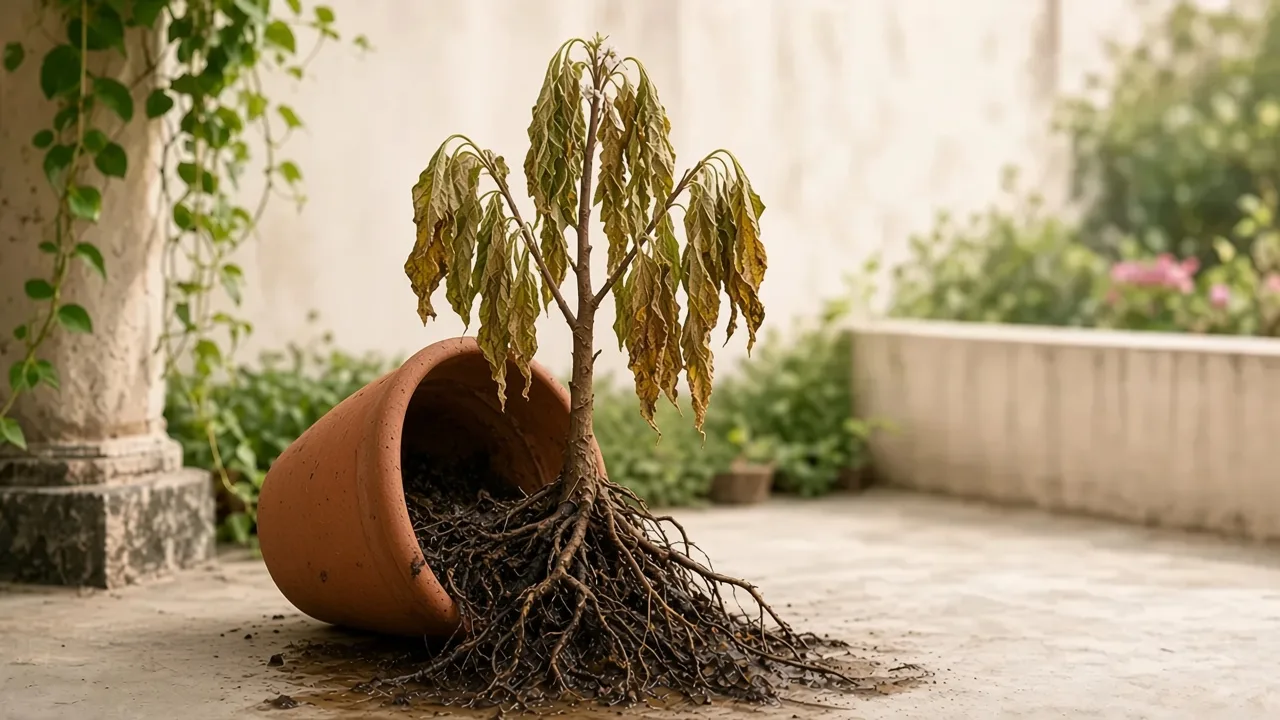
First, stop all irrigation and empty saucers or cachepots so the root zone can drain. If the top 3–5 cm stays soggy while leaves yellow, new flushes stall, or the pot smells sour, tip the tree out and inspect roots—firm pale roots mean correct overwatering; brown mush with a sour smell confirms rot.
Root Rot on Chikoo: Causes, Checks & Fixes
This guide covers root rot on Chikoo. See also the general Root Rot guide, watering, and light pages for this plant.
Root Rot on Chikoo: Causes, Checks & Fixes
Quick answer
Chikoo (Manilkara zapota) root rot is root failure from chronically wet, low-oxygen soil—often after treating a drought-tolerant mature sapodilla like a thirsty houseplant, or leaving a terrace pot saturated through monsoon weeks. Young trees defoliate or decline from lack of water, so owners water often; mature trees need irrigation mainly during long dry spells from flowering through harvest, and UF/IFAS warns that over-watering may cause trees to decline. That age mismatch is a common path to rot in home pots.
For how chronic wet mix damages roots in general, see our root rot guide. On Chikoo, the warning pattern is yellowing or drooping leaves on heavy wet soil, stalled tip flushes on a slow evergreen, sour smell at the drain hole, and brown mushy roots when you tip the pot—not normal old-leaf drop at the base alone.
First step: stop all irrigation and empty saucers or cachepots. Let excess water drain, then check whether the top 3–5 cm has begun to dry before the next drink. If the mix stays soggy and the canopy keeps declining, inspect roots the same day—do not fertilize, hard-prune, or upsize into a larger wet pot first.
When to use this page vs other Chikoo guides
| What you see | Read next |
|---|---|
| Heavy wet pot, mushy roots, sour smell (this page) | Stay here for inspection and salvage limits |
| Wet mix but roots still mostly firm | Overwatering on Chikoo — dry-down may be enough |
| Dry, light pot, brown leaf margins | Underwatering — common on young trees in dry spells |
| Midday limp leaves that recover on a drying pot | Wilting or drooping leaves |
| Lower yellow only, firm trunk, neutral smell | Yellow leaves |
| White fuzz on wet surface, firm roots | Mold on soil or fungus gnats |
Browse overlapping symptoms on the Chikoo problems hub when more than one pattern fits.
What root rot looks like on Chikoo
Sapodilla is a slow-growing tropical evergreen fruit tree with glossy leaves clustered near shoot tips—not a fast herb that bounces back in days. Root damage may show as subtle stall before obvious collapse, especially on mature container trees held at 3.7–4.6 m with pruning.
Canopy clues before you unpot
- Yellowing leaves while the top 3–5 cm of mix feels wet for many days
- Wilting or drooping on a heavy pot, especially after automatic irrigation or stacked rainy days
- New tip growth stalls while older leaves look dull or drop—unusual on a tree that should push slow but steady flushes in warm weather
- Sour or musty smell when you lift the pot or tilt it toward the drain hole
- Fungus gnats over constantly wet surface mix on terrace containers
- Fruit or scurfy brown berries developing soft rot in very wet seasons—UF/IFAS lists fruit rot (Phytophthora palmivora) among sapodilla diseases; wet roots and wet fruit often share the same drainage failure
What you find on the roots
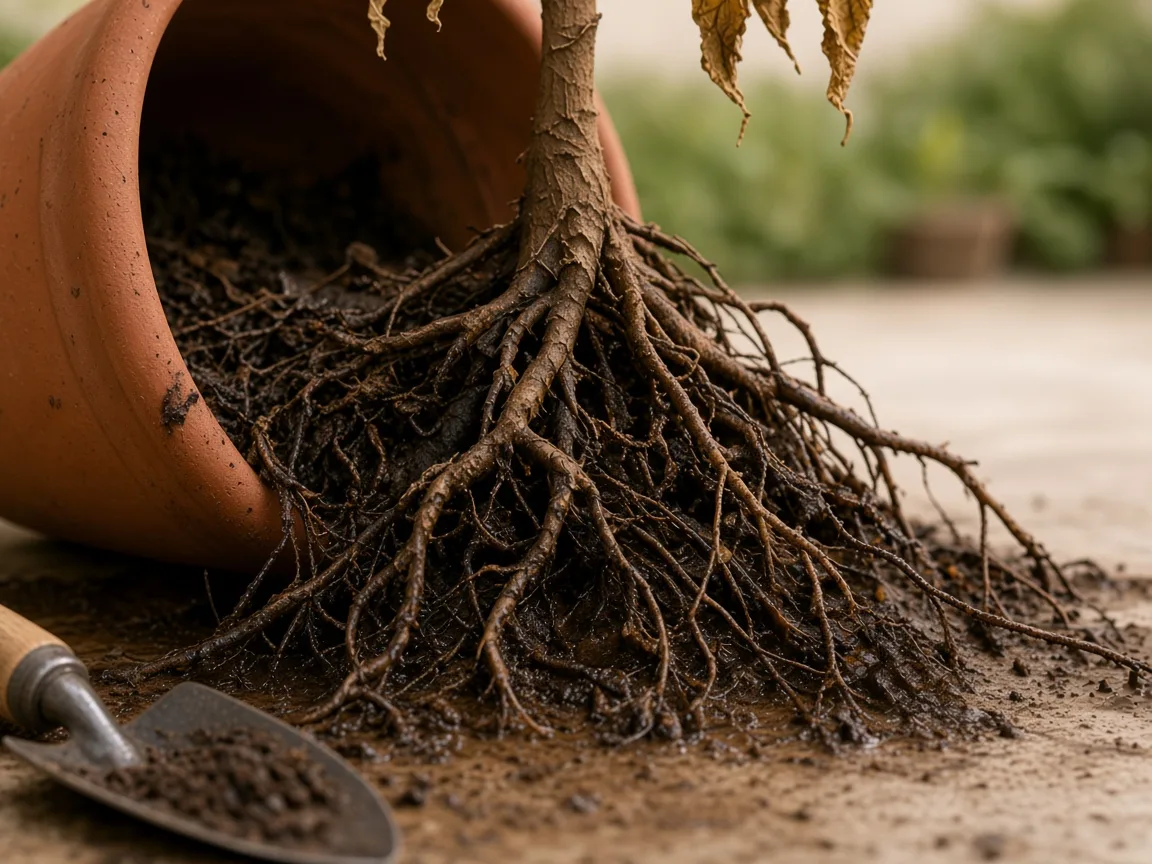
Tip the root ball out supporting the trunk base rather than pulling the stem. Healthy sapodilla roots should feel firm and pale when you pinch through gloves. Rot shows as brown, soft, or hollow roots that may slough their outer layer. Sapodilla tolerates many soils but will not perform well in poorly drained soils, so container growers see rot sooner than in raised, sandy ground.
Milky latex bleeds from cuts on leaves, stems, and bark—wear gloves when trimming roots or handling wounded tissue, and keep sap away from skin and pets per the Chikoo overview.
Lower leaves that have turned fully yellow will not return to deep green. Judge recovery by new tip flush, firm roots, and stable pot weight—not old leaf color.
Young trees vs mature trees: different water, same rot risk
UF/IFAS divides sapodilla watering by age:
| Stage | Water need | Rot trap |
|---|---|---|
| Newly planted / first 3 years | Regular moisture; weekly in prolonged dry spells | Soggy nursery pots, saucers full after daily watering |
| 4+ years / mature | Benefits mainly during long droughts from flowering through harvest | Lawn sprinklers on a timer wetting the root zone too often |
The extension bulletin is explicit: use of lawn sprinkler systems on a timer may result in over-watering and cause sapodilla trees to decline, because too much water too often applied causes root rot. Home growers often inherit a mature drought-tolerant tree but keep the young-tree watering habit—especially in large decorative pots on concrete.
Terrace pots, monsoon rain, and slow dry-down
Chikoo is widely grown on rooftops, courtyards, and frost-free gardens across India and the tropics. Containers concentrate risk: one blocked drain hole, a water-filled saucer, or roof runoff into the pot can keep the root zone saturated after a single storm.
Roots need oxygen in pore spaces. When water fills those spaces, roots can decline from lack of oxygen even before a named pathogen appears. Sapodilla’s slow metabolism means a heavy pot may stay wet longer than a fast annual—so “I only watered twice this week” can still mean chronic saturation.
Practical container checks:
- Confirm drainage holes are open; circling roots from root-bound nursery stock plug them more often than growers expect—see repotting if the tree dries within a day yet wilts on wet days.
- Never leave the pot standing in a full saucer after irrigation or rain.
- Raise heavy pots on feet so the base is not sealed to concrete.
- During monsoon weeks, pause scheduled watering until the top 3–5 cm dries—see the soil guide for gritty blends that match UF’s well-drained preference.
ST405 notes sapodilla grows best on well-drained soils while tolerating clay, sand, and alkaline ground in the landscape—pots must still drain freely; “tolerates clay” is not permission for a waterlogged container.
Confirm the diagnosis before repotting
Work through evidence in order:
- Soil moisture at 3–5 cm — wet and cool with canopy decline means roots, not drought.
- Pot weight — unusually heavy days after the last watering suggests poor drainage or a plugged hole.
- Trunk base — firm wood with only lower leaf yellowing may still be early overwatering; dark, soft tissue at the soil line is advanced.
- Root texture — mush confirms rot; firm pale roots do not.
- Irrigation history — timer, shared lawn sprinklers, or daily watering on a tree past its establishment years strongly points to cultural rot.
Drought stress on young sapodilla can also cause defoliation or decline from lack of water— but that comes with dry, light pots and crispy margins, not sour wet mix. Salt or wind burn and low humidity stress show different leaf patterns; rot pairs with wet soil and smell.
First fix: drain the root zone, then inspect once
After you stop watering and empty saucers, wait only long enough to see whether water drains freely—hours, not days of neglect in extreme heat on a young tree. If the mix remains waterlogged and the canopy still declines:
- Tip the root ball out supporting the trunk base.
- Shake away loose mix and look at root color and firmness.
- If more than half the root system is firm, move to conservative trimming below.
- If most roots are mush and the trunk base is soft, salvage is unlikely—plan replacement rather than repeated rescue.
Do not apply fertilizer to force growth; stabilize roots first. Hold the fertilizer guide until new tip growth looks stable.
Step-by-step salvage when firm roots remain
When inspection shows decay on the edges but a solid core of healthy roots:
- Trim only soft, brown, or hollow roots with clean pruners. Expect latex; wipe tools after.
- Discard the old mix—do not reuse it for sapodilla or other fruit trees in the same pot.
- Repot into fresh, freely draining mix sized to the remaining root mass (roughly 50% potting mix, 25% coarse sand or grit, 25% compost or fine bark per the soil guide). Avoid upsizing “to help” a stressed tree.
- Water once lightly to settle mix, then let the top 3–5 cm dry before the next irrigation.
- Stake if needed without wounding bark; resume light pruning only after growth stabilizes.
Avoid stacking a fungicide drench, hard cutback, and full feed on the same day. UF/IFAS lists no major root-rot epidemic on Florida sapodilla, but the cultural fix is drainage and watering discipline—the same lever that prevents timer over-watering.
Recovery timeline and when to give up
Mild cases may show firmer new tip growth within several weeks after drainage improves and only a small root section was trimmed—remember sapodilla is slow-growing, so patience matters more than on herbs.
Replace or stop rescue when:
- The trunk base collapses or turns black and soft
- New wilt or yellowing spreads weekly on mix that is finally drying
- Nearly all roots slough on a second inspection
- A root-bound young tree in an undersized pot keeps re-wetting because the mass never dries—refresh roots and mix per repotting or start a healthy grafted plant
Prevent root rot on the next Chikoo
- Match water to tree age—young trees moist, mature trees mainly in long droughts around fruiting.
- Turn off shared lawn irrigation at the sapodilla root zone; hand-water the tree on its own schedule.
- Use pots with drainage and mix that drains freely without staying soggy in the center.
- Plant on a mound in flood-prone yard spots—UF/IFAS recommends raised planting where heavy rains pool.
- Inspect after monsoon weeks before increasing fertilizer or pruning hard.
Return to routine care from the Chikoo overview once pot weight, tip flush, and root firmness stay stable through a full dry-down cycle.
Related Chikoo guides
Use this page when direct inspection finds soft, brown, or foul-smelling roots on wet mix. Route elsewhere when roots are firm:
| Evidence | Guide |
|---|---|
| Wet mix, firm roots | Overwatering |
| Dry pot, wilt | Underwatering or wilting |
| Yellow lowers only | Yellow leaves |
| Stable tree, routine moisture | Watering or overview |
Related tool
Use the Root Rot Risk Checker to narrow causes for root rot on this plant before changing multiple variables at once.