Spider Mites on Chikoo: Stippling Checks & Fixes
Quick answer
Spider mites on Chikoo (*Manilkara zapota*) show as pale stippling on glossy evergreen leaves and fine silk on leaf undersides—often during hot, dusty terrace weather. First step: move the pot away from other plants, then rinse every leaf underside with lukewarm water before you spray anything.
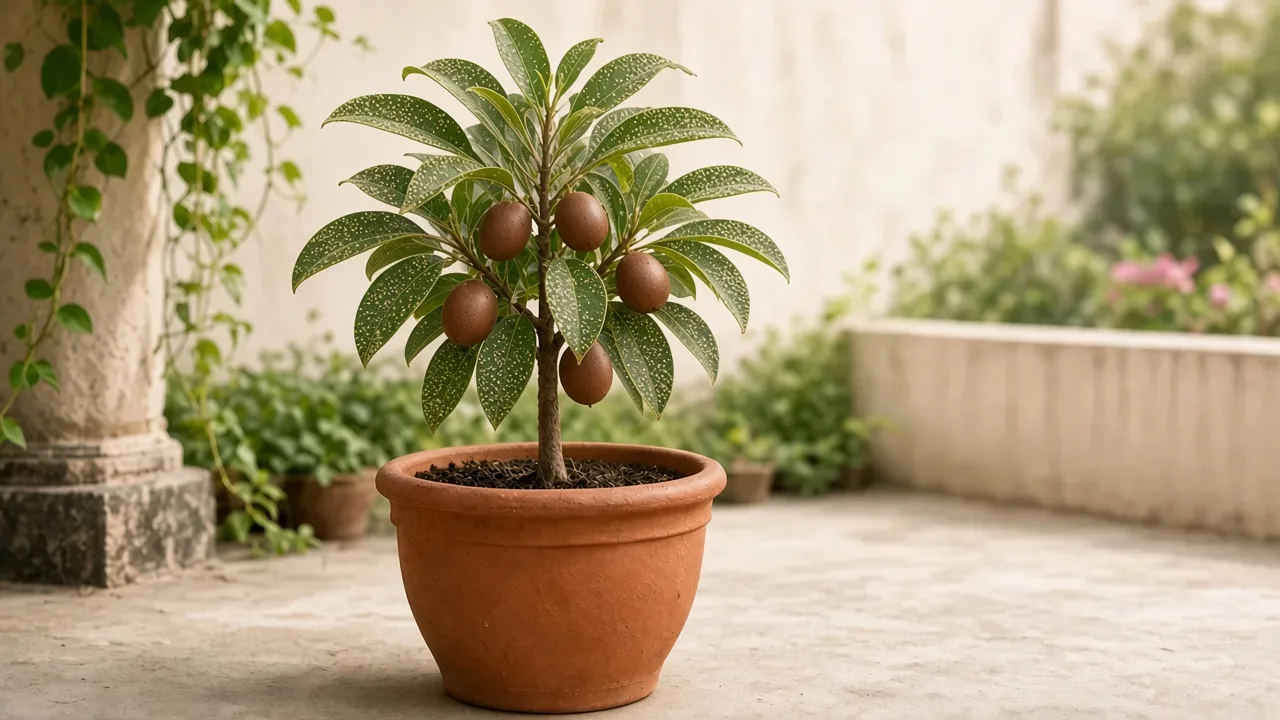
Spider Mites on Chikoo: Causes, Checks & Fixes
This guide covers spider mites on Chikoo. See also the general Spider Mites guide, watering, and light pages for this plant.
Spider Mites on Chikoo: Causes, Checks & Fixes
Quick answer
Spider mites on Chikoo (Manilkara zapota, sapodilla or sapota) are tiny arachnids that pierce leaf cells and suck sap, not insects. On terrace-grown trees they usually appear as fine yellow or pale stippling on thick, glossy evergreen leaves, with silky webbing hidden on undersides and at shoot tips. Hot, dusty conditions and water-stressed plants favor outbreaks—a common mismatch on sun-baked concrete where mature sapodilla is drought-tolerant but young container trees still need steady moisture.
For mite life cycles, why broad-spectrum insecticides can backfire, and when oils or soaps help in general, see our spider mites pest guide. On Chikoo, damage usually climbs from the newest flush and sunny leaf faces on a slow woody fruit tree—not from uniform yellowing on wet lower leaves, which more often signals overwatering or root rot. UF/IFAS emphasizes scale insects and periodic bloom pests on sapodilla; spider mites are the stippling-and-webbing lookalike you confirm with a tap test, not fixed shells on bark.
First step: move the entire pot away from every other plant on the terrace, then rinse every leaf underside with lukewarm water—aiming at the backs of leathery blades and soft new shoots—before you reach for miticides.
When to use this page vs other Chikoo guides
This page is the pest-first entry for stippling plus webbing on evergreen foliage.
| Pattern | Read next |
|---|---|
| Fine stippling + silk on leaf undersides | This page |
| Sticky honeydew on soft shoot tips | Aphids |
| White cottony wax in shoot axils | Mealybugs |
| Yellow leaves, wet mix, sour soil | Overwatering or root rot |
| Limp canopy, light pot, dry margins | Wilting or underwatering |
| Cupped pale shoots in deep shade, no webbing | Not enough light |
What spider mites look like on Chikoo
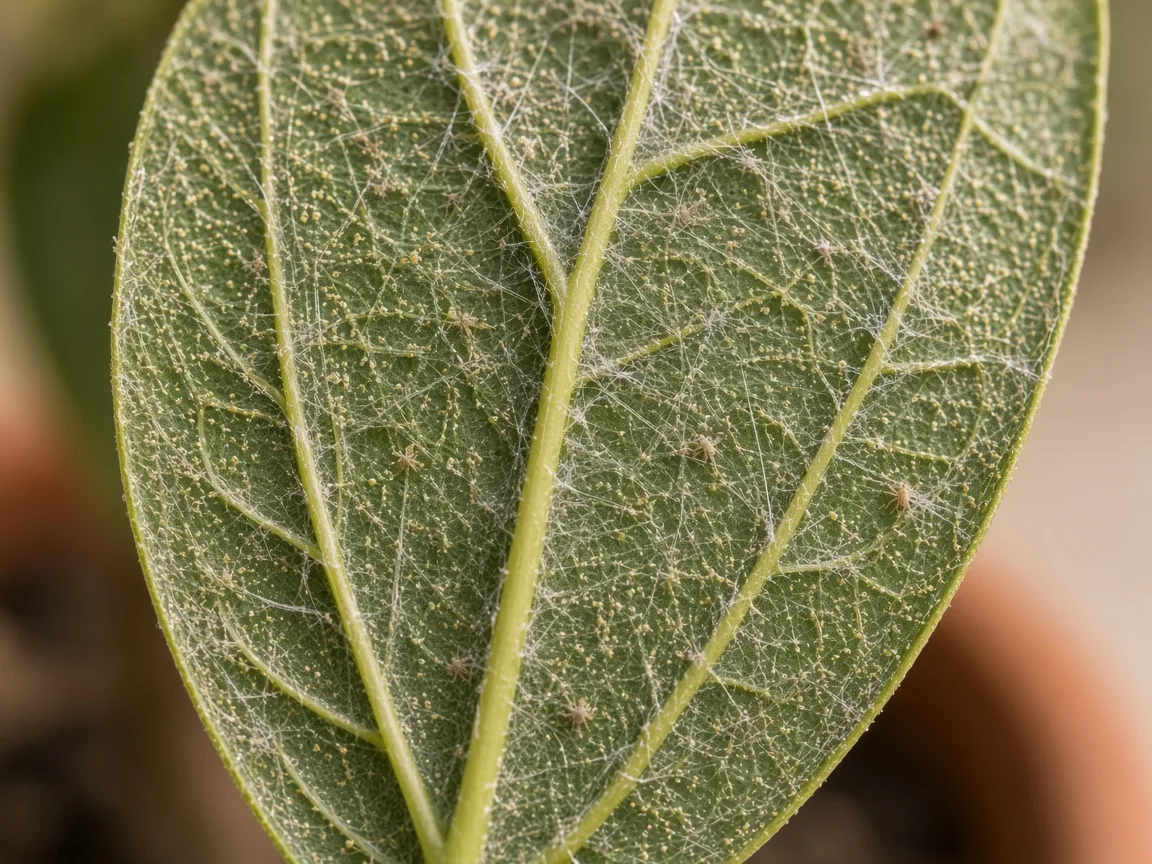
Healthy Chikoo carries leathery, glossy evergreen leaves on slow woody branches—not thin herbaceous foliage. Mite damage shows up as:
- Pinprick yellow or pale dots on the upper surface—the classic stippled look on broad tropical blades
- Dull bronzing on heavily fed leaves before they drop
- Fine silk at petioles, stem joints, and around the softest new flush
- Gritty undersides with amber eggs or black fecal specks visible at 10× magnification
- Webbing on shoot tips during warm-season growth after monsoon rain or deep watering pushes soft leaves
Mites look like tiny moving dots, about 1/50 inch long to the naked eye. A hand lens makes colonies on undersides much easier to see on sapodilla’s waxy cuticle.
Not mite damage: evenly rough brown skin on ripe fruit is normal sapodilla texture. Milky latex from a cut stem is not webbing. Scale forms flat armored disks UF/IFAS lists on sapodilla bark and branches—shells do not crawl when prodded.
Where spider mites hide on sapodilla leaves and shoots
Chikoo is a slow tropical evergreen fruit tree with milky latex in leaves and stems. Mites follow the same pattern as on other woody hosts but use sapodilla-specific niches:
Undersides of glossy mature leaves hold most colonies. The waxy upper surface can look fine while the back is stippled—inspect from below on a sunny terrace.
Newest flush after warm-season growth offers tender tissue. Soft leaves at shoot tips web over faster than hardened lower canopy.
Sunny, wind-exposed sides of potted trees dry first. Mites often appear on margins beside dusty walkways or reflective tiles where foliage heats up.
Inner canopy near the trunk on dense, unpruned specimens can hold colonies missed from the walkway—especially if the tree was recently pruned and pushed soft regrowth. See the pruning guide before opening the whole crown at once.
Neighboring pots on shared terraces let mites walk to mango, guava, or hibiscus when populations spike—scout adjacent fruit trees, not only Chikoo.
Why terrace Chikoo gets spider mites
Several sapodilla-specific factors raise risk beyond generic houseplant advice:
Hot, dry terrace microclimate. Twospotted spider mites prefer hot, dry weather and reproduce quickly when temperatures favor short generation times. Indian terrace summers and post-monsoon dry spells match that pattern even though Chikoo is tropical.
Drought stress on young pots. Mature sapodilla tolerates drought, but water-stressed plants are highly susceptible to mite damage. A young container tree allowed to go bone dry between deep soaks while leaves bake in full sun is a common setup for stippling on the newest flush—cross-check the watering guide before blaming only pests.
Dust on evergreen blades. Sapodilla leaves stay on the tree year-round. Dust from construction, roads, or dry terrace tiles stresses foliage and pairs with mite hotspots described in UC IPM management notes.
Soft regrowth after feeding or rain. Heavy nitrogen can push lush tips mites colonize quickly—review the fertilizer guide if stippling followed a big feed.
Insecticide spikes. Broad-spectrum sprays can kill predators and worsen mite outbreaks. Terrace growers treating scale on sapodilla with the wrong product sometimes see stippling explode weeks later.
Not the primary UF/IFAS pest list item. Sapodilla has relatively few insect pests in Florida, with scale and bloom moths noted more often than mites—but twospotted spider mites still attack more than 200 plant species, including many fruit trees. Absence from one regional list does not mean your terrace tree is immune.
Latex, rinsing, and terrace wash safety
Chikoo exudes milky latex (chicle) when leaves or stems are cut or badly bruised. That changes how you rinse mites:
- Support each branch when you spray so soft wood does not snap.
- Wear gloves if latex irritates skin; keep rinse runoff off furniture and edible fruit you plan to harvest soon.
- Use lukewarm water—cold shock on heat-stressed tropical leaves can add stress on top of mite feeding.
- Rinse undersides thoroughly; colonies live mostly on leaf undersurfaces.
- Do not shred leaves with a pressure nozzle on maximum—contact knockdown matters more than stripping wax.
Ripe Chikoo flesh is a common human food, but seeds, older leaves, and latex carry documented hazards on Manilkara zapota—keep pets away from prunings and treated runoff per the Chikoo overview.
How to confirm the cause
Work through these checks in order:
- Tap test — Hold white paper under a suspect leaf and strike the blade. Watch for tiny moving specks; static debris does not crawl.
- Webbing check — Silk at the petiole or encircling a shoot tip strongly points to mites. Webbing distinguishes spider mites from aphids and thrips, which do not spin silk.
- Pattern on glossy leaves — Scattered stippling on individual blades fits mites. Uniform yellowing from the soil line up on a heavy wet pot fits overwatering more than pinprick dots alone.
- Environment — Is the pot on sun-heated concrete during a dry spell? Was the tree drought-stressed last week? That context fits mites better than low humidity bronzing without moving specks.
- Lookalike pests — Sticky honeydew on soft tips suggests aphids. Cottony wax suggests mealybugs. Fixed brown bumps suggest scale—monitor per UF/IFAS sapodilla guidance.
- Root cross-check — Feel whether the top 3–5 cm of mix is dry per watering. Mite treatment plus accidental daily soaking can weaken slow sapodilla roots UF/IFAS links to decline under frequent over-watering.
If the tap test is negative, webbing is absent, and leaves yellow uniformly on wet mix, investigate root-zone problems before committing to a mite spray cycle.
First fix for Chikoo
After isolating the pot, rinse every leaf underside with lukewarm water, directing the stream along midribs and shoot tips where webbing collects.
Move the tree to a wash area if needed. Repeat daily or every other day for several days while you monitor—water sprays knock down live mites and are the safest first intervention on a food tree when colonies are moderate.
Do not start with horticultural oil, neem, or miticide on day one if a thorough rinse plus improved moisture already drops mite counts on the tap test.
Do not repot, hard-prune half the canopy, and spray on the same day. Chikoo is slow-growing; give one stressor at a time.
Step-by-step recovery
After the initial rinse:
- Improve moisture rhythm for young trees—deep water when the top 3–5 cm dries, then let excess drain. Avoid letting the root ball bake dry for weeks while you only spray leaves.
- Rinse undersides every one to two days until tap tests show few moving specks for two consecutive checks.
- Wash terrace dust off upper leaf surfaces with plain water so foliage is not coated in grime that traps heat.
- Apply insecticidal soap or horticultural oil only if rinses fail after one week and mites remain dense. Most miticides are not effective on eggs, so plan two or more applications at label intervals—often about five days in warm weather. Test one shaded leaf first; soaps and oils can burn sensitive or drought-stressed plants.
- Hold extra fertilizer until new flush opens clean. Resume light feeding per the fertilizer guide after two weeks of stable foliage.
- Manage ants only if honeydew from other pests is present—ants do not farm spider mites the way they farm aphids, but overlapping infestations happen on terrace trees.
Prune only heavily webbed shoot tips that fail two rinse cycles and block new growth. Expect latex from every cut; blot stems and air-dry wounds.
Recovery timeline
Expect fewer live mites on tap tests within three to five days of consistent rinsing. Cosmetic stippling on mature glossy leaves may persist for months until the tree sheds them naturally. Clean soft flush on the next growth cycle—often four to ten weeks on slow sapodilla—is the realistic recovery signal.
Improvement signs: New leaves open without fresh stippling, webbing stops advancing, firm woody stems, stable color on hardened lower canopy.
Worsening signs: Bronzing spreading to multiple tiers, leaves dropping in waves, tap tests still dense after two rinse weeks, or shoots wilting while mix stays wet—revisit root rot and wilting rather than repeating oils in heat.
Lookalike symptoms
| What you see | More likely | Quick check |
|---|---|---|
| Stippling + fine silk on undersides | Spider mites | Tap test; lens on webbing |
| Sticky soft shoot tips | Aphids | Pear-shaped insects; honeydew |
| White cottony wax in axils | Mealybugs | Wax lifts; no stipple pattern |
| Flat armored disks on stems | Scale (see UF/IFAS sapodilla list) | Shells fixed to bark |
| Yellow lower leaves, wet mix | Overwatering | Pot weight; sour smell |
| Dry pot, brown margins, no mites | Underwatering | Lift pot; check dry depth |
Mistakes to avoid
Do not assume stippling means you should stop watering a young Chikoo entirely—drought stress increases mite damage. Match moisture to season per the watering guide.
Do not spray horticultural oil on heat-stressed foliage at midday. Plant susceptibility to soaps and oils varies.
Do not use broad-spectrum insecticides for other terrace pests without reading labels—predator loss can spike spider mite numbers.
Do not fertilize heavily during active stippling. Soft lush tips feed the next mite generation.
Do not treat once and walk away. Warm weather can complete a mite generation in less than a week when food and heat align.
Do not confuse fruit skin texture with leaf stippling—harvest issues belong to culture guides, not mite diagnosis.
How to prevent spider mites next time
Scout leaf undersides weekly during peak dry heat and after dust storms on the terrace.
Quarantine new grafted sapodilla two weeks before placing pots beside other fruit trees.
Keep full sun and airy draining mix so flushes mature quickly—weak shaded shoots are harder to monitor on slow trees.
Rinse dust from leaves during long dry spells without leaving the pot soggy.
Preserve predatory mites and insects when populations are low; tolerating minor stippling on established lower canopy is often safer than repeated broad sprays on a food tree.
Avoid stacking scale treatments and mite oils without a recovery gap—follow UF/IFAS guidance to monitor sapodilla pests and treat only when infestations are large where that applies to your region and product labels.
When to worry
Small stippling on one sunny branch during a dry week is common on vigorous terrace Chikoo and often responds to rinsing plus moisture correction. Escalate when webbing covers multiple shoots, tap tests stay dense after two weeks, or new flush fails across the canopy.
Act urgently if stems soften, leaves yellow in waves on wet mix, or the tree wilts with sour soil—switch to root rot diagnosis rather than assuming mites alone.
Related Chikoo guides
- Overview — sapodilla culture, latex, and fruiting basics
- Watering — young-tree moisture vs mite-friendly drought stress
- Light — full sun placement on terraces
- Aphids — sticky shoot-tip colonies without webbing
- Mealybugs — cottony wax on stems and flush
- Problems hub — full symptom index
Conclusion
Spider mites on Chikoo are a hot, dry, dusty-terrace problem on glossy evergreen leaves—not a mysterious whole-tree collapse. Isolate the pot, confirm mites with a tap test and webbing, rinse undersides thoroughly, and keep young roots evenly moist without waterlogging. Firm new flush without fresh stippling is the recovery signal; old bronzed blades may stay imperfect on a long-lived fruit tree.
Related tool
Use the Pest Identifier Tool to narrow causes for spider mites on this plant before changing multiple variables at once.