How to Prune Chives: Timing, Cuts and Recovery
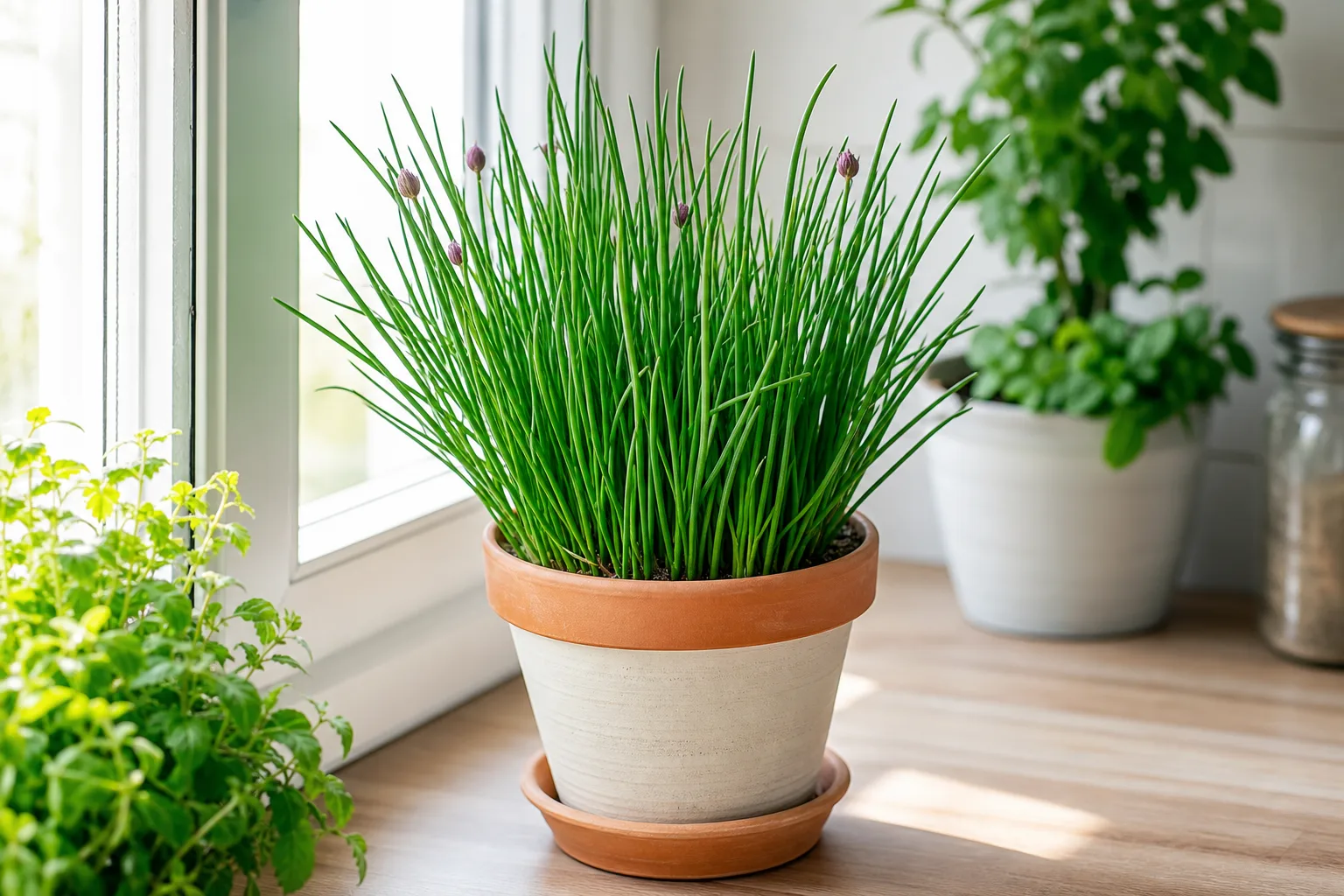
How to Prune Chives: Timing, Cuts and Recovery
How to Prune Chives: Timing, Cuts and Recovery
Quick answer
First, remove only dead, damaged, or spent growth from the common chive (Allium schoenoprasum) clump. For a kitchen harvest, cut selected leaves near the soil line rather than snipping only their tips or pulling them upward. After flowering, a healthy established clump can be cut back to encourage a fresh flush, but avoid a hard cut on a newly divided, drought-stressed, or already weak plant. NC State Extension recommends clipping leaves at the base and deadheading to limit self-seeding (NC State Extension). Use clean scissors and leave enough foliage for the plant to recover unless you are doing a deliberate post-bloom cutback.
What pruning does for a chive clump
Chives grow from a cluster of small bulbs, sending up narrow hollow leaves and seasonal flower stalks. Regular harvesting removes individual leaves for use; pruning is broader cleanup, flower removal, or a planned cutback after bloom. These actions can keep old foliage from obscuring new growth, reduce unwanted seedlings when spent flower heads are removed, and create a new leaf flush after flowering. They cannot fix poor drainage, deep shade, or a congested clump by themselves. The Chives overview explains how cutting fits with light, water, soil, and division.
When to prune chives
You can harvest leaves through active growth once the clump is established and the foliage is long enough to cut cleanly. The RHS describes chive leaves as harvestable from spring to autumn with regular snipping (RHS). Remove dead leaves as they appear, and trim old foliage in early spring if it has collapsed or dried over winter. After purple flowers fade, remove the stalks if you do not want seed or perform a broader cutback when the clump is vigorous. Wisconsin Extension notes that chives bloom from mid-spring into early summer and that deadheading reduces volunteer seedlings (Wisconsin Horticulture). Avoid a full trim during extreme heat, drought, or immediately after dividing.
What to check before cutting
Look at the clump from the outside in. Identify healthy green leaves, dried foliage, flower stalks, and any soft or collapsing growth. Check whether new leaves are already emerging from the base and whether the plant is actively growing. If a crowded centre is weak but the outer bulbs are healthy, division may be more effective than repeated pruning. For a pot, make sure the mix is not waterlogged or bone dry before cutting. The Chives repotting guide describes when crowding calls for dividing rather than simply trimming the leaves.
Make the first cut to dead or damaged growth
Start with the lowest-risk work: remove fully brown, broken, or collapsed leaves close to their base. Cut a flower stalk that has finished blooming down near the foliage, while leaving new green leaves intact. Make clean cuts with scissors; do not tug or twist leaves, which can loosen the small bulbs. If only the tips are brown, remove the damaged portion if the rest of the leaf is green, but look for water, salt, or light problems before assuming the plant needs a larger cut. A careful first pass shows the clump’s shape and lets you decide whether more pruning is necessary.
Harvest leaves cleanly at the base
For a small harvest, gather a few leaves and snip each one near the soil line. Cutting the full length of selected leaves encourages replacement growth; repeatedly cutting only the tips can leave ragged ends. Avoid pulling upward on the leaves. Savvy Gardening recommends cutting chive leaves at the base rather than tugging them and describes a post-bloom cutback for mature plants (Savvy Gardening harvest guide). NC State Extension likewise recommends clipping leaves at the base once plants are about six inches tall. Leave the rest of the clump untouched when you only need a handful for cooking.
Remove flower stalks after blooming
Chive flowers are part of the plant’s normal cycle, not a sign that foliage care has failed. Keep the blooms if you enjoy them or want seeds; remove faded heads if you want to limit seedlings around the bed. Cut the stalk near its base once the flowers have finished, taking care not to remove the surrounding green leaves. Wisconsin Extension says deadheading after flowers fade will reduce or eliminate volunteer seedlings, and GrowVeg describes removing flower heads to reduce reseeding and encourage leaf production (GrowVeg). Savvy Gardening also recommends removing spent flower stalks after bloom when a grower wants more leaf growth rather than seed (Savvy Gardening pot guide).
When a full cutback makes sense
A full cutback can be useful after flowering when an established clump has become crowded with stiff flower stems and older leaves. For this reset, cut the foliage low, around one to two inches above the soil, with clean shears. Utah State Extension describes cutting chives back close to the soil for harvest, while Savvy Gardening recommends a complete cut after blooms fade to stimulate new leaves (Utah State University Extension, Savvy Gardening harvest guide). Harvest to Table instead recommends leaving roughly two inches of blade above the soil when harvesting, which is a conservative option for a production-style cut that preserves some green growth (Harvest to Table). This is optional, not a required annual haircut. If the clump is young, recently divided, or struggling, remove only dead leaves and spent stalks.
How much foliage to remove
For routine harvest, take a small portion at a time from a vigorous clump and leave most of its green leaves intact. If you are removing the whole post-bloom flush, cut the clump once rather than repeatedly taking it down to the soil every few days. A complete cutback can leave a gap in harvest while the plant replaces its leaves; Savvy Gardening notes that regrowth after flowering cutback may take a few weeks. Do not apply the “remove one-third” rule mechanically: chives are a dense, bulb-forming herb, and the right amount depends on clump vigor and whether the cut is a small harvest or a single seasonal reset.
What not to cut
Do not cut below the leaf bases into the bulbs or dig into the crown with shears. Do not remove all green growth from a weak plant, a new division, or a clump with little root activity. Avoid cutting a patch just because it looks untidy if new leaves are already emerging and the older growth is still green. If the centre is dying while the outside remains vigorous, dividing the clump is usually a better renewal method than repeatedly shearing the leaves. See the Chives propagation guide for division steps.
Use clean, sharp tools
For a small kitchen harvest, clean scissors are enough; for a large clump, use sharp garden shears that can make an even cut through the leaves. Wipe soil from the blades and clean them before moving between plants, especially if you are removing diseased or decaying tissue. Avoid crushing hollow leaves with dull blades, since a ragged cut dries back less neatly. Keep tools dry after use. Chives are edible, so clean tools also help keep soil and old plant material out of the harvest. Do not apply chemical wound dressings or powders to the cut ends.
Help chives recover after pruning
After a light harvest, return the plant to its normal growing place and keep the soil moisture steady. After a complete cutback, avoid piling fertilizer onto the crown or letting the pot dry completely; the plant needs stable conditions while fresh leaves emerge. If the soil is already moist, do not water simply because you have pruned. The Chives watering guide explains how to judge the root-zone moisture, and the light guide helps choose a bright recovery position. Delay dividing or repotting until the clump has resumed growth unless the roots or drainage are the actual problem.
How long regrowth takes
An established chive clump can begin replacing cut foliage within a few weeks when it is actively growing and conditions are mild. A hard cutback creates a longer pause in harvest than removing only a few leaves, and cool weather, heat stress, low light, or root disturbance can slow the return. Judge recovery by the appearance of fresh green leaves at the base, not by expecting cut blades to lengthen again. Wisconsin Extension cautions that a full cutback takes several weeks to regrow; the exact timing varies with plant condition and season. If no new growth appears, inspect the bulbs and growing conditions before cutting again.
What pruning cannot fix
Pruning cannot make a shaded clump produce strong growth, cure waterlogged roots, or restore bulbs damaged by rot. If the plant remains thin, check the Chives light guide and soil guide before taking more foliage. If the centre is congested, division may be needed. If leaves are limp, test soil moisture before watering; both overly dry and saturated conditions can weaken the plant. A sparse clump may also be in seasonal dormancy. Avoid treating every yellow or brown leaf with a full cutback, because removing healthy leaves can reduce the plant’s recovery capacity.
Maintain a tidy clump through the year
Harvest a few full leaves at a time during active growth, remove dead leaves as needed, and deadhead faded flowers if you do not want seedlings. In early spring, clear old foliage that did not survive winter, taking care not to cut new shoots. BHG recommends removing old growth as part of seasonal care and deadheading flowers to reduce self-seeding (BHG). If a clump becomes congested every few years, divide it rather than repeatedly shortening the foliage. Keep a modest harvest rhythm and allow the clump to rebuild after a heavy cut.
When to use this page vs other Chives guides
Use this guide to decide what to cut, when to cut it, and how the plant should recover. For routine leaf harvest and division, the propagation guide and repotting guide explain when a crowded clump needs renewal. Read the fertilizer guide before trying to feed weak growth. Start at the Chives overview for seasonal care and pet-safety context.
Related Chives guides
For more on light and moisture after a cut, use the Chives light guide and watering guide. The soil guide helps if the clump is declining despite careful pruning. These guides cover different causes of weak growth so you can avoid cutting healthy leaves when another condition is responsible.
Conclusion
Prune chives lightly for regular harvest, remove dead foliage and faded flower stalks as needed, and save a full post-bloom cutback for a vigorous established clump. Cut leaves near the soil line with clean scissors, never pull the bulbs loose, and leave healthy green growth on a stressed or newly divided plant. Fresh leaves usually return over the following weeks when the roots, light, and moisture are suitable. If the clump remains weak, investigate growing conditions or divide it instead of pruning it again.