How to Repot Chives: Divide and Refresh a Crowded Clump
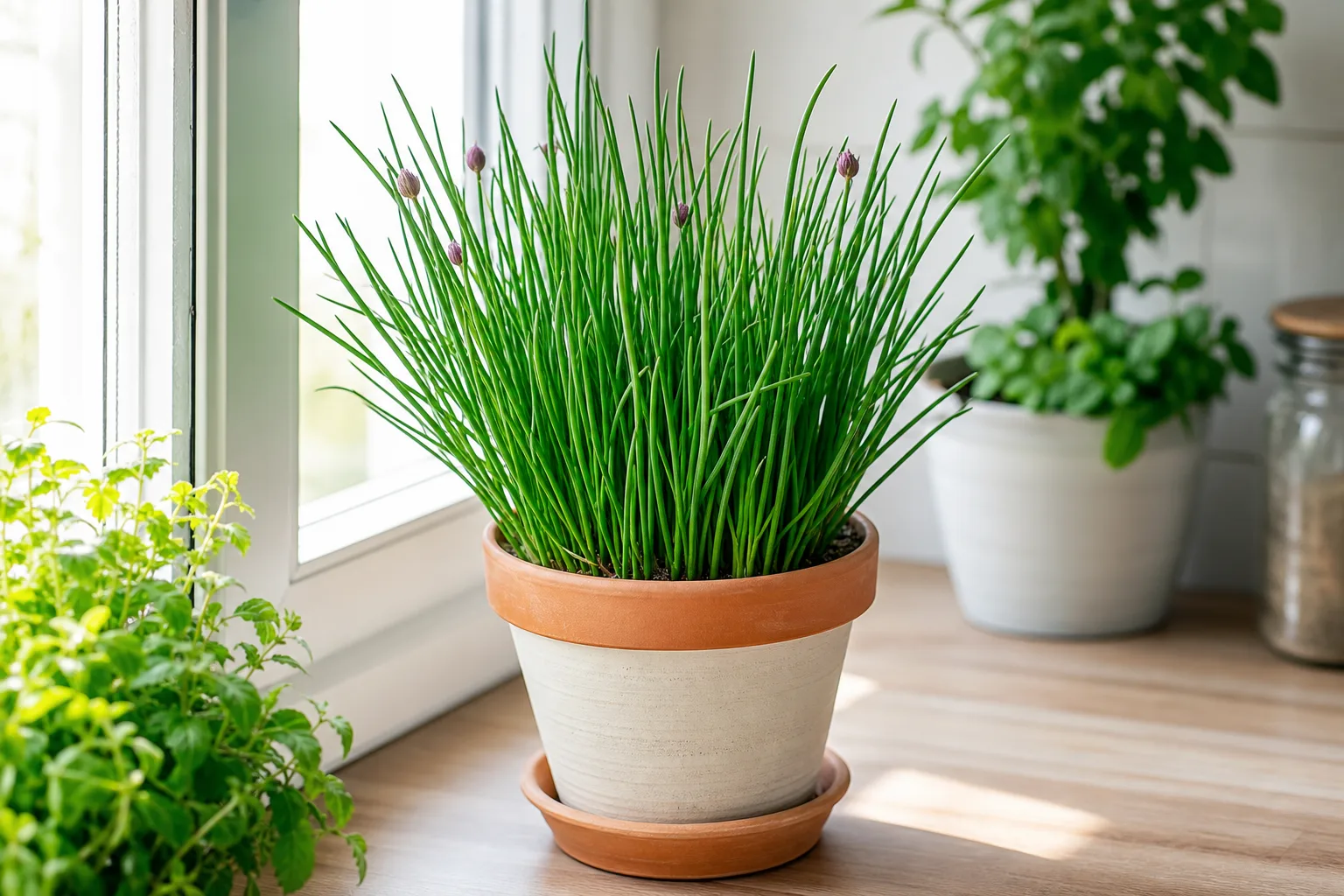
How to Repot Chives: Divide and Refresh a Crowded Clump
How to Repot Chives: Divide and Refresh a Crowded Clump
Quick answer
Repot chives when roots fill the container, the clump becomes congested, or the potting mix has broken down. Because common chives spread as a tight group of small bulbs, repotting often means dividing the clump and replanting only part of it in fresh mix. Choose a pot with drainage, keep the crown at its previous depth, and water it in. Wisconsin Extension recommends dividing plants every two to three years to prevent overcrowding, while Better Homes & Gardens describes repotting a container clump every three to four years (Wisconsin Horticulture, BHG). Utah State Extension also recommends renovating chive beds every few years (Utah State University Extension). Use the plant’s condition, not the calendar alone, to decide.
Repotting chives often means dividing
Chives (Allium schoenoprasum) form a perennial clump of small bulbs rather than one large central root ball. Over time the bulbs crowd the pot, and the centre can become weak. Moving the entire intact clump into a much larger container may postpone the issue but does not renew crowded growth. Division lets you remove dead or weak central material, refresh the growing mix, and keep only manageable sections. The Royal Horticultural Society recommends dividing established clumps as part of routine chive care (RHS).
Signs a container clump needs attention
Look for roots emerging through the drainage opening, a clump that has filled the surface, a weak or thinning centre, or a pot that dries unusually quickly because roots occupy most of the mix. A cracked or compacted potting medium is another reason to refresh. One root at the hole is not an emergency; chives are vigorous and can extend roots through available openings. If leaves remain healthy and moisture is manageable, there is no need to disturb the plant just because a few roots show. GrowVeg notes that crowded chive clumps benefit from division every few years, while plant condition helps determine the timing (GrowVeg).
Choose the right time
Spring, as fresh growth begins, is an easy time to repot and divide because the plant can resume growth in the new mix. In mild climates, early autumn can also work if the clump has time to settle before temperature extremes. NC State Extension recommends dividing chives in spring or fall, and Wisconsin Extension likewise describes division as a routine renewal step (NC State Extension). Avoid repotting during severe heat, a prolonged dry spell, or while the mix is waterlogged. If the pot is broken or drainage is blocked, handle it as soon as practical, then protect the plant from harsh sun while it adjusts.
Select a pot with free drainage
Choose a stable pot with at least one open drainage hole. It should hold the selected division comfortably, with a little room for new growth, rather than placing a small clump in a very large volume of wet mix. Savvy Gardening identifies drainage as the top consideration for container chives (Savvy Gardening). If you want to keep a large clump intact, choose a wider pot that accommodates it without forcing the roots into a tight coil. Clean the container before reuse and clear out any roots blocking its holes.
Prepare a loose potting mix
Use fresh multipurpose potting mix that drains readily and retains some moisture. Avoid filling a container with heavy garden soil, which can compact and keep the root zone wet. If the old medium is still loose and healthy, you can retain some of it while removing the tired portion; otherwise replace it. The Chives soil guide gives more detail on mix structure and organic matter. Do not add a thick layer of compost at the top after repotting, because it can bury the crown and hold moisture against the bulbs.
Lift the clump gently
Water the pot lightly the day before if the mix is extremely dry, so roots are less brittle, but do not start with saturated soil. Turn the container on its side, support the foliage near the base, and ease the clump out. If it is firmly stuck, tap the pot or slide a blunt tool along the inside wall rather than pulling hard on the leaves. Brush away loose, exhausted mix and inspect the bulbs. Remove only dead, soft, or clearly damaged pieces with clean hands or tools. The RHS describes dividing established chives and replanting them; the aim is to retain healthy rooted sections, not to strip every root bare.
Divide the roots into useful sections
Separate the clump into sections that each retain several bulbs and roots. Wisconsin Extension suggests divisions with at least five bulblets and recommends dividing crowded plants every few years. Do not make tiny pieces with only one weak bulb unless you are prepared for slower establishment. If the clump is not crowded and the potting mix remains good, keep it intact and simply refresh the outer mix or move it to a container only slightly wider. Harvest to Table also describes dividing chives as a way to create new plants and renew old clumps (Harvest to Table).
Set divisions at their former depth
Add mix to the pot so each division sits at about the same depth it grew previously. Spread the roots downward and outward without sharply bending them. The top of the bulb cluster should remain just covered or at its former soil line; do not bury the green base of the leaves under several centimetres of mix. Fill around the division and press gently to remove large air gaps without packing the soil hard. If planting multiple sections in one container, leave room between them so the clumps can expand and air can move through the foliage.
Water and settle the new pot
After planting, water slowly until the medium is evenly moist and excess flows through the drainage hole. Empty the saucer and let the container drain completely. If the mix settles and exposes roots, add a little more mix around the sides while keeping the crown clear. A potted division may need more frequent checks for a short period while roots extend into fresh medium, but do not leave it continuously wet. The Chives watering guide explains how to check moisture by the mix rather than a fixed schedule.
Aftercare during establishment
Place the newly divided pot in bright conditions with some protection from extreme midday heat for the first few days. Keep the mix lightly moist while new growth begins, and avoid fertilizing immediately; fresh potting mix and root disturbance are enough change at once. A few older leaves may wilt or dry as the plant adjusts, but remove only clearly dead growth. Once the clump has resumed upright leaf production, return it to its usual sun or light shade. The Chives light guide covers indoor and outdoor placement, and the fertilizer guide explains why routine feeding is rarely needed.
When to keep the clump intact
Do not divide a healthy clump solely to meet a two- or three-year interval. If the roots have not filled the pot, the mix drains well, and the centre is producing leaves, continue normal care. Repotting stresses roots, and each extra division increases the chance of drying before establishment. You can top up a small amount of settled mix or remove spent leaves without disturbing the bulbs. If only the soil is exhausted, refresh the potting medium around an intact clump during mild weather, then wait for signs of new growth before making additional changes.
Avoid common repotting mistakes
Do not jump into an oversized pot, bury the crown deeply, or divide the clump into pieces too small to recover quickly. Avoid cutting away all foliage unless it is dead or damaged; some leaves help the plant resume growth. Do not fertilize heavily to compensate for root disturbance, and do not set the new pot in a water-filled saucer. Better Homes & Gardens notes repotting intervals of several years, while Wisconsin Extension recommends division to prevent crowding. Those timelines vary with container size and growth, so visible congestion and mix condition are more useful than a strict date.
When to use this page vs other Chives guides
Use this guide when a container is crowded, roots fill the pot, or its mix needs refreshing. If the soil remains wet after repotting, see the soil guide and watering guide. For starting divisions, seeds, or a new pot, use the propagation guide. The Chives overview summarizes the full care routine.
Related Chives guides
The pruning guide covers cutting leaves and flower stalks around the time of division. The light guide helps select a bright recovery position, and the fertilizer guide covers feeding after the roots settle. For general care, start at the Chives plant hub.
Conclusion
Repot chives when the clump is crowded, roots fill the container, or the potting mix has deteriorated. Spring or mild early autumn gives the plant a chance to settle, but the visible condition matters more than a strict interval. Divide into rooted sections with several bulbs, use loose potting mix, keep the crown at its former depth, and let runoff drain. Give the plant steady moisture and time to resume growth before harvesting heavily or feeding.