Chives Watering Guide: Keep Roots Moist, Not Soggy
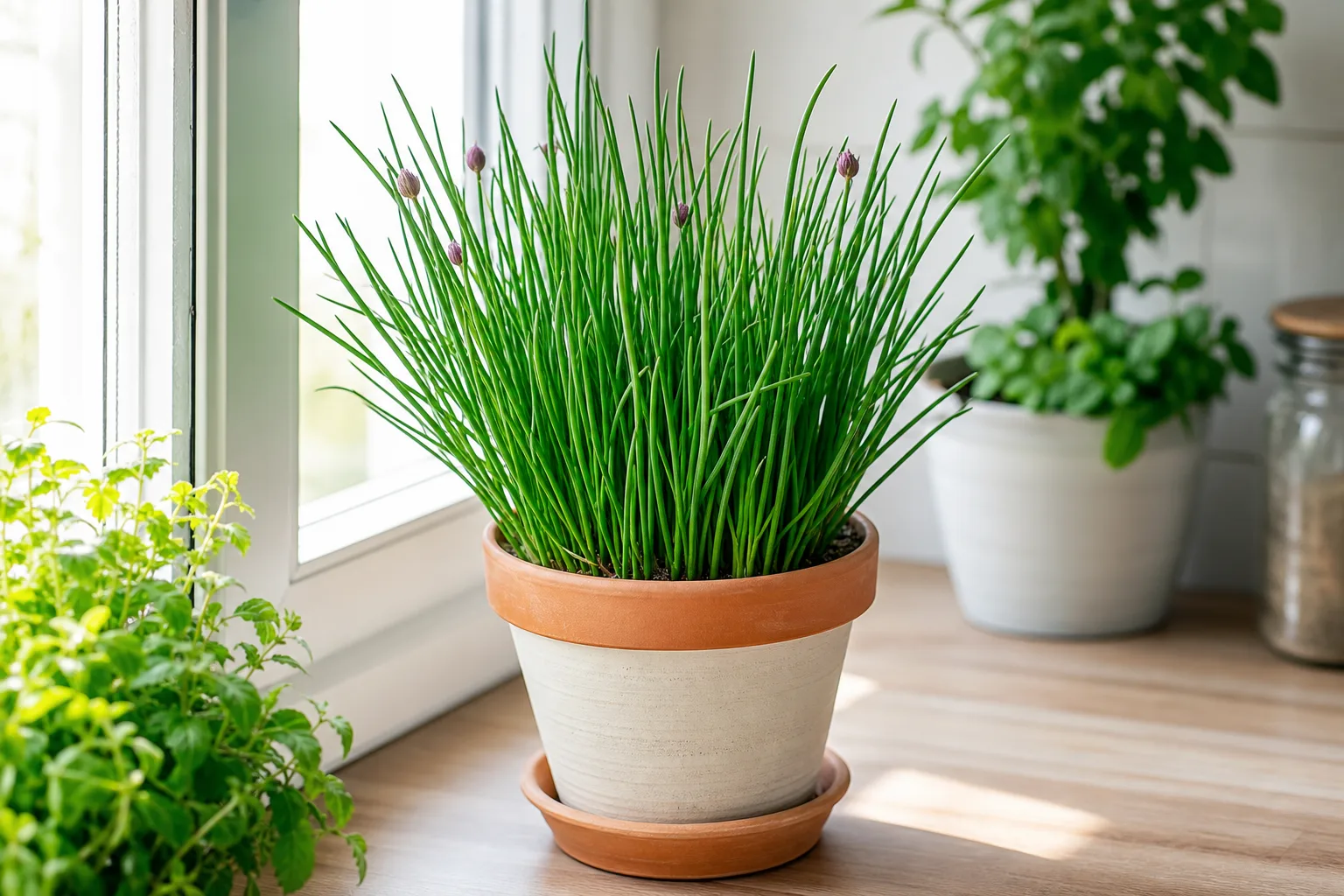
Chives Watering Guide: Keep Roots Moist, Not Soggy
Chives Watering Guide: Keep Roots Moist, Not Soggy
Quick answer
Keep chives lightly moist while seedlings and divisions establish, then let the upper soil begin to dry before watering again. Established garden clumps tolerate short dry spells, but they grow best with consistent moisture. Container chives need more frequent checks because a small volume of potting mix dries faster than a bed. Always let excess water drain; standing water around the shallow bulbs can lead to root problems. Wisconsin Extension describes established chives as drought tolerant but says they grow best with consistent moisture (Wisconsin Horticulture). Check the soil with a finger before adding water instead of following a fixed weekly schedule.
What chives need from water
Common chives (Allium schoenoprasum) form clumps of small bulbs and fine, relatively shallow roots. They need enough water to support new leaf growth, especially after sowing, transplanting, or division, but they do not need saturated soil. North Carolina State Extension notes that root rot may occur in poorly drained soil, while Utah State Extension recommends moist, well-drained conditions (NC State Extension, Utah State University Extension). The goal is to water through the root zone, then allow air back into the mix as it drains.
Check the soil before watering
Push a finger about two to three centimetres into the soil near the edge of the clump. If that layer still feels cool and damp, wait; if it is becoming dry, water slowly and reassess. The surface can look dry while the roots remain moist underneath, especially in a cool garden bed. In a pot, lift it occasionally to learn its watered and dry weight, but use the mix itself as the final check. Chives can tolerate a little drying once established, so there is no need to keep the top constantly glossy or wet.
Water newly planted chives more consistently
Seedlings, new transplants, and divisions have not yet spread their roots into the surrounding soil. Water them after planting and check regularly during their first weeks, particularly in sunny or windy weather. Keep the root zone evenly moist, not flooded, until you see fresh growth. Better Homes & Gardens recommends watering new plants thoroughly and keeping them hydrated until new growth appears (BHG). After the clump is visibly growing, extend the interval between waterings according to rainfall and soil texture rather than continuing the same intensive establishment routine.
Adjust for established garden clumps
A well-rooted outdoor clump can draw on a larger volume of soil than a pot. Rain may meet its needs for long stretches, and supplemental watering is mainly useful during prolonged dry weather or when leaves are actively growing and the bed has dried deeply. Wisconsin Extension notes that established plants tolerate drought, but consistent moisture supports better growth. Utah State likewise recommends moist, well-drained soil, which does not mean the bed should stay wet. Water at soil level, let it soak in, and avoid shallow daily sprinkling that wets only the surface.
Water container chives by the mix, not the week
Pots dry more quickly because they contain less soil and are exposed to air on the sides. A small or terracotta container in sun may need attention much sooner than a large glazed pot in cool weather. Savvy Gardening emphasizes drainage and regular moisture checks for chives grown in containers (Savvy Gardening). Check the mix on warm days and after strong wind, but water only when the upper layer is beginning to dry. Do not assume that a pot needs water just because the same weekday has arrived.
Give water slowly and let it drain
Water around the base of the clump rather than blasting the leaves. Apply a steady stream until the mix is evenly wet and a little water exits the drainage hole, then empty the saucer. If dry potting mix repels water and it runs down the sides, pause briefly and apply another small round so the root ball can absorb it. A bed that sheds water down a slope may need slower pulses. The RHS advises growing chives in free-draining ground and containers; a drainage opening is as important as the amount you pour (RHS).
Change watering with weather and season
Warm sun, wind, shallow pots, and active leaf production increase water loss. Cool weather, rain, low light, and winter dormancy reduce it. Chives may slow or die back during cold winters or extreme summer heat, so do not keep watering at the same summer rate when the plant is not actively growing. Harvest to Table describes chives as drought tolerant once established and recommends keeping soil moist during active growth (Harvest to Table). The simplest adjustment is to inspect the soil more often during heat and less often when the weather is cool or rainy.
Understand short dry spells
A mature clump usually recovers from a brief dry spell once it receives a thorough drink, though leaves can lose firmness or develop dry tips if the stress continues. Water deeply enough to moisten the root area, then leave time for drainage; do not compensate by leaving the pot standing in water. If the leaves have browned or become brittle, old tissue may not turn green again. Judge recovery by the next flush of leaves. GrowVeg notes that common chives are perennial and return after seasonal dormancy, a reminder that slower or dry-looking top growth does not always indicate a dead crown (GrowVeg).
Spot too much water
A pot that remains heavy and wet for days, a sour smell, or a clump declining in consistently saturated soil points to a drainage problem rather than a need for more fertilizer. Yellowing can have multiple causes, so check the moisture at root depth before making a diagnosis. NC State Extension identifies root rot as a risk in poorly drained soil. If the container has no drainage hole, move the plant into one that does; if garden soil is heavy, improve the planting position or use a raised bed. Do not water again while the root zone remains soggy.
Spot too little water
Dryness is more likely when a pot feels light, the mix is dry below the surface, and leaves lose firmness during a warm spell. A garden clump can tolerate a short lapse, but repeated drying can slow new leaf growth. Water the soil rather than relying on misting the foliage, and give the root zone time to rehydrate. Harvest to Table notes that chives need moisture during growth and tolerate drought once established. If symptoms continue after watering, inspect drainage and roots as well; limp leaves in saturated soil are not a cue to add more water.
Reset a pot that stays wet
First confirm that water can exit the container and that no saucer is holding runoff. Move the pot out of persistent rain or a shaded, cool corner until the mix begins to dry. If the mix is compacted, smells sour, or has stayed saturated for a long time, check the root ball and replace it with a loose, well-draining potting mix. Avoid repeatedly pulling the clump apart to inspect it. The Chives soil guide explains mix and drainage choices; the repotting guide covers when a container change is justified.
Water after division or harvest
A fresh division benefits from a thorough watering immediately after planting so soil settles around its roots. Keep it evenly damp while it establishes, then use the normal soil check. A harvest alone does not require a special watering treatment: if the soil is already moist, do not water just because leaves were cut. After a hard post-flowering cutback, give the clump ordinary care and let new foliage appear before harvesting heavily again. Wisconsin Extension advises that a full cutback takes time to regrow (Wisconsin Horticulture); the Chives pruning guide covers the cut itself.
Avoid common watering errors
The most common mistakes are watering by calendar, keeping a pot permanently wet, and treating a dry surface as proof that the whole root zone needs water. A fixed routine ignores differences in pot size, season, wind, and soil texture. Do not pour small amounts every day if the root ball is still wet, and do not let a container sit in a full saucer. Better Homes & Gardens and the RHS both emphasize well-drained conditions for chives, while Wisconsin Extension describes them as drought tolerant once established (BHG). Together, those points favor a thorough drink followed by a moisture check.
When to use this page vs other Chives guides
Use this guide when you are deciding whether the clump needs water or when to change container checks. For low growth in a shady site, see the Chives light guide; for soil that stays wet, see the soil guide. The fertilizer guide covers nutrient needs, and the propagation guide explains the first watering after sowing or division. Start at the Chives overview for the full routine.
Related Chives guides
The repotting guide helps distinguish a root-bound pot from one that is simply overwatered. Use the pruning guide for seasonal cutting and leaf harvest. These topics interact, but change one condition at a time so you can tell whether moisture, drainage, or crowding was behind a weak clump.
Conclusion
Water chives by checking the root-zone mix. Keep new seedlings and divisions evenly moist while they establish, then let the surface layer begin to dry before watering again. Garden clumps need extra water mainly through long dry spells; containers require closer checks because they lose moisture faster. Always let runoff escape. If leaves look weak, check soil moisture and drainage before adding water, fertilizer, or another major change.