Aphids on Dracaena Marginata: Causes, Checks & Fixes
Quick answer
Aphids on Dracaena Marginata cluster on soft new leaves at each cane tip rosette, leaving sticky honeydew on narrow red-edged blades. First step: isolate the plant and rinse aphids off the crown rosettes and leaf undersides with lukewarm water before any spray.
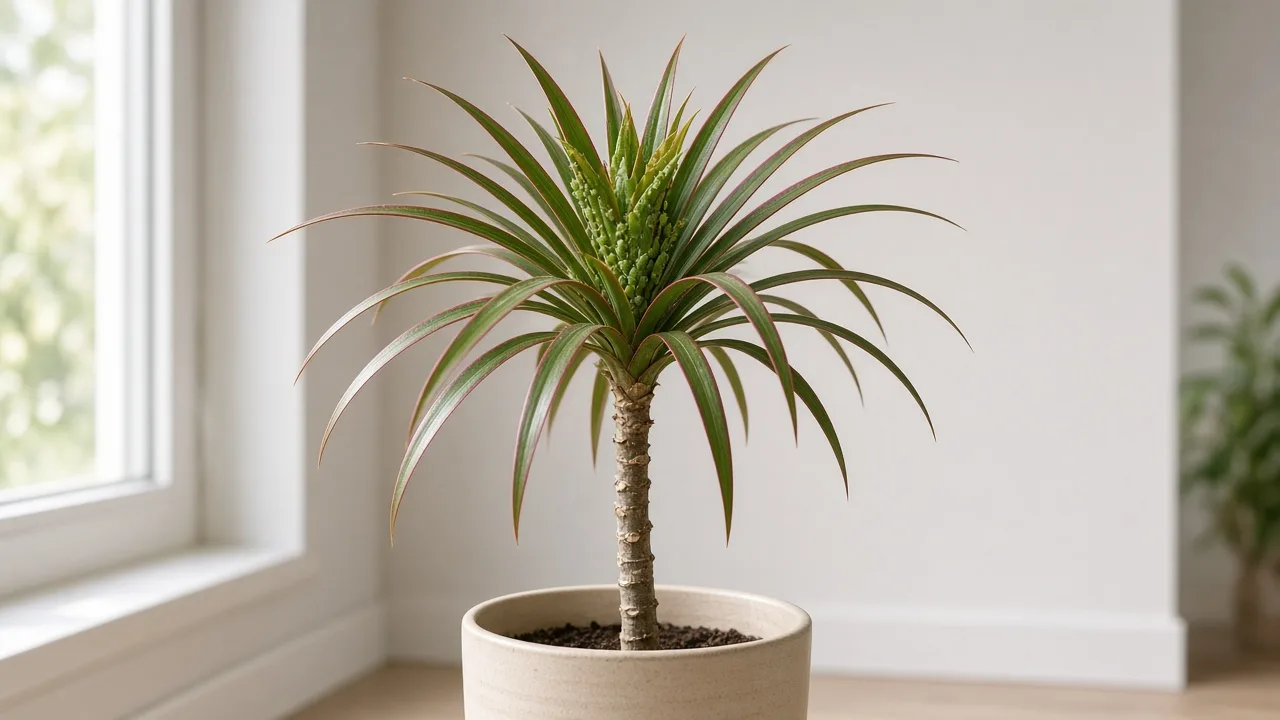
Aphids on Dracaena Marginata: Causes, Checks & Fixes
This guide covers aphids on Dracaena Marginata. See also the general Aphids guide, watering, and light pages for this plant.
Aphids on Dracaena Marginata: Causes, Checks & Fixes
Quick answer
Aphids on Dracaena Marginata (Dracaena marginata, Madagascar dragon tree) are small sap-sucking insects that settle on the softest tissue at each cane tip—newly unfurling narrow sword leaves with red or pink margins. They pierce tender blades as they open, leaving curled tips, shiny honeydew on stiff older foliage, and sometimes ants on the pot rim. Established multi-cane plants rarely die from aphids alone when you catch colonies early on slow-growing stems.
For how aphids behave on houseplants in general, see our aphids guide. On marginata, the decisive check is live insects and stickiness at the rosette—not brown dry tips on mature leaves, which usually trace to fluoride or dry-down stress instead.
First step: isolate the plant and rinse aphids off each cane rosette and leaf undersides with lukewarm water. Fan the narrow blades apart, spray from below, tip the pot so water runs away from the gray cane base, and let foliage dry in bright indirect light the same day. Only after a thorough rinse should you consider insecticidal soap on persistent colonies.
When to use this page vs other Dracaena Marginata guides
- Dracaena Marginata watering — Use when soil moisture or fluoride brown tips are the main question, not visible insects.
- Dracaena Marginata problems hub — Browse all common issues on this species.
- Mealybugs on Dracaena Marginata — Cottony white clusters in cane joints instead of pear-shaped aphids.
- Spider mites on Dracaena Marginata — Stippling and webbing in dry winter air, not sticky new crown growth.
Aphids vs. mealybugs vs. spider mites on slim canes
Dragon tree pests are easy to mix up because all three can show up on slow dracaena canes indoors.
| What you see | Likely pest | Next step |
|---|---|---|
| Pear-shaped insects on cane-tip rosettes and leaf bases; sticky honeydew; ants on pot rim | Aphids (this guide) | Isolate, rinse rosettes and undersides, repeat before spray |
| White cottony masses where leaves meet gray canes | Mealybugs | Mealybugs on Dracaena Marginata |
| Fine stippling, webbing, dry leaf edges; worse in heated winter rooms | Spider mites | Spider mites on Dracaena Marginata |
| Brown tips on mature sword leaves with no stickiness or insects | Water or fluoride stress | Brown tips and watering |
If honeydew is present but you cannot find insects, follow ant trails upward—they often farm aphids or mealybugs on the rosette above.
What aphids look like on Dracaena Marginata
Marginata pushes new leaves from rosettes at the top of each slim gray cane—not the broad strap leaves of corn plant. That unfolding cluster is softer than hardened sword foliage below, which is where aphids feed on soft, new plant growth per UC IPM. UC IPM describes aphids as small, soft, pear-shaped insects that may be green, yellow, brown, red, or black.
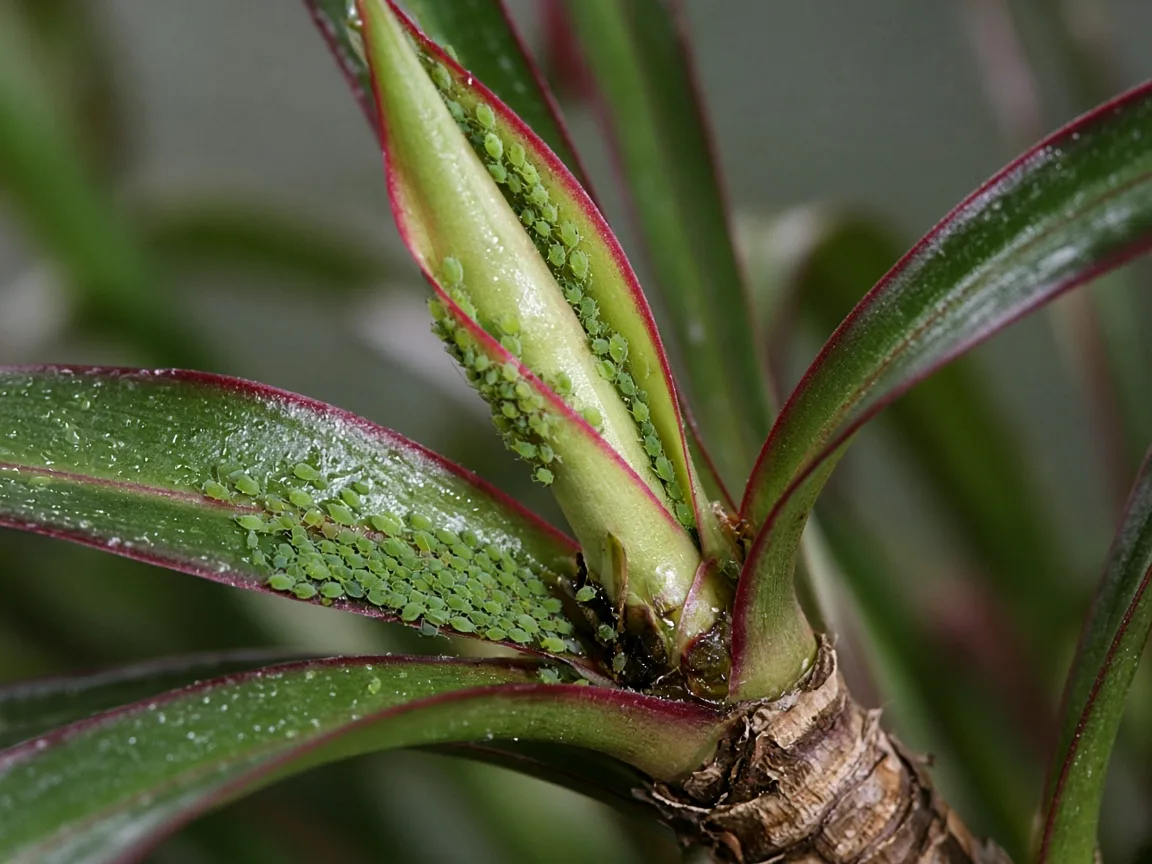
Green aphid cluster tucked where a narrow red-edged leaf meets the cane—compare with clean sword blades below.
Typical signs on dragon tree include:
- Pinhead-sized soft insects clustered on the newest sword leaves and the shoot apex of each cane head
- Pear-shaped bodies about 1/16 to 1/8 inch long with visible legs; they cling when disturbed rather than flying away immediately
- Shiny honeydew on narrow blades below active colonies; sooty mould may grow on dried honeydew per the RHS
- Ants on the pot rim or saucer—ants protect aphids from natural enemies, so biocontrol struggles until ants are blocked
- Slightly twisted or stunted new sword leaves when populations are high on a rosette
- Whitish cast skins on stems and in leaf axils as aphids molt
- Winged adults on crowded colonies—a sign populations are spreading to other plants
On marginata, damage often shows on one branched head first while sister canes still look crisp—a common miss on tall floor plants you view from across the room. Older lower sword leaves can stay perfect even when the top rosette is heavily colonized.
Unlike mealybugs, aphids are naked soft insects without cottony wax. NC State lists mealybugs, aphids, scale, and spider mites among dracaena pests to monitor. Unlike fluoride tip burn—common on marginata—aphids cluster on live tissue with insects present; brown tips stay fixed at leaf margins without honeydew.
Where to inspect on multi-head dragon trees
Work cane by cane from soil line to rosette:
- Each cane-tip rosette — newest unfurling sword leaves and the shoot apex (check every head on branched plants)
- Leaf axils where narrow blades meet slim gray stems
- Undersides of upper sword leaves along midribs, especially on the youngest foliage
- Cane joints near the soil line—mealybugs are more common here, but stressed plants can host aphids too
- Pot rim and saucer — ant trails point upward to active colonies
Hold a phone light along the blade edge. Marginata’s narrow leaves hide small colonies until honeydew dulls the red margin on blades below.
After beheading or fresh branching
Many owners behead tall marginata to force side shoots lower on the cane. Aphids love the soft flush that follows—several tender rosettes may open at once. If you recently pruned, inspect every new head weekly until growth hardens. See the pruning guide for recovery timing, but treat pests before stacking more cuts.
Why Dracaena Marginata gets aphids
Aphids are not random bad luck. They arrive on new plants, cuttings, summer patio exposure, or shared tools, then settle into tender rosette tissue where indoor sprays often miss them. Gardening Know How notes that excessive nitrogen can encourage lush growth that draws aphids to dracaena.
Several marginata habits make infestations easier to miss:
Rosette-focused growth. Each slim cane has one active growing point at its tip. Aphids feeding there remove sap from the only flush that lengthens that stem—damage looks sudden even though colonies built quietly for weeks.
Slow replacement rate. Marginata is a slow to moderate grower indoors. Heavy sap feeding yellows leaves and stunts plants; on dragon tree, that sap loss outpaces leaf replacement longer than on fast vines.
Indoor predator absence. Lady beetles and lacewings consume aphids outdoors. Indoors, populations can increase rapidly when warm—females give birth to live young, and nymphs mature quickly under favorable conditions.
Narrow leaf architecture. Sword blades pack tightly at the crown. Aphids tucked between unfurling leaves are harder to reach with contact pesticides until you fan the rosette open during rinsing.
Tall pots and overwatering risk. Marginata tolerates dry-downs, but owners sometimes overwater after spotting sticky leaves. Soggy mix weakens roots while pests persist on the crown—see overwatering if lower leaves yellow on heavy pots.
Mealybug confusion. UF/IFAS notes mealybugs and scale as common dracaena pests; aphids are less often mentioned but still occur per NC State’s dracaena pest list. White wax in cane joints points to mealybugs instead.
How to confirm the cause
Work through these checks before buying spray or changing soil:
- Find insects, not just stickiness. Honeydew alone can follow scale, mealybugs, or aphids. Locate the pest source on a rosette first.
- Every cane head. Branched marginata may host aphids on only one tip—inspect all rosettes.
- Movement test. Aphids cling when disturbed. Flying insects suggest whiteflies; cottony wax that does not move is mealybugs.
- Shake test. Hold white paper under a rosette and tap the cane gently. Aphids fall as small dots that stay put.
- Ant and mold check. Ants plus sooty mold strongly suggest sap feeders above.
- Rule out fluoride tip burn. Brown crisp margins without insects, honeydew, or ants point to tap water quality—see brown tips.
- Rule out spider mites. Stippling and webbing without soft clusters suggest mites—see spider mites.
- Inspect the collection. Aphids spread to nearby shelves. Check other dracaenas and broad-leaf companions.
Confirmed aphids require treatment on the plant and surrounding collection, not just the worst leaf.
First fix for Dracaena Marginata
Move the plant away from other houseplants, then rinse each cane rosette and leaf undersides with a firm stream of lukewarm water—UC IPM recommends knocking aphids off with a strong water spray on sturdy plants before reaching for pesticides.
On marginata:
- Tilt the tall pot in a sink or shower so water runs off narrow blades—not straight into a heavy floor pot
- Cover the soil surface with foil or a plastic bag if the mix is already damp from recent watering
- Fan sword leaves apart at each rosette; spray undersides along midribs where aphids hide
- Let foliage dry the same day in bright indirect light—wet blades in deep shade invite fungal spotting
Gardening Know How recommends blasting dracaena pests off with a strong spray of water when only a few insects are present. Do not return marginata to its display spot until you finish at least one follow-up inspection cycle.
Do not soak the pot repeatedly while treating; dragon tree roots hate stale moisture in dim corners. Do not apply fertilizer to a pest-stressed plant. Do not skip isolation.
Insecticidal soap and repeat cadence
If live aphids remain after two or three rinse cycles, apply a product labeled for aphids on houseplants, covering rosette tissue and undersides thoroughly. Insecticidal soaps kill only insects contacted during application—repeat every five to seven days through at least two to three cycles to catch newly hatched nymphs.
Spot-test first. Dracaena foliage can be sensitive to soaps and oils—apply to one lower sword leaf, wait 24 hours, and check for spotting before treating every rosette. If the spot test fails, stick with repeated rinsing and alcohol swabs on accessible clusters.
Sap and pet safety during treatment
Dracaena is toxic to cats and dogs. Wear gloves if you have sensitive skin, keep treated leaves away from pets until dry, and contact your veterinarian or ASPCA Animal Poison Control if a pet chews infested or recently treated foliage.
Step-by-step recovery
After isolation and the first rinse, continue in this order based on severity:
- Repeat rinses every two to three days until you stop finding live aphids on each rosette.
- Alcohol swabs on accessible clusters. Dab dense crown colonies with a cotton swab dipped in 70% isopropyl alcohol when rinsing misses tight axils—test one leaf first.
- Insecticidal soap or horticultural oil on remaining nymphs after a successful spot test. Cover rosettes and undersides; avoid applying in hot sun or to drought-stressed plants. Repeat weekly for two to three cycles.
- Address ants if present. Keeping ants off plants helps beneficial insects control aphids. Trap or block ant trails on pot rims.
- Wipe sooty mold from sword leaves with a damp cloth once honeydew production stops—RHS notes sooty mould is harmless but can be wiped off.
- Inspect the collection weekly for two weeks after you think the plant is clear.
- Hold fertilizer until new sword leaves look normal for two weeks. Sap loss, not nutrient lack, is the immediate problem.
- Do not repot on day one unless soil pests are confirmed—repotting plus pest stress on slow marginata compounds damage. See repotting only after pests are controlled.
Recovery timeline
Because marginata grows slowly, pest recovery is measured in weeks, not days.
- First seven to ten days: Active colonies should shrink after isolation and repeated rinsing; fresh aphids on previously cleaned rosettes mean keep going.
- Two to four weeks: With weekly soap follow-ups after a clean spot test, new crawlers should become rare; honeydew stickiness dries up.
- Four to eight weeks: Judge success by clean new sword leaves with crisp red margins, not by old distorted foliage—which will not fully revert.
- Two to three months: A tall multi-cane plant may still look thin until enough new blades fill gaps; that is normal for dragon tree.
Worsening signs: colonies return at every rosette despite treatment, winged aphids appear on multiple plants, lower leaves drop in clusters, or the cane feels soft while soil stays wet—soft cane points to root rot and needs separate assessment.
What not to do
Do not ignore honeydew—it leads to sooty mold and ant farming. Do not stop after one rinse or one soap application; aphid nymphs hatch on a staggered schedule and repeat applications are usually necessary.
Do not soak the pot repeatedly while treating; marginata in deep shade already risks overwatering. Avoid broad-spectrum indoor sprays that harm beneficial predators if you later move plants outdoors.
Do not over-fertilize after treatment to push growth—over-fertilization pushes tender shoots that aphids prefer.
Do not confuse fluoride burn with pests; brown tips without insects need filtered water, not more soap.
Do not return the plant from quarantine until you have gone two weeks without finding live aphids on any rosette.
Dracaena Marginata care cross-check
While treating aphids, keep baseline care steady so the plant can grow out of damage:
- Light: Bright indirect light; weak light slows recovery and favors leggy growth. See the light guide.
- Water: Let the top half of mix dry between drinks; see the watering guide.
- Humidity: 40–60% is adequate; low humidity alone will not remove aphids but can stress blades during recovery.
- Rinsing technique: Tipping the pot and targeting rosettes beats overhead soaking that pools at the cane base.
How to prevent aphids next time
Scout each cane rosette weekly, especially after spring growth picks up indoors. UC IPM recommends checking plants at least twice a week during rapid growth.
Quarantine new dragon trees two weeks before placing them on a shared plant stand.
After summer outdoors, rinse and inspect before the plant re-enters your home.
Use balanced fertilizer at modest strength in active growth—not heavy nitrogen that pushes soft shoots.
Preserve beneficial insects by avoiding broad-spectrum sprays unless necessary.
Keep ant barriers on shelves where you have had honeydew problems before.
For species context and routine care, see the Dracaena Marginata overview.
When to worry
Escalate when aphids cover most new growth on multiple cane heads despite a week of rinsing, when sooty mold blocks most blade surfaces, or when new sword leaves stay stunted while the cane base softens. A handful of aphids on one rosette is manageable with isolation and rinsing. A colony on every unfolding tip with ants and mold needs soap repeats and possibly removing the worst shoots if cane health is failing.
Conclusion
Aphids on Dracaena Marginata target the same soft rosettes at slim cane tips that give this plant its architectural look indoors. Confirm them on narrow red-edged sword leaves, isolate, rinse before you spray, and repeat until each head produces clean new growth. Steady light, fluoride-aware watering, rosette-focused rinsing, and weekly scouting during your watering routine prevent small colonies from becoming sticky messes across your whole dragon tree collection.
Related Dracaena Marginata guides
- Dracaena Marginata overview
- Dracaena Marginata watering
- Dracaena Marginata light
- Dracaena Marginata soil
- Mealybugs on Dracaena Marginata
- Spider mites on Dracaena Marginata
- Yellow leaves on Dracaena Marginata
- Dracaena Marginata problems
Related tool
Use the Pest Identifier Tool to narrow causes for aphids on this plant before changing multiple variables at once.