How to Prune Fig Trees: When, Where & What to Cut
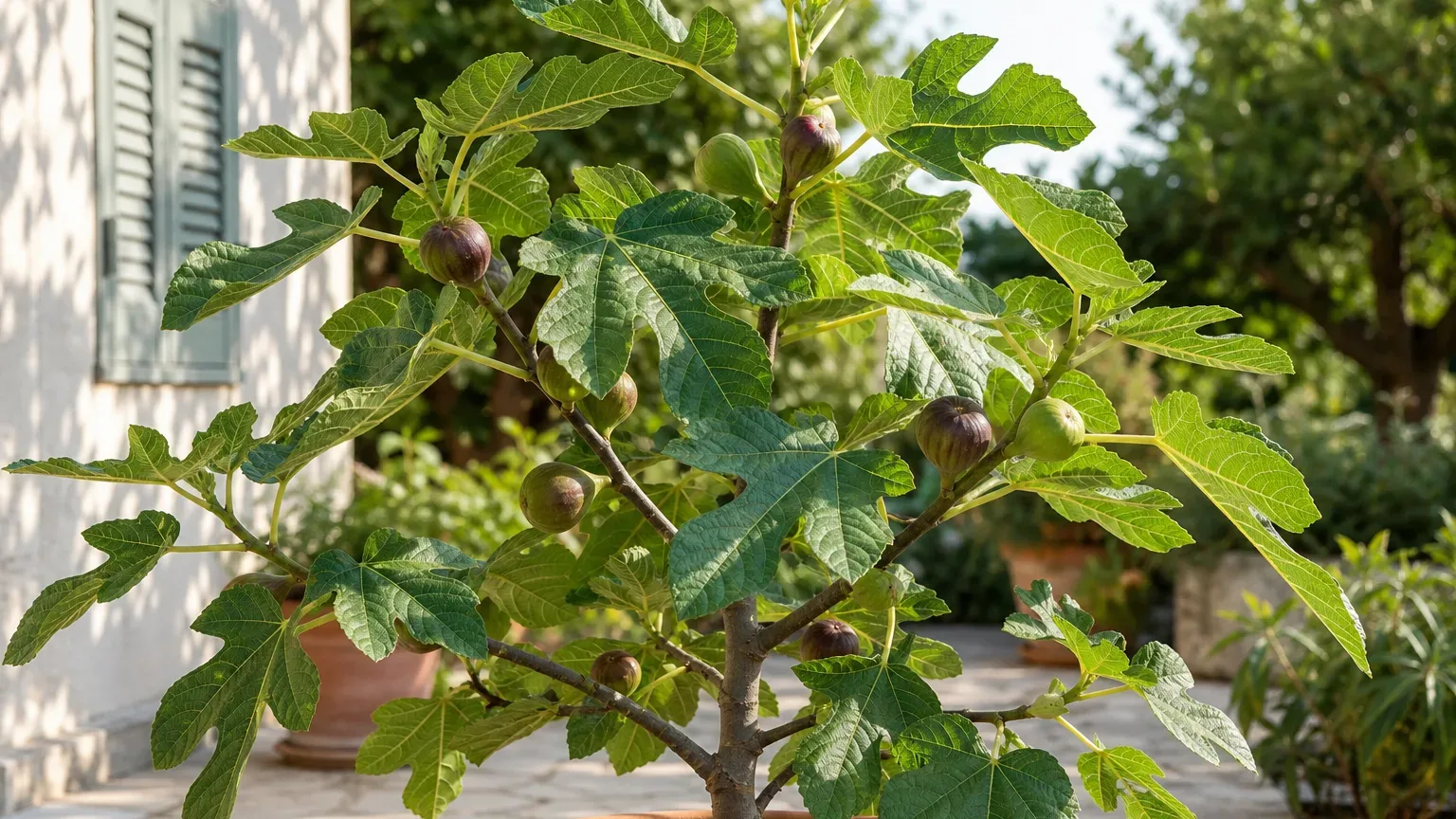
How to Prune Fig Trees: When, Where & What to Cut
How to Prune Fig Trees: When, Where & What to Cut
First, remove only dead, damaged, or clearly diseased wood with clean bypass pruners or a pruning saw. Cut back to healthy tissue or to the branch base without leaving a ragged stub. Do not shorten live fruiting shoots until you have inspected the tips for pea-sized overwintered fruitlets and decided which branches actually need hard renewal.
Quick answer
Common fig (Ficus carica) is a vigorous deciduous fruit tree, not an evergreen indoor Ficus. Prune it twice a year: once in early to mid-spring after hard frosts pass, and again in early to mid-summer for shoot tipping and thinning (RHS fig pruning guide). The main outdoor crop ripens from pea-sized fruitlets that formed at shoot tips the previous late summer and overwintered on the plant (Missouri Botanical Garden). Either leave a shoot alone or cut it back hard to a short stub—light tip pruning on bare branches does little. Wear gloves: broken stems release irritant latex (NC State Extension). For whole-plant context, see the Fig overview.
What pruning does for common fig
Left alone, fig becomes a large spreading shrub or small tree with long bare branches, base suckers, and leaves that shade their own fruit. Regular pruning keeps the plant harvestable on a terrace or balcony, lets light into the canopy, removes energy-draining suckers, and channels growth into shoots that can carry next year’s embryos.
Pruning cannot fix weak sun, waterlogged roots, or an oversized pot. If the tree is stretching toward light with sparse leaves, improve Fig light placement before expecting structural cuts to produce compact growth. Likewise, drought-stressed plants drop fruit and yellow leaves—stabilize Fig watering before aggressive thinning.
Four jobs appear on most home figs:
Sanitation removes dead, frost-damaged, crossing, or diseased wood whenever you see it. Spring framework pruning chooses which prior-year shoots to keep, hard-renews bare branches, and opens the crown. Summer tipping pinches vigorous new shoots after five leaves to encourage branching and next year’s fruitlets. Autumn cleanup removes large unripe figs that will not mature, leaving only the tiny embryos for next season.
When to prune fig
Spring structural pruning
Start major cuts once prolonged hard frost is unlikely and before the spring growth flush accelerates. In warm parts of India this may fall in late winter or early spring; in cooler hill terraces, wait until nights are reliably above damaging cold for your cultivar. NC State Extension notes light winter pruning may help maintain shape, but the productive calendar for fruiting plants centers on spring renewal after cold risk drops.
On fan-trained wall figs, reduce about one-third of the previous year’s young shoots to 2.5 cm (1 in) stubs with good spacing, remove inward-growing wood, and shorten one or two old bare framework branches to 5–8 cm (2–3 in) stubs (RHS fan pruning).
Early-summer pinch and thinning
Return in early to mid-summer when new shoots are elongating. Pinch or cut back shoot tips once they have five to six leaves to slow whippy growth and encourage side branching with embryonic fruitlets at the tips (RHS). Remove long soft shoots that spoil shape by cutting them hard to 5–8 cm unless you plan to tie them into the framework.
Stop shoot tipping by mid-summer. Growth pruned after that point may not have time to form next year’s pea-sized embryos before the season ends (RHS).
Mid-autumn cleanup
In mid-autumn, remove larger green figs that formed on current-season wood and will not ripen. Only the tiny overwintered embryos at shoot tips should remain for next year’s crop (RHS fruiting explanation). In short-season or high-rainfall areas, prompt removal also reduces fallen fruit mess NC State flags as a common issue.
When not to prune
Delay elective structural pruning when:
- the plant was recently repotted or root-pruned (Fig repotting stacks stress with hard cutting);
- leaves are wilting from drought or the mix stays soggy;
- most tips still carry pea-sized fruitlets you intend to harvest;
- a severe cold snap or heat wave is imminent for a container plant you cannot shelter.
Sanitation of broken or diseased wood is the exception—remove that promptly.
What to check before cutting
Walk around the plant and label each branch mentally:
- Fruitlets present? Look at last year’s shoot tips for pea-sized swellings. Keep compact shoots that carry them.
- Bare or whippy? Long leafless sections need hard renewal stubs, not a light trim.
- Suckers at the base? NC State notes common fig produces many suckers that can form thickets—plan to remove them.
- Framework fit? On a fan, branches should spread along wires; in a pot, aim for an open bowl-shaped crown.
- Sun and water context? Sparse, stretched growth often means insufficient direct light rather than a pruning failure.
The first cut to make
Remove one clearly dead, frost-killed, or diseased branch entirely, cutting to healthy cambium or to the collar at a main stem. Bag the debris if latex sap is dripping. Only after that cleanup should you mark live shoots for hard renewal or summer tipping.
How to prune fig step by step
Container bush or standard
Most terrace and balcony figs grow as a short-trunk bush or standard in a large pot. After sanitation:
- Identify shoots with pea-sized fruitlets at the tips and mark them keep.
- Remove crowded, crossing, or weak shoots entirely, or shorten them to 2.5 cm stubs if you want replacement growth lower on the branch.
- On mature plants, cut one or two over-long bare branches to 5–8 cm stubs to force new shoots from near the base of the branch.
- In early summer, pinch tips of selected new shoots at five to six leaves.
- Strip suckers from the pot rim and soil surface as they appear.
Root restriction in containers helps limit excess leafy growth and encourages fruiting (Missouri Botanical Garden container guidance). Match pruning goals to the pot size you can realistically maintain.
Wall-trained fan
Fan training suits a sunny south- or west-facing wall that stores heat—useful in cooler pockets of India as well as Mediterranean-style climates. Tie new shoots to horizontal wires about 30 cm apart. In spring, thin forward- and backward-growing shoots that cannot be eased sideways, renew bare leaders to short stubs, and retain fruitlet-bearing tips. In early summer, tie and pinch as for bush forms. Work from the bottom upward so sap does not drip onto your skin (RHS how-to feature).
Suckers and crowded shoots
Cut suckers flush at the base as soon as you see them—they divert energy from the trained crown (RHS). When two shoots occupy the same space, remove the one without fruitlets or with weaker angle. Aim to remove roughly one-third of young stems in spring if the plant is congested, not half the canopy at once unless you are executing a staged renovation.
Where to cut and how much is safe
Fig pruning follows a binary rule: leave the shoot alone or prune it hard. Shortening a bare branch by a few centimeters rarely produces useful low regrowth (RHS).
| Wood type | Cut to | Goal |
|---|---|---|
| Dead, diseased, frost-damaged | Healthy tissue or collar | Sanitation |
| Young crowded shoot without fruitlet | Remove entirely or 2.5 cm stub | Thinning / renewal |
| Old bare branch | 5–8 cm stub | Low replacement shoots |
| New soft summer whip | 5–8 cm stub if not needed for framework | Shape control |
| Shoot tip in early summer | Pinch above the fifth leaf | Branching + next year’s embryos |
For routine maintenance, removing about one-third of young stems in spring is a useful ceiling. Major renovation is different—see below.
What not to cut
Do not shear the canopy like a hedge. Avoid:
- shoot tips carrying pea-sized overwintered fruitlets unless you accept losing that fruit;
- heavy summer tipping after mid-summer;
- leaving long bare stubs that die back unpredictably;
- keeping all suckers for “bushiness”—they create a weedy thicket;
- pruning the same day as heavy Fig fertilizer application or repotting unless sanitation demands it.
Pruning also cannot ripen figs that formed too late in the season. Those belong in the autumn removal pile, not on the plant over winter.
Pruning for size on terraces and in pots
A container fig can be kept to roughly 1.2–2.4 m with annual spring thinning, summer tipping, and disciplined sucker removal—especially when roots are confined and the plant receives full sun. If height still exceeds your balcony clearance, renew one tall bare leader per year to a 5–8 cm stub rather than topping every branch at once.
Combine size control with correct Fig soil drainage and steady moisture while fruit swells. Oversized leafy growth in a huge pot often signals excess nitrogen or root space rather than a need for harder pruning.
Renovation pruning for overgrown figs
Mature fig tolerates hard cutting, but responds with vigorous water shoots. RHS renovation guidance recommends staggering major reduction over several years unless emergency clearance is required: remove about one-third of the oldest shoots each spring, then pinch summer regrowth. Ground-planted trees may need three to five years to regain a balanced crown; container plants often respond faster if light and water stay consistent.
Tools, sap safety, and pet precautions
Use sharp bypass pruners for shoots up to finger thickness and a pruning saw for older wood. Disinfect blades between plants if disease is suspected.
Ficus carica exudes white latex containing furanocoumarins. NC State lists phytophotodermatitis as the principal human poisoning symptom from sap contact followed by sun exposure. Wear gloves, long sleeves, eye protection, and a hat when working overhead. Wash skin promptly and keep cut material away from children and pets.
NC State classifies common fig as a low-severity poisonous plant and flags problems for cats, dogs, and horses. Bag pruning waste rather than composting where animals can reach it.
Aftercare and recovery timeline
After spring pruning, expect bud break and new shoots within the normal active growth window for your climate—often a few weeks in warm conditions, longer if nights remain cool. Summer pinching should produce lateral shoots and tiny embryos at tips by late summer.
Hold watering steady but not excessive while new shoots harden; follow the Fig watering guide’s dry-surface rule rather than flooding after a hard cut. Do not repot solely because you pruned. If you want to propagate selected renewal wood, see Fig propagation for hardwood cuttings and layering timing.
Signs pruning worked:
- retained fruitlets swell and ripen on kept shoots;
- new shoots emerge from hard stubs low on bare wood;
- the crown looks open, not a tangle of crossing whips;
- sucker regrowth at the base slows once removed consistently.
Signs timing or severity was off:
- few or no fruitlets the following year after heavy spring tip removal;
- excessive water sprouts after single-session hard renovation;
- continued leaf yellowing despite improved shape—often roots or water, not pruning.
Mistakes to avoid
Light trimming bare branches. Shortening a leafless section without cutting to a stub leaves an ugly stick and weak regrowth.
Pruning off all fruitlet-bearing tips in spring. That is the most common reason for “my fig grows leaves but no fruit.”
Summer pruning too late. Post-midsummer cuts sacrifice next year’s embryos.
Ignoring suckers. They rebuild a thicket and steal vigor from the trained crown.
Pruning in weak light. The plant simply regrows long shoots; fix sun first.
Handling sap bare-handed. Irritation and phytophotodermatitis risk are real on pruning day.
Related Fig guides
- Fig overview — growth habit, fruiting basics, and cultivar expectations
- Fig light — why full sun matters before structural cuts
- Fig watering — moisture while fruit swells and after pruning stress
- Fig propagation — using pruned wood for cuttings or layering
- Fig repotting — when to root-prune without stacking with heavy canopy cuts