Root Rot on Fig: Container Checks & Salvage
Quick answer
Root rot on fig (*Ficus carica*) usually starts when container mix stays saturated—often after fruit-season soaks, winter watering on leafless trees, or saucers left full. First step: stop watering, lift the pot, and unpot to inspect roots and the stem base before adding more water because lobes hang.
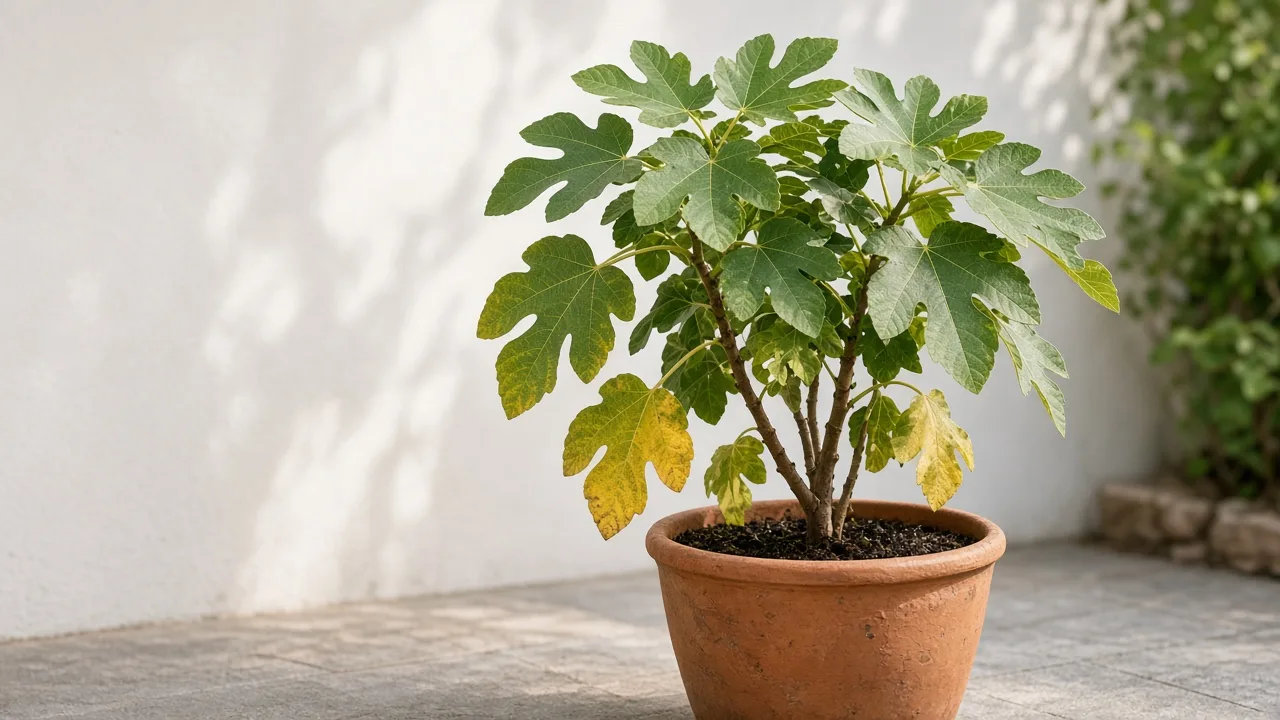
Root Rot on Fig: Causes, Checks & Fixes
This guide covers root rot on Fig. See also the general Root Rot guide, watering, and light pages for this plant.
Root Rot on Fig: Causes, Checks & Fixes
Quick answer
Root rot on fig (Ficus carica) is almost always a wet root-ball problem, not a missing fertilizer or a single skipped watering. Common fig is a deciduous fruiting tree with shallow, fibrous roots that need oxygen between soaks. UF/IFAS notes figs need plenty of water during the fruiting season but will not tolerate excessively wet soil—that tension is where container growers lose trees.
First step: stop watering, lift the container, and unpot to inspect roots and the stem base. Do not add water because lobes hang; plants with root rot often wilt while soil stays wet because rotting roots cannot transport water.
For how chronic saturation damages roots in general, see our root rot guide. On patio and terrace figs, rot usually tracks fruit-season soaking, cachepots, or winter drinks on leafless dormant trees—not the same rhythm as a fiddle-leaf Ficus indoors.
When to use this page vs other Fig guides
This page is the confirmed wet-root rescue path for common fig. Use it when mix stays soggy, roots are mushy, or wood softens at the soil line.
- Overwatering on Fig — start here when you suspect calendar watering or saucer water before roots are clearly mush
- Drooping leaves on Fig — when lobes hang but you have not yet unpoted to see root color and firmness
- Wilting on Fig — acute collapse in hours; may end here if wet mix and soft wood confirm rot
- Yellow leaves on Fig — lower-lobe yellowing on chronic wet mix often precedes rot
- Fig watering — long-term dry-down rhythm after salvage
- Fig soil — gritty repot mix and drainage for recovery
What root rot looks like on Fig
Healthy container fig holds rough, lobed leaves on firm gray-brown wood. Root rot changes the root ball and lower stem first; canopy symptoms follow.
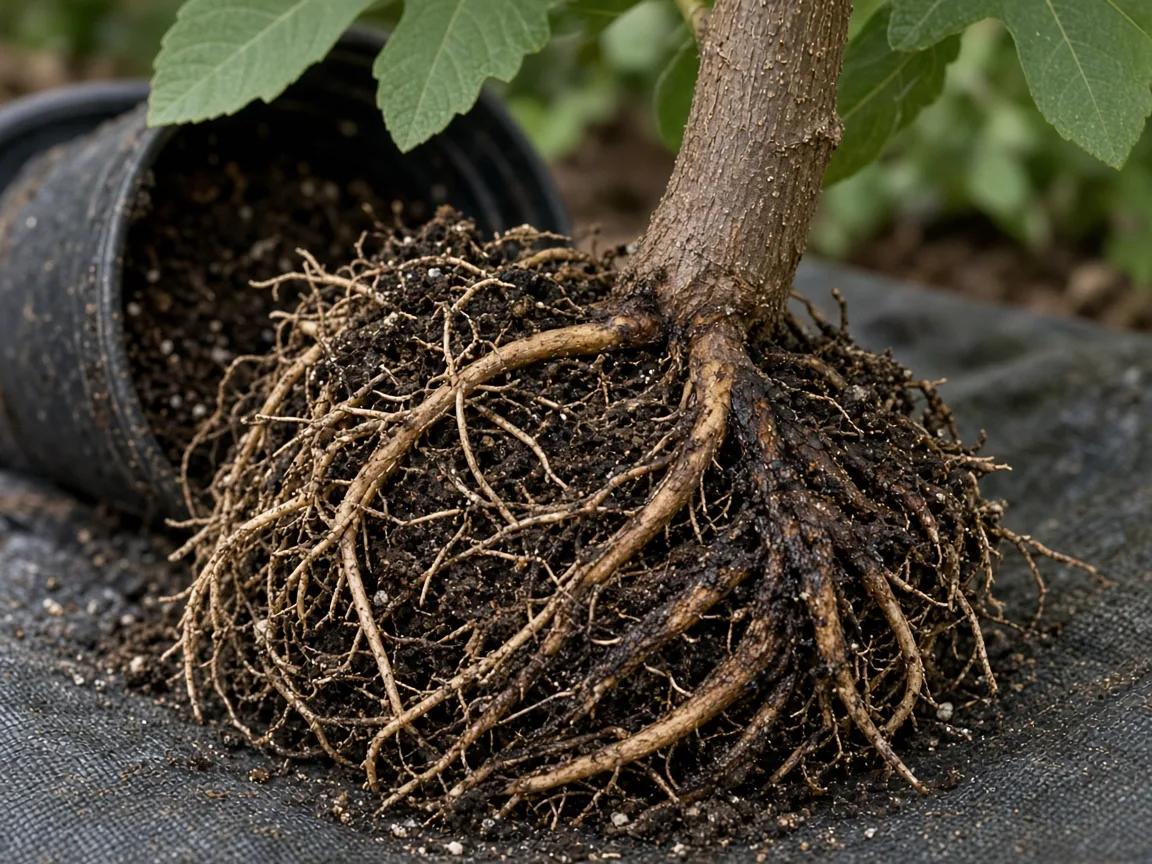
Root rot on Fig—compare mushy dark roots with firm pale roots on the same root ball.
Early signs (still saveable)
- Pot feels heavy several days after the last soak; top mix clings wet while lower lobes yellow
- Growth stalls during active leaf-out or fruit swell despite sun and feed
- Fungus gnats or mold on soil appear—surface clues that mix rarely dries
- Syconia abort or fail to swell when improper soil moisture stresses the tree
Advanced signs (act today)
- Sour or swampy odor from drainage holes
- Roots turn brown, slimy, or hollow when you brush mix away; healthy fig roots are firm and pale tan to white
- Soft, darkened wood at the soil line on container plants
- Multiple branches wilt together on wet mix—the classic pattern where owners water again because foliage looks thirsty
Why Fig gets root rot (not your indoor Ficus)
Same genus, different watering physics. Common fig pushes large leaves and developing syconia in summer, so mix dries fast in terracotta on a hot terrace—but roots still need air. NC State lists fig in organically rich, well-drained, moist soil. “Moist” means replenished after the upper layer dries, not saturated for a week.
Fruit swell plus fear of drought. Growers often increase soak frequency while syconia swell, then leave saucers full or nest pots in cachepots. Wet feet during heat is a common rot trigger even when the tree “needed” water yesterday.
Dormant overwatering. Missouri Botanical Garden recommends watering regularly in the growing season but reducing watering in fall for container plants. A leafless fig in a garage still gets weekly drinks out of habit while roots use almost no moisture—slow rot builds without an obvious summer overwater event.
Poor drainage and dense mix. Overwatered container plants stay saturated when mix is peat-heavy, holes clog, or gravel blocks drainage. Fig roots sit in stagnant water; most root rot fungi prefer wet soil conditions.
Post-repot soggy reset. Fresh mix that stays wet too long after Fig repotting can stall new feeder roots—especially if you watered daily “to help establishment” on an already wet root ball.
Winter garage rot vs summer terrace rot
These two failure modes look similar above soil but need different prevention.
| Season | Typical mistake | Pot clue | Canopy clue | Prevention anchor |
|---|---|---|---|---|
| Summer / fruit swell | Daily shallow drinks, full saucers, cachepots | Heavy; wet at depth in heat | Drooping lobes, fruit drop, yellow lower leaves | Fig watering dry-down during swell |
| Winter dormancy | Summer schedule on leafless tree | Wet mix weeks after one drink | Few leaves to show stress; soft wood surprise in spring | Light drinks only when root ball approaches dry |
| Early spring wake-up | Soak before roots active in cold mix | Stays wet in unheated shelter | Delayed leaf-out, soft tips | Wait for bud swell; verify drainage before deep soak |
How to confirm the cause
Work in order so you do not drown a tree that is only dry:
- Pot weight — Heavy days after watering favors rot; very light favors drought (different guide).
- Deep moisture — Probe 1–2 inches down, then deeper near drainage. Clinging wetness for days supports rot.
- Smell — Sour odor from the pot bottom strongly supports decay on wet mix.
- Stem squeeze — Pinch young wood at the soil line. Soft tissue on wet mix is urgent.
- Unpot on a tarp — Slide the root ball out. Brush mix away and compare firm pale roots versus mush.
- Wilt paradox — If lobes hang but mix is wet and roots are brown, this is rot—not a cue to water (Wisconsin Extension).
Decision rule: Wet mix plus mushy roots means reduce moisture and trim decay—not “let it dry on its own” if more than a small fraction of roots are mush.
Severity ladder for container fig
Mild
Some brown tips on roots, but main trunk firm and most roots pale and hard. Often recoverable with trim, dry repot, and corrected watering.
Moderate
Large root loss, firm scaffold branches, sour smell limited to the bottom of the ball. Salvage with aggressive trim and gritty soil; expect slow spring flush.
Severe
Trunk base soft, most roots mush, multiple branches failing on wet mix. Whole-tree recovery is unlikely—take firm suckers or cuttings from clean wood per the propagation guide if tissue is still healthy above the rot line.
First fix for Fig
Stop all watering immediately. Do not fertilize, do not “test with a small drink,” and do not mist leaves to perk them up.
Next, unpot onto a tarp, rinse only enough to see roots, and trim every mushy root back to firm tissue with clean pruners. Let cut surfaces air-dry for several hours. Repot remaining firm roots into dry, free-draining mix—not the old soggy ball—and withhold soak until you re-check firmness in a few days.
Wear gloves: broken fig stems release irritating latex that can sensitize skin in sun. Wash tools and exposed skin after pruning.
Step-by-step recovery
- Document — Note season (dormant vs fruit swell), last repot, and whether saucers or cachepots held water.
- Trim roots — Remove brown mush; keep firm white or tan roots even if the ball is small.
- Inspect stem — If cambium is green and wood is firm above rot, keep the scaffold; if base is soft through, pivot to salvage wood higher up.
- Dry repot — Use the mix ratios in Fig soil; pot only slightly larger than the trimmed root mass.
- Place in bright light — Active recovery needs sun per the light guide, but avoid baking a freshly trimmed root ball in dark wet mix.
- First post-rescue drink — Water only when new mix is approaching dry at the top 1–2 inches and the pot feels lighter—not on a calendar.
- Watch new growth — Success is firm new buds and stable pot weight, not instant re-greening of every old lobe.
Wisconsin Extension advises reducing soil moisture as the core save strategy once rot is confirmed—chemical fungicides are rarely the practical home fix.
Recovery timeline
Mild cases with firm wood often show new bud break within two to four weeks in warm weather after a dry repot. Moderate root loss may take a full growing season before syconia size returns to normal. Old yellowed lobes may not re-green; judge recovery by new leaves and firm wood, not cosmetic repair of damaged tissue.
If mix stays sour or wood re-softens within two weeks, reopen the root ball—hidden mush in the center is common on dense peat balls.
Root rot vs lookalikes on Fig
| Pattern | Pot / roots | Stem | Start here |
|---|---|---|---|
| Root rot | Heavy, wet; mushy brown roots; sour smell | Soft at soil line on wet mix | This guide |
| Dry drought stress | Light; dry throughout; firm roots if unpoted | Firm wood | Underwatering on Fig |
| Overwatering stress | Wet but roots still mostly firm | Firm wood | Overwatering on Fig |
| Heat wilt | Normal moisture; firm roots | Firm; afternoon droop only | Fig light |
| Transplant shock | Evenly moist after repot; no sour smell | Firm | Fig repotting |
Mistakes to avoid
- Watering because lobes hang while the pot is heavy—this worsens overwatering and rot together.
- Repotting into an oversized container “to help it recover”—extra wet mix volume kills more roots.
- Fertilizing stressed trees to “push growth” before roots are firm again.
- Reusing soggy old mix or saucer water that drained from the infected pot.
- Ignoring winter dormancy: a leafless fig in a cool garage rarely needs weekly deep soaks.
How to prevent root rot next season
Match water to growth stage: frequent checks and deep soaks while leaves and syconia swell; sharp reduction after leaf fall (Missouri Botanical Garden). Use pots with unobstructed holes, empty saucers, and avoid long-term cachepots without lifting the inner pot.
Scout weekly during fruit swell—the same weeks you adjust watering for crop load. Reject nursery trees in sour, waterlogged mix before purchase. Mulch in-ground trees to buffer swings as UC IPM notes for stable root-zone moisture, but never mulch against a soggy container collar.