Fig Watering Guide: How Often to Water Ficus carica
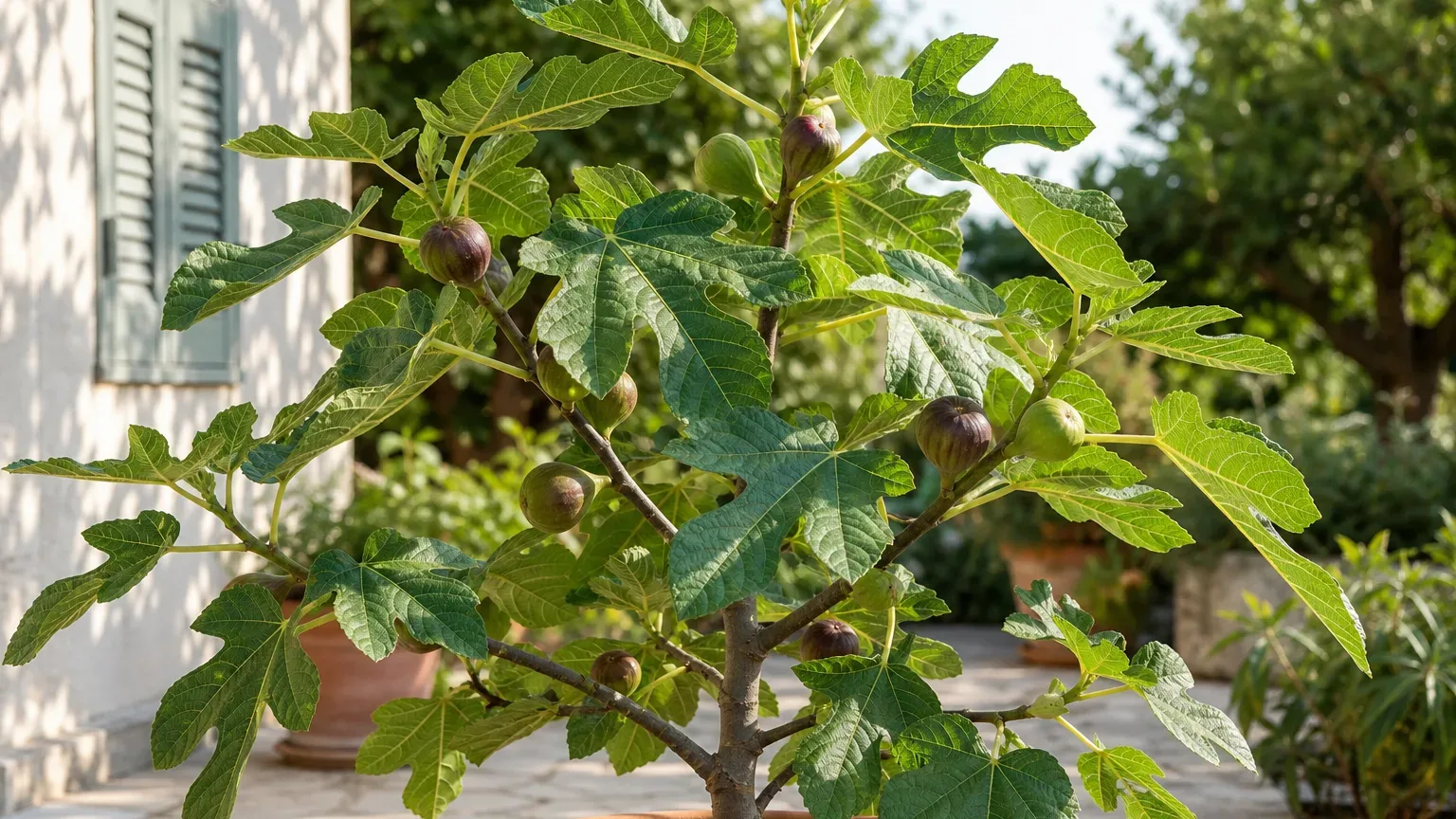
Fig Watering Guide: How Often to Water Ficus carica
Fig Watering Guide: How Often to Water Ficus carica
Fig watering is one of the fastest ways to lose a crop — or the whole root system — on an otherwise tough tree. Ficus carica is a deciduous fruit tree native to the Mediterranean region and Central Asia, not the evergreen indoor Ficus sold as rubber plants or fiddle-leaf figs. Outdoors it wants steady, deep moisture while leaves and fruit are developing, then a sharp reduction once it drops leaves and enters dormancy. The failure mode is rarely “you forgot to water once.” It is watering on a calendar, keeping saucers full, or letting a container bake dry while figs swell.
This guide covers how often to water container and in-ground figs, how to check dryness at the root ball, seasonal changes from active growth through dormancy, and what to do when improper soil moisture causes fruit drop. For whole-plant context, start with the Fig overview and pair this page with Fig soil and Fig light guides.
Why Fig Watering Differs From Indoor Ficus
The genus name Ficus confuses growers. Common fig is a woody, deciduous fruit tree that loses leaves in winter, sets fruit on new wood, and spends summer pumping water into large palmate leaves and swelling synconia. Missouri Botanical Garden lists its water need as medium and recommends watering regularly during the growing season while reducing watering in fall for container plants (Missouri Botanical Garden — Ficus carica).
That is a different rhythm from drought-tolerant houseplant Ficus species grown in dim rooms. Fig roots need oxygen. NC State notes the species wants organically rich, well-drained, moist soil and does not tolerate alkaline conditions (NC State — common fig). “Moist” here means evenly replenished after the upper layer dries — not saturated day after day. UF/IFAS is explicit: figs need plenty of water during the fruiting season but will not tolerate excessively wet soil (UF/IFAS Gardening Solutions — figs). Your job is to land in that window.
How Often to Water a Fig Tree
There is no honest universal interval. A fig in a 40°C terrace pot in May may need a check every two to three days. The same plant in a cool garage after leaf fall may go two weeks between light drinks. Use dryness at the root ball as the trigger, not a phone reminder.
Container figs in active growth often need water every 3–7 days in hot, sunny weather and every 7–14 days in mild conditions, always after the top 1–2 inches (2.5–5 cm) of mix feels dry. Large leaves and developing fruit move water fast. Penn State extension notes container figs are sensitive to drought stress and wind and should be watered regularly as the weather indicates (Penn State — figs in the home garden).
In-ground trees with established roots tolerate longer gaps. UC IPM recommends deep, infrequent irrigation every 2–3 weeks for mature fruit trees, wetting several feet of soil around the drip line rather than spraying the trunk (UC IPM — cultural tips for growing fig). Sandy soils may need water every 3–5 days when young; heavier soils can go 1.5–2 weeks. Young trees are thirstier — up to 3–5 gallons per week in the first year while roots establish.
Track your own pot: note the date you soaked, when the container felt light again, and whether leaves stayed firm. Within two cycles you will know your terrace rhythm better than any generic schedule.
Checking Soil Dryness Before You Water
Surface color lies on large containers. The rim can look pale and dusty while the center still holds moisture — or the opposite, if peat on top repels water while deeper mix has dried out. Always test into the root zone.
Finger or knuckle test: Push into the mix to the first or second knuckle. Cool, clinging soil means wait. Dry, crumbly soil at that depth means you can water. On small pots, tip gently and check weight; a light pot usually means dry.
Skewer or chopstick test: Insert a dry wooden skewer toward the bottom. Darkening or soil sticking means moisture remains. Clean, dry wood signals it is time to soak.
Drainage check: Water should exit the bottom within minutes of a full soak. If it never does, the problem is compacted or poorly draining soil, not “water less and hope.”
Do not let the entire root ball go bone dry for weeks during leaf expansion or fruit swell. Fig tolerates some drought, but UC IPM lists too little irrigation as a direct cause of fig drop before fruit matures (UC IPM — fig drop or no fruit).
The Deep-Soak Method for Container and Garden Figs
The soak-and-drain cycle matches how figs use water in warm seasons: one thorough wetting, full drainage, then a dry-down phase before the next drink. UC IPM warns that frequent light sprinkler watering creates shallow roots and recommends a hose, soaker, or drip for deep watering instead (UC IPM — cultural tips for growing fig).
For containers, water slowly across the surface until excess runs freely from drainage holes. Stop when the saucer fills, empty the saucer within 30 minutes, and do not leave the pot standing in water. For in-ground trees, irrigate around the drip line and beyond, not against the trunk, which promotes crown disease.
Avoid misting leaves as a substitute for root watering. Large fig leaves lose moisture to wind and sun, but only root-zone water supports fruit fill.
Watering During Active Growth and Fruit Development
Once buds break and leaves expand, moisture demand climbs sharply. This is when “medium water” actually means evenly available moisture — not flood, not neglect.
From leaf-out through main-crop fruit swell, check containers every few days in heat. Drought while figs enlarge causes limp foliage, crisp leaf margins, and premature fruit drop. UF/IFAS ties fruit quality directly to regular water during the fruiting season while insisting roots must never sit in waterlogged mix (UF/IFAS Gardening Solutions — figs).
Mulch helps. NC State recommends mulching roots to maintain moisture, especially in fall for winter protection (NC State — common fig). A 5–8 cm layer of compost or bark on container tops — without burying the stem — slows evaporation on sunny terraces. Pair steady moisture with full sun from the Fig light guide; weak light plus erratic watering produces lanky shoots and poor fruit either way.
If you are feeding during this window, remember that Fig fertilizer cannot replace correct irrigation. Excess nitrogen with irregular water pushes leaves at the expense of fruit and can worsen stress symptoms.
Seasonal Watering Adjustments
Spring: As buds swell, increase checks from dormant levels. New leaves and shoots use more water each week temperatures rise.
Summer through harvest: Peak demand. Container plants on hot walls may need the shortest intervals of the year. In-ground trees still prefer deep, less frequent drinks over daily sprinkles.
Fall: Missouri Botanical Garden advises reducing watering in fall as growth slows (Missouri Botanical Garden — Ficus carica). UC IPM similarly says to reduce water in late summer and fall for established trees (UC IPM — cultural tips for growing fig).
Winter dormancy: After leaf fall, roots use far less moisture. Keep mix lightly moist, not wet. A dormant fig in a cold garage or sheltered terrace corner can rot if you continue summer soak frequency on cold, slow-drying soil. Water only when the root ball is approaching dry — often every two to three weeks in cool storage, less if humidity is high.
Watering Figs in India and Similar Tropical Climates
Indian growers often keep figs on south- or west-facing terraces or against warm walls where Ficus carica ripens well. Two seasons matter for water timing.
Pre-monsoon heat (March–May): High evaporation and fruit swell coincide. Container anjeer may need checks every two to four days. Shade cloth during extreme afternoon heat reduces transpiration stress, but do not use that as an excuse to skip soil tests.
Monsoon (June–September): Rain can supply much of the water, but daily saturation without drainage is dangerous. Ensure pots drain freely, tilt saucers, and skip irrigation when mix stays wet for days. Raised beds or feet under pots help on flooded terraces.
Post-monsoon and winter: Growth may slow rather than full temperate dormancy in mild coastal or southern zones. Still reduce frequency when new leaf production pauses. In north India, move containers to a protected spot before hard frost and cut water sharply while bare.
How Soil Mix and Pot Size Change Your Schedule
Fast-draining Fig soil — potting mix or loam with compost and perlite, pumice, or coarse bark — dries faster and needs more frequent checks, but it also prevents the root rot that kills figs in heavy, soggy blends. A large pot holds more moisture per soak and extends intervals. Undersized pots dry within a day in heat and stress fruit even when you water often.
If water runs straight through without moistening the center, the root ball may be hydrophobic or root-bound. That pattern calls for repotting or a slow top-to-bottom soak with brief sub-irrigation, not more daily splashes.
Signs You Are Overwatering a Fig
Chronic wet soil deprives roots of oxygen. Watch for:
- Yellowing leaves while mix stays dark and cool
- Leaf or fruit drop despite wet soil
- Sour or rotten smell from the container
- Soft, dark roots when you inspect after repotting
- Fungus gnats and algae on the soil surface
- Stalled growth in bright sun with soggy mix
UC IPM notes that prolonged saturation harms young trees and that watering near the trunk promotes root and crown disease on established plants (UC IPM — cultural tips for growing fig). First action: stop watering, improve drainage, empty standing water, and inspect roots. Repot into fresh, airy mix only if smell or mushy roots confirm damage.
Signs You Are Underwatering a Fig
Drought stress shows up faster on large-leaved container plants:
- Limp, drooping leaves that recover after a soak
- Dry, crisp margins on older leaves
- Premature fruit drop or shriveled young figs
- Potting mix pulling away from the container sides
- Very light pot weight and dust-dry top several inches
Fig is not a cactus. One missed watering during a heat wave is survivable; repeated dry cycles during fruit swell are not. Soak thoroughly when tests show dryness, then resume your normal check cycle.
Water Stress and Premature Fruit Drop
Fruit drop frustrates growers more than almost any other fig problem, and water is often the cause. UC IPM states that too little or too much irrigation and watering in a manner inconsistent with moisture needs commonly cause figs to drop before maturity (UC IPM — fig drop or no fruit). The same source links improper soil moisture to poor fruit set overall.
If fruit falls while soil is wet, fix drainage before adding more water. If fruit falls during a dry spell, increase soak depth and frequency through the swell period. Mulch to buffer swings. Also rule out sudden heat after overcast weeks — but always check the root ball first.
Watering After Repotting or Root Work
Freshly repotted figs need gentle, consistent moisture while new root hairs form. Water thoroughly at repotting time, let excess drain, then keep mix evenly slightly moist — not saturated — for two to three weeks. See the Fig repotting guide for timing; late winter to early spring is ideal.
Avoid heavy fertilizer until active growth resumes. Root-pruned container figs may wilt once after repotting even with correct moisture; shade from harsh afternoon sun for a week and resist the urge to water daily unless dryness tests demand it.
Common Fig Watering Mistakes
Watering every Tuesday regardless of weather. Fix: finger-test the root ball every time.
Leaving containers in full saucers. Fix: drain after every soak.
Treating fig like a desert plant during fruiting. Fix: steady moisture while figs swell; dryness only between soaks, not for weeks.
Continuing summer frequency through dormancy. Fix: cut back sharply after leaf fall.
Sprinkling the trunk instead of the root zone. Fix: water the drip line on in-ground trees.
Using heavy, water-retentive mix in rainy monsoon pots. Fix: amend for drainage per the soil guide.
Each mistake returns to the same principle: deep soak when the upper layer dries, full drainage, then adjust by season and fruit stage.
When to use this page vs other Fig guides
- Fig overview — Start here for whole-plant identity, toxicity, and cultivar basics before deep-diving watering.
- Fig light — Use when the issue is weak sun or scorch, not soil moisture.
- Fig soil — Escalate here when water runs through too fast or stays wet too long.
- Fig fertilizer — Pair during active growth; fertilizer cannot fix drought or root rot.
- Fig repotting — Use after diagnosing chronic wet feet or root-bound dry pockets.
- Fig propagation — Cuttings need different, steadier moisture than established trees.
- Fig pruning — Prune in dry weather; latex sap is irritant — unrelated to daily watering but part of seasonal care.
Related Fig guides
Conclusion
Fig watering succeeds when you treat Ficus carica as the deciduous fruit tree it is: check the root ball, soak deeply when the top 1–2 inches dry, drain fully, and keep steady moisture through leaf expansion and fruit swell. Reduce sharply after leaf fall. Container figs on hot terraces — including growers in India — need more frequent checks than in-ground trees, but excessively wet soil is as damaging as drought.
Watch for yellow leaves and sour mix when wet, limp foliage and dropped fruit when dry. UC IPM ties both extremes to premature fruit drop. Pair this rhythm with free-draining soil, full sun, and seasonal honesty about dormancy. Get the soak-and-dry cycle right and fig becomes a forgiving crop tree; get it wrong and no amount of fertilizer will bring the fruit back.