Brown Tips on Fig: Dry Margins & Sun Scorch
Quick answer
Brown tips on common fig usually mean the distal edge of a large lobed leaf dried faster than shallow roots could resupply water—common on hot terrace pots, during fruit swell, after a missed soak, or when wet mix limits uptake. First step: test the top 1–2 inches of mix; if dry, deep-soak once and drain fully before changing light or fertilizer.
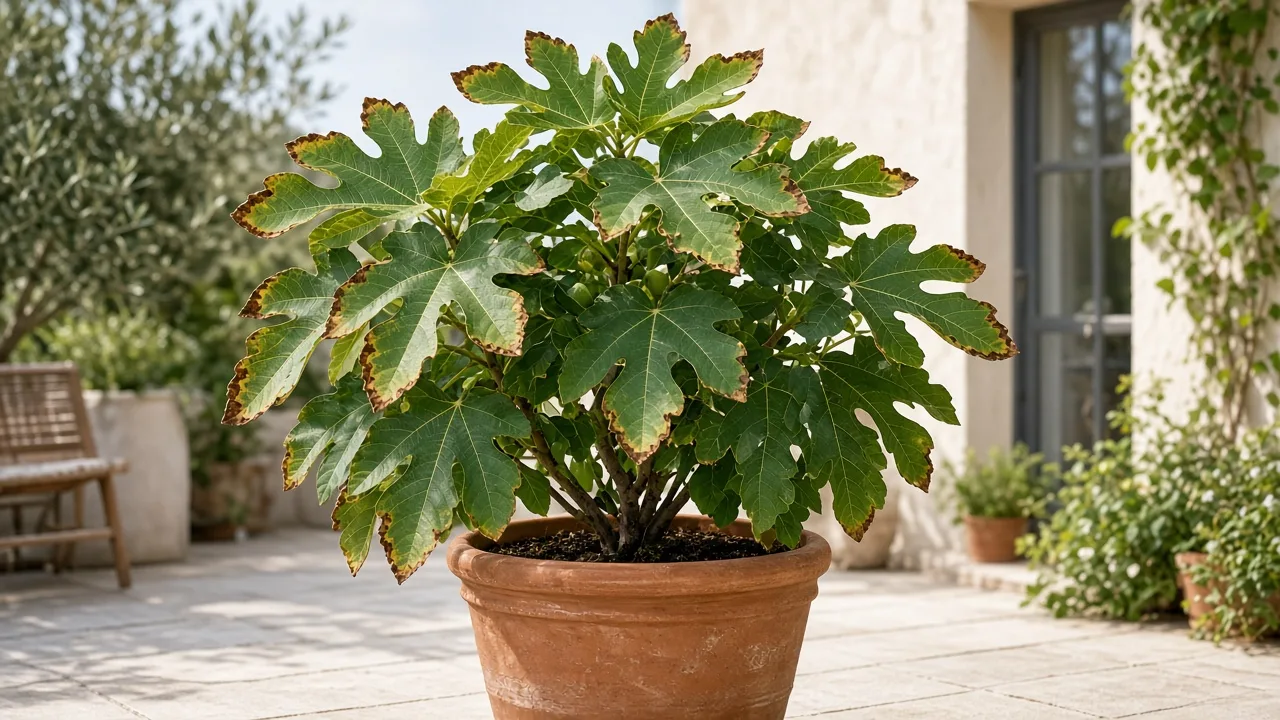
Brown Tips on Fig: Causes, Checks & Fixes
This guide covers brown tips on Fig. See also the general Brown Tips guide, watering, and light pages for this plant.
Brown Tips on Fig: Causes, Checks & Fixes
Quick answer
Brown tips on common fig (Ficus carica) mean the distal edge or lobe point of a large, deeply lobed leaf has turned dry and tan while much of the blade may still look green. This is not the same problem as brown edges on evergreen indoor Ficus (rubber plant, fiddle-leaf fig) grown in dim rooms. Fig is a deciduous fruit tree with sun-hungry foliage and shallow, surface-hugging roots that move water fast into leaves and swelling fruit.
For how tip necrosis works on plants in general, see our brown tips hub. On fig, the pattern usually traces to missed deep watering on a hot terrace pot, drought while fruit swells, reflected heat scorch, fertilizer salt or hard-water buildup, or roots that cannot take up water in soggy mix—not a mysterious indoor-houseplant humidity issue.
First step: run the fig 1–2 inch dry-down check before you change light or feed. Dusty-dry upper mix and a light container point to underwatering. Cool, clinging soil with yellow lower leaves points to overwatering. Crisping on sun-facing lobes right after a move to a west wall or bare rooftop points to light and heat stress.
When to use this page vs other Fig guides
- Fig watering guide — Use when you are unsure whether the root ball is dry, evenly moist, or waterlogged through fruiting season and dormancy.
- Fig light guide — Use when bleached or scorched patches appear on sun-exposed lobes after a placement change.
- Underwatering on Fig — Limp leaves, very light pots, mix pulling away from the container edge.
- Yellow leaves on Fig — Broad yellowing before margins brown, often with wet soil or root stress.
- Root rot on Fig — Soft stems, sour mix, browning that spreads beyond dry margins into whole leaves.
What brown tips look like on Fig
Fig leaves are large, palmate, and deeply lobed—each “tip” may be the point of a lobe or the outer margin between lobes, not a single grass-like leaf tip. UF/IFAS Gardening Solutions describes bright dark green blades with a rough, fuzzy upper surface on Ficus carica.
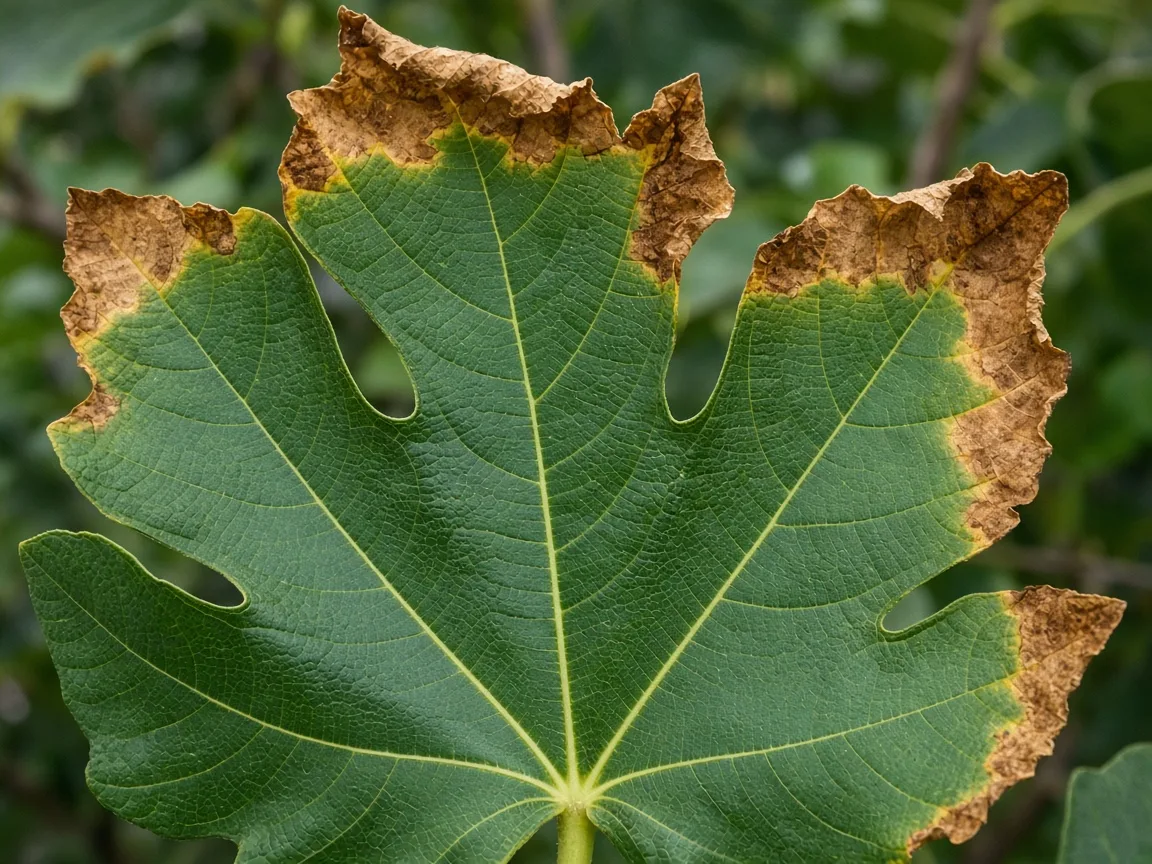
Brown tip symptoms on common fig—compare dry tan lobe margins with green tissue toward the petiole.
- Dry margin necrosis: tan to chocolate brown, papery, and confined to the outer edge or lobe point while the midrib zone stays green.
- Heat scorch patches: bleached yellow-white zones on sun-facing lobes that later brown and feel leathery—common after moving a container from part shade to harsh afternoon sun on masonry.
- Uniform crisping on newest leaves: often follows a hot windy spell when a terrace pot dried faster than you watered; may sit with slightly folded leaves before tips brown.
- Salt or fertilizer edge burn: margins brown on otherwise turgid leaves after repeated feed or hard irrigation water; white crust on the rim of the pot is a clue.
- Spotty brown lesions: discrete dead areas with yellow halos fit leaf spot or rust on stressed fig more than simple dry tips—NC State notes leaf spots, rust, and blight can occur on fig.
- Cold or frost tan: overnight damage may bronze margins on early spring flush leaves before new wood hardens.
Why Fig gets brown tips
Shallow roots and missed deep watering
Fig roots tend to grow close to the soil surface. Gardening Know How warns that dry roots can lead to premature fruit drop and recommends regular watering and mulching during the growing season. On a container fig, the upper 1–2 inches (2.5–5 cm) can be bone dry while you assume “I watered last week.” Large leaves transpire heavily in full sun; lobe tips desiccate first.
Drought during fruit swell
UF/IFAS states figs need plenty of water during the fruiting season but will not tolerate excessively wet soil. That narrow window means both drought and saturation show on foliage. A tree pushing figs on new wood may brown margins when moisture fails during July–October ripening in warm climates.
Sun and reflected heat on terrace pots
Fig wants full sun all day for best fruit, per UF/IFAS, yet a sudden jump in intensity—especially on dark pots against west-facing walls—can scorch lobe tips before roots catch up. Missouri Botanical Garden recommends full sun for container figs in cooler zones while noting regular summer watering; scorch is often an acclimation problem, not a sign the plant must live in shade year-round.
Wet feet and uptake failure
NC State lists organically rich, well-drained, moist soil—moist meaning replenished after drying, not saturated. Constantly wet mix limits oxygen; tips brown while lower leaves yellow. This pattern overlaps overwatering on Fig and root rot when stems soften.
Salt, sodium, boron, and heavy feeding
UC IPM notes figs grow on high-lime soils but are sensitive to excessive sodium and boron, where tipburn may appear. Over-frequent fertilizer on dry mix, especially in containers, can injure fine roots and show as marginal browning on young flush leaves. Hold Fig fertilizer until you confirm moisture and drainage.
Leaf disease on already stressed foliage
Blight, rust, and leaf spots can create brown dead patches that start away from the true margin. Missouri Botanical Garden lists leaf spots and rust among fig problems. Rule out circular lesions and spreading spots before treating tip burn as watering error alone.
How to confirm the cause
Work through checks in an order that matches fig biology:
- Moisture at 1–2 inches — Dusty dry and a light pot (drought) vs cool, heavy, clinging mix (wet roots).
- Recent weather and placement — Heat spike, wind, new rooftop move, or removed shade cloth in the last two weeks?
- Pattern on the plant — Sun-facing lobes only vs all leaves vs lower old leaves only.
- Fruit stage — Are figs swelling on the same branches showing tip burn?
- Feed and water history — Recent heavy fertilizer, saucer always full, or hard-water crust on the pot rim?
- New growth — Are the youngest lobed leaves still opening green after you adjust one variable?
UC IPM stresses that moisture should be replaced well before trees begin to show stress—by the time many lobe tips crisp, the root zone has already been off balance for days.
First fix for Fig
Make one correction first:
- For firm, dry brown margins on a light, dry pot after heat or missed watering: deep-soak until excess drains from the container (or wet several feet of soil in-ground), then let the top 1–2 inches dry before the next soak per Fig watering. Empty cachepots and saucers after every drink.
- For soft yellowing leaves with wet mix and spreading brown: stop watering, improve drainage, and inspect roots only if the pattern worsens—see overwatering before soaking again.
Do not fertilize, repot, and move into hotter sun on the same stressed tree.
Step-by-step recovery
- Stabilize water rhythm — Deep, infrequent soaks during active growth; sharp reduction after leaf fall when dormancy begins (Missouri Botanical Garden).
- Mulch surface roots — Straw or compost on in-ground trees helps hold moisture without keeping the crown soggy (Gardening Know How).
- Acclimate light — Move pots gradually toward full sun; use temporary afternoon shade only while tips are actively scorching, then lengthen exposure as lobes stay plump.
- Flush salts if needed — Run clean water through the container until it flows freely from drainage holes; resume modest feeding only after new growth looks stable.
- Trim cosmetic damage carefully — Snip only dry papery edges with clean tools; wear gloves because fig latex can irritate skin (Fig overview grower notes).
- Treat disease if confirmed — Remove spotted leaves with lesions, improve airflow, and compare with the Fig problems hub if brown expands as spots, not margins.
Recovery timeline
Dry tan tissue on a lobed leaf will not turn green again. Judge success by new leaves opening with intact margins within two to four weeks after water and light match the diagnosis. Sun scorch on a few outer lobes often stabilizes after one acclimation period. Chronic drought during fruit swell may need a full season of steady moisture before yield recovers.
If tips keep browning on fresh growth after corrected watering, inspect for root rot on Fig and spider mites on the undersides of lobed leaves.
Lookalike symptoms
| What you see | Likely cause | Where to go |
|---|---|---|
| Whole leaves yellow, wet mix | Root stress | Yellow leaves |
| Limp foliage, very light pot | Drought | Underwatering |
| Bleached then brown sun-facing lobes | Light or heat | Not enough light (inverse—too much) / Light guide |
| Circular brown spots with yellow halos | Leaf disease | Problems hub |
| Sticky leaves, stippling | Pests | Aphids or spider mites |
| Fruit drop with dry soil | Irrigation stress | Fig watering |
What not to do
Do not mist fig leaves like a tropical foliage plant—humidity trays rarely fix margin burn on a sun-grown fruit tree. Do not increase watering because tips look “dry” when soil is already wet. Do not apply high-nitrogen feed on scorched or waterlogged trees. Do not hard-prune heavily during active fruiting unless you accept losing the current crop on cut wood.
Avoid stacking repotting, systemic pesticide, and major pruning on the same stressed container fig.
Fig care cross-check
Align fixes with normal culture on the Fig overview: at least six hours of direct sun, free-draining mix, and steady moisture while leaves and fruit develop. NC State recommends full sun to partial shade in organically rich, well-drained, moist soil neutral to mildly acidic.
Indoor overwintering of dormant pots needs bright cool storage and reduced watering, not the summer soak schedule on cold slow-drying mix. Pair any light change with a root-ball moisture check, not automatic daily drinks.
How to prevent brown tips next time
Check container weight or the top 1–2 inches every few days in hot weather—calendar watering fails on terrace figs. Mulch in-ground root zones; use light-colored pots or afternoon shade cloth only during heat waves after moves. Fertilize modestly during active growth per Fig fertilizer, and flush containers occasionally if margins repeatedly burn without drought.
UC IPM suggests protecting exposed limbs from sunburn after pruning with diluted white latex paint on orchard trees—a clue that sudden bare wood plus intense sun also stresses fig tissue, not just leaves.
Practical checks
Urgency check
Cosmetic margin burn on a few lower lobes is low urgency if new growth stays green. Escalate when stems soften, odor comes from the pot, brown lesions spread as spots, or cold-damaged wood fails to break bud in spring.
Best inspection order
For fig, inspect newest lobed leaves and sun-facing margins, then pot weight and drainage, recent placement changes, fruit load, undersides for mites, and roots only if softness spreads.
Severity note
This issue is marked medium for fig—isolated dry tips rarely kill a mature tree, but repeated drought during fruit swell can reduce crop quality and trigger drop.
Related Fig guides
- Fig overview — deciduous fruit tree culture, not indoor Ficus
- Fig problems hub — all common issues on this species
- Fig watering — fruiting-season moisture and dormancy cuts
- Fig light — full sun, walls, and container placement
- Fig soil — drainage mixes for pots and garden beds
- Wilting on Fig — when whole leaves droop, not just tips crisp
Related tool
Use the Brown Tips Diagnosis Tool to compare tip patterns before you change watering, shade, and fertilizer at once.