Not Enough Light on Fig: Terrace Checks & Fixes
Quick answer
Not enough light on common fig shows as long gaps between lobed leaves, a canopy leaning toward one bright direction, pale small new foliage, and repeated failure to swell or ripen syconia despite steady watering. First step: move the container to the brightest outdoor spot you have with at least six hours of direct sun on the whole canopy—or plan outdoor placement for the growing season—then hold other care changes for two weeks.
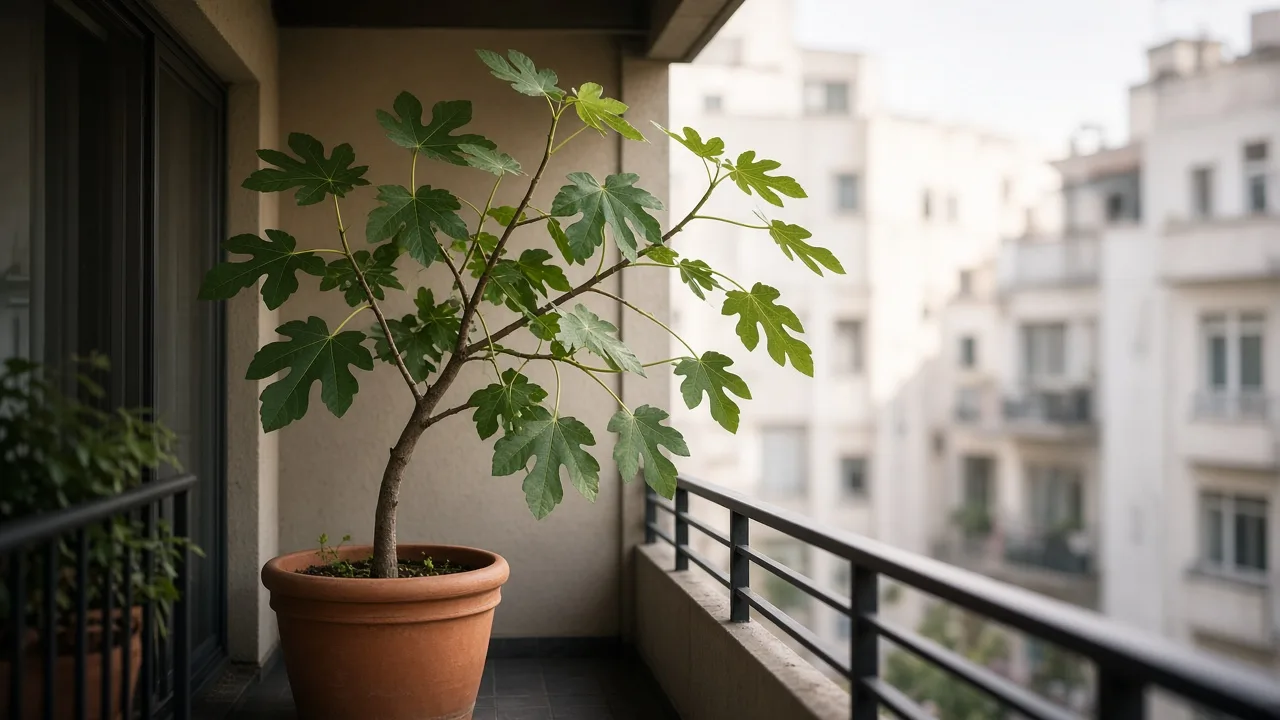
Not Enough Light on Fig: Causes, Checks & Fixes
This guide covers not enough light on Fig. See also the general Not Enough Light guide, watering, and light pages for this plant.
Not Enough Light on Fig: Causes, Checks & Fixes
Quick answer
Common fig (Ficus carica) is a deciduous, sun-loving fruit tree—not the low-light evergreen Ficus houseplant advice often implies. In too little light, container figs push long internodes between large lobed leaves, lean hard toward the brightest direction, and may keep green foliage yet fail to set or ripen useful syconia because the main crop develops on vigorous new wood that never received enough daily sun.
For how chronic low light limits photosynthesis in general, see our not enough light hub. On fig, the decisive check is direct sun hours on the whole canopy at the pot—not whether the terrace or living room looks bright to you.
First step: move the container to the brightest outdoor placement available with at least six hours of direct sun on the outer leaves (open terrace, sunny rail, or a south- or west-facing wall site as in RHS fig guidance). Change nothing else for two weeks so you can read the next flush.
When to use this page vs other Fig guides
- Leggy growth — when elongated shoots dominate but you already logged adequate direct sun hours
- Slow growth — when roots, dormancy, or nutrition stall the tree despite strong terrace exposure
- Yellow leaves — when lower lobes fade on heavy wet mix or after a hard relocation shock
- Overwatering — when soil stays saturated while light is weak and transpiration drops
- Light guide — long-term placement, acclimation, grow lights, and fig vs fiddle-leaf confusion
- Problems hub — full symptom index for this species
What not enough light looks like on Fig
Healthy fig in strong summer sun carries sturdy shoots, closely spaced lobed leaves, and—on mature, appropriately pruned plants—visible fruit swellings on new wood. Shade stress breaks that rhythm before the tree dies outright.
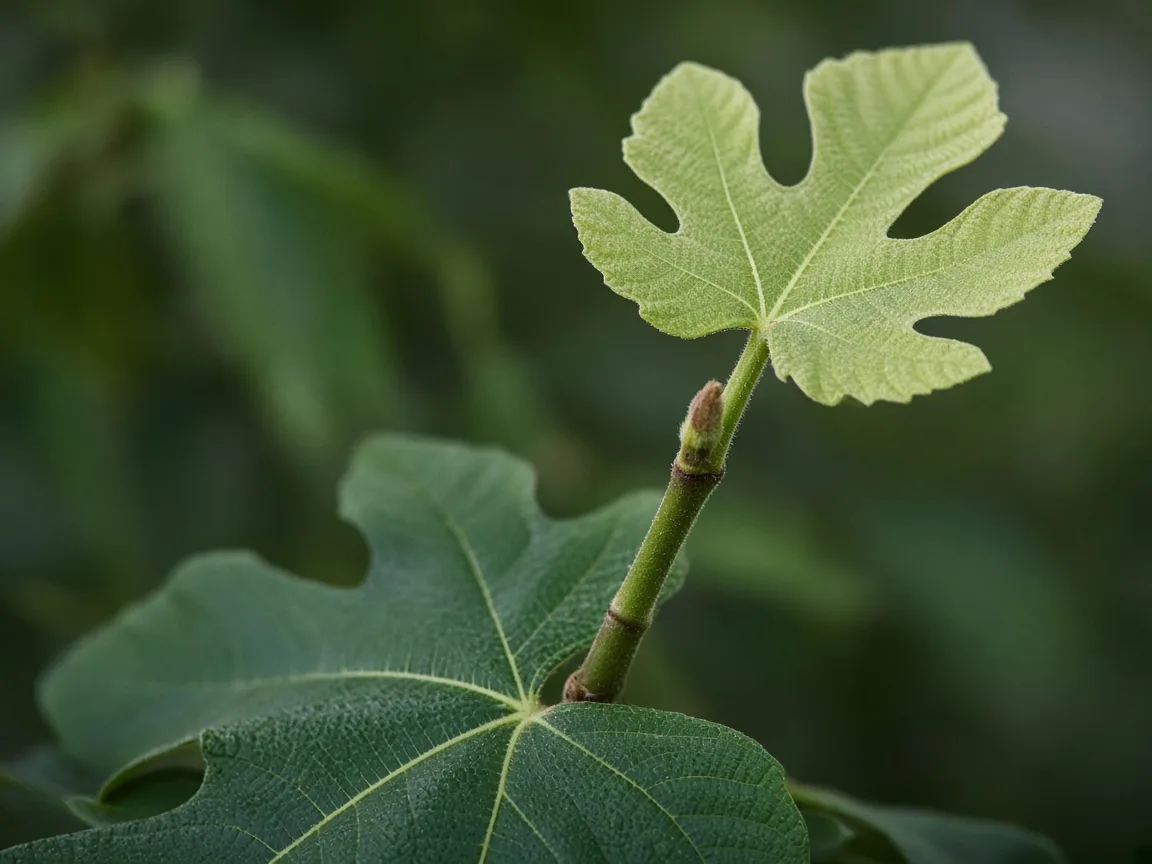
Long stem gap and smaller new lobed leaf—compare spacing and leaf size to older tissue on the same shoot.
Typical low-light pattern on Ficus carica:
- Long gaps between leaves on new shoots (etiolation toward one light source)
- Smaller, thinner new lobes than leaves formed in brighter weeks
- Pale or dull green canopy instead of deep rough green on the upper leaf surface
- Strong lean of the whole pot or fan toward one window, wall gap, or terrace opening
- Lush leaves but no swellings, tiny fruit that never ripen, or repeated drop of immature syconia
- Mix that stays damp at the surface for many days because large leaves transpire slowly in dim conditions
What low light usually does not look like:
- Crispy bleached patches on sun-facing lobes after a sudden move to all-day terrace sun (scorch—see Fig light acclimation)
- Limp midday wilt on hot afternoons with dry, light pot weight (underwatering or heat stress)
- Black mushy stems with sour mix while the plant was already in full sun (root rot)
Why Fig is not a “bright indirect” houseplant
The shared genus name sends many buyers toward advice written for fiddle-leaf fig (Ficus lyrata) or rubber plant (Ficus elastica). Common fig is different: it is deciduous, sheds leaves in winter, and is grown for outdoor sun and edible fruit. NC State lists full sun as six or more hours of direct sunlight daily, with partial shade defined as two to six hours—tolerance, not ideal cropping conditions.
RHS recommends a warm, sunny, sheltered spot, often fan-trained against a south- or west-facing wall with root restriction for containers. That is the opposite of keeping a fruiting tree several metres from a north window all summer.
If your only option is indoors beside ordinary glass, treat it as temporary holding for a young plant until weather allows terrace sun—not the long-term home for a productive tree. Epic Gardening lists edible fig for full sun in edible landscapes and container gardens; matching that intensity outdoors beats guessing from room brightness.
Fruit on new wood: why shade shows up as “no figs”
Unlike many foliage houseplants, fig’s main value is syconia that ripen in late summer or fall on new wood (Missouri Botanical Garden). NC State notes fruits form on new wood with light winter pruning to maintain shape.
A shaded tree can look alive—green lobes, slow lengthening stems—yet never build the well-lit new shoots that carry a crop. Weak spring shade often appears months later as small or absent fruit, not as immediate yellowing. Before adding nitrogen from the Fig fertilizer guide, confirm the canopy receives enough direct sun during the growing season; extra feed rarely fixes a dim terrace.
Container terraces, parapets, and “bright shade” traps
Balcony figs fail light in predictable ways:
- Parapet walls that hide the pot from morning sun while the top two leaves catch a narrow noon beam
- Permanent awnings or monsoon covers left down after cloud clears
- Neighbouring towers that shrink the sun arc between seasons
- Tinted balcony glass that looks bright to your eyes but cuts plant-level direct rays
- Indoor winter carryover—soft shoots that elongated in a dim room, then scorch or stall when moved outdoors without acclimation
Count sun beside the container on three clear days. A spot that receives four hours of open morning sun plus bright sky light often outperforms an all-day “bright” nook that never gets a sharp shadow at the pot rim.
How to confirm the cause
Work through these checks before repotting, heavy pruning, or feeding:
- Sharp-shadow test — A dark, crisp shadow at the pot rim means direct sun; a faint shadow means bright shade (usually too dim for fruiting fig).
- Compare newest lobed leaves — Focus on the top two nodes; older leaves from a brighter month can mislead.
- Two-week placement trial — Move to the brightest safe outdoor location without changing watering rhythm. Shorter internodes and slightly larger new lobes confirm light was the limiter.
- Pot weight vs stretch — Heavy wet mix plus pale lean in a dark corner suggests you may also be overwatering for the current light level; lift the pot before the next drink.
- Rule out drought — Very light dry mix with folded lobes points to underwatering first; chronic shade plus damp mix produces soft pale stretch.
If new growth improves only when the canopy receives more direct sun—and rot, pests, and drought are ruled out—low light is confirmed.
First fix for Fig
Move the container to full outdoor sun for the growing season, targeting at least six hours of direct light on the whole canopy each clear day.
Place the pot where south-, west-, or east-facing exposure gives the longest open sky view you can manage, matching RHS container guidance for warm sunny sites. Rotate a quarter turn every week or two if growth leans, but avoid shuffling a fruiting tree daily during ripening.
That single change—more usable photons—comes before thinning, repotting, or fertilizer. If outdoor sun is impossible even in summer, add a full-spectrum LED sized to the entire spread and run 12–14 hours daily (see Fig light for coverage notes), but treat fruit as a bonus until intensity proves adequate.
Step-by-step recovery
After the first light fix:
- Hold placement steady — Leave the pot in the new bright spot for at least two weeks without stacking other experiments.
- Match watering to new light — Brighter conditions dry large containers faster; check the top 2–5 cm per your watering guide before each deep drink.
- Acclimate soft leaves if exposure jumped — Increase direct sun over 10–14 days if the tree came from nursery shade or indoors; hold if fresh lobes bleach or crisp (Fig light).
- Open the canopy to available rays — Light winter thinning on established plants can help lower branches see sun; follow Fig pruning timing so you do not strip fruiting wood blindly.
- Prune or shorten hopeless stretch — Long bare stems will not compact retroactively; shorten to a sturdy node once new growth looks firm, wearing gloves because broken fig tissue exudes irritating latex (see Fig overview).
Recovery timeline
Expect clearer improvement in the next flush within two to four weeks after light increases. The first lobed leaves after the fix should show shorter stem gaps and slightly larger blades than the set above them.
Old elongated internodes do not shrink. Success means sturdier new shoots, optional fruit swellings the same season on well-lit wood, and soil that dries on a realistic rhythm—not that previous lean disappears without pruning.
Worsening signs during recovery: continued stretch under an undersized grow light, yellowing lower leaves on constantly wet mix (ease watering and improve drainage), or soft dark stems (inspect for root rot immediately).
Lookalike symptoms
| What you see | Likely cause | Next page |
|---|---|---|
| Long shoots, damp mix, pale lean | Low light ± overwatering | This page + overwatering |
| Long shoots in full sun, crowded pot | Leggy habit or competition | Leggy growth |
| No new nodes despite bright terrace | Roots, season, or feed timing | Slow growth |
| Yellow lower lobes, wet soil | Root stress or nitrogen | Yellow leaves |
| Midday wilt, dry pot, full sun | Heat + water | Wilting |
What not to do
Do not keep a fruiting fig indoors on houseplant light rules while expecting a crop. Avoid heavy nitrogen feeds on shaded trees hoping for bulk—soft shoots invite pests and still fail to fruit. Do not interpret partial-shade tolerance as permission for year-round dim rooms.
Do not move from a dark corner to all-day terrace sun in one day without acclimation. Do not increase watering because leaves look pale when the mix is already wet—fix light and dry-down first.
How to prevent low-light stress
Plan placement before spring bud break: open terrace, sunny wall, or large south- or west-facing container rail with six-plus hours of direct sun. Move pots outdoors as leaves expand, not after stems already stretched indoors.
For permanent shade from buildings, choose a smaller ornamental role or invest in canopy-scale supplemental light, not a clip lamp. Pair bright placement with appropriate pot size and drainage from Fig soil and repotting so sun stress is not compounded by root crowding.
When to worry
Pure low light is rarely an overnight emergency. Yellowing on wet mix in a dim room needs same-week attention—improve light and ease watering together. Repeated fruit drop on a shaded, overfed tree warrants a full care cross-check on the problems hub.
If a grow light already runs 14 hours and new lobes still stretch, increase fixture output or lower it before assuming the cultivar is wrong.
Conclusion
Common fig without enough light produces pale, stretched shoots and disappointing fruit on an otherwise forgiving tree. Confirm the problem by logging direct sun at the pot, move the container to full outdoor sun (or equivalent grow-light coverage) as the first fix, acclimate soft leaves before peak summer, and judge recovery on new lobed leaves and fruiting wood—not old elongated stems. Bright light belongs first; watering and fertilizer work better once photons match this species.
Related Fig guides
Related tool
Use the Plant Problem Diagnosis Tool to narrow causes for not enough light on this plant before changing multiple variables at once.