Leggy Growth on Fig: Sun, Pinch & Prune Fixes
Quick answer
Leggy common fig shows long gaps between large palmate leaves, soft shoots leaning toward the brightest sky, and lush leaves but few ripening figs—usually from too little direct sun, not from slow metabolism. First step: move the pot or reopen the canopy to at least six hours of direct sun on the outer leaves before hard pruning or extra fertilizer.
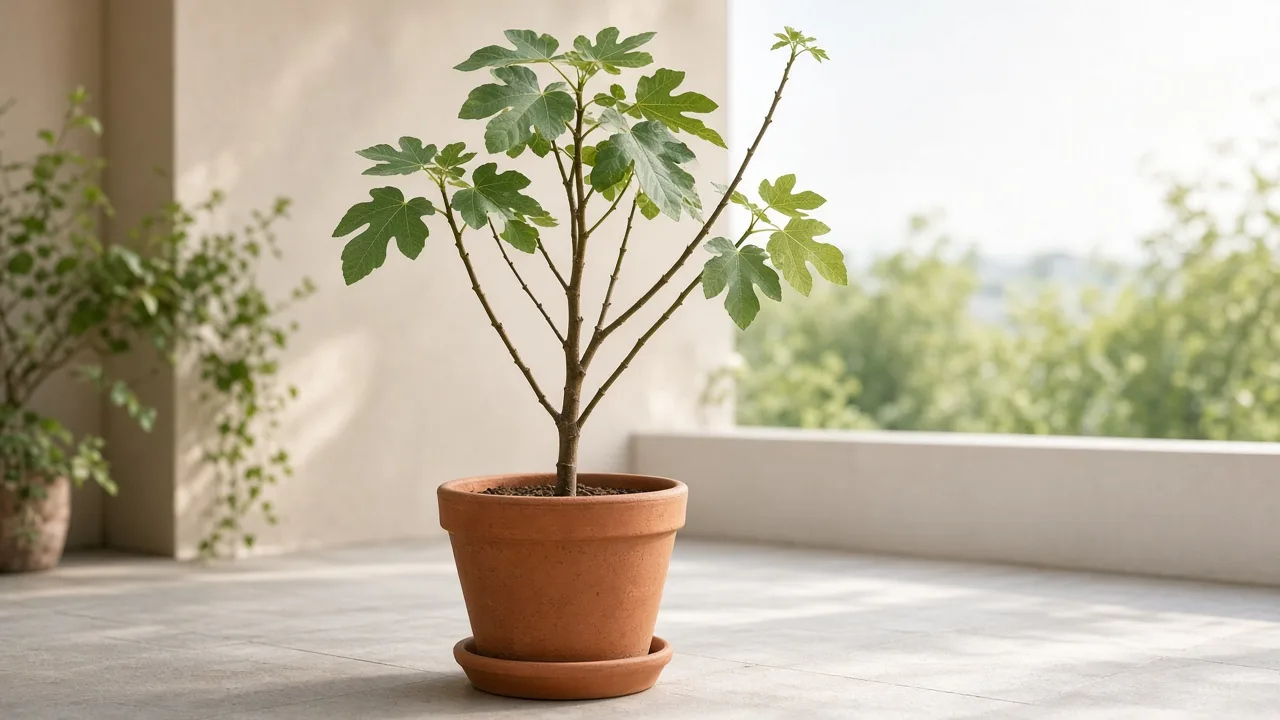
Leggy Growth on Fig: Causes, Checks & Fixes
This guide covers leggy growth on Fig. See also the general Leggy Growth guide, watering, and light pages for this plant.
Leggy Growth on Fig: Causes, Checks & Fixes
Quick answer
Leggy growth on common fig (Ficus carica) is stretch toward usable light on a sun-hungry deciduous fruit tree—not the same problem as leggy fiddle-leaf fig indoors. When daily direct sun on the outer canopy falls short, the tree pushes long one-year shoots, wide gaps between large palmate leaves, and a lean toward the brightest wall or terrace opening. Leaves may look lush, but fruit set and ripening often disappoint because the productive tips lack energy and timing.
For how etiolation works in general, see our leggy growth hub. On edible fig, the signature is whippy extension wood, bare framework branches after partial shade or missed pinching, and shoots that reach past railings while pea-sized fruitlets fail to form at the tips.
First step: reopen the canopy to at least six hours of direct sun on the leaves—move the container, thin overhead shade, or fan-train against a sunny wall—and hold that placement stable for several weeks before hard pruning or feeding.
This page covers structural legginess and fig-specific renewal. For broader low-light placement, dormancy storage, and hand-shadow testing, see not enough light on fig. For daily sun hours and terrace placement, see the Fig light guide.
What leggy growth looks like on Fig
Leggy Ficus carica reads as architecture and shoot quality, not soft vine-like flop. Each leaf is a broad, lobed palmate blade on a stiff petiole; stretch shows up as bare brown-green wood between nodes and thin, fast-growing tips that aim at the sky gap.
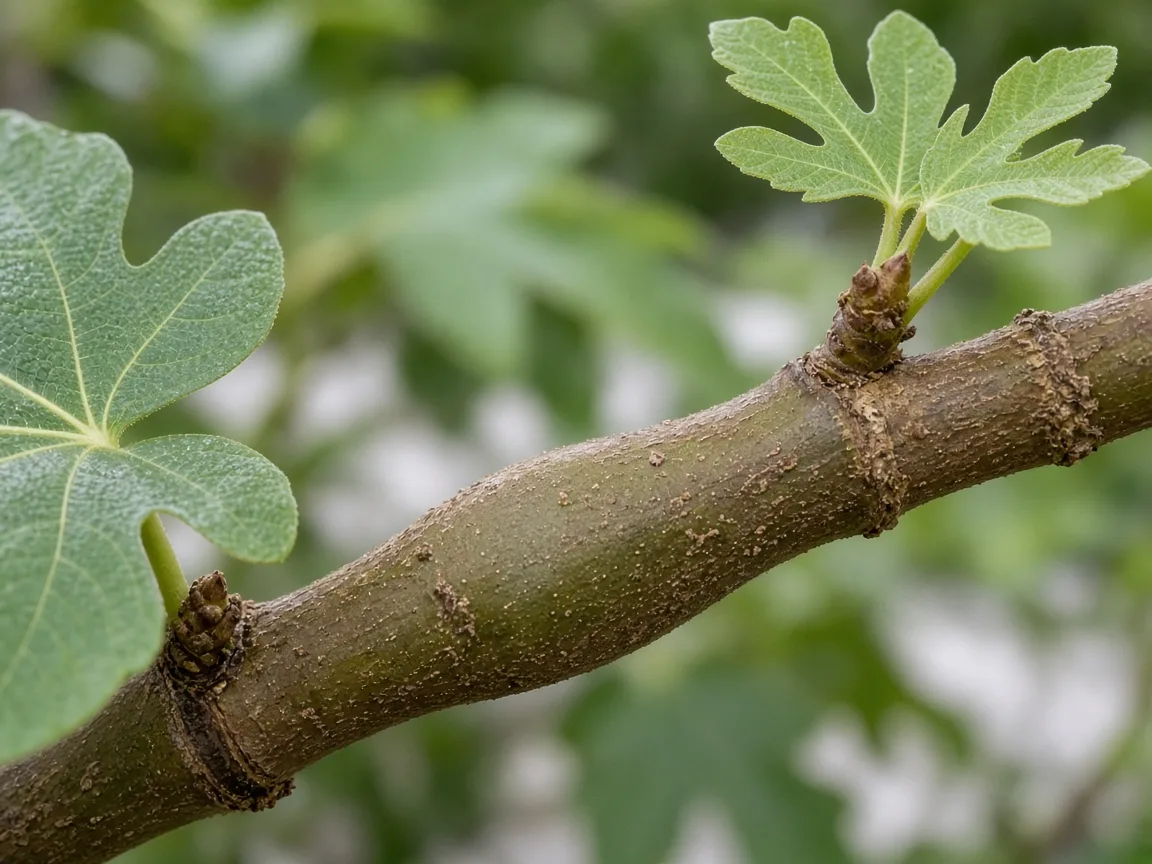
Leggy growth on common fig—compare the long bare section between nodes with smaller new leaves at the shoot tip.
Typical patterns include:
- Long internodes on the newest extension growth—often twice the gap you saw on shoots formed in peak summer sun
- Smaller palmate leaves on the longest whippy tip compared with older canopy leaves from a brighter season
- Strong directional lean toward one south or west exposure, parapet opening, or gap between buildings
- Bare framework branches with leaves only at the ends after years in partial shade or after indoor overwintering without enough glass-side sun
- Vigorous suckers at the base or from buried roots stealing light from the trained crown (NC State notes common fig produces many suckers that can form thickets)
- Green foliage but few swellings or poor ripening—survival growth without the light budget fruiting needs (Missouri Botanical Garden lists edible fig for full sun)
What leggy growth usually is not: a healthy fan on a sunny wall with short gaps and pea-sized fruitlets at shoot tips (RHS fig pruning guide); sudden leaf scorch after jumping from shade to hot afternoon tile (acclimate per the light guide); or yellowing with sour wet soil (overwatering compounded by dim corners).
When vigorous fig is not “leggy”
Common fig is a rapid grower in warm sun (NC State). Long shoots after a hard spring stub cut can look alarming but may be renewal vigor if the plant sits in full sun and you pinch tips at five to six leaves by early summer. Legginess adds disproportionate bare wood, weak tip leaves, and missing fruitlets, not merely fast length in good light.
Why Fig gets leggy growth
Primary cause: too little direct sun on the fruiting canopy for a species that NC State assigns to full sun (six or more hours of direct sunlight daily), tolerating only partial shade (two to six hours). RHS lists common fig in full sun. Partial shade keeps the plant alive; it rarely supports compact shoots and reliable outdoor ripening.
Low light levels produce spindly, lanky growth as plants stretch toward brighter conditions—a mechanism that shows clearly on large-leaved fruit trees pushed into shade.
Fig-specific triggers:
- Terrace shade and monsoon cloud. A pot that received strong pre-monsoon sun may stretch when buildings, awnings, or shorter cloudy days cut plant-level exposure for weeks.
- Winter storage away from glass. Container figs overwintered in a garage or back room leaf out in spring on weak, reaching shoots unless returned outdoors early to full sun.
- Competing canopy or crowded pots. Neighbouring plants, parapet walls, or untrimmed suckers shade the inner framework; the tree extends toward the one bright slot.
- Houseplant advice mismatch. Ficus carica is deciduous and fruiting, not an evergreen indoor foliage Ficus. Keeping it “beside a bright window” through the growing season rarely equals six hours of direct sun on the leaves (Fig overview grower notes).
- Nitrogen without photons. Feeding soft growth in shade produces more whippy wood without fixing the energy deficit—see the Fig fertilizer guide after light improves.
Secondary factors that compound stretch:
- Missed summer pinching. Without early-summer tipping, apical shoots keep extending instead of branching with embryonic fruitlets at tips (RHS).
- Overwatering in a dim corner. Wet soil plus weak light yellows lower leaves and stalls buds—audit watering if soil stays damp ten-plus days while shoots still reach.
When to use this page vs other Fig guides
| What you see | Start here | Or use |
|---|---|---|
| Long bare branches, lean, whippy tips, poor fruit in shade | Leggy growth (this page) | Light after you commit to a sun move |
| Unsure if sun is adequate; dormancy storage; hand-shadow fail | Not enough light | Return here for stub cuts and pinching |
| Correct sun but tree still will not grow | Slow growth | Rule out roots and nutrition |
| Bare wood after you know light is fixed | Pruning | Spring stubs and summer five-leaf pinches |
| Yellow leaves, sour wet mix | Overwatering | Light correction still helps, but dry-down comes first |
How to confirm the cause
Work through these checks before repotting, doubling fertilizer, or stripping the whole canopy:
- Sun hours on the outer leaves. On a clear day, note whether direct rays hit the tip shoots at mid-morning, noon, and mid-afternoon—not just whether the terrace feels bright.
- Internode comparison. Compare the gap between the last two leaves on the longest shoot to a side branch that gets more sun. Leggy growth adds bare wood length, not only overall tree height from age.
- Fruitlet audit. Inspect shoot tips for pea-sized overwintered embryos. Absent embryos on long new wood after a shaded year suggests stretch without productive tipping (RHS fruiting explanation).
- Lean direction. If every new leaf faces the same wall opening, the tree is actively reaching—not randomly floppy from wilting.
- Sucker load. Look at the base for thickets shading the main stems; suckers are normal on fig but worsen crowding (NC State).
- Two-week sun trial. Move the pot to the sunniest feasible spot without changing pot size or feed. If the next emerging leaf is larger and the internode shorter, light was limiting.
First fix for Fig
Move the tree into corrected full sun—or remove what blocks the canopy—and keep it there through the next growth flush.
Target at least six hours of direct sun on the leaves (NC State full sun definition). Practical moves:
- Shift the container to the longest open south- or west-facing arc on a terrace, or against a sun-baked wall for fan training (RHS recommends sunny wall culture).
- Thin overhead shade from other pots, cloth screens, or tree branches—not the fig’s own leaves unless you are deliberately opening the framework.
- After winter storage, return outdoors gradually over seven to fourteen days to avoid scorch, but do not leave the plant in a dim holding spot through the spring push (details in light guide).
While testing the move:
- Do not hard-prune every long branch on the same day as the move.
- Do not repot and cut together—stacking stress slows the read on whether sun was the limit (repotting guide).
- Do not feed heavily to “bush out” shade growth—correct photons first.
When to prune, pinch, and renew bare wood
Structural work is step two, after sun improves.
Spring hard renewal
Once four to six weeks of better sun produce stiffer shoots or at least one normal-sized new leaf, renew long bare framework branches in early to mid-spring after hard frost risk drops. Either leave a shoot alone or cut it back hard to a 2.5–8 cm stub—avoid light tip trims on bare wood (RHS). Full technique and sap safety are in the Fig pruning guide.
Early-summer pinching
In early to mid-summer, pinch or cut back shoot tips after five to six leaves to slow whippy extension and encourage side branching with embryonic fruitlets (RHS). Stop tipping by mid-summer so new growth can form next year’s pea-sized tips before the season ends.
Retain shoots that already carry overwintered fruitlets—do not stub them while diagnosing legginess.
Suckers and shade at the base
Remove suckers that crowd the main stems when they steal light from the trained crown. Wear gloves: fig sap is irritant and can cause phytophotodermatitis after sun exposure on skin (overview grower notes).
Recovery timeline
Two to four weeks after sun correction: The next leaf on extension shoots should look fuller and closer to the previous node than the most stretched section. Some leaf drop after a big move is normal on fig—judge by new bud movement, not every older blade.
One season: With spring stubbing plus summer pinching in good light, many container trees rebuild a shorter, more open crown and set pea-sized tips for the following crop (RHS calendar).
Old bare wood: Permanent until you hard-cut to stubs or tie new fan arms into a wall framework. A tree left in partial shade for years may need staged renewal over two or three seasons, not one dramatic shave.
Worsening signs: Continued yellowing with wet soil, soft base shoots, or total failure to break bud after a sun move—cross-check root rot and watering before assuming more sun alone will fix the tree.
Lookalike symptoms
- Phototropism without full etiolation — Lean toward one opening but moderate internodes elsewhere. Rotate the pot weekly and add total sun hours; see not enough light if growth also stalls.
- Post-stub flush — Very long soft shoots after a hard spring cut in full sun. Pinch at five leaves; this is vigor, not chronic shade stretch.
- Overwatering in a dim corner — Yellow or drooping leaves with damp mix. Fix dry-down before blaming light alone (overwatering).
- Slow growth without active reach — Dim light but stable old internodes from prior years. May need the same sun fix but presents as slow growth rather than active whippy extension.
- Normal dormancy — Bare branches in winter after leaf fall. Wait until spring bud break before diagnosing new-season legginess.
What not to do
Do not shear the canopy like a hedge—fig fruiting depends on tip embryos and careful stubbing, not blunt clipping. Do not remove every long green shoot in deep shade hoping for bushiness—cuts without sun produce more stretch. Do not keep the pot indoors through the growing season and expect compact outdoor-type fruiting wood. Do not fertilize heavily on whippy shade growth. Do not confuse cosmetic legginess with root failure when wet soil and mass yellowing coincide.
How to prevent leggy growth next time
Plan for full sun from the start—six hours minimum on the leaves, more open exposure when possible (NC State). On terraces, choose the least obstructed arc and re-check after monsoon when shade patterns shift.
- Pinch summer shoots at five to six leaves before mid-summer (RHS).
- Renew one or two bare leaders per year to stubs instead of letting shade produce ever-longer naked framework.
- Remove suckers early so the trained crown keeps light.
- Return container plants outdoors to full sun as soon as frost risk allows—do not extend dim indoor holding.
- Match watering to light after moves—brighter sites dry faster (watering guide).
- Catch stretch on the second long internode, not the fifth.
Healthy common fig in strong sun makes stiff shoots, large palmate leaves on moderate gaps, and pea-sized fruitlets at the tips going into winter. In partial shade it becomes a reaching skeleton with leaves at the ends and little fruit worth harvesting. Sun first; stub and pinch second.
Related Fig guides
- Overview — deciduous fruiting habit vs indoor Ficus
- Light — six-hour rule, terrace placement, acclimation
- Not enough light — placement diagnosis and dormancy storage
- Pruning — stub cuts, five-leaf pinches, sap safety
- Slow growth — when sun is adequate but progress stalls
- Watering — dry-down after you increase exposure
Conclusion
Leggy common fig is a sun and training problem on a fruit tree, not a generic houseplant stretch. Move to full direct sun, confirm the next flush is tighter, then use spring stubs and summer pinches without stripping pea-sized fruitlets. Old bare framework stays until you renew it deliberately—prevention means bright stable placement through the growing season, not more nitrogen in shade.