Aphids on Fig: Spring Flush Checks & Fixes
Quick answer
Aphids on fig colonize tender spring leaves, soft shoot tips, and sometimes young syconia on Ficus carica—often with sticky honeydew on large lobed foliage. First step: blast colonies off with a strong hose stream on outdoor or patio plants, or isolate container figs and rinse leaf undersides while keeping the root ball from staying waterlogged.
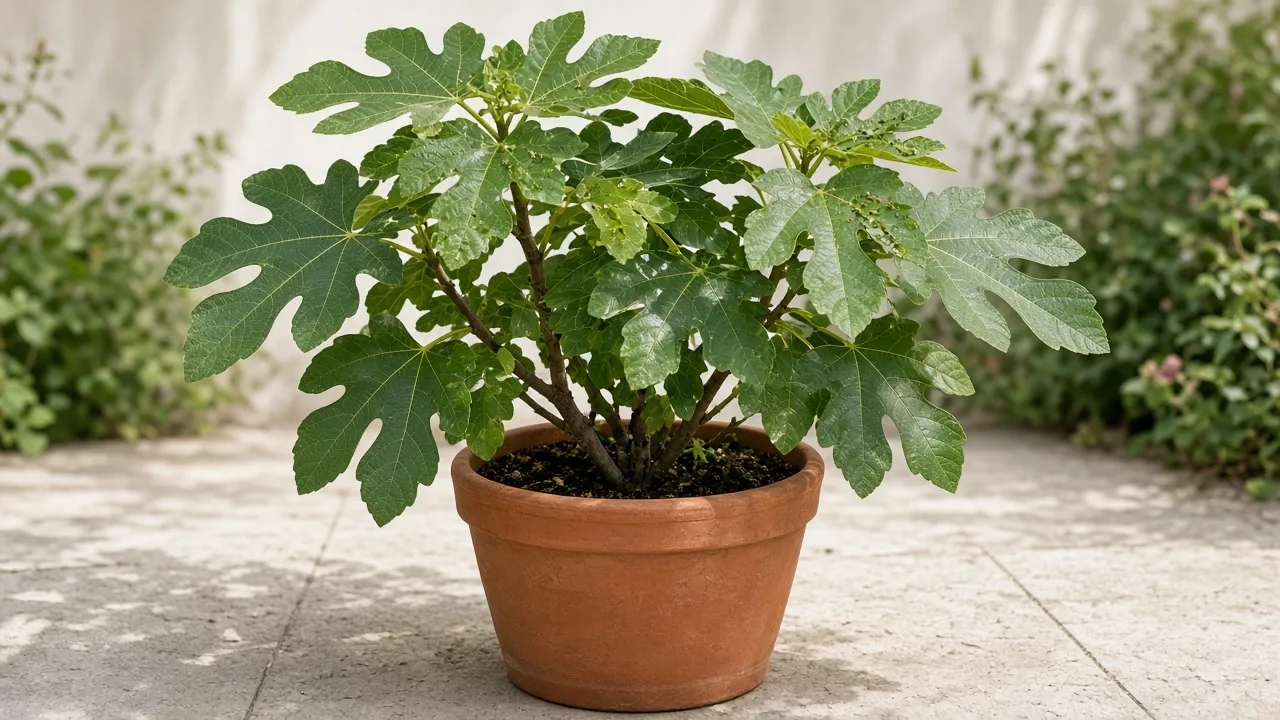
Aphids on Fig: Causes, Checks & Fixes
This guide covers aphids on Fig. See also the general Aphids guide, watering, and light pages for this plant.
Aphids on Fig: Causes, Checks & Fixes
Quick answer
Aphids on fig (Ficus carica) show up on the soft tissue this deciduous fruit tree pushes in spring—new lobed leaves, tender shoot tips, and sometimes small developing syconia. First step: knock visible colonies off with a strong stream of water on outdoor or patio plants, or isolate a container fig and rinse leaf undersides thoroughly while keeping the root ball from staying soggy.
For how aphids feed, reproduce, and produce sticky honeydew in general, see our aphids pest guide. On common fig, the pattern usually concentrates on the spring flush and any nitrogen-softened shoots, not on dormant bare wood in winter.
Why Fig gets aphids
Spring leaf-out creates a buffet. Common fig breaks dormancy with a burst of large, soft leaves and new fruiting wood. Aphids prefer tender new growth where sap is easy to reach. On a wall-trained or container fig, that often means the top few nodes and any suckers at the base—places you may not notice until honeydew dulls the glossy leaf surface.
Warm patio weather speeds reproduction. When daytime temperatures sit in the range where aphids reproduce quickly, a few winged immigrants can become dense clusters on one branch within a week. Open balconies, shared garden walls, and nursery stock brought home in spring are common entry routes.
Soft, over-fed shoots attract pests. Heavy nitrogen while the tree is in full sun pushes lush leaves that stay tender longer. That overlaps with the watering rhythm figs need while fruit swells—steady moisture for roots, but not a reason to pour on fertilizer when pests are already on soft tips.
Outdoor figs have help; container figs do not. In a garden, lady beetles, lacewings, and parasitic wasps often knock aphids back without sprays. On a lone container on a balcony, missing those allies means you need earlier rinsing and ant control.
NC State lists aphids among common fig problems alongside scale, mealybugs, and spider mites—confirm you have soft moving insects, not the pests your fig is more often sold with.
What aphids look like on Fig
- Small pear-shaped insects—green, yellow, black, or brown—clustered on leaf undersides, shoot tips, and young stem tissue
- Colonies tucked under the lobes of newest leaves and along the petiole where it meets the branch
- Sticky honeydew on upper leaf surfaces, stems, patio stones, or the pot rim; ants traveling up the trunk or main stem toward new growth
- Curling, yellowing, or stunted newest leaves while older hardened lobes look mostly normal
- Sooty mold growing on untreated honeydew, leaving dull black patches on leaves near the infestation
- White cast skins on leaf undersides after aphids molt
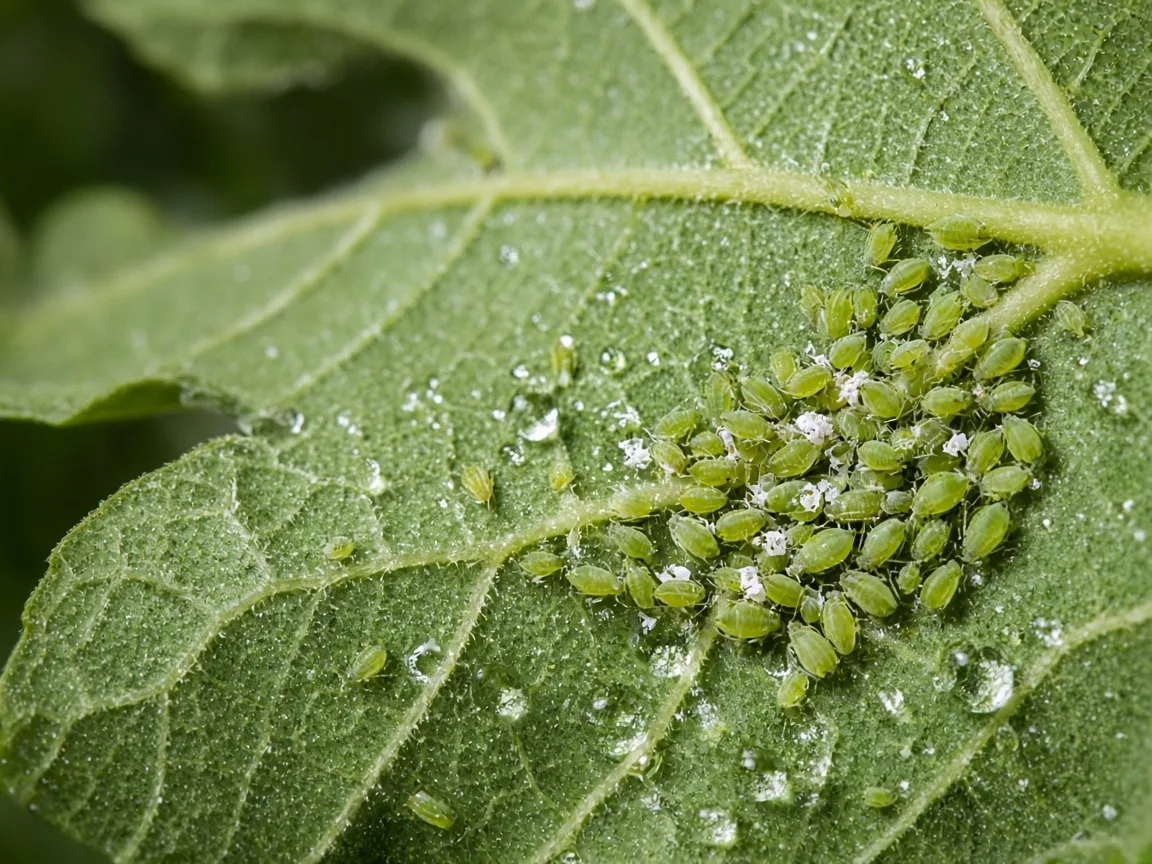
Aphids on fig—compare clustered soft-bodied insects with healthy tissue on the same shoot.
Unlike mealybugs on Fig, aphids are not cottony white and crawl slowly when disturbed. Unlike hard scale bumps on stems (immobile shells that do not crawl), aphids stay soft and grouped on growing tips. See spider mites on Fig for stippling and webbing on undersides in hot dry weather. Unlike underwatering, which yellows many leaves and pairs with dry, pulling-away mix, aphid damage concentrates on the softest new flush with insects present.
Where aphids hide on a fruiting fig (plant-only check)
Work top-down on the current season’s wood, not last year’s hardened branches:
- Shoot tips — Scan the last 4–6 inches of new growth on each branch; aphids often coat the terminal bud and first unfurling leaves.
- Syconium clusters — Check small developing “fruit” at nodes; honeydew here can attract sooty mold that spoils ripening figs and other sap feeders later in the season.
- Suckers at the base — Root suckers on in-ground figs push soft leaves at soil level that are easy to miss when you only look at the canopy.
- Wall-trained cordons — On espaliered plants, the horizontal arms’ upper surfaces catch sun but undersides along the wall stay shaded and can harbor colonies.
- Container rim — Ants on the pot edge often lead to aphids on the highest soft shoots above, not to fungus gnats in the mix below.
How to confirm the cause
- Movement test — Brush a cluster with a gloved finger. Aphids crawl; scale and mealybugs stay fixed.
- Honeydew test — Wipe a leaf. If stickiness returns within a day and feels tacky—not just normal leaf texture—sap feeders are still active.
- Ant trail follow — Ants protect aphids from predators; follow them to the colony before treating the whole tree.
- Natural enemy scan — Look for lady beetles, lacewing larvae, or golden “mummy” aphids from parasitic wasps; if predators are abundant, you may only need rinsing and patience.
- Watering cross-check — Limp leaves on a fast-drying container with no insects point to underwatering or heat stress, not aphids. Yellowing on many leaves with sour wet mix suggests overwatering or root rot—different fixes.
Lookalike symptoms to rule out
| What you see | Likely cause | Next step |
|---|---|---|
| Cottony white in leaf axils | Mealybugs | See mealybugs on Fig |
| Fine stippling + webbing on older leaves | Spider mites | See spider mites on Fig |
| Hard brown bumps on stems | Scale | Manual removal + horticultural oil on hardened scale |
| Whole-tree yellow with wet mix | Root stress | Overwatering / root rot checks |
| Crisp margins, dry pot weight | Drought | Watering guide dry-down test |
First fix for Fig
Knock colonies off with a strong stream of water on in-ground, wall-trained, or large patio figs where the plant can take a thorough rinse. UC IPM recommends hosing aphids off sturdy plants before reaching for pesticides—common fig’s woody stems and thick leaves tolerate this well when drainage is good.
For container figs, move the pot to a driveway or tub, avoid flooding the root ball repeatedly, and tilt the pot so rinse water drains fast. Your fig still needs the top 1–2 inches to dry between deep waterings; do not compensate for pest stress by keeping mix soggy.
Repeat rinses every two to three days for two weeks to catch nymphs that hatch between passes. If ants persist, band the trunk or pot with a sticky barrier or bait ants on the ground—not on ripe fruit—so predators can work.
If rinsing fails on a small container tree, isolate the plant and apply insecticidal soap labeled for ornamentals, covering leaf undersides and shoot tips after a 48-hour test leaf shows no burn. Spray in cool morning or evening—not in hot midday sun on drought-stressed leaves.
Wear gloves when handling cut or broken fig tissue. NC State notes that damaged Ficus carica tissue releases irritating latex containing furanocoumarins; wash skin promptly and keep prunings away from pets.
Do not repot, hard-prune, and spray on the same day. Make one correction first so you can read the tree’s response.
Step-by-step recovery
- Confirm aphids on soft spring growth—not lookalike pests or root stress.
- Rinse or hose colonies off all affected shoots, including suckers and wall-side leaf undersides.
- Manage ants so lady beetles and lacewings can return.
- Remove one hopeless tip only if a single shoot is so coated that spray cannot penetrate curled leaves—cut with gloves on, avoid splashing latex, and disinfect tools.
- Soap or horticultural oil only if rinsing misses hidden colonies; oils and soaps need full coverage and can stress plants in extreme heat.
- Hold fertilizer until new leaves open clean for two weeks—soft nitrogen-rich shoots invite reinfestation.
- Monitor weekly through fruit swell; re-rinse at the first sign of stickiness on new tips.
Recovery timeline
Visible aphids should drop within one to two weeks of consistent rinsing or soap cycles. Distorted young lobes may stay curled for the rest of the season; judge success by clean new leaves and firm brown-gray bark on the shoots you need for next year’s crop.
Honeydew and sooty mold can take longer to weather off—wipe heavy mold from a few leaves if it blocks light, but avoid stripping the whole canopy. If fruit aborts during drought while pests are present, fix watering separately; aphids alone rarely kill an established fig but can weaken a stressed container plant.
What not to do
- Do not blast rinse a container fig daily while leaving the pot saucer full—roots need oxygen between the deep soaks this species prefers.
- Do not use homemade dish soap sprays on food-bound trees; use products labeled for ornamental fruit or vegetable contact where appropriate.
- Do not apply horticultural oil in blazing sun on wilted leaves—some plants are sensitive when heat-stressed.
- Do not ignore ants—they will rebuild aphid colonies after every rinse.
- Do not strip half the canopy to “save” the tree; figs need leaf area for ripening and winter starch storage.
- Do not touch pruning wounds bare-handed—latex sap is a real skin hazard on this species.
How to prevent aphids next time
Quarantine new figs for two weeks on a separate patio before placing them against a warm wall with your main tree. Scout shoot tips weekly from leaf-out through early fruit swell—the same weeks when light and warmth drive fig growth.
Avoid heavy nitrogen that keeps leaves soft; use compost or balanced feed as in the fertilizer guide. Harvest ripe syconia promptly and clear fallen fruit to reduce secondary pests. In gardens, tolerate small aphid colonies when predators are visible—they often disappear by mid-summer on outdoor trees.
When to worry
Escalate when honeydew coats many developing syconia, sooty mold covers most of the canopy, or rinsing plus ant control fails after three full treatment cycles during warm weather. A mature in-ground fig with firm wood rarely dies from aphids alone, but a small container plant that is also overwatered or starved for sun can stall badly if pests persist through the only spring flush.
When to use this page vs other Fig guides
- Fig watering — Use when limp leaves and dry mix suggest drought, not insects.
- Fig problems hub — Browse all common issues on this species.
- Mealybugs on Fig — Cottony patches without soft pear-shaped clusters.
- Spider mites on Fig — Stippling and webbing on older leaves in hot dry air.
- Yellow leaves on Fig — Whole-tree yellowing with care stress patterns.
Related Fig guides
Conclusion
Aphids on fig are a spring flush and shoot-tip problem on Ficus carica, not a mysterious whole-tree collapse. Confirm soft clusters, honeydew, or ants on new lobed leaves; rinse hard on outdoor plants or isolate and rinse container figs without waterlogging roots. Manage ants, hold fertilizer until growth looks clean, and judge recovery by pest-free new leaves and firm wood—not by every old lobe that already curled.
Related tool
Use the Pest Identifier Tool to narrow causes for aphids on this plant before changing multiple variables at once.