Drooping Leaves on Fig: Water Checks & Fixes
Quick answer
Drooping leaves on fig (*Ficus carica*) usually mean roots are not keeping large lobed leaves turgid—either the mix is too dry while leaves and syconia are pumping water, or it stays wet and roots fail. First step: lift the container and probe the top 1–2 inches of mix before you water or repot.
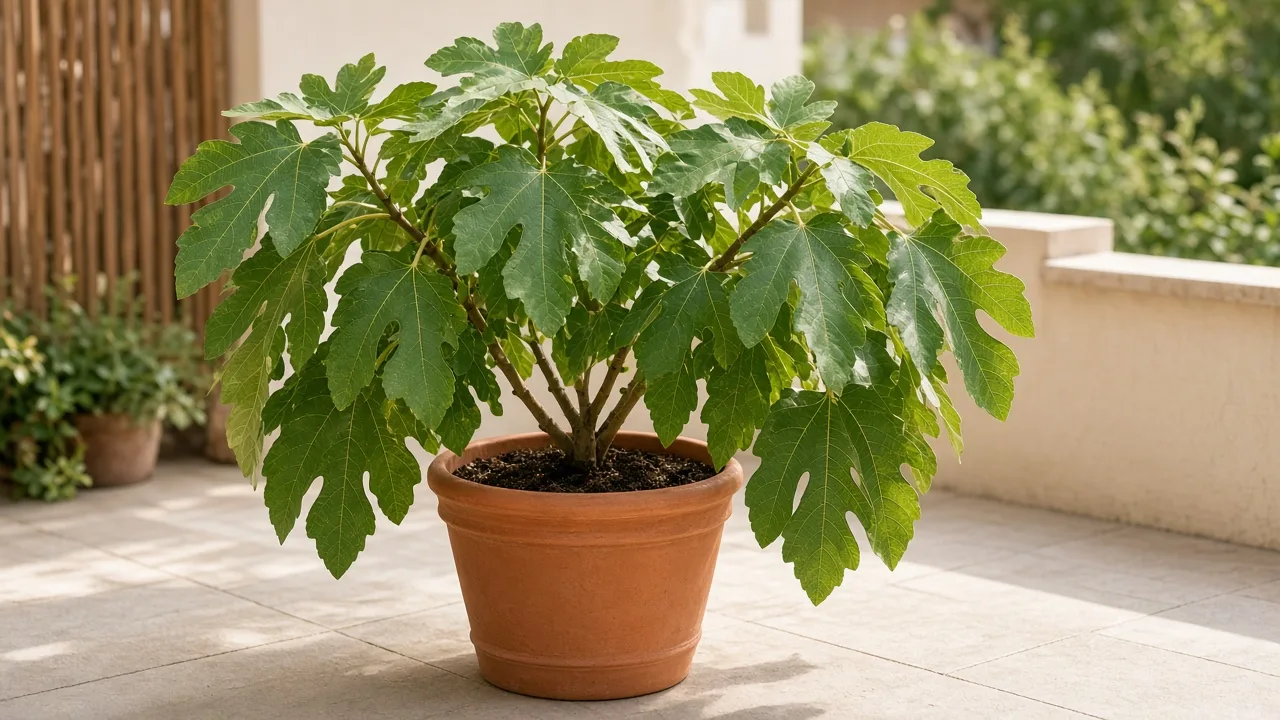
Drooping Leaves on Fig: Causes, Checks & Fixes
This guide covers drooping leaves on Fig. See also the general Drooping Leaves guide, watering, and light pages for this plant.
Drooping Leaves on Fig: Causes, Checks & Fixes
Quick answer
Drooping leaves on fig (Ficus carica) mean the tree cannot hold its large, deeply lobed leaves at their normal angle—roots are either not delivering water fast enough, or damaged roots on wet mix cannot take up water even when the pot feels heavy.
First step: lift the container and probe the top 1–2 inches of mix before you change anything.
For how chronic root stress shows up as hanging foliage on houseplants in general, see our drooping leaves guide. On common fig, droop almost always tracks seasonal watering, fruit swell, or container root-ball dryness—not the same care rhythm as a fiddle-leaf or rubber plant Ficus.
How drooping differs from wilting on Fig
| Pattern | Speed | Canopy | Pot / mix | Syconia | Start here |
|---|---|---|---|---|---|
| Drooping leaves | Days to weeks; gradual hang | Large lobes angle down; stems may still feel firm early | Dry throughout or wet for days | May drop if drought hits during swell | This guide |
| Wilting | Hours to days; acute collapse | Soft limp tissue, sometimes all at once | Very dry or paradoxically wet | Rapid abort on stress | Wilting on Fig |
| Yellow leaves | Often follows chronic wet droop | Yellow before hang on lower lobes | Heavy, sour mix | Less common as first sign | Yellow leaves on Fig |
| Heat midday droop | Afternoon only | Sun-side branches hang; shaded lobes OK | Normal moisture; firm wood | Usually still firm | Fig light placement |
If the tree looked fine yesterday and collapsed today, start with wilting triage. Return here when leaves have been hanging for several days without a single dramatic collapse.
What drooping leaves look like on Fig
Healthy common fig holds rough, dark green lobes on stiff young wood. Drooping changes the silhouette before every lobe yellows.
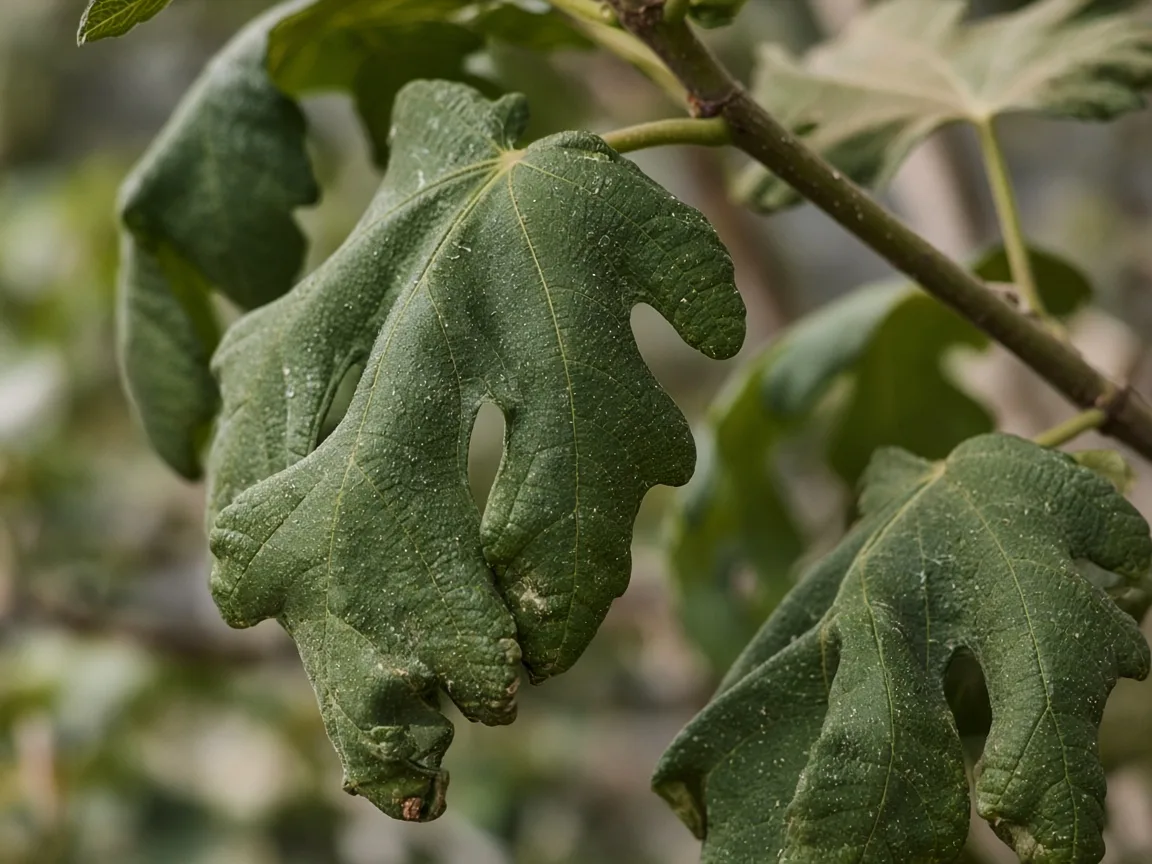
Drooping leaf symptoms on Fig—compare limp lobes with firm tissue on the same branch.
Dry droop (drought stress)
- Pot feels light when lifted; mix is dry 1–2 inches (2.5–5 cm) down, not just dusty on top
- Leaves hang downward but may stay firm when squeezed; margins can curl or feel crisp
- Container figs dry faster than in-ground trees, especially in terracotta on a sunny terrace
- Developing syconia may abort or shrink when drought hits during swell (UC IPM lists too little irrigation as a common cause of fig drop)
- Stems stay hard; no sour smell from drainage holes
Wet droop (root stress)
- Pot stays heavy days after the last watering
- Leaves droop despite wet mix—the classic pattern where owners add more water because foliage hangs
- Lower lobes may yellow; some feel soft when pressed
- Figs will not tolerate excessively wet soil even though they need plenty of moisture during the fruiting season
- Sour or rotten odor from the pot bottom supports failing roots—escalate to root rot on Fig
Heat droop (unacclimated sun)
- Appears on the hottest afternoon after rolling a container out of winter storage or moving to a brighter wall
- Soil moisture and pot weight are normal; stems remain firm
- Sun-facing lobes hang; shaded side may look fine
- Often recovers by evening without extra water if roots were not dry at depth
Post-repot or early spring flush droop
- Follows Fig repotting or root pruning within the last two to three weeks
- Whole plant hangs slightly even though you followed a normal soak rhythm
- Mix reads evenly moist but not sour; wood stays firm
- Usually resolves once new feeder roots grow—avoid compensating with daily shallow watering
Why Fig leaves droop (not your indoor Ficus)
Same genus, different plant. Common fig is a deciduous fruiting tree that loses leaves in winter, sets syconia on new wood, and spends summer moving large amounts of water into lobes and fruit. Indoor Ficus benjamina or fiddle-leaf advice—weekly small drinks in dim rooms—will mislead you on a sun-hungry patio fig.
Fruit swell pulls water fast. UF/IFAS notes figs need plenty of water during the fruiting season but cannot sit in saturated mix. When syconia swell in summer, a container that was fine at leaf-out can droop within days if you skip checks during a heat wave. That is different from ornamental houseplants with no crop load.
Shallow roots + small pots. Penn State extension notes container figs are sensitive to drought stress and wind. Fibrous roots near the surface dry quickly; wind on a balcony strips moisture from the huge leaf surface. Drooping on the windward side while the leeward side looks OK often traces to uneven drying, not disease.
Winter dormancy mismatch. Missouri Botanical Garden recommends watering regularly during the growing season but reducing watering in fall for container plants. Continuing a summer weekly soak after leaf fall keeps mix wet while dormant roots use almost no water—chronic wet droop builds without an obvious “I overwatered today” moment. See the seasonal rhythm in the Fig watering guide.
Overwatering and root failure. NC State lists common fig in organically rich, well-drained, moist soil—moist means replenished after the upper layer dries, not soggy day after day. Saturated mix suffocates roots; damaged roots cannot transport water, so lobes hang while the pot still holds moisture. Improper soil moisture stresses trees and impairs health in ways that show up as leaf and fruit problems together.
How to confirm the cause
Work through these checks in order:
- Pot weight — Lift the container. Very light favors drought; heavy days after watering favors saturation.
- Deep moisture — Probe 1–2 inches down. Bone dry throughout favors dry droop. Clinging wetness for days favors wet droop. Surface dust-dry with wet below can mean you have been shallow watering—see underwatering on Fig.
- Leaf squeeze — Press a mid-stem lobe. Firm with crisp margins fits dry droop. Soft, yellowing, or translucent tissue fits wet stress.
- Stem firmness — Pinch young wood at the soil line on container plants. Soft, discolored tissue on wet mix confirms rot spreading—open the root rot guide today.
- Smell check — Sour odor from the drainage hole supports wet droop. Neutral dry scent fits drought.
- Time-of-day pattern — Afternoon droop on firm stems with normal pot weight suggests heat stress; evening perk-up confirms it.
- Fruit check — Syconia dropping or shriveling while leaves hang strongly implicates moisture stress during swell—fix watering before assuming pests.
- Season — Leafless dormant tree with wet mix in a garage is a winter overwatering pattern, not a summer drought pattern.
Decision rule: Wet soil plus soft stem base means do not water—inspect roots. Dry soil throughout plus firm wood means one deep watering is appropriate.
First fix for Fig
Lift the pot. If it is heavy and mix is wet at depth, stop watering and plan a root inspection—do not add water because lobes hang.
That single choice prevents the costliest mistake on container fig: drowning roots that are already failing. Slide the plant out on a tarp, brush away wet mix, and squeeze roots and the stem base. Trim mushy roots with clean tools, let cut surfaces air-dry, and repot firm tissue into dry, gritty mix from the soil guide. Full salvage steps live on root rot on Fig.
If—and only if—the pot is light, mix is dry deep down, and stems feel firm, water thoroughly until excess drains from the bottom, empty the saucer, and do not soak again until the top 1–2 inches dry and the pot feels lighter. Pair with the watering guide dry-down method—not a calendar.
Do not mist hanging lobes. Do not fertilize a stressed tree before moisture and roots are stable.
Step-by-step recovery
Dry-drooping fig
- Water deeply once until excess runs from drainage holes; empty the saucer immediately.
- If mix repelled water and ran down the sides, bottom-soak the pot in a basin for 20–30 minutes, then drain fully.
- Move to full sun once acclimated—the light guide covers wall placement and terrace exposure.
- Wait 24–48 hours before judging. Lobes should regain a more upright angle if roots were healthy.
- Resume watering only when the top 1–2 inches are dry and the pot feels noticeably lighter.
Wet-drooping fig
- Stop all watering. Unpot and rinse roots gently to see firm versus mushy tissue.
- Trim soft, brown, or hollow roots back to healthy tan tissue. Sterilize pruners between cuts; wear gloves because fig sap can irritate skin.
- If main stems are still firm, air-dry the root ball in bright light for 24 hours before repotting into fresh mix.
- Hold fertilizer until new leaves open clean and pot weight stabilizes.
- If more than half the root mass is mushy or the trunk base is soft, follow the root rot salvage path rather than repeated shallow watering.
Heat-drooping fig
- Provide afternoon shade or move the pot until acclimated over 7–10 days.
- Confirm mix was not dry at depth—do not double-water if only sun angle changed.
- Increase check frequency during heat waves without keeping mix soggy.
Recovery timeline
Thirst droop on healthy roots often lifts within 24–48 hours after one thorough watering that fully drains. Wet-soil droop from early root stress may take two to four weeks after trim, air-dry, and repot before new firm lobes appear. Heat droop on acclimated plants usually resolves within one to two weeks of gentler exposure. Chronic winter overwatering on a leafless tree may show no visible leaf recovery until spring flush—fix mix moisture now anyway.
Judge progress by firm new shoots, stable pot weight, and syconia that hold size—not by every old lobe returning perfect posture.
Lookalike symptoms on Fig
| What you see | Likely cause | Next page |
|---|---|---|
| Whole-tree hang + heavy wet pot + sour smell | Root failure | Overwatering / root rot |
| Crisp margins, light pot, dry skewer | Drought | Underwatering |
| Afternoon hang, firm wood, normal weight | Sun acclimation | Fig light |
| Stippling + webbing on undersides | Spider mites | Spider mites on Fig |
| Soft shoots + insects on tips | Aphids | Aphids on Fig |
Mistakes to avoid
- Watering because leaves hang while mix stays wet at depth—the paradox that worsens overwatering.
- Treating a patio Ficus carica like a drought-tolerant rubber plant in a dim living room.
- Keeping summer soak frequency after leaf fall in a cool garage.
- Repotting into wet mix on the same day you discover droop without inspecting roots first.
- Fertilizing “to perk it up” before moisture diagnosis—especially while syconia are stressed.
How to prevent drooping leaves next season
Align checks with growth stage: frequent pot lifts during leaf-out, fruit swell, and heat; sparse light drinks only when dormant roots approach dry. Use free-draining mix and open holes in containers. Mulch in-ground trees to buffer moisture swings as UC IPM recommends for root-zone stability. Roll containers out of winter storage gradually into full sun. Scout weekly when syconia swell—the same weeks you would adjust watering for crop load, not calendar habit alone.
When to worry
Escalate same-day when droop spreads across multiple branches while the pot stays heavy, the trunk base softens, or syconia abort en masse during otherwise normal weather. A mature in-ground fig with firm wood rarely dies from one missed drink, but a small container on a hot terrace can lose an entire flush if drought and heat combine for a week.
When to use this page vs other Fig guides
- Gradual hang over days or weeks, firm or dry/wet mix confusion → this page.
- Sudden collapse today → wilting.
- Yellow lower lobes with chronic wet mix → yellow leaves and overwatering.
- Calendar and seasonal soak depth → watering.
- Mushy roots confirmed → root rot.
Related Fig guides
Conclusion
Drooping leaves on fig are a water-transport problem on a deciduous fruit tree, not a mystery “Ficus mood.” Lift the pot, read moisture at the root ball, and separate dry drought from wet root failure before you soak or repot. Match watering to leaf-out, fruit swell, and dormancy—and expect patio containers to need more attention than in-ground trees on the same cultivar.
Related tool
Use the Plant Problem Diagnosis Tool to narrow causes for drooping leaves on this plant before changing multiple variables at once.