Low Humidity on Jade Pothos: Causes, Checks & Fixes
Quick answer
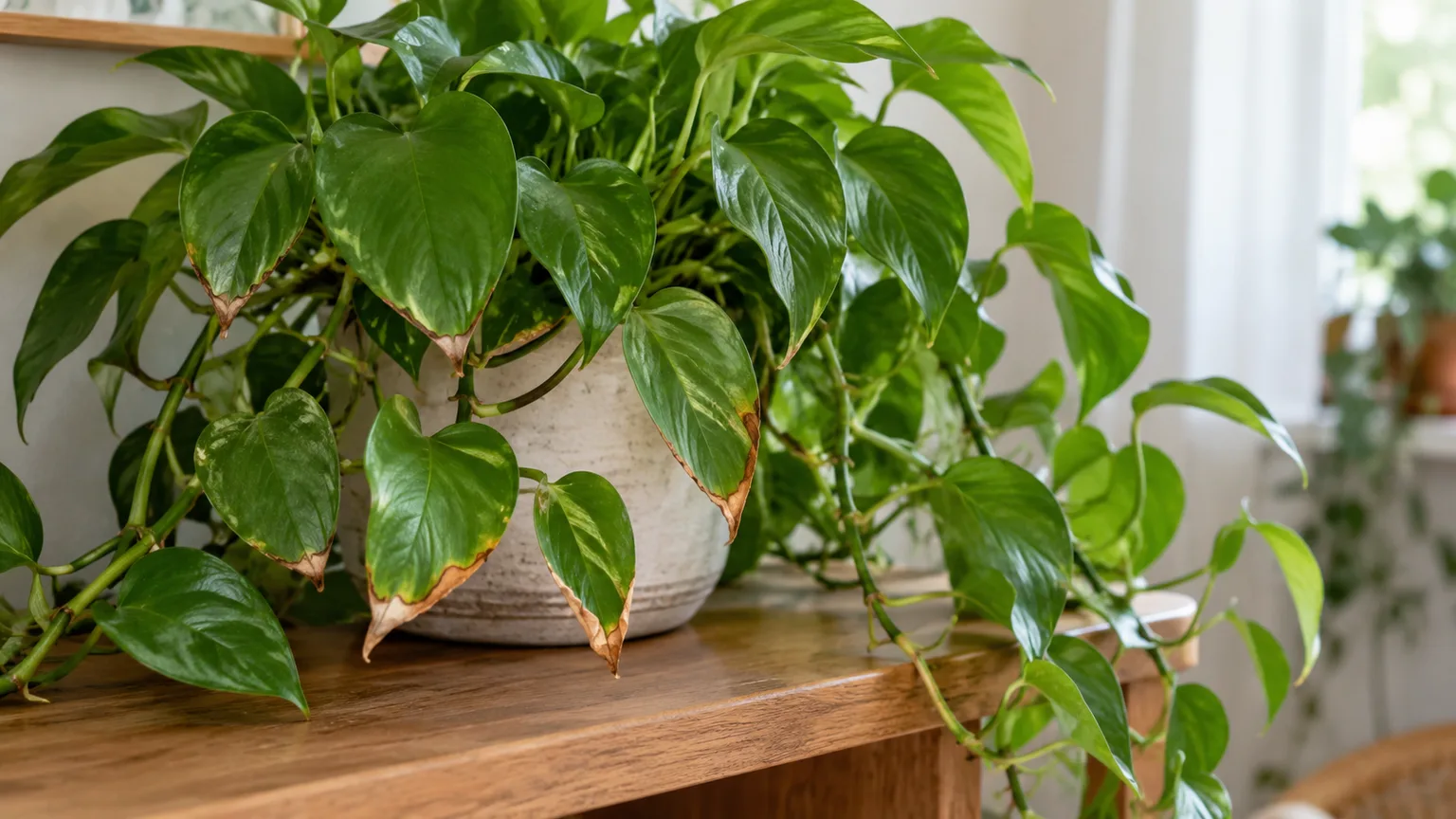
Dry indoor air alone rarely harms Jade Pothos, which tolerates average household humidity, but sustained air below about 30 percent near heating vents crisps new leaf edges and invites spider mites. First fix: move the plant out of hot, dry airflow and raise local humidity with a small humidifier, after ruling out salt buildup and underwatering.
Low Humidity on Jade Pothos: Causes, Checks & Fixes
This guide covers low humidity on Jade Pothos. See also the general Low Humidity guide, watering, and light pages for this plant.
Low Humidity on Jade Pothos: Causes, Checks & Fixes
Quick answer
Low humidity alone is an uncommon primary diagnosis on Jade Pothos (Epipremnum aureum ‘Jade’). This cultivar tolerates low humidity and average household air far better than thin-leaved tropicals like calatheas, so crispy edges usually trace to water quality, watering rhythm, or spider mites first. Dry air becomes the real culprit when a hygrometer at leaf level reads persistently below about 30 percent — typically a trailer hung near a heating vent, radiator, or AC draft — and the newest leaves emerge with dry, papery margins while older foliage looks fine.
Your first fix: move the plant out of the hot, dry airflow and raise the humidity immediately around it with a small humidifier. For the general mechanics of dry-air damage, see our low-humidity guide. On Jade Pothos, the pattern usually shows up as crisped new-leaf edges plus shriveled aerial-root nubs on otherwise healthy trailing vines — not whole-leaf yellowing.
What low humidity looks like on Jade Pothos
On this plant, dry air damage is subtle and edge-first. Newly unfurled leaves — the soft, pale-green ones at the vine tips — develop tan, papery margins that feel dry but not mushy. The rest of the leaf stays deep green and turgid. You may also notice the small brown aerial-root nubs at each stem node looking shriveled and brittle instead of plump, and unfurling leaves that seem to stick or tear slightly as they open.
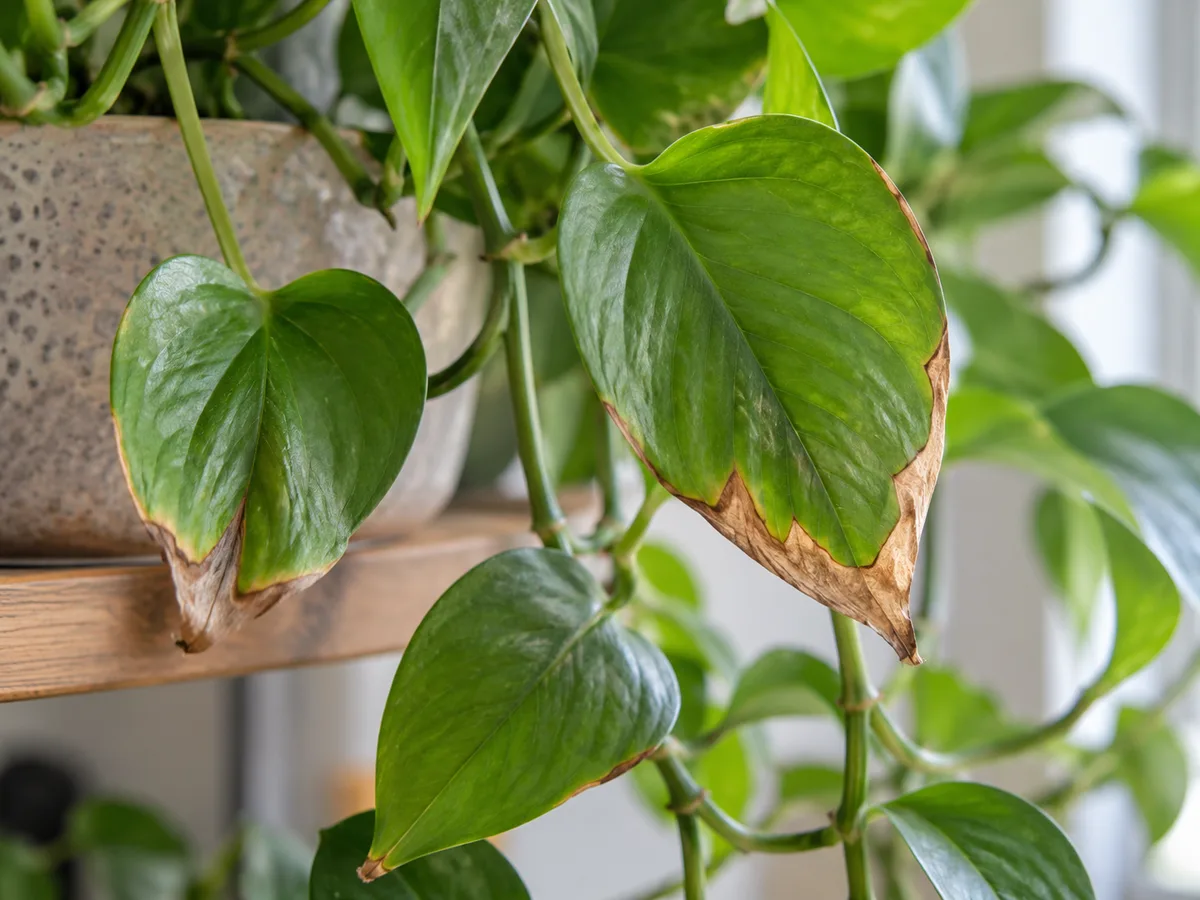
Dry, papery new-leaf margins with shriveled aerial-root nubs at the node — classic dry-air pattern on Jade Pothos when the hygrometer reads low.
Because Jade is a solid-green cultivar with no variegation to bleach or burn first, early dry-air damage hides well. By the time edges are obvious on mature leaves, the plant has usually sat in dry airflow for weeks. Check the Jade Pothos overview if you are unsure what healthy new growth should look like on this cultivar.
Why dry air hits Jade Pothos the way it does
Jade Pothos has thin, non-succulent leaves with no water-storage tissue — every bit of leaf moisture must be continuously replaced through the roots and the humid boundary layer around the foliage. In still, moderately humid air that boundary layer slows water loss. In a hot draft from a vent, it is stripped away constantly, and the thinnest tissue — fresh unfurling leaves and leaf margins — desiccates first while thick mature leaves look untouched.
The trailing habit concentrates the damage. Vines hang down into whatever air current passes below the pot, and the growing tips at the vine ends sit farthest from the root system, so they feel water stress first. That is why dry-air crisping on a trailer often appears only at the vine tips while the crown near the soil looks perfect — a pattern that would make no sense on a rosette plant but is diagnostic here.
The node anatomy tells the same story. Pothos climbs in nature using brown aerial roots at each node, and on a healthy indoor Jade those nubs stay firm and ready to root. In sustained dry air they shrivel to brittle threads — a small, plant-specific signal that corroborates your hygrometer reading before leaf edges ever brown.
The vent-and-shelf trap
Most Jade Pothos low-humidity cases are really placement cases. This plant is the classic high-shelf trailer, and high shelves sit exactly where heated air pools and where wall vents blow. A plant that was flawless all summer can crisp within two weeks of the heating season starting, with no change in watering at all. Warm air from radiators and forced-air vents can hold far less relative humidity at leaf temperature, so a room reading of 35 percent at thermostat height can mean under 25 percent in the warm plume around a hanging vine.
Winter grouping matters for the same reason. Jade Pothos kept alone on a high shelf near a vent is fully exposed; the same plant grouped with other foliage away from direct airflow sits inside a shared pocket of transpired moisture. If your crisping started when the heat kicked on, suspect the vent before suspecting the humidifier you do not own. Cross-check placement against the Jade Pothos light guide — the bright indirect spots this plant prefers are rarely directly above radiators.
How to confirm the cause
Work through this order before changing anything:
- Measure the air at leaf level. Set a cheap hygrometer among the vines — not on a distant shelf — for 24 to 48 hours. Persistently below about 30 percent supports a dry-air diagnosis. The Sill notes pothos feels most at home at 40 to 60 percent humidity, so readings in that band argue against humidity as the cause.
- Map the airflow. Hold a tissue near the vines. If it flutters toward or away from a vent, radiator, or AC outlet, you have found the delivery mechanism. Damage should be worst on the vines in the draft path.
- Rule out salts and fluoride. Brown tips with a thin yellow band between brown and green tissue point to water quality, not air — hard irrigation water leaves mineral deposits that concentrate at leaf margins. White crust on the soil surface or pot rim confirms it. See brown tips on Jade Pothos for the flush protocol.
- Rule out underwatering. Leaves curling inward plus a light pot with mix dry 4 to 5 cm down means the plant needs water, not humidity — review the Jade Pothos watering guide. Dry air alone does not make whole leaves go limp.
- Rule out spider mites. Dry, dusty air is exactly where mites thrive — UC IPM notes mite damage is most severe in hot, dusty conditions and on water-stressed plants. Tap leaves over white paper and look for moving specks; stippled, bronzing foliage with fine webbing is mites, not humidity. Full protocol lives on the spider mites on Jade Pothos page.
Write down which pattern matched. Dry air, salts, underwatering, and mites each need a different first fix.
First fix for Jade Pothos
Move the plant out of the dry airflow and place a small humidifier within a meter or two of the vines so local humidity holds above roughly 40 percent. NC State Extension recommends exactly this pairing for pothos: use a humidifier or set the pot on a tray of wet pebbles to increase humidity — with the pebble tray as the backup when no humidifier is available, keeping the pot base above the water line.
Make this one change first. Do not repot, prune heavily, and fertilize the same week — a stressed trailer needs one variable moved at a time so you can read the response in new growth.
Step-by-step recovery
After confirming dry air (hygrometer below ~30 percent, draft found, salts and mites ruled out):
- Relocate away from the vent or radiator — even one meter of separation out of the direct plume changes the leaf-level reading dramatically. Group with other plants if possible.
- Run the humidifier near the vines, aiming for 40 to 50 percent at leaf level. Empty and refill daily to avoid microbial film.
- Water normally: when the top half of the mix dries, roughly every 7 to 10 days in bright light. Dry air does not change the soak rhythm described in the watering guide — do not compensate by overwatering, or you will trade crisp edges for overwatering on Jade Pothos.
- Leave damaged leaves in place until new growth emerges; they still photosynthesize. Trim fully brown margins for appearance only, cutting just inside the dead tissue so no green wound is left open.
- Wipe leaves with a soft damp cloth to remove dust. Dust films worsen mite pressure in dry conditions and slightly block light on this light-hungry cultivar.
If salts were the real cause: flush the pot with plain water until several pot-volumes drain through, let it drain fully, and pause feeding — then still fix the vent placement, because dry air accelerates salt concentration at leaf tips.
If mites were the real cause: isolate the plant, rinse leaf undersides thoroughly, and confirm live mites before any spray — UC IPM advises to be sure mites are present before treating. Follow the dedicated spider mites guide rather than raising humidity alone.
Recovery timeline
Existing crisped edges never re-green — judge everything by new growth. In spring and summer, vines pushing fresh leaves with clean, flexible margins within four to eight weeks mean the fix worked. Aerial-root nubs plumping back up at the nodes is an earlier positive sign, often visible within two to three weeks.
In winter, expect slower confirmation: short days stall new leaves, so hold the improved placement steady and look for the damage stopping its spread rather than instant new foliage. If crisping continues on leaves that emerge after the move, re-run the confirmation checklist — the cause was likely salts or watering, not air.
Lookalike symptoms to rule out
| Pattern | Likely cause | First step |
|---|---|---|
| Crispy new-leaf edges, hygrometer below ~30 percent, draft found | Low humidity | Move from airflow; humidifier |
| Brown tips with yellow band, white soil crust | Salts / fluoride | Brown tips guide; flush, pause feed |
| Whole leaves limp and curling inward, dry light pot | Underwatering | Underwatering guide; deep soak |
| Stippled bronzing leaves, fine webbing, moving specks | Spider mites | Spider mites guide; isolate, rinse |
| Yellow lower leaves plus crisp edges, wet heavy pot | Overwatering / root stress | Overwatering guide; dry out, inspect roots |
| Single oldest leaves browning while vines grow well | Normal aging | No action; prune spent leaves |
Yellowing that spreads across whole leaves belongs on the yellow leaves on Jade Pothos page, not here — dry air browns margins without yellowing the leaf body.
What not to do
Do not mist the vines and consider it fixed. Misting raises humidity for minutes and does nothing about a vent blowing all day — and one trusted pothos clinic notes misting does almost nothing for humidity while doing nothing at all for salt-driven edge burn.
Do not overwater to compensate for dry air. Pothos is better kept too dry than too wet, and Penn State lists root rot from excess water as one of this plant’s only real problems. Soggy mix plus dry air gives you two problems instead of one.
Do not feed a crisping plant to “green it up.” Fertilizer adds the very salts that mimic humidity damage at leaf margins. Hold all feeding until new leaves emerge clean.
Do not seal the plant in a plastic bag or tiny cabinet for humidity unless you can ventilate it — stagnant wet air on pothos foliage invites fungal leaf problems that dry-air Jade never had.
How to prevent it next time
Align placement with how this trailer actually lives:
- Site away from air streams. No hanging directly over radiators, in front of heating vents, or in the blast path of AC units. High shelves are fine only if the air there is still.
- Group in winter. Cluster Jade with other foliage plants during heating season so shared transpiration buffers the driest months.
- Water by the pot, not the calendar. When the top half of the mix dries — and the soil guide mix drains freely — the roots keep leaf margins supplied even when air is dry. Match rhythm to the watering guide rather than misting on a schedule.
- Keep temperatures steady. Pothos prefers average room temperatures between 60 and 80°F; cold drafts below about 60°F damage tissue that then looks like humidity burn.
- Run the humidifier seasonally. Start it when the heat kicks on, retire it in spring. Re-measure each winter — new vents, new apartments, and new shelf spots reset the equation.
Check vine tips and node nubs monthly through the heating season. Plump nubs and clean new margins mean your setup is working.
Related Jade Pothos problems
Dry air overlaps with several sibling guides — use these when your checklist points past simple edge crisping:
- Brown tips — yellow-banded tips with soil crust mean salts or fluoride, not air.
- Underwatering — limp, inward-curling leaves with a bone-dry pot need water first.
- Spider mites — stippling, bronzing, and webbing in hot, dry, dusty spots.
- Overwatering — yellow limp leaves on a wet pot mean root stress, and flushing a rotting plant makes it worse.
- Jade Pothos overview — baseline light, water, and trailing-habit care for the full cultivar picture.
When to worry
Escalate immediately if you find webbing with stippled, bronzing leaves — mite populations explode in dry indoor air and defoliate vines fast. Act the same day if crisping spreads from edges to whole leaves while stems soften or the mix smells sour; that is rot riding along, not cosmetic dry air.
Cosmetic edge crisping on a plant with firm vines, clean new growth after relocation, and no pests can wait for the next hygrometer check — no emergency repot or feed required.
When to use this page vs other Jade Pothos guides
- Jade Pothos watering guide — use for routine moisture checks before assuming the air is the problem.
- Jade Pothos problems hub — browse all 16 common issues on this cultivar.
- Brown tips on Jade Pothos — different entry point when edges have a yellow band or soil crust.
- Underwatering on Jade Pothos — different entry point when leaves go limp, not just crispy.
- Yellow leaves on Jade Pothos — different entry point when whole leaves yellow rather than margins browning.