Overwatering on Jade Pothos: Causes, Checks & Fixes
Quick answer
Overwatering on Jade Pothos shows as limp solid-green vines on heavy damp soil with yellowing that starts at the base. First step: stop watering until the top 4–5 cm of mix feels dry, then confirm the drainage holes are open and the saucer is empty.
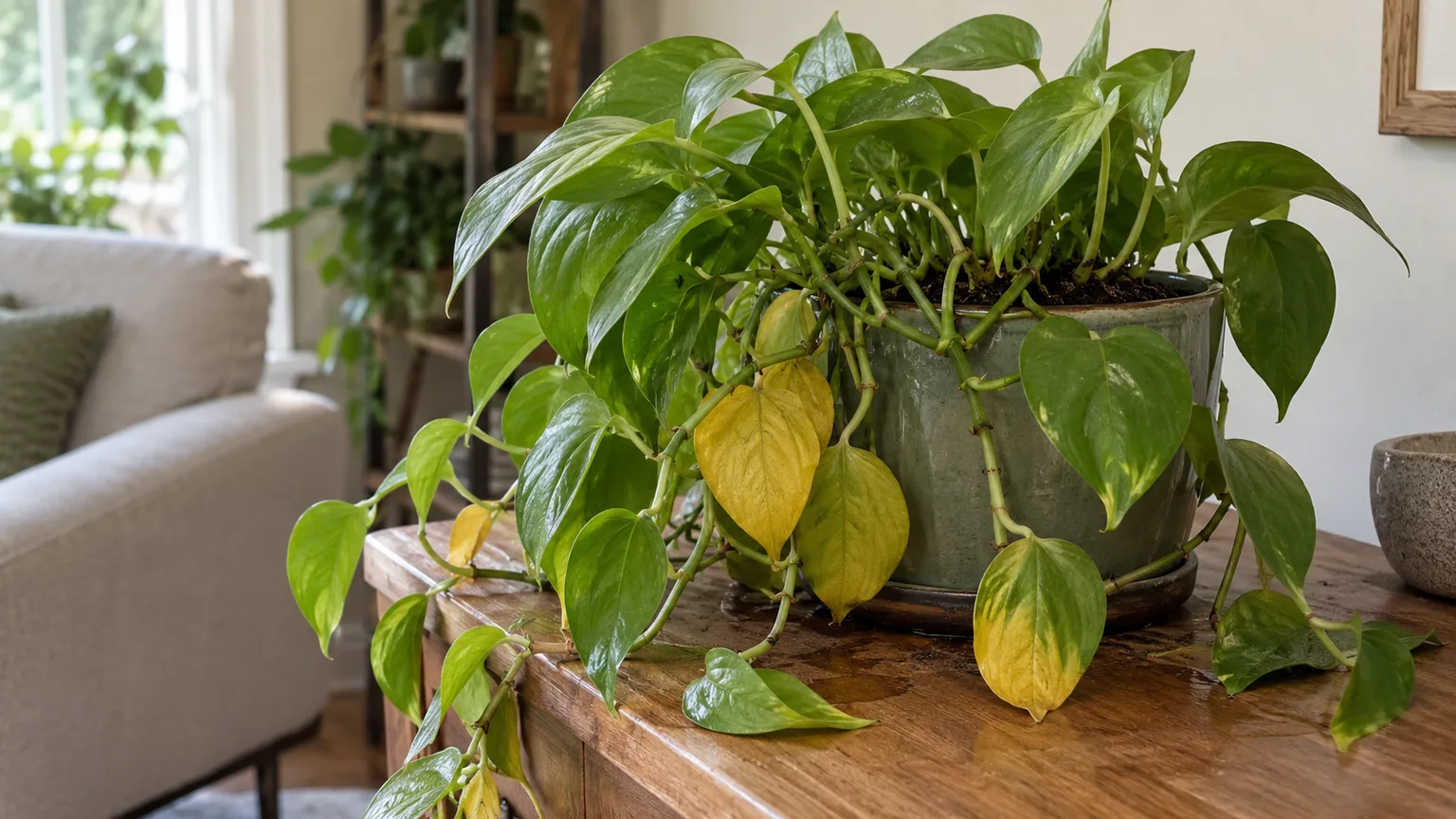
Overwatering on Jade Pothos: Causes, Checks & Fixes
This guide covers overwatering on Jade Pothos. See also the general Overwatering guide, watering, and light pages for this plant.
Overwatering on Jade Pothos: Causes, Checks & Fixes
Quick answer
Overwatering on Jade Pothos (Epipremnum aureum ‘Jade’) means the root zone stays wet long after watering. Because this trailing vine stores water in thick stems and heart-shaped leaves, limp vines on damp soil are the classic trap: growers see droop, add water, and roots lose even more function.
First step: stop watering until the top 4–5 cm of mix feels dry. Lift the pot — a heavy pot plus yellow lower leaves or a sour smell confirms the diagnosis better than any calendar date.
How this page fits the cluster: the wilting guide covers dry-pot versus wet-pot first checks when vines droop. This page covers chronic wet mix and early root stress before decay is advanced. If stems soften at the soil line or unpotted roots look brown and mushy, move to the root rot guide for trim-and-repot rescue.
Overwatering vs. underwatering on Jade Pothos
| Pattern | Pot weight | Soil at 4–5 cm | Stem at soil line | What it usually means |
|---|---|---|---|---|
| Overwatering | Heavy | Damp, cool, clings to fingers | Soft or darkening | Roots failing on saturated mix |
| Underwatering | Light | Dry and crumbly | Firm and green | Turgor loss from drought |
| Low light + slow dry-down | Medium-heavy | Damp for two weeks or more | Firm but thinning vines | Overwatering risk building toward rot |
An underwatered Jade Pothos wilts on a light, dry pot and usually perks within hours of a thorough soak — see the underwatering guide for that recovery. Wilt on wet soil means roots can no longer absorb water because decay has started, so extra water only deepens the damage.
What overwatering looks like on Jade Pothos
Jade’s uniform deep-green leaves hide early trouble. Unlike Golden Pothos, there is no fading variegation to warn you — the first visible change is usually a soft, pale yellow spreading across one or two lower leaves near the pot while the vine tips still look acceptable. Overwatered pothos develop yellow leaves while the stems turn black, and on Jade the stem darkening often starts right at the soil line where moisture lingers longest.
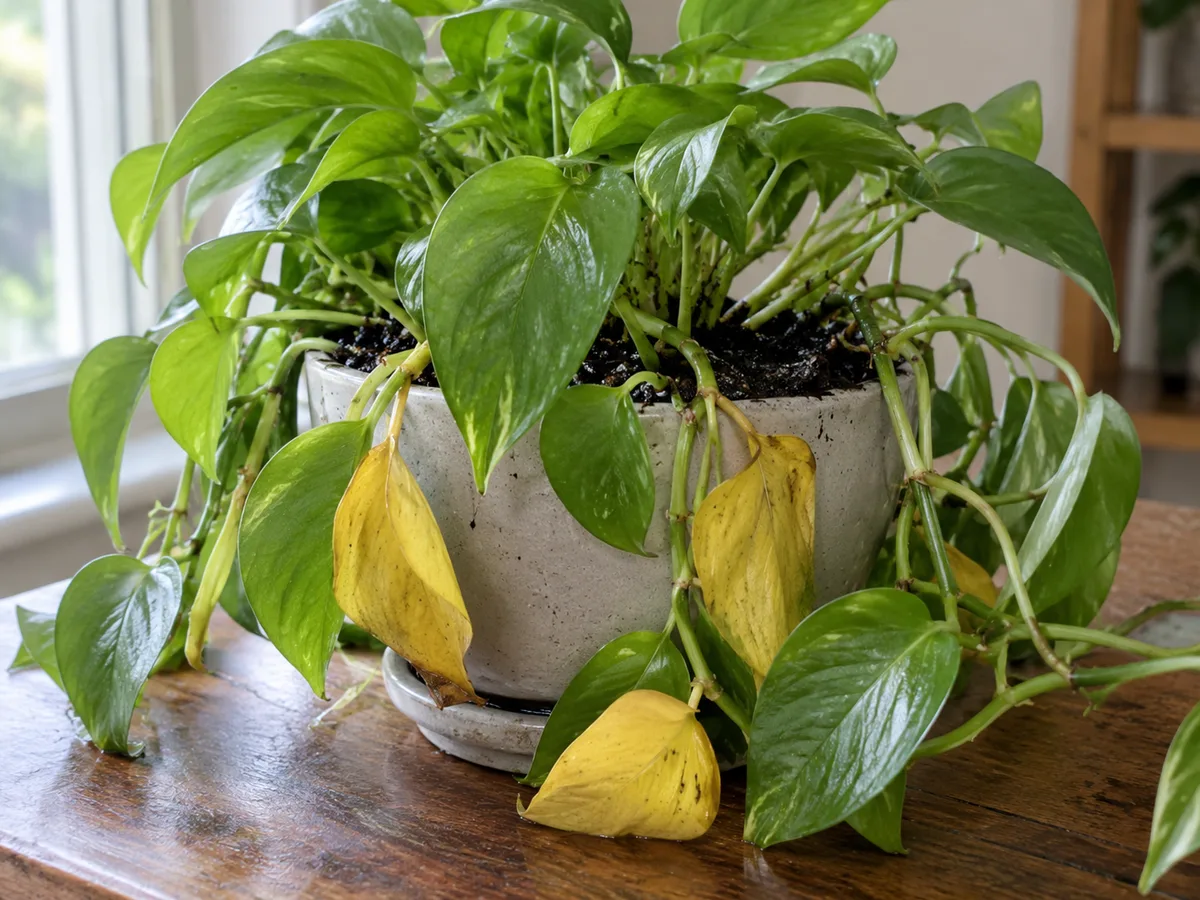
Yellowing lower leaf and softening stem base on Jade Pothos; compare with firm green tissue further along the same vine.
Early signs, in the order Jade usually shows them:
- Yellow lower leaves while the mix is still damp — not one aging leaf, but several at the base yellowing together
- Limp vines on heavy soil that stay floppy even though you just watered
- Dark or soft stem sections at the soil line, sometimes with blackening of the leaf margins
- Sour or musty smell when you lift the pot, plus fungus gnats or a white film on the surface (compare the fungus gnats and mold on soil guides when those appear alongside wet mix)
For the general mechanics of how saturated mix injures roots, see our overwatering guide. On Jade Pothos, the pattern above — base-up yellowing plus a pot that never lightens — is what separates true overwatering from ordinary old-leaf drop.
Why Jade Pothos gets overwatered
The dim-corner trap. Jade tolerates lower light better than variegated pothos, so it often lands on dim shelves and in north-facing rooms. That tolerance is about survival, not water use: in weak light the plant drinks far less per week, and pothos needs more water in brighter light and less in low light. A weekly rhythm that works in a bright window keeps a dim-corner Jade soggy for weeks.
Vine-shaded pot surface. Long trailing vines drape over the pot rim and shade the soil surface, slowing evaporation exactly where you check for dryness. The top looks dry-ish while the middle of the pot stays wet. Always probe 4–5 cm deep near the pot edge, not just the visible surface.
Calendar watering instead of dryness checks. Indoor water use shifts with season, light, and growth. Let the well-drained potting medium dry out between waterings rather than watering on a fixed weekday — Jade’s normal rhythm is roughly every 7–10 days in bright light and every 14–21 days in low light, per its watering guide.
Oversized pots and sealed cachepots. A pot much larger than the root mass holds a reservoir of wet mix the roots cannot reach, and a nursery pot sitting in water inside a decorative cachepot wicks moisture back up for days. Both keep the lower root zone airless while the surface seems fine.
Dense, peat-heavy mix. Standard potting mix compacts over time, and Jade’s fine roots suffocate in it. An airy blend with perlite, as described in the soil guide, drains fast enough that a normal watering cannot linger.
How to confirm overwatering on Jade Pothos
Work through these checks in order before treating:
- Lift the pot. A pot that still feels heavy several days after watering is the single most reliable clue.
- Probe at depth. Push a finger 4–5 cm down near the pot edge. Damp soil that clings to your skin means wait; dry and crumbly means the wilt has another cause.
- Inspect the stem base. Part the vines at the soil line. Firm green stems suggest early-stage trouble; soft, dark, or translucent sections mean decay is underway.
- Smell the drainage hole. A sour or rotten-egg odor signals anaerobic mix and likely root damage.
- Read the co-symptoms. Fungus gnats hovering over the surface or mold filming the mix both confirm the pot has stayed wet too long — but treat the moisture first, since those pests fade once the mix dries properly.
Too much water leads to root rot, one of only a few problems with this plant, so a positive check on weight plus depth moisture is enough to act. If you unpot and find them, root rots with brown or nonexistent roots are most often due to overwatering — at that point follow the root rot rescue path instead of simple dry-down.
First fix and step-by-step recovery
Match the response to the severity you confirmed above.
Mild (heavy pot, yellow base leaves, firm stems): dry it down. Stop watering, empty the saucer, and move the plant into brighter indirect light with airflow — see the light guide for placement that speeds drying without scorching. Wait until the upper few inches of mix dry out completely before watering again; if a finger comes out mucky, keep waiting. Most mild cases stabilize within two to three weeks.
Moderate (sour smell, soft stem base, spreading yellow): unpot and inspect. Slide the root ball out, shake off saturated mix, and trim any brown, translucent, or mushy roots back to firm white tissue with sharp sanitized scissors. Repot into fresh airy mix in a pot sized to the remaining roots — not the old oversized one — and repot only into a container with a large drainage hole and a fluffy, aerated blend. Hold water for several days, then resume with the depth check. The repotting guide covers mix and pot sizing in detail.
Severe (mushy stems, collapsed vines, most roots gone): salvage node cuttings. Jade’s trailing stems carry aerial-root nodes that easily root in water. Cut healthy firm sections with at least one node each, discard everything soft or blackened, and root them in clean water. This sacrifices the parent pot but preserves the plant’s genetics — often the fastest route back to a full Jade when the root system is destroyed.
Recovery timeline
Expect new firm leaves at the vine tips within two to four weeks of a mild dry-down, and within four to eight weeks after a moderate repot. Judge progress by new growth and drying rhythm, not by old leaves: yellowed blades will not re-green, but fresh leaves should emerge deep green and firm while the pot starts lightening on a normal schedule.
Warning signs that the problem is worsening: yellowing climbs toward the vine tips, stems soften further up the vine, or the mix still smells sour a week after repotting. Any of those means decay is still active — re-inspect the roots or fall back to node cuttings.
Lookalikes to rule out
- Underwatering — light dry pot, crispy leaf edges, fast perk-up after watering (compare with the dry-pot checks in Related guides below).
- Not enough light — pale thin vines with long gaps between leaves, but the pot dries normally. See not enough light.
- Root rot — the advanced stage of this same problem: mushy roots and collapsing stems (follow the rescue path in Related guides below).
- Natural old-leaf drop — a single lowest leaf yellows and dries while everything else stays firm and the pot dries on schedule. No action needed.
- Fertilizer salt buildup — brown crispy margins on otherwise firm leaves in a pot that dries normally; overwatering damage is soft and limp, not crispy. Flush the mix and review the fertilizer guide rather than changing the watering rhythm.
Mistakes to avoid
Do not water “a little bit daily” — shallow sips keep the top wet while roots below stay airless. Do not fertilize a stressed Jade; salts cannot fix suffocated roots and may burn them. Do not repot, prune hard, and spray pesticide on the same day — one intervention at a time lets you read the plant’s response. And do not bury recovered stems deeper when repotting; Jade stems rot fast when buried in damp mix.
Pothos is better kept too dry than too wet — when in doubt, wait another day and check again.
How to prevent it next time
Water by dryness, not by day: top half of the mix dry before every watering, roughly every 7–10 days in bright light and every 14–21 days in low light. Grow Jade in a pot with real drainage holes, set inside a cachepot only if you empty it within half an hour. Refresh compacted mix with perlite so water runs through instead of pooling, and slow the rhythm in winter when cool dim rooms cut the plant’s water use. A weekly two-second lift of the pot teaches you its dry weight faster than any schedule. Cross-check placement and mix against the watering and soil guides each season.
Conclusion
Overwatering on Jade Pothos is a timing problem, not bad luck: a low-light plant watered on a bright-light schedule, in a pot that never fully dries. Confirm it with heavy pot plus damp mix at depth plus base-up yellowing, then stop watering and fix drainage before anything else. Jade forgives a missed watering far more readily than roots that never get oxygen.
For the species profile and year-round rhythm, see the Jade Pothos overview and the full problems hub.
Related Jade Pothos guides
- Watering — dry-down protocol and seasonal rhythm
- Wilting — dry-pot versus wet-pot first checks
- Root rot — trim, repot, and node salvage when decay is confirmed
- Yellow leaves — yellowing patterns beyond wet soil
- Underwatering — light pot and drought recovery
- Fungus gnats — wet-soil co-symptom and larval control
- Mold on soil — surface film on persistently damp mix
- Soil and repotting — airy mix and pot sizing that prevent recurrence
Related tool
Use the Root Rot Risk Checker to score drainage, pot size, and watering rhythm for overwatering on this plant before changing multiple variables at once.