Root Rot on Jade Pothos: Causes, Checks & Fixes
Quick answer
Root rot on Jade Pothos shows as yellowing lower leaves, soft stems near the soil line, and soil that never dries: unpot first and check the roots. Trim mushy brown roots to firm white tissue, repot in fresh airy mix, and root a healthy node cutting as insurance.
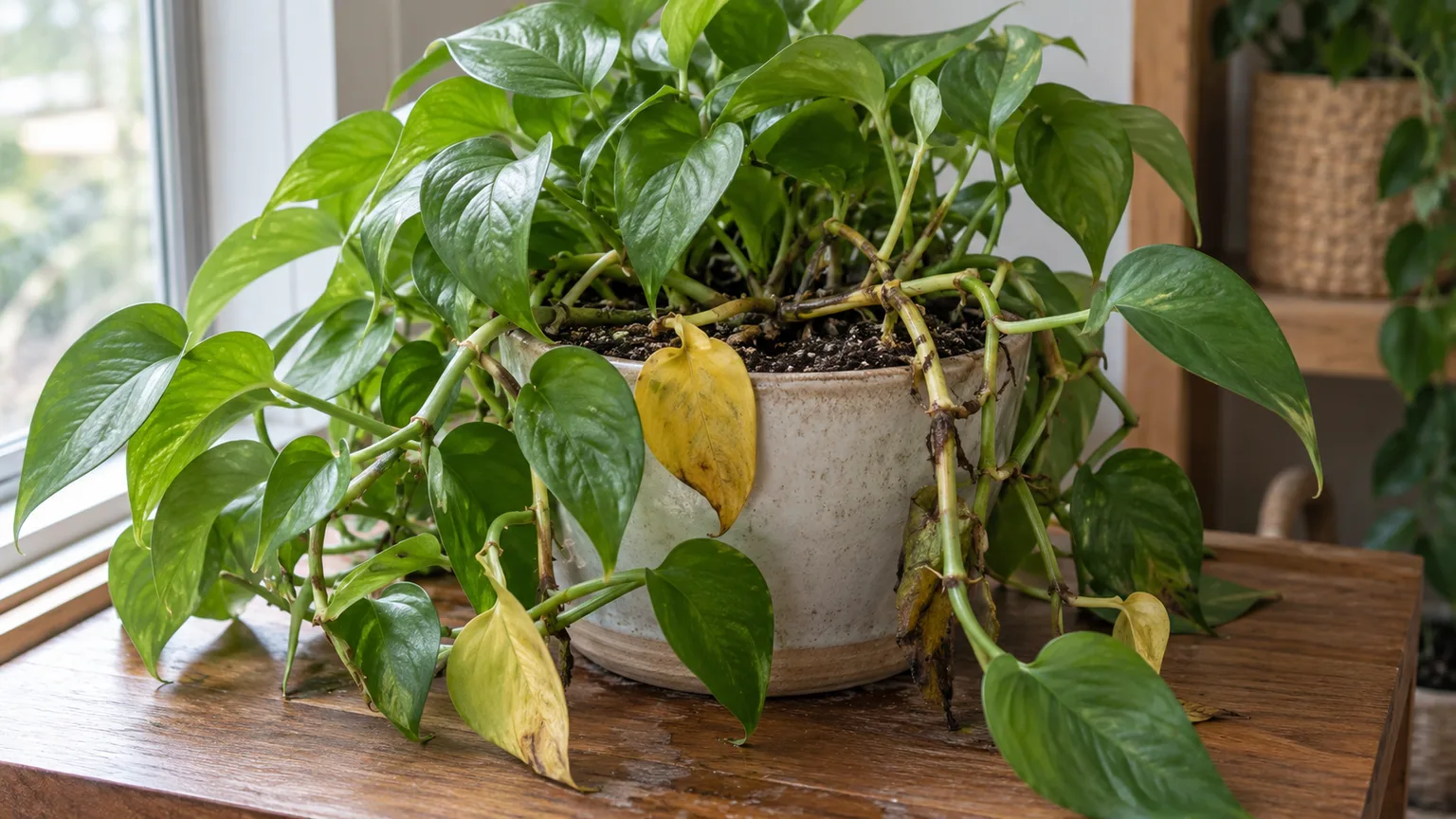
Root Rot on Jade Pothos: Causes, Checks & Fixes
This guide covers root rot on Jade Pothos. See also the general Root Rot guide, watering, and light pages for this plant.
Root Rot on Jade Pothos: Causes, Checks & Fixes
Quick answer
Your Jade Pothos (Epipremnum aureum ‘Jade’) has yellowing lower leaves, soft stems at the soil line, or soil that stays wet for days — and you need to know whether the roots are rotting or the plant just needs a drink adjustment. Jade’s solid-green leaves tolerate lower light than variegated pothos, which is exactly why it rots: in dim corners it drinks slowly while owners keep watering on schedule.
First step: unpot the plant and inspect the roots. For general background on how chronic wet mix damages roots, see our root rot guide. On Jade Pothos, the pattern usually shows up as firm white roots (good — adjust watering only) versus brown, mushy, foul-smelling roots (rot — trim and repot). Do not fertilize, mist, or repot blindly before you have looked at the root ball.
What root rot looks like on Jade Pothos
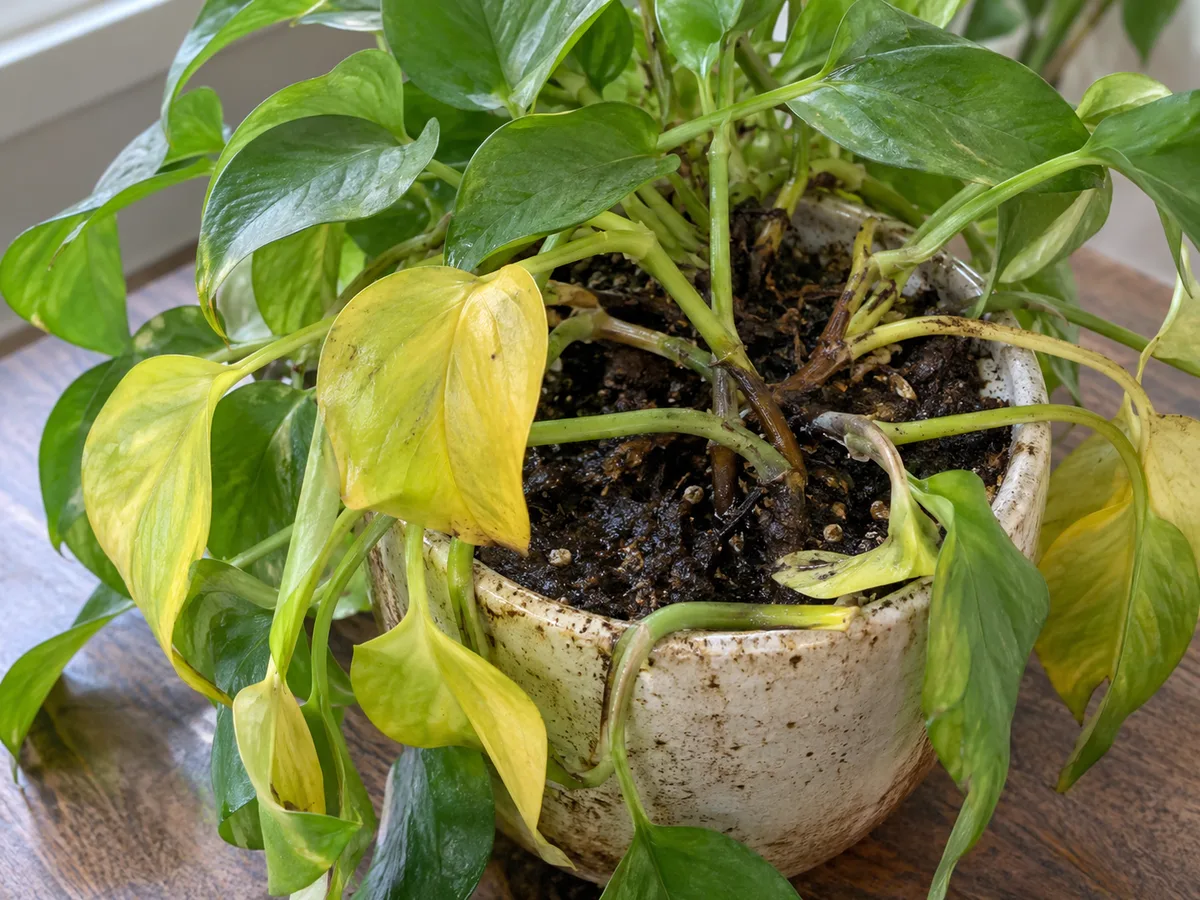
Root rot on Jade Pothos: soft brown roots, yellowing lower leaves, and mushy stem bases — compare with firm white roots on the same plant.
Jade shows rot differently from upright plants because damage travels along trailing vines from the root zone upward:
Early signs (roots stressed, vines still mostly green):
- Lower leaves turn solid yellow and drop while new tip growth stalls
- Pot feels heavy days after watering; the top half of mix never dries
- Vines look limp even though the soil is wet — the classic “thirsty plant in wet soil” paradox
- Small dark flies hover when you disturb the pot — fungus gnats sharing the same soggy habitat
Advanced signs (rot established):
- Stems near the soil line turn yellow, brown, and mushy — on a trailer this is the point where the vine loses its connection to the roots
- Roots are soft, brown, and discolored instead of firm and pale, often with a sour or swampy smell
- Soil stays soggy because rotted roots have stopped drawing up moisture — each new watering just sits there
- Whole vines collapse while neighboring vines still look fine, because individual stems rot at different rates
Because Jade vines root at nodes all along the stem, a vine with a rotted base but healthy tip growth is still salvageable as a cutting — the tip nodes carry their own rescue kit.
When to use this page vs other Jade Pothos guides
This page is the root-first entry for suspected rot: soft stems, wet soil, and failing roots on Jade Pothos. Use it to confirm rot and decide between trim-and-repot surgery and cutting propagation.
- Overwatering — go here when leaves yellow and soil stays wet but stems are still firm and roots unexamined
- Yellow leaves — go here when yellowing is the only symptom and you need the full cause map (light, age, nutrients, water)
- Wilting — go here when vines droop and you cannot tell underwatering from rot-in-wet-soil
- Fungus gnats — go here when small flies swarm the pot alongside damp soil
- Mold on soil — go here when fuzzy surface growth appears on persistently wet mix
- Watering guide — go here for the long-term dry-down rhythm after rot is fixed
- Soil guide — go here for airy perlite-rich mixes that protect recovering roots
Why Jade Pothos gets root rot
Jade Pothos is famously hard to kill, and NC State Extension notes that root rot and blackening leaf margins follow overwatering on Epipremnum aureum. Rot here is almost never a mystery pathogen arriving from nowhere — it is the plant’s low water use colliding with too much moisture. For this plant, the usual triggers are:
The low-light watering trap. Jade keeps rich green color in medium or lower light, so owners place it in dim corners and keep the same weekly watering. But a low-light Jade may need water only every 14–21 days, and each extra drink accumulates in soil the plant cannot empty. Check the light guide if your plant sits far from a window.
Dense peat mix with no air pockets. Standard indoor potting soil compacts around pothos roots and holds water for weeks. Jade needs well-drained mix amended with perlite so roots breathe between drinks — see the soil guide for practical blends.
Oversized pots and trapped drainage. A small Jade in a large decorative pot sits in a reservoir of unused wet soil. Pots without holes, full saucers, and tight cachepots keep the root zone saturated — the same conditions behind poor drainage problems.
Winter slowdown with summer watering. Jade grows fast in warm bright months and nearly stalls in cool dim winters. Continuing summer frequency through winter is the single most common rot trigger on this plant.
Water-propagated vines planted into soggy soil. Jade roots easily from stem-node cuttings in water, but water-grown roots are brittle. Newly transplanted cuttings in heavy wet mix rot before they adapt — keep the first month barely moist, not wet.
The organisms behind the damage — typically water molds such as Pythium and Phytophthora that thrive in saturated mix — are detailed in the hub article linked above. On Jade Pothos your job is not identifying the microbe; it is removing the wet conditions that let it attack.
How to confirm the cause
Work through these checks in order before cutting anything:
- Pot-weight test — Lift the pot. Heavy days after the last watering confirms saturation through the root zone, not just a damp surface.
- Soil-line stem squeeze — Gently press stems where they meet the mix. Firm green bases suggest overwatering without rot yet; brown mushy stem bases mean rot has reached the vines.
- Unpot inspection — Slide the root ball out. Healthy pothos roots are firm and pale; rotted roots are soft, brown, and fall apart, often with a bad odor.
- Smell check — Normal mix smells earthy. A sour or swampy smell means anaerobic decay is active in the root zone.
- Leaf pattern — Rot yellows the oldest, lowest leaves first while the mix stays wet. Uniform pale growth with dry soil points to not enough light instead.
- Gnat cross-check — Flies rising from the pot confirm chronically wet organic mix, which supports both gnats and rot pathogens.
Lookalike comparison
| What you see | Likely cause | How to tell apart |
|---|---|---|
| Yellow lower leaves, wet soil, mushy stem bases | Root rot | Unpot reveals soft brown smelly roots |
| Yellow lower leaves, wet soil, firm stems | Early overwatering | Roots still firm and pale on inspection |
| Drooping vines that perk up after watering | Underwatering | Soil dry and pot light, not heavy |
| Drooping vines in wet soil that never perk up | Root rot | Roots cannot transport water despite moisture |
| One or two yellow oldest leaves, firm plant | Normal aging | No stem softness, soil dries normally |
| Sticky residue plus distorted new leaves | Aphids or mealybugs | Visible insects on inspection, roots fine |
First fix for Jade Pothos
Unpot the plant and inspect the root ball — today if stems are mushy, within a day or two if only leaves yellow.
Tip the nursery pot sideways, slide the root ball out, and shake off loose mix so you can see every root. This single inspection tells you which of the two rescue paths to take: trim-and-repot when firm roots remain, or node-cutting propagation when the base is gone. Nothing else — no fertilizer, no fungicide spray, no bigger pot — comes before this look.
Step-by-step recovery
If some roots are still firm and pale:
- Rinse the root ball under lukewarm water so rot boundaries are visible.
- With clean sharp scissors, cut every soft brown root back to firm pale tissue. Do not leave decayed sections — they spread after repotting.
- Trim any mushy stem bases above the rot line; sterilize blades with rubbing alcohol between cuts.
- Repot into fresh mix — standard potting soil cut generously with perlite per the soil guide — in the same or a smaller pot with open drainage holes. Never reuse the old soggy mix.
- Water lightly once to settle the mix, empty the saucer, then hold water until the top half dries. Penn State Extension advises trimming roots and cutting back vines at repotting while avoiding excess water afterward.
If all roots are mushy or stem bases have collapsed:
- Accept that the base is lost — vines with fully rotted stems cannot re-root from the base.
- Cut healthy vine sections just below a node, keeping 2–3 leaves per cutting. Identify healthy vine parts and trim below a node, rooting in water or fresh soil — never back in the contaminated container.
- Strip the lowest leaves, place nodes in clean water or moist fresh mix, and discard the rotted base plus all old soil.
- Pot up rooted cuttings only when water roots reach 3–5 cm, into airy mix kept barely moist for the first weeks.
Insurance either way: even when repotting a partially healthy plant, take two or three node cuttings. Jade roots from nodes so readily that a backup costs nothing and saves the cultivar if the mother plant declines.
Mistakes to avoid
- Watering “a little” to help a rotting plant recover — saturated roots need air, not more water. Hold until the mix genuinely dries.
- Repotting into a bigger pot — extra soil holds extra water around damaged roots. Same size or smaller.
- Reusing the old mix — pathogens persist in contaminated soil. Fresh sterile mix only; use sterile soil for new cuttings.
- Spraying fungicide or hydrogen peroxide as the main treatment — surface treatments cannot fix saturation and dead tissue. Surgery plus drainage comes first.
- Fertilizing a stressed Jade — damaged roots cannot take up nutrients; salts further burn them. Resume feeding only after clean new growth appears.
- Propagating from rotted vine sections — cuttings taken below the rot line carry decay with them. Cut from visibly healthy tissue only.
- Stacking repot, prune, relocate, and feed on the same day — the plant is already stressed; change the root environment, then let it rest.
Recovery timeline
Jade Pothos is a fast grower, so recovery reads quickly once rot is removed and conditions are corrected:
- Week 1–2: No further yellowing; remaining leaves feel firmer; soil finally dries between checks.
- Week 3–4: New leaf tips emerge on healthy vines; water-propagated node cuttings show 2–3 cm roots.
- Month 2–3: Steady trailing growth resumes; repotted plants need water on a normal lengthening rhythm.
Warning signs the fix failed: continued stem softness, new yellow leaves after the soil has dried, or sour smell returning. Re-inspect roots once — if rot persists, fall back to node cuttings rather than a second round of surgery on the same root ball.
How to prevent root rot next time
Build the routine around Jade’s actual water use, not the calendar:
- Water only when the top half of the mix is dry — roughly every 7–10 days in bright light, every 14–21 days in low light per the watering guide.
- Empty saucers and cachepots after every watering; never let the nursery pot sit in standing water.
- Use airy mix with perlite or bark so the root zone drains within hours, following the soil guide.
- Size pots to the root ball and repot only every 1–2 years in spring unless roots circle the bottom.
- Cut watering frequency in winter and in dim rooms where growth stalls.
- Quarantine new plants and check drainage holes before placing Jade in decorative containers.
When to worry
Treat rot as urgent — same-day unpotting — when stems at the soil line are brown and mushy, multiple vines collapse together, or the pot smells sour. These mean decay is moving upward and the window for saving the base is closing.
Lower urgency when only one or two oldest leaves yellow, stems stay firm, and the pot eventually lightens. Inspect roots at the next convenient moment and correct watering — the plant will usually stabilize without surgery.
Jade Pothos rarely dies from a single overwatering. It dies from weeks of unexamined wet soil. The unpot check is cheap, fast, and decisive — do it early.
FAQs
How can I confirm root rot on Jade Pothos?
Unpot and look at the roots directly: firm white roots mean the problem is elsewhere, while brown mushy roots with a sour smell confirm rot. Above ground, expect yellowing lower leaves and soft stems at the soil line while the mix stays wet.
What should I check first for root rot on Jade Pothos?
Check three things in order: pot weight days after watering, stem firmness at the soil line, and then the roots themselves. A heavy pot plus mushy stem bases points strongly to rot: confirm by unpotting before you trim anything.
Can Jade Pothos recover from root rot?
Yes, when some firm white roots or healthy vine nodes remain: trim all mushy tissue, repot in fresh well-draining mix, and hold water until recovery. Vines with fully rotted stems rarely re-root from the base: propagate healthy node cuttings in water instead.
When is root rot on Jade Pothos an emergency?
Act the same day when stems near the soil are brown and mushy, several vines collapse at once, or the pot smells sour: rot spreads upward fast. If only one or two lower leaves yellow while stems stay firm, inspect roots promptly but without panic.
How do I prevent root rot on Jade Pothos long term?
Prevention is mostly watering discipline: water only when the top half of the mix is dry, empty saucers and cachepots after every drink, and use airy potting mix with perlite. Match frequency to light: low-light plants may go two to three weeks between waterings.
Related Jade Pothos guides
- Jade Pothos overview — care basics and growth habit
- Watering — dry-down rhythm and seasonal adjustments
- Soil — airy perlite-rich mix for healthy roots
- Overwatering — early stage before rot sets in
- Yellow leaves — full yellowing cause map
- Wilting — telling underwatering apart from rot-in-wet-soil
- Fungus gnats — companion pest on soggy mix
- Mold on soil — surface fungus on persistently wet soil
- All Jade Pothos problems
Related tool
Use the Root Rot Risk Checker to narrow causes for root rot on this plant before changing multiple variables at once.