Aphids on Jade Pothos: Causes, Checks & Fixes
Quick answer
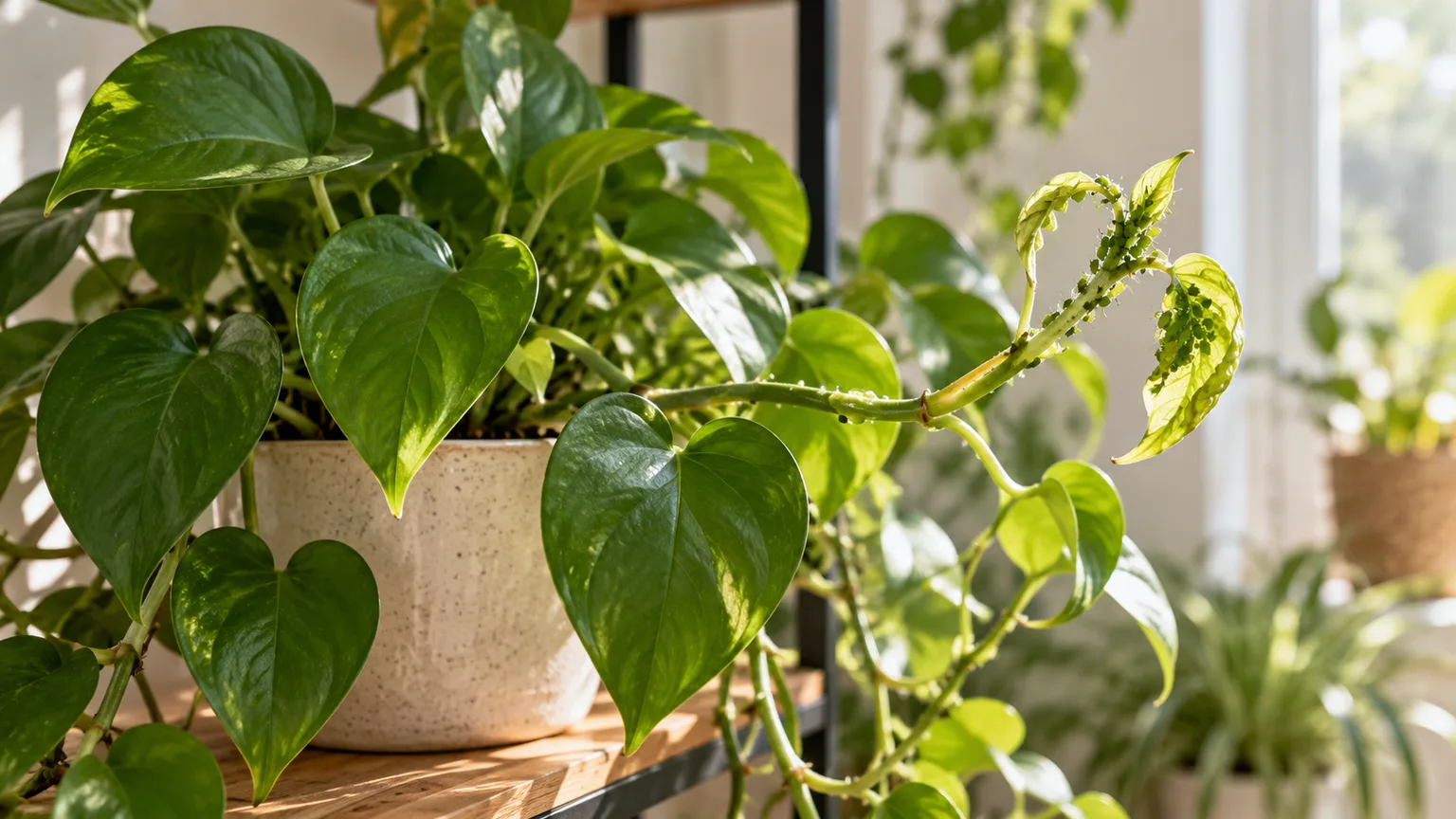
Aphids on Jade Pothos cluster on soft new vine tips and leaf undersides, leaving sticky honeydew and curled young leaves. First step: isolate the plant and blast the vine tips and leaf undersides with a strong stream of water. Follow with insecticidal soap only if live aphids remain after a few days.
Aphids on Jade Pothos: Causes, Checks & Fixes
This guide covers aphids on Jade Pothos. See also the general Aphids guide, watering, and light pages for this plant.
Aphids on Jade Pothos: Causes, Checks & Fixes
Quick answer
Aphids on Jade Pothos show up as clusters of tiny soft insects packed onto the newest vine tips and the undersides of young leaves, with sticky honeydew spotting the leaves below. Young leaves may unfurl twisted or stunted. For how this damage works on plants in general, see our aphid guide. On Jade Pothos, the pattern almost always starts at the growing tips, not on old established leaves.
First step: isolate the plant and blast the vine tips and leaf undersides with a strong stream of water. Support each trailing vine with one hand so the spray hits the colony without snapping stems. Most dislodged aphids cannot climb back, and the rinse clears honeydew at the same time. Recheck in three days and treat with insecticidal soap only if live clusters remain.
What aphids look like on Jade Pothos
On this plant, aphids are a vine-tip problem. Check the softest inch of each growing tip, the still-furled new leaf, and the underside of the two youngest open leaves. The insects are pear-shaped, soft-bodied, and 1/16 to 1/8 inch long, often green or yellow-green on pothos, and they sit in dense motionless-looking clusters along stems and midribs. A hand lens helps: aphids have two small tube-like cornicles sticking out of their rear end, which dust specks and thrips larvae lack.
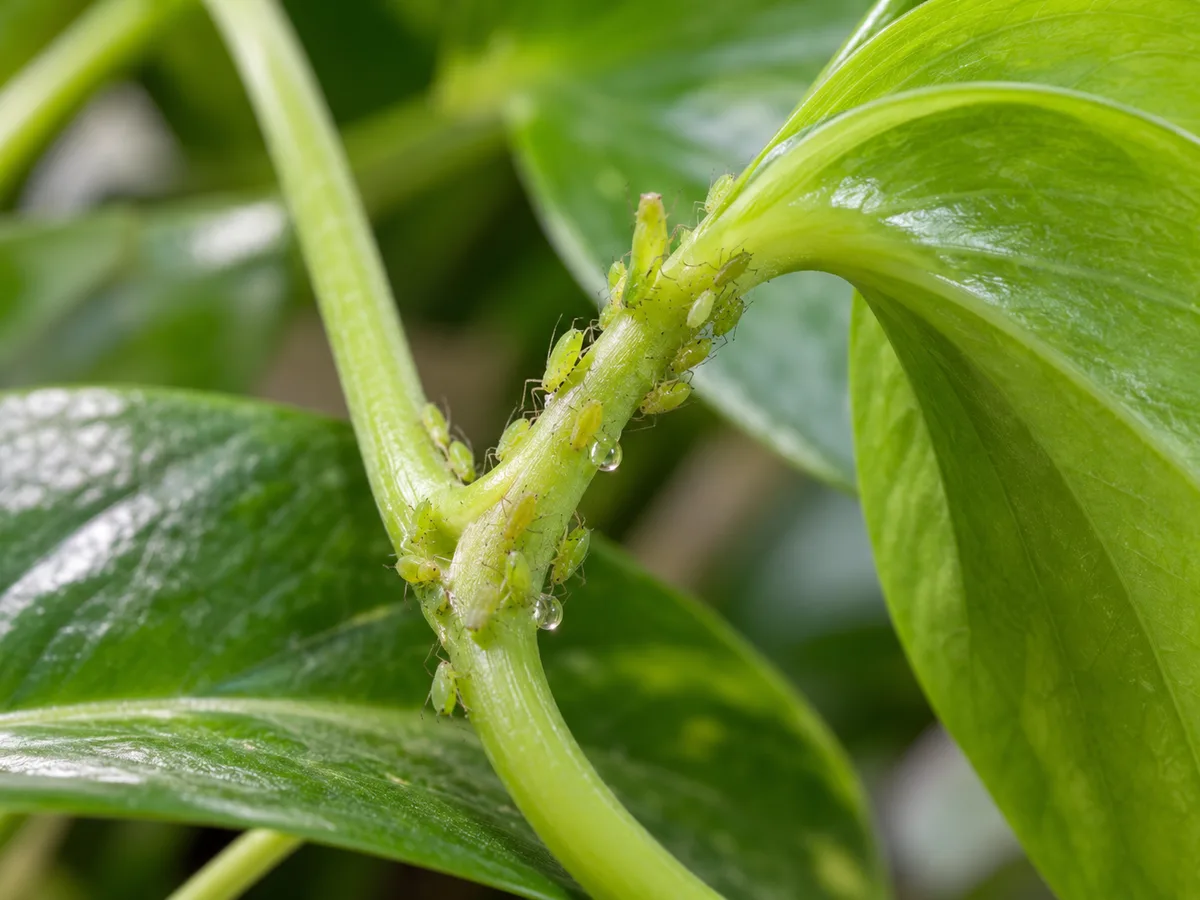
Tiny green aphid clusters packed along a Jade Pothos vine tip and young leaf underside, with a glossy film of honeydew.
The secondary signs matter as much as the insects. Aphids suck sap and excrete sticky honeydew that can blacken with sooty mold, so glossy sticky patches on the leaves beneath a vine tip point upward to the colony. You may also find white shed skins stuck in the honeydew, distorted new leaves that never flatten, and in established colonies a trail of ants commuting up the vines to harvest the honeydew.
Why Jade Pothos draws aphids
Jade Pothos grows fast and pushes soft nitrogen-fueled tip growth through most of the year indoors, and aphids feed almost exclusively on exactly that tissue. The solid-green Jade cultivar carries full chlorophyll in every leaf, so it keeps producing tender new tips even in medium light where variegated pothos would stall. Each flush of soft growth is a fresh feeding site, which is why colonies often appear a week or two after a growth spurt or a heavy feeding.
Three Jade-specific situations invite outbreaks. First, a plant brought home from the store or moved indoors for winter often carries a hidden starter colony on one tip, plus the stress of adjusting light. Second, enthusiastic fertilizing pushes the soft sappy growth aphids reproduce fastest on, so recently fed plants are hit first. Third, long trailing vines that never get tip-checked let a colony on the far end of a six-foot vine grow unnoticed for weeks while honeydew rains on the leaves below. None of this means the plant is weak; it means fast soft growth needs tip inspections to match.
How to confirm it is really aphids
Work tip to base, not base to tip. Start at the newest growth on every vine, including vines hanging behind the pot that are easy to skip. Hold white paper under a suspect tip and tap the vine sharply: live aphids drop as tiny slow-moving specks, while dust brushes off dry and inert. Check for honeydew by running a finger along a leaf below the colony; true honeydew feels tacky and slightly raised, not like water spots.
Rule out the common confusions before treating. If leaves are sticky but no insects are visible anywhere, wash one section and recheck in 48 hours; hidden colonies on an unchecked vine usually reveal themselves. If the newest leaves are small and pale but clean and dry, review the watering rhythm and light placement instead, since hunger and dim corners stunt tips without any pest. The Mealybugs on Jade Pothos page covers the other sap pest that leaves stickiness, but mealybugs show as white cottony tufts in leaf axils rather than exposed green clusters on open tips.
The first fix for Jade Pothos
Isolate the plant and rinse every vine tip thoroughly with strong water. Move the pot away from other houseplants first, because winged aphids walk and fly short distances indoors. Then take the plant to a sink or shower, support each vine, and spray the tips, unfurling leaves, and leaf undersides until no clusters remain. Knocked-off aphids rarely return to the plant, and the spray washes honeydew off with them. Let the vines drip-dry in good airflow before returning the pot to its spot.
Do one thing well rather than three things at once. Do not prune, spray, repot, and fertilize on the same day; you will not know which action worked, and a wet rinse followed immediately by oil spray on soaked foliage invites leaf spotting. Rinse now, wait three days, and only escalate if you find live clusters again.
Step-by-step cleanup after the rinse
Recheck every tip on day three with the tap test. If live aphids persist on one or two tips, snip just those infested tips back to the nearest healthy node and discard them in the trash, not the compost. This removes the densest colony and the distorted leaves sheltering it in one move, and Jade Pothos branches readily from nodes below the cut.
If colonies survive in several places, apply insecticidal soap next. Spray in the evening, coat the tips and both leaf surfaces until wet, and remember that soaps and oils kill only the aphids present on the day of spraying, so repeat applications are usually needed. A practical indoor sequence of rinse first, then soap, then neem oil for stubborn cases matches what works on trailing pothos without drenching the whole plant. Always follow the product label directions and keep exposure low, keep sprays off water-stressed foliage, and test one vine tip a few days before treating the whole plant when temperatures run hot.
Skip the repot. Aphids feed on foliage, not roots, and unpotting a trailing Jade Pothos mid-infestation snaps vines and adds transplant stress while the colony keeps feeding. The one exception is a plant so vine-tangled that you cannot reach the tips to inspect them; then a light trim for access beats a repot every time. Review the repotting guide only if the pot itself has separate problems like sour mix or circling roots.
Lookalike symptoms on Jade Pothos
| What you see | Likely cause | How to tell | Where to go |
|---|---|---|---|
| Green clusters on vine tips plus sticky leaves | Aphids (this page) | Tap test drops live insects; honeydew above clean lower leaves | Stay here; rinse first |
| White cottony tufts in leaf axils and stem joints | Mealybugs | Waxy white masses that smear orange when dabbed | Mealybug guide for alcohol-dab treatment |
| Fine stippling and webbing on older leaves | Spider mites | Dusty stipple plus silk at leaf joints; shake test over paper | Spider mite guide for humidity and rinse protocol |
| Small flies rising when you water, sticky-free leaves | Fungus gnats | Flies from the soil, not the tips; larvae harm roots | Fungus gnat guide for dry-down trapping |
| Yellow lower leaves, heavy pot, no insects | Overwatering | Whole-pot heaviness and soft stems, not tip clusters | Overwatering guide for the dry-down rhythm |
| Small pale new leaves, leggy bare vines, no stickiness | Low light, not pests | Evenly spaced small leaves along stretched vines | Light guide and leggy growth page |
Mistakes to avoid
Do not fertilize an aphid-infested Jade Pothos to push it through the damage. Extra nitrogen grows exactly the soft tissue the colony is eating, and feeding a stressed plant delays the firm regrowth that ends the outbreak. Hold all fertilizer until new tips unfold clean for at least two weeks, then resume the normal fertilizer schedule at half strength.
Do not use dish soap, vinegar, or alcohol sprays as substitutes for labeled insecticidal soap. Homemade detergents strip the waxy leaf coating Jade Pothos needs in indoor air and burn young tips, while proper insecticidal soap is formulated and labeled for foliage. Similarly, never spray oil and then park the plant in direct sun; oil plus strong light scorches the same soft leaves you are trying to save.
Do not ignore ants on the vines. Ants farm aphids for honeydew and chase away the predators that would otherwise help, so an ant trail means the colony is established enough to defend. Wipe the trail, rinse the tips, and check neighboring plants the same day rather than treating the aphids while the ant highway stays open.
Recovery: what heals and what does not
Leaves that unfurled twisted will not straighten, and heavy honeydew spotting may leave faint marks even after washing. Judge the plant by its newest output instead: clean tips unfolding flat, firm green color matching the solid Jade foliage, and no fresh tackiness on leaves below the tips. Most light infestations stabilize within two to three weeks of the rinse plus one soap follow-up.
Watch for two warning signs during recovery. Sooty mold spreading across lower leaves means honeydew is still being produced somewhere, so re-inspect every vine end including the ones behind the pot. Whole-vine yellowing or soft stems point away from aphids toward root or watering trouble; switch to the overwatering and yellow leaves guides if the pot stays heavy and stems soften. If every tip is colonized, mold coats multiple leaves, and growth has stalled for a month despite two treatments, take fresh tip cuttings from the cleanest section and restart; Jade Pothos roots easily from nodes while a consumed mother plant rarely rebounds.
How to prevent it next time
Quarantine every new plant for two weeks where its vine tips can be checked without touching the collection. Aphid populations explode fastest in warm rapid-growth windows, so check plants at least twice a week while they are growing fast and catch the first cluster when it fits on one tip. Keep nitrogen modest: a light half-strength feed in the growing season beats frequent heavy doses that flush the sappy growth aphids prefer.
Match care to the plant’s actual pace. Jade Pothos tolerates lower light than variegated types, but tips grow firmest in steady medium indirect light with water only when the top half of the mix dries. A plant described in the overview as a fast solid-green trailer should show firm evenly spaced leaves; soft stretched tips signal dim placement that invites both pests and weak growth. Prune overlong vines back to healthy nodes in spring so every tip stays within inspection reach, and wipe honeydew off neighboring leaves during checks before mold gets established.
Related Jade Pothos guides
- Overview - start here for the whole-plant picture: solid-green vigor, placement, and pet toxicity.
- Problems hub - browse all diagnosed issues when more than one symptom overlaps.
- Mealybugs - use when white cottony axil masses, not exposed tip clusters, explain the stickiness.
- Spider mites - use when stippled dusty leaves and fine webbing, not honeydew, dominate.
- Fungus gnats - use when flies rise from the soil rather than insects sitting on vine tips.
- Overwatering - use when heavy pots and soft stems, not pests, explain yellowing.
- Watering - use for the long-term top-half dry-down rhythm after aphids clear.
- Soil - use when the mix stays wet and keeps regrowth soft and pest-prone.
Related tool
Use the Pest Identifier Tool to narrow causes for aphids on this plant before changing multiple variables at once.