Wilting on Kalanchoe: Causes, Checks & Fixes
Quick answer
On Kalanchoe, wilting means water is not reaching the leaves: either roots are rotting in wet mix or the plant has used up stored moisture. Before watering, lift the pot and press a stem base at the soil line. Firm stems with a light, dry pot need a deep soak: soft or dark stems with damp soil mean stop watering and inspect roots.
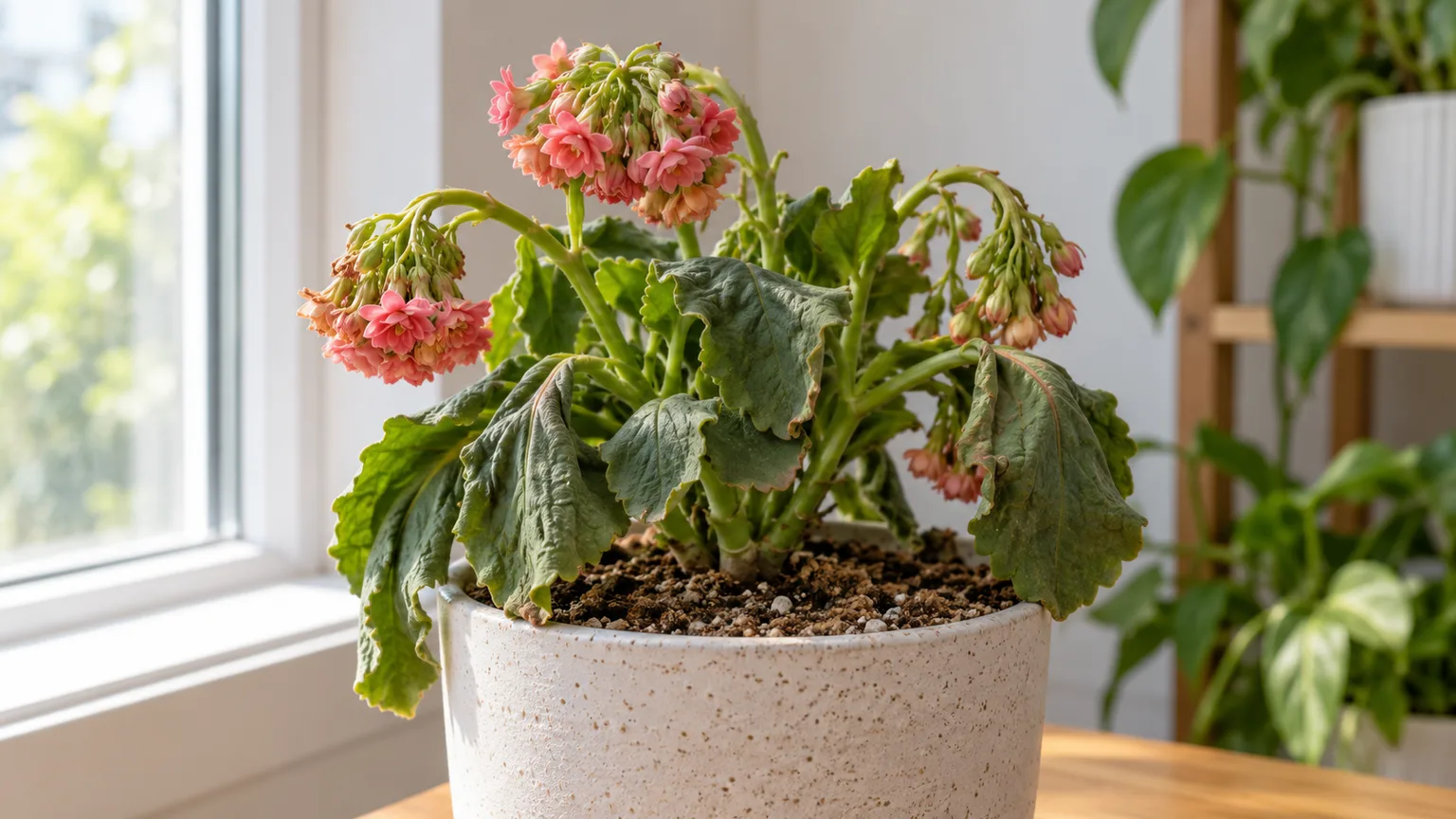
Wilting on Kalanchoe: Causes, Checks & Fixes
This guide covers wilting on Kalanchoe. See also the general Wilting guide, watering, and light pages for this plant.
Wilting on Kalanchoe: Causes, Checks & Fixes
Quick answer
When a Kalanchoe wilts, its thick leaves and flower clusters go limp because water is not reaching them, not always because the plant needs more water. This succulent stores moisture in its foliage, so the same droopy look can mean rotting roots sitting in wet mix or a plant that has simply used up its reserves. First step: lift the pot and press a stem base at the soil line before you add any water. A light pot with firm stems means thirst. A heavy, damp pot with soft stems means stop watering and check the roots.
What wilting looks like on Kalanchoe
Healthy Kalanchoe leaves feel firm, plump, and slightly waxy, with the thick scalloped foliage the plant is known for standing out stiffly from the stems. Flower clusters sit upright above the leaves for weeks at a time. Wilting breaks that posture: leaves lose stiffness and hang downward, leaf surfaces wrinkle or turn soft instead of springy, and bloom heads flop over even though their color may still look fine.
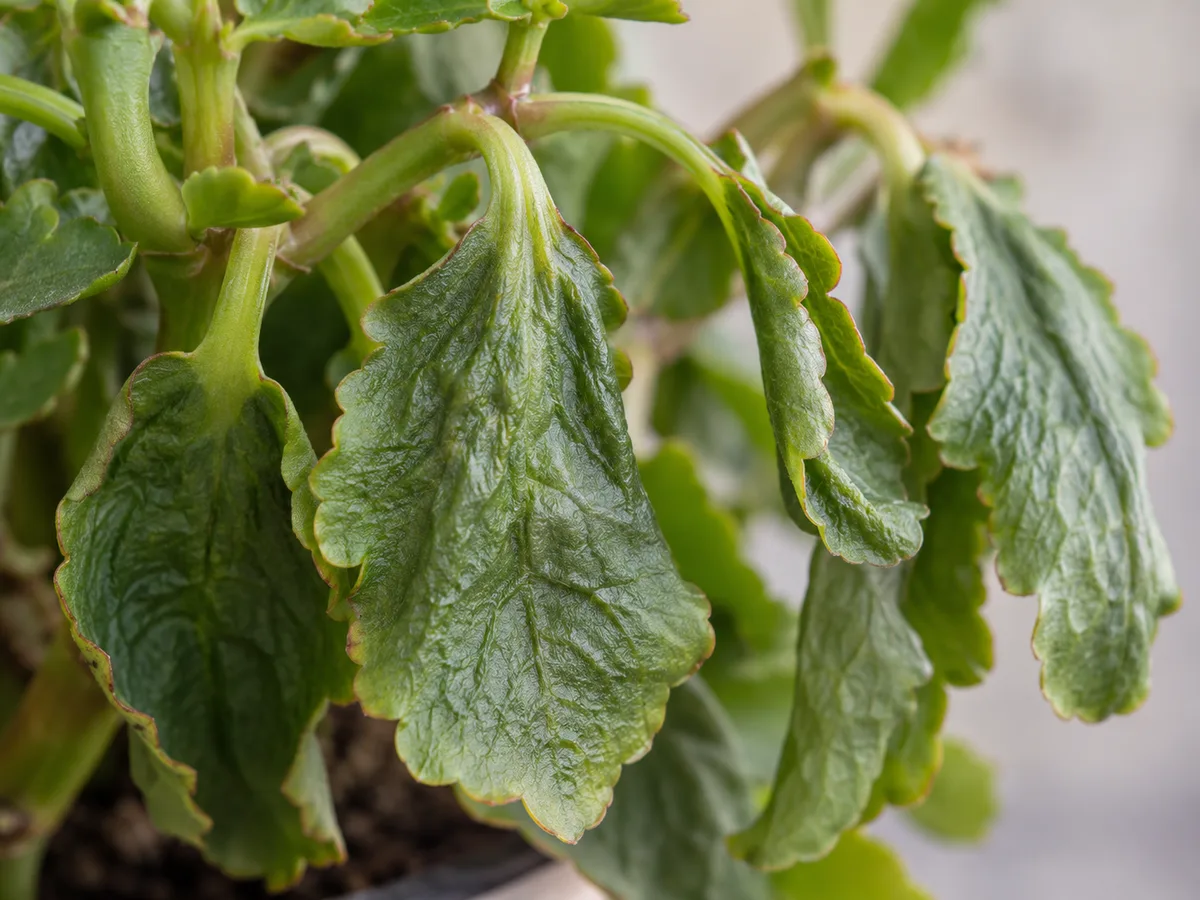
Limp, drooping scalloped leaves on Kalanchoe showing turgor loss: wrinkled and papery means drought, soft and translucent means excess water.
The two wilt types feel different in your fingers, and that difference is the whole diagnosis. Dry wilt shows wrinkled or shriveled leaf surfaces, a very light pot, and mix that is dusty all the way down, while stems stay firm. Wet wilt shows soft, mushy, or translucent leaves that may yellow quickly, a heavy pot days after watering, and sometimes darkening at the stem base where it meets the soil. For how limp leaves behave across houseplants in general, see our wilting guide. On Kalanchoe specifically, the leaf-feel test plus the stem base almost always separates the two causes.
Why Kalanchoe wilts
Kalanchoe evolved to hold water in its leaves and coast through dry spells, so it tolerates drought far better than constantly damp roots. Most wilting cases trace back to a broken water pathway: roots too damaged to absorb, or soil dry so long that stored reserves ran out.
Overwatering on Kalanchoe and root rot on Kalanchoe (most common)
Kalanchoe can be damaged by overwatering, and Clemson Extension warns that root rot usually results from a mix that does not drain quickly or from watering too often. Saturated mix suffocates roots, decayed roots cannot move water upward, and the leaves wilt even though the pot is wet. The classic triggers are calendar watering, a full saucer left standing, a pot with no drainage hole, or a dense peat mix kept from the florist display. Overwatered leaves turn soft, mushy, and translucent before yellowing or dropping, and the stem base can darken at the soil line.
Underwatering on Kalanchoe during active growth
Extended dryness still stresses the plant, especially in bright summer warmth when it is growing and blooming. The leaves release stored water until they wrinkle and droop, matching the thirst pattern of shriveled, less plump foliage. Unlike rot, the stems stay firm and the mix is bone dry throughout. NC State Extension recommends allowing the soil to dry out between waterings and then watering deeply, which is exactly the rhythm that prevents this kind of wilt.
The florist peat plug stays wet while the surface looks dry
Most gift Kalanchoes arrive in water-retentive peat that dries from the top first. The surface can look and feel dry while the root ball underneath is still soggy, so a well-meaning extra drink stacks moisture where roots already sit wet. If your plant wilted within weeks of coming home from a shop, suspect this layered-moisture trap before anything else. The soil guide covers the gritty replacement mix, and the watering guide explains how to check moisture at depth rather than at the surface.
Spent blooms flop and mimic whole-plant wilt
After the long flower display ends, bloom stalks naturally droop and dry while the leaves stay firm. This is exhaustion of the flower heads, not a water emergency, and it fools many owners into overwatering a plant that needs deadheading instead. Snip finished flower stems back to the first set of leaves and watch the foliage: if leaves remain plump and new tip growth looks firm, the plant is entering its normal post-bloom rest, not dying.
Cold and heat stress
Kalanchoe prefers nights around 45 to 65 degrees Fahrenheit and days from 50 to 70, with cool nights prolonging open flowers. Chilling near frost or beside a cold draft damages leaf tissue, causing limp patches and drop even in correctly watered soil. At the other extreme, hot sun on a dehydrated plant raises transpiration past what damaged or dry roots can supply, so wilt deepens on warm afternoons and eases overnight.
Sap-feeding pests on new growth and buds
Clemson lists mealybugs, aphids, and brown scale as the most common insect pests on this plant. Heavy clusters on tender tips and unopened buds drain sap and can make fresh growth twist and flag while older leaves still look fine. Check leaf axils, stem tips, and the undersides of buds for cottony masses, sticky honeydew, or tiny bumps before concluding the problem is watering alone. See mealybugs on Kalanchoe or aphids on Kalanchoe if you find them.
How to confirm the cause
Work through these checks in order. Stop when the pattern is clear.
- Pot weight - Lift it. Light and airy supports drought. Heavy days after watering supports trapped moisture.
- Deep moisture - Push a finger or wooden skewer to the pot bottom. Dry throughout means thirst. Cool and damp means hold off water.
- Stem-base firmness - Gently press each stem where it meets the soil. Firm means the water path is intact. Soft, dark, or mushy means rot.
- Leaf feel - Wrinkled and papery suggests drought. Soft, translucent, or rapidly yellowing suggests excess water.
- Bloom and cold context - Recently finished flowering with firm leaves points to spent blooms, not disease. Sudden wilt after a cold night points to chill damage.
- Pest scan - Inspect buds, leaf joints, and new tips for insects or stickiness.
| What you find | Likely cause | Confirmed? |
|---|---|---|
| Firm stems + light pot + dry deep mix | Underwatering | Yes, water deeply |
| Soft or dark stem bases + damp soil + yellowing leaves | Root rot | Yes, stop water and inspect roots |
| Firm leaves + flopped flower heads only | Spent blooms | Likely, deadhead and rest the plant |
| Firm stems + wilt days after repotting | Transplant stress | Likely, stabilize and wait |
| Cold exposure + limp patches on firm stems | Chill damage | Check temperature history |
| Sticky tips + visible insects | Pest sap loss | Yes, treat pests first |
The first fix to try
Lift the pot, check moisture at the bottom, and press the stem bases before you water again. That is the entire first action: no repotting, no fertilizer, no spray until you know which side of the wet-dry divide you are on.
If stems are firm and the mix is dry through, water deeply until excess drains from the bottom, empty the saucer immediately, and return the plant to bright light. Recheck leaf firmness the next morning.
If stems are soft or the mix is damp, do not water. Move the plant to a warm, airy spot with bright indirect light and let the pot dry. If stems still feel soft after a week of dry-down, unpot and inspect the roots, trimming only brown or mushy tissue with a clean blade before repotting into fresh gritty mix.
Step-by-step recovery
When the plant is dry and firm
Soak the root ball evenly and drain it fully. Do not mist the leaves; Kalanchoe prefers dry foliage and good airflow. Leaves should start feeling firmer within hours to a day. If they do not improve after a second deep watering a few days later, some fine roots may be damaged, so hold a steady soak-and-dry rhythm and watch new tip growth rather than old leaves.
When the plant is wet and soft
Stop all watering immediately. Slide the plant out of the pot and shake off the soggy mix. Healthy roots are pale and firm; rotted ones are brown or black and mushy, sometimes with a sour smell. Cut decay back to clean firm tissue, let the cuts air-dry for a day, then repot into fast-draining cactus-style mix in a pot with drainage holes. Wait several days before the first light watering. Recovery takes weeks, and stems that turned black at the base rarely re-firm.
When repotting caused the wilt
Disturbed roots absorb less water for a week or two, so mild wilt after a spring repot with firm stems usually means transplant stress, not rot. Hold water for three to five days after repotting, keep the plant warm and bright without fertilizer, and resume watering only when the fresh mix dries through. If stems soften during this wait, rot was already present and the wet-and-soft protocol applies instead.
Recovery timeline and success signs
Drought wilt on firm stems often visibly improves within a day of a proper soak, with full leaf plumpness back within a week. Transplant stress eases over two to four weeks as new root tips establish. Rot recovery is slow: expect four to eight weeks minimum before trusting the plant, and only if stem bases stayed at least partially firm after cleanup.
Signs you are winning: stems feel harder than before, new leaves unfold at the tips, wilt stops spreading to more branches, and the pot reaches a light, dry weight on a normal schedule.
Signs it is worsening: stem bases darken further upward, leaves yellow in clusters while soil stays wet, a sour smell develops, or no new growth appears after a month of corrected care. When the whole base is mushy, salvage is unlikely; take stem cuttings from any still-firm growth instead, following the propagation timing in the Kalanchoe overview.
Lookalike symptoms
Normal post-bloom flop - Flower heads droop and brown while leaves stay plump. Deadhead rather than soaking the soil.
Drooping leaves on Kalanchoe - Overlaps heavily with wilting; use that guide when the main question is posture without clear wet-dry evidence.
Leggy growth and not enough light - Stretched, pale stems in dim rooms look sad but are etiolation, not turgor loss. Kalanchoe gets spindly in low light even with perfect watering, so fix placement per the light guide rather than changing the drink.
Yellow leaves without limp stems - Yellowing alone may mean age, chill, or early overwatering. Wilting specifically means firmness is gone, so check roots and moisture first via yellow leaves on Kalanchoe.
Mistakes to avoid
Do not pour water on every limp Kalanchoe; wet-soil wilt gets worse with more water. Do not repot on day one unless you find mushy roots or a pot with no drainage. Do not fertilize a wilted plant, since salts stress roots that are already struggling; Clemson advises feeding actively growing plants only, about once a month. Do not move a stressed plant into deep shade; it needs bright light to recover, just not scorching midday sun while dehydrated. Kalanchoe is toxic to cats and dogs, so keep cuttings, fallen leaves, and the recovering plant out of pets’ reach and wash hands after handling damaged tissue.
How to prevent wilting
Grow Kalanchoe the way its succulent leaves expect. Water only when the whole pot is dry: roughly every 10 to 14 days in summer and every 3 to 4 weeks in winter, verified with a finger or skewer at depth. Use very fast-draining mix in terracotta with open drainage holes, and always empty the saucer so roots never sit in standing water. Give bright light with some direct sun after gradual acclimation. Deadhead spent blooms, cut back leggy stems after flowering, and ease off water in cool winter months when growth slows. The watering guide and soil guide carry the full long-term routine once this episode resolves.
When to worry
Treat wilting as urgent when stems soften or darken at the soil line, collapse spreads across several branches while soil stays wet, or the pot smells sour. Those signs mean rot may be consuming the stems that support the whole plant. Slow wilt on firm stems during a hot spell is far less alarming: correct the watering and stabilize light, and the plant usually rebounds. When in doubt, trust the stem-base test rather than guessing.
When to use this page vs other Kalanchoe guides
- Kalanchoe watering guide - Use for routine moisture checks before assuming wilting is the main issue.
- Kalanchoe problems hub - Browse all common issues on this species.
- Underwatering on Kalanchoe - Different entry point when symptoms overlap with wilting.
- Overwatering on Kalanchoe - Different entry point when symptoms overlap with wilting.
- Root rot on Kalanchoe - Different entry point when symptoms overlap with wilting.
Related Kalanchoe guides
- Kalanchoe overview - care basics and succulent growth habit
- Watering - full-pot dry-down schedule and seasonal adjustments
- Soil - gritty fast-draining mix that protects roots
- Light - bright placement that keeps growth compact
- Underwatering on Kalanchoe - dry-side diagnosis when the pot is light
- Overwatering on Kalanchoe - wet-side diagnosis when the pot stays heavy
- Root rot on Kalanchoe - root surgery when stems soften
- Drooping leaves on Kalanchoe - posture-first entry when wet-dry evidence is unclear
- Mealybugs on Kalanchoe - sap-feeding pest behind weak new growth
- Kalanchoe problems