Aphids on Kalanchoe: Causes, Checks & Fixes
Quick answer
Aphids on kalanchoe cluster on flower buds, shoot tips, and the undersides of young leaves, leaving sticky honeydew and curled new growth. First, isolate the plant and wipe or rinse the visible colonies off, keeping the succulent soil dry. Follow with insecticidal soap only if live aphids return.
Aphids on Kalanchoe: Causes, Checks & Fixes
This guide covers aphids on Kalanchoe. See also the general Aphids guide, watering, and light pages for this plant.
Aphids on Kalanchoe: Causes, Checks & Fixes
Quick answer
If your kalanchoe’s buds look sticky, stunted, or crawling with tiny pear-shaped insects, aphids are the likely cause. They love the soft flower trusses and fresh shoot tips of kalanchoe, and Clemson HGIC lists mealybugs, aphids, and brown scale as this plant’s most common insect pests.
First fix: isolate the plant, then wipe or rinse the visible colonies off the buds and young leaves while keeping the succulent mix dry. Recheck in 3–4 days and use insecticidal soap only if live aphids return. For general aphid biology beyond kalanchoe, see our aphids guide.
What aphids look like on kalanchoe
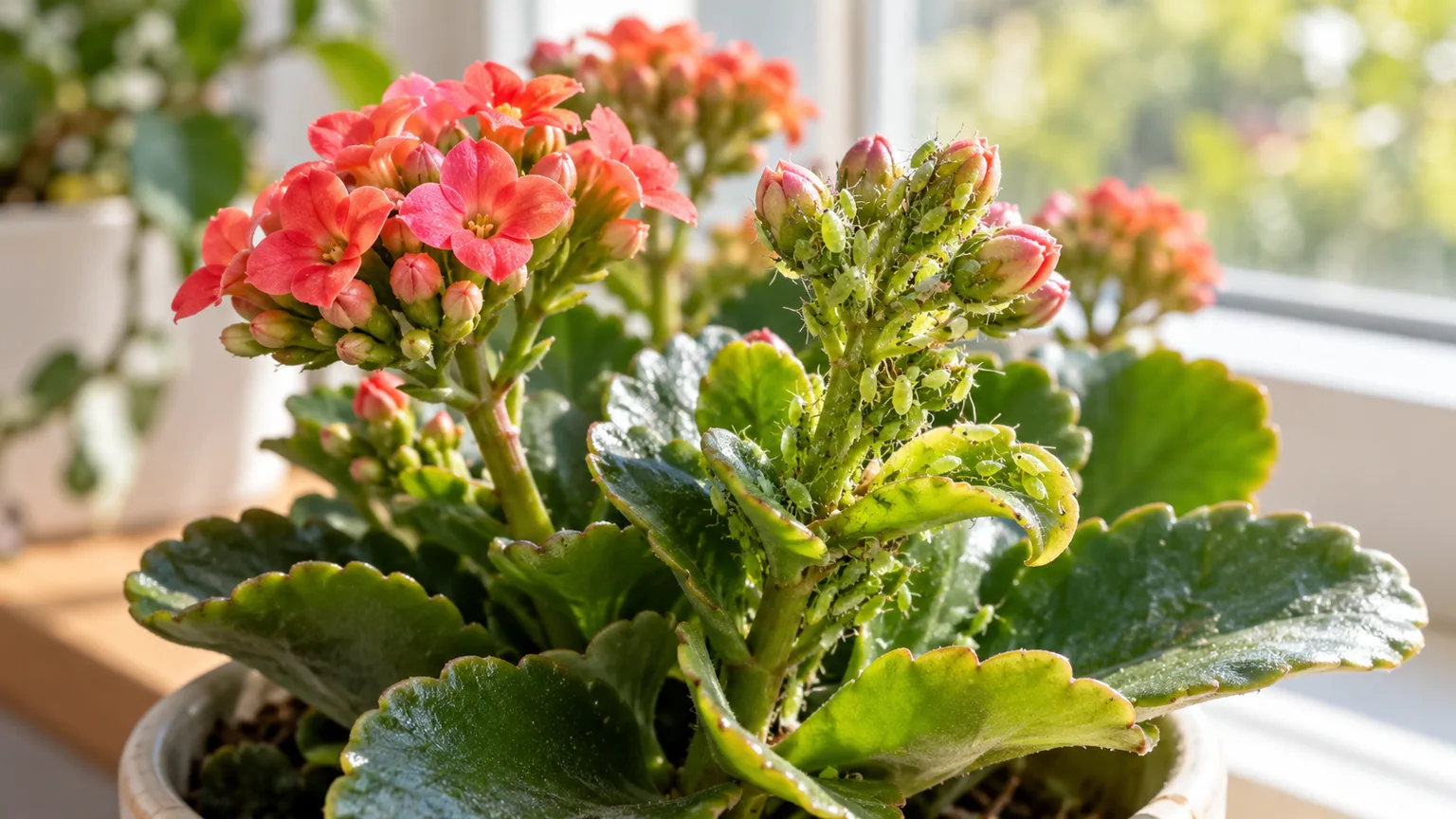
On kalanchoe, aphids pack onto flower buds, opening blooms, shoot tips, and the undersides of the youngest scalloped leaves. They are small (roughly 1–7 mm per RHS), soft, pear-shaped insects — green, black, brown, or pinkish — often in dense, slow-moving clusters along buds and stems, matching the 1/16 to 1/8 inch pear-shaped description from Maine’s pest office.

Close-up of green aphids packed on kalanchoe buds and young leaves, with sticky honeydew starting to gloss the surface.
The telltale sign on this plant is sticky: honeydew coats buds, upper leaves, and sometimes the windowsill below. That sugary film may grow black sooty moulds and collects white cast skins. New buds deform, fail to open, or drop; young leaves curl or pucker. Ants marching up the pot toward the buds are another strong hint, since ants tend aphid colonies for honeydew.
Where aphids hide on kalanchoe’s scalloped leaves and flower trusses
Kalanchoe’s growth habit decides where to look first. Unlike a fern or an aroid with big flat leaves, kalanchoe offers aphids two perfect shelters: the dense branching flower truss and the cupped joints where thick leaves meet the stem.
- Inside the flower truss: buds, pedicels, and half-open blooms. Aphids wedge between buds where sprays and wipes miss.
- Shoot tips and leaf axils: the softest new tissue, especially after deadheading or a growth flush.
- Undersides of young leaves: colonies line the midrib and scallop notches.
- Stem joints near the crown: check where lower leaves meet fleshy stems, but do not confuse waxy mealybug cotton with smooth aphid bodies — compare with mealybugs on kalanchoe.
Mature, firm outer leaves are rarely the main colony. If damage is only on old lower leaves with no insects or honeydew, suspect yellow leaves on kalanchoe from watering or light instead.
Why kalanchoe gets aphids
Aphids feed on soft, new plant growth, and anything pushing soft growth invites them. On kalanchoe that usually means one of these patterns:
- A plant in full bud or active growth. Florist kalanchoe forced into heavy bloom carries weeks of tender bud tissue — ideal aphid food. Fresh growth after pruning or deadheading is equally vulnerable.
- Too much nitrogen or overfeeding. Excess fertilizer produces soft, sappy shoots; UC IPM specifically warns not to over fertilize because aphids feed on soft new growth. Kalanchoe needs only light feeding in active growth (see fertilizer), never as a rescue for a pest-stressed plant.
- Warm, still indoor air with weak light. Kalanchoe stretches in low light (check light needs), producing thin tips that aphids colonize faster. Crowded windowsills with no airflow let colonies build unchecked.
- Ants or a nearby infested plant. Ants protect aphids from predators, and winged aphids drift in from adjacent houseplants. Isolate new plants and blooming gift plants for a week or two.
Overwatering does not cause aphids, but a wet, heavy mix weakens the plant and makes every other stress worse. Kalanchoe must dry between waterings — keep that discipline during treatment (more in watering and overwatering).
How to confirm the cause
Work through this order before spraying:
- Magnify the buds. Part bud clusters gently and look for clustered pear-shaped insects, not flat armored bumps (scale) or white cotton masses (mealybugs). Aphids are usually found feeding on new growth or the undersides of leaves, sucking sap and excreting honeydew.
- Touch-test for honeydew. Sticky buds, sticky upper leaves, or a tacky sill mean active sap-feeders. Waxy dry cotton without stickiness points to mealybugs instead.
- Check distortion vs. water stress. Aphid damage curls and puckers the newest tissue while the mix may be fine. Whole-plant softness with wet soil points to root trouble — see root rot and wilting.
- Look for ants, skins, and soot. Any one of these corroborates aphids; all three together are conclusive.
- Rule out lookalikes. Fine stippling with webbing is spider mites, not aphids. Black powder on honeydew is sooty mold growing on aphid waste, not a separate leaf-spot disease — though persistent damp plus poor airflow can invite mold on soil.
First fix for kalanchoe: remove aphids, keep the crown dry
Do one thing first: physically remove the colonies while protecting the succulent from excess water.
- Move the plant away from other houseplants and, if blooming, away from bee-visited outdoor spots before any spray.
- Snip off the worst-budded truss tips if they are crawling and deformed — one or two truss cuts beat drenching the whole plant.
- Wipe remaining colonies off buds and leaf undersides with a cotton swab dipped in rubbing alcohol, or dislodge them with a firm water rinse aimed at the buds. Clemson HGIC lists handpicking, water spraying, and alcohol swabs as practical first steps for minor aphid infestations.
- Tilt the pot so rinse water runs off the foliage, not into the mix; blot the crown and leaf joints dry afterward. Kalanchoe rots fast in a soaked crown, so never leave it dripping in a cachepot.
Recheck buds and shoot tips every 3–4 days for two weeks. If colonies refill, move to the step-by-step treatment below.
Succulent-safe rinse: kill aphids without rotting the crown
Standard “blast it in the shower” advice needs a kalanchoe adjustment. Thick leaves store water, fleshy stems scar easily, and the tight crown traps moisture — the same traits that make soil and drainage so critical for this species.
- Rinse in the morning so foliage dries in bright, airy light the same day.
- Cover the mix surface with plastic wrap or foil during the rinse, then remove it so the pot can breathe.
- Use a sink sprayer on medium, aimed sideways at buds and leaf undersides — not straight down into the rosette.
- Afterward, shake the pot gently, blot joints with tissue, and run a small fan nearby for an hour. Skip misting entirely during the infestation; wet leaves help neither aphids nor kalanchoe.
Step-by-step recovery
- Prune the worst bits. Remove heavily deformed buds and any truss dripping honeydew. This instantly cuts the population and lets sprays reach survivors. Clean scissors between cuts.
- Rinse or wipe as above, keeping soil dry. UC IPM recommends knocking aphids off with a strong stream of water on sturdy plants — kalanchoe stems qualify, but its soil does not want the runoff.
- Apply insecticidal soap only to survivors. If live aphids persist after 3–4 days, spray buds and leaf undersides thoroughly with a labeled houseplant insecticidal soap. These are contact insecticides only effective when they make direct contact and need repeat applications as hidden eggs hatch. Test one truss first; spray in the evening, never on a drought-stressed plant or in hot direct sun.
- Wipe honeydew and soot. A damp cloth on sticky leaves restores photosynthesis and reveals whether new stickiness is forming.
- Starve the next generation. Hold all fertilizer until clean new growth resumes, thin crowded trusses for airflow, and keep ants off the pot (sticky barriers or simply moving the plant breaks the trail).
- Escalation line. If three soap rounds plus pruning fail, or the plant is a small florist pot fully encased in aphids and soot, replacement is the honest answer — Clemson HGIC notes that a severely damaged, low-value plant is sometimes best discarded rather than drenched in chemicals. Never apply outdoor systemic granules to an indoor blooming plant on your own schedule; follow the label and local rules.
Recovery timeline
- Days 1–3: colonies visibly gone from buds after wipe/rinse; stickiness stops spreading.
- Weeks 1–2: existing curled buds mostly stay curled — judge by new tips, not old damage. Fresh buds should emerge clean and ants should leave.
- Weeks 3–4: new leaves firm and flat, new buds opening normally. Resume the normal watering rhythm and light feeding only once this clean growth holds.
Worry signs: colonies refilling every truss within days, buds blackening under sooty mold, stems softening at the base (possible secondary rot — check root rot), or no new growth at all after a month. Stalled, distorted growth with no insects left may be lingering virus or severe bud damage; prune back to firm tissue and wait for a clean flush.
Mistakes to avoid
- Soaking the succulent to kill the pest. Daily showers and misting rot kalanchoe crowns faster than aphids damage them. Rinse surgically, then dry.
- Spraying first, diagnosing never. Soap on mealybugs, mites, or edema wastes a week. Confirm pear-shaped colonies plus honeydew first.
- Fertilizing a stressed plant. Extra nitrogen makes softer growth and more aphids. Feed only clean, actively growing plants.
- One heavy pesticide blast. Contact soaps need thorough coverage and repeats; drenching once, especially in sun, burns kalanchoe leaves and misses hidden buds.
- Ignoring the neighbors. Treating one truss while an infested plant touches it guarantees reinfestation. Inspect adjacent plants and keep the patient isolated until clean.
How to prevent it next time
- Keep kalanchoe in bright light with several hours of sun after acclimation — compact growth resists aphids better than etiolated tips (see light and leggy growth).
- Water by dry-down, not calendar: soak only when the top inch is fully dry and the pot feels light, and empty the cachepot (watering).
- Use the gritty, fast-draining mix and terracotta this species expects (soil); roots that breathe grow buds aphids find less inviting.
- Deadhead spent blooms promptly and thin overcrowded trusses so buds dry fast after watering.
- Check buds weekly from bud-set through bloom, especially on new florist plants. A cotton swab on day one beats soap on day fourteen.
- Slow down in winter: short days stall growth (slow growth), so cut water and stop feeding rather than pushing soft off-season shoots.
When to use this page vs other kalanchoe guides
- Sticky buds with visible colonies → this page.
- White cotton in leaf axils, no honeydew gloss → mealybugs.
- Fine stipple plus webbing on leaves → spider mites.
- Soft, translucent leaves with wet soil → overwatering or root rot.
- Pale stretch with no pests → not enough light.
- Fuzzy soil surface after wet weeks → mold on soil or fungus gnats.
- General kalanchoe growing and rebloom context lives on the kalanchoe overview and the problems hub.
Related kalanchoe guides
- Kalanchoe overview — full care baseline: light, soak-and-dry watering, and rebloom.
- Kalanchoe problems hub — when symptoms overlap and you need the right pest or watering page.
- Mealybugs on kalanchoe — use when the white pest is cottony rather than smooth and pear-shaped.
- Spider mites on kalanchoe — use for stippled leaves with fine webbing instead of honeydew.
- Yellow leaves on kalanchoe — use when yellowing dominates and no colonies or stickiness are found.
- Overwatering on kalanchoe — use when the mix stays wet and leaves turn soft or translucent.
Related tool
Use the Pest Identifier Tool to narrow causes for aphids on this plant before changing multiple variables at once.